
Yes, weed can technically grow under regular household light bulbs, but the results range from disappointing to outright failure depending on what stage of growth you're in and which bulb type you're using. Seedlings can survive under a standard CFL or even a bright LED household bulb. Vegetative growth is possible but slow. Flowering under regular bulbs? That's where things fall apart fast. If you're trying this today, here's exactly what to expect and how to squeeze the most out of what you have.
Can Weed Grow With Regular Light Bulbs? What to Expect
Marcus Hartley
6 May 2026
What regular light bulbs can and can't do for weed
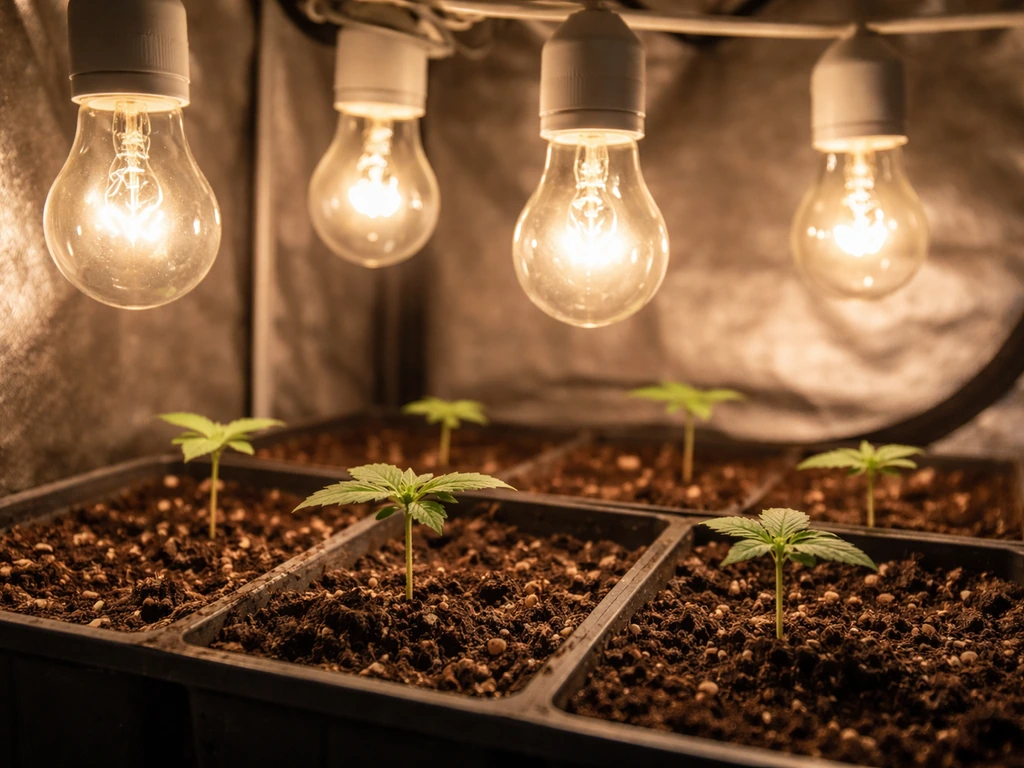
The honest answer is that most regular household bulbs were designed to help humans see, not to drive plant photosynthesis. That distinction matters a lot when you're growing cannabis, which is a high-light-requirement plant with specific intensity needs at every stage.
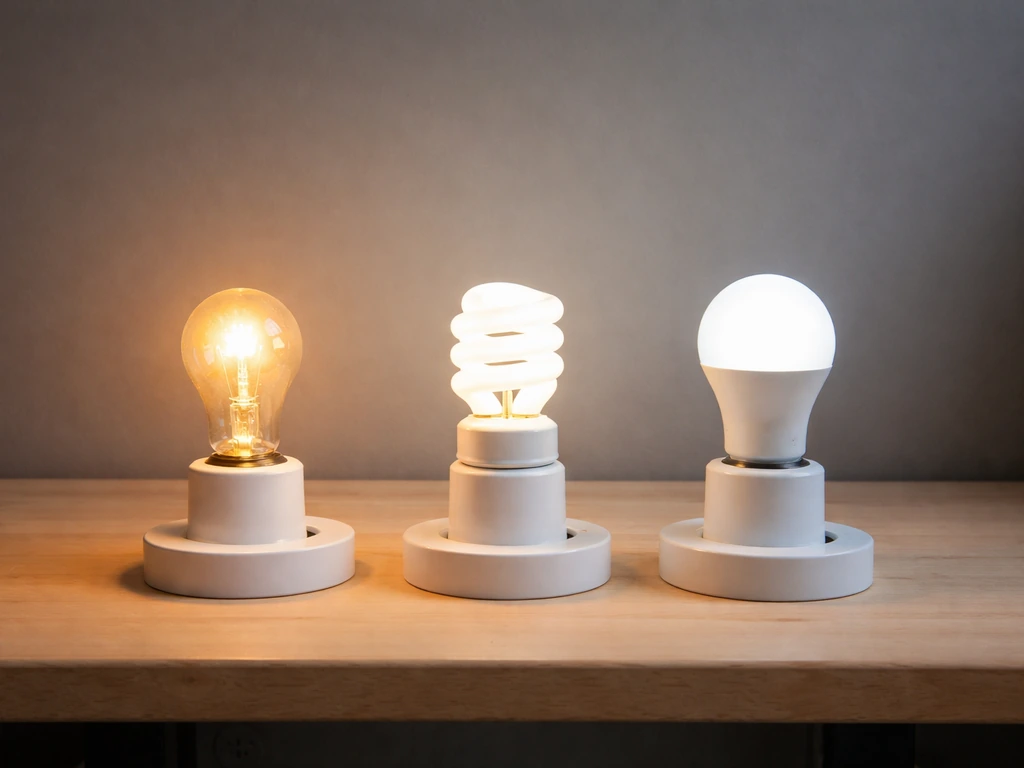
Here's a quick breakdown of the common household bulb types and how they stack up:
| Bulb Type | PAR Output | Heat Output | Best Use Case | Verdict for Weed |
|---|---|---|---|---|
| Incandescent | Very low (~15% of energy becomes usable plant light) | Very high (~75% emitted as infrared) | Nothing useful | Skip it entirely |
| Halogen | Low to moderate | Extremely high | None | Fire and heat risk, not worth it |
| Standard household CFL | Moderate | Low to moderate | Seedlings, early veg | Workable in a pinch with enough bulbs |
| Standard household LED (warm/cool white) | Moderate | Low | Seedlings, early veg | Better than CFL for efficiency, still limited |
| Full-spectrum grow LED | High | Low | All stages | This is what you actually want |
Incandescent bulbs are the worst option by a wide margin. Only about 15% of the energy they consume actually becomes light in the PAR range (400–700 nm) that plants use for photosynthesis. The rest turns into heat, which creates a second problem: you have to keep them far enough away to avoid burning your plants, but that distance kills the already-weak light intensity. Halogens are similarly hot and inefficient. Don't bother with either.
CFLs (compact fluorescent bulbs, the curly ones you might have in a lamp) and standard white LEDs are a different story. They run cooler, they're more efficient, and they do produce some usable light for plants. They're not ideal, but they're not completely useless either, especially for very young plants. The catch is intensity: you'll need a lot of them clustered close together to hit even the minimum light levels cannabis needs.
Spectrum and intensity: why grow lights actually work better
Two things determine whether a light source can grow plants well: spectrum (the colors of light it emits) and intensity (how much of that light actually reaches the plant's leaves). Regular bulbs usually fall short on both, but intensity is the bigger problem.
Cannabis has well-documented light intensity needs measured in PPFD (photosynthetic photon flux density, basically "how many photons are hitting your plant per second per square meter"). Seedlings need roughly 100–250 µmol/m²/s. Vegetative plants need 300–450. Flowering plants need 700–1,200. A single household CFL producing around 2,500 lumens doesn't get close to those numbers at any reasonable distance. You'd need four or more bulbs per plant, positioned just a few inches away, to approach the low end of vegetative light needs.
Spectrum matters too, but it's actually secondary to intensity for CFL setups. The "right" spectrum (more blue for veg, more red for flowering) is less critical than simply having enough total light output. That said, regular warm-white LEDs and incandescent bulbs are heavily weighted toward yellow and red wavelengths and are weak in the blue range, which is important for compact vegetative growth. Without enough blue light, plants stretch upward looking for more light, a problem called etiolation.
True grow lights (dedicated LED panels, HPS, MH) are engineered to deliver the right PPFD across a wider canopy area at an appropriate distance. A 200-watt LED grow panel can cover a 2x2 foot area at flowering-level intensity. To match that with household CFLs, you'd be zip-tying dozens of bulbs to a frame and hoping for the best.
Seedling, vegetative, flowering: which stages can regular bulbs actually support
Not all growth stages have the same light demands, and that's worth knowing if you're working with what you have right now.
Seedlings (first 1–2 weeks)
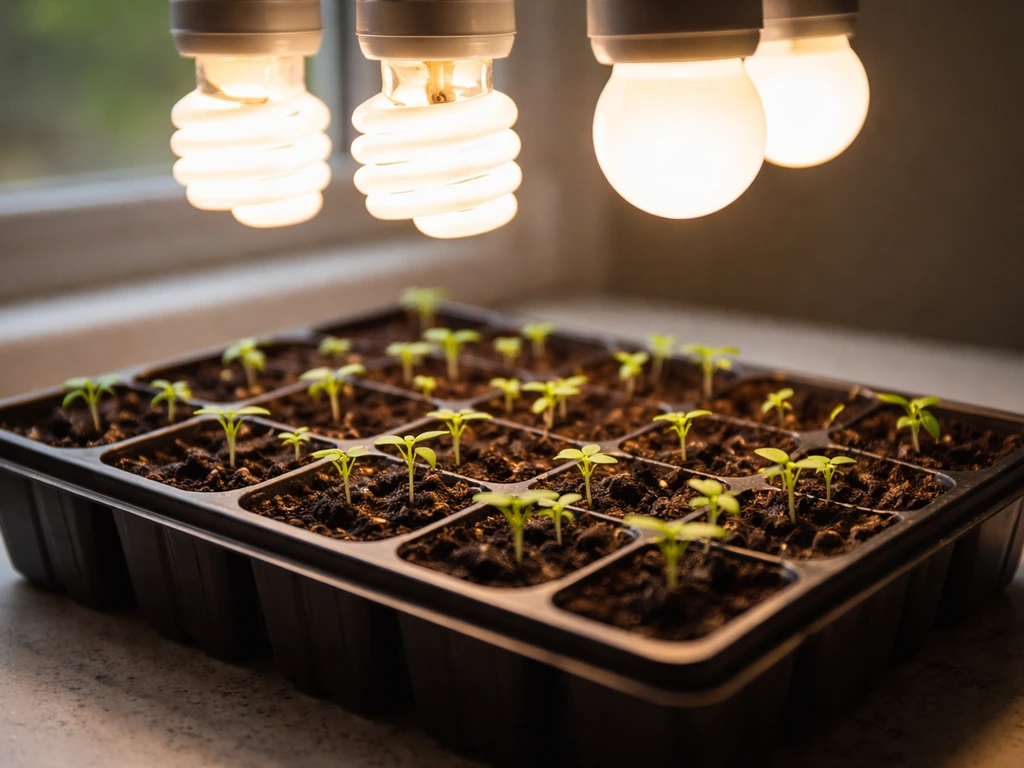
This is where regular bulbs are most forgiving. Seedlings need relatively low PPFD (100–250 µmol/m²/s), and a few CFL bulbs or bright household LEDs positioned 2–4 inches above the seedling tray can work. Keep the light schedule at 18–20 hours on, 4–6 hours off. At this stage, the plant isn't doing heavy photosynthetic lifting, so the bar is lower. Just don't let seedlings stretch, which happens fast when light is too dim or too far away.
Vegetative growth
Possible with regular bulbs, but you'll see slower growth than under a real grow light. If you're using CFLs, cluster at least 4–6 bulbs as close to the canopy as heat allows (typically 2–6 inches for CFLs). Use daylight/cool-white spectrum (5,000–6,500K) bulbs during this phase because higher blue content keeps internodes tighter. Maintain an 18/6 light schedule. Your plants will grow, just more slowly and with more stretching than you'd see under a proper setup. Autoflowering strains are more forgiving here since they don't rely on the photoperiod to switch stages. Because many photoperiod-sensitive plants require an uninterrupted dark period to trigger flowering, even small light leaks during the dark phase can prevent proper stage switching Photoperiodism.
Flowering
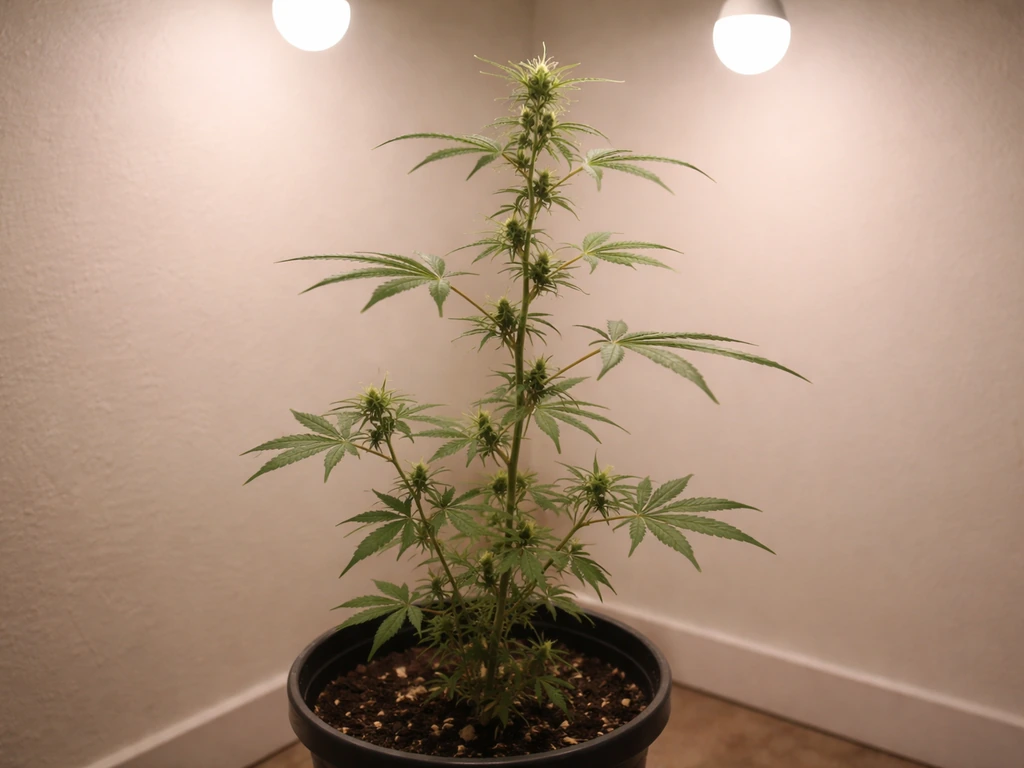
This is where regular household bulbs realistically fail. Flowering cannabis needs 700–1,200 µmol/m²/s of PPFD, and it needs a strict 12 hours of light followed by 12 hours of uninterrupted darkness to trigger and maintain the flowering cycle in photoperiod strains. Even if you nail the 12/12 schedule, the intensity from household bulbs won't be enough to produce dense, resinous buds. This is why the question of whether weed needs light to grow matters so much in practice intensity from household bulbs. You'll get flowers, technically, but they'll be airy, small, and low-potency. CFLs can handle one small plant in a grow cabinet if you stack enough of them, but it's a lot of effort for a disappointing result.
Autoflowering strains are a smarter choice if you're committed to using lower-powered lights. They switch to flowering based on age, not light schedule, so you can run them at 20 hours of light per day throughout their entire life cycle, which squeezes more out of whatever intensity you have.
How to test your setup today
Before you write off your current setup (or invest more into it), do a quick practical audit. Here's how to check what you're actually working with:
- Measure your light distance: CFLs and standard LEDs lose intensity quickly with distance. For seedlings, get bulbs 2–4 inches away. For vegetative plants, 4–8 inches. Further than that and you're not doing much.
- Count your lumens: Check the bulb packaging. If each CFL is producing 1,600–2,500 lumens, you need at least 4 bulbs per plant to approach the low end of vegetative requirements. More is better.
- Use the free Photone app: Download the Photone (formerly GrowLightMeter) app on your phone. Set it to your light source type and hold it at canopy level. It gives you a PPFD estimate that's more useful than lux alone. It's not lab-accurate, but it's a solid directional check.
- Check for stretching: If your plant is growing tall with long gaps between leaf nodes, it's not getting enough light. Shorter, bushier growth means the light is adequate.
- Set a timer: Inconsistent light schedules stress plants. Get a basic outlet timer (under $10) and lock in 18/6 for veg or 12/12 for flowering. Don't rely on remembering to flip the switch.
- Note heat at canopy: Hold your hand at canopy level for 30 seconds. If it's uncomfortably warm, your bulbs are too close or too hot, and you risk bleaching or heat stress.
One important note on measuring light: lux readings from a basic meter or phone app can be misleading because lux was designed for human vision, not plant photosynthesis. In a r/Autoflowers thread, growers discuss practical ways to blank" rel="noopener noreferrer">measure or estimate PPFD, including using Photone and understanding the limits of lux-to-PPFD approximations. Different light spectrums give different lux-to-PPFD ratios. A warm incandescent looks "bright" to your eye but delivers very little usable plant light. The Photone app handles this better than a raw lux reading, especially if you select your exact bulb type in the settings.
Expected problems from weak lighting and how to fix them
Low-light grows have predictable failure patterns. Knowing them in advance saves a lot of frustration.
- Etiolation (stretching): Tall, spindly stems with big gaps between nodes. Caused by insufficient intensity or light placed too far away. Fix: move lights closer, add more bulbs, or use a reflective surface (mylar, white walls, aluminum foil in a pinch) to bounce more light onto the plant.
- Slow vegetative growth: Plant is alive but barely growing. Usually means total light intensity is too low. Fix: add more bulbs, reduce canopy-to-light distance, or upgrade.
- Pale or yellowing leaves: Can indicate light stress or nitrogen issues, but in a low-light grow it often means the plant isn't photosynthesizing efficiently enough to use nutrients well. Fix: check light intensity first before adding fertilizer.
- Poor flowering or no bud development: Flowers form but stay small and airy. Almost always an intensity problem. Fix: this is the clearest signal to upgrade to a dedicated grow light.
- Pest and mold issues: Low-light grows produce weaker plants with slower metabolism, which makes them more vulnerable to pests and mold. Good airflow and avoiding overwatering are your best defenses here.
- Inconsistent flowering trigger in photoperiod strains: If any light leaks into the dark period (from a phone, a streetlight, even an LED indicator on a power strip), it can confuse the plant and stall flowering. Make sure your 12-hour dark period is truly dark.
When to upgrade: choosing the right grow light
If your plants are stretching, your buds are tiny, or you're running more than two plants, it's time to upgrade. The good news is that entry-level LED grow lights have gotten genuinely affordable and the quality has improved a lot in recent years.
What to look for in a grow light
Focus on actual PPFD output and coverage area, not just wattage. A light rated for a 2x2 foot coverage area should deliver 300–450 µmol/m²/s at canopy for veg and be adjustable or positionable to hit 700–900+ for flowering. Many budget LED panels list a wattage but don't publish real PPFD data. Look for brands that publish their PPFD maps, or buy from a grow-specific retailer where reviews include actual grow results.
- For 1 plant: A 100–150W LED grow light (actual draw, not "equivalent") covering a 2x2 foot area is a solid starting point and costs $50–$120.
- For 2–4 plants: Step up to a 200–300W LED covering a 3x3 or 4x4 foot area.
- Full-spectrum LEDs with both blue and red coverage (or white broad-spectrum) outperform single-color "blurple" panels.
- Adjustable height and a dimmer function are worth paying a little extra for because you can tune intensity by stage without moving the whole light.
- Hang the light at the manufacturer's recommended height, then verify at canopy level with the Photone app.
Strain choices if you're keeping a low-power setup
If you're not ready to upgrade yet, autoflowering strains are your best bet. They complete their life cycle in 70–90 days regardless of light schedule, tolerate lower light levels better than photoperiod strains, and stay smaller (which means your limited-intensity bulbs can cover more of the canopy). Low-stress training (bending and tying branches to spread the canopy flat) also helps you get more of the plant into the "sweet spot" closest to your light source.
Safety and troubleshooting with household bulbs
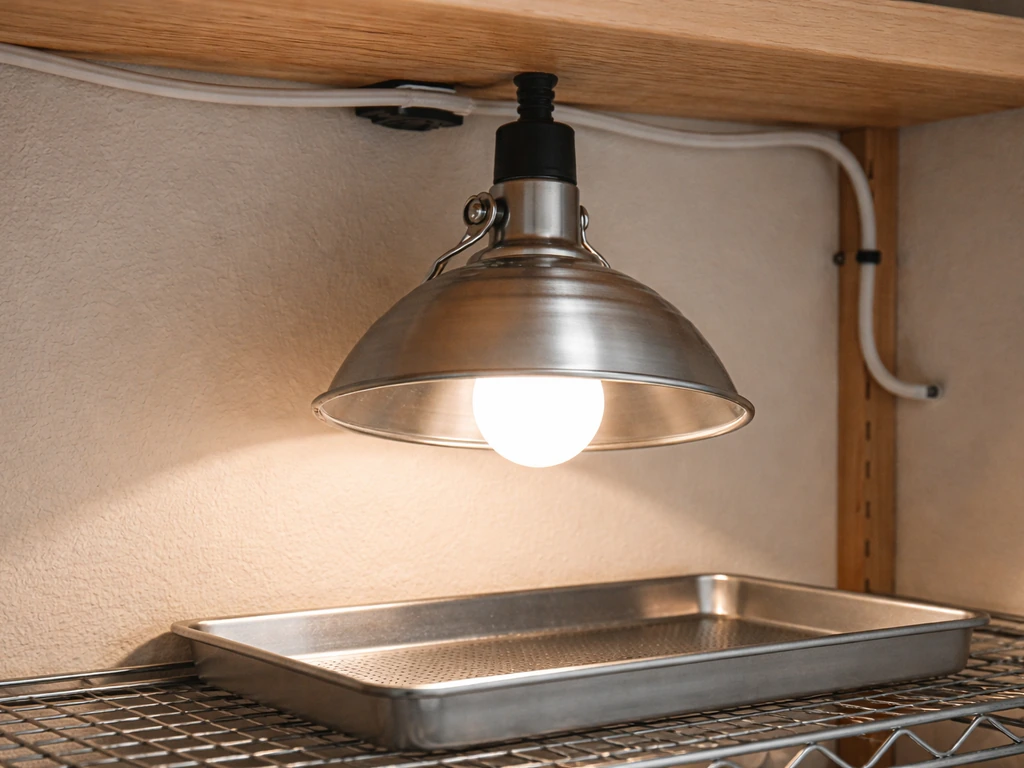
Growing with household bulbs in a small space introduces some risks that are worth taking seriously, especially since grow setups often involve water, humid air, and improvised fixtures.
Heat and fire risk
Incandescent and halogen bulbs run extremely hot and should not be used in enclosed reflectors or placed near flammable materials like cardboard grow boxes or fabric. CFLs and LEDs run cooler but can still overheat in totally enclosed fixtures, which reduces their output and shortens their lifespan. If you're building a DIY grow cabinet, leave ventilation gaps and keep bulbs away from reflective material that traps heat against the bulb base.
Electrical safety
Water and electricity are the core risk in any indoor grow. Don't run extension cords under rugs or through tight spaces, and avoid daisy-chaining power strips. The U.S. Consumer Product Safety Commission specifically flags improperly rated extension cords as a fire and shock hazard. Use a grounded outlet, a properly rated power strip with surge protection, and keep all electrical connections away from your watering area. Timers should be rated for the total wattage of everything plugged into them.
Troubleshooting checklist
If your plants aren't growing well, run through this before assuming it's a nutrient or pest problem. Light is the most common bottleneck in a household-bulb setup:
- Check light distance: Is the bulb within the recommended range for the growth stage? CFLs should be 2–6 inches from canopy.
- Check total output: Are you running enough bulbs? One 23W CFL is almost never enough for a cannabis plant past the seedling stage.
- Check the timer: Is it actually cycling correctly? Plug a lamp into it and watch it for a full cycle if you're unsure.
- Check for light leaks: During the dark period, is the room or cabinet truly dark? Even small light leaks can interrupt photoperiod flowering.
- Check bulb temperature: Touch the base of the bulb after an hour of running. If it's uncomfortably hot, the fixture may be restricting airflow and shortening bulb life.
- Check plant color and structure: Pale yellow-green with stretching almost always means more light is needed. Dark green compact growth means light is adequate.
The broader question of whether weed can grow without light at all (it can't, for the obvious photosynthesis reason) is a separate topic, but it reinforces the point here: light is the single most critical input in an indoor grow, and getting it right is worth the investment. If you're curious about the absolute minimum light cannabis needs to survive versus thrive, that's worth exploring on its own. Duckweed can grow in low-light conditions, but without any light it will not thrive can duckweed grow without light. For now, the practical takeaway is this: use what you have for seedlings, plan to upgrade before flowering, and pick autoflowering strains if you want the most forgiving possible grow with limited light.
FAQ
If I start seedlings under regular bulbs, can I switch to real grow lights later without ruining the plants?
Yes, but switch gradually if you can. Make the change over a few days by increasing distance or reducing intensity stepwise, because a sudden jump in PPFD can cause leaf stress (bleaching or tacoing). Keep the new light positioned so the top leaves are not getting direct, overly intense hotspots.
Will using a brighter bulb wattage actually fix the low-light problem, or is it mostly about PPFD?
It helps only if the extra power translates into usable plant light at the leaf. Two bulbs can have the same wattage but very different PPFD due to spectrum and efficiency, so focus on PPFD (or grow-light PPFD data) and canopy coverage, not just watts or lumens.
Can I use an “improvement hack” like a reflective box, foil, or cardboard to make regular bulbs work better?
Reflectors can improve uniformity, but they do not create missing intensity. Use reflective material to reduce dead spots, not to compensate for a fundamentally underpowered setup. Also avoid trapping heat against bulb bases, CFLs especially, since enclosed reflective cabinets can overheat and dim the effective output.
What’s a safe distance for CFLs and LEDs from the plant, and how do I tell if they are too close?
Use heat as your guide, not just distance charts. If the bulb base or fixture is too hot to touch comfortably for more than a few seconds, increase spacing and improve airflow. Watch the leaves for bleaching or curling, and check internode stretch, slow growth, or pale foliage as signs the light is either too weak or too intense.
Are warm-white (2700K-3000K) bulbs completely unusable for cannabis, even for veg?
They are usually weak for compact veg because the blue component is limited, which increases stretching risk. They can still keep seedlings alive, but if you only have warm-white, expect looser internodes and slower growth, so you should position the light closer (within heat limits) and consider a cooler option for the vegetative stage.
If I can’t meet 12/12 PPFD with regular bulbs, will autoflowers give dense buds, or just “some flowers”?
Autoflowers are more tolerant of low intensity and timing, but they still need sufficient PPFD to build thick resin. With regular bulbs you may get harvestable buds, often smaller and less potent than expected, but it will generally be more consistent than photoperiod plants trying to flower under the same low-light conditions.
How many bulbs is “enough” if I’m using CFLs, and should I spread them out or stack them?
More bulbs can help, but spacing matters for canopy coverage. Cluster bulbs to reduce distance to the leaves, aiming for relatively even illumination across the top canopy rather than one bright hotspot. A single CFL rarely covers enough area at useful PPFD, so you typically need multiple bulbs arranged around the plant rather than one positioned dead center.
Can I rely on lux readings from a phone app to confirm my setup will work for weed?
Usually not reliably. Lux is weighted for human vision and can mislead badly when spectra differ from daylight. If you do measure, choose an app that lets you match bulb type or estimate PPFD more directly, and validate your results with plant response, like whether leaves are staying compact during veg.
My plants are stretching and leaves look pale, does that mean I should add nutrients or change light first?
Change light first. In low-intensity household setups, pale leaves and rapid stem elongation are common signs of insufficient PPFD. Nutrients can mask symptoms temporarily, but they cannot replace light energy needed for photosynthesis. After adjusting light distance, spectrum (more cool/daylight), and schedule, reassess feeding.
Will running the lights longer than recommended (for example, 24 hours on) improve growth under regular bulbs?
Not necessarily, and it can backfire. Longer photoperiods can increase light exposure, but many plants still need a practical intensity to benefit. Excessive light hours combined with low-quality spectrum can also increase stress and slow overall development. For seedlings, stick near the common 18-20 on approach, and for autoflowers you may run longer, but keep an eye on heat and leaf condition.
What wiring or safety mistakes are most common when people DIY a household-bulb grow cabinet?
Daisy-chaining power strips, using extension cords not rated for the load, and placing fixtures near wet areas are the big ones. Also, enclosed cabinets that lack airflow can overheat CFLs and shorten their lifespan while reducing output. Keep electrical connections away from watering, use grounded, properly rated gear, and ensure ventilation gaps near the bulbs.