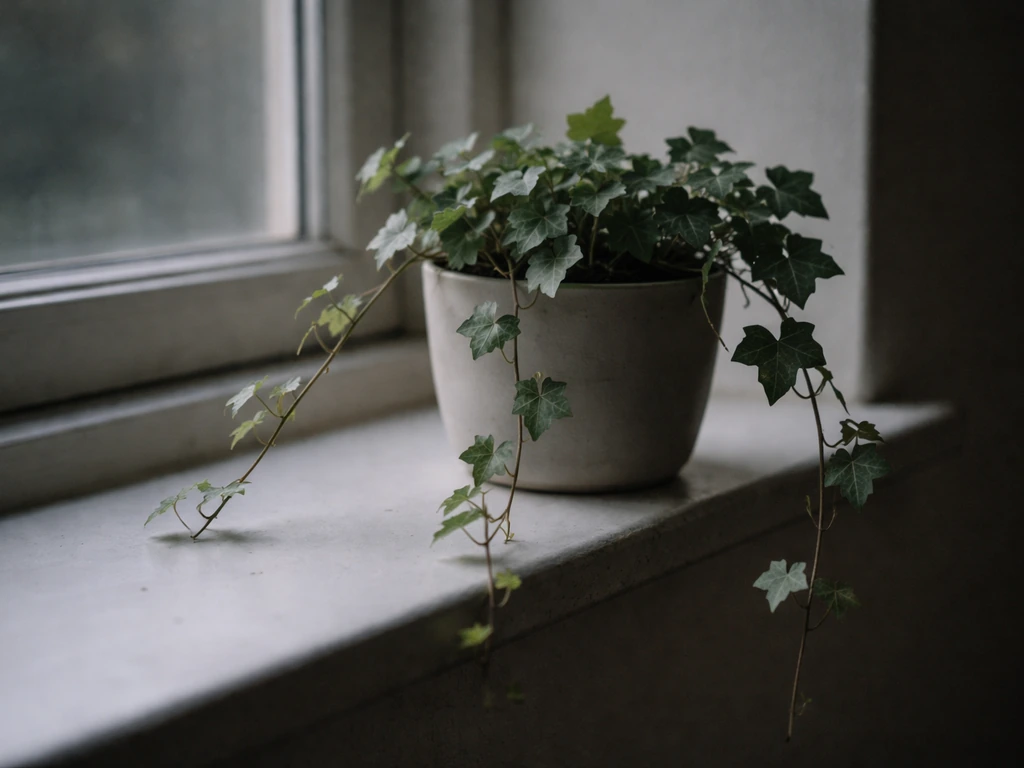
English ivy (Hedera helix) can survive in low light, but it won't thrive there the way it does near a bright window. Devil's ivy, which is actually pothos (Epipremnum aureum) and not a true ivy at all, handles low light a bit better. Both plants will stay alive in dim conditions, but 'alive' and 'growing well' are two very different things. Here's exactly what to expect, what you can do to improve their odds, and when it makes more sense to just switch plants.
Can English Ivy Grow in Low Light? Shade Guide
Marcus Hartley
24 Apr 2026
Wait, are English ivy and devil's ivy the same plant?
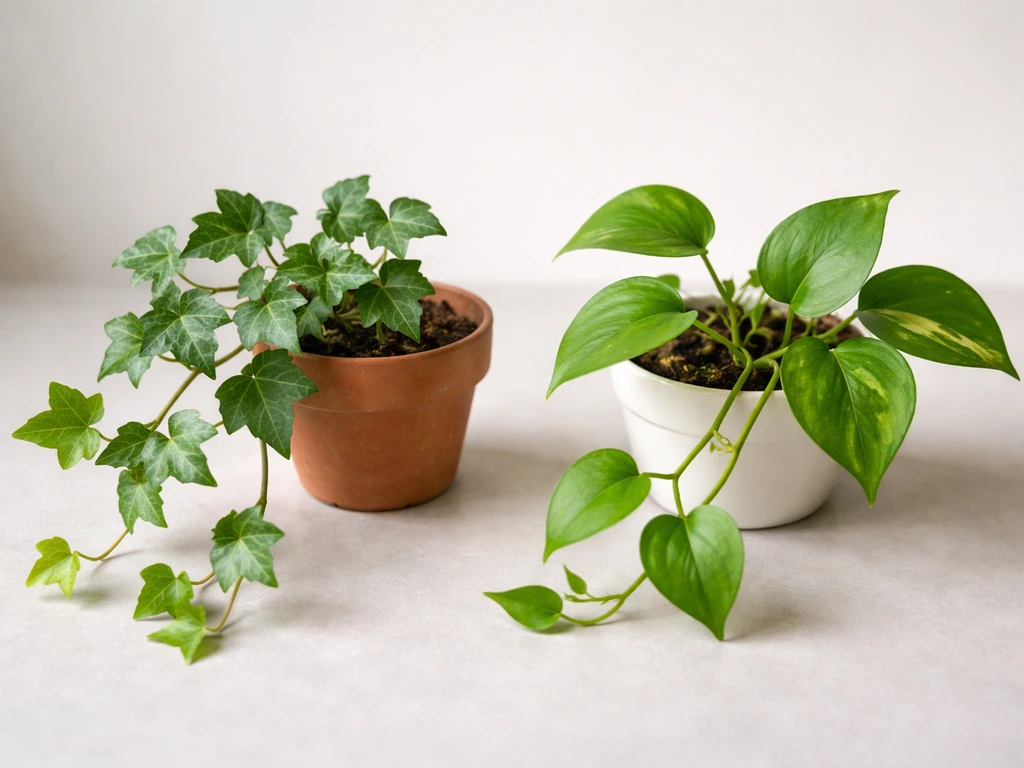
No, and this mix-up causes a lot of confusion. English ivy is Hedera helix, the classic trailing vine with the distinctive lobed leaves. Devil's ivy is a nickname for pothos (Epipremnum aureum), a completely different species from Southeast Asia. The 'devil's ivy' name stuck because pothos is so hard to kill it seems almost indestructible even in the dark. They look nothing alike up close, but both trail attractively, which is probably where the confusion starts. If someone tells you 'devil's ivy loves low light,' they're talking about pothos. If you actually have English ivy, that's a different situation entirely.
What 'low light' actually means indoors
Most people use 'low light' to mean 'not in direct sun,' but that covers an enormous range. True low light, the kind that actually challenges plants, is roughly 25 to 75 foot-candles (fc) of illuminance at the leaf surface. Penn State Extension puts the common baseline for low light at around 100 fc. For context, a well-lit office or a spot 8 to 10 feet from a south-facing window might measure 75 to 150 fc, while a north-facing room interior or a hallway might sit at 25 fc or below. One foot-candle is approximately 10.76 lux, so if you have a basic lux meter on your phone or a cheap handheld one, you can multiply lux readings by 0.093 to get foot-candles.
Without any meters, here's a rough rule: if you can comfortably read a book without turning on a lamp during the day, you have enough light for shade-tolerant plants. If you need artificial light to see clearly, your space is genuinely dark and most plants, including both ivy and pothos, will struggle long-term. A north-facing window with no obstructions outside is usually the minimum workable setup for either plant.
What to realistically expect in low light
English ivy in low light
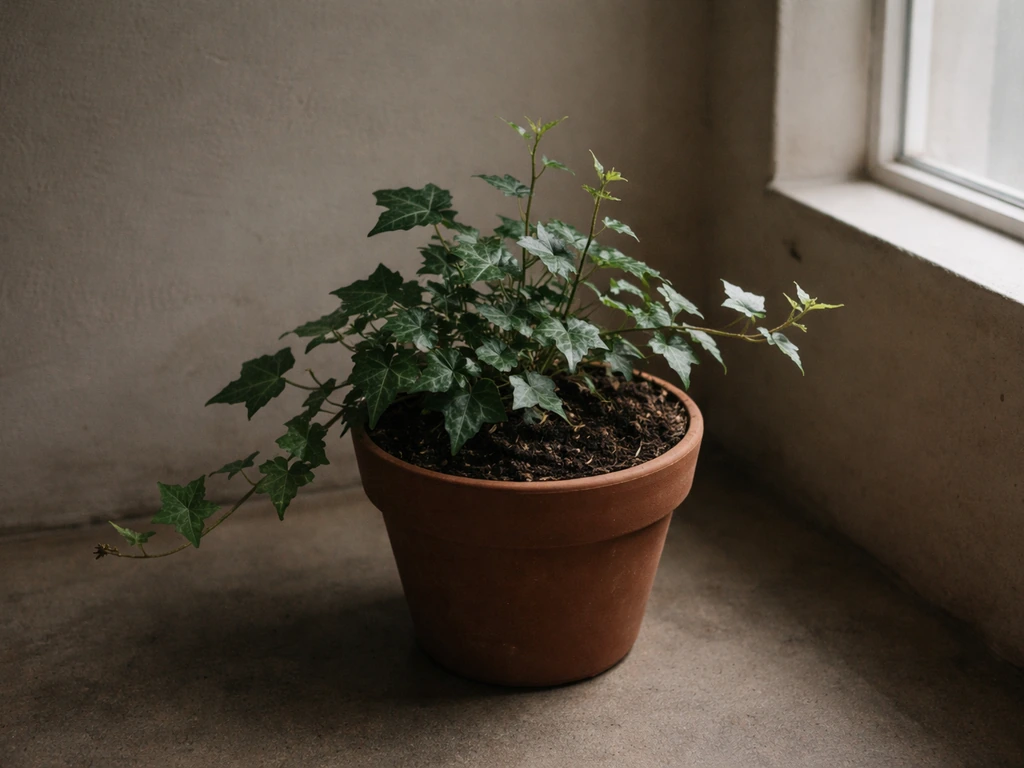
English ivy tolerates low light better than many other plants, but its behavior changes noticeably. Growth slows significantly, sometimes to a near standstill in winter. The vines become leggy, with longer gaps between leaves as the plant stretches toward whatever light it can find. Leaves may come in smaller than normal. In very dim conditions, you'll start seeing yellowing and leaf drop, which are the plant's way of shedding tissue it can no longer support through photosynthesis. The Sill notes these as clear stress signals. English ivy also tends to become more vulnerable to pests like spider mites when it's stressed by low light, partly because the plant's natural defenses are weaker.
Pothos (devil's ivy) in low light
Pothos genuinely earns its 'unkillable' reputation in low light. It can survive in conditions that would kill most other houseplants. That said, in true low light (under 75 fc), pothos stops producing variegation. Variegated cultivars like Golden Pothos or Marble Queen will revert to plain green because the plant is conserving every bit of chlorophyll it has. Growth slows, leaves come in smaller, and the vines stretch. It won't die quickly, but it won't look great either. Penn State Extension’s guidance notes that pothos can survive in low light for quite some time, but over time it will lose desirable leaf qualities such as brightness and variegation depending on the cultivar lose desirable leaf qualities like variegation or brightness. MSU Extension includes pothos in low-light plant guidance, but 'low light tolerant' in extension literature usually means it survives, not that it's a centerpiece.
How to give low-light ivy the best chance
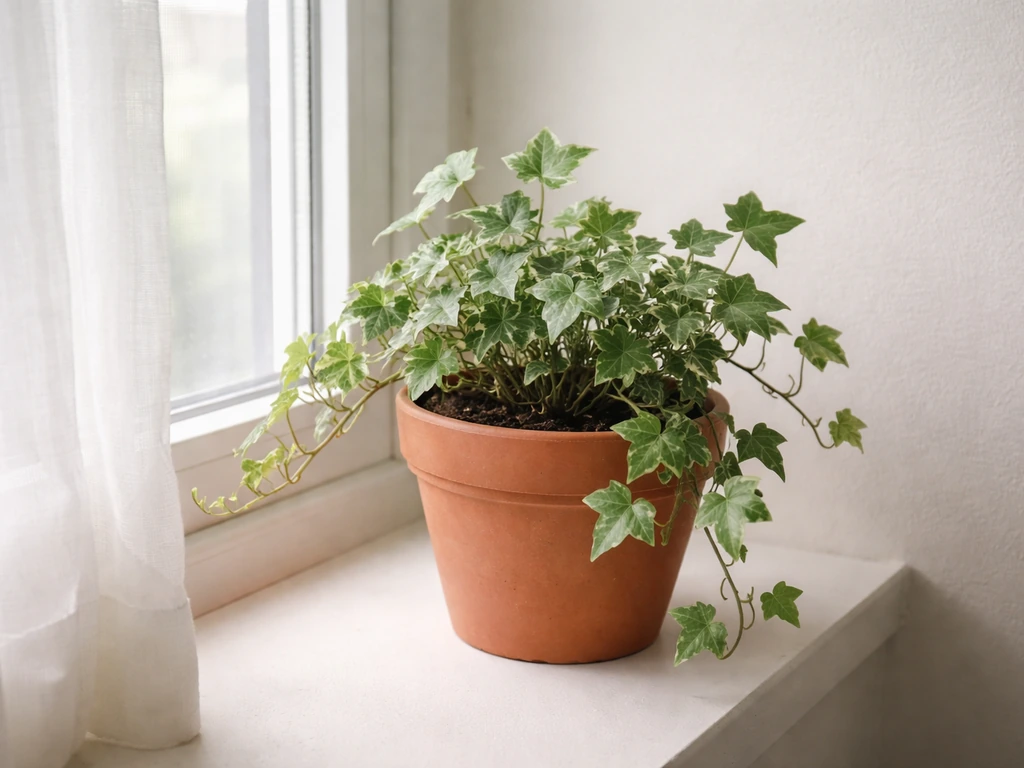
You can squeeze a lot more performance out of both plants in marginal light conditions with a few smart placement choices. Missouri Extension recommends north windows and light diffused through a sheer curtain as a practical minimum for foliage plants. Here's how to work with what you have:
- Place the plant as close to the window as possible. Light intensity drops off fast with distance, roughly following an inverse square relationship. Moving from 4 feet to 2 feet from a window can quadruple the light at the leaf surface.
- North-facing windows are your best bet in a genuinely dim space. East-facing windows with gentle morning sun are even better for English ivy, which prefers cool, indirect light over hot afternoon exposure.
- If you have a sheer curtain on a south or west window, that diffused light is often more than adequate and avoids leaf scorch on ivy, which can burn in direct afternoon sun.
- Rotate the plant a quarter turn every week or two. This prevents one-sided growth and makes sure all the foliage gets some exposure rather than just the side facing the window.
- Keep the leaves clean. Dust on the surface of leaves physically blocks light from reaching the chlorophyll. Wipe leaves with a damp cloth every few weeks, especially on English ivy's textured foliage.
- Don't block the window with other objects or furniture. It sounds obvious but even a sheer pile of books on a windowsill can cut available light noticeably.
MSU Extension also suggests an acclimation approach: grow the plant in better light for a season, then move it to a lower-light decorative spot for a period. The plant banks energy when conditions are good, which helps it coast through a dim stretch. This works better for short-term display than permanent placement in a dark corner.
Using grow lights when your space is truly dark
If your space genuinely doesn't have a usable window, grow lights are the straightforward fix. University of Maine Extension puts it simply: grow lights can make every day sunny for houseplants, eliminating the limitations of low natural light entirely. The good news is you don't need anything expensive or complicated for ivy or pothos.
What type of light to choose
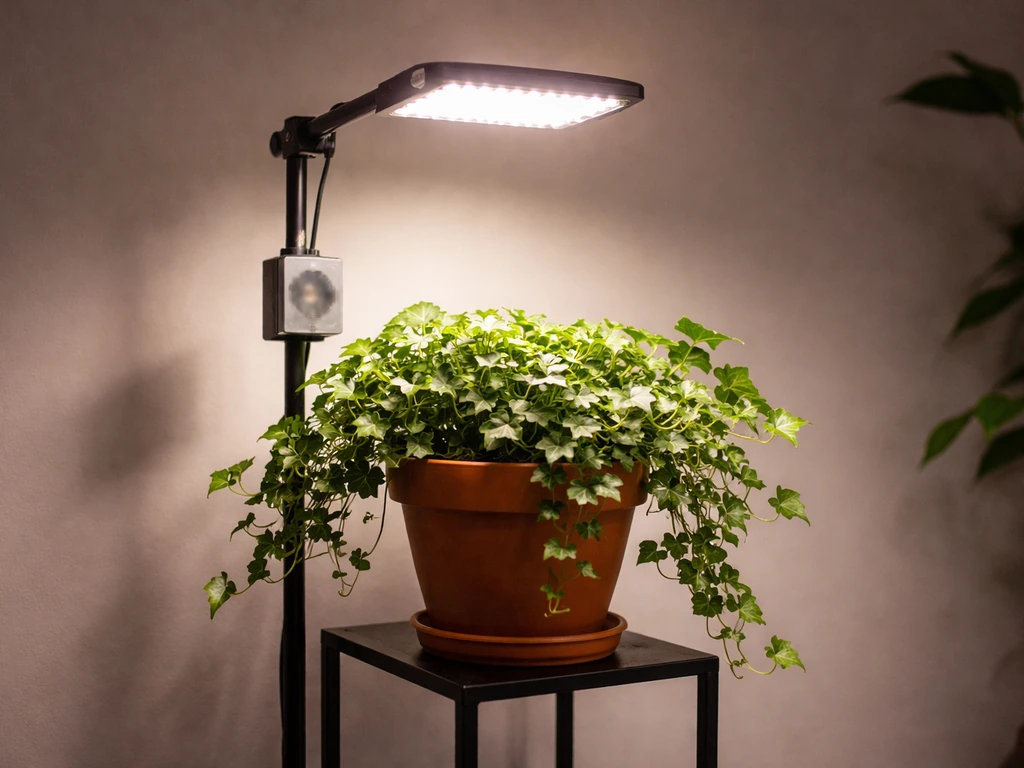
For foliage plants like English ivy and pothos, a full-spectrum LED grow light is the best choice. LEDs run cool, use less electricity than fluorescent tubes, and last longer. You don't need a specialized plant light with a purple/pink glow. Any good-quality full-spectrum LED (5000K to 6500K color temperature) works well for foliage growth. A 15 to 30-watt LED panel or bulb is more than enough for a single plant or a small shelf.
Distance and placement
For shade-tolerant plants like ivy and pothos, you're targeting a PPFD (photosynthetic photon flux density) of roughly 50 to 150 micromoles per square meter per second at the leaf surface, based on University of Maine Extension's houseplant PPFD guidance. In practical terms, that means placing a standard LED grow bulb about 12 to 18 inches above the plant. Missouri Extension recommends placing fluorescent lights close to plants for best results, and the same principle applies to LEDs. If you notice the leaves are pale or bleached, move the light farther away. If growth is slow and leggy, move it closer.
Daily light schedule
Both English ivy and pothos do well with 12 to 16 hours of supplemental light per day. Set a timer so you don't have to think about it. Using the DLI formula (DLI = 0.0036 x PPFD x light hours), a PPFD of 100 µmol/m²/s for 14 hours gives a daily light integral of about 5 mol/m²/day, which is plenty for shade-tolerant foliage plants. Running the light longer makes up for lower intensity if your bulb is small. A simple plug-in outlet timer costs a few dollars and handles the whole schedule automatically.
Adjusting care for low-light conditions
Low light changes how a plant uses water, nutrients, and energy. If you keep caring for a dim-spot plant the same way you'd care for one near a sunny window, you'll create problems. Here's what to adjust:
- Water less frequently. Plants in low light photosynthesize slowly, which means they take up water more slowly too. The soil stays wet longer, and overwatering in low light is one of the fastest ways to lose either plant to root rot. Check the top inch or two of soil before watering. If it's still damp, wait.
- Cut back on fertilizer. A plant that's barely growing doesn't need much food. Fertilizing a slow-growing plant in low light can lead to salt buildup in the soil without the plant being able to use the nutrients. Feed at half strength, and only during spring and summer when there's at least some active growth.
- Keep humidity moderate. English ivy in particular appreciates some humidity, roughly 40 to 60 percent. Dry indoor air plus low light is a stressful combination. A small tray of pebbles and water under the pot or a nearby humidifier helps without risking overwatering.
- Improve air circulation. Stagnant air in dark corners encourages fungal problems and makes spider mites worse. A small fan on low, even just running a few hours a day, makes a real difference for English ivy.
- Watch for pests more closely. Stressed, low-light plants attract spider mites (ivy especially), fungus gnats from moist soil, and scale. Check the undersides of leaves weekly and treat early with insecticidal soap if you spot anything.
Signs it's time to move or switch plants
Both plants will tell you when they've had enough. With English ivy, watch for persistent yellowing that spreads even after you've corrected watering, consistent leaf drop without obvious cause, and new growth that's extremely small and pale. With pothos, watch for vines that produce almost no new leaves over months, full reversion to plain green on a variegated cultivar, and mushy stems near the soil. If you see these signs after trying better placement, a grow light, and adjusted watering, the honest answer is that your space is too dark for these plants to be happy long-term.
At that point, you have two options: add a grow light on a timer (genuinely the simplest fix for a dark space), or switch to plants that are even more shade-tolerant. Some plants that handle truly low light better than English ivy include:
- ZZ plant (Zamioculcas zamiifolia): handles near-darkness and neglect better than almost any other houseplant
- Cast iron plant (Aspidistra elatior): lives up to its name in dim, drafty, dry conditions
- Dracaena: several varieties tolerate low light well and stay attractive
- Chinese evergreen (Aglaonema): one of the most reliable low-light foliage plants, with some striking varieties
- Snake plant (Sansevieria): another near-indestructible option for genuinely dark spots
Pothos already sits near the top of the shade-tolerant list, so if your pothos is struggling, a grow light is almost certainly the better path than switching species. For English ivy, if the spot is below 50 fc and you can't add supplemental light, switching to a Chinese evergreen or ZZ plant will save you a lot of frustration. It's worth noting that other common houseplants like dieffenbachia and fittonia are sometimes marketed as low-light options, but they have their own specific light requirements and failure modes worth understanding before you commit. That said, can fittonia grow in low light depends heavily on conditions, so it helps to understand what light it really needs before you buy fittonia are sometimes marketed as low-light options.
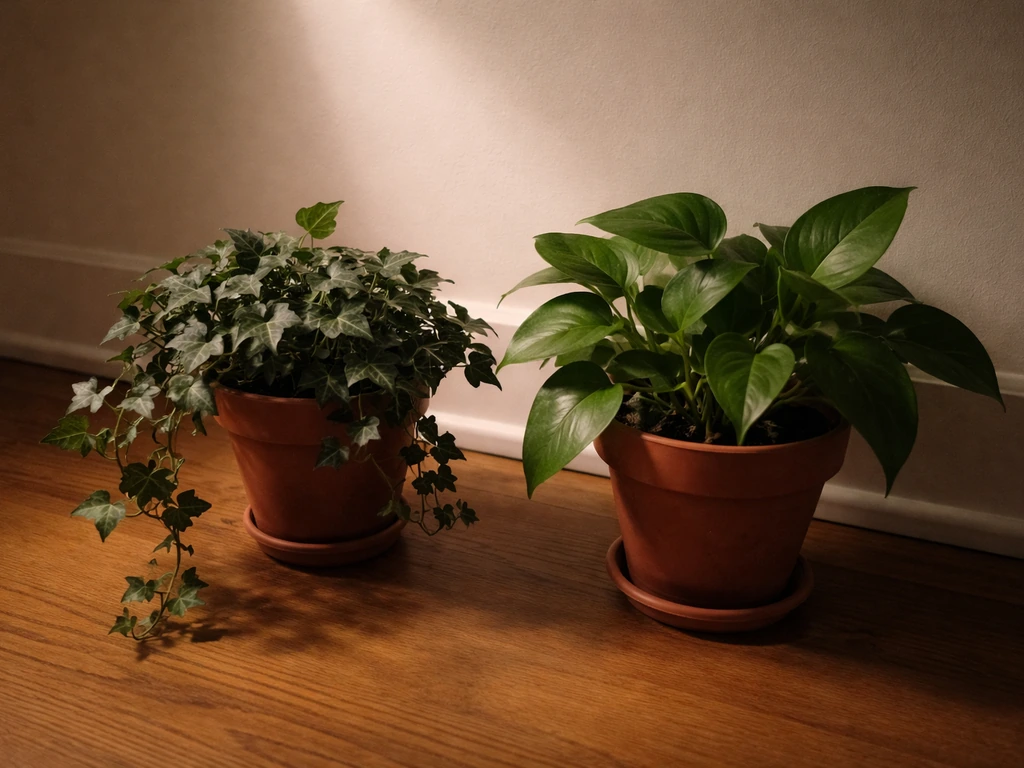
Quick comparison: English ivy vs. pothos in low light
| Factor | English Ivy (Hedera helix) | Pothos / Devil's Ivy (Epipremnum aureum) |
|---|---|---|
| Minimum usable light | ~50–75 fc | ~25–50 fc |
| Growth speed in low light | Very slow, leggy | Slow, but persists |
| Leaf changes | Smaller leaves, yellowing, drop | Smaller leaves, loss of variegation |
| Overwatering risk | High (root rot) | Moderate |
| Pest risk in low light | High (spider mites) | Moderate |
| Responds well to grow light? | Yes, noticeably | Yes, strongly |
| Overall low-light verdict | Tolerates it, doesn't love it | Genuinely low-light tolerant |
Both plants are worth trying in a marginally lit space, especially with a grow light on a timer. But go in with realistic expectations: you're managing decline less than you're growing a thriving plant. Get the light right first, adjust the watering, and give it 4 to 6 weeks before deciding if the spot is working. Fiddle leaf figs can also struggle in low light, so make sure you match their light needs before expecting steady growth can fiddle leaf figs grow in low light. A common question is whether a can ficus grow in low light, and the answer depends on how dim your space actually is can fiddle leaf figs grow in low light. That's usually enough time to see whether the plant is stabilizing or still slowly losing ground.
FAQ
What counts as “low light” for English ivy, and how can I estimate it without a meter?
English ivy is challenged most in roughly 25 to 75 foot-candles at the leaf (about 2.3 to 7.0 lux). Without a meter, use the practical test from the article: if you can read comfortably in daytime without turning on a lamp, your light is usually workable for shade-tolerant plants. If you need a lamp to read, plan on slow decline for English ivy unless you add supplemental light.
Can English ivy survive on a bathroom shelf with only indirect light?
Sometimes, but bathrooms often have dim corners that are still humid, which can mask stress until it shows up as yellowing and leaf drop. If there is no nearby bright window and no light from outside sources, consider adding a timer grow light for 12 to 16 hours to prevent the plant from getting stuck in a “survive only” mode.
Do variegated English ivy cultivars handle low light better or worse than standard green?
Worse, usually. Variegated forms need more light to maintain their pattern, so in low light they tend to green up and grow even more slowly than standard Hedera helix. If you have a variegated cultivar, use a closer LED position and watch for paleness or loss of pattern as a cue to increase light.
Should I rotate my English ivy in low light to keep growth even?
Yes. In dim rooms the vine naturally leans toward the light source, so rotating the pot a quarter turn every 1 to 2 weeks helps prevent lopsided growth and reduces the appearance of “leggy” stretching on one side. Rotation alone will not fix true low-light deficiency, but it improves the look while you adjust light.
How far should I keep an LED grow light from English ivy to avoid pale leaves?
Start around 12 to 18 inches above the foliage, then adjust based on color and posture. If leaves look pale, washed, or “bleached,” move the light closer or extend the photoperiod. If leaves scorch or curl tightly downward, move it farther away.
Will English ivy need less water in low light?
Usually yes. In dim conditions the plant uses less water because growth and photosynthesis slow down, so the soil stays wet longer. A common mistake is watering on the same schedule as a brighter spot, which increases the chance of root issues. Instead, water only after the top portion of the potting mix dries and confirm with finger testing.
My English ivy is dropping leaves, but the soil isn’t bone dry. What else could be going on?
Low light can cause leaf drop even when watering seems “reasonable.” Another common contributor is inconsistent watering (alternating wet and dry), which is harder for stressed plants to tolerate. Check that drainage is adequate, then verify light first (placement and timer grow light if needed) before changing only the watering routine.
If my English ivy doesn’t grow for months in low light, is it dead?
Not necessarily. In winter or deep shade, it may pause growth and then either stabilize or keep shedding leaves. The decision aid from the article still applies: if you see persistent yellowing and continued leaf drop after improving placement and correcting watering, that indicates the spot is too dark long-term.
What pest problems are most likely when English ivy is in low light?
Spider mites are the big one. Stress from insufficient light can weaken the plant’s resilience, making mite infestations more likely and faster to take hold. If you notice stippling or fine webbing, increase light and humidity moderately and inspect the undersides of leaves regularly, not just the top.
Can I use a grow light on a schedule, or should it run all day?
A schedule is best, 12 to 16 hours per day for ivy and pothos, using a plug-in timer. Running longer can partially compensate for lower intensity, but leaving the light on 24/7 usually increases stress and can disrupt normal rest patterns. Start with 14 hours (as discussed in the DLI example) and adjust by leaf color and growth rate.
If my apartment has no usable window, can I rely on grow lights alone for English ivy?
Yes. If you truly have no bright natural light, a full-spectrum LED on a timer is the straightforward solution mentioned in the article. Place the light close enough to reach the target PPFD range, and plan for periodic adjustments as the plant grows so leaf coverage stays consistent.
Is pothos truly a good “backup” if English ivy struggles in my low-light spot?
Often, yes. Pothos tolerates low light better and can keep vines looking decent longer. However, if your space is genuinely very dim, pothos may lose variegation and stop producing new leaves, so the practical backup plan is still a timer grow light if the plant looks worse over 4 to 6 weeks.