
Yes, some ferns genuinely can grow in low light indoors, not just survive in a corner looking sad. But the honest answer is that it depends entirely on which fern you have. A few species are legitimately shade-tolerant and will push out healthy new fronds in a dim north-facing room. Others, like Boston ferns, need more than most people expect and will slowly decline in true low light no matter how well you care for them. If you pick the right species and give them a couple of extras like humidity and consistent moisture, low-light fern growing is very doable.
Can Ferns Grow in Low Light? How to Succeed Indoors
Marcus Hartley
5 May 2026
What 'low light' actually means for ferns (and plants in general)
The phrase 'low light' gets thrown around loosely, so let's get specific. Light intensity is measured in foot-candles (fc). Illinois Extension puts true low light at around 75 fc, while University of Maryland Extension defines low light as the 25–100 fc range, which includes north-facing rooms and spaces that rely entirely on artificial lighting. To put that in practical terms: a spot 8–10 feet from a window in a well-lit room, or a north-facing windowsill in winter, is in that low-light zone. Bright indirect light, the sweet spot most indoor ferns actually prefer, sits higher, around 150–500 fc.
Why does this matter? Ferns use light to manufacture carbohydrates through photosynthesis. When light drops too low, they simply can't produce enough energy to grow. University of Minnesota Extension is pretty direct about this: without enough light, plants can't make the carbohydrates they need and will eventually die. So the goal isn't just keeping your fern alive in low light. It's keeping light intensity just high enough that the plant can still generate new fronds, not just tread water.
Most tropical ferns that we grow indoors are naturally adapted to filtered woodland light, think the understory of a forest where light is dappled and indirect. That's different from true deep shade. So when University of Minnesota Extension says tropical ferns do best in 'medium light,' like an east-facing window or a few feet back from a west or south window, they're describing that understory sweet spot. Low light is possible for certain species, but medium-low is a more realistic and safer target.
The fern types that actually handle dim spaces well
Not all ferns are created equal when it comes to shade tolerance. Here are the ones that genuinely work in low-to-medium-light indoor situations, along with honest notes on each.
| Fern Type | Light Tolerance | Best Placement | Notes |
|---|---|---|---|
| Maidenhair Fern (Adiantum) | Low to medium | North-facing window | Clemson Extension calls a north window 'ideal'; very fussy about humidity and moisture |
| Bird's Nest Fern (Asplenium nidus) | Low to bright indirect | North or east window | UGA Extension notes it tolerates low to bright conditions but never direct sun; one of the more adaptable choices |
| Holly Fern (Cyrtomium falcatum) | Low to medium | North or east window | Consistently listed as one of the most low-light-tolerant indoor ferns |
| Button Fern (Pellaea rotundifolia) | Low to medium | North or east window | More drought-tolerant than most ferns; a good beginner pick for lower-light spots |
| Boston Fern (Nephrolepis exaltata) | Medium (not truly low) | East window or bright indirect | Needs at least indirect sun; UGA Extension notes even winter placement requires some indirect sun; struggles in true low light |
| Staghorn Fern (Platycerium bifurcatum) | Bright indirect (not low) | Near a bright window | University of Wisconsin Extension emphasizes bright indirect light; not a good low-light candidate |
The bird's nest fern and maidenhair fern are probably my top two recommendations for genuinely dim spaces. Bird's nest is the more forgiving of the two. Maidenhair is beautiful but needs high humidity to go with that lower light, otherwise it drops leaves fast. If you want something extra tough, holly fern is underrated and handles neglect better than most.
Boston ferns deserve a mention here because they're so popular, but they sit at the edge of what works in true low light. If you're specifically trying to grow a Boston fern in a dim space, that topic has a lot of nuance worth exploring on its own.
Signs your fern isn't getting enough light
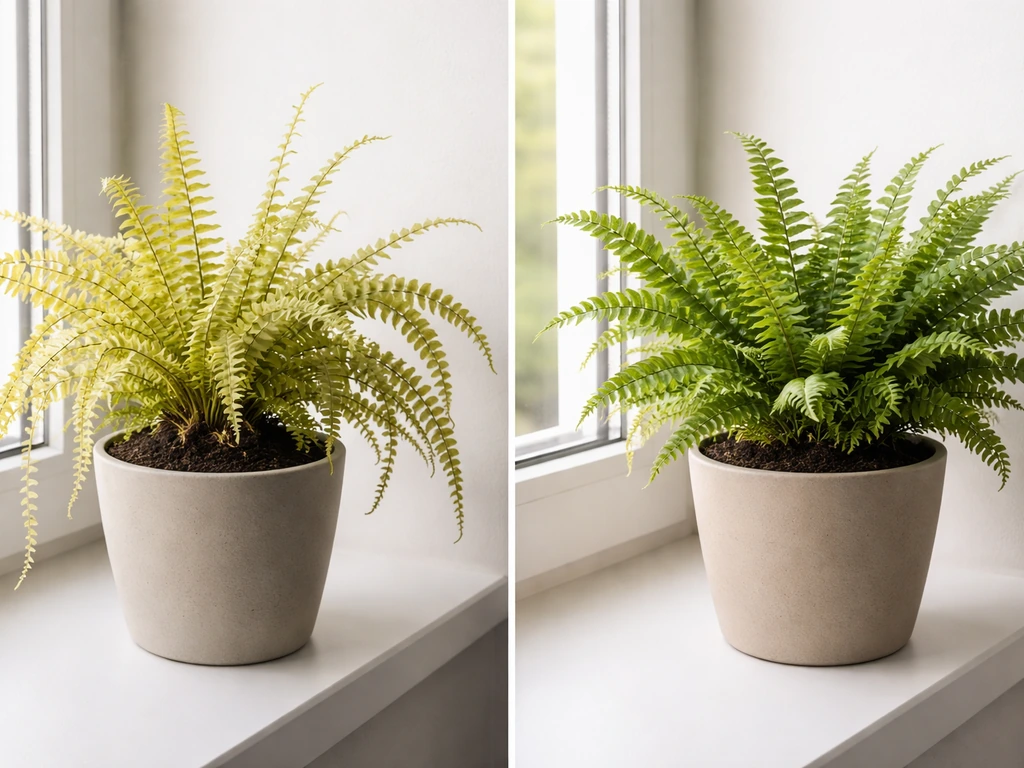
Ferns under low light stress show a pretty recognizable set of symptoms. The tricky part is that some of these overlap with overwatering or other problems, so you need to look at the full picture. Here's what to watch for:
- Pale, yellowish, or washed-out fronds: This is one of the clearest signals. University of Minnesota Extension explains that insufficient light impairs chlorophyll production, which is what makes leaves green. Pale new growth is a red flag.
- Slow or stopped new growth: If your fern hasn't pushed a new frond in weeks during the growing season (spring through summer), light is the first thing to check.
- Leggy, elongated growth: Fronds reaching toward a light source or growing unusually long and thin is the plant stretching for more light.
- Dropping fronds or lower leaf loss: When a fern can't photosynthesize enough to support all its fronds, it starts shedding the older ones.
- Brown tips without other obvious cause: UMN Extension specifically links brown tips and decline to insufficient light in tropical ferns.
- Increased vulnerability to fungal issues: Low light combined with poor airflow creates humid, stagnant conditions that can promote fungal problems. Penn State Extension notes that cultural conditions, including poor light and excess moisture, compound disease risk.
Quick self-check: is your spot too dim?
You don't need a light meter to do a rough check. Hold your hand about a foot above a piece of white paper in the spot where your fern lives. If you see a sharp, clear shadow, you've got decent light. A soft, fuzzy shadow means low light. No shadow at all? That's too dim for almost any fern to thrive. If you want a number, inexpensive lux meter apps on a smartphone can give you a foot-candle reading (divide lux by about 10.76). Aim for at least 75–100 fc at the plant level for shade-tolerant ferns.
Where to put your fern for the best low-light results
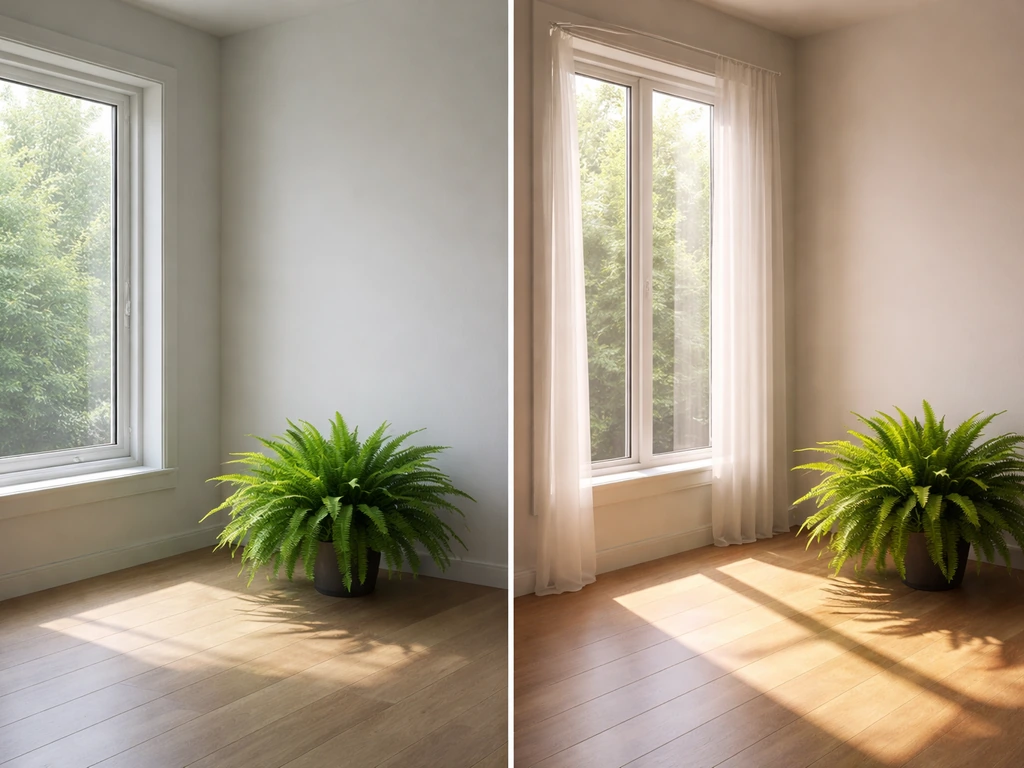
Window direction matters more than most people realize. North-facing windows provide consistent, soft indirect light with no direct sun exposure at all, which is actually ideal for maidenhair and holly ferns. East-facing windows are the sweet spot for most indoor ferns: gentle morning sun that fades to shade for the rest of the day. University of Connecticut's indoor ferns guidance recommends north or east-facing windows specifically for ferns, and University of Minnesota Extension agrees, calling an east window the go-to for medium-light plants.
West and south windows can work if you manage the intensity. Direct afternoon sun from a west or south window will scorch fern fronds fast. The fix is simple: move the plant back 3–5 feet from the glass, or hang a sheer curtain. University of Maryland Extension recommends both of these strategies for dialing down too-intense window light. University of Connecticut echoes the sheer curtain tip specifically for ferns. Even moving a fern 2 feet back from a bright window can drop it into a workable indirect-light zone.
- North window: Best for true low-light ferns like maidenhair and holly fern; no direct sun risk
- East window: Best all-around choice for most indoor ferns; gentle morning light, shade afternoon
- West window, 3–5 feet back or with sheer curtain: Works well for bird's nest fern and others that tolerate slightly more light
- Interior room with no window: Only workable with a grow light; natural light alone won't be enough
- Rotate your fern a quarter turn every week or two so all sides get equal exposure and growth stays even
When to add a grow light and how to set it up
If your space doesn't have a good north or east window, or you're growing ferns in a windowless office or bathroom, a grow light isn't just helpful, it's necessary. The good news is that ferns don't need the same intense light as fruiting plants or herbs. A modest LED or fluorescent grow light is enough.
LED vs. fluorescent for ferns
LED grow lights are my first recommendation. They run cooler, use less electricity, and last longer than fluorescent bulbs. A full-spectrum LED panel or even a simple LED grow bulb in a clamp-on reflector works well for one or two ferns. Fluorescent shop lights (T5 or T8 tubes) are a solid, affordable alternative that many indoor gardeners already have and they work fine for ferns. Avoid standard incandescent bulbs; they generate too much heat relative to the usable light they produce.
Distance and duration
Position your LED grow light 12–20 inches above the fern's fronds. This is the range most manufacturers including SANSI recommend, and it delivers usable intensity without heat stress. For fluorescent tubes, 6–12 inches is more typical since they're lower output. The key principle from University of Minnesota Extension is that intensity drops as you move the light farther away, so if your fern looks pale under a grow light, try moving it closer before assuming the light is too weak.
Run your grow light 12–14 hours a day. Both Iowa State University Extension and Mississippi State University Extension recommend this duration for good vegetative growth in houseplants. Using a simple outlet timer takes the guesswork out completely. Don't run lights 24 hours: University of Florida IFAS research shows that continuous light isn't better than 12–18 hours and can actually stress foliage plants.
| Setup Scenario | Light Source Recommendation | Distance from Plant | Daily Duration |
|---|---|---|---|
| North window with some natural light | Small LED grow bulb as supplement in winter | 12–18 inches | 10–12 hours |
| Interior room, no windows | Full-spectrum LED panel or T5 fluorescent | 12–20 inches (LED) / 6–12 inches (fluorescent) | 12–14 hours |
| East window, dark winter days | LED grow bulb on a timer | 12–18 inches | 10–12 hours to top up natural light |
| Office desk, no window | LED grow light or desktop grow lamp | 12–20 inches | 12–14 hours |
The other stuff that makes or breaks ferns in low light
Light is the foundation, but it's not the whole picture. In low-light conditions especially, the other care factors become more critical because the plant has less energy to recover from stress.
Humidity
Most tropical ferns want 50% relative humidity or higher. In a low-light indoor space, which is often also a room with dry air, this is one of the biggest challenges. University of Wisconsin Extension highlights humidity as a key difficulty for indoor ferns like staghorn. The simplest solutions: group ferns together so they create their own humid microclimate, set pots on a tray of pebbles and water (keeping the pot bottom above the waterline), or run a small humidifier nearby. Misting works short-term but doesn't maintain humidity consistently.
Watering and soil moisture
Here's a low-light trap a lot of people fall into: they water their fern on the same schedule regardless of light conditions. In low light, your fern uses water more slowly because it's photosynthesizing less. That means the soil stays wet longer, which dramatically raises the risk of root rot. University of Maryland Extension links root rot directly to excess moisture and emphasizes using well-draining media.
Penn State Extension also flags overwatering alongside low light as compounding causes of poor plant health. Penn State Extension also notes that preventing and addressing fungal problems is part of good indoor plant care, especially because cultural conditions strongly affect plant health indoors [Penn State Extension also flags overwatering alongside low light as compounding causes of poor plant health. ](https://extension. psu.
edu/pest-and-disease-problems-of-indoor-plants). In low light, always water based on soil feel rather than a fixed schedule. Stick your finger an inch into the soil; if it's still moist, wait.
Soil and pot choice
Use a well-draining potting mix, something labeled for houseplants with some perlite or orchid bark mixed in for extra aeration. Ferns in low light should never sit in soggy, dense soil. A pot with drainage holes is non-negotiable. Terracotta pots help wick excess moisture if overwatering is your weakness; plastic or glazed ceramic retains moisture longer, which suits ferns in drier conditions.
Temperature and airflow
Most indoor ferns are comfortable in the 60–75°F range that most homes already maintain. Avoid placing ferns near heating vents, radiators, or drafty windows, all of which dry them out quickly. University of Wisconsin Extension specifically calls out good air circulation as important for ferns. In low-light rooms that tend to be humid and still, a small fan running on low nearby helps prevent the stagnant air conditions that encourage fungal disease.
Fertilizing in low light
Go light on fertilizer in dim conditions. A plant that isn't growing much doesn't need or use much fertilizer, and excess fertilizer salts can burn roots. A half-strength balanced liquid fertilizer once a month during spring and summer is plenty. Skip fertilizing entirely in winter if your fern is in a naturally dark space with no grow light supplementation.
Your step-by-step plan for a low-light fern setup
Here's how to put it all together, whether you're starting fresh or trying to troubleshoot a struggling fern.
- Assess your light. Stand in your intended spot and do the shadow test (hand over white paper). If there's no shadow or only the faintest one, you'll need a grow light. If you see a soft shadow, you're in low-to-medium light and a shade-tolerant fern can work.
- Pick the right fern. For true low light, choose bird's nest fern, maidenhair fern, or holly fern. Avoid Boston fern and staghorn fern unless you have a genuinely bright indirect spot.
- Choose your window placement. North or east window is ideal. If you have a west or south window, move the fern 3–5 feet back or use a sheer curtain.
- Decide on grow light supplementation. If you have a north window that gets darker in winter, add an LED grow bulb on a timer set to 10–12 hours. If you have no window, use a full-spectrum LED panel or T5 fluorescent at 12–20 inches above the plant, running 12–14 hours daily.
- Set up humidity. Place the pot on a pebble tray with water, group with other plants, or run a small humidifier nearby. Aim for 50%+ relative humidity.
- Adjust your watering. Water only when the top inch of soil is dry. In low light, this will be less often than you think. Use a well-draining mix with perlite.
- Check for airflow. Make sure air isn't stagnant around your fern, especially in humid conditions. A small fan on low solves this.
- Monitor for improvement. New frond growth within 4–6 weeks of optimized conditions is your green light (pun intended) that the setup is working. Continued pale color or no new growth means the light needs to go up: move closer to the window, add a grow light, or increase grow light hours.
Troubleshooting checklist
- No new growth after 6+ weeks in growing season: Increase light intensity first (move closer to window or add/upgrade grow light)
- Pale or yellowing fronds: Almost always a light issue; check foot-candle level and increase if below 75 fc at plant level
- Brown tips on otherwise healthy fronds: Could be low humidity, low light, or irregular watering; check all three
- Fronds dropping frequently: Combination of low light and possible overwatering; let soil dry slightly more between waterings and boost light
- Mushy stems or base: Root rot from overwatering in low light; remove affected roots, repot in fresh well-draining mix, drastically reduce watering frequency
- Leggy, stretched growth: Plant is reaching for light; move it closer to the light source or add supplemental lighting
- Fungal spots or mold on soil/fronds: Improve airflow with a small fan and reduce watering frequency; low light plus stagnant humid air is a fungal invitation
One last honest note: if you're working with a space that gets almost no natural light and you're not willing to add a grow light, the fern options narrow significantly. In a related Reddit discussion, people also debate whether foot-candles can be used as a reliable indoor light target for houseplants, including mention of typical low-light ranges discussed by community members almost no natural light.
At that point, you might have better luck with plants that are genuinely engineered for deep shade, like pothos or cast iron plant, while you carve out a better-lit spot for your fern. That said, if you pick the right species, set up a modest grow light, and keep the humidity up, ferns in low-light homes are genuinely achievable. If you're still wondering about low-light options, can hornwort grow in low light?
is another related question worth checking as you compare plants for dim rooms. If you're curious about other leafy options, you may also wonder can bromeliads grow in low light, since they can sometimes handle dimmer rooms than people expect related question worth checking. I've grown bird's nest fern in a north-facing apartment bathroom with a grow bulb on a timer and it pushed out new fronds reliably.
It just takes a little more intentional setup than plopping the plant on a shelf and hoping.
FAQ
If my fern is surviving but not growing, does that still count as “low light success”?
In general, move ferns to the brightest spot you have (often an east or north window), and if you cannot keep light steady throughout the day, use a grow light on a timer. Watch for new fronds, not just leaf retention, because low-light “survival” is different from low-light growth.
Can I place a low-light fern a few feet away from a window and still get enough light?
Yes, but only if the light is truly reaching the plant. Window glass plus distance usually drops intensity a lot, and leafy plants also get shaded by surrounding objects. Measure or estimate where fronds sit, not where the window is, and expect that “a few feet back” can still be too dim for Boston fern and similar borderline species.
Will moving my fern from a dark corner to better light cause it to react badly?
Avoid abrupt changes. If you relocate a fern from dim to brighter light, do it gradually over 1 to 2 weeks (or start with a grow light and increase duration slightly). Sudden jumps can cause frond edge browning or a temporary slowdown as the plant adjusts.
How do I adjust watering when ferns grow in low light?
Water frequency often drops significantly in low light, and the “finger test” is usually more reliable than any schedule. If the soil stays moist for more than a few days, scale back watering and confirm you have drainage and a well-aerating mix, since soggy soil is what leads to root rot.
If I increase humidity with a humidifier, will my fern grow in low light that is too dim?
It helps, but it rarely solves the problem by itself. Humidity devices raise moisture in the air, but they cannot replace insufficient light. A fern in low light may still stall even at good humidity, so treat light first, then humidity.
Do ferns in low light need brighter light sometimes, or is constant dim light enough?
Not always. Some ferns tolerate dim conditions but still need periodic stronger light cycles to look their best. A practical approach is to keep constant “minimum usable light” with a grow light if needed, then let the plant rest in your normal room lighting otherwise.
Will a regular LED bulb work as a low-light grow light for ferns?
Yes, but ensure the grow light is the right type and positioned correctly. Standard desk lamps and cool-white bulbs are often weak for plant growth. A modest full-spectrum LED or fluorescent shop light, hung at the recommended height above fronds, is the safer choice.
How can I tell whether low light, overwatering, or another issue is causing my fern problems?
If the light is adequate, symptoms like pale fronds or slow growth point to other causes such as dryness, low humidity, compacted soil, or excess fertilizer. If symptoms appear after a change in watering or soil, treat that first, because overwatering and poor drainage are especially damaging when light is low.
Is air circulation really necessary for ferns in low light?
For most indoor ferns, yes, a nearby small fan on low can help prevent stagnant, fungal-prone air. Just avoid blasting air directly at delicate fronds, and keep the airflow consistent rather than intermittent gusts.
Should I fertilize my fern during low-light months or in a dark room?
Often, yes. In winter or in dark offices, even shade-tolerant ferns may stop producing fronds. Many people get into trouble by fertilizing a stalled plant, so use fertilizer only during active growth and at reduced strength, or skip entirely if you are running a short photoperiod.
How do I know if my grow light is too strong for a fern?
Too much light can scorch fronds, but in low-light setups the bigger risk is usually “wrong expectations.” If you see crisp, bleached patches, back the plant away or lower the light intensity by raising the light or using a timer shorter on the bright days. Keep the goal at healthy, steady new growth.
Are lux meter apps accurate enough to measure low-light conditions for ferns?
Using a lux-meter app can be helpful for a rough check, but app readings vary by phone model and placement. Use it consistently (same phone, same distance to the fern, same time of day), and adjust based on outcomes like frond color and new growth rather than chasing a single exact number.