
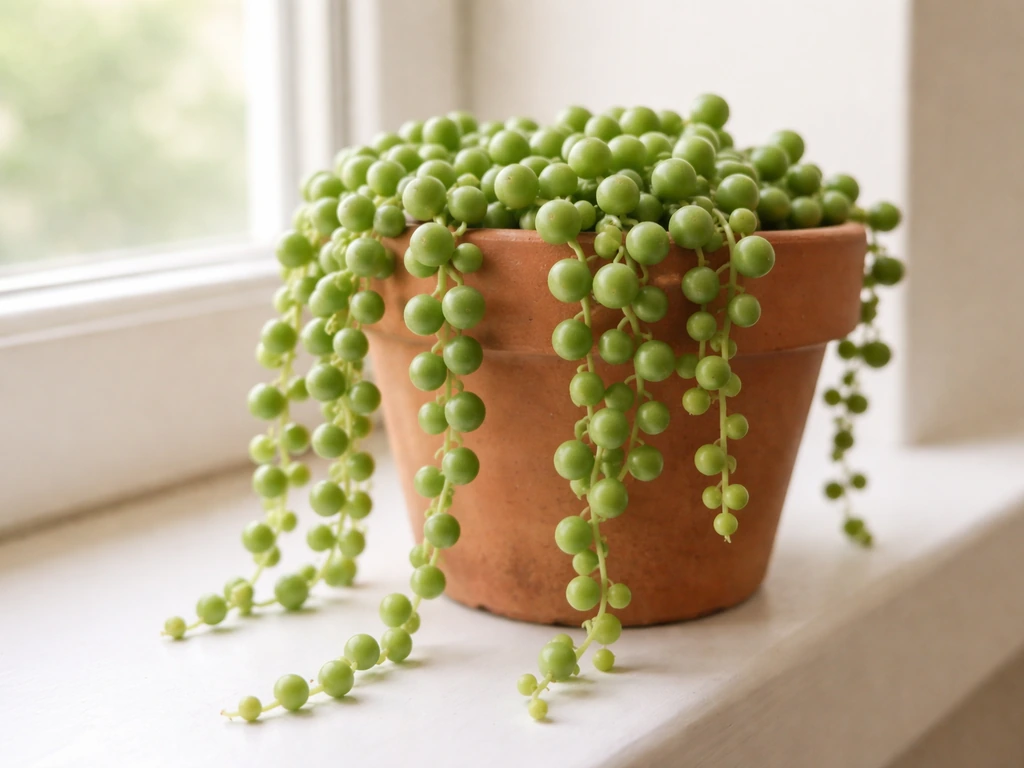
String of pearls can survive in low light for a while, but it won't actually grow well there. It's a succulent built for bright conditions, and in dim spots it stretches, shrinks, and slowly declines rather than producing those plump, evenly spaced pearls you're after. If your space is genuinely low light, you can keep one alive short term, but you'll need to either find the brightest spot you have or add a grow light to see real growth.
Can a String of Pearls Grow in Low Light? How Much Sun It Needs
Marcus Hartley
29 Apr 2026
What 'low light' actually means for string of pearls
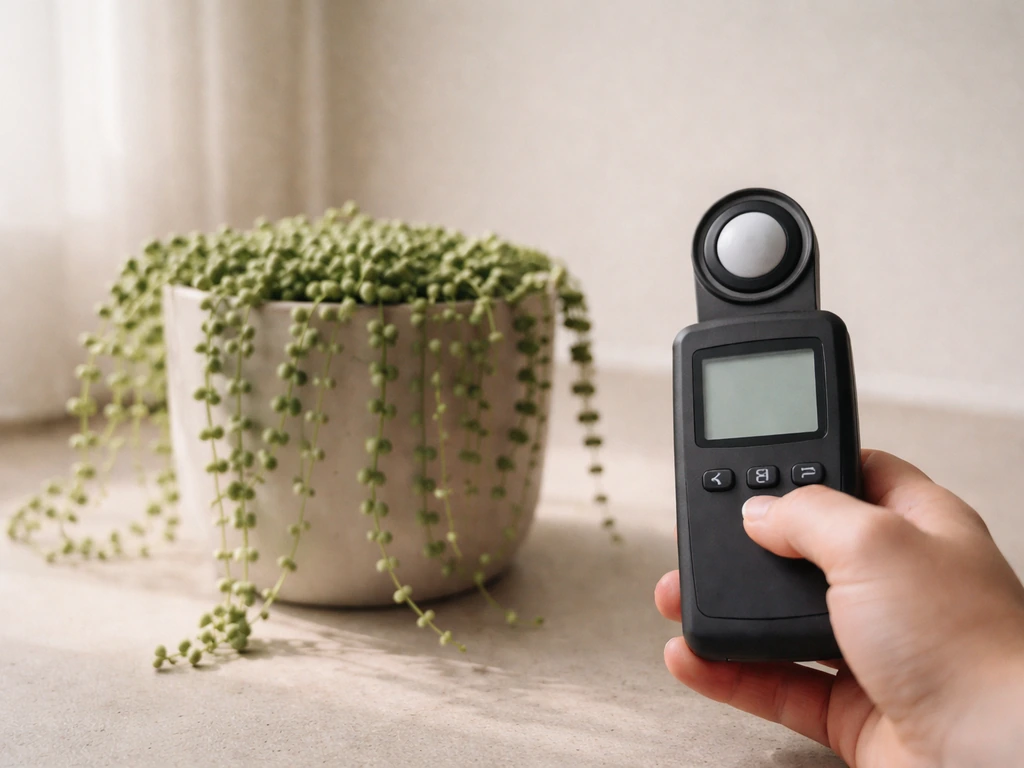
Before you can decide if your space works, it helps to put a number on it. Extension horticulturists generally define low light indoors as roughly 50 to 250 foot-candles (about 500 to 2,500 lux). That typically corresponds to a north-facing window, a spot several feet back from any window, or an office or basement without direct window access. If you've ever noticed a room feels comfortably lit to your eyes but your plants look sad, that's low light at work. Human eyes adapt to dim conditions very well; plants can't fake it.
String of pearls sits at the opposite end of the houseplant light spectrum from shade-tolerant foliage plants. It comes from arid, sun-drenched regions of South Africa, and its pearls are actually modified leaves with a specialized 'epidermal window,' a translucent strip that channels sunlight directly into the photosynthetic tissue inside. That structure is the reason it needs real light, not just ambient room brightness. Recommendations for healthy growth sit around 15,000 to 25,000 lux, which is firmly in the bright indirect to gentle direct sun range, not in low-light territory.
Survive vs. actually grow: the honest answer
Here's the real distinction worth making: string of pearls can stay alive in low light for months, sometimes longer, but it won't grow in any meaningful way. Growth will essentially pause. The pearls already on the plant may persist, but they'll shrink over time as the plant slowly burns through its stored energy. New growth will be spindly and stretched rather than full and compact. If you're hoping to watch those trailing strands get longer and lusher, low light won't deliver that. The plant is surviving, not thriving.
For real, sustained growth you want to be at the medium-to-bright end of the indoor light range: somewhere in the neighborhood of 2,000 lux on the low end, with 10,000 lux or more giving noticeably better results. That's a south or west-facing window with some direct morning or afternoon sun, or a bright east window where it gets gentle sun for a few hours. Low-light spots (north windows, rooms without south/west exposure) simply don't produce enough photons for the plant's specialized leaf structure to do its job.
Signs your string of pearls isn't getting enough light
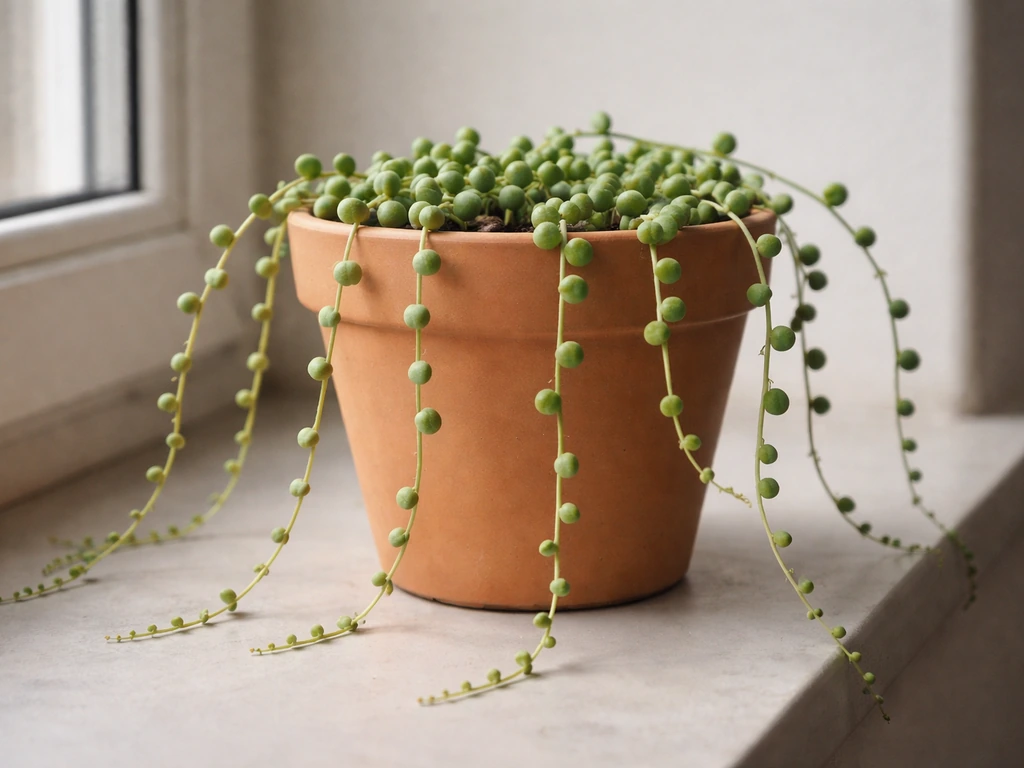
The plant is fairly honest about light stress if you know what to look for. Etiolation is the classic tell: stems stretch long and thin, and the gaps between individual pearls widen noticeably. Instead of a dense, cascading strand, the growth looks sparse and almost threadlike. The pearls themselves can also flatten or elongate, losing their round, bead-like shape, and the color shifts from a rich, waxy green toward a pale, washed-out hue. These aren't watering symptoms. They're the plant physically reaching for more light.
- Stems are long and thin with wide gaps between pearls (etiolation)
- Pearls are flattening, elongating, or looking smaller than usual
- Overall color has faded from deep green to pale or yellowish green
- New growth appears but is noticeably weaker and more widely spaced than established growth
- The plant hasn't grown at all in several months
One important diagnostic: if your pearls are shriveling, check the soil before assuming it's a light problem. Shriveled pearls plus dry soil points to underwatering or light-related stress. Shriveled pearls plus wet soil is a root rot warning and needs immediate attention. These look similar but require completely different fixes, so always check moisture first.
How much light string of pearls actually needs
Practically speaking, aim for a minimum of around 2,000 to 3,000 lux to maintain the plant without rapid decline, but genuine healthy growth kicks in above 10,000 lux. The sweet spot most care guides agree on is 15,000 to 25,000 lux for best results. In window terms, that means a south or west window where the plant gets at least a couple of hours of direct or near-direct sun daily, or a bright east window. If your brightest window tops out well below that, you're looking at a grow light situation.
| Light level | Approximate lux | Typical indoor location | String of pearls outcome |
|---|---|---|---|
| Low | 500–2,500 lux | North window, back of room | Survives short term, no real growth, gradual decline |
| Medium | 2,500–10,000 lux | East window, shaded south/west window | Maintains health, slow but possible growth |
| Bright indirect | 10,000–25,000 lux | South or west window, near glass | Thrives, active growth, plump pearls |
| Direct sun | 25,000+ lux | Unobstructed south window, outdoors | Excellent, but watch for scorch in sudden transitions |
Where to put it in your home for the best light
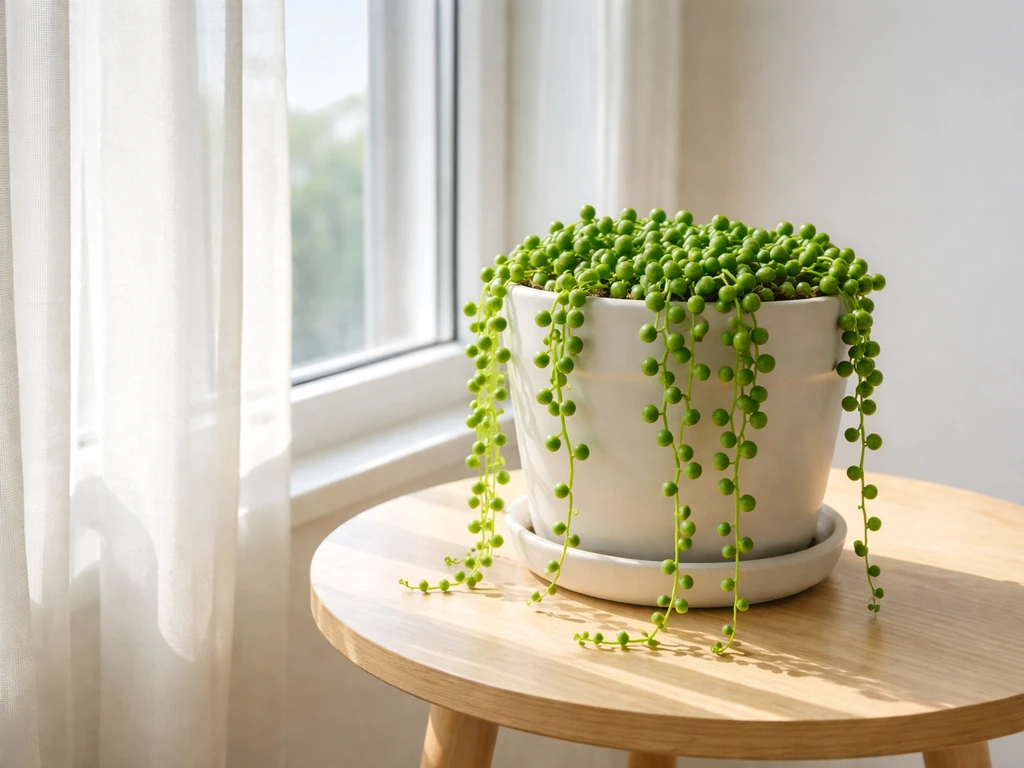
Your south-facing window is almost always the best option in the northern hemisphere. String of pearls does well in the bright zone right at or near the glass, and it can handle some gentle direct sun through a south window without burning, especially in winter. A west window is the next best choice, giving strong afternoon light. East windows work too, particularly if the sun exposure is unobstructed, though growth will be a little slower than on south or west.
North windows are where things get tricky. In most homes, a north window simply doesn't deliver enough light for string of pearls to do more than survive, and even that comes with limits. If you truly want it to grow, you’ll need enough light or a grow light, because low light usually only supports short-term survival. If that's all you have, place the pot as close to the glass as physically possible, use a clean, reflective surface (a light-colored shelf or white tray) to bounce ambient light back up toward the plant, and rotate it every week or two so all sides get equal exposure. These tricks help at the margins but can't fully compensate for a fundamentally dim location.
Also think about what's blocking light. Sheer curtains, trees outside the window, furniture between the plant and the glass, or shelves above the pot all reduce the lux reaching the pearls. String of pearls looks great in a hanging basket, and hanging it right in the window frame is a genuinely good placement strategy since it puts the plant at the maximum light point in the room.
Using a grow light when your space just isn't bright enough
This is where a lot of people feel hesitant, but grow lights for succulents don't need to be complicated or expensive. A simple LED grow light or even a full-spectrum fluorescent bulb can genuinely bridge the gap between a dim room and acceptable light levels for string of pearls.
LED vs. fluorescent: which to choose
LED grow lights are the better long-term choice. They run cooler, use less electricity, and last significantly longer than fluorescent options. Full-spectrum LED panels or LED strip lights with a color temperature around 5,000 to 6,500K work well for succulents. That said, a simple fluorescent shop light in the same color temperature range can still work fine if that's what you have available. For string of pearls specifically, you don't need a high-powered horticultural setup. A moderately powerful LED panel or even a desk-style grow light is plenty.
Placement distance and timing
For most LED grow lights, positioning the light 6 to 12 inches above the plant delivers a good intensity for succulents, though check your specific light's specs since output varies. Run it for 12 to 16 hours per day to compensate for low ambient light. Extension research on succulents generally targets a PPFD of around 100 to 200 micromoles per square meter per second for basic indoor growth, which most moderate LED grow lights can achieve at that distance. A plug-in timer (usually under ten dollars) takes the guesswork out of the daily schedule and keeps the photoperiod consistent, which matters for the plant's internal rhythms.
Watch the plant for the first couple of weeks after adding a grow light. If pearls start looking pale or bleached in a way that's different from the greening-up you'd expect, the light may be too close or too intense, and you can back it off a few inches. Signs of improvement, like new growth with tighter pearl spacing and richer color, usually show up within four to six weeks.
Troubleshooting by scenario
Different light situations call for different adjustments. Here's how to think through the most common ones:
| Your situation | The problem | What to do |
|---|---|---|
| North-facing window only | Too dim for healthy growth | Move as close to glass as possible, add a grow light, reduce watering frequency |
| South or west window but plant is set back 4+ feet | Lux drops sharply with distance | Move plant to within 1–2 feet of window or onto the sill itself |
| Office or basement with no natural light | Essentially zero usable sunlight | Rely entirely on grow lights, 12–16 hours/day, set a timer |
| Bright window but covered by sheer curtains | Moderate light reduction | Remove sheers or pull them back during the day, or move plant to the sill edge |
| Plant is stretching toward one side | Uneven light exposure | Rotate pot 90 degrees every 1–2 weeks for balanced growth |
| Pearls shriveling despite regular watering | Check soil: if wet, likely root rot; if dry, underwatering or light stress | Stop watering immediately if soil is wet, check roots; if dry, water deeply and improve light |
Adjusting your watering when light is low
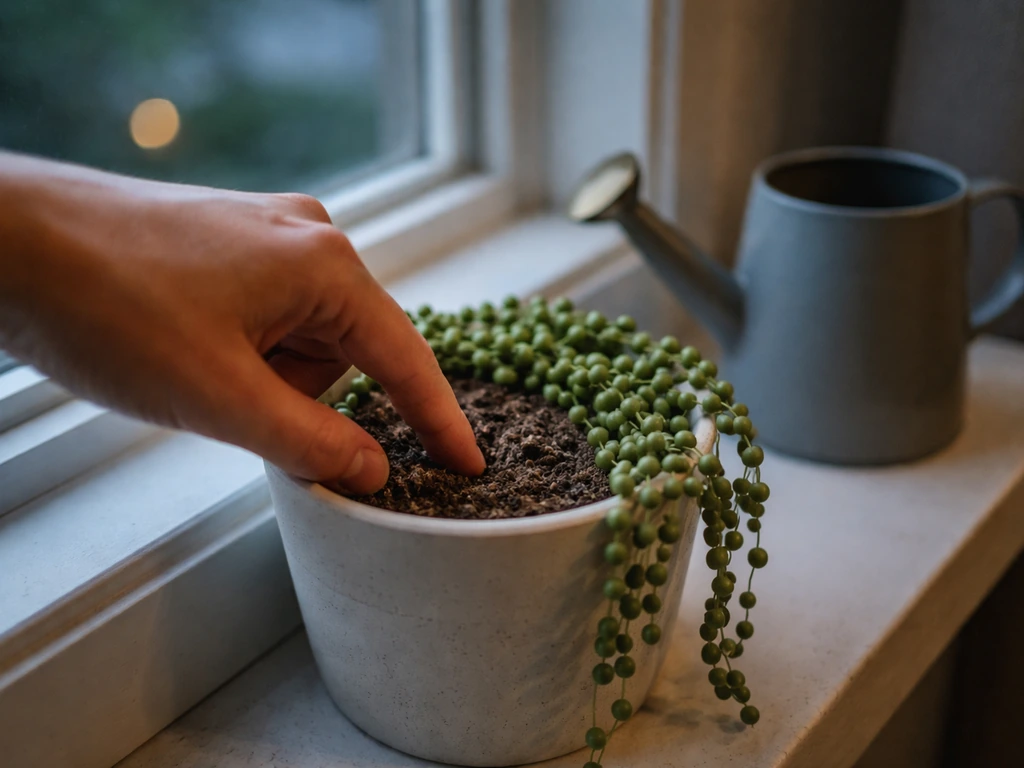
This is a big one that catches a lot of people off guard. String of pearls in low light isn't actively growing, so it's using almost no water. In Wisconsin Horticulture, University of Wisconsin, Madison recommends allowing the potting medium to dry out completely between infrequent waterings, with more frequent watering in summer and less in winter blank" rel="noopener noreferrer">cause root rot. If you want trailing growth instead, you may wonder whether a can string of hearts grow in low light, but it still depends on how dim your space truly is String of pearls in low light isn't actively growing. If you keep watering on the same schedule you'd use for a plant in a bright window, you're going to cause root rot. The soil stays wet longer because there's less evaporation and the roots aren't pulling moisture for growth. That combination is exactly the conditions root rot loves.
The fix is simple but requires a mindset shift: water based on the soil, not the calendar. Stick your finger two inches into the soil. If there's any moisture at all, wait. In a low-light situation, you might find yourself watering every two to three weeks or even less in winter. That feels extreme if you're used to weekly watering, but it's genuinely what the plant needs. Use a well-draining cactus or succulent mix, make sure the pot has drainage holes, and never let the plant sit in a saucer full of water.
The warning signs for rot are mushy, translucent, or yellowing pearls and stems that are blackening near the soil line. If you see those, pull the plant out of its pot and inspect the roots immediately. Trim any black or mushy roots, let it dry out, and repot in fresh dry mix. Catching rot early is the difference between saving the plant and losing it.
Realistic expectations and what to do next
String of pearls is genuinely one of the more light-demanding houseplants, and it's worth being honest with yourself about your space before committing. If you have a bright south or west window, you'll likely have success. If your home runs dim, a grow light makes this plant possible, but it does require that extra step. If you’re wondering can bird of paradise grow in low light, the answer is usually limited, because it generally needs much brighter conditions than most “indoor low light” spots provide bird of paradise in low light. Some plants just suit some homes better than others, and that's okay. If you're looking for trailing plants that genuinely tolerate lower light, options like string of hearts can sometimes fare better in moderate conditions.
If you want to test and improve your setup today, here's where to start:
- Measure the light at your plant's current location using a free lux meter app on your phone (not perfect, but a useful starting point). Do this at midday.
- If you're below 2,000 lux, move the plant to your brightest window and get it as close to the glass as possible.
- If your brightest window still reads low, order a simple full-spectrum LED grow light and set it on a timer for 14 hours a day.
- Check the soil before every watering. In low light, water only when the top two inches are fully dry.
- Watch for new growth over the next four to six weeks. Tighter pearl spacing and deeper green color are your confirmation that things are improving.
- If you see stretching continue despite these changes, the light still isn't enough and you need to either move the grow light closer or upgrade to a stronger unit.
FAQ
Will my string of pearls grow at all if the room is truly low light?
No. Even if a string of pearls is technically alive in dim rooms for months, you should treat “low light” as a survival situation, not a plan for new growth. If you want it to trail and fill out, the quickest confirmation is to check for etiolation (long thin stems and widened gaps). If you do not see tight bead spacing after you move it to your brightest spot or add a grow light, the light level is still too low.
If I add a grow light, should I keep the same watering schedule?
Soil moisture changes more quickly with grow lights than with winter window light. If you add a grow light, re-check the soil before you water and expect a shorter dry-down time (often weekly rather than every couple of weeks). A good rule is to wait until the top 2 inches are dry, then water thoroughly and drain completely, then repeat based on the next dry-down rather than the old schedule.
Can root rot happen even if my string of pearls looks like it is just barely surviving in low light?
Yes, but only temporarily. Rot can still occur in dim conditions, even though the plant is not growing much. The highest-risk scenario is watering “on schedule” and keeping soil wet. In low light, miss one day of drying can matter, so prioritize a cactus/succulent mix, confirm drainage holes, and use the finger test (2 inches down) before any watering.
If my plant becomes leggy in low light, will it ever look full again?
Over time, low-light stress can permanently change the look of older growth. Etiolated stretches may not “round back out,” and the plant may need replacement of worst stems with new growth once you increase light. After improving light, focus on whether new pearls form closer together and whether the color returns, rather than expecting old segments to revert.
How can I tell whether to wait and adjust light versus checking the roots right away?
Rot is best caught early, but pulling the plant every few weeks is not necessary. Instead, make root checks part of your routine only when you see high-risk cues like mushy or translucent pearls, blackening at the soil line, or a sour smell from the pot. If those appear, inspect roots immediately, trim damaged tissue, and repot into dry mix for faster recovery.
Is it okay to run a grow light only part of the day?
You can, but consistency matters. Strings of pearls have an internal rhythm, so aim for a steady daily photoperiod with the timer. A common mistake is running the light “whenever you remember,” which can confuse new growth timing and make color changes harder to interpret. Use a timer and keep the light schedule stable for at least several weeks.
Does hanging my string of pearls right by the window guarantee it will get enough light?
Hanging near a window can help, because the plant receives more light when it sits closer to the glass and the top receives the brightest portion of daylight. However, sheer curtains, blinds, and even foliage outside can drop the actual lux significantly. If you are using a window to supplement light, ensure the plant is not blocked above or behind by shelves and that it is not tucked behind fabric.
My plant looks worse after I started a grow light, how do I adjust it?
If the pearls look pale, washed out, or they appear bleached, reduce intensity by increasing distance or shorten the daily photoperiod. If the plant is merely stretching, not bleaching, you likely need more light (move closer or increase run time). Keep changes small and gradual, then reassess after about 2 to 4 weeks, because color shifts can lag behind.
Should I fertilize my string of pearls when it is in low light?
In low light, fertilizer is usually a waste at best and can be harmful at worst because the plant is not converting growth and may accumulate salts in dry soil. Once you are getting real growth, dilute fertilizer and use it sparingly, then pause during winter or during any recovery from light stress or root issues. Always flush the pot with water occasionally if salts are building.
What is an easy at-home way to judge whether my space is truly low light for this plant?
Yes. A practical litmus test is to treat your “low light” spot the way you would treat a phone camera that struggles: if you cannot read a book comfortably without extra lighting, the plant likely cannot photosynthesize enough for healthy beading. Human eyes adapt, so rely on your plant’s response, especially pearl spacing and color return, after you move it for a couple of weeks.