
Yes, plants can absolutely grow under tube lights. Standard fluorescent tubes, T5 and T8 shop lights, and LED tube replacements can all support real plant growth, from leafy herbs to low-light houseplants, as long as you get three things right: the right tube type, close enough placement, and enough hours per day. The catch is that not every tube light is equally useful for plants, and a bulb that makes your garage look bright isn't automatically doing much for photosynthesis.
Can Plants Grow in Tube Light? Setup Guide and Tips
Marcus Hartley
13 May 2026
What people usually mean by "tube light"
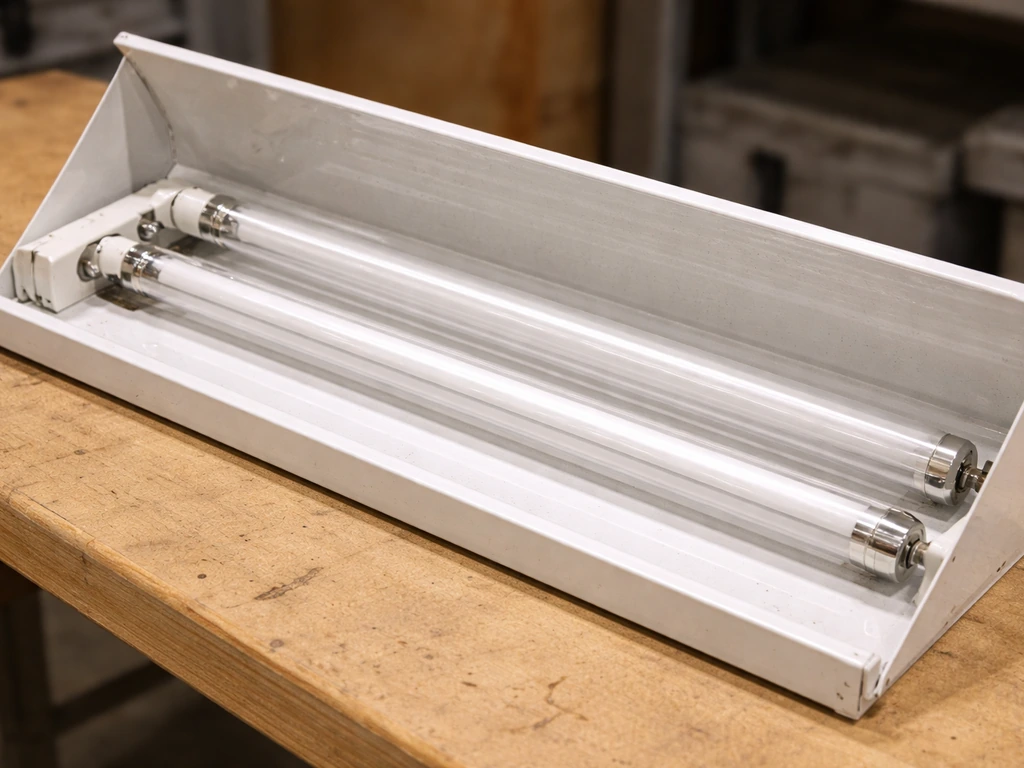
When gardeners search for "tube light," they usually mean one of a few things, and it matters which one you have. The most common is a standard fluorescent shop-light fixture, those long rectangular units with one or two tubes, often labelled cool white or warm white. These are T8 or T12 tubes (the numbers refer to tube diameter in eighths of an inch) and they're everywhere, from hardware stores to thrift shops.
Then there are T5 fluorescent tubes, which are slimmer, run hotter, and put out noticeably more light per foot. T5 fixtures are a step up from standard shop lights and are genuinely useful for seedlings and herbs. Beyond those, you'll also find LED tube replacements, which fit into standard fluorescent fixtures but use LED technology inside. These vary wildly in quality and spectrum, so the brand and spec sheet matter more than the form factor.
What all of these have in common is that they produce visible light, but visible brightness (measured in lumens) isn't the same as plant-usable light. University of Minnesota Extension notes that “tube light” usually means fluorescent shop-light fixtures, and that plant success depends on usable photosynthetic light (PAR/PPFD) rather than just brightness like lumens or lux visible brightness (measured in lumens) isn't the same as plant-usable light. Plants care about PAR, photosynthetically active radiation, measured in micromoles per square meter per second (PPFD). A tube that looks blinding to your eye might be delivering surprisingly little usable photosynthetic energy to your plants, especially if it's hanging two feet above the pot.
Can plants grow under tube lights? The real requirements
Plants need three things from any light source: the right wavelengths (spectrum), enough intensity (PPFD at the leaf surface), and enough hours per day (photoperiod). Tube lights can deliver all three, but only under the right conditions.
Spectrum: do tube lights have what plants need?
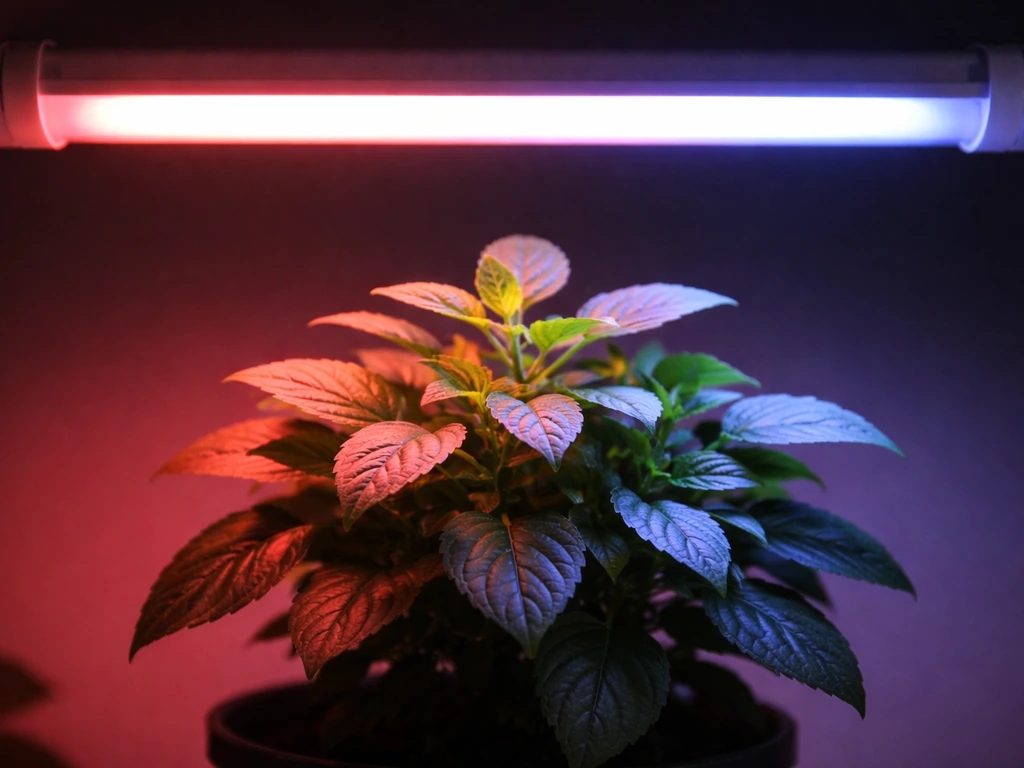
Plants respond most strongly to red and blue wavelengths. Red light drives photosynthesis and stem elongation; blue light controls leaf shape, compactness, and chlorophyll production. Cool white fluorescent tubes are actually a reasonable match for plants because they emit a broad spectrum with decent blue content. Warm white tubes skew toward the red/yellow end. Using one of each, a common recommendation for fluorescent setups, gives you a reasonable blend of both. Purpose-built grow tubes (labelled "plant" or "grow" tubes) are optimized for this balance, but honest answer: standard cool white T8s work well for a lot of plants.
Intensity: how much light actually reaches the plant?
This is where most tube-light setups fail. Light intensity drops off dramatically with distance. A T8 shop light delivering 200 PPFD at 6 inches might only deliver 50 PPFD at 24 inches. Most low-light houseplants need somewhere around 50 to 150 PPFD to grow steadily. Herbs in active growth want 100 to 500 PPFD. Flowering or fruiting plants can need 400 PPFD or more. With artificial light, flowers can grow successfully as long as the light provides the right spectrum, enough intensity, and a suitable number of hours each day can flowers grow with artificial light. A single-bulb cool white T8 hung 18 inches away probably isn't hitting those numbers for anything except the most shade-tolerant plants.
Photoperiod: how many hours counts?
Because tube lights deliver less intensity than sunlight, you compensate partly with longer daily run times. University of Missouri Extension’s houseplant lighting guidance recommends using distances of about 6 to 12 inches from the light source and running lights around [16 to 18 hours daily](https://extension. missouri. edu/media/wysiwyg/Extensiondata/Pub/pdf/agguides/hort/g06515.
pdf) for some setups, while noting that 12 to 14 hours can be adequate depending on the light provided. The total light dose a plant receives over a day is called the Daily Light Integral (DLI), and it's calculated from PPFD multiplied by the number of hours the light runs. If your tubes are delivering modest PPFD, running them for 14 to 16 hours instead of 8 hours meaningfully increases the total dose.
For most herbs, 12 to 16 hours per day covers the range. For sun-hungry seedlings, some growers push to 18 or even 22 hours to hit target DLI values, though most plants appreciate at least a few hours of darkness per day. Even with that long a run time, lettuce still needs enough intensity to grow under 24 hour light 18 or even 22 hours.
Even with enough hours, constant light is usually not ideal for plants, so aim for a consistent day-and-night cycle rather than running lights 24/7.
Best plants for tube-light conditions
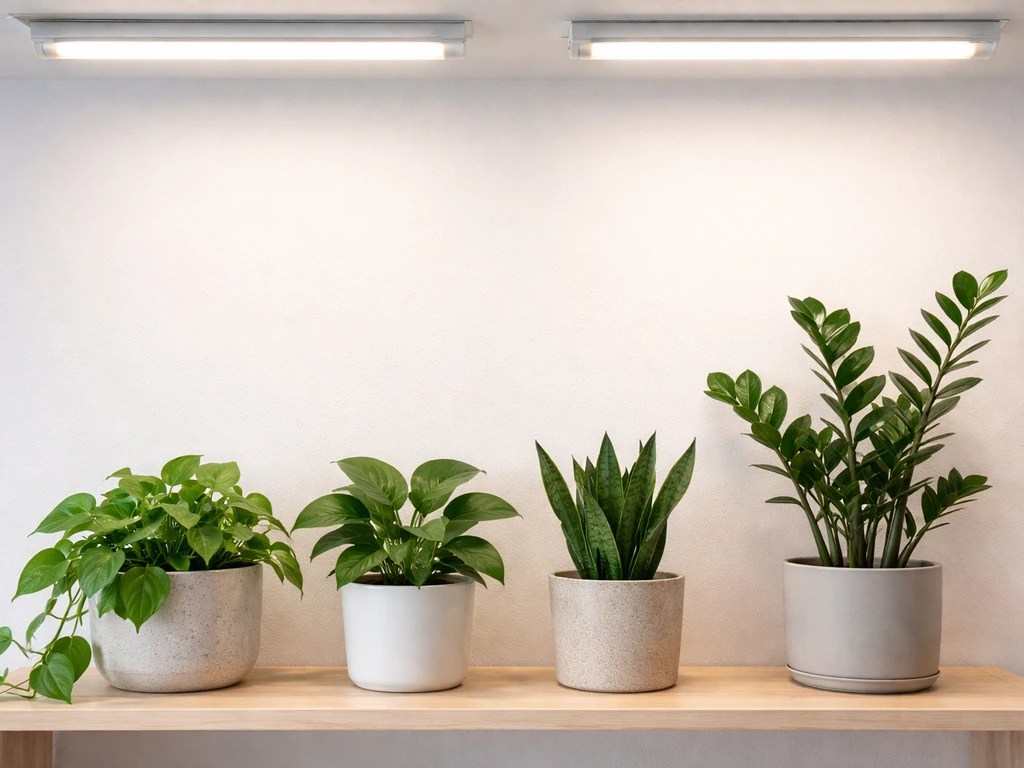
Not every plant is a realistic candidate for tube lights, and being honest about that upfront saves a lot of frustration. For more options, see which plants can grow in fluorescent light at different distances and light doses plants that can grow in fluorescent light. The best results come from plants with lower to moderate light needs, where standard fluorescent output is genuinely sufficient rather than a compromise.
| Plant Type | Light Need (PPFD) | Tube Light Suitability | Notes |
|---|---|---|---|
| Pothos, philodendron, snake plant | 50–150 PPFD | Excellent | Thrive under a single T8 fixture at moderate distance |
| Peace lily, ZZ plant, dracaena | 50–150 PPFD | Excellent | Classic low-light houseplants; tube light is plenty |
| Herbs (basil, chives, cilantro, mint) | 100–300 PPFD | Good with setup effort | Need 2+ T8 tubes, 6–12 inches away, 14–16 hrs/day |
| Succulents and cacti | 100–200 PPFD | Decent | Can maintain but not thrive; may etiolate over time |
| Seedlings (for transplanting) | 100–200 PPFD | Good with T5 or 4-bulb T8 | Keep lights 2–4 inches above tops; long run times needed |
| Tomatoes, peppers, fruiting crops | 400–800+ PPFD | Poor | Will grow but become leggy; tube lights rarely sufficient |
| Orchids | 40–200 PPFD (varies) | Good for low-light varieties | Phalaenopsis does well; high-light orchids will struggle |
The sweet spot for tube lights is low-light houseplants and herbs. Medium- and low-light plants like pothos, peace lilies, snake plants, and ZZ plants can genuinely thrive under fluorescent tube setups, which is why office lobbies lit mostly by fluorescent overhead tubes often have lush-looking plants. Herbs like basil, chives, and cilantro are doable with a proper setup but demand more attention to placement and run time.
How to choose the right tube or bulb
The tube type and quantity you choose will shape everything else about your setup. Here's how to think through it.
T8 vs T5 vs LED tube replacements
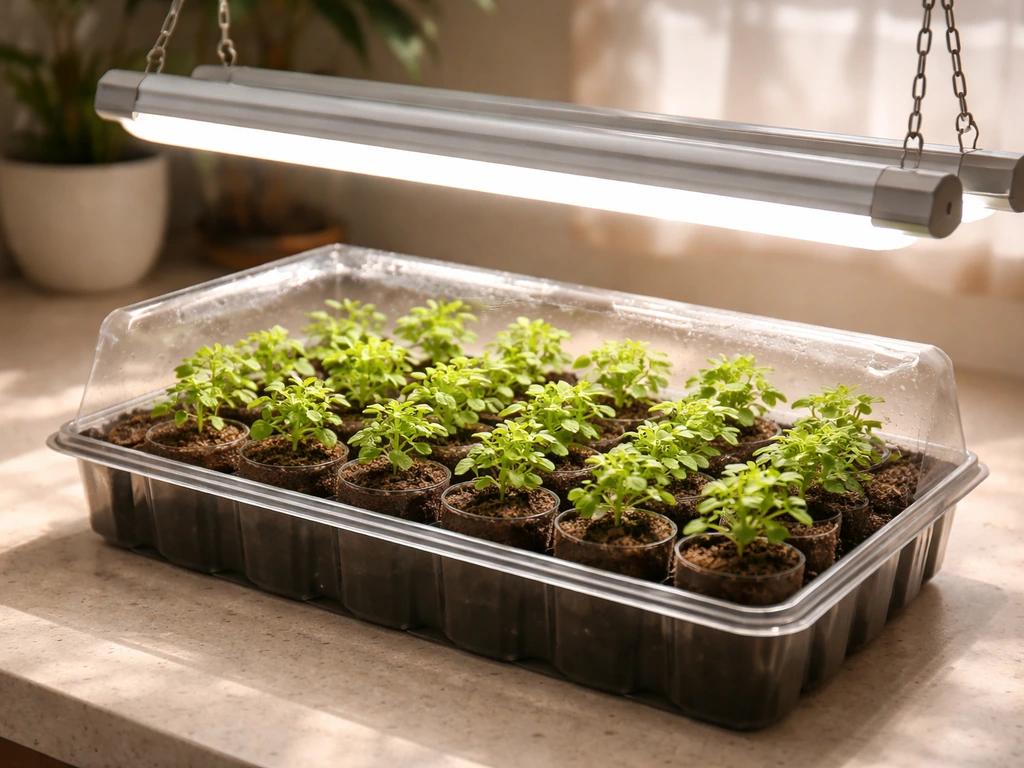
Standard T8 fluorescent tubes in a four-bulb shop-light fixture are a legitimate starting point for seedlings and herbs, provided you keep them close and run them long. A single two-bulb T8 fixture is fine for low-light houseplants. T5 fixtures are more efficient and brighter per tube, making them the better choice when you want to grow herbs vigorously or start seeds. LED tube replacements can work well, but only if they're specified for horticulture or at least have a broad, balanced spectrum including blue wavelengths. Cheap warm-white LED tubes tend to be light on blue, which limits their usefulness.
Color temperature matters
For fluorescent tubes, aim for color temperatures in the 4000K to 6500K range (cool white to daylight). These have more blue content, which supports compact, healthy growth. Warm white bulbs (2700K to 3000K) are skewed toward red and yellow, which can work for flowering stage but tends to produce stretchier growth in seedlings and herbs when used alone. The classic hack is to use one cool white and one warm white tube in the same fixture to cover more of the spectrum. Purpose-built "grow" fluorescent tubes (sometimes sold as Gro-Lux or similar) are designed with plant spectra in mind and are worth the small price premium if you can find them.
Replace tubes on a schedule
Fluorescent tubes lose intensity and shift spectrum as they age, often before they burn out. A tube that still lights up after two years may be delivering significantly less usable PAR than it did when new. A good rule of thumb is to replace fluorescent grow tubes every 12 to 18 months even if they still look fine visually.
Placement, spacing, and photoperiod: setting it up properly
This is the section that separates tube-light setups that work from ones that produce sad, stretchy plants. Distance is the single biggest variable most beginners get wrong.
Distance from the canopy
For seedlings under fluorescent tubes, keep the fixture 2 to 4 inches above the tops of the plants and raise it as they grow. This sounds uncomfortably close, but fluorescent tubes don't produce enough heat to burn plants at that distance and the intensity drops off so quickly that anything further than 6 inches cuts your delivered PPFD dramatically. For herbs and houseplants, Penn State Extension's guidance of 6 to 12 inches from two 40-watt cool white bulbs is a solid practical target. For low-light houseplants that just need maintenance rather than active growth, you can go up to 12 to 18 inches, but watch the plants for signs they're struggling.
How many tubes do you need?
One tube is usually not enough for anything except a single low-light plant sitting directly beneath it. Two tubes side by side (a standard two-bulb shop light) cover a narrow band. For a 2-by-4-foot growing area with herbs or seedlings, a four-bulb T8 fixture, or two two-bulb fixtures mounted parallel, is the practical minimum. Adding a reflective backing or hood to the fixture (even white-painted cardboard or foil) can meaningfully increase the useful light reaching plants without any additional electricity.
Daily run times
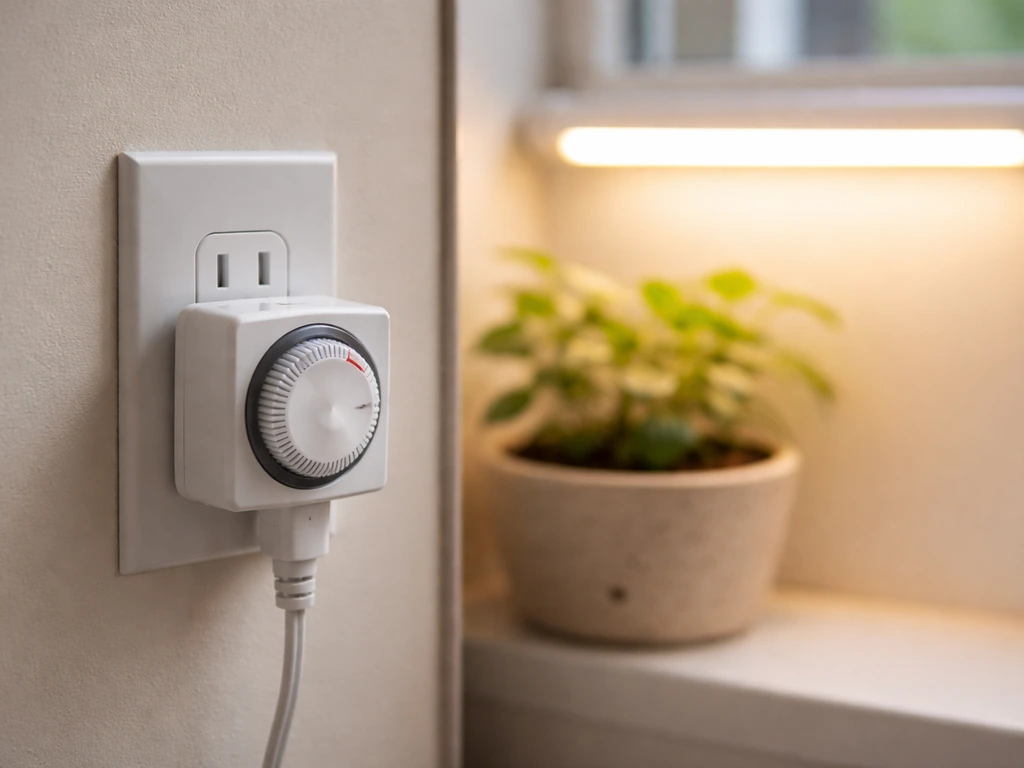
Use a plug-in timer. Running lights by memory leads to inconsistent photoperiods, which stresses plants over time. Here are the practical targets:
- Low-light houseplants (pothos, snake plant, ZZ): 12 to 14 hours per day
- Herbs in active growth (basil, cilantro, chives): 14 to 16 hours per day
- Seedlings under standard T8 shop lights: 16 to 18 hours per day; sun-loving seedlings may need up to 22 hours to hit target DLI
- Flowering houseplants: 12 to 14 hours (most need some dark period to trigger or maintain bloom)
The reasoning behind longer hours under tubes is the DLI math: if your tubes deliver, say, 100 PPFD at canopy, running them for 16 hours gives a DLI of about 5.8 mol/m²/day, which is workable for herbs and seedlings. Drop to 8 hours and you're at 2.9 mol/m²/day, which is marginal even for low-light plants trying to grow rather than just survive.
How to know it's working, and what to do when it isn't
The plants will tell you if something is off. You just need to know the vocabulary.
Signs your plants are getting enough light
- New leaves are similar in size to existing leaves (not noticeably smaller)
- Stems are upright and compact with short spaces between nodes
- Leaf color is rich and consistent with the plant's normal color
- Herbs are bushy and branching, not reaching upward in one thin stem
- Seedlings are stocky, not tall and floppy
Signs your tube light setup isn't cutting it
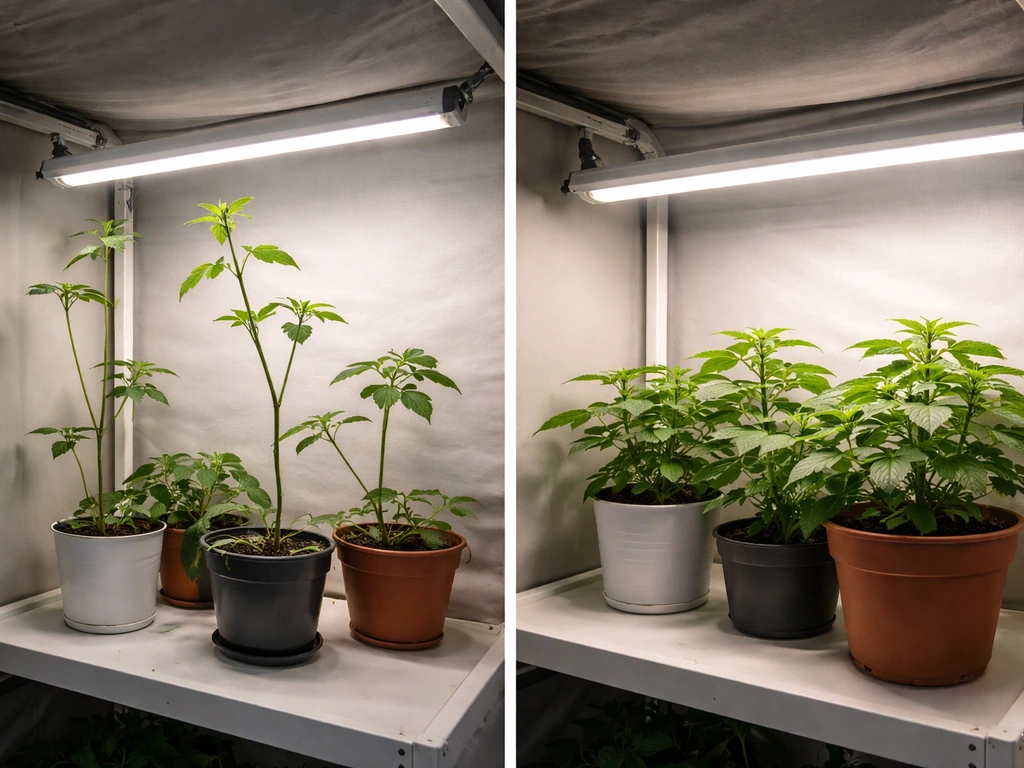
The classic and most obvious sign is leggy growth: long spaces between leaf nodes, thin stems, and plants literally leaning or stretching toward the light. This happens because the plant is desperately trying to get closer to the source. Alongside that, look for pale green or yellowing leaves, especially on new growth. When plants don't get enough light, they stop producing chlorophyll efficiently, so foliage turns yellow to almost white rather than staying a healthy green. For flowering plants, you might also notice buds failing to develop or dropping before they open. Older leaves yellowing and dropping while new growth looks weak and small is another reliable warning sign.
Troubleshooting steps
- Move the fixture closer to the canopy first. This is the most common fix and the cheapest.
- Add more tubes or a second fixture if you're already at the minimum distance and plants are still struggling.
- Increase run time by 2 hours and observe the plants over 2 to 3 weeks.
- Check tube age. If your tubes are over 12 to 18 months old, replace them even if they still light up.
- Add a reflector or white-painted backing behind the fixture to bounce lost light back toward the plants.
- Consider whether the plant is simply wrong for tube lights. If it's a full-sun herb or fruiting crop, more hours won't fully compensate for the intensity gap.
One thing worth flagging: some of these symptoms overlap with overwatering, underwatering, or root problems. If you've optimized your light setup and the plant still looks off, check the basics before assuming it's purely a light issue.
When tube lights aren't enough, and what to switch to
Tube lights are a genuinely practical tool for a wide range of indoor growing situations, but there are real limits. If you're finding that even a four-bulb T8 setup at close range and 18-hour run times is producing leggy herbs, pale seedlings that won't bulk up, or vegetables that stall out and never fruit, the honest answer is that you've hit the ceiling of what tube lights can deliver for those plants.
The practical upgrade path is a dedicated LED grow light, not necessarily an expensive one. Modern full-spectrum LED grow panels (sometimes called quantum boards or panel lights) deliver higher PPFD across a wider footprint with better spectrum control than tube setups. For growing herbs vigorously, starting heat-loving seedlings like tomatoes and peppers, or attempting flowering plants that want more light, an LED grow light in the 45W to 100W range (actual draw, not "equivalent") will outperform even a good T5 fluorescent setup while using similar or less electricity.
The decision framework is simple: if your plants are low-light houseplants or shade-tolerant herbs, stick with tube lights. They're cheap, easy to find, and perfectly capable. If you're growing light-hungry herbs like basil in quantity, starting vegetable seedlings for outdoor transplanting, or attempting flowering plants that need real intensity, budget for an LED grow light and you'll have much less frustration. The comparison between fluorescent tubes and LED grow lights is worth understanding in more depth if you're deciding between them for a specific setup.
Quick planning checklist for a tube-light grow setup
- Choose your plants first: low-light houseplants and herbs work best with tube lights
- Select a fixture with at least two T8 or T5 tubes; four tubes for a serious herb or seedling setup
- Use cool white (4000K to 6500K) or purpose-built grow tubes; mix warm and cool white for better spectrum
- Mount the fixture so tubes are 2 to 4 inches above seedlings, or 6 to 12 inches above herbs and houseplants
- Set a timer for 12 to 16 hours daily depending on plant type (more hours for herbs and seedlings)
- Add a simple reflector behind the fixture if possible
- Replace tubes every 12 to 18 months regardless of whether they still light up
- Watch for leggy growth or pale leaves as early warning signs and adjust distance or run time first
- Upgrade to a dedicated LED grow light if your target plants consistently underperform despite optimizing the above
FAQ
Can I use any tube light from the hardware store and expect plants to grow?
No. “Tube light” fixtures are either fluorescent or LED tube replacements, and the plant result depends on the actual output at the leaf, the spectrum balance (enough blue plus some red), and how long you run them. Before buying, check whether the LED tube is labeled horticulture or provides spectrum data (not just “cool white”), and plan for close mounting if you stick with fluorescent.
Will tube lights work for seedlings in a kitchen or room where I cannot hang them very low?
Yes, but only if you keep the lamp close and you match the daily light dose. In practice, a typical kitchen range hood height often pushes the light too far for seedlings, so you may need a smaller distance to the canopy (closer than you think) and a longer photoperiod. If you cannot mount within a few inches, consider switching to an LED grow fixture.
How do I know whether I should increase hours or keep the same schedule under tube lights?
If you can measure or estimate PPFD, aim for a daily light integral target, not just “hours.” As a rule, if your tubes are producing modest PPFD at the leaf, extending to around 14 to 16 hours helps total dose, but going much longer than that often becomes counterproductive for many plants because it reduces the chance to recover and can still leave intensity too low.
What’s the fastest way to troubleshoot leggy or pale plants under tube lights?
Watch for leggy growth plus pale or yellowing new leaves together, then adjust one variable at a time, usually distance first. A good workflow is: move the fixture closer within safe limits, keep the same timer schedule for a few days, and only then change tube type or add another tube/fixture if the improvement is insufficient.
Is it better to run tube lights 24/7 so my plants grow faster?
Most tube setups need a day and night cycle, even if it’s longer than natural daylight. Running lights 24/7 can reduce plant vigor and can aggravate stress, so use a timer and set a consistent photoperiod such as 12 to 16 hours for many herbs, then fine tune based on how your plants respond.
Can tube lights keep plants alive, or will they actually promote active growth?
Some plants can survive, others can actually grow. Low-light houseplants often do well as “maintenance” plants, while herbs like basil and flowering or fruiting plants require higher intensity and better spectrum, and tube lights may stall if the canopy is too far or the setup is too weak.
Do I need expensive grow hoods, or can I improve tube light output with simple reflectors?
Yes, adding reflectors behind and around the fixture can improve how much light reaches the plants, especially when the light is coming from the front only. Simple options like white-painted board or foil can reduce wasted light without changing electricity use, but avoid placing reflective materials so close that they create glare or heat buildup.
Why does my tube light look bright but my plants still stretch?
Intensity fades quickly with distance. If you move the fixture from 6 inches to about 24 inches away, you may cut usable PPFD drastically, which is why a single or two-bulb fixture often looks bright but still fails plants. For fluorescent tubes, close mounting is usually the difference between steady growth and stretched, weak growth.
Should I replace tube lights on a schedule even if they still light up?
Yes. Fluorescent tubes can degrade in usable light before they appear “burned out,” so visually working bulbs can still deliver less PAR. A practical approach is to plan on replacement every 12 to 18 months for grow use, especially if you’ve relied on the tubes for active growing rather than occasional supplementation.
Are LED tube replacements as good as T5 or T8 fluorescent tubes for plants?
LED tube replacements can work, but cheap warm-white-only tubes often underperform because they are light on blue wavelengths. Look for either horticulture labeling or specifications that indicate a balanced spectrum (including blue) and avoid buying purely on “watts” or lumen brightness.
At what point should I stop trying to fix tube lights and switch to an LED grow light?
If you want to grow a plant that needs real intensity, you can reach a limit where more tube lights and long run times still do not meet the needed PPFD. When multiple adjustments (distance, tube type, number of bulbs, and hours) still leave you with stalling, pale growth, or failure to flower, the practical upgrade is moving to a modern full-spectrum LED grow fixture sized to your canopy.