
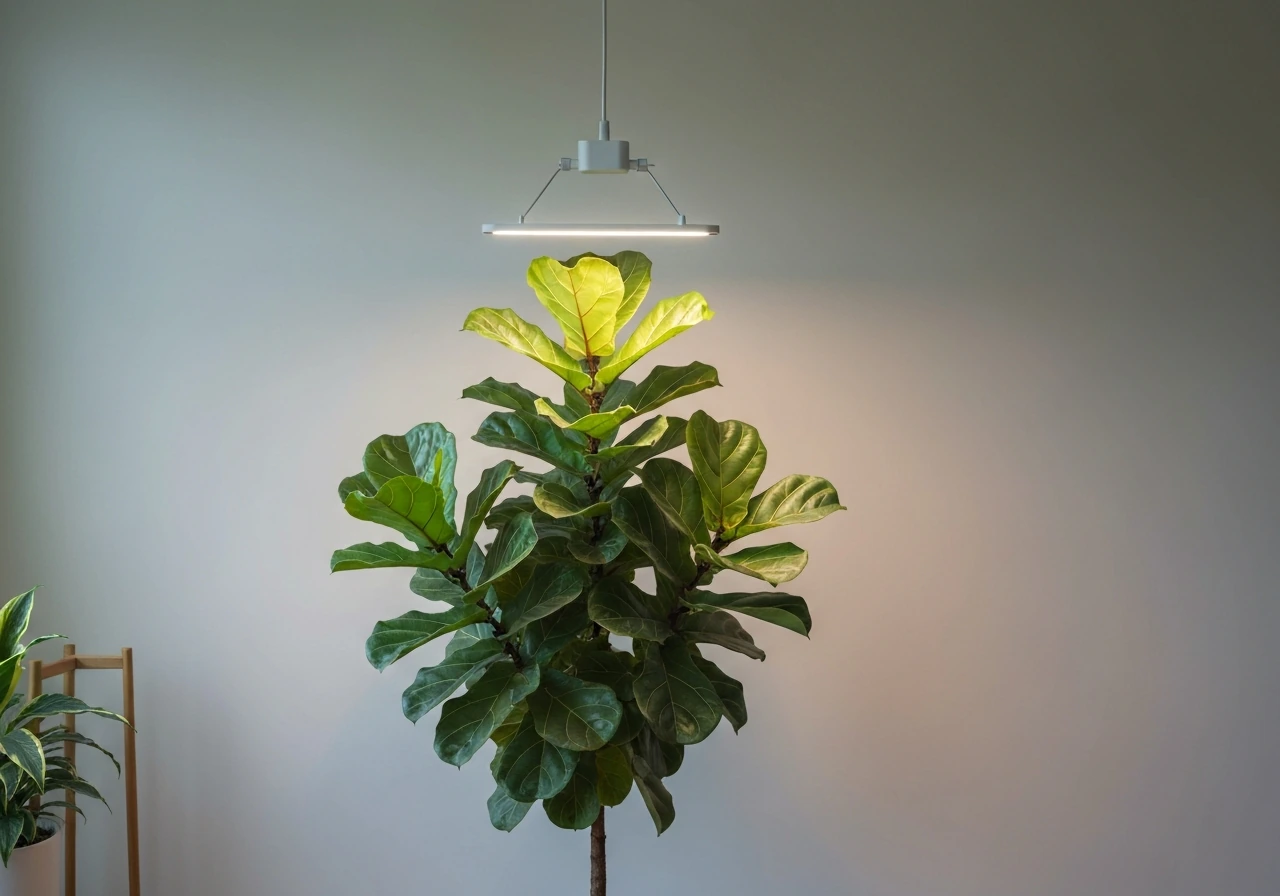
Place your grow light directly above your fiddle leaf fig, centered over the canopy, somewhere between 12 and 24 inches from the topmost leaves. Run it for 6 to 8 hours a day on a timer. That covers the basics, but getting it right in your specific space means thinking through the height, angle, mounting spot, and a few easy-to-miss mistakes. A snake plant can be set up with similar placement principles, but its grow light requirements are different from fiddle leaf figs height, angle, mounting spot. Here's how to dial it in.
Where to Place a Grow Light for a Fiddle Leaf Fig
Marcus Hartley
4 May 2026
How to tell if your fiddle leaf fig needs more light
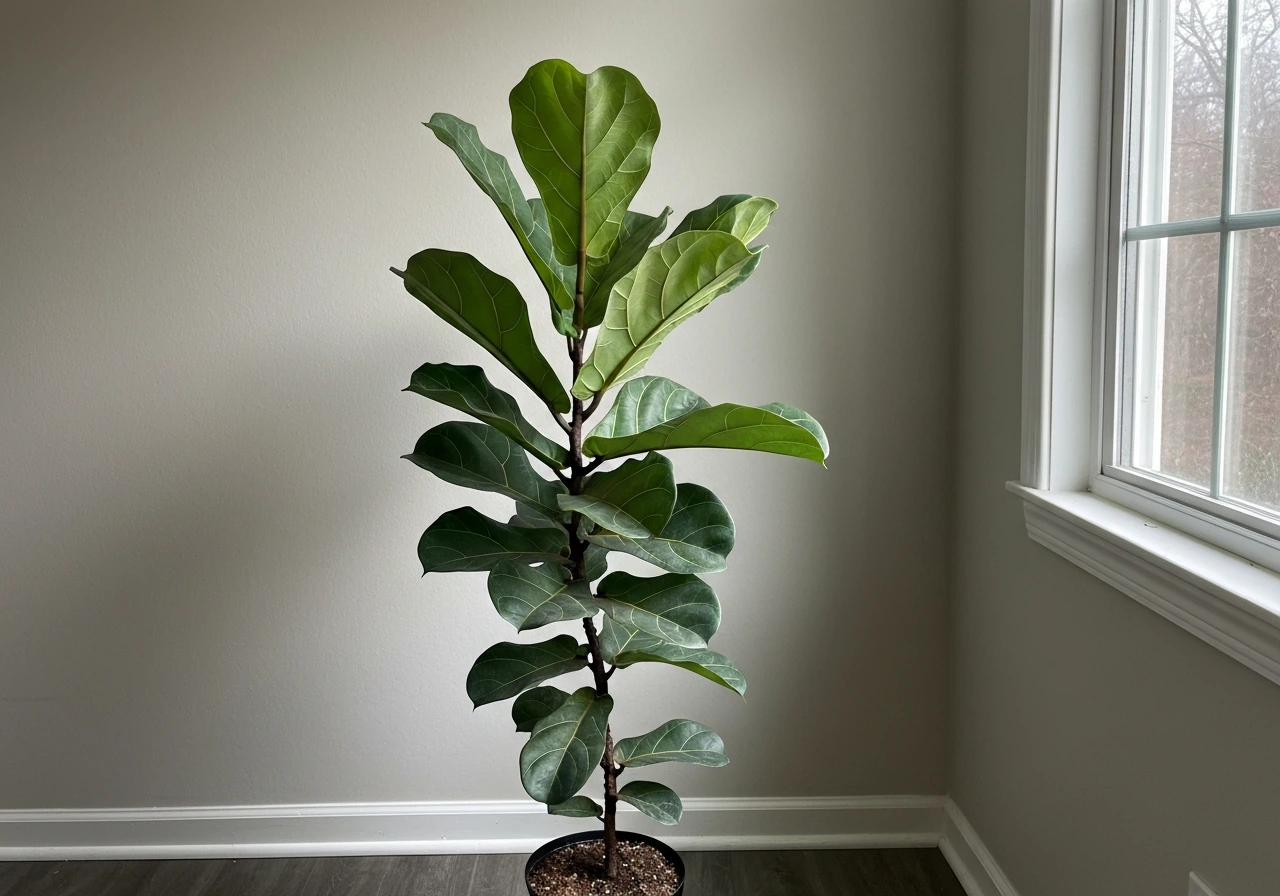
Fiddle leaf figs are native to the rainforest understory, so they evolved under bright but filtered canopy light. Indoors, they need strong, bright, indirect light for around 6 to 8 hours daily. An East Coast Garden Center fiddle leaf fig care handout specifically recommends blank" rel="noopener noreferrer">bright indirect light year-round. Jade plants like grow lights too, and they generally do best with strong light that stays fairly consistent so they do not stretch strong, bright, indirect light. When they're not getting enough, they'll tell you pretty clearly.
- Leaning or stretching toward a window: the plant is reaching for more light, and new growth will look elongated and weak
- Slower growth than expected, especially in spring and summer when it should be pushing new leaves
- Smaller new leaves: underpowered light often means new leaves come in noticeably smaller than mature ones
- Leaf drop without obvious overwatering or root rot: a gradual drop of lower leaves in low-light conditions is common
- Pale or washed-out leaf color: leaves should be a deep, glossy green; dull or yellowing foliage can signal insufficient light (though this can also point to root issues, so check the soil too)
One thing worth knowing: brown spots alone don't always mean a light problem. Brown spots with dark green surrounding leaves usually point to root rot. Spots that spread with yellowing edges are more likely bacterial leaf spot. But if your plant looks otherwise healthy and is just growing slowly or leaning, inadequate light is the most likely culprit, and a grow light is a practical fix. A big-box retail care manual for the ficus lyrata notes that it needs bright, filtered light.
Placement basics: distance, height, and beam angle
The most important placement variable is distance from the canopy. Too close and you risk leaf burn. Too far and the light intensity drops off fast. A good starting point for a typical LED grow light is 12 to 24 inches above the topmost leaves. If you're using a lower-powered panel or a bulb in a floor lamp, lean toward the closer end of that range. A more powerful full-spectrum LED panel should sit toward the farther end, at least to start.
Height really matters here because light intensity follows an inverse square relationship with distance: double the distance and you get roughly a quarter of the intensity. LedLightsGeek gives similar distance guidance, noting that doubling the distance from the LED grow light to the plant reduces canopy intensity to about one-quarter, consistent with the inverse-square concept double the distance and you get roughly a quarter of the intensity. That's why moving a light from 12 inches to 24 inches above your plant isn't a minor tweak. Start at 18 inches and adjust based on what you observe over the following weeks.
Beam angle is the other variable most people ignore. Most LED grow panels have a fairly wide beam spread, which is useful for covering a large, wide canopy like a fiddle leaf fig. If your light has a narrow beam or is a spotlight style, angle it slightly so it sweeps across the whole canopy rather than concentrating on just the top growth. The goal is even coverage, not a hot spot on a few leaves.
Best mounting spots depending on your room layout
Where you physically put the light matters as much as the distance settings. The best situation is pairing a grow light with existing natural light, not replacing it entirely. Here's how the most common setups play out.
Near a window
If your fiddle leaf fig is already near a bright window, a grow light here works as a supplement, extending the photoperiod on dark winter days or filling in gaps when the light quality drops. Mount the light on a sturdy floor stand or hang it from a ceiling hook directly above the plant. Position it so it doesn't compete awkwardly with window light from the side, which can encourage the plant to lean. Keep it overhead and centered.
In a corner or away from windows
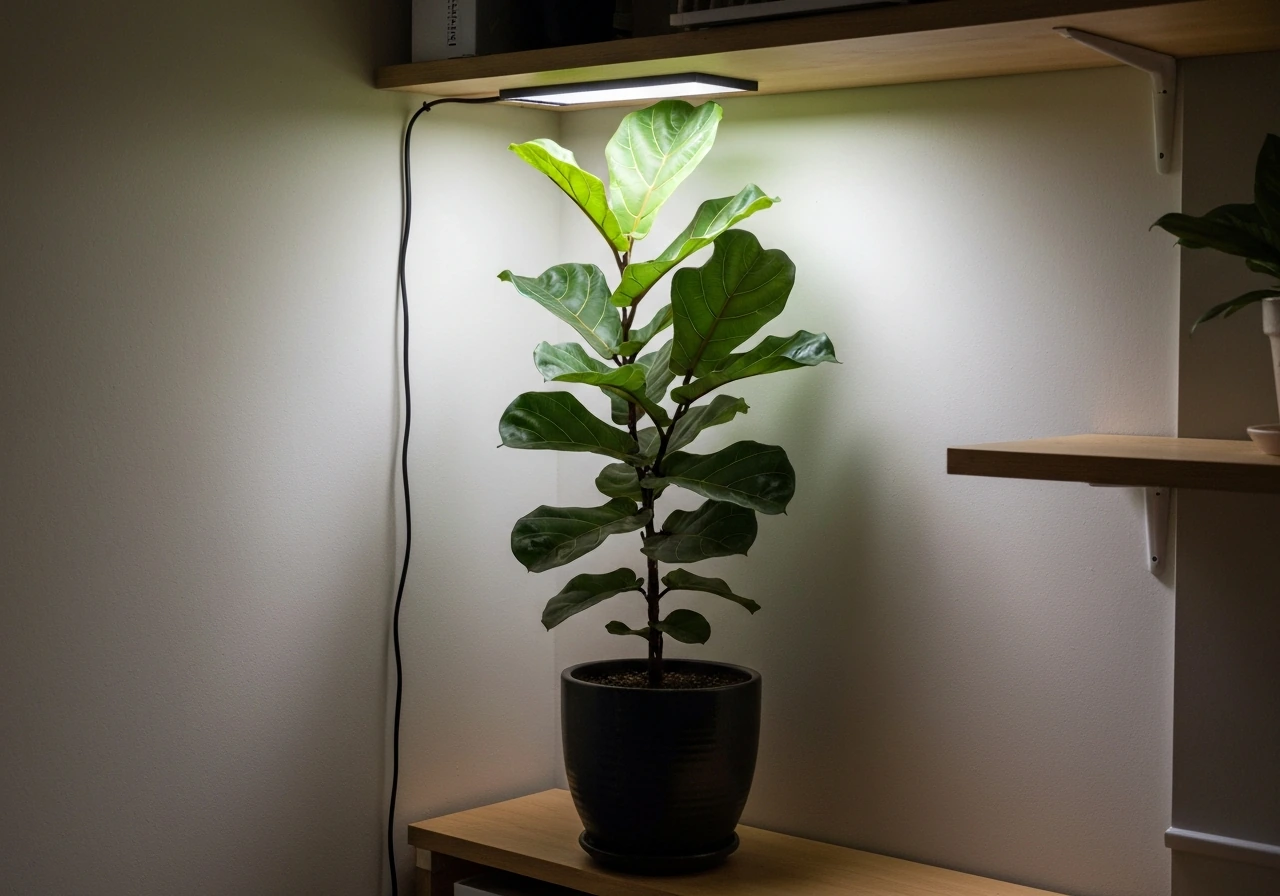
If your fiddle leaf fig is living in a corner with little to no natural light, the grow light becomes the primary source, and this is where consistency really matters. Use a floor lamp grow light or a ceiling-mounted panel, and commit to running it on a timer every single day. The plant needs that reliability. A corner spot can actually be great because the walls help reflect light back toward the plant and you have two surfaces to work with for mounting.
On shelving or in a plant corner
Smaller or younger fiddle leaf figs sometimes live on shelves or plant stands. If your shelf has a lip or the plant sits low, this is exactly the situation NYBG flags: only the top leaves get decent light while lower foliage suffers. A clip-on or adjustable-arm grow light works well here, positioned above and angled down to cover the whole plant rather than just the crown. If the shelf has overhead shelving above it, make sure the light still has clearance to sit within 12 to 24 inches of the canopy.
How to aim the light for balanced, even growth
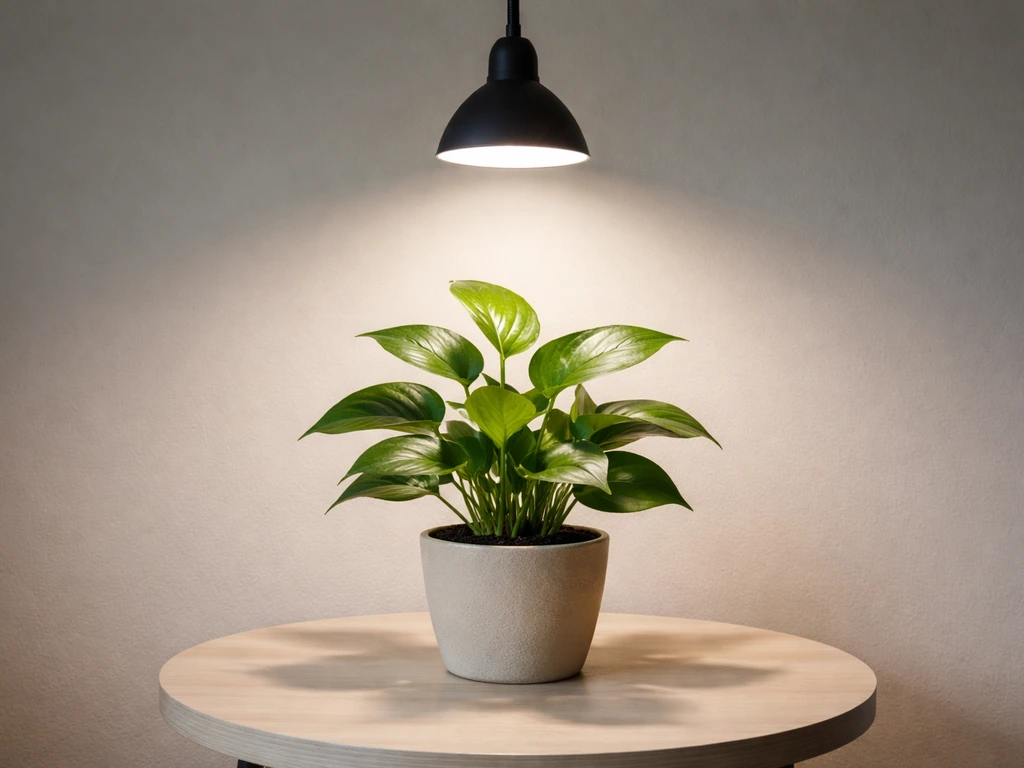
The most common growth problem caused by poor light placement is uneven growth, where one side of the plant gets more light than the other and becomes bushier and taller while the shaded side thins out. Here's how to avoid it.
- Center the light directly over the plant's main stem, not off to one side. Think of it like a spotlight on a stage: it should cover the whole performer, not just one wing.
- Rotate the pot a quarter turn every week or two. This evens out any directional bias from windows or lights that aren't perfectly centered.
- If your plant has a dominant leaning direction from previous uneven light, rotate it so the weaker side faces the light for a few weeks to let it catch up.
- Check that lower leaves are getting some coverage. If your light has a very narrow beam, consider angling it very slightly or adding a second light source at a lower position for larger plants.
One easy trick: hold your hand a few inches above the canopy with the light on. If you feel warmth building up quickly (within 30 seconds), the light is too close or running too hot. LED grow lights are generally much cooler than older fluorescent or HID setups, which is one reason they've become the go-to for indoor plant parents.
Choosing the right grow light setup
You don't need to spend a lot to make this work, but you do need the right tool. Here's a quick comparison of the main options.
| Light Type | Best For | Heat Output | Energy Use | Typical Cost |
|---|---|---|---|---|
| Full-spectrum LED panel | Larger fiddle leaf figs, primary light source | Low | Low | Moderate to high upfront |
| LED bulb in floor lamp | Small to medium plants, supplemental light | Low | Low | Low |
| Fluorescent tube (T5 or T8) | Budget option, decent for smaller plants | Moderate | Moderate | Low to moderate |
| Ring-style LED grow light | Compact setups, shelves, even coverage on small plants | Very low | Very low | Low |
LED is the clear winner for most home setups. The energy efficiency is real, the heat output is low enough that you can run them close to the plant without worrying as much about scorching, and modern full-spectrum LEDs give plants the red and blue wavelengths they actually use for photosynthesis. Fluorescent is still a workable budget option, especially T5 tubes, but you'll need to keep them closer to the canopy to get adequate intensity, and they run warmer.
For spectrum, look for a light labeled "full spectrum" or "broad spectrum" with output in the 3000K to 6500K color temperature range. You don't need a light that looks purple or red unless you're in a specialty growing setup. A good daylight-spectrum LED will do the job fine and is easier to live with aesthetically.
On timing: use a plug-in timer. Set it for 6 to 8 hours during the day, ideally during normal daylight hours rather than running it at 2am. Fiddle leaf figs aren't photoperiod-sensitive the way some flowering plants are, but keeping a consistent light schedule that mimics natural daylight patterns is still good practice and helps regulate the plant's basic metabolic rhythm. Calatheas generally also do well under grow lights, as long as you provide enough intensity and keep the timing consistent do calatheas like grow lights. Many owners wonder whether fiddle leaf figs like grow lights, and the good news is that they usually do when the placement and timing are right do fiddle leaf figs like grow lights. If you want to grow chaetomorpha, you’ll also get the best results by choosing the right light and keeping it consistent day to day best light to grow chaetomorpha. If you're only supplementing natural light, 4 to 6 additional hours from the grow light is often enough.
Common placement mistakes and how to fix them
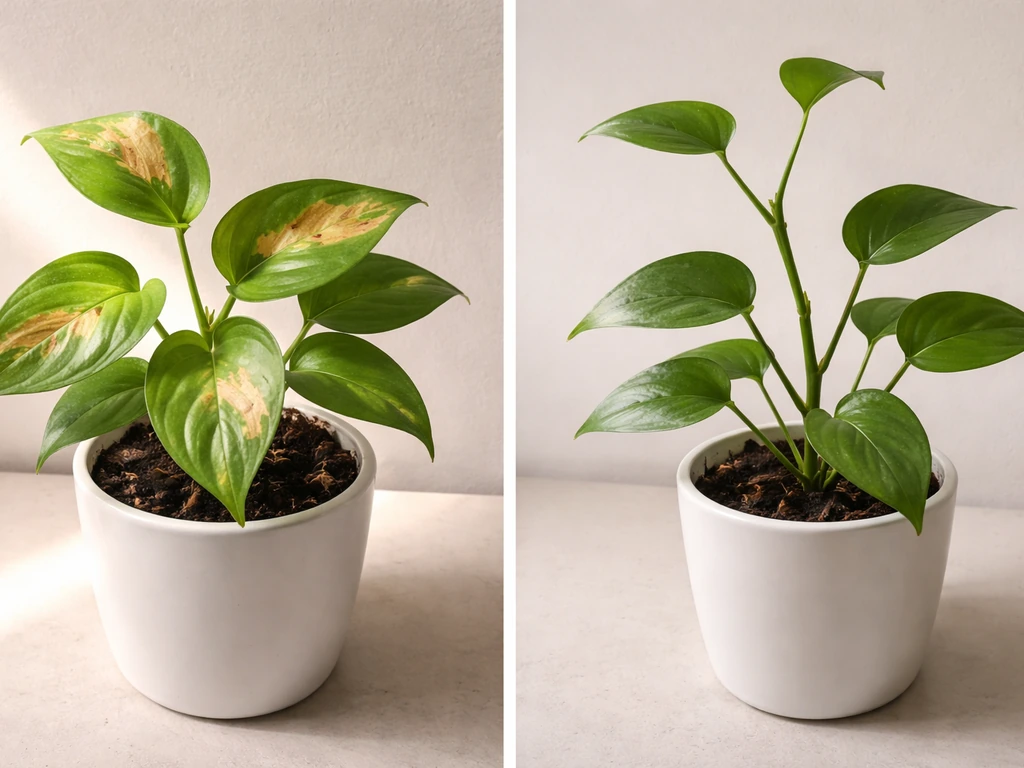
Leaf burn (light too close or too intense)
Symptoms are brown, crispy patches on the upper leaves, sometimes with fading or bleaching around the patch. This is different from the dark brown spots of root rot. If you see this, move the light up by 4 to 6 inches and monitor over the next couple of weeks. Don't panic and move it across the room. Small, incremental adjustments work better than overcorrecting.
Leggy or stretching growth (light too far or too weak)
If new growth is coming in thin, elongated, and floppy, the plant isn't getting enough light intensity. Move the light closer in 3-inch increments, or consider upgrading to a more powerful LED if you're maxed out on height and still seeing weak growth. Also check your timer: if the light is only running 3 to 4 hours a day, increasing to 6 to 8 hours is the first fix to try before changing position.
Uneven or one-sided growth
This almost always means the light isn't centered above the plant or the plant is also getting strong directional window light from one side. Start rotating the pot weekly. Recheck your light mounting position and make sure it's directly above the stem, not off to the side. If a window is strongly pulling the plant's growth in one direction, blocking some of that window light (with a sheer curtain) and centering the grow light overhead can help reset the balance.
Shock from sudden placement changes
Fiddle leaf figs are famously sensitive to sudden environmental changes. Don't go from dim corner to blasting it under a 200-watt grow panel in one day. Introduce the grow light gradually: start with 4 hours a day and bump it up by an hour or so every few days until you reach your target photoperiod. Same with distance: start at the farther end of the range (20 to 24 inches) and move closer slowly.
Setting up a simple rotation schedule and tracking your results
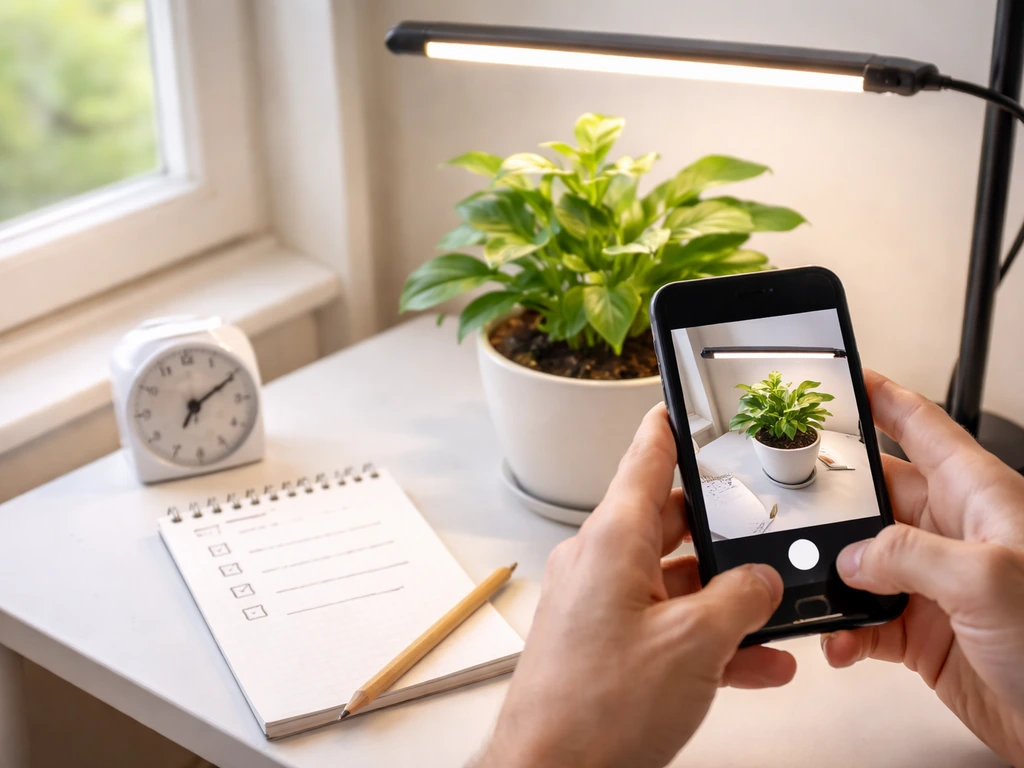
The best thing you can do after placing your grow light is take a baseline photo and then check back consistently. Plants don't change overnight, and it takes a few weeks to see meaningful responses to light adjustments.
- Take a photo from the same spot every 2 weeks. This makes it easy to spot changes in growth direction, leaf size, and color that are hard to notice day to day.
- Mark new growth: when a new leaf unfurls, note how long it took and how big it is compared to previous leaves. Improving light should mean faster growth and larger leaves over time.
- Rotate the pot every 7 to 14 days and note which direction the plant is leaning before you rotate. If leaning is getting worse, your light placement needs to come more overhead.
- Adjust distance by no more than 3 to 4 inches at a time. Wait at least 2 weeks before making the next change so you're responding to real results, not noise.
- Check the timer monthly to make sure it hasn't shifted. A timer that drifts by an hour or stops working can quietly set your plant back without obvious symptoms for weeks.
If you're supplementing with a grow light because your natural light is borderline, pay extra attention in fall and winter. If you are wondering, can you use a grow light for a bonsai tree, the answer is yes, but you need to match the distance and schedule to the smaller canopy. Seasonal light decreases can trigger leaf drop even if your setup worked fine all summer. In those months, consider bumping your timer up by an hour or moving the light a few inches closer to compensate.
Getting this dialed in takes a bit of patience, but once you find the right distance and duration for your specific plant and space, fiddle leaf figs are actually quite rewarding to grow. They're dramatic plants that respond visibly to improvements in their conditions, and there's a real satisfaction in watching a new leaf unfurl because you got the setup right. If you're exploring grow lights for other tropical houseplants too, the same general principles apply, though species like philodendrons and calatheas have their own light preferences worth looking into separately. Corals also depend on light intensity and spectrum, so choosing the right reef light and placing it correctly is key to helping them grow light preferences.
FAQ
How do I tell if my grow light is too close versus it’s not strong enough?
If you see bleaching or a faded, washed area that looks sunburn-like on the upper leaves, move the light up 4 to 6 inches and wait 2 to 3 weeks before changing anything else. If the damage is from heat, you may also notice faster warming, so aim for a comfortable distance rather than pushing the light closer for “faster growth.”
What’s the best daily schedule for a fiddle leaf fig grow light, especially if I’m busy?
Use a timer you can trust, then add slack for setup changes. A simple approach is 6 to 8 hours daily, always starting during normal daylight (for example, late morning through early evening). Avoid short bursts like 2 to 3 hours, because underexposure can show up as slow, thin growth even if the light is positioned correctly.
Do I need to rotate my fiddle leaf fig if the light is centered above it?
Rotate the pot every 1 to 2 weeks when the plant is near a window or in a reflective corner. Even with an overhead grow light, side light (or uneven reflection from walls and furniture) can push one branch to grow faster, leading to an asymmetrical canopy.
Can I use a grow light only in the evening or on dark winter days?
Yes, but you should treat it like supplemental lighting rather than replacement. Start by keeping the grow light on for 4 to 6 extra hours during the darker part of the day, then adjust based on new leaf growth and whether the plant leans toward the brighter areas.
What should I do if my grow light creates a hotspot instead of even coverage?
If you use a narrow-beam or spotlight-style light, cover the whole canopy by angling it slightly so it “sweeps” across the plant instead of creating one bright spot. If your light has an adjustable height, increase height slightly to improve spread, because narrow beams commonly cause uneven growth (strong side versus shaded side).
My fiddle leaf fig is on a stand or shelf, how do I place the light correctly without baking the top leaves?
When the plant is on a shelf, the key is that the top of the canopy must still land inside the 12 to 24 inch “sweet spot” from the light. If lower leaves are blocked by the shelf lip or the plant sits too low, switch to a clip-on or adjustable-arm light and position it to reach the lowest foliage you want to keep healthy.
What if I placed the light at 12 to 18 inches and my fiddle leaf fig still isn’t growing well?
Mounting height is usually the first adjustment, but the second is power and coverage area. If your plant is already at the closer end of the recommended range and still grows slowly or stays leggy, the issue is often insufficient output for your canopy size, not just distance.
How should I introduce a grow light if my fiddle leaf fig is coming from a very dim corner?
For a slow, incremental transition, start at 4 hours per day for a few days, then add about 1 hour every few days until you reach 6 to 8 hours. For distance, start toward the farther end (around 20 to 24 inches) and move closer in small steps, because sudden intensity changes are a common trigger for leaf drop in this plant.
Do I need to adjust the light height as my fiddle leaf fig grows?
Base your placement on the topmost leaves at their current height, then re-check if the plant grows or you repot and raise or lower the canopy. A helpful rule is to take a quick measurement whenever a new leaf unfurls and the top edge rises, because the distance can accidentally become too close after rapid growth.
How can I be sure the problem is light placement and not something else?
Don’t use only leaf color as your guide. For example, brown patches alone can come from issues other than light, and severe cold drafts or inconsistent watering can mimic stress. Use the combination of growth shape (thin and floppy versus sturdy), symmetry (uneven leaning), and the specific pattern of damage (sunburn-like bleaching on upper exposed areas).