
A handful of plants can genuinely survive in very low light indoors, but nothing grows in a completely dark room with zero light. What most people mean by a "dark room" is actually a space with 25–100 foot-candles of ambient light, and that's a workable range for a surprising number of tough, shade-tolerant houseplants. Snake plants, pothos, ZZ plants, cast iron plants, and peace lilies are your most forgiving options. The closer your room gets to actual darkness (think under 10 foot-candles), the more you'll need to supplement with even a basic LED bulb to keep any plant alive long-term.
Plants That Can Grow in a Dark Room: Best Low-Light Options
Marcus Hartley
29 Apr 2026
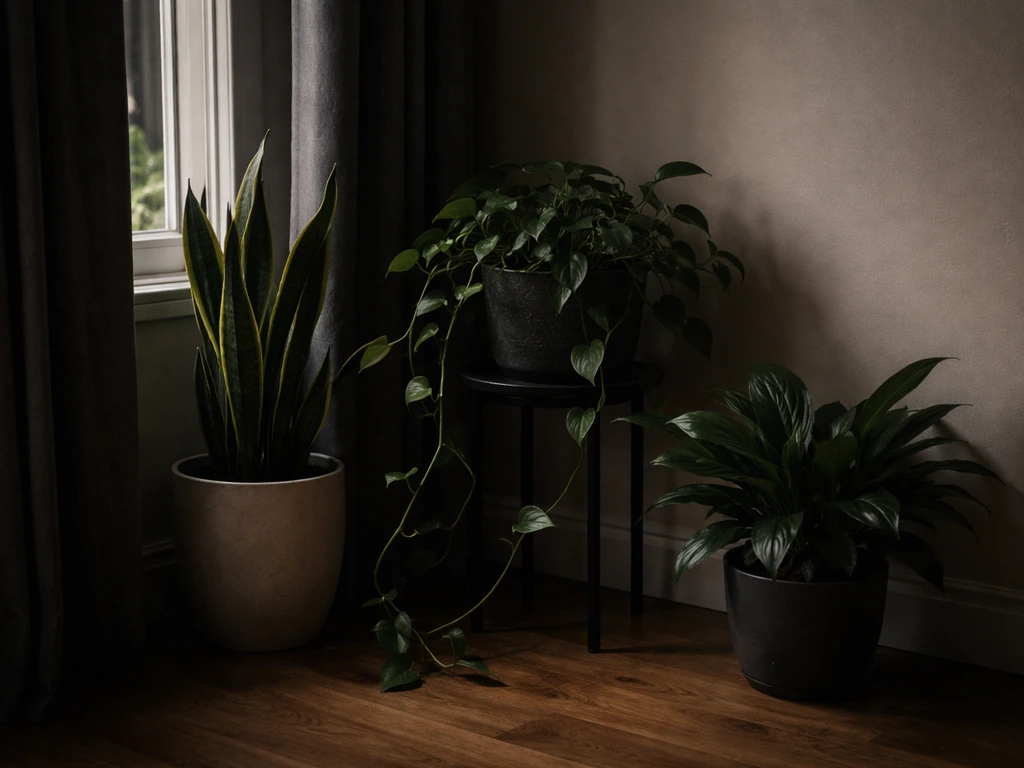
What "dark" actually means for indoor plants
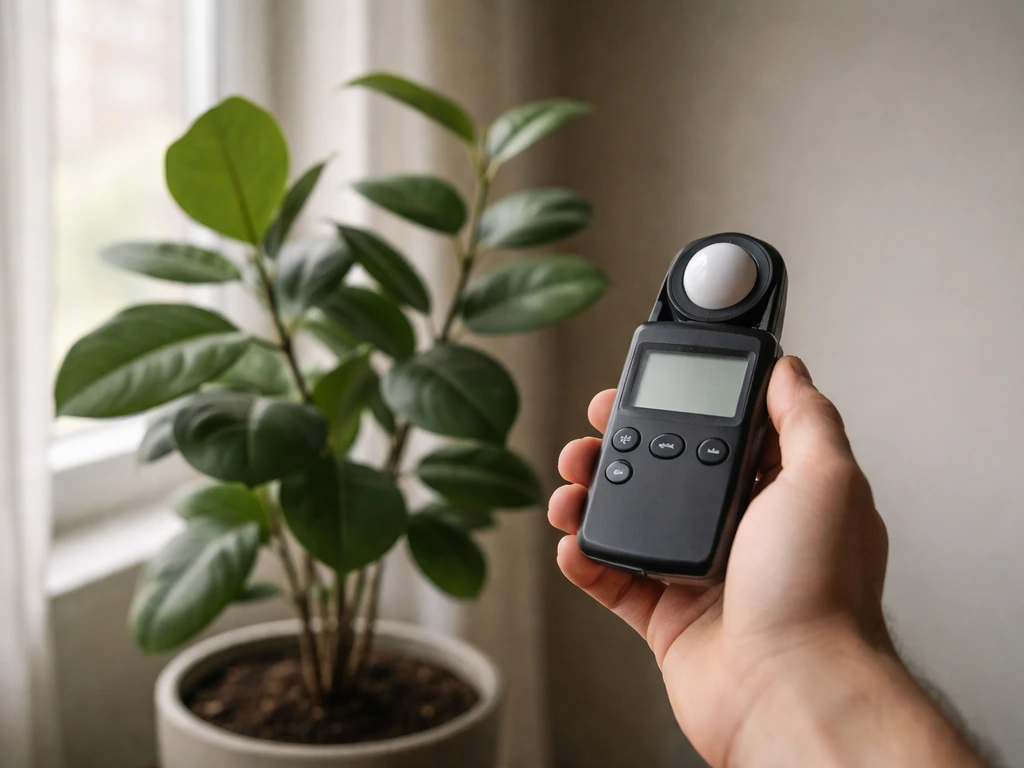
Light indoors is measured in foot-candles (fc). University of Maryland Extension and Missouri Botanical Garden both define the "low light" range as 25–100 fc. That covers north-facing rooms, hallways, interior rooms with no windows, and spaces that only get light from a lamp or an open doorway. It sounds dim, and it is, but it's not zero. A truly dark room, like a closet or an interior room with the door shut and no lamp, can drop below 10 fc. That's functionally nothing for photosynthesis, and no houseplant will do well there indefinitely.
Here's a quick way to think about it. If you can comfortably read a book in the room without straining, you probably have enough ambient light to keep the toughest low-light plants alive. If you have to flick on a light just to navigate the space, you're below that threshold and will need to supplement. That's not a dealbreaker, just something to know before you pick your plants.
The best plants for dark and low-light rooms
These plants have been tested in real low-light apartments, dim office corners, and rooms with nothing but a hallway light spilling under the door. They're not just "tolerant" of low light in a vague marketing sense. They're genuinely adapted to shade, and they won't throw a fit if they're not getting hours of sun every day.
- Snake plant (Sansevieria/Dracaena trifasciata): One of the most forgiving houseplants alive. Survives in 25–50 fc without visible distress for months. Growth slows to almost nothing, but it holds its form and stays healthy. Perfect for dark rooms.
- ZZ plant (Zamioculcas zamiifolia): Stores water in its rhizomes and tolerates neglect better than almost anything. Handles very low light well and doesn't need frequent watering, which is a bonus in dark rooms where you're more likely to overwater.
- Pothos (Epipremnum aureum): Trails, climbs, and keeps going even in dim spaces. Golden pothos is slightly more light-tolerant than the variegated varieties, which need a bit more light to hold their patterning.
- Peace lily (Spathiphyllum): Thrives in 25–50 fc. It'll tell you when it needs water by drooping slightly, which makes it forgiving for beginners. Flowers only appear with more light, but the plant stays lush even in dark rooms.
- Cast iron plant (Aspidistra elatior): Named appropriately. This plant was used in dimly lit Victorian parlors before electric lighting existed. It's genuinely one of the most shade-tolerant plants you can buy.
- Chinese evergreen (Aglaonema): Dark green varieties handle the lowest light levels. Variegated or red cultivars need more light, so stick to the plain green types for truly dim spots.
- Dracaena (various species): Most dracaenas handle low light well. Janet Craig (Dracaena fragrans) and corn plant varieties are particularly good for dim indoor spots.
- Prayer plant (Maranta leuconeura): Handles low light and adds visual interest with its patterned leaves. Prefers humidity, so a bathroom with some ambient light is ideal.
Very low light vs "dark-ish": which plants go where
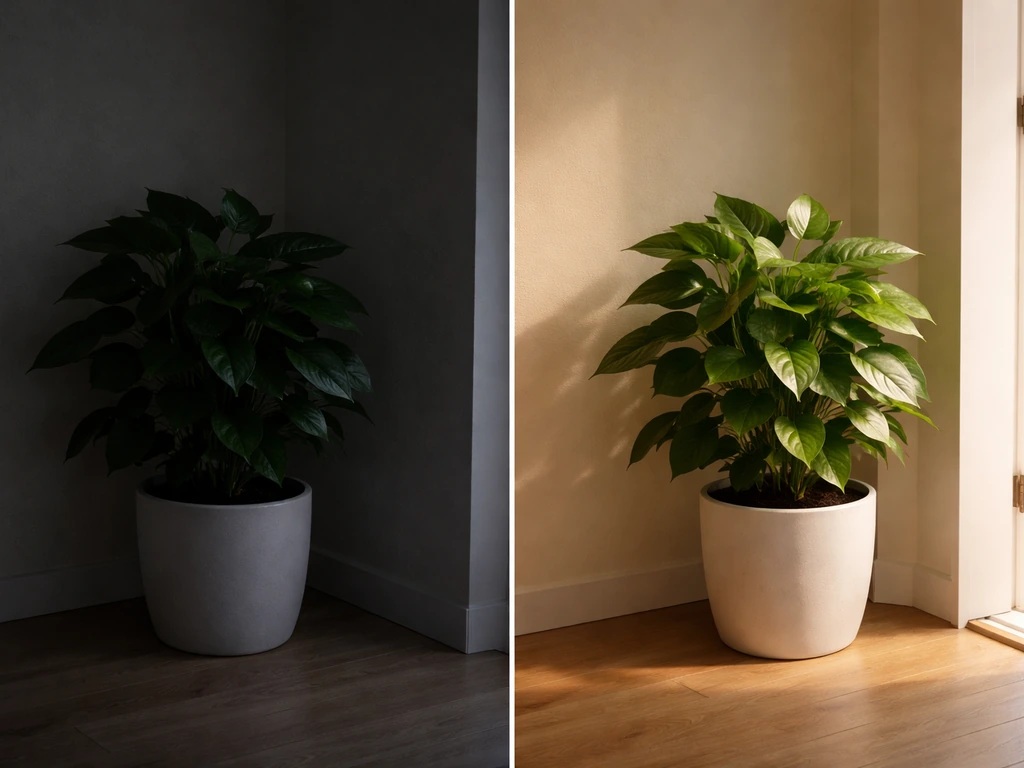
There's a real difference between a room with 25–50 fc and one with 50–100 fc, even if both feel "dark" to you. Mississippi State University Extension provides a foot-candle light range for “Low Light” that runs from 25 to 75 foot-candles and also discusses artificial light scenarios blank" rel="noopener noreferrer">25–50 fc. If your room gets some ambient light from a doorway, an always-on lamp, or a window in an adjoining space, you're in that higher range and have more options. If the room is truly sealed off with light only from an occasional ceiling fixture, you're working with the bottom of the scale. Here's how those two scenarios map to plant choices:
| Plant | Very low light (10–30 fc) | Low-light room with lamp/ambient (30–100 fc) | Notes |
|---|---|---|---|
| Snake plant | Yes (survives) | Yes (grows slowly) | Best all-around dark-room pick |
| ZZ plant | Yes (survives) | Yes (grows steadily) | Needs infrequent watering either way |
| Pothos | Marginal (plain green only) | Yes | Variegated types need 50+ fc |
| Peace lily | Marginal | Yes | Flowers need more light, foliage stays fine |
| Cast iron plant | Yes | Yes | Extremely shade tolerant |
| Chinese evergreen (green) | Yes | Yes | Avoid colorful varieties in very low light |
| Dracaena | Marginal | Yes | Janet Craig handles lowest levels |
| Prayer plant | No | Yes | Needs at least 50 fc to look its best |
If you're curious whether a specific plant works in a completely sealed space, both snake plants and ZZ plants come up constantly in those real-world tests. There are dedicated guides on whether a snake plant can grow in a dark room and whether a money plant handles near-zero light, because those two questions come up so often. The short version is both survive better than most, but neither actually thrives without some light source.
Keeping dark-room plants alive: care basics
Low-light care is different from regular plant care in one critical way: everything slows down. Photosynthesis is reduced, growth nearly stops, and the plant isn't pulling water or nutrients the way it would in a bright spot. Most dark-room plant deaths happen because the owner keeps watering on the same schedule they'd use in a sunny window, and the soil stays wet for too long. Root rot follows.
Watering
Cut your watering frequency roughly in half compared to what a plant tag recommends. In low light, most houseplants in well-draining soil need water every 2–3 weeks rather than weekly. Always check soil moisture before watering. Stick your finger 2 inches into the soil. If it's still damp, wait. For ZZ plants and snake plants specifically, erring on the dry side is always better than watering on schedule.
Soil and pots
Use a well-draining mix. A standard potting mix with a handful of perlite added is ideal for most low-light plants. Avoid moisture-retaining mixes marketed for tropical plants, since those hold water longer than a dark room's slow-growing plant actually needs. Always use a pot with drainage holes. Terra cotta dries out faster than plastic or glazed ceramic, which can actually be helpful in low-light situations where overwatering is the main risk.
Temperature and placement
Most low-light houseplants are tropical and prefer 60–80°F (15–27°C). Keep them away from cold drafts near exterior walls or under air conditioning vents. If the room is interior and naturally warmer, that's actually a plus. Humidity doesn't need to be obsessively managed for most of these plants, though peace lilies and prayer plants appreciate a light misting or a pebble tray with water underneath.
Setting up artificial light when your room needs a boost
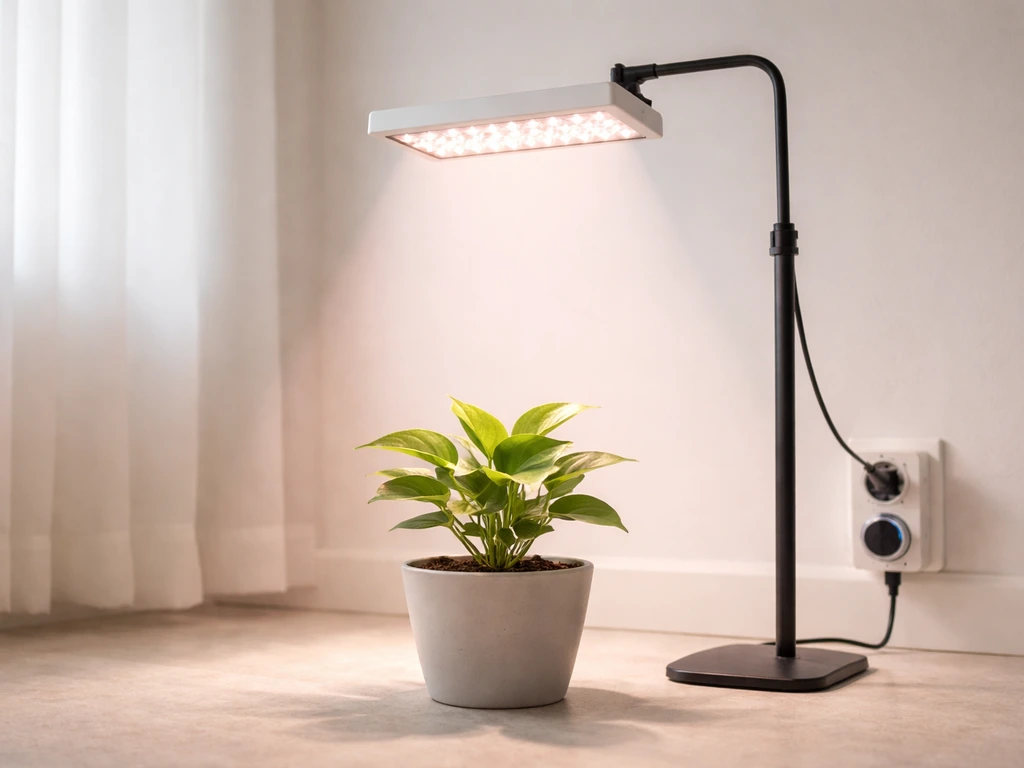
If your room falls below 25 fc, or if you want your plants to actually grow rather than just survive, adding artificial light is genuinely the most impactful thing you can do. The good news is you don't need an elaborate grow-light setup for low-light houseplants. A modest LED or fluorescent bulb can get the job done.
Grow lights vs. household LED bulbs
Purpose-built grow lights deliver light in the specific spectrum plants use for photosynthesis (primarily red and blue wavelengths). They're more efficient at producing usable plant light per watt than a standard bulb. However, for low-light-adapted plants like the ones on this list, a standard full-spectrum LED bulb or a cool-white fluorescent bulb placed close enough will absolutely work. You're not trying to grow tomatoes here.
| Light type | Best for | Approximate cost | Placement notes |
|---|---|---|---|
| Purpose-built LED grow light | Any houseplant, faster growth, compact setups | $15–$60 for a basic panel | 6–18 inches above plant canopy |
| Full-spectrum LED bulb (standard socket) | Low-light houseplants, casual setups | $8–$20 | Within 2 feet of the plant |
| Cool-white fluorescent tube | Low-light houseplants, shelving setups | $10–$25 | Within 2 feet; 4 feet drops to ~40 fc |
| Warm-white LED bulb | Marginal; low PAR output | $5–$15 | Not ideal; only use if nothing else available |
University of Missouri Extension research on fluorescent tube lamps illustrates why distance matters so much: at 2 feet from the bulb, you might get around 110 fc, but at 4 feet that drops to about 40 fc. That's a massive difference. Keep your light source as close as your setup allows, ideally within 12–24 inches of the plant canopy. For a shelf plant in a dark room, a small clip-on grow light or an LED desk lamp positioned 12–18 inches above the leaves is a practical, inexpensive fix.
How long to run the light
Aim for 12–14 hours of artificial light per day for low-light-adapted plants. A $10 plug-in timer takes the guesswork out entirely. Plants need a dark period too, so don't run lights 24 hours. Set the timer to match a natural day length and leave it. If you're also getting some ambient daylight in the room, 8–10 hours of supplemental light may be plenty.
Why low-light plants fail (and how to fix it)
Even the toughest shade-tolerant plants can fail in dark rooms, and it's almost always one of the same few causes. Here's what to watch for and what to do about each.
- Leggy, stretched growth: The plant is reaching toward any available light. Stems get long and weak, leaves spread far apart. Fix: add a light source closer to the plant, or rotate it toward whatever light exists. Leggy growth won't reverse, but new growth will be more compact once the light improves.
- Yellow leaves: Usually overwatering in low-light conditions, though it can also mean the plant simply isn't getting enough light to maintain its existing leaves. Fix: check the soil moisture first. If it's wet, pull back on watering and make sure drainage is adequate. If the soil is dry and yellowing continues, the plant needs more light.
- No new growth for months: In very low light, slow growth is expected, but zero new growth over several months is a sign the plant is in survival mode rather than growing. Fix: move it closer to any light source, add a supplemental lamp, or move it to a brighter room occasionally for a "light charge."
- Wilting despite wet soil: Classic root rot from overwatering. The roots can't function, so the plant wilts even though there's plenty of moisture. Fix: unpot the plant, trim any black or mushy roots, repot in fresh dry mix, and leave it to dry out before watering again. Cut watering frequency going forward.
- Pests (fungus gnats in particular): Consistently wet soil in low-light rooms is a breeding ground for fungus gnats. Fix: let the soil dry out more between waterings. Top-dress with a thin layer of sand or grit to deter egg-laying. A yellow sticky trap near the pot catches adults.
- Pale, washed-out leaves: Distinct from yellowing, this is usually light stress in variegated plants that need more light to maintain their pigmentation. Green varieties are safer bets for truly dark rooms. Fix: swap to a plain green variety, or add supplemental light.
One pattern worth knowing: most dark-room plant failures are slow, not sudden. The plant looks okay for weeks, then gradually declines over months. By the time it looks bad, it's been struggling for a while. Check in on your plants every couple of weeks and look for early signs, slight drooping, a new pale leaf, soil that's been wet too long. Catching issues early makes them much easier to fix.
Dark rooms aren't hopeless for plants, they just require a bit of honesty about what "dark" actually means and choosing the right species for the actual conditions. Start with a snake plant or ZZ plant, check your soil before every watering, and grab a basic LED grow light if you want to give your plants a real chance to thrive rather than just survive. That's genuinely all it takes.
FAQ
Can a plant grow in a completely dark closet where it never sees any light?
No plant can survive indefinitely with zero light exposure. Even “dark room” plants need a measurable light source, typically at least above the very low 10 foot-candle range. If the light never falls on the leaves even briefly, treat it as a no-go situation, or plan to add artificial light.
How do I know whether my grow light is strong enough for a dark room?
Keep the bulb close and aim it so the leaves receive light directly. For many setups, changing the distance from the plant is more important than upgrading to a pricier bulb, because foot-candles drop quickly as distance increases. Use the “read a book comfortably” rule for ambient light, then use a timer and placement to top up what’s missing.
What’s the difference between 25 to 50 foot-candles and 50 to 100 foot-candles for low-light plants?
Yes, but “thriving” requires more than tolerance. In the 25 to 50 foot-candle range many low-light species can survive and slowly maintain themselves, while closer to 50 to 100 foot-candles you’ll get steadier new growth. If your room is consistently nearer the bottom end, expect only slow changes unless you supplement light.
My plant looks worse after moving to a darker room, what should I check first?
Most low-light plants signal trouble through gradual decline, leggy stems, paler new growth, or persistent wilting even when the soil isn’t fully dry. The fastest fix is usually to adjust watering first, then confirm light levels and move the plant or increase light duration.
Is it always enough to water low-light plants on a schedule that’s half as often as usual?
Cutting watering in half is a starting point, but the real trigger should be soil dryness. If you’re using a light moisture meter, still verify with a finger test since readings can be misleading in dense mixes. In low light, consistently wet soil for more than about a couple weeks is the bigger red flag than missing a calendar schedule.
What’s the best way to prevent root rot in low-light conditions?
Use well-draining soil plus a pot with drainage holes, then never let the pot sit in a saucer of water. If you do get standing water, empty it promptly, and consider unpotting to check for sour smell or black, mushy roots. In dark rooms, root rot can progress slowly enough that the plant seems “fine” at first.
Do I need to worry about humidity or temperature more in a dim room?
Temperature swings matter more than humidity for many low-light houseplants. Keep plants away from cold exterior walls, drafty windows, and blasting air conditioning, since cold stress slows growth and can worsen watering-related issues. A generally stable indoor range is safer than “comfortable to me” if the plant is near a vent.
Should my grow lights run all day or only part of the day?
Many low-light plants need a regular light-off period to support normal growth rhythms. Running lights 24 hours often leads to weaker growth and can encourage other issues. If you already have ambient daylight, you may need fewer supplemental hours, commonly around 8 to 10, but confirm by watching new growth rate over time.
If my room is too dark to grow plants, what’s the safest way to choose what to buy?
Start with the species that are adapted to shade, like snake plant or ZZ plant, and add a small light boost if you’re near the lowest foot-candle end. If you want “actual growth,” plan for supplemental light and accept that even the toughest plants will still grow slowly without it.
Should I rotate plants in a dark room, especially if the light is coming from one side?
Rotating the pot every couple of weeks helps prevent one-sided leaning toward the light source, especially when light comes from a lamp or doorway. In dark rooms, the plant may also stretch more subtly, so rotation plus closer light placement often improves shape.