
Yes, plants can absolutely grow in a room with no windows, but only if you replace the missing sunlight with the right artificial light. "No windows" does not mean "no light", it means you're fully in charge of what light your plants get, which is actually more controllable than you'd think. The plants you choose matter a lot, and so does how you set up your grow lights. Get those two things right and a windowless room becomes a perfectly workable growing space.
Can Plants Grow in a Room Without Windows? Guide
Marcus Hartley
11 May 2026
What 'no windows' actually means for your plants
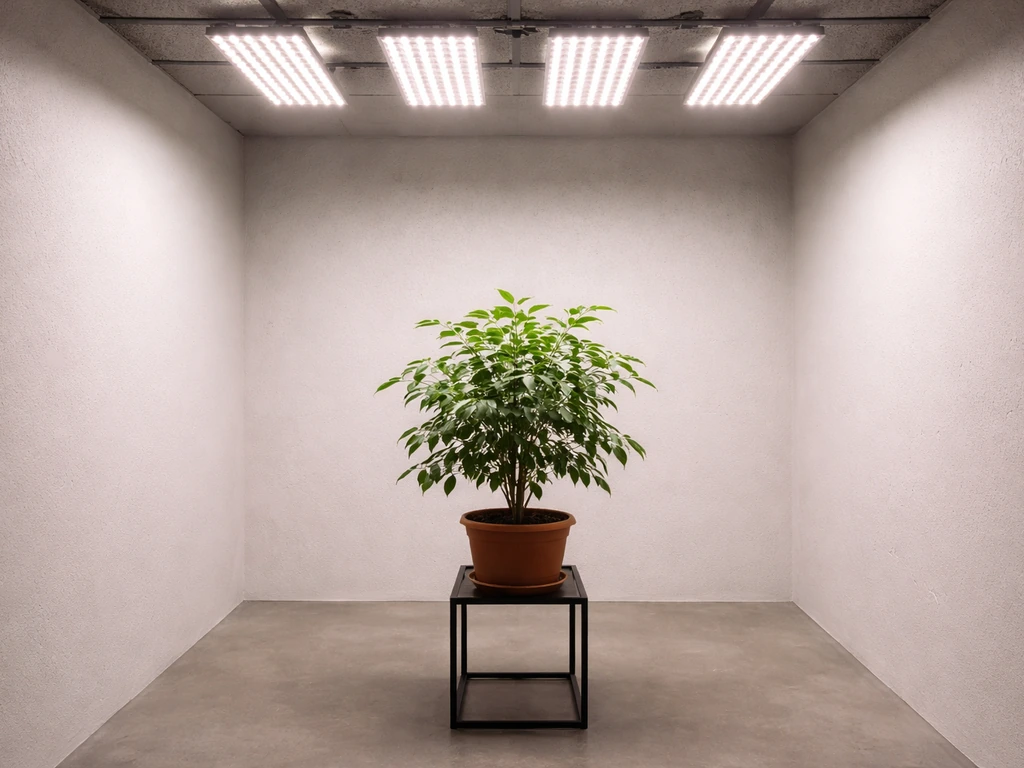
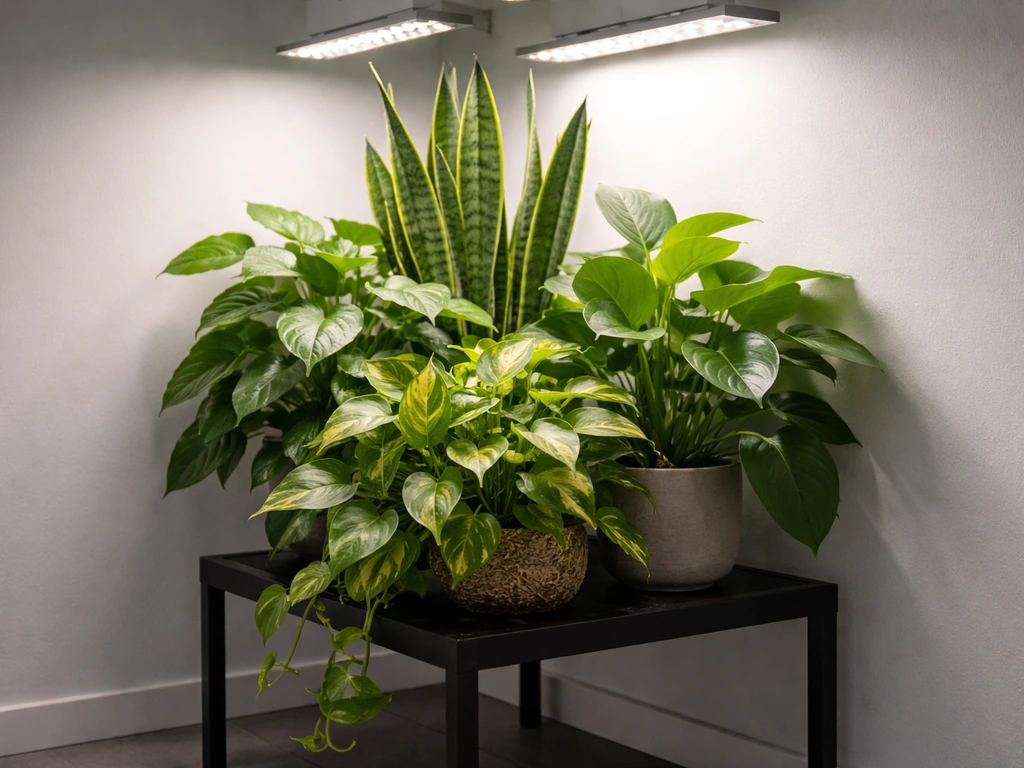
When people ask whether plants can grow without windows, they're usually conflating two very different situations. A room without windows isn't a room without light, it's a room without natural light. That distinction matters enormously. Plants don't care whether photons come from the sun or from a bulb above your shelf. What they care about is the quantity and quality of light hitting their leaves, because that's what powers photosynthesis.
What plants actually can't survive is complete darkness. Even the most shade-tolerant species need some light energy to run basic metabolic functions. So the real question isn't whether artificial light works, it does, but whether you're providing enough of the right kind. The metric that matters most here is PPFD (photosynthetic photon flux density), which measures how many light particles useful to plants are landing on a surface per second. A standard lamp in the corner of a room probably won't cut it. A purpose-built grow light positioned correctly will.
One more thing worth saying upfront: a windowless room is actually simpler in some ways than a room with tricky, inconsistent natural light. You're not fighting afternoon glare, seasonal shifts, or light filtered through window film or glass. You control everything. That's a real advantage once you understand the basics.
Best plants for windowless rooms
Not every plant is a realistic candidate here. Fruiting plants, cacti, succulents, and most flowering species need intensity levels that are expensive to replicate artificially in a home setting. Stick to plants that have evolved in the understory of dense forests, they're built for low-to-medium light and genuinely thrive under grow lights. Here are the most reliable picks.
Snake plant (Sansevieria / Dracaena trifasciata)
If you're starting out, start here. University of Maryland Extension calls it "likely the toughest" houseplant for low-light conditions, and University of Illinois Extension notes it can be grown in any light intensity from dim interior to full sun. That range is extraordinary. Under a modest grow light, snake plants grow slowly but steadily, hold their structural form beautifully, and forgive irregular watering. They're the plant I'd recommend to anyone setting up a windowless space for the first time.
ZZ plant (Zamioculcas zamiifolia)
ZZ plants are built for neglect. Their thick rhizomes store water and nutrients, which means they tolerate inconsistent care alongside low light. UF IFAS research confirms they're more tolerant of low light than most foliage plants, and their slow transpiration rate means soil stays moist longer, which is something to keep in mind when watering (more on that later). The deep green, glossy foliage looks great under warm-spectrum grow lights too.
Pothos (Epipremnum aureum)
Pothos is forgiving, fast-growing, and tells you immediately when something is wrong. Both Clemson HGIC and Penn State Extension confirm it can survive low light for a significant period, though Penn State notes that variegation and color quality will fade over time without adequate light. Under a good LED grow light, pothos bounces back quickly and vines out enthusiastically. It's one of the best plants for testing whether your light setup is working.
Chinese evergreen (Aglaonema)
Aglaonema handles low, indirect light better than most decorative foliage plants, and Clemson HGIC confirms it performs well in heavily shaded indoor conditions. The dark green varieties (rather than the bright pink or red ones) are the best bet for low-light setups because they carry more chlorophyll. They're slow growers, which means mistakes don't escalate quickly, a good trait when you're dialing in a new setup.
Other solid options
- Cast iron plant (Aspidistra elatior) — nearly indestructible, tolerates very dim light
- Peace lily (Spathiphyllum) — one of the few flowering plants genuinely suited to low light
- Dracaena (most varieties) — slow, low-fuss, handles artificial light well
- Heartleaf philodendron — similar care profile to pothos, equally forgiving
How much artificial light these plants actually need
Here's where most beginners go wrong: they assume any light is enough light. It isn't. Plants use light in a measurable way, and you need to hit at least a minimum threshold for photosynthesis to outpace respiration, otherwise the plant slowly declines even if it looks okay for a while.
The most useful unit for this is PPFD, measured in µmol·m⁻²·s⁻¹. Low-light plants like the ones listed above generally need roughly 40 to 100 µmol·m⁻²·s⁻¹ at the leaf surface. A cheap PPFD meter (also called a PAR meter) plugged into your phone can tell you exactly what your grow light is delivering at canopy level, and it's a worthwhile $20 to $30 investment if you're serious about this.
Duration matters just as much as intensity. The concept of daily light integral (DLI) combines both: it's the total amount of light energy a plant receives over a full day, calculated by multiplying your PPFD by your photoperiod in seconds and converting the result. For low-light houseplants in a windowless room, targeting a DLI of around 4 to 8 mol·m⁻²·day⁻¹ is a reasonable starting range. Practically, that means running a moderate grow light for 12 to 16 hours a day. A simple outlet timer makes this effortless.
One note on lux readings: lux meters are common and cheap, but lux is a measurement of light as human eyes perceive it, not as plants use it. The PPFD-to-lux conversion varies depending on the spectrum of your light source, so lux alone can be misleading when evaluating grow lights. If you can only measure one thing, measure PPFD at canopy level.
Choosing grow lights for a windowless room: LED vs fluorescent
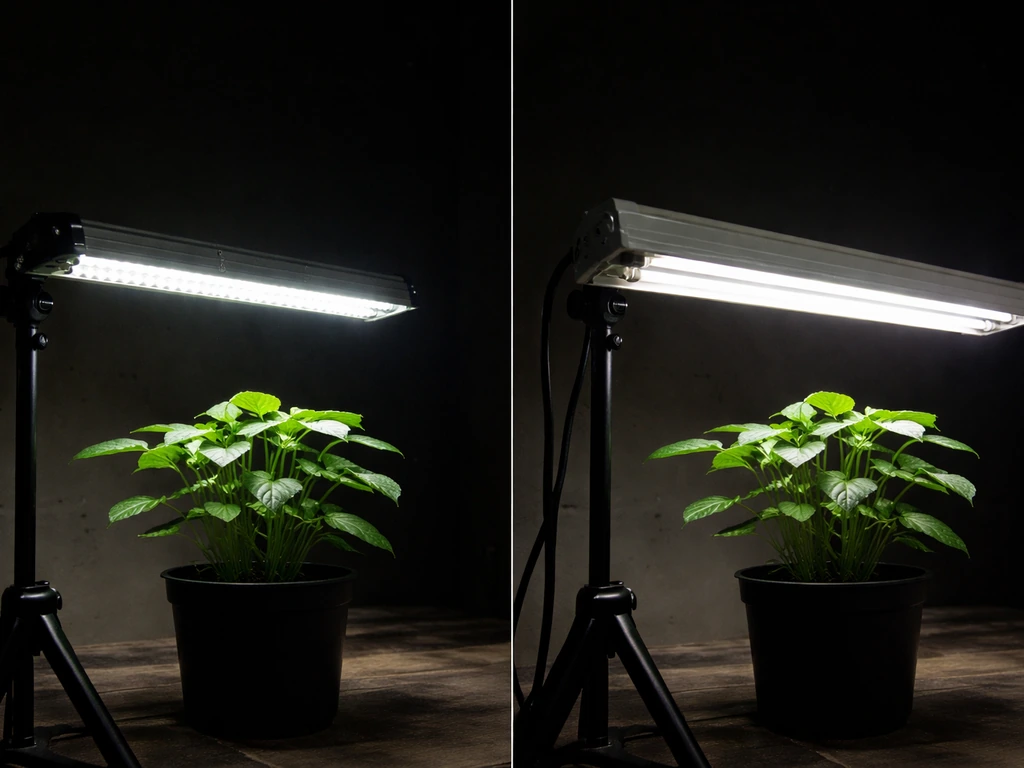
You have two main realistic options for a home windowless setup: LED grow lights and fluorescent fixtures. Incandescent bulbs are not a viable choice, K-State Extension notes they produce far more heat than useful light, making them inefficient and potentially harmful to plants placed close enough to get adequate intensity.
| Feature | LED Grow Lights | Fluorescent (T5/T8) |
|---|---|---|
| Energy efficiency | Very high — less wasted as heat | Moderate — more heat than LED |
| Lifespan | ~50,000–100,000 hours (L90 rated) | ~10,000–20,000 hours |
| Upfront cost | Moderate to high | Low to moderate |
| Running cost | Lower long-term | Higher than LED |
| Heat output | Low — stays cool close to plants | Moderate — can stress plants if too close |
| Spectrum control | Full or broad spectrum available | Limited; cool white most common |
| Best for | Long-term setups, larger spaces | Budget starts, seedlings, small shelves |
For a windowless room you plan to use long-term, LED grow lights are the better investment. OSU Extension's evaluation criteria for horticultural LEDs highlight efficiency, heat output, light quality, and lifespan as the key factors, and LEDs win on almost all of them over time. Look for a full-spectrum LED that explicitly lists PPFD output at a given distance, not just wattage. Wattage tells you how much power the light draws; PPFD tells you how much useful light your plants actually receive.
If budget is tight right now, a T5 fluorescent shop fixture with two 40W tubes works genuinely well for low-light plants, especially on shelving units. Iowa State Extension recommends positioning these fixtures 6 to 12 inches from foliage for adequate intensity. Just expect to replace bulbs more frequently and pay more on your electricity bill over time.
Setting up your lights and scheduling them properly
Placement: get the distance right
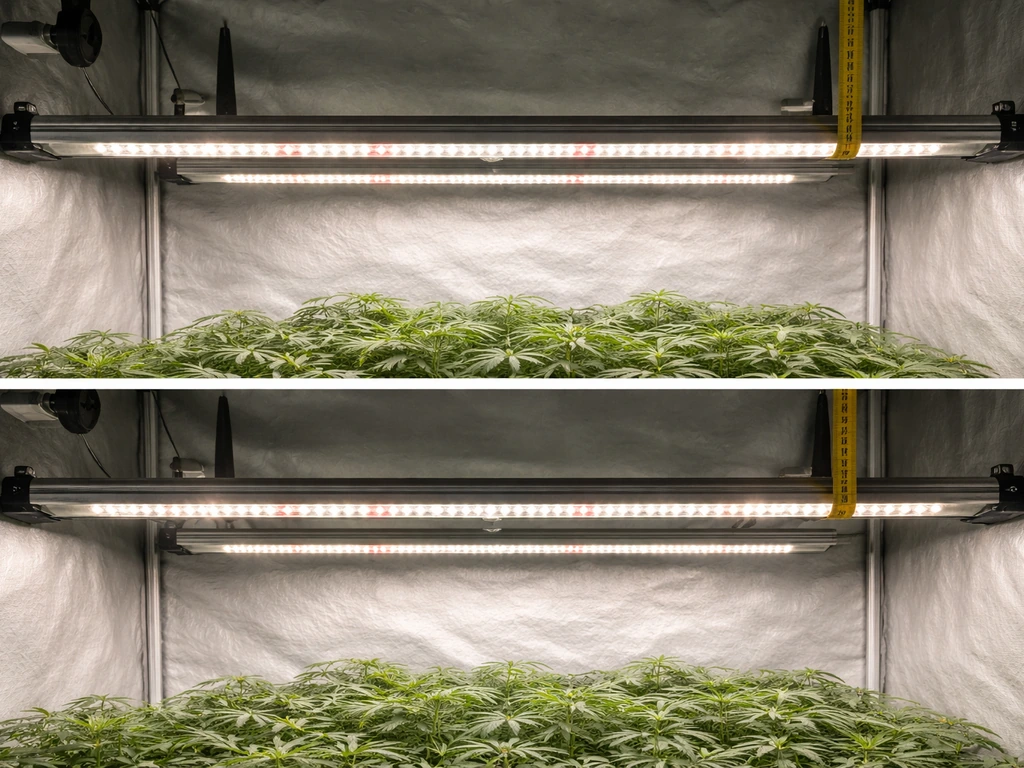
Light intensity drops off quickly with distance, this is the inverse square law in action. If you use mirrored surfaces to bounce extra light around, the effective intensity at the leaves can improve without changing your fixture light intensity drops off quickly with distance. A grow light that delivers a useful PPFD at 12 inches may deliver half that at 18 inches. Always check your specific light's manufacturer specs or measure with a PAR meter at the actual distance your plants will sit. For low-light foliage plants under a modest LED panel, 12 to 24 inches above the canopy is a common starting point, but verify rather than assume.
Uniformity matters too, especially if you're growing multiple plants. IES horticultural lighting guidelines specifically flag PPFD uniformity across the canopy as a key factor, a plant sitting at the edge of your light's coverage zone may be getting significantly less light than one directly underneath. IES horticultural lighting recommended practice ANSI/IES RP-45-21 emphasizes that plant response depends on both irradiation timing and total daily light dose, and it also discusses PPFD uniformity across the canopy ANSI/IES RP-45-21 horticultural lighting recommended practice. Rotate your plants every week or two, or invest in a wider-spread fixture to even things out.
Scheduling: use a timer, not guesswork
Plants benefit from consistent light cycles. Research on photoperiod and plant growth confirms that changing the number of light hours at a fixed PPFD changes total light dose and growth outcomes, it's not just about intensity, it's about total daily exposure. For most low-light houseplants in a windowless room, 12 to 16 hours of light with 8 to 12 hours of darkness is a solid starting schedule. Don't leave lights on 24 hours, plants need a dark period for certain physiological processes, and constant light can actually stress some species.
A basic mechanical outlet timer costs under $10 and removes all the guesswork. Set it, forget it, and your plants get consistent light every day. This is one of the easiest wins in a windowless setup and something I'd call non-negotiable for anyone serious about getting results.
A simple starting setup
- Choose a full-spectrum LED grow light sized for your space (check PPFD specs at the distance you'll use)
- Position it 12 to 24 inches above your plant canopy as a starting point
- Plug it into a timer set for 14 hours on, 10 hours off
- Measure PPFD at canopy level after a week and adjust height if needed
- Rotate plants weekly for even coverage
Care essentials beyond light
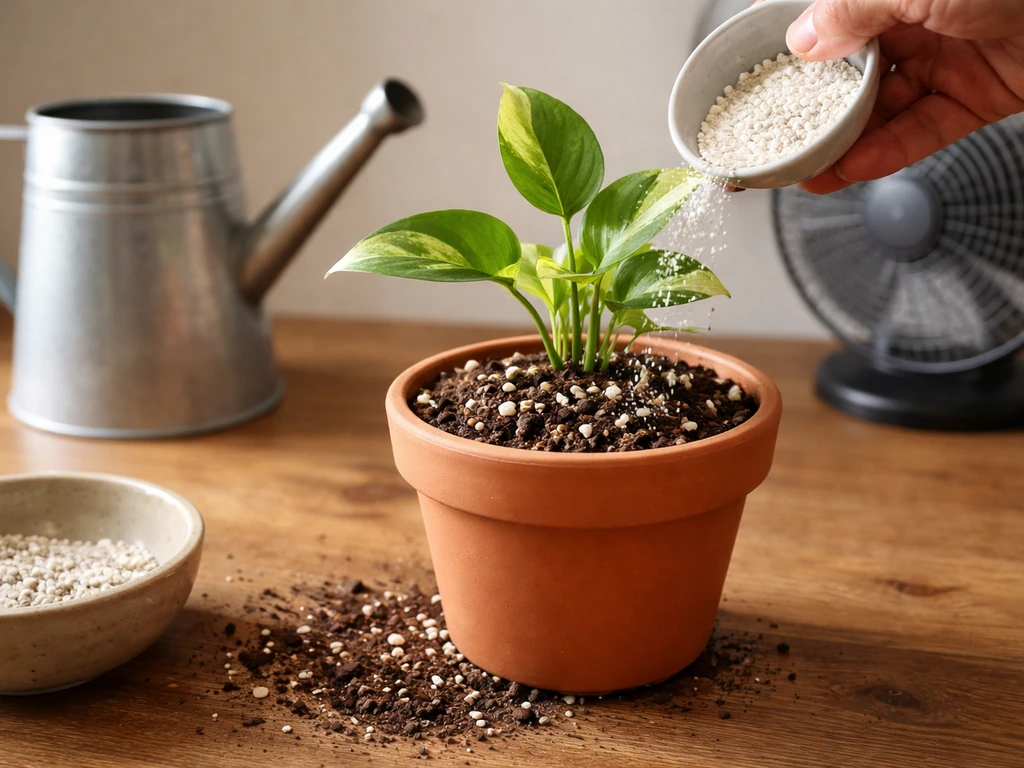
Light is the biggest variable in a windowless room, but it's not the only one. Getting the other basics right is what separates a thriving plant from one that just slowly declines despite a decent light setup.
Watering: less is more here
This is the most common mistake in low-light and windowless setups. Without the warmth and evaporation that sunlight provides, soil dries out much more slowly than it would near a bright window. Overwatering is the number one killer of houseplants in these conditions. University of Maryland Extension identifies yellowing of lower and inner leaves, wilting despite moist soil, and eventual leaf drop as the classic signs of overwatering, and these symptoms overlap annoyingly with light deficiency, which makes diagnosis tricky. The rule of thumb: always check soil moisture before watering. Stick your finger two inches into the soil. If it still feels damp, wait.
Soil: drainage is everything
Use a well-draining potting mix. For ZZ plants and snake plants especially, adding perlite (about 20 to 30% by volume) improves drainage significantly and reduces the risk of root rot, a real concern in low-light environments where soil stays wet longer. Gardening Know How notes that low-light plants are especially vulnerable to root rot precisely because the soil doesn't dry between waterings the way it would in brighter conditions.
Airflow and humidity
Stagnant air in a closed windowless room creates two problems: it encourages fungal issues like powdery mildew, and it can let humidity build up around foliage. A small fan running on low for a few hours a day keeps air moving around your plants, mimics natural outdoor conditions, and dramatically reduces the risk of fungal outbreaks. Cornell CALS also notes that consistently warm, humid conditions promote fungus gnat populations, those annoying tiny flies that breed in wet soil. Good airflow and letting soil dry between waterings keeps them away.
Fertilizing: go light-handed
Plants in low-light setups grow more slowly than they would in brighter conditions. That means they use nutrients more slowly too. Cut your fertilizer dose to half the recommended rate and apply it only during the active growing period (roughly spring through summer). Over-fertilizing a slow-growing plant in low light pushes weak, stretched growth and can burn roots, neither of which helps you.
Troubleshooting the most common problems
Leggy, stretched growth
If your plant is producing long, widely spaced stems with small leaves and pale coloring, it's etiolating, reaching desperately toward a light source that isn't strong enough. This is the clearest signal that your light is either too far away, not bright enough, or not on long enough. Move the light closer, check your PPFD, and extend the photoperiod. Also resist the urge to fertilize a leggy plant, adding nitrogen to a light-starved plant just makes the stretched growth worse.
Yellowing leaves
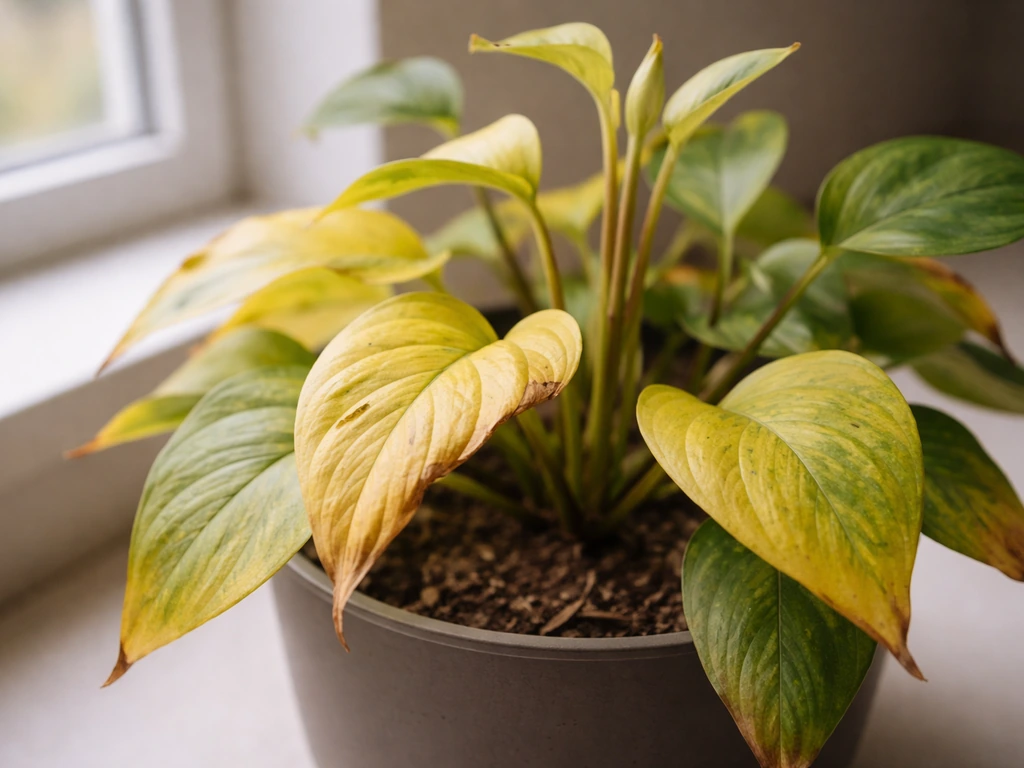
Yellow leaves have multiple possible causes in a windowless room, which is what makes them frustrating to diagnose. The key is to look at the pattern and the soil. If lower and inner leaves are yellowing and the soil has been consistently wet for days at a time, overwatering is the most likely culprit, check for root rot while you're at it. If yellowing is more widespread, newer growth looks pale, and soil moisture seems fine, insufficient light is the likely cause. Increase light duration or intensity and see if new growth comes in greener.
Slow or no growth
Low-light plants are inherently slow growers, so some patience is warranted. But if a plant shows zero new growth for several months under your artificial setup, something is off. Work through the basics: Is your PPFD at canopy level actually in the 40 to 100 µmol·m⁻²·s⁻¹ range? Is the photoperiod consistently 12 to 16 hours? Is the plant root-bound or in nutrient-depleted soil? Is the temperature in the room staying reasonable (most tropical foliage plants prefer 60 to 80°F)? Eliminating these one by one usually reveals the issue.
Wilting despite regular watering
Counterintuitively, wilting with wet soil almost always means root rot rather than underwatering. When roots are damaged by consistently saturated soil, the plant can't take up water even though it's available. Ease off watering immediately, improve drainage, and if the problem is severe, consider repotting into fresh, dry mix after trimming any blackened roots. This is recoverable if caught early.
Quick diagnosis reference
| Symptom | Most Likely Cause | Fix |
|---|---|---|
| Long, pale, widely spaced stems | Insufficient light (etiolation) | Move light closer or increase photoperiod |
| Lower leaves yellowing, wet soil | Overwatering / root rot | Let soil dry, improve drainage, check roots |
| Widespread pale/yellow new growth | Not enough light intensity | Increase PPFD or run light longer |
| No growth for months | Light too low, root-bound, or cold temps | Check PPFD, repot, confirm room temperature |
| Wilting with moist soil | Root rot from overwatering | Reduce watering, repot with fresh mix |
| Tiny flies around soil | Fungus gnats from consistently wet soil | Let soil dry out, improve airflow |
A windowless room is not a hostile environment for plants, it's just one where you have to be intentional. Pick a forgiving species like snake plant or ZZ plant, get a decent full-spectrum LED, set a timer, and watch your watering. Most people who fail at this do so because they either chose the wrong plant, underestimated how little light a regular bulb provides, or kept the soil too wet. Solve those three things and you'll be genuinely surprised what grows.
FAQ
How dark can a windowless room be at night, and do I need complete darkness?
For most low-light houseplants, you should aim for a true dark period (lights off) for the entire night window, not “dim room light.” Even small stray light from LEDs, TVs, or hallway fixtures can slightly alter the daily light integral and confuse troubleshooting, especially with slow-growing plants.
Is a grow light running 24 hours a day ever a good idea?
Usually no. Continuous light can stress many indoor plants because they need a dark period for normal physiology. If you suspect plants are not responding, increase photoperiod within the typical range (often 12 to 16 hours for low-light types) or raise PPFD, then reassess new growth over a few weeks.
Can I grow plants in a windowless room using only a regular lamp.
Often not. Regular bulbs rarely provide enough usable intensity at leaf level, and their spectrum may be poorly matched for photosynthesis. If you try it anyway, measure PPFD at canopy distance and confirm you are near the target range for the plant group you chose.
How far should the LED be from the leaves, and how do I avoid guessing.
Distance is critical because intensity drops quickly as you move away from the fixture. Use your manufacturer’s PPFD-versus-distance data if provided, or measure with a PAR meter at the exact shelf height, then keep the light at that fixed position for at least a couple of growth cycles.
Do I need to rotate plants under the light.
Yes, if your fixture does not cover the entire canopy evenly. Rotating every week or two helps compensate for lower PPFD near edges. Alternatively, use a wider-spread fixture or raise/lower the light to improve coverage uniformity.
What PPFD number should I target if I want multiple plant types in the same room.
You need the highest-demand plant’s target to prevent the others from being underlit, but placement matters. Consider grouping plants by light requirement and using separate shelves or fixtures, because raising one light level can overexpose shade-tolerant plants.
Is lux measurement good enough if I do not have a PPFD meter.
Lux is not reliably interchangeable with PPFD because human vision weights colors differently than plants do. If you only have lux readings, treat them as a rough clue, but decision-making should still be anchored to PPFD at leaf level when possible.
Why are my plants growing taller and thinner (leggy) even though I use a grow light.
Legginess usually means the light dose is insufficient at the leaf surface, either the fixture is too far, the PPFD is low, or the photoperiod is too short. Increase PPFD by moving closer or upgrading the fixture, and verify your timing with an outlet timer rather than relying on memory.
How can I tell whether yellow leaves are from too much water or too little light.
Check the pattern and soil moisture together. If lower or inner leaves yellow while the soil stays wet for multiple days, root stress from overwatering is likely. If soil is drying as expected but new growth looks pale or slow to green up, light is more likely the limiter.
What is the fastest way to diagnose a windowless setup that “is not working.”
Run a short checklist: confirm your timer is set to the daily photoperiod you think it is, measure PPFD at canopy level, verify plants are not sitting farther from the light than intended, and then inspect drainage and soil moisture routine. This prevents the common mistake of adjusting fertilizer when the real issue is light intensity.
How often should I water plants in a windowless room, and why does the schedule not match a windowed room.
You should base watering on soil drying, not a calendar. Windowless conditions often stay cooler, more humid around leaves, and they reduce evaporation, so pots can remain wet longer. Always check moisture before watering, and use a well-draining mix plus appropriate pot drainage holes.
Do I need a fan if my room already feels dry and I do not see mold.
A gentle airflow still helps. It reduces leaf-surface humidity pockets that can lead to fungal issues and can deter fungus gnats by helping the soil dry more evenly. If you never move air at all, you are more likely to see recurring mildew or persistent gnats after watering.
Should I use fertilizer in a windowless room the same way as outdoors.
No. Because low-light plants usually grow more slowly, they typically need less fertilizer and a narrower application window during active growth. If you fertilize at the normal rate, you can get weak stretched growth or salt buildup, especially in slow-growing foliage.
What temperature range should I keep in a windowless plant room.
Many tropical foliage plants do best in a moderate indoor range, roughly 60 to 80°F. Cold spots near the floor, vents, or poorly insulated corners can slow growth and make you misinterpret light deficiency, because metabolism drops when temperature is low.
How long should I wait before judging that the lighting plan is failing.
Give it time for new growth. Expect slow changes in low-light species, and evaluate over several weeks, not days. If there is absolutely no new growth for a few months, then measure PPFD again, check photoperiod, and inspect roots and soil fertility before making major changes.