
Cannabis can survive in indirect sunlight, but it almost certainly won't thrive or flower reliably without help. A healthy weed plant in vegetative growth needs a PPFD (photon flux density) of roughly 400–600 µmol·m⁻²·s⁻¹ for 18 hours a day. A bright south-facing window might hit 2,000–5,000 lux on a good day, which translates to somewhere around 40–100 µmol·m⁻²·s⁻¹ of usable light, maybe a bit more if you're lucky. That gap tells you everything.
Can Weed Plants Grow in Indirect Sunlight? A Guide
Marcus Hartley
26 Apr 2026
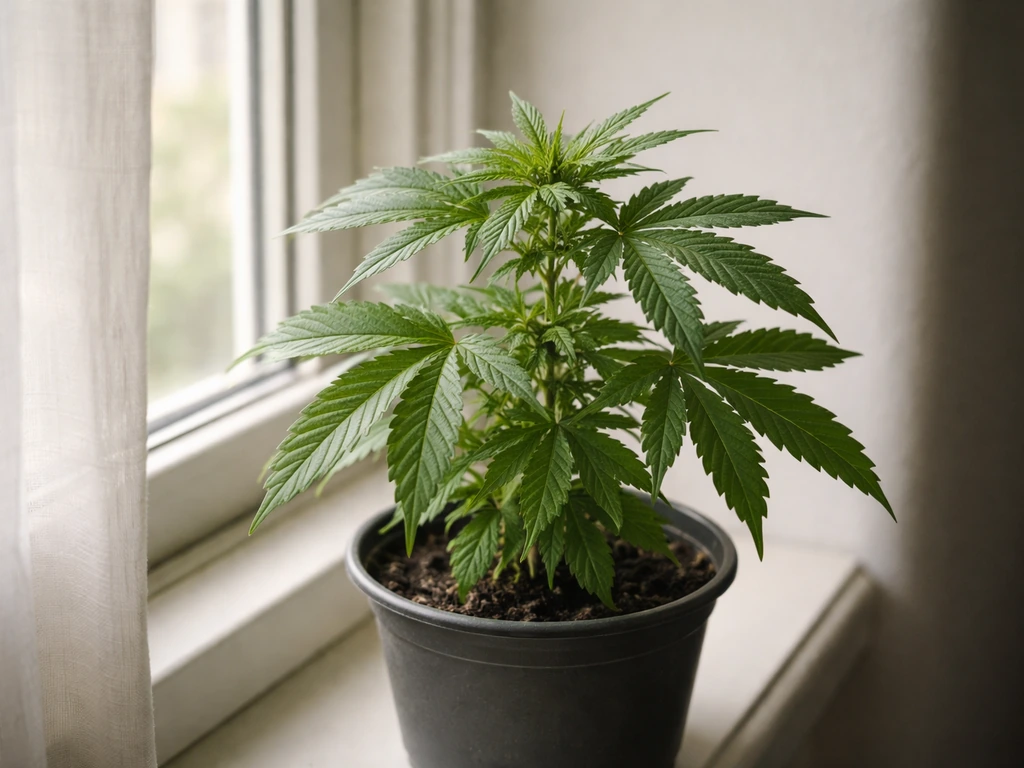
You're not going to get dense buds from a shady windowsill. But indirect light can keep seedlings and clones alive, sustain slow vegetative growth, and buy you time while you sort out a proper setup. Knowing exactly where your light situation falls, and what to do about it, is what this guide is for.
What 'indirect sunlight' actually means for indoor cannabis
Indirect sunlight means your plant is getting light that has bounced off something before reaching it, or light coming through a window without the sun's direct beam hitting the leaves. Think of a bright room where you can read comfortably but the sun isn't shining straight onto your desk. That's indirect. It's not darkness, but it's a long way from the 80,000–100,000 lux (roughly 30–40 DLI) that full outdoor sun provides on a clear summer day.
For cannabis specifically, the relevant metric isn't brightness the way your eyes perceive it. Plants use light in the 400–700 nanometer range, called photosynthetically active radiation (PAR). The practical measurement is PPFD, in µmol per square meter per second. Lux measures how bright light appears to humans, not how much photosynthetic energy a plant actually receives. That distinction matters when you're trying to figure out if your window is doing anything useful for your plants.
Indirect light from a window can mean very different things depending on which direction the window faces, how far the plant sits from the glass, whether there are trees or buildings outside, and what time of year it is. A plant one meter back from a north-facing window in winter is in a completely different situation than a plant sitting right on the sill of a west-facing window in June. Both are 'indirect sunlight,' but one might support slow vegetative growth while the other is essentially low-light survival mode.
How much light cannabis actually needs: survival, healthy growth, and flowering
The clearest way to think about this is in terms of DLI, or daily light integral. DLI combines both the intensity and duration of light into one number: how many moles of photons the plant receives per square meter per day. You calculate it from PPFD: DLI = 0.0036 × PPFD × hours of light per day. It's the metric that actually predicts growth outcomes.
| Growth Stage | Target PPFD | Photoperiod | Target DLI | What Happens Below This |
|---|---|---|---|---|
| Seedling | 200–400 µmol·m⁻²·s⁻¹ | 18 hours | ~13–26 mol·m⁻²·day⁻¹ | Slow start, stretchy seedlings |
| Vegetative | 400–600 µmol·m⁻²·s⁻¹ | 18 hours | ~25–40 mol·m⁻²·day⁻¹ | Leggy growth, thin stems, poor structure |
| Flowering | 600–1000 µmol·m⁻²·s⁻¹ | 12 hours | ~35–55 mol·m⁻²·day⁻¹ | Airy buds, low yields, possible failure to flower |
Now compare those targets to what indirect sunlight typically delivers indoors. A bright room with a large south-facing window might reach 2,000–5,000 lux at the plant's canopy, roughly 40–100 PPFD equivalent (using a rough sunlight conversion). Run that through the DLI formula at 12 hours of usable light and you get a DLI of around 1.7–4.3 mol·m⁻²·day⁻¹. That's about 10–15 times less than what vegetative cannabis needs, and 20–30 times less than what flowering cannabis needs. The plant won't die immediately, but it will be weak, stretched, and unlikely to flower properly.
To put it plainly: indirect window light alone can support cannabis survival and very slow vegetative growth at best. It is not enough for flowering. This isn't gatekeeping, it's just biology. Cannabis is a high-light crop. It evolved in open sun. Even many common houseplants that do well in indirect light, like pothos or snake plants, are in 'survival mode' rather than thriving mode at those light levels. Cannabis just has much higher requirements than most houseplants.
How to check your window light today (practical tests and targets)

Before you assume your space is too dark or just right, actually measure it. Here are three approaches that work with what most people already have.
The shadow test
Hold your hand about 30 cm above a white piece of paper at the spot where your plant sits. If you see a sharp, clearly defined shadow, you have bright indirect or direct light. If the shadow is faint and blurry, you're in low indirect light. If there's barely any shadow at all, that's essentially a dim room, and cannabis won't do much there without supplemental lighting.
Use a lux meter app
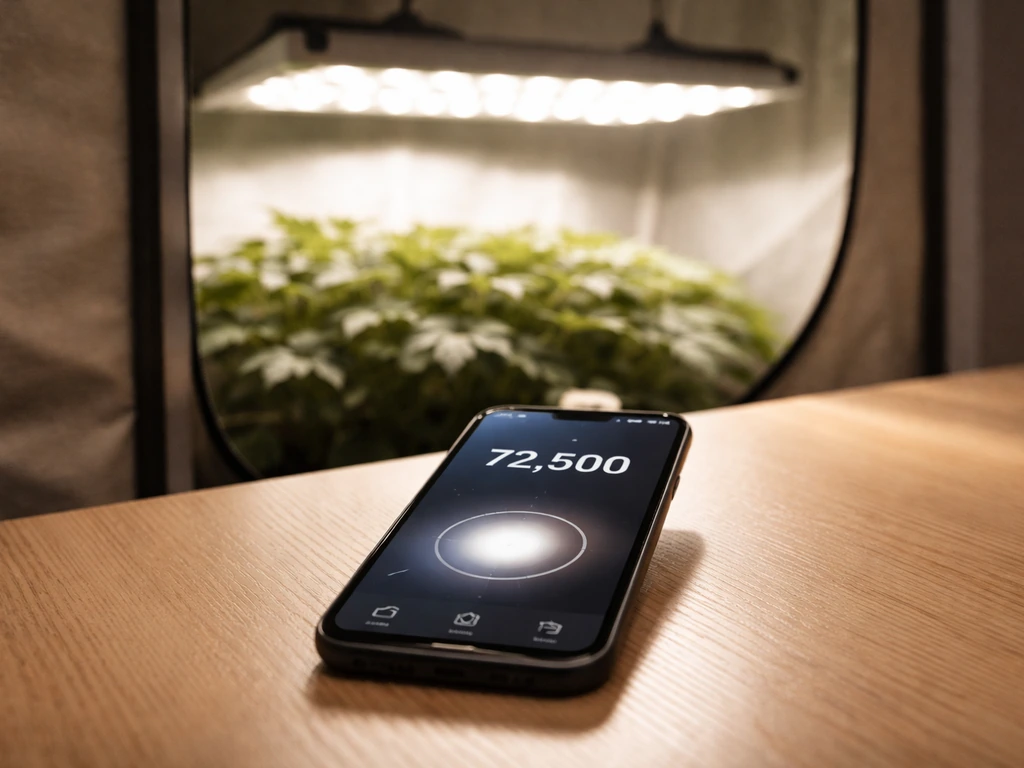
Download a free lux meter app on your phone (Lux Light Meter Pro is a common one, and it's reasonably accurate for ballpark readings). Take a measurement at the canopy height of your plant, at the brightest point of the day. Here's a rough guide to what you're seeing. Keep in mind these are loose estimates because the lux-to-PPFD conversion depends on the spectrum of the light, not just the intensity.
| Lux Reading at Canopy | Approximate PPFD (Sunlight) | Rough DLI at 12 hrs | Verdict for Cannabis |
|---|---|---|---|
| Under 1,000 lux | ~20 µmol·m⁻²·s⁻¹ | ~0.9 mol·m⁻²·day⁻¹ | Too dim, survival only |
| 1,000–5,000 lux | ~20–100 µmol·m⁻²·s⁻¹ | ~0.9–4.3 mol·m⁻²·day⁻¹ | Better, but still far short |
| 5,000–15,000 lux | ~100–300 µmol·m⁻²·s⁻¹ | ~4.3–13 mol·m⁻²·day⁻¹ | Decent for seedlings only |
| 15,000–30,000 lux | ~300–600 µmol·m⁻²·s⁻¹ | ~13–26 mol·m⁻²·day⁻¹ | Approaching veg minimum |
| Over 30,000 lux | ~600+ µmol·m⁻²·s⁻¹ | ~26+ mol·m⁻²·day⁻¹ | Possible for veg with long hours |
Most indoor indirect-light spots fall between 500 and 5,000 lux. Even bright, open rooms rarely exceed 10,000 lux unless you're sitting right at the window in direct sun. If you want a more accurate reading, a dedicated quantum sensor (like Apogee's instruments) measures PPFD directly rather than relying on lux-to-PPFD conversion estimates, which are inherently approximate because they depend on the light spectrum. Apogee Instruments’ full-spectrum quantum sensors and meters are designed to measure photosynthetically active radiation and report PPFD in µmol·m⁻²·s⁻¹ for plant-growing applications quantum sensor measures PPFD directly in µmol·m⁻²·s⁻¹.
Window orientation and distance
In the Northern Hemisphere, south-facing windows get the most light year-round. East and west windows are next. North-facing windows are the hardest, giving you diffuse, low-intensity light that rarely breaks 1,000 lux at the plant. Distance from the window matters enormously too. Light intensity drops off quickly as you move away from the glass, sometimes halving every meter or so depending on the room. Put your plant as close to the brightest window as possible, ideally within 30–60 cm of the glass.
When indirect sunlight is enough, and when it's not
Indirect sunlight is enough for germinating seeds and keeping very young seedlings alive for the first week or two. After that, you need more. It can also work for holding clones in a low-activity state if you're not ready to move them into a full setup yet. But the moment you want actual vegetative growth with proper internodal spacing and healthy leaf development, indirect window light alone is going to fall short in most homes.
Flowering on indirect light only is essentially not going to happen with any meaningful result. Cannabis in flower needs a DLI of 35–55 mol·m⁻²·day⁻¹ and a strict 12-hour dark period. Grow Weed Easy notes that cannabis is a photoperiod plant and that flowering typically requires long nights, often described as 12 hours of uninterrupted darkness (such as a 12/12 schedule) [strict 12-hour dark period](https://www. growweedeasy.
com/light-schedules). Not only is indirect window light far too weak to hit those DLI targets, but window-based photoperiods are also unreliable because ambient indoor light at night can interrupt the required darkness, preventing the plant from triggering or completing flowering. You need blackout conditions for the dark period, which is much easier to manage with an artificial lighting setup.
If your space gets unusually bright indirect light, like a large south-facing window in a room with white walls, and you're growing an auto-flowering strain (which flowers based on age rather than photoperiod), you might squeeze out some slow vegetative progress. But even then, you'd be pushing your luck and should expect thin stems, loose structure, and disappointing results compared to a supplemented setup.
Signs your plant isn't getting enough light (and what to do right now)
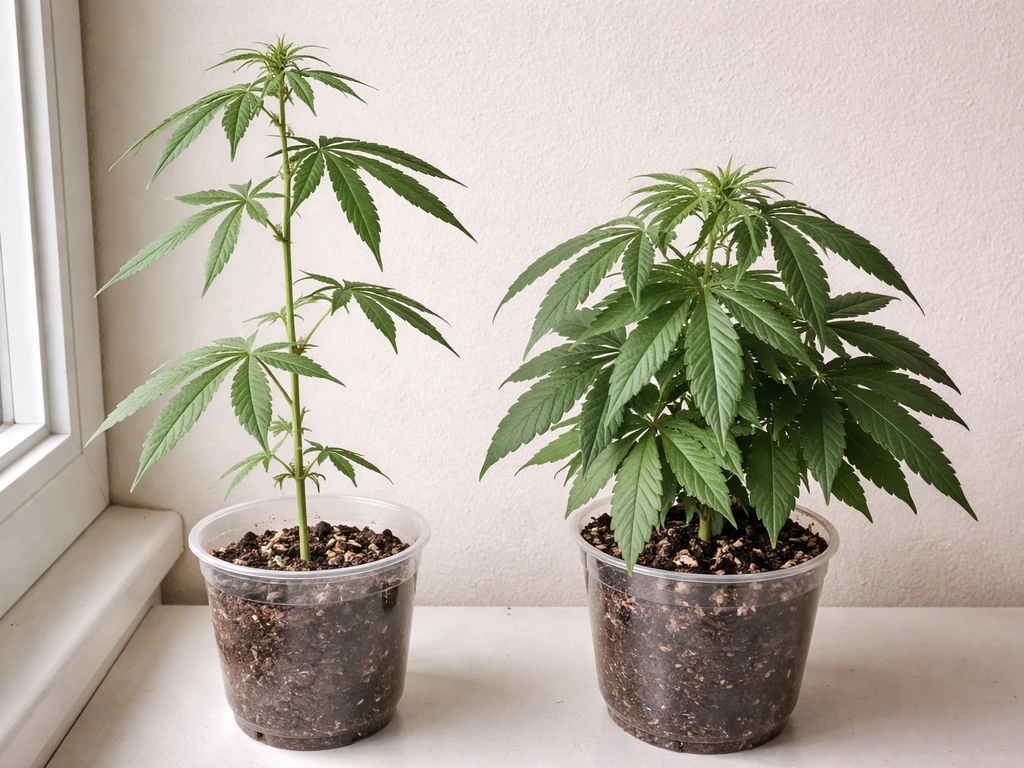
The plant will tell you when it's light-starved. These signs are hard to miss once you know what you're looking for.
- Stretching and leggy stems: This is called etiolation. The plant elongates its stem and internodes trying to reach more light. Instead of a compact, bushy structure, you get long gaps between each set of leaves and a thin, weak stem that struggles to support itself.
- Pale or yellowing leaves: Leaves lose their deep green color when chlorophyll production slows. A light-starved plant often looks washed out and pale, starting with newer growth.
- Slow or stalled growth: If your plant barely changes week to week, it's probably not getting enough light to sustain active growth. It's just surviving.
- Small leaves: Leaves don't fully expand under low light, staying smaller and sometimes cupped or curved.
- Dropping lower leaves: The plant may sacrifice older, lower leaves that are receiving the least light, causing unusual yellowing and leaf drop from the bottom up.
If you notice any of these signs, move the plant closer to your light source immediately. If it's at a window, get it right up to the glass. Rotate it so every side gets exposure. If you have a reflective surface (even white foam board), position it on the opposite side of the plant from the window to bounce light back in. If that doesn't help within a week, supplemental lighting is your next move.
Using grow lights to supplement your indirect light setup
This is where the real solution lies for most indoor growers working with indirect or low sunlight. You don't necessarily need to replace your window light entirely. You just need to add enough artificial light to hit your DLI targets. Here's how LED and fluorescent options compare for this situation.
LED grow lights
LEDs are the best all-around choice for supplementing or replacing indirect window light. Modern quantum board LEDs (like those using Samsung LM301 diodes) are energy-efficient, produce a full spectrum covering the PAR range cannabis needs, and generate relatively low heat. For vegetative growth, you want a color temperature around 4,000–6,500K (blue-heavy spectrum). For flowering, a warmer 3,000K spectrum with more red helps trigger and sustain bud development.
Many modern full-spectrum LEDs cover both stages reasonably well on their own. A 100–200W LED panel positioned 30–60 cm above the canopy can deliver the PPFD ranges cannabis needs for both veg (400–600 µmol·m⁻²·s⁻¹) and flower (600–1,000 µmol·m⁻²·s⁻¹), depending on the fixture and distance. Start with the manufacturer's recommended hanging height and use your lux app or a PPFD meter to verify canopy levels.
Fluorescent lights (T5 and CFL)
T5 fluorescent tubes and compact fluorescent bulbs (CFLs) are cheaper upfront and widely available. They work well for seedlings and early vegetative growth, and they're a decent low-cost supplement to window light. The downside is that they're much less efficient than LEDs watt-for-watt, they produce more heat relative to their output, and they need to be kept very close to the plant (within 5–15 cm) to be effective. That makes them harder to manage as plants grow taller. For flowering, fluorescents generally don't deliver enough intensity to hit cannabis targets unless you have a lot of them, which gets hot and expensive. They're best used as a seedling or veg supplement, not a flowering solution.
| Light Type | Best Stage | Efficiency | Heat Output | Cost to Start | Verdict |
|---|---|---|---|---|---|
| Full-spectrum LED | Veg and flower | High | Low | Medium–High | Best overall, worth the investment |
| T5 Fluorescent | Seedling and early veg | Medium | Medium | Low | Good budget supplement for early stages |
| CFL | Seedling and early veg | Low–Medium | Medium | Very low | OK for a quick fix, not a long-term solution |
| HID (HPS/MH) | Veg and flower | High | Very high | Medium | Powerful but hot and bulky for small spaces |
If you're supplementing window light with artificial lighting, the goal is to combine whatever your window provides with enough artificial PPFD to close the gap to your stage targets. For example, if your window delivers 100 µmol·m⁻²·s⁻¹ and your veg target is 500 µmol·m⁻²·s⁻¹, you need your grow light to add roughly 400 µmol·m⁻²·s⁻¹ at canopy level. Set your grow light timer to run for 18 hours per day during vegetative growth, and 12 hours during flowering, with the dark period kept completely dark.
Room setup tips to get the most out of indirect light
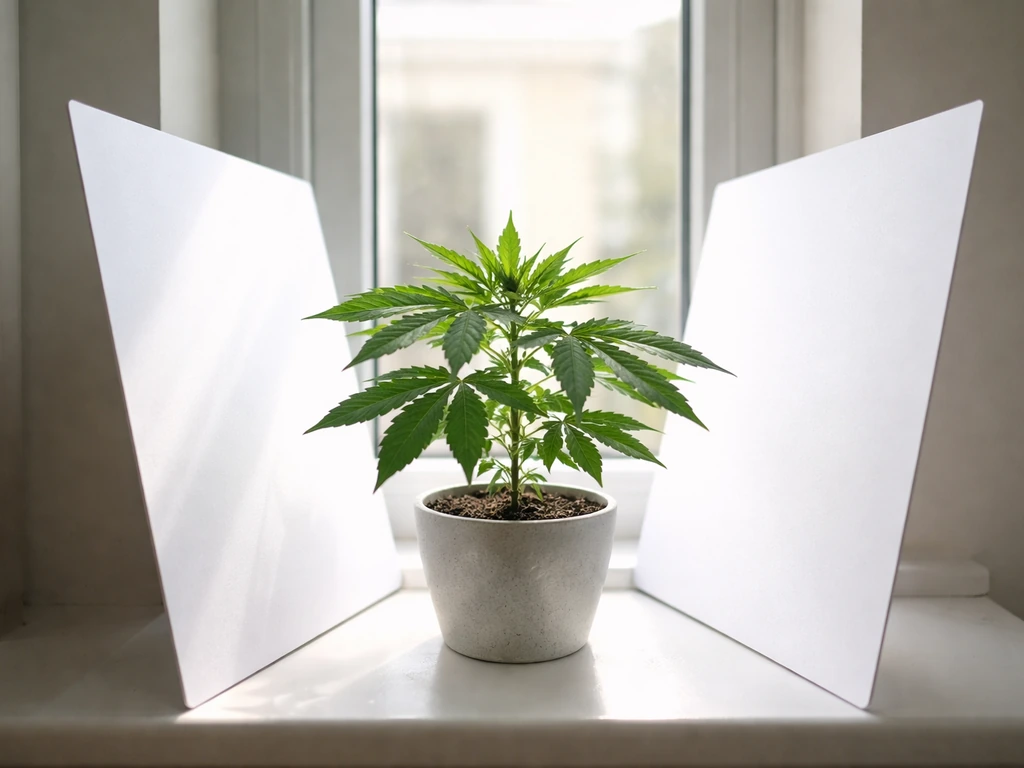
Even before you buy any grow lights, you can squeeze more out of whatever natural light you have with a few simple adjustments.
- Place plants as close to the brightest window as possible. Even moving a plant from one meter to 30 cm from the glass can double or triple the light it receives. Light intensity drops off fast with distance.
- Use reflective surfaces. White walls already help a lot. You can do better by placing white foam board, Mylar sheet, or even aluminum foil (matte side out) on the sides opposite your window to bounce indirect light back toward the plant. This is free or nearly free and makes a real difference in low-light rooms.
- Rotate your plants. Cannabis tends to grow toward the light source. Rotating the pot 90–180 degrees every few days ensures every part of the plant gets roughly equal exposure, which produces more even, balanced growth.
- Keep windows clean. Dirty glass can block a meaningful percentage of light. Wipe your windows down, especially in winter when light is already weaker.
- Choose the right room. A room with multiple windows or a skylight will outperform a single-window room every time. If you have a choice, use the brightest room you have.
- Use light-colored walls and surfaces throughout the space. A room with white or light-grey walls reflects significantly more ambient light than one with dark colors, which helps marginally but is worth noting if you're setting up from scratch.
Your next steps based on your actual light situation
Here's how to think about your specific scenario and what to do today, depending on where you're starting.
You have a bright, south-facing window with lots of natural light
You're in the best position of anyone growing with window light. Get your plant right up to the glass, use white reflectors on the sides, and measure your lux with a phone app. If you're reading above 15,000 lux consistently for 8–10 hours, you have a real foundation to work with for vegetative growth. Supplement with a modest LED panel for the remaining hours to hit your 18-hour veg photoperiod and push your DLI toward the 25–40 mol·m⁻²·day⁻¹ target. For flowering, you'll need the LED to do most of the heavy lifting and strict light control for the 12-hour dark period.
You have a north-facing window or limited, weak indirect light
Don't rely on the window as a primary light source. Use it as a small bonus while your grow light does the real work. Even a budget-friendly T5 or CFL setup will outperform a north-facing window for cannabis. Invest in an entry-level LED panel (100W is enough for a single plant) and treat the window light as a supplement, not the foundation.
This is genuinely the realistic path to growing cannabis in most apartments and urban homes. If you're wondering what can grow under a deck with little sunlight, start by focusing on low-light plants that do not need strong daily sun and avoid trying to force light-demanding crops. If you're looking for what plants grow well with little sunlight, focus on low-light houseplants and keep expectations realistic about slower growth low-light plants.
You're mostly indoors with no reliable access to direct or bright indirect sun
Go full artificial from the start. This isn't a failure. Most serious indoor cannabis growers don't use window light at all because artificial lighting is more controllable, consistent, and scalable. A grow tent with a full-spectrum LED panel gives you complete control over photoperiod, intensity, and spectrum at every stage.
You also get the light-proof environment you need for a reliable 12-hour dark period during flowering. For context on how much light different plants need and how artificial lighting compares to sunlight for other species you might be growing alongside your cannabis, the principles around why plants grow better in sunlight versus artificial sources apply across the board.
The same idea is why many plants tend to grow better in sunlight than under artificial lighting plants grow better in sunlight. For other plants, the same core idea explains why plants often grow better in sunlight than under artificial sources why plants grow better in sunlight.
The bottom line is this: indirect sunlight alone is almost never enough to grow cannabis well from seedling through harvest. But understanding exactly how much light you have, and supplementing strategically with the right grow lights, turns an impossible situation into a very doable one. Start by measuring your window light today, identify the gap, and close it with the most efficient artificial source you can reasonably afford. Your plant will tell you within a week whether you got it right.
FAQ
If my plant gets “bright” indirect light, how do I tell whether it is actually enough for vegetative growth?
Don’t rely on how bright it looks to your eyes. Use a lux app at canopy height during the brightest hours, then compare to the rough expectation that most indirect window spots support only a small fraction of the PPFD needed for veg. If you are not consistently in a high-lux range, plan on supplementing, because “bright room” can still mean low daily light integral (DLI).
Can I keep cannabis alive with indirect sunlight indefinitely, without any grow lights?
You can sometimes prevent immediate death, especially for very young plants, but long-term survival usually becomes weak, stretched growth with poor leaf development. Once you need stable vegetative vigor or any chance of flowering, indirect window light alone typically fails to meet DLI requirements.
Does rotating the plant or moving it closer to the window fully fix the problem?
It helps, but it rarely closes the full light gap. Distance from the glass usually drops intensity quickly, so putting the canopy within about 30 to 60 cm of the window and using reflective surfaces on the sides can improve results. If measurements still show low PPFD, supplemental light is the only reliable fix.
What happens if I accidentally expose the plant to light during the 12-hour dark period?
For photoperiod cannabis, even small amounts of light at night can interfere with flowering signals and dark-period completeness. The practical approach is to make the dark period truly dark, using a light-proof environment like a tent or blackout controls, rather than just turning off your main grow light.
Will an auto-flowering strain grow better in indirect sunlight than photoperiod plants?
It can make some progress because it does not require a strict light/dark trigger to flower, but it still needs enough total light energy to build dense growth. Expect slower, thinner structure if your DLI is low, and plan to supplement if you want quality yields.
Is lux a reliable way to choose a grow light for indirect sunlight situations?
Lux can be a useful ballpark for deciding whether you are in a low, medium, or high window-light situation, but it is not precise for cannabis. Different spectra convert lux to PPFD differently, so the more reliable route is measuring PPFD with a quantum sensor or using a fixture that you can verify at canopy height.
Do reflective materials like white walls, foil, or foam board always improve window grow results?
They can improve distribution by bouncing more light back toward the canopy, but only if the plant is positioned close enough to benefit from that reflected light. Place reflectors on the side(s) where light is being lost, and re-check growth after about a week, since airflow and heat from lights are also factors when you supplement.
How close should fluorescent lights be to cannabis if I’m supplementing indirect sunlight?
Fluorescents need to be very close to deliver enough intensity, commonly within roughly 5 to 15 cm for seedlings and early veg. Keep in mind this proximity can get tricky as plants grow taller, and flowering usually requires higher intensity than most fluorescent setups can provide efficiently.
What light schedule should I use if I’m combining window light with an LED?
Use the stage-based photoperiod you need, then treat the LED as the tool that fills the DLI gap. For example, during veg you typically target an 18-hour light day, and during flowering a 12-hour day with a completely dark 12-hour night, regardless of what the window contributes during the off period.
How quickly should I expect to see signs that my indirect-light setup is too weak?
Cannabis will show light-starvation indicators fairly quickly, often within about a week, especially changes like stretching and reduced leaf vigor. If you don’t see improvement after moving closer, rotating, and adjusting reflectors, switch to supplementation rather than waiting longer.