
Bamboo cannot grow without any light at all. In true darkness, it cannot photosynthesize, which means it slowly starves and dies. That said, bamboo is more shade-tolerant than most people expect, and with the right artificial lighting setup, you can absolutely grow it indoors in a space that gets little or no natural sunlight. The key is understanding the difference between a plant that's barely surviving and one that's actually pushing out new shoots.
Can Bamboo Grow Without Sunlight? Indoor Light Guide
Marcus Hartley
27 Apr 2026
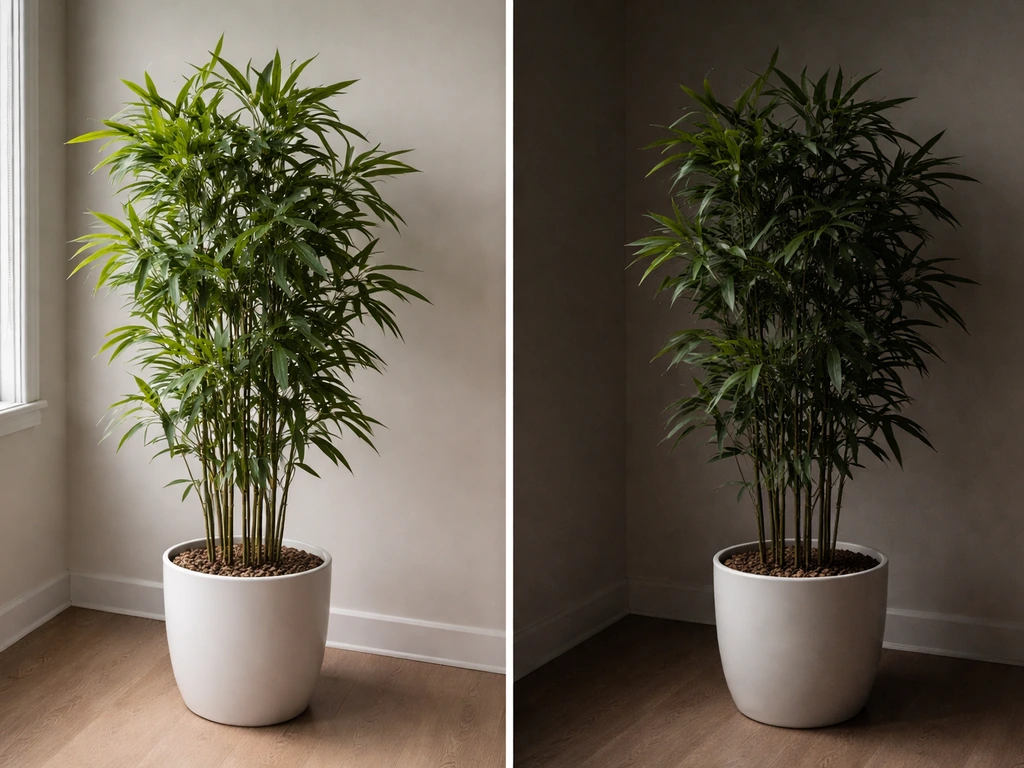
Low light vs. no light: there's a big difference
Plants have what's called a light compensation point (LCP), which is the minimum light level where photosynthesis exactly balances the energy the plant burns through respiration. Above the LCP, the plant has a net energy surplus and can grow. Below it, the plant is running a deficit, essentially burning through its stored energy to stay alive. Eventually, it runs out and declines.
Bamboo in low light (think a few feet from a north-facing window, or under a bright grow light) can sit right at or above its compensation point and continue producing new culms and leaves, though slowly. Bamboo in a dim hallway with no windows and no grow light is operating below that threshold. You might not notice the decline for weeks because bamboo stores energy in its rhizomes, but it is declining. The plant is not growing in any meaningful sense, it's just delaying the inevitable.
Lucky bamboo, which is actually a Dracaena rather than a true bamboo, is worth separating out here. It handles low light significantly better than true bamboo species do. If you're dealing with lucky bamboo specifically, that's a somewhat different conversation from growing Phyllostachys, Fargesia, or other real bamboo genera indoors.
Growing bamboo indoors without sunlight: what's actually possible
I've had a clumping bamboo (Fargesia) in my apartment in a spot that gets almost no direct sun, only bright reflected light from a white wall plus a grow light. It grows slowly, but it does grow. The moment I moved it away from that setup into a darker corner for a few weeks, new shoot production stopped entirely and the leaves started yellowing at the tips. In the study described in the PMC paper, bamboo leaf segments showed chlorophyll degradation and senescence when kept in the dark, with yellowing developing over time yellowing at the tips. That's the real-world ceiling: indirect light or quality artificial light keeps it going, but genuine darkness shuts it down fast.
True bamboo varieties like Fargesia (clumping, cold-hardy) and dwarf Pleioblastus species are among the more shade-tolerant options. Running bamboos in the Phyllostachys genus are generally sun-hungry and don't do well indoors at all. If you're committed to growing bamboo in a low-light indoor space, choose a shade-tolerant clumping species and pair it with grow lights. Without that combination, you're setting yourself up for failure.
How much light bamboo actually needs
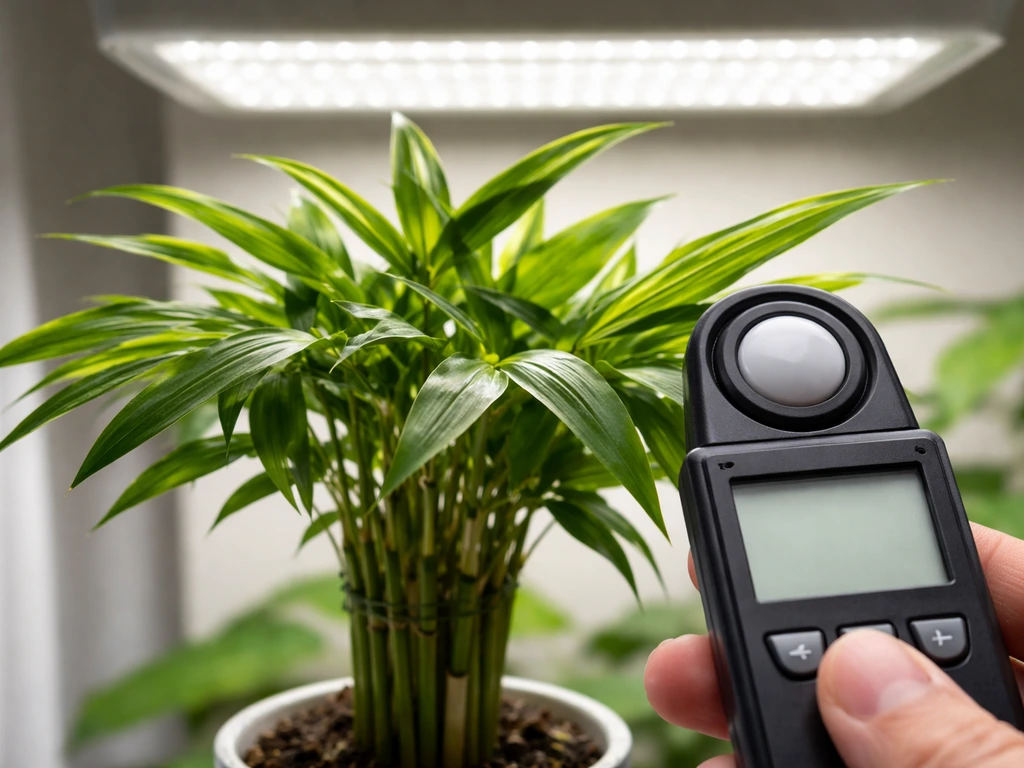
For most indoor bamboo species, you're aiming for a minimum of about 1,000 to 2,000 lux for survival, and ideally 3,000 to 5,000 lux or more for active growth. In PPFD terms (which is what grow light specs use), that's roughly 15 to 75 micromoles per square meter per second at the low end for shade-tolerant species. For real, productive growth, you want to be closer to 100 to 200 µmol/m²/s.
Duration matters just as much as intensity. Bamboo needs around 12 to 16 hours of light per day indoors. It doesn't have the same strict photoperiod requirements as flowering plants, so you have flexibility on the schedule, but cutting the day short below 10 hours will stunt growth even if the light itself is strong enough.
Signs your bamboo isn't getting enough light
- Leaves turning pale green or yellow, especially on new growth
- Leggy, weak new culms that lean toward the nearest light source
- No new shoots or culms for several weeks during the growing season (spring through summer)
- Existing leaves dropping off without being replaced
- Slow or zero increase in plant height over 4 to 6 weeks
Setting up artificial lighting for indoor bamboo
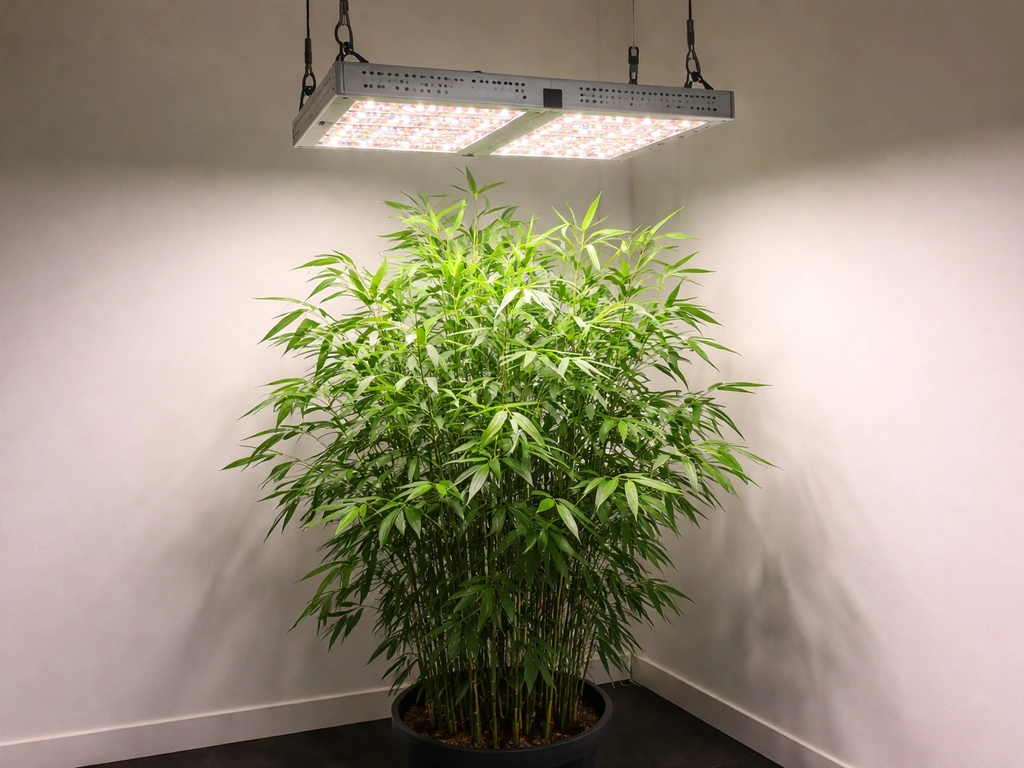
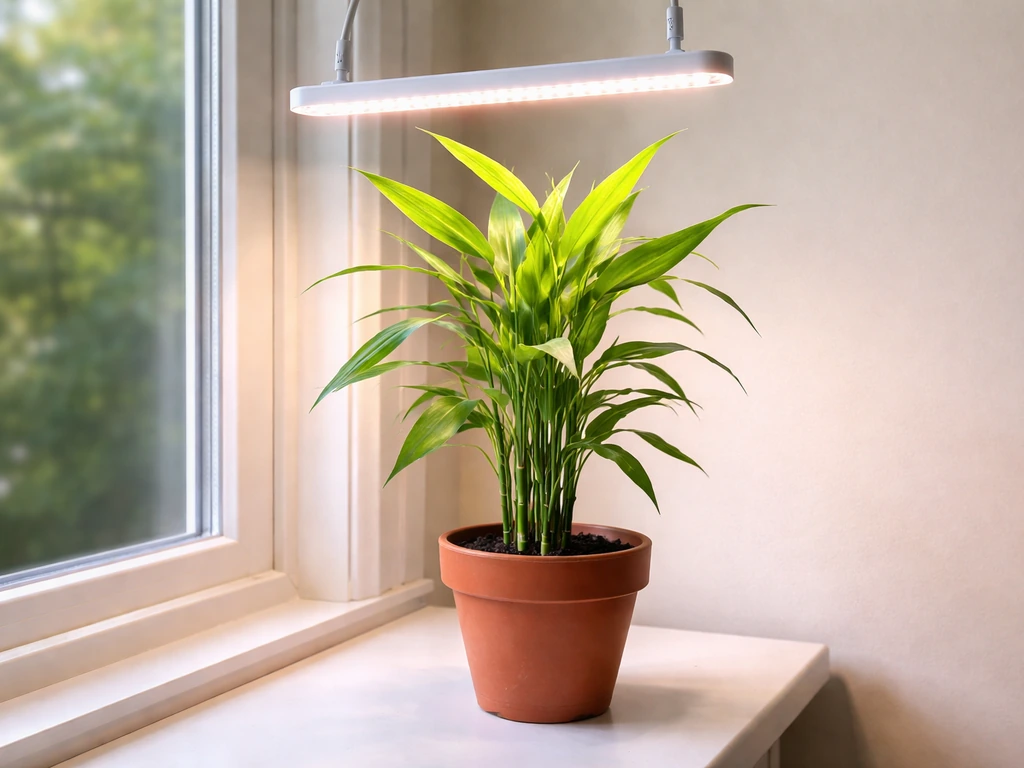
LED grow lights are the practical choice here. They're energy-efficient, run cool enough to place close to the plant without burning leaves, and modern full-spectrum LEDs cover the wavelengths bamboo needs most (blue light around 400 to 500 nm for leafy growth, and red light around 630 to 700 nm for overall photosynthesis). Fluorescent shop lights (T5 or T8) can work as a budget option, but they don't deliver the same PPFD at a given distance, so you'll need more of them or to hang them closer.
Placement and distance
For a mid-power LED panel (something in the 45 to 100-watt range), hang it 12 to 24 inches above the top of the plant. Check the manufacturer's PPFD chart if available. You want the canopy of your bamboo hitting at least 100 µmol/m²/s. If you notice leaf tips burning or bleaching, raise the light. If growth is stalling and the leaves are pale, lower it or add a second light source.
Lighting schedule
Run your grow light on a timer set to 14 to 16 hours on, 8 to 10 hours off. This mimics a long summer day, which is when bamboo naturally pushes out the most new growth. You don't need to overthink the on/off timing, just make sure the plant gets a consistent dark period. Skipping the dark period entirely (running lights 24 hours) actually stresses most plants, including bamboo, so don't do it.
Quick LED grow light selection tips
- Look for full-spectrum LEDs with a color temperature between 3,500K and 6,500K
- Check that the product lists actual wattage drawn from the wall, not 'equivalent' wattage
- For a single bamboo container up to about 2 to 3 feet wide, a 45 to 65-watt LED panel is a reasonable starting point
- Bar-style LED grow lights are great for taller bamboo because you can position them to the side as well as overhead
- Avoid cheap single-spectrum red/blue 'blurple' lights; modern white full-spectrum LEDs outperform them for foliage plants
What to do if you truly have no usable light
If your space has no natural light and you're not ready to invest in grow lights, the honest answer is that bamboo is not the right plant for that spot. But before you give up on bamboo entirely, here are a few practical options to consider.
- Relocate the plant: Even moving bamboo to a spot near any window, even a north-facing one, gives it a fighting chance. A few feet makes a surprisingly big difference.
- Add reflective surfaces: White walls, metallic reflective film, or even a large mirror near the plant can redirect and amplify available ambient light. This isn't a substitute for real light, but it stretches what you have.
- Start with a grow light as a minimum investment: A basic 45-watt full-spectrum LED costs less than most houseplants. If you're serious about growing bamboo indoors, this is the single most impactful thing you can do.
- Switch to a more shade-tolerant plant: If the space really can't support bamboo, consider plants that sit naturally at much lower light compensation points, like pothos, ZZ plants, or cast iron plants. Lucky bamboo, despite its name, is one of the most forgiving low-light options and may be a better fit. It's a fundamentally different plant from true bamboo, but if the look is what you're after, it's worth considering.
Troubleshooting checklist: fix the problem today
If your bamboo is struggling indoors, light is often the culprit, but not always. Work through this checklist before assuming your plant is doomed.
- Check light levels first: Hold your hand 12 inches above the plant at midday. If you can barely see your hand's shadow, the light is too low. Move the plant or add a grow light before diagnosing anything else.
- Verify light duration: Is the grow light or window exposure giving at least 12 hours? If you haven't set a timer, set one now. Inconsistent light is almost as bad as insufficient light.
- Assess watering: Bamboo in low light needs less water than bamboo outdoors because it's photosynthesizing and transpiring less. Stick your finger 2 inches into the soil. If it's still damp, don't water yet. Overwatering in low-light conditions causes root rot, which looks exactly like a light-deficiency problem.
- Check temperature: Bamboo prefers 60 to 80°F (15 to 27°C) indoors. Drafts from air conditioning vents or heating ducts directly on the plant will cause leaf drop and slow growth regardless of light. Move the plant away from direct airflow.
- Inspect the roots and pot: If the plant is root-bound (roots circling the bottom or coming out of drainage holes), it will struggle no matter how good the light is. Repot into a container one size up using a well-draining mix with some organic material.
- Evaluate fertilizer: Indoor bamboo in low light doesn't need heavy feeding. A balanced liquid fertilizer (10-10-10 or similar) at half strength every 4 to 6 weeks during spring and summer is plenty. Over-fertilizing in low light causes salt buildup in the soil and burned root tips, which compounds the problem.
- Look for pests: Spider mites and scale insects love stressed indoor bamboo. Check the undersides of leaves for webbing, sticky residue, or tiny moving dots. Treat with neem oil or insecticidal soap if you find anything.
- Give it two to three weeks after fixing the light: Bamboo doesn't bounce back overnight. Once you've improved the light situation, wait at least 2 to 3 weeks before deciding whether the intervention worked. New growth appearing at the tips is the clearest sign things are improving.
The bottom line on bamboo and light
Bamboo needs light to grow, full stop. It can tolerate lower light than most people assume, but it can't photosynthesize in the dark and it will not produce new shoots without crossing that minimum light threshold. Tulsi is generally grown as a sun-loving herb, so growing it without sunlight will usually require strong grow lights can tulsi grow without sunlight. If you're curious about other crops, can mung beans grow without sunlight is a similar question about whether photosynthesis can keep up in true darkness. The good news is that a decent LED grow light on a timer solves the problem almost entirely, and shade-tolerant clumping species like Fargesia are genuinely manageable as indoor plants when you give them the right setup. If your space is extremely dark, be honest about it and either invest in grow lights or pivot to a plant that's built for low-light living. If you're specifically asking can lucky bamboo grow without sunlight, keep in mind it is still limited by the same basic light needs as other indoor plants.
FAQ
Will bamboo survive for a while in a very dark room (no windows, no grow light)?
It may stay alive for weeks because it draws on stored energy in the rhizomes, but it is not producing new shoots. Expect gradual decline (slower or stopped growth, yellowing leaf tips) once it is running below its light needs for too long.
How do I tell whether my bamboo is just “slow” versus actually not getting enough light?
Slow growth looks like fewer new shoots but still ongoing leaf production and relatively normal green color. Not enough light shows up as stalled shoot formation, pale or washed-out leaves, and yellowing at the tips or edges, even if the plant otherwise looks intact.
Can I use window light only, how close to a north-facing window is usually enough?
Indirect window light can work if it is bright and consistent, but “a few feet” varies by room brightness and season. If you cannot read comfortably with that same lighting, assume it is too dim and plan on supplementing with a grow light.
Is fluorescent light enough for bamboo, or do I need LEDs?
Fluorescents can keep bamboo alive, especially if the fixtures are close, but they usually deliver less PPFD for the same energy. You typically need more fixtures or lower mounting height, and you may still struggle to reach the intensity range for active shoot production.
What’s a safe distance to hang an LED grow light without burning the bamboo?
Start with 12 to 24 inches above the top of the plant for a mid-power panel, then adjust using symptoms. If you see bleaching or scorched, crispy leaf tips, raise the light. If leaves are pale and growth is slow, lower it or add another light source.
Can bamboo grow with light on 24/7 if it’s a strong grow light?
Usually no. Bamboo needs a reliable dark period for stress-free metabolism, and running lights continuously can cause stress and weaker growth over time. Use a timer to provide about 8 to 10 hours of darkness.
How can I estimate whether my setup hits the right light level if I don’t have a PPFD meter?
You can use lux as a rough check, but lux varies by light source and distance. The practical approach is to aim for the lux ranges for survival versus growth and then confirm by plant response (continued new shoot formation and greener leaves). A PPFD meter gives the best accuracy for grow lights.
Do clumping bamboos and running bamboos need different light indoors?
Yes. Clumping bamboos (often more shade-tolerant) are more workable indoors with supplemental light, while running types like many Phyllostachys species generally demand more intensity and often fail to maintain healthy growth without strong lighting.
Does lucky bamboo require more or less light than true bamboo?
Lucky bamboo (a Dracaena) is more forgiving in low light than many true bamboo species, but it still cannot photosynthesize in true darkness. If you see yellowing and no new growth, it is still underlit for long-term health.
If my bamboo is failing, what else should I check besides light?
Light is the biggest driver, but also review watering and airflow. Poor drainage, consistently soggy soil, or low humidity can cause stress that looks similar to light issues. Use a well-draining potting mix and avoid waterlogged roots, especially indoors where evaporation is slower.
How long should I keep lights on before deciding the bamboo needs more intensity?
Give it at least 2 to 4 weeks of consistent lighting before making a major adjustment. If no new shoots appear and leaf color keeps deteriorating within that window, increase PPFD (lower the light slightly, add a second fixture, or improve reflectivity around the plant).
Can I reflect more light by using a different setup instead of brighter bulbs?
Yes. Placing the pot near light-colored surfaces and using reflective materials around the grow area can boost effective light reaching the canopy. This does not replace true PPFD, but it can reduce how aggressively you need to increase fixture power or lower distance.