
Buds grow during both day and night, but each period does something different. During the day (or your grow light's "on" period), your plant runs photosynthesis, builds sugars, and responds to light cues that trigger the hormonal signals behind flowering. At night, it uses those stored sugars to actually expand cells, elongate stems, and develop flower structures. So if you're asking which period "counts" more, the honest answer is: you need both, and getting the balance right is the whole game for indoor growers.
Do Buds Grow at Night or Day? Indoor Grow Guide
Marcus Hartley
24 Apr 2026
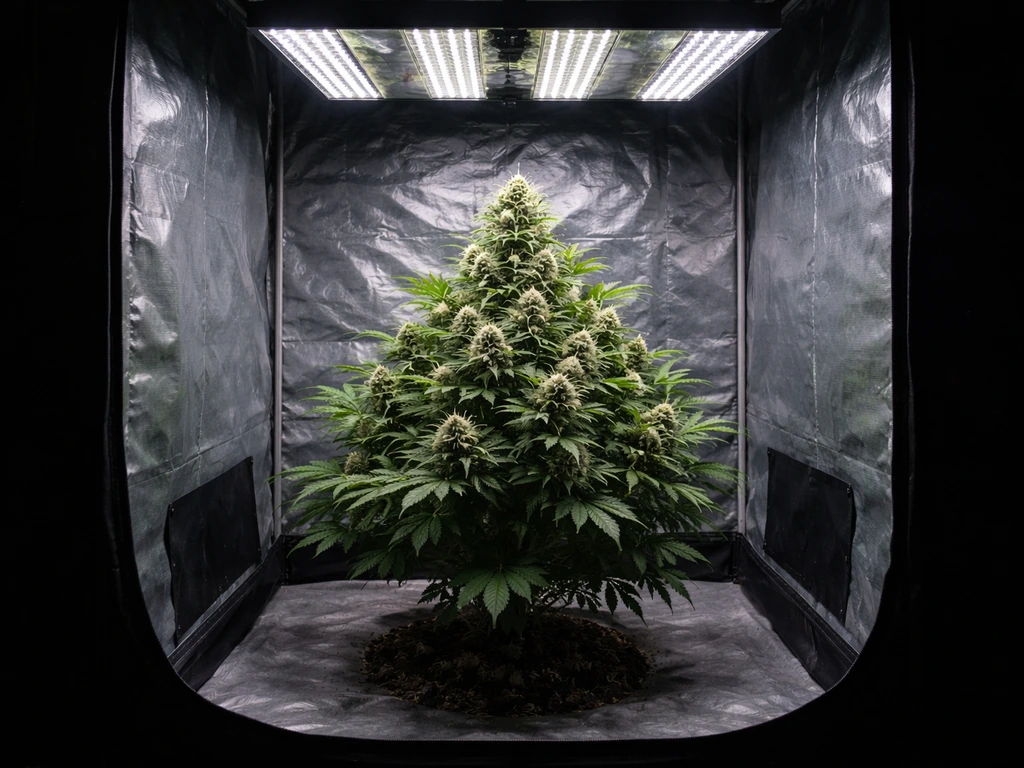
How light triggers buds and why darkness matters too
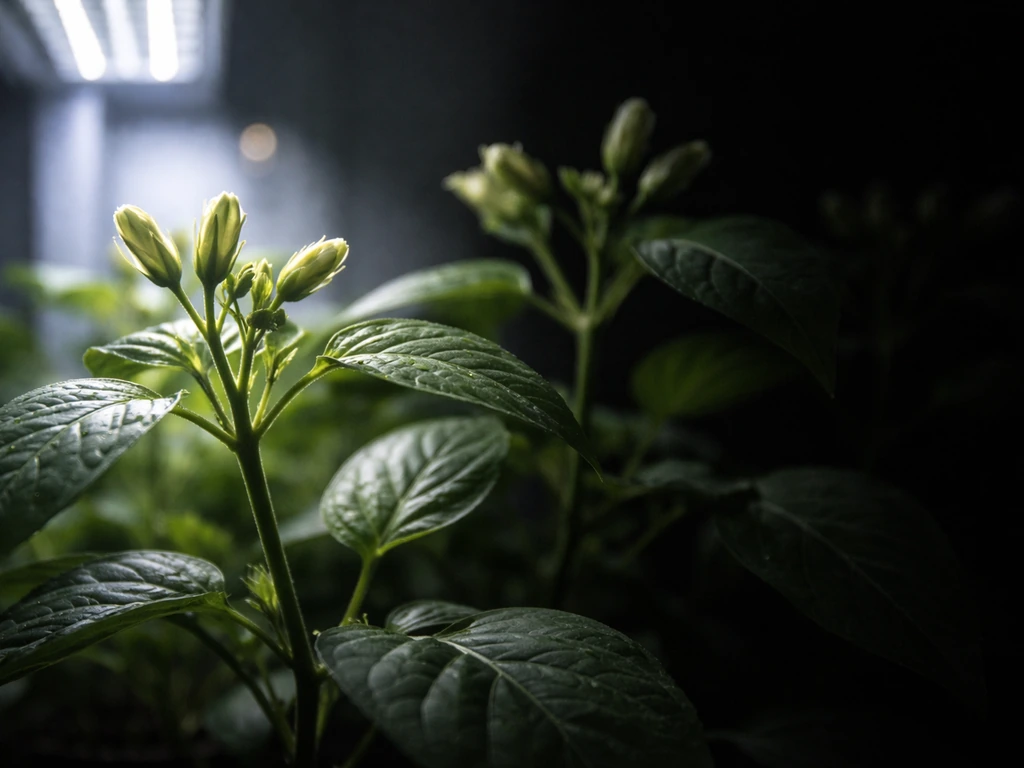
Light doesn't just feed your plant, it sends information. Many flowering plants are photoperiod-sensitive, meaning they use the ratio of light to darkness to decide when to form buds. Short-day plants like cannabis, chrysanthemums, and poinsettias need an uninterrupted dark period that exceeds a species-specific threshold (called the critical night length) before they'll commit to flowering. Long-day plants flip that around and need shorter nights. The key word is "uninterrupted," and that matters enormously for indoor setups.
The mechanism behind this is pretty elegant. When leaves experience the right photoperiod, they synthesize a protein signal called florigen (encoded by the FT gene in most plants). Florigen travels through the plant to the shoot tip, where it kicks off bud and flower initiation. Your plant's circadian clock is involved too, essentially gating when the plant is "sensitive" to light during the night. A brief flash of light in the middle of a long dark period can reset that clock and prevent flowering in short-day species. This is why a stray LED light from a timer or a streetlight leaking through a curtain can stall your buds entirely.
What actually happens across a full 24-hour cycle
Think of your plant running two different "programs" over the course of a day. During the light period, photosynthesis is running at full speed, converting light energy into carbohydrates (sugars and starch). Those carbohydrates are the raw material for everything else: cell wall building, hormone production, and the energy reserves the plant draws on after lights-out.
Once the lights go off, the plant switches to respiration. It's burning those stored carbs to fuel actual cellular growth, including cell expansion in developing buds and stems. Research in Arabidopsis shows that visible growth (cell expansion) often peaks around the early part of the night or the light-to-dark transition, not deep into the dark period. Interestingly, leaf expansion rates are actually at their lowest near the end of the night and ramp back up after dawn. So growth is a 24-hour process with peaks and valleys, not something that happens only in one period.
There's another wrinkle worth knowing: the quality of your daytime light directly affects how well your plant grows at night. If photosynthesis was poor during the day (dim light, wrong spectrum, too short a period), the plant has less sugar stored to work with after lights-out. Studies on Arabidopsis show that nighttime "sugar starvation" reduces gibberellin biosynthesis the next day, which slows overall growth. In plain terms: a weak light period today means slower bud development tomorrow night.
Managing light schedules indoors with LEDs and fluorescents
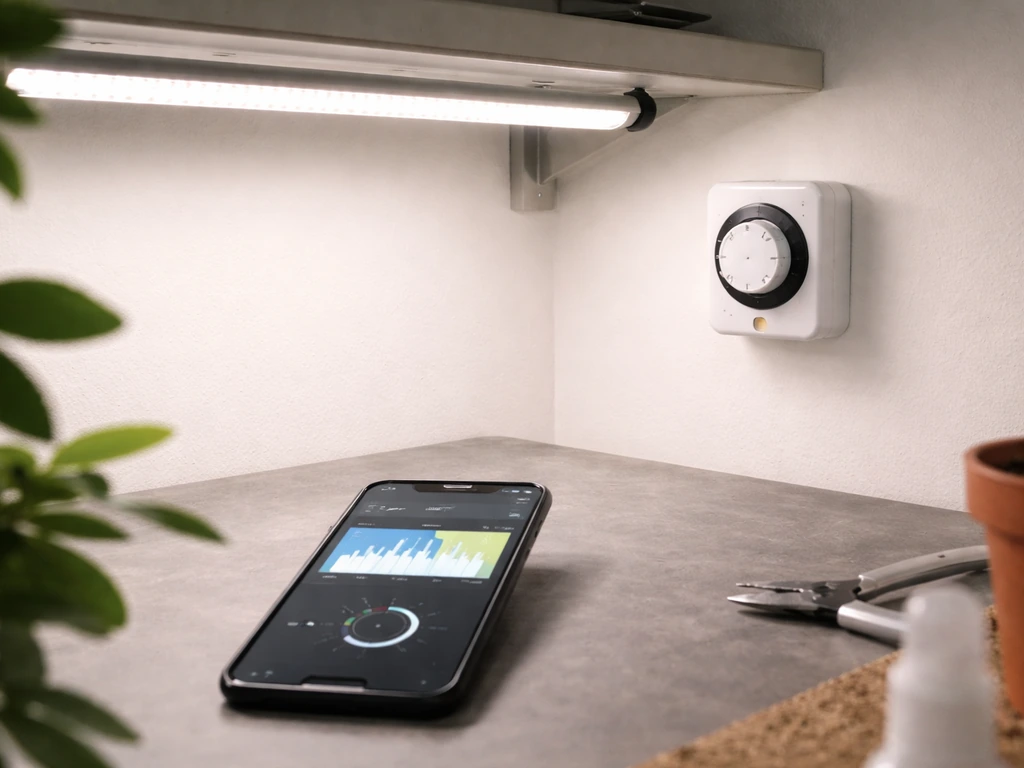
This is where theory turns into something you can actually act on. Indoor growers have a huge advantage over outdoor ones: you control the photoperiod completely. The challenge is doing it consistently and without light leaks.
Standard photoperiod schedules by plant type
| Plant Type | Veg / Growth Schedule | Flowering / Bud Schedule | Notes |
|---|---|---|---|
| Short-day plants (cannabis, chrysanthemum, poinsettia) | 18h light / 6h dark | 12h light / 12h dark | 12/12 is the standard trigger; even 13h light has been shown to increase yield in some cannabis cultivars |
| Long-day plants (most herbs, lettuce, some flowers) | 16–18h light / 6–8h dark | 14–16h light (to maintain) | Reducing dark period keeps these in vegetative growth |
| Day-neutral plants (tomatoes, peppers, African violets) | 14–16h light / 8–10h dark | Same schedule works for flowering | These aren't photoperiod-sensitive; total light intensity matters more |
For short-day plants specifically, the dark period isn't just a break, it's an active trigger. Cannabis growers have used a 12h/12h split as the standard flowering schedule for decades. A recent controlled study comparing 12h vs. 13h photoperiods found that the slightly longer day actually increased yield and quality in two high-THC cultivars, which shows there's room to fine-tune beyond the default. But the baseline of 12 hours of uninterrupted darkness is still the reliable starting point.
One technique worth knowing about for ornamental growers is "night interruption," where you briefly expose plants to light in the middle of the night to keep short-day plants from flowering (useful if you want to delay a chrysanthemum from blooming too early). MSU Extension also describes photoperiod manipulation strategies such as day-extension (lighting at the end of the day) and blank" rel="noopener noreferrer">night-interruption (mid-night lighting). The flip side is "day extension," where you add light around sunset to artificially lengthen the photoperiod. Purdue and MSU Extension both document these as standard greenhouse management tools, and they translate directly to home grow setups with a programmable timer.
Using DLI to gauge whether your plants are getting enough
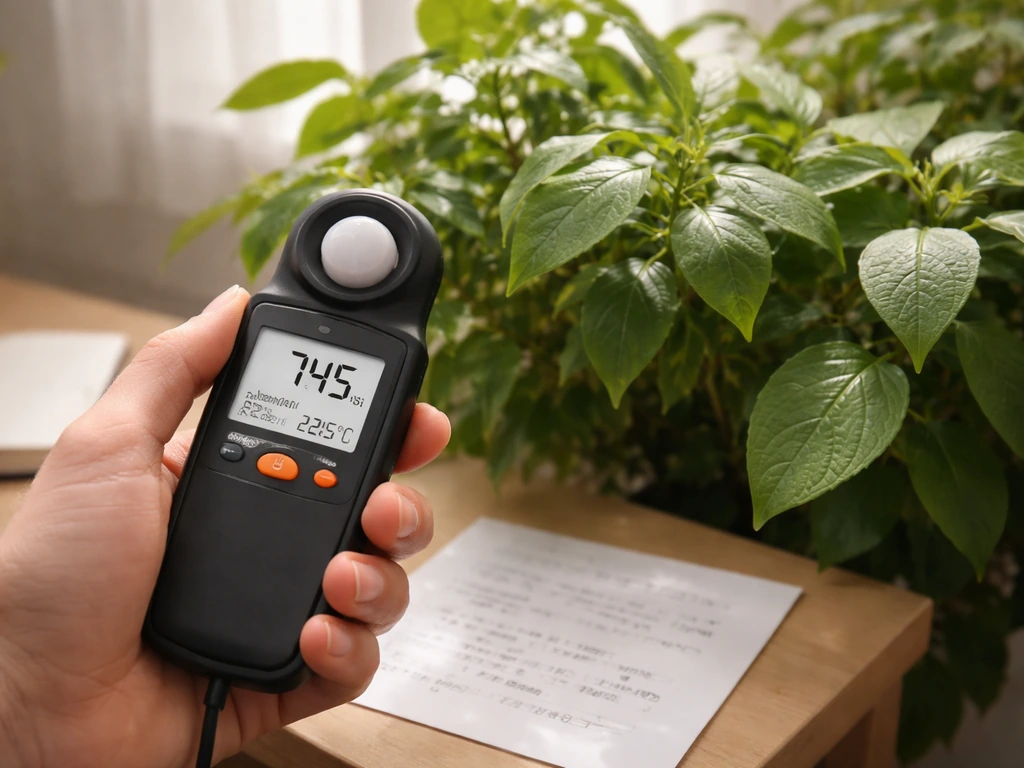
Daily Light Integral (DLI) is the total amount of photosynthetically active light your plant receives over a full day, measured in moles of light per square meter. It's a more useful number than just "how many hours" because it accounts for intensity too. Oklahoma State University Extension recommends DLI-based planning for LED grow light setups, and there are free calculators online that let you plug in your light's PPFD output and your intended photoperiod hours to see if you're hitting your target. For most flowering plants, a DLI of 20–40 mol/m²/day during the flowering stage is a reasonable target range, though specific plants vary. Michigan State University Extension also explains DLI values in mol·m−2·d−1 and how different targets, such as 3 to 20 mol·m−2·d−1 in their setup, relate to bedding-plant flowering responses DLI of 20–40 mol/m²/day.
Signs your light schedule (or dark period) is off
Plants are pretty good at telling you something is wrong if you know what to look for. Here are the most common signals and what they usually mean:
- Leggy, stretched stems with long internodes: almost always a sign of insufficient light intensity or a photoperiod that's giving too much darkness to a long-day or day-neutral plant. Move your light closer or increase its duration.
- Buds forming unexpectedly early (or not at all): if you have a short-day plant and it starts flowering when you didn't intend it to, check for light leaks during the dark period. Even low-intensity light (as little as 2 foot-candles, per UMass Extension guidance on poinsettias) can disrupt bud initiation in sensitive species.
- Buds stalling mid-development: often tied to poor daytime photosynthesis. If your light is too dim or too far away, your plant isn't building enough carbohydrate reserves to fuel nighttime growth. Check your light-to-canopy distance and PPFD output.
- Pale or yellowing leaves during flowering: can indicate the plant is nutrient-stressed, but in purely light-related terms, it sometimes signals the plant is cannibalizing older tissue because it can't photosynthesize enough during the day.
- No flowering response after switching to 12/12: suspect a light leak. Check seams in grow tents, gaps under doors, and any indicator LEDs on equipment inside the grow space during dark hours.
- Herming or abnormal flower development in cannabis: light stress during the dark period is one known trigger. Consistent, interruption-free darkness matters.
Practical steps you can take today to test and fix your setup
You don't need a lot of equipment to get this right. Here's a straightforward process to run through if you're troubleshooting bud development or just setting up a new grow:
- Set a reliable timer. Use a digital programmable timer, not a mechanical one, for your grow lights. Mechanical timers can drift by 15–30 minutes over a week, which matters for photoperiod-sensitive plants. Set your on/off times and check them against a clock after 24 hours.
- Check for light leaks during the dark period. Physically enter your grow space (or look in) after lights-out and let your eyes adjust for two full minutes. Any light you can see, including indicator LEDs on power strips, phone chargers, or fans, is a potential problem for short-day species. Cover or remove all sources.
- Measure your light-to-canopy distance. Most LED grow lights perform best between 18 and 24 inches from the canopy during flowering, but check your specific light's manufacturer specs. Too far away drops PPFD significantly and cuts into your DLI.
- Calculate your DLI. Use a free DLI calculator with your light's PPFD and your planned photoperiod hours. If you're coming in well under your target range, either extend your light period (if the plant type allows it) or lower your fixture.
- Maintain your schedule for at least 2 weeks before judging results. Photoperiod responses take time. Short-day plants typically show visible bud development 1–2 weeks after switching to a flowering schedule, assuming the dark period is correct.
- Document changes one at a time. If you adjust light distance and photoperiod length at the same time, you won't know which change made the difference. Change one variable, wait a week, then evaluate.
If you're growing plants other than photoperiod-sensitive species and wondering whether your general indoor plants grow at night, the short version is yes, many plants do a fair amount of their cell expansion work during dark hours. The same principles around adequate daytime light and an undisturbed night cycle apply broadly, not just to flowering plants. If you're wondering whether do nightshades grow at night, remember that the same need for an adequate daytime light period and an uninterrupted dark cycle generally applies. You can also test whether can plants grow under black light by checking if the spectrum still supports enough photosynthesis for your specific plant. You can think of candlelight as another low-intensity light source, so whether buds grow depends on how much usable light it provides for photosynthesis and how long your plant is left in an uninterrupted dark period can plants grow by candlelight. Vegetable plants follow similar rhythms, and even day-neutral species benefit from consistent light schedules rather than erratic on/off patterns.
The bottom line is that buds don't "belong" to the day or the night exclusively. Your job as an indoor grower is to give your plant a strong, consistent light period to build energy and receive flowering cues, and then a genuinely dark, uninterrupted rest period to let all that development actually happen. Get both right and your bud development will follow.
FAQ
How much light leak during the dark period is actually harmful? (seconds vs minutes)?
If you accidentally turn the lights on briefly during the dark period, the impact depends on how photoperiod-sensitive your plant is. For short-day types, even a few minutes of light in the middle of a long uninterrupted dark block can disrupt flowering, so treat any “mystery” LEDs or indicator lights as part of the grow schedule, not background noise.
Will buds grow faster if I keep the lights off longer at night?
Your plant does not grow “more” if you add extra hours of darkness, because photoperiod-sensitive flowering is about uninterrupted darkness reaching the critical night length, not about maximizing night time. Longer dark can reduce overall daily energy if it also shortens the light period, so you can worsen growth by pushing beyond what your species and light intensity can support.
What’s the safest way to check my plants without messing up night flowering triggers?
For photoperiod plants, the most important variable is the uninterrupted dark window. If you need to work around your timer, avoid opening the room door during the dark block, and use a camera or low-intensity red lighting for yourself. Also confirm your timer is on the correct output (some “smart” power strips can momentarily reboot).
If my lights on for the same hours, why does one grow still stall at night?
Yes. If your daytime light is weak, too short, or the wrong spectrum, you reduce the carbohydrate reserves available for cell expansion at night, which can slow bud development. This is why two setups with the same 12 hours on can grow differently, one lighting setup may produce a higher Daily Light Integral (DLI) that fuels stronger night growth.
Do day-neutral plants also care about night timing, or can I run a random schedule?
Even day-neutral plants generally respond poorly to erratic on/off patterns, because they rely on predictable daily cues for energy balancing and growth rate. Use a consistent schedule, and if you must change it, adjust gradually (for example, shifting by 15 to 30 minutes per day) rather than making sudden large changes.
How long after changing the light schedule should I expect to see bud growth?
Bud expansion timing is not identical for every stage. Early flower initiation and later swelling respond differently to photoperiod and light intensity, so if you notice “no growth” right after a schedule change, give the plant enough time to complete the developmental stage transition before judging results.
Do night interruption or day extension still work if I use a weak lamp or small LED?
Night interruption and day extension only work as planned if the light you add is actually strong and correctly timed. A dim flashlight or indirect ambient light may not meet the threshold to shift the plant response, while a properly powered grow light at the wrong time can accidentally trigger earlier or later flowering.