
Peas need at least 6 hours of direct sunlight per day to grow, but they really hit their stride with 8 to 10 hours. That 6-hour mark is the bare minimum for survival and modest production. If you want strong vines, plenty of flowers, and a real harvest of pods, aim for the higher end of that range whenever you can.
How Much Sunlight Do Peas Need to Grow Indoors and Out
Marcus Hartley
25 Apr 2026
Pea sunlight requirements: the actual numbers
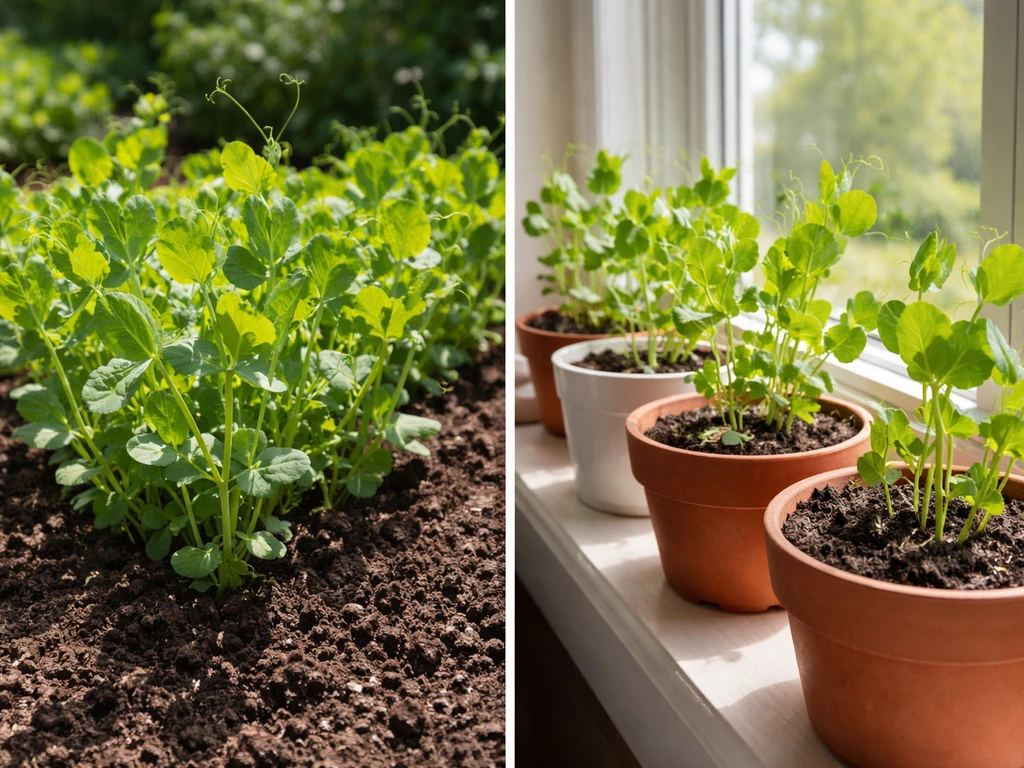
University of Maryland Extension and Utah State University Extension both classify peas as full-sun vegetables, and the guidance lines up neatly across sources: 6 hours per day is the minimum, 8 to 10 hours per day is what you should shoot for if you want maximum yield. University of Minnesota Extension phrases it as '5 to 6 hours of noonday sun,' which is a useful way to think about it because midday sun is far more intense than the low-angle light you get early morning or late evening.
The reason more light pays off comes down to photosynthesis. Peas are doing a lot of work when they flower and fill pods, and they need a consistent supply of light energy to pull it off. Less light means slower growth, fewer flowers, and smaller pods. It doesn't mean the plant will die at 5 hours, but you'll notice the difference in your harvest.
One more thing worth knowing: peas are a cool-season crop. Their ideal air temperature range is 50 to 60°F, and they typically mature in around 60 days. That matters for light planning because it connects directly to season. You're growing them in spring or fall, not the peak of summer, which means your light windows may be shorter or lower in angle than you'd have in July.
How to measure the light you actually have
Most people dramatically overestimate how much light their space gets. I did the same thing in my first apartment, convinced my west-facing window was 'bright enough' for almost anything. Checking your actual light levels before you commit to a planting spot will save you a lot of frustration.
Outdoors: the simple tracking method
Outside, measuring sunlight is straightforward. Pick your intended planting spot and check it every hour from sunrise to sunset on a clear day. Count the hours when that spot receives unobstructed direct sun (not just bright shade). Do this during the season you plan to grow, because spring sun angles are different from summer. If you get 8 or more hours of direct sun, you're in great shape. Six hours is workable. Anything under 5 hours and peas will struggle to produce well.
Indoors: understanding window direction and distance
Indoors is trickier. Window direction is your first clue: south-facing windows get the most sun across the day in the northern hemisphere, east-facing give you gentler morning light, and west-facing deliver afternoon sun. North-facing windows are usually too dim for peas without supplemental lighting. But window direction alone doesn't tell the full story. Distance from the glass matters enormously. Light intensity drops off fast as you move plants back from the window, and glass itself blocks some intensity.
For a more precise read, a lux meter (a cheap one runs about $15 to $20) will tell you the light intensity at any spot in your home. For reference, bright indirect indoor light is roughly 1,000 to 5,000 lux, while outdoor sun can reach 50,000 lux or more. Peas want to be at the higher end of what a window can offer.
If you want to go deeper, the concept to know is Daily Light Integral, or DLI, which measures the total amount of light a plant receives in a day. The formula is: [DLI = PPFD (in μmol·m⁻²·s⁻¹) × hours of light × 0. ](https://www. nature.
com/articles/s41598-025-23083-y. pdf)0036. This becomes useful when you're running grow lights and want to dial in your setup precisely, which I'll cover in a bit.
Where to place peas to get the most light
Window placement indoors
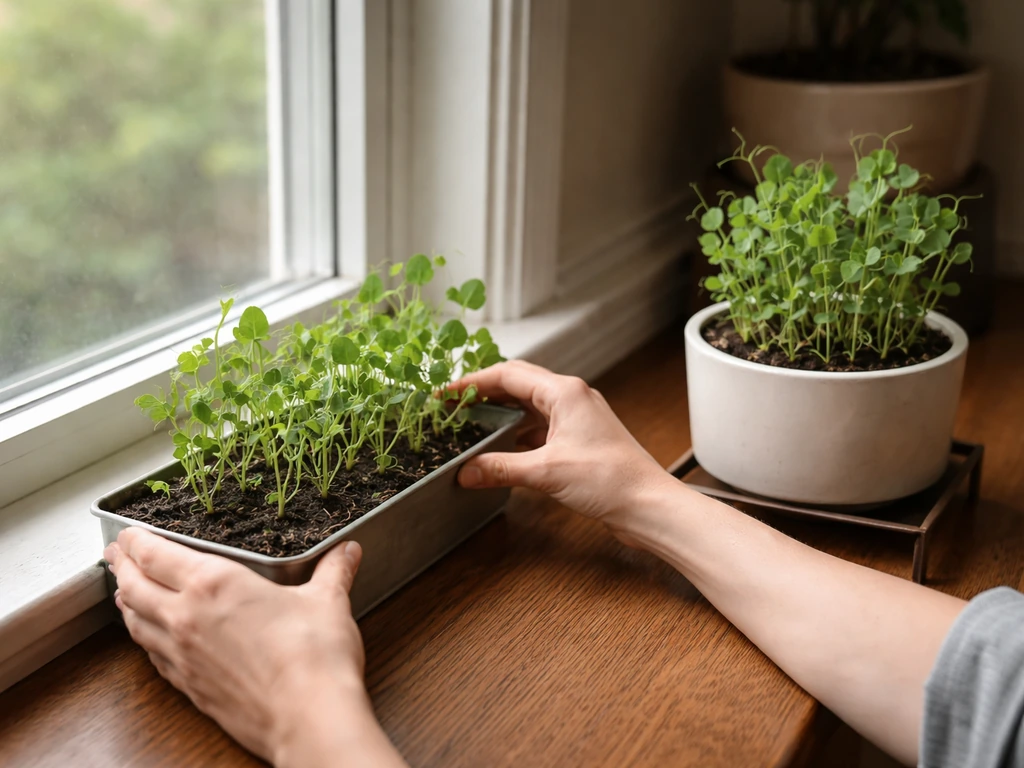
If you're growing peas inside, your south-facing window is your best friend. Put containers as close to the glass as possible, ideally within 6 to 12 inches. If your window ledge isn't deep enough, a small shelf or plant stand right next to the window works well. Rotate containers every few days so all sides of the plant get even exposure, because peas will lean heavily toward light and become lopsided if you don't.
East or west windows can work if the light duration is long enough, but you'll likely fall short of that 8 to 10 hour target from natural light alone. In those cases, a grow light to supplement morning or evening hours is a practical fix rather than a total replacement.
Balcony and patio setups
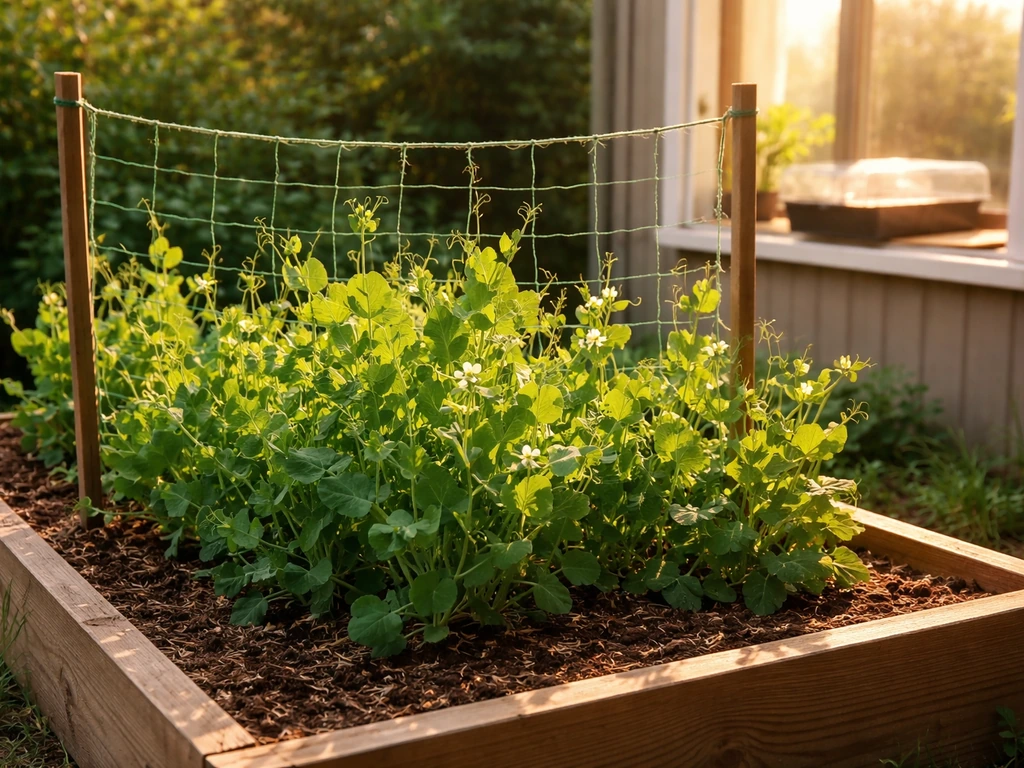
A balcony can be excellent for peas if it gets direct sun for most of the day. South or southwest-facing balconies in spring are ideal. The main pitfall is overhead coverage: if you have a balcony above yours, it may block a significant portion of direct sun even if the space feels bright. Check how much open sky is actually visible from your growing area. Peas also love something to climb, so a trellis, a tension wire along the railing, or even a few stakes in a container will help them grow upright and keep leaves exposed to light rather than tangled.
When natural light isn't enough: setting up grow lights for peas
If you're indoors and your windows can't deliver 6 to 8 hours of good direct light, a grow light is not optional for peas, it's necessary. Peas are not low-light plants. The good news is you don't need anything fancy or expensive to bridge the gap.
What kind of grow light to use
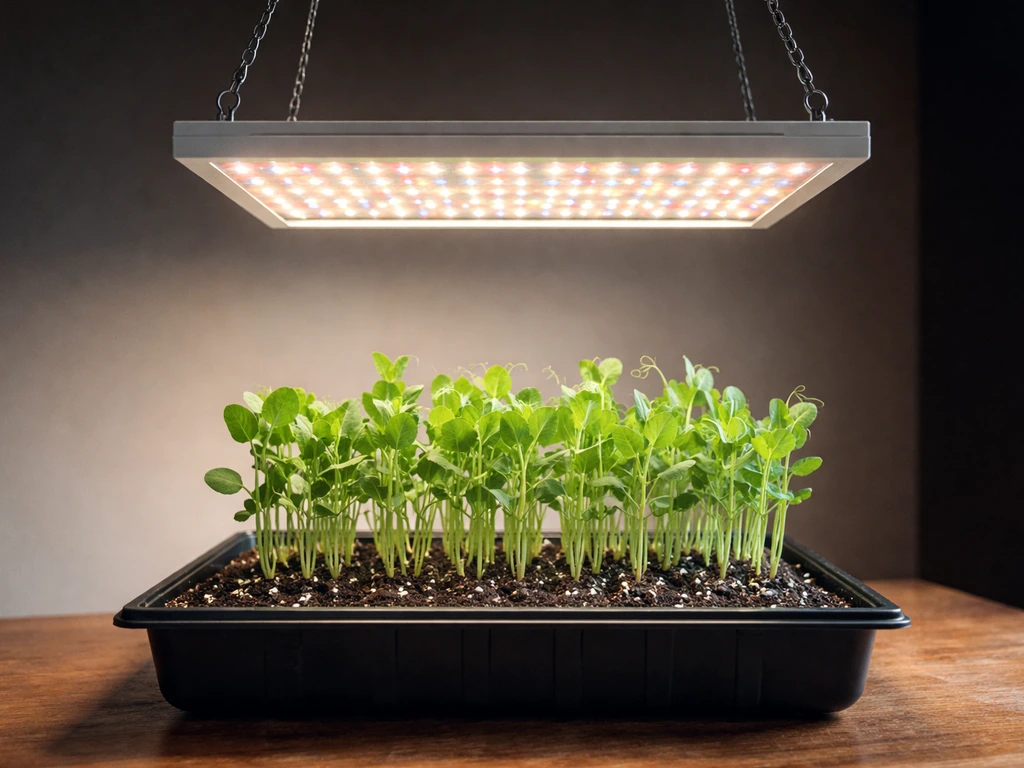
For peas, a full-spectrum LED panel is the go-to choice. They run cooler than older HID or fluorescent setups, last longer, and the spectrum quality is much better for vegetative growth and flowering. University of Minnesota Extension even recommends fluorescent or LED lights over relying on windows during low-light winter months, and that guidance holds for any season if your natural light is limited.
For light intensity, research on pea seedlings tested light levels of 200, 400, and 800 μmol·m⁻²·s⁻¹ (PPFD), and 400 μmol·m⁻²·s⁻¹ came out as the most suitable level for supporting healthy photosynthesis. That's a medium-intensity setting, achievable with a decent LED panel without spending a fortune. Look for lights rated at 40 to 60 watts for a small growing area (roughly 2x2 feet), and position the light 12 to 18 inches above the canopy as a starting point, then adjust based on how the plants respond.
How long to run the grow light
Run your grow light for 14 to 16 hours per day when it's serving as the primary light source. Research using pea plants has used 16-hour photoperiods in controlled trials, and this range keeps vegetative growth strong and supports flowering. If you're supplementing natural window light, just add enough artificial light hours to bring your total light period to around 14 to 16 hours. Use a simple outlet timer so you don't have to remember to switch it on and off manually.
If you want to use the DLI formula to check your setup: at 400 μmol·m⁻²·s⁻¹ for 14 hours, you get a DLI of about 20 mol·m⁻²·day⁻¹, which is a solid target for active pea growth. You can dial back intensity or hours slightly if you're supplementing rather than replacing sunlight.
Signs your peas aren't getting enough light (and what to do)
Peas are pretty good at telling you when they're struggling with light, if you know what to look for. The signs usually show up within a week or two of insufficient exposure.
- Etiolation (leggy, stretched stems): This is the most obvious red flag. When peas don't get enough light, they elongate rapidly in a desperate search for more, producing long, weak, pale stems with wide gaps between leaf nodes. Controlled studies confirm this stem elongation is a direct response to low light conditions. Fix: move the plant to a brighter spot or lower your grow light.
- Pale or yellowing leaves: Healthy pea leaves are a confident green. Pale, washed-out, or yellow leaves often signal that chlorophyll production is dropping because there isn't enough light to sustain it. Fix: increase light intensity or duration.
- Few or no flowers: Peas that flower poorly or not at all are often under-lit. Insufficient light means the plant doesn't have the energy budget for reproduction. Research confirms that low-light conditions can directly delay or suppress flowering and pod development. Fix: add supplemental lighting or relocate to a sunnier position.
- Weak, spindly tendrils: Pea tendrils that can't grip anything or that look thin and limp are another sign the plant isn't building enough structural tissue. This ties back to inadequate photosynthesis from low light.
- No pod development despite flowers: If flowers appear but drop before forming pods, light (along with temperature) is one of the first things to check. The plant may not have the energy reserves to support pod fill.
The fix for most of these issues is the same: more light, sooner. Move plants to your best window, add a grow light, or extend your light hours. Plants showing early-stage etiolation can often recover well if light improves quickly. Severely leggy plants are harder to rescue, so catching this early matters.
Scheduling light and timing your sowing for consistent results
Light availability and timing are deeply connected for peas. Because peas are a cool-season crop, they should ideally be growing during the spring or fall when temperatures are 50 to 65°F. The happy coincidence is that spring also brings steadily lengthening days, which means your outdoor or window light hours are increasing just as your plants are ramping up growth and heading toward flowering.
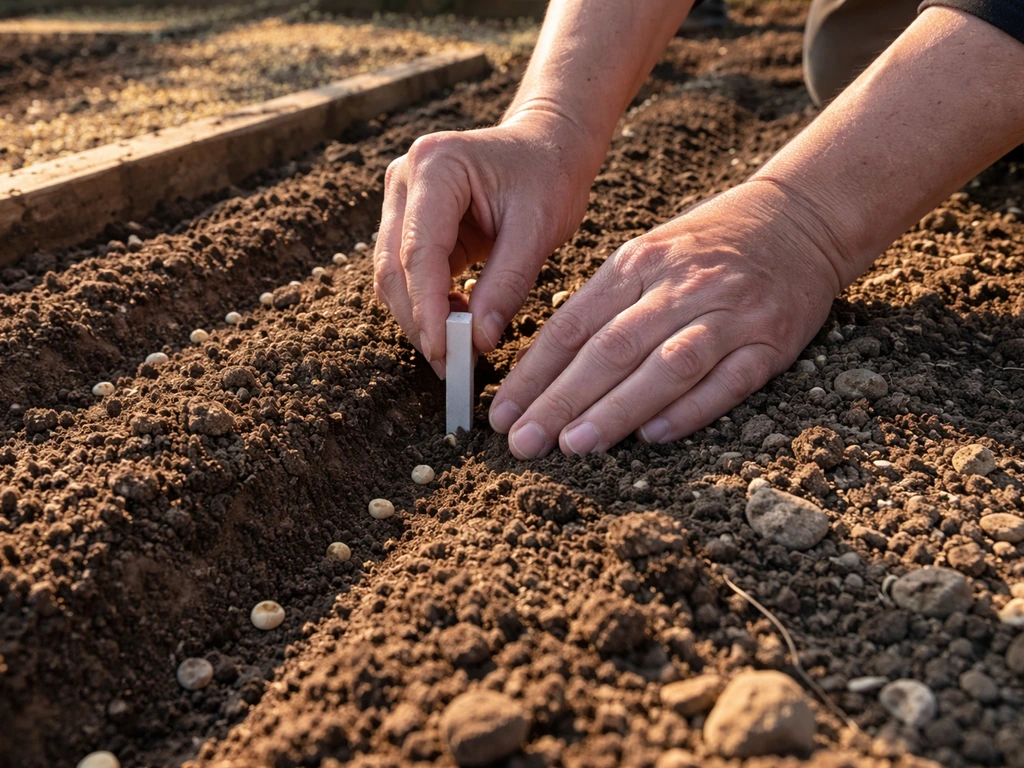
Outdoors, plant peas as soon as the ground can be worked in spring, usually when soil temperatures hit 50 to 65°F. This early start means your peas will be doing most of their growing and pod-filling during the brightest part of spring, well before summer heat arrives. In many climates, a fall planting is also possible. The light will be declining in fall rather than increasing, so factor that into your expectations for yield.
Indoors, you have more control. If you're starting seeds in winter for transplanting later, run your grow lights at 14 to 16 hours per day from day one. Peas germinate best in cool soil (50 to 65°F), so don't put them on a heat mat. As spring approaches and natural light improves, you can start reducing artificial light hours and transitioning plants toward a window or outdoor space. Keep peas on a consistent daily light schedule using a timer, sudden changes in light duration can stress plants and slow development.
One practical scheduling tip: if you're supplementing window light with a grow light, run the artificial light in the early morning hours to extend the photoperiod from the start of the day rather than late at night. Plants respond well to a gradual light-to-dark transition, and front-loading your supplemental hours tends to feel more natural for their growth rhythm.
If you're comparing pea light needs to other vegetables you might be growing alongside them, peas sit firmly in the full-sun camp. Do vegetables need direct sunlight to grow depends on the type, but many produce best with plenty of direct sun full-sun camp.
Vegetables like carrots and radishes have similar or sometimes slightly more flexible light requirements, but as a general rule, most productive vegetables do best with plenty of direct light, and peas are no exception to that pattern. For more specific guidance on timing and light hours, see how much sunlight carrots need to grow Vegetables like carrots.
Radishes also benefit from direct sun, so if you're growing them alongside peas, it's worth checking whether they need sunlight to grow do radishes need sunlight to grow. Carrots have their own direct-sun target, so it helps to check how much sunlight they need for healthy growth how much sunlight do carrots need to grow.
Carrots have their own direct-sun target, so it helps to check how much sunlight do carrots need to grow as a close comparison for your light planning. You might also be wondering, do radishes need sunlight to grow in the same way?
| Situation | Recommended Action | Daily Light Target |
|---|---|---|
| Outdoor full-sun spot (south-facing) | Plant directly, no supplemental light needed | 8–10 hours direct sun |
| Outdoor partially shaded spot | Relocate if possible; add reflective surfaces to boost light | Minimum 6 hours direct sun |
| South-facing indoor window | Place within 12 inches of glass, rotate regularly | As many natural hours as available, supplement if under 6 hours |
| East or west indoor window | Supplement with LED grow light for 4–8 extra hours | 14–16 hours combined natural + artificial |
| North-facing window or low-light interior | Full LED grow light setup required | 14–16 hours artificial light at ~400 μmol·m⁻²·s⁻¹ |
| Indoor seed starting in winter | Run full-spectrum LED 14–16 hours/day from germination | 14–16 hours artificial light |
FAQ
Can peas grow in bright shade if they do not get direct sun for 6 hours?
Bright shade may keep plants alive, but it usually reduces flowering and pod size because peas respond to direct light intensity. If you are consistently below the 5-hour direct-sun range, plan on moving the container or adding supplemental light rather than relying on shade.
How do I tell the difference between low light and a watering problem in peas?
Low light often shows as slow growth, pale leaves, and leggier stems that lean toward the light. Overwatering or poor drainage more commonly causes drooping with consistently wet soil, yellowing that starts lower, and possible fungus around the base. Check the soil moisture and look for the “leaning toward light” pattern to separate the causes.
Do peas need direct sun throughout the entire day, or is morning sun enough?
Morning sun can work if you still reach the required direct-sun hours, but morning light tends to be lower intensity. Because midday light is more intense, two gardens with the same total hours can perform differently, with the one receiving more midday direct sun usually doing better.
What happens if I start peas indoors with grow lights, then move them outdoors?
Do not switch abruptly from artificial light to full sun or to shorter daylight. Harden off by increasing outdoor exposure gradually over several days, keeping the first sessions shorter and partially sheltered. This reduces wilting and leaf burn from sudden intensity changes.
How close should the grow light be, and how can I adjust without a lux meter?
Start with the light 12 to 18 inches above the canopy, then adjust based on plant response. If stems stretch and leaves become lighter, raise the intensity or lower the light. If leaves look stressed or bleach, move the light farther away or reduce intensity.
Should I run grow lights all day long for peas?
If the lights are the primary source, a 14 to 16 hour photoperiod is typically effective for active growth. For supplemental use, keep the plants on a consistent schedule and only extend daylight to the target total, using a timer to avoid accidental long nights or extended day length.
Will a timer that turns the light off at night hurt peas?
Generally no, but consistency matters. Aim for the same on-off window daily. Sudden changes, like skipping days or varying the start time by many hours, can slow development and make the plants more prone to leggy growth.
How much window light is enough for seedlings versus mature peas?
Seedlings often tolerate lower light temporarily, but they still need strong exposure to avoid early stretching. If you notice rapid stem elongation in the first couple weeks, treat it as an indicator that the spot is too dim for the whole growth cycle, and supplement sooner.
Do peas need light at night for better yields?
No. Peas use dark periods for normal daily rhythms. Keep nights dark or near-dark, even if you are using timers, because extended light into the night beyond your set schedule does not substitute for direct daytime intensity.
If my balcony gets sun, is it still possible that peas get too little light?
Yes. Overhead structures, railings, and the height of surrounding buildings can block “open-sky” direct sun even when the area feels bright. Check by observing the same spot hourly on a clear day, or test with a lux meter if available, to confirm true direct-sun hours.