Carrots need a solid blank" rel="noopener noreferrer">6 to 10 hours of direct sunlight per day. Carrots need a solid 6 to 10 hours of direct sunlight per day, and if you are switching to peas you will want to look up how much sunlight do peas need to grow before planting. The minimum to get a decent harvest is 6 hours, but 8 to 10 hours is the sweet spot where roots develop properly, taste good, and mature on schedule. Anything below 6 hours and you're in partial shade territory, which carrots tolerate only weakly. They are a full-sun crop, plain and simple, and unlike leafy greens, they can't really lean on low light to do their job.
How Much Sunlight Do Carrots Need to Grow? (Outdoor and Indoor)
Marcus Hartley
20 Apr 2026
Your carrot light target, in plain numbers
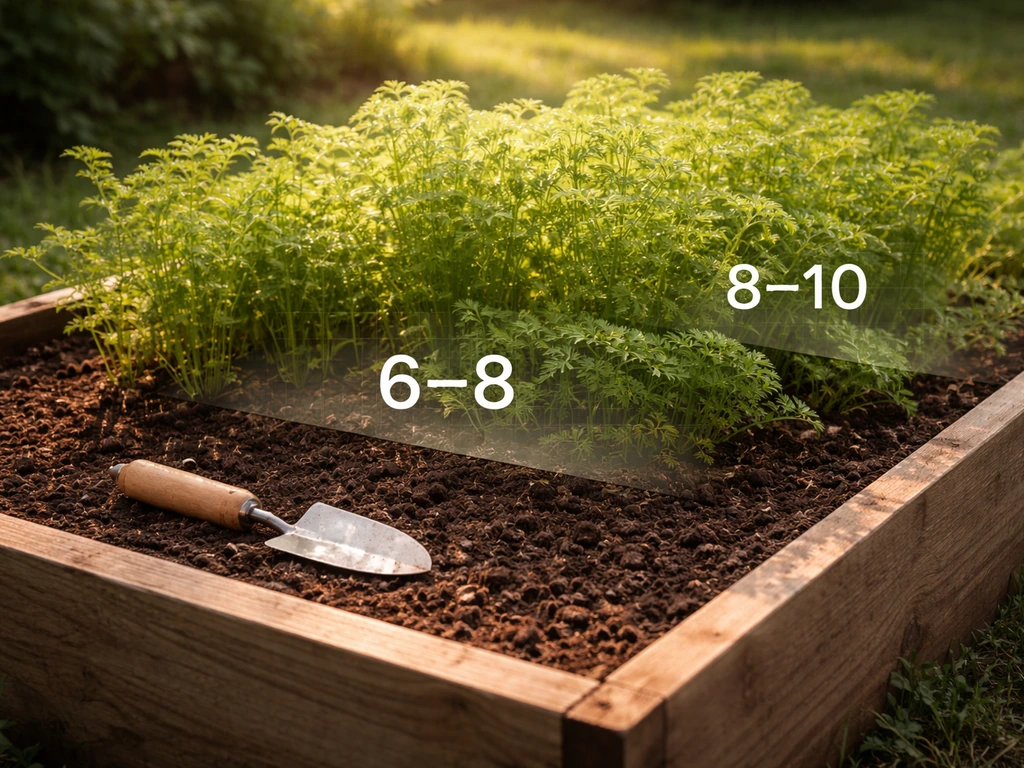
The University of Maryland Extension puts it clearly: carrots require at least 6 hours of direct sunlight per day and prefer 8 to 10. The University of Delaware and Oregon State University both classify carrots as full-sun plants, with only a tolerance for "very light shade" on their best days. Virginia Tech Extension emphasizes the importance of choosing a location with adequate sunlight for good carrot growth Virginia Tech Extension emphasizes adequate sunlight for carrots. That's not the same as shade-tolerant. It just means they won't immediately die if a cloud passes over.
In practical terms, "enough light" for carrots looks like this: the bed or container sits in a spot that gets unobstructed sun from mid-morning through mid-afternoon, with no heavy tree canopy or building shadow cutting across it for more than an hour or two. If you're growing in a container on a patio, you can track the sun arc across the space on a clear day and count the lit hours directly. That count is your real number.
Partial shade (4 to 6 hours) is technically possible but expect slower root development, smaller roots, and delayed maturity. Below 4 hours, carrots struggle. They'll germinate, produce some scraggly tops, and give you very little underground. It's one of those cases where the honest answer is: if your space only gets 3 hours of sun, carrots aren't the right crop for it, and that's okay.
Outdoor sun vs. window light: they are not the same thing
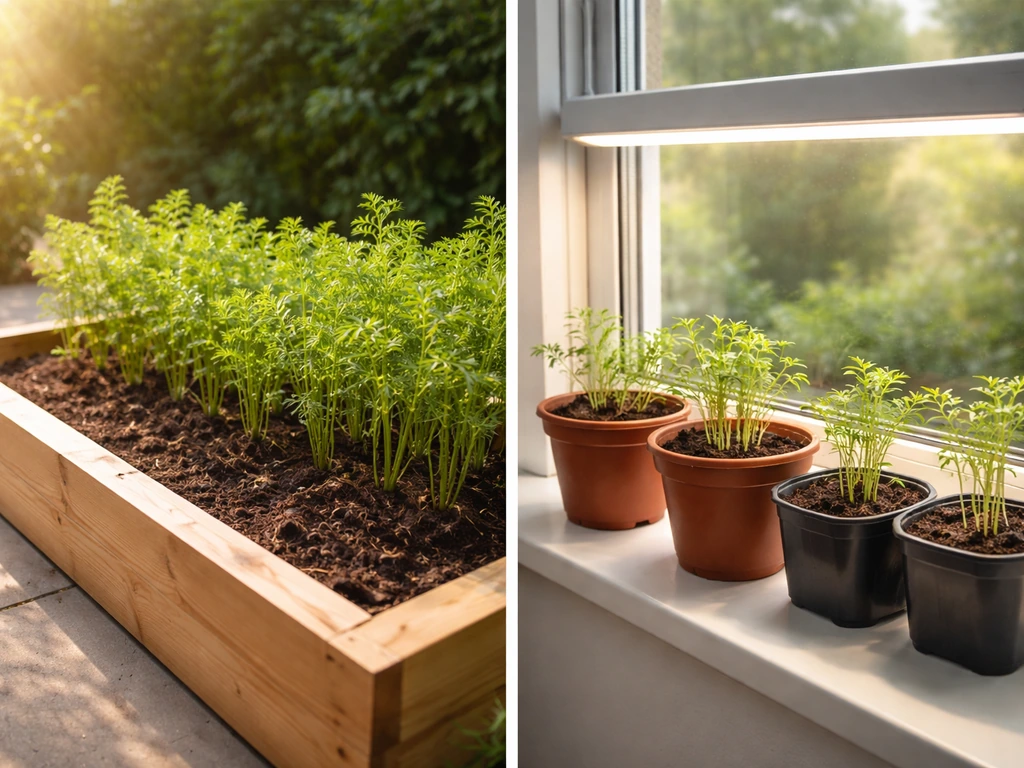
This is a really important distinction, especially for anyone hoping to grow carrots on a windowsill or near a glass door. Outdoor direct sun delivers roughly 1,500 to 2,000 micromoles of photons per square meter per second (µmol/m²/s) of photosynthetically active light on a bright day. A south-facing window on a clear afternoon might give you 200 to 500 µmol/m²/s right at the glass, and that drops off fast the farther back you move from the pane. North-facing windows in most climates rarely get above 50 to 100 µmol/m²/s.
Glass also filters some of the light spectrum, particularly UV, though that matters less for carrot root development than total intensity and daily duration. The bigger issue is simple: even a bright window is usually delivering a fraction of outdoor sunlight. So when extension sources say "6 hours of direct sunlight," they mean actual outdoor sun or a well-calibrated grow light, not window ambient light. A south-facing window might substitute for some outdoor sun, but it won't match it unless the conditions are genuinely exceptional.
If you're growing carrots indoors, the window-only approach is honestly risky unless you're on a very sunny south-facing exposure with no obstructions and full clear days. If you are wondering about vegetables more broadly, direct sunlight is usually the most dependable way to power photosynthesis, though some crops prefer partial shade do vegetables need direct sunlight to grow. Most indoor carrot growers do better combining window light with a grow light, or just using grow lights as the primary source.
How to quickly check whether your spot has enough light
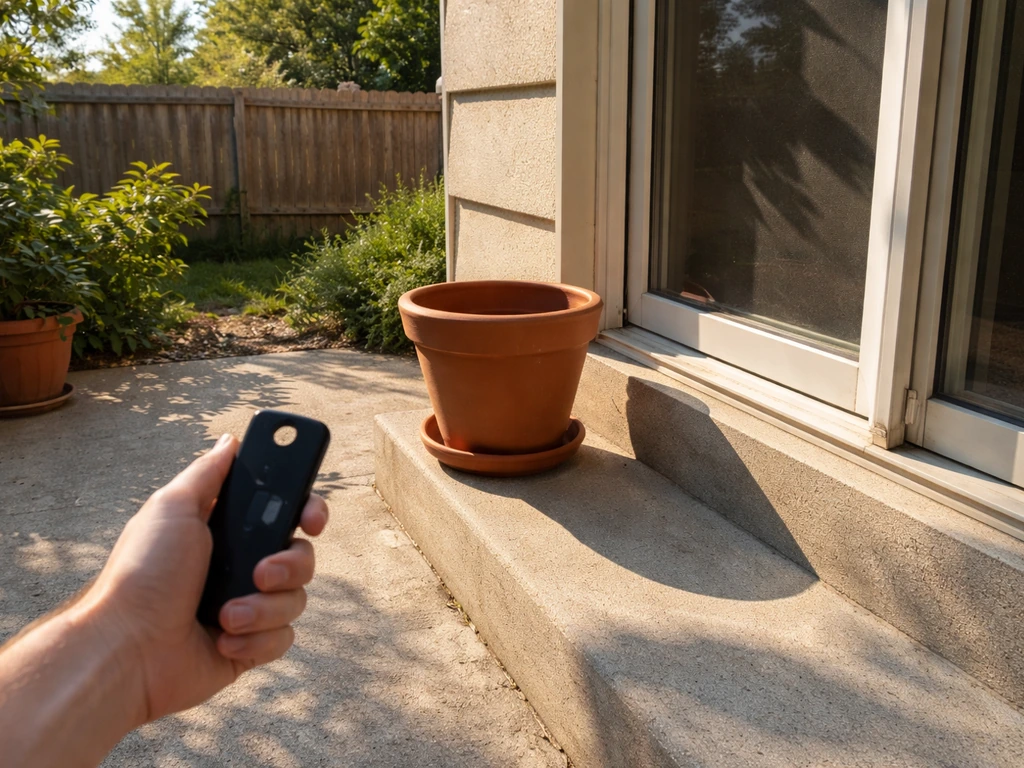
You don't need a fancy meter to get a working read on your light situation. Start with simple observation, then upgrade your method if you need precision.
- Track the sun arc on a clear day: stand at your growing spot or check your container location every hour from 8am to 6pm and note when direct sun is actually hitting it. Count those hours. Dappled or reflected light does not count as direct sun for this purpose.
- Check for sharp shadows: hold your hand above the soil at midday. If you see a crisp, dark shadow, you have direct sun. A faint, blurry shadow means diffused or indirect light. No shadow means very low light.
- Use a light meter app: free smartphone apps (like Lux Light Meter) give you a rough lux reading. Outdoor full sun reads 50,000 lux or more. Below 20,000 lux, you're in partial shade. Below 5,000 lux, it's too dim for good carrot growth.
- Watch your seedlings: if the tops are stretching tall and thin rather than staying compact and green, that's a classic leggy-plant signal that they're reaching for more light.
- Check the soil temperature separately: if germination is slow, rule out cold soil before blaming light. Carrots germinate well around 72°F (22°C). Below 50°F (10°C), germination nearly stops regardless of light levels.
Not enough sun? Here's how to supplement with grow lights
If your outdoor spot is shaded or you're growing indoors, a decent LED grow light will do the job. The key is delivering enough total daily light to match what the sun would provide. A useful way to think about this is Daily Light Integral (DLI), which is basically the total amount of photosynthetically active light hitting your plants over a full day. You calculate it like this: PPFD (in µmol/m²/s) multiplied by light hours per day, multiplied by 0.0036. To support full-sun carrots, you're aiming for a DLI in the range of roughly 12 to 20 mol/m²/day.
In practical LED terms, if your light delivers about 400 µmol/m²/s at the canopy level and you run it for 14 hours, that gives you a DLI of roughly 20, which is solidly in the full-sun zone. At 200 µmol/m²/s for 14 hours, you're around DLI 10, which starts to shade into partial-sun territory. That's workable but not ideal. The fix is either moving the light closer to raise PPFD or adding more run time (up to a point).
A full-spectrum LED with red and blue diodes is your best practical choice. Research has shown that carrot root development responds to spectral quality, meaning the ratio of red to blue light genuinely affects how the storage root forms and how sugars accumulate underground. A broad-spectrum "white" LED or a red/blue blurple panel both work, but full-spectrum tends to perform more consistently across the whole plant cycle. You don't need anything industrial. A mid-range LED panel rated for a 2x2 or 3x3 foot footprint is plenty for a container or raised bed section.
Light schedule and placement: how to set it up right
Positioning the light
Height matters more than people expect. Most LED grow lights meant for vegetables work best positioned 12 to 24 inches above the plant canopy. Too close and you risk light bleaching or heat stress on the feathery carrot tops. Too far and the PPFD drops quickly (light intensity follows an inverse square relationship with distance, so doubling the distance roughly quarters the intensity). Start at 18 inches and adjust based on what you see. Use the manufacturer's PPFD chart if they provide one, or just buy a cheap PAR meter or use a smartphone app as a rough guide.
Setting the timer
Use a basic outlet timer. For carrots, a 14-hour light period works well, and it's a good default for most situations where you're fully replacing sunlight. If you're supplementing a south window, you can run the grow light as a day-extender: turn it on around sunset and run it until your total light hours (natural plus artificial) reach 14 to 16 hours. Michigan State Extension recommends placing supplemental lights on a timer that kicks in at sunset and extends the photoperiod to your target, rather than running lights all day when natural light is available.
Keep the schedule consistent. Carrots aren't as sensitive to photoperiod as flowering plants, but irregular light schedules still disrupt growth and stress the plant. Set it, leave it, and only adjust when growth tells you something is off.
Quick reference: light setup targets
| Setup | Target hours/day | Approx. PPFD at canopy | Notes |
|---|---|---|---|
| Outdoor full sun | 8–10 hours | 1,000–2,000+ µmol/m²/s | Ideal; no supplementation needed |
| South window only | 6–8 hours possible (best case) | 200–500 µmol/m²/s at glass | Risky without grow light backup |
| LED grow light (full replacement) | 14–16 hours | 300–500 µmol/m²/s | Targets DLI ~15–25 |
| LED supplement + window | Window hrs + 4–6 hrs LED | 200+ µmol/m²/s from LED | Run LED at evening extension |
Common light problems and how to fix them fast
Leggy, spindly tops
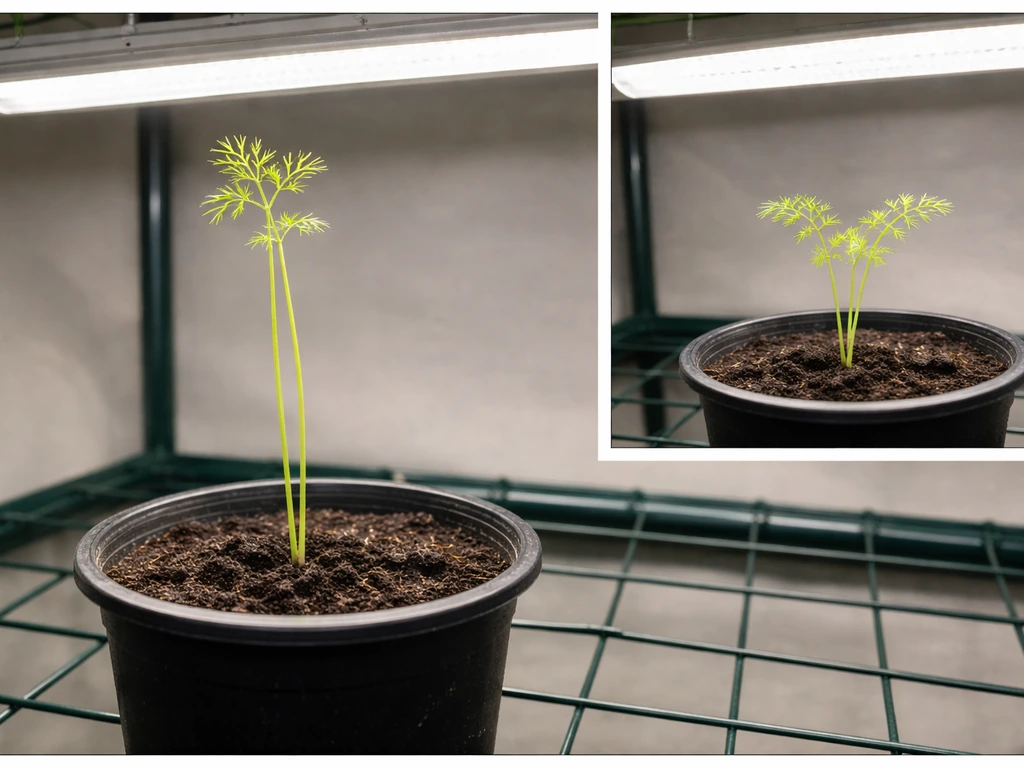
Tall, thin, pale green carrot foliage stretching toward the light is a classic sign of insufficient light intensity or duration. The plant is reaching for more. Fix: move your grow light closer (if using one), add more hours to your schedule, or relocate the container to a sunnier spot. If you're near a window, try moving the container directly to the glass rather than a foot or two back.
Slow or uneven germination
Before assuming it's a light problem, check soil temperature. Carrots germinate best around 72°F and very slowly below 55°F. If your soil is cold, a heat mat under the tray will do more than any light adjustment. That said, if soil temperature is fine and germination is still patchy after two weeks, adding a few extra hours of light can help signal the seedlings once they do sprout.
Stunted or forked roots
Underdeveloped or misshapen roots have several causes (rocky soil, inconsistent watering, overcrowding), but chronic low light is a real contributor. When the plant doesn't have enough light energy, it prioritizes survival over root storage development. If you've ruled out the physical soil causes and growth is still weak, bump your light duration up by 2 hours and give the plants another 2 to 3 weeks to respond.
Bleached or scorched tops
Yellowing or papery patches on the foliage under a grow light usually mean the light is too close or too intense for the current stage. Pull the light up by 4 to 6 inches and reassess after a week. Outdoors, this is less common but can happen in very hot climates with full midday sun on young seedlings. A shade cloth rated for 20 to 30% reduction during the hottest part of the day resolves it without sacrificing your total light hours.
Good tops, poor root fill
If the foliage looks great but roots are thin and underdeveloped, check whether light is actually reaching later in the day. Carrots use that afternoon light energy to push carbohydrates down into the root. If your outdoor spot gets morning sun only and shade after noon, you may be hitting 6 hours technically but missing the higher-intensity afternoon window that really drives root bulking. Shifting containers to a spot with afternoon exposure, or extending LED run time into the evening, can make a noticeable difference.
One more thing worth knowing: if you're also growing other root vegetables like radishes, the light logic is similar but the tolerance thresholds differ. Radishes also need plenty of light, but they can often handle a bit less than full sun depending on the variety and how cold or hot it is. Carrots are less forgiving of low light than some other crops, so the fixes here are good starting points but always cross-check against the specific crop you're growing.
FAQ
Do carrots need direct sun specifically, or is bright indirect light enough?
Carrots perform best with direct sunlight or an equivalent intensity from a grow light. Bright indirect light (for example, light bouncing off walls) usually does not deliver enough total daily light, so roots stay thin and maturity is delayed even if the tops look green.
What happens if my carrots get 6 hours of sun but the sun is weak, like morning-only or filtered through leaves?
6 hours is a useful minimum, but only if that light is reasonably intense. Morning-only or canopy-filtered sun often counts as partial-sun conditions, so expect slower root bulking. If possible, aim for unobstructed afternoon exposure, or extend LED time to compensate.
Can I grow carrots under a grow light for fewer hours if I use a stronger light?
Yes, what matters is total light over the day (DLI), not hours alone. Use PPFD at the canopy level and target a similar DLI range as full-sun carrots, then adjust height or timer length. If you just crank brightness and shorten time, keep an eye on leaf stress from excess intensity.
How close should a grow light be during germination versus after sprouting?
Start slightly higher during germination, then move closer after seedlings establish. Very close intense light at the sprout stage can cause bleaching or papery leaf patches. A practical approach is starting around the mid-range (about 18 inches), then adjust in small steps after you see leaf color over a week.
Should I include a dark period every day when using grow lights?
Yes, carrots still need a daily dark period. Use a timer to create a consistent photoperiod, commonly around 14 hours when fully replacing sun, rather than running lights continuously. Consistency matters more than the exact hours if you are keeping total DLI in the target range.
Is it okay to rotate containers or beds to even out light?
It often helps, especially outdoors where one side faces the sun or indoors where a window dominates. Rotate containers about weekly so growth stays even. Avoid frequent daily shifts indoors, because abrupt changes can stress the plants even when total light is adequate.
How do I tell the difference between low-light problems and watering or soil problems?
Chronic low light usually shows pale, stretched foliage leaning toward the light. Watering issues more often cause wilt, irregular growth, or cracking at the soil surface. For root problems, also check for rocks or compaction, since misshapen roots commonly come from the soil environment even when light seems fine.
My carrot seedlings germinated poorly, but once they sprouted they look okay. Should I increase light or fix something else first?
First check soil temperature, since carrots germinate best around 72°F and struggle below about 55°F. If germination is patchy after two weeks, warming with a heat mat can do more than light changes. After sprouting, then adjust light duration to support root development.
Do carrots grown in shallow containers need more light than those in the ground?
Usually, yes. Shallow containers often heat up faster and can dry out more quickly, which reduces root expansion. If you are using a shallow pot, you should lean toward the higher end of the light target (closer to 8 to 10 hours outdoors, or an equivalent DLI indoors) to encourage faster, stronger root bulking.
What light schedule should I use if my window gets some sun but not the full 6 to 10 hours?
Use the grow light as a supplement to reach your total target light hours, for example extending into the evening so the combined natural plus artificial time lands around 14 to 16 hours in many indoor setups. Also ensure the grow light is positioned to hit the canopy, not just the space near the window.
Are there any carrot varieties that tolerate less sun better than others?
Some varieties may handle borderline light slightly better, especially if you harvest earlier for smaller roots. However, carrots overall are not truly shade-tolerant, so if your spot repeatedly stays below about 4 to 6 hours of usable light, yields are likely to be disappointing regardless of variety.
How long after improving light will I see results in root size?
Top growth can change within days, but root bulking typically takes longer, often a couple of weeks. If you adjust light due to thin roots, give plants an additional 2 to 3 weeks to respond before making another major change.