No, weeds and plants cannot grow with absolutely zero light. If you're wondering does weed need light to grow, the short answer is no, not zero light, because photosynthesis depends on photons. Duckweed is also a photosynthetic plant, so it cannot grow without light either. Not even a little. Without light, photosynthesis simply cannot start, and without photosynthesis, a plant has no way to produce the energy it needs to build new tissue. It will burn through whatever reserves it has stored, then decline and die. That said, "without light" and "without direct sunlight" are two very different situations, and that distinction matters a lot if you're trying to grow something indoors.
Can Weed Grow Without Light? Zero vs Low-Light Growth
Marcus Hartley
13 May 2026
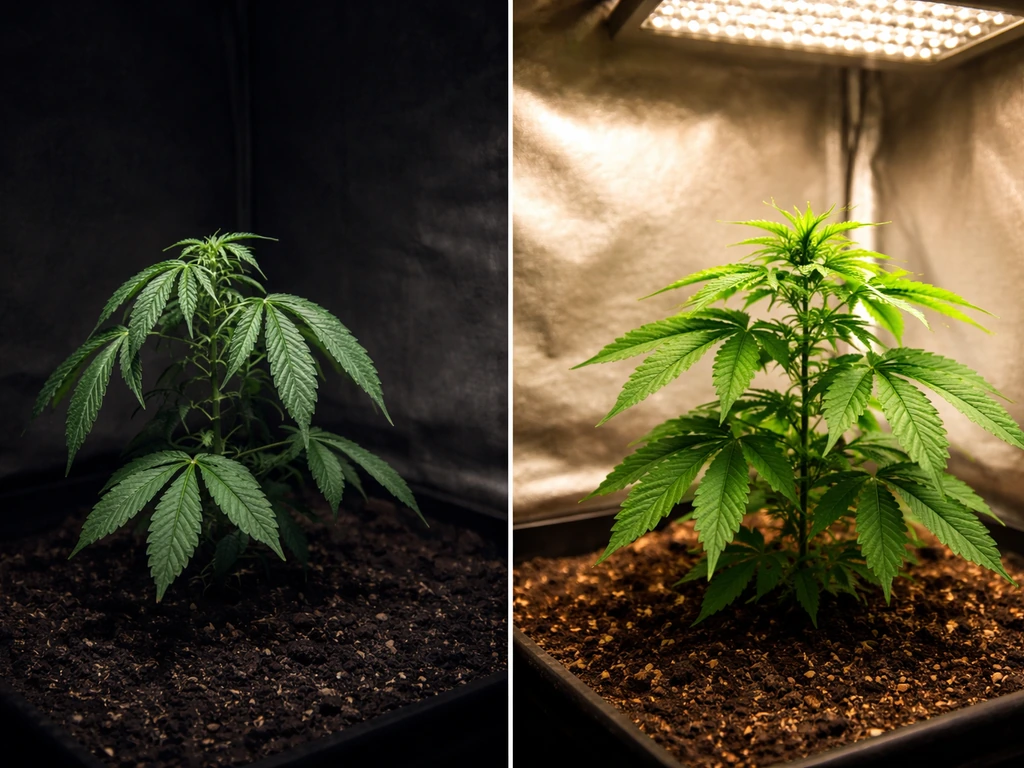
Zero light vs. no sunlight: these are not the same thing
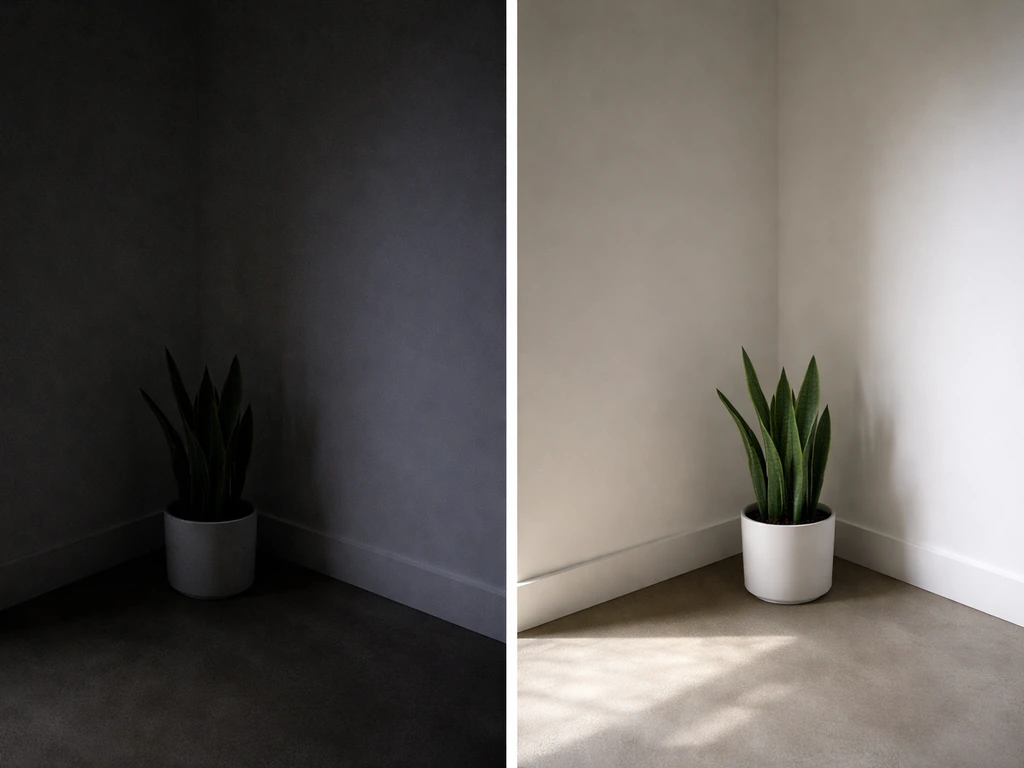
Here's where people get confused. "No sunlight" does not mean "no light." A room with no windows gets zero light, and nothing will grow there. But a room with indirect light from a window, a lamp, or even reflected light from nearby rooms has photons bouncing around, and plants can use those photons. The light reactions of photosynthesis just need photons to hit the chlorophyll in leaf cells. Where those photons come from, whether the sun, an LED strip, or a fluorescent tube, doesn't matter to the plant. A peer-reviewed study in Energies analyzes how lux meters and smartphone light sensors respond differently to light spectra, showing that measurement errors depend on the sensor’s spectral sensitivity Where those photons come from, whether the sun, an LED strip, or a fluorescent tube, doesn't matter to the plant..
You may have heard that plants have "dark reactions" in photosynthesis, which sounds like it implies they can photosynthesize in the dark. They can't. The dark reactions (also called the Calvin cycle) are just the carbon-fixation step that doesn't directly require light to run, but they only work after the light reactions have already generated ATP and NADPH. Without that light-powered first step, the whole process stops. In complete darkness, a plant shifts entirely to cellular respiration, burning its own stored sugars just to stay alive, and that's not a sustainable strategy. If you want weed plants to stay healthy, aim for at least low light rather than complete darkness In complete darkness.
There's also a concept called the light compensation point: the minimum light intensity where a plant's photosynthesis exactly balances its respiration. Below that point, the plant is consuming more energy than it's producing, even if it's technically alive. For most plants, that threshold sits around 12 to 20 micromoles of photons per square meter per second (µmol/m²/s). Shade-tolerant plants have a lower compensation point, which is why they survive in dim corners where sun-loving plants would slowly starve.
What "no direct sunlight" actually means for your plants
Direct sunlight means the sun's beam is hitting the leaf surface unobstructed, which delivers somewhere around 32,000 to 100,000 lux depending on time of day and season. Indirect light, by contrast, is light that's reflected, filtered through curtains, or diffused around a room. Bright indirect light (the kind you'd get a few feet from a south-facing window with a sheer curtain) is roughly 10,000 to 21,000 lux. That's genuinely enough for a wide range of plants, including many popular weed species and foliage plants.
The University of Minnesota Extension puts low light at 50 to 250 foot-candles (roughly 50 to 150 µmol/m²/s in PPFD terms), medium light at 250 to 1,000 foot-candles, and high light above 1,000 foot-candles. A dim corner away from any window falls in that low-light zone, and while some plants can survive there, most won't thrive. A spot near but not in direct sun is medium to bright indirect, and that's where most common indoor plants actually do well.
How to check if your room actually has enough light right now
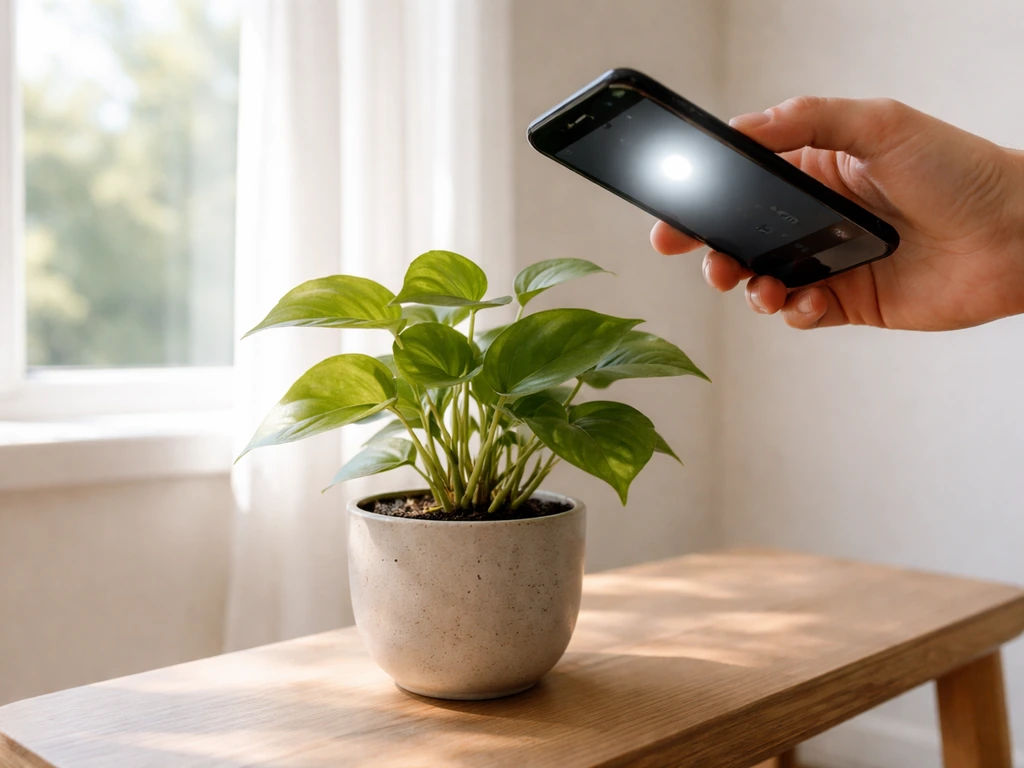
You don't need expensive equipment to get a rough read on your light levels. Here's a simple process you can do today:
- Download a light meter app. Photone is the most plant-focused option and can measure PPFD (photosynthetically active radiation, the unit that actually matters for plant growth) in addition to lux. Keep in mind that phone sensors aren't perfectly accurate, especially under LED or fluorescent spectrums, but they give you a useful ballpark.
- Measure at canopy height. Hold your phone at the same level your plant's leaves would be, not up at the ceiling or at eye level. Light drops off fast with distance.
- Take several readings. Move the phone around the area where the plant will sit and average the numbers. Light can vary a lot even within a few inches.
- Compare to the ranges. Low light is roughly 50 to 150 µmol/m²/s PPFD or 50 to 250 foot-candles. If your reading is below 50, you're in survival territory at best for most plants. Below 20, almost nothing will make net gains.
- Check at the right time. Measure during the brightest part of the day, typically between 10am and 2pm, since that's the peak your plants will actually experience.
One thing worth noting: the total light a plant receives over a full day matters more than any single-moment reading. This is called Daily Light Integral (DLI), measured in mol/m²/day. A PPFD of 200 µmol/m²/s for 16 hours gives a DLI of about 12 mol/m²/day, which is enough for leafy greens and many foliage plants. Virginia Tech Extension recommends using PPFD and DLI for any serious light planning, rather than just lux or watts, because they reflect the energy your plant actually gets.
What your plant looks like when the light isn't enough
Plants are pretty good at telling you when they're not getting enough light, if you know what to look for. The process is called etiolation, and it's essentially the plant stretching desperately toward any light source it can find. Here's what you'll see:
- Leggy, elongated stems with long gaps between leaf nodes (the plant is physically stretching to find more light)
- Pale, yellowing, or washed-out leaves from reduced chlorophyll production
- Small new leaves that are noticeably smaller than older ones
- Leaning heavily toward any nearby light source
- Older leaves dropping off as the plant sheds what it can no longer support
- Stunted overall growth, or a complete stall where nothing new seems to be growing
These symptoms don't always mean your plant is about to die, but they're a clear signal to act. A leggy, pale plant isn't just less attractive, it's also weaker and more vulnerable to pests and disease. The good news is that most plants recover well once you move them closer to light or add a grow light. I've rescued more than a few sad, etiolated plants by just moving them to a brighter shelf and giving them a few weeks.
How to replace sunlight with artificial lighting
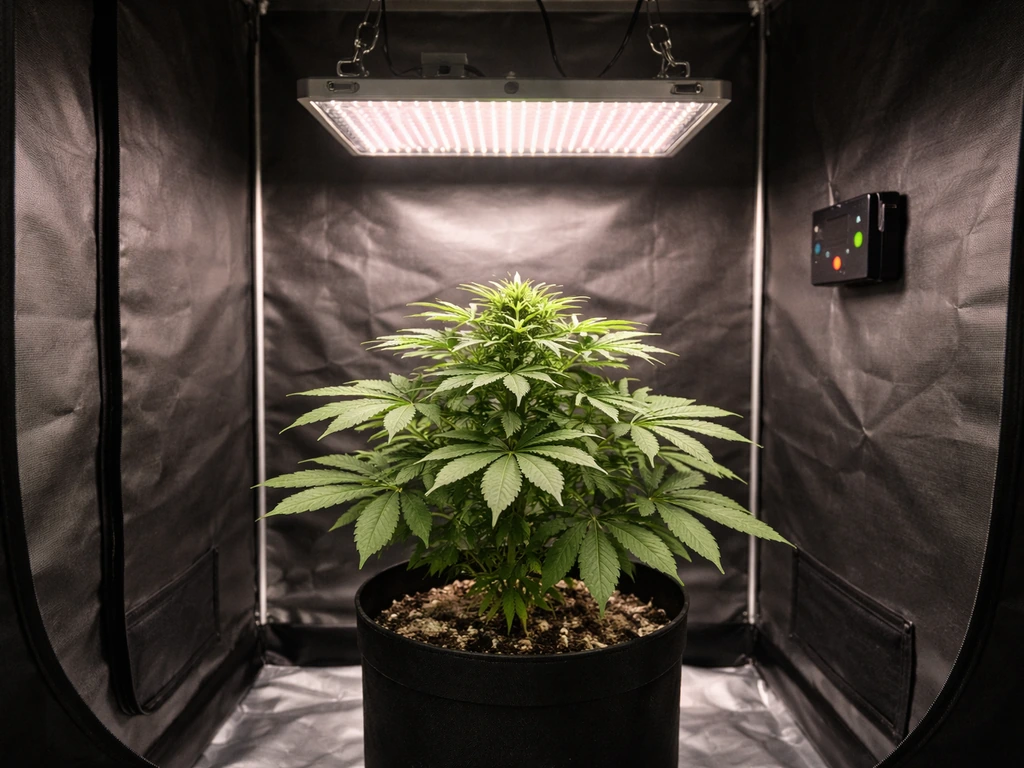
Artificial light can fully substitute for sunlight as long as it covers the right spectrum and delivers enough photons. Plants primarily use red light (around 630 to 660 nm) and blue light (around 430 to 470 nm) for photosynthesis. Full-spectrum LED grow lights cover both, and they're the most energy-efficient option available right now. Fluorescent and CFL bulbs also work, especially T5 fluorescents, though they're less efficient per watt than modern LEDs.
| Light Type | Best For | Energy Efficiency | Heat Output | Upfront Cost |
|---|---|---|---|---|
| Full-spectrum LED grow light | All plant types, any stage | Excellent | Low | Moderate to high |
| T5 Fluorescent | Seedlings, herbs, leafy greens | Good | Low to moderate | Low to moderate |
| CFL (spiral bulb) | Small plants, budget setups | Decent | Low to moderate | Very low |
| Regular incandescent bulb | Not suitable | Poor | High | Very low |
Regular incandescent bulbs are not a real option for plant growth. They produce mostly heat and red/infrared wavelengths but very little of the blue spectrum plants need for healthy vegetative growth. If you're wondering whether weed plants can grow with regular light bulbs, the short answer is that incandescents alone won't cut it, though LEDs and fluorescents marketed as "full spectrum" or "daylight" (5,000 to 6,500 K color temperature) can do the job when positioned correctly.
Practical setup: placement, distance, timers, and schedules
Getting the basics right makes a bigger difference than buying an expensive light. Here's what actually matters:
Distance from the light to your plant
Light intensity drops off rapidly as distance increases, so placement is your most important variable. When measuring grow light output, use the target canopy or plant height and take readings across a grid, then average them because intensity can vary across the area Grow Light Setup Guide. University of Minnesota Extension guidelines give these starting points:
- Seedlings: 4 to 6 inches below the light
- Hydroponic lettuce and herbs: 6 to 12 inches
- Foliage houseplants: 12 to 24 inches
If you're using an LED that doesn't put out much heat, you can safely stay on the closer end of those ranges. With fluorescents and especially older-style bulbs, keep a bit more distance to avoid heat stress on the leaves. The simplest check: hold your hand at plant level under the light for 30 seconds. If it feels warm to hot, move the light up.
How many hours per day (photoperiod)
Most indoor plants and weed species need somewhere between 12 and 18 hours of light per day when growing under artificial light, because artificial fixtures don't deliver the same intensity as full outdoor sun. Here's a practical schedule by plant type:
- Seedlings: 16 to 18 hours per day
- Leafy greens and herbs (hydroponic or soil): 12 to 14 hours per day
- Foliage houseplants: 12 to 14 hours per day
- Flowering houseplants: 14 to 16 hours per day
Use a timer. This is not optional. Consistent photoperiods matter to plant development, and forgetting to turn a light on or off for a few days in a row will affect your results. A basic plug-in outlet timer costs a few dollars and removes all the guesswork.
A quick DLI check for your setup
If you want to verify your setup is actually delivering enough light energy, multiply your PPFD reading (in µmol/m²/s) by your daily hours, then multiply by 0.0036. That gives you DLI in mol/m²/day. Leafy greens generally want a DLI of around 12 mol/m²/day. So a light delivering 200 µmol/m²/s for 16 hours hits about 11.5, which is close enough. At 150 µmol/m²/s for the same period, you're at roughly 8.6, which is on the low end but survivable for shade-tolerant species.
Your best options when light is genuinely limited
Sometimes a room just doesn't get enough natural light and you're not ready to invest in a grow light setup. That's fine. The most practical move is to choose plants that genuinely match your conditions instead of fighting them. Shade-tolerant species have lower light compensation points and will produce net energy gains at intensity levels that would leave a sun-loving plant starving.
Beyond plant selection, a few low-effort tweaks can meaningfully increase usable light in a dim space:
- Add reflective surfaces near your plants. White walls, white boards, or reflective Mylar sheeting bounce ambient light back toward the canopy and can measurably boost effective PPFD without adding a single watt.
- Keep leaves clean. Dusty or grimy leaves absorb less light. A quick wipe with a damp cloth every few weeks helps.
- Position plants strategically. Even a few feet closer to a window can double or triple light intensity. The difference between a plant on a windowsill versus a plant four feet back into the room is enormous.
- Use a single well-positioned CFL or LED bulb as a supplement. You don't need a full grow tent setup. A 23-watt full-spectrum CFL or a small LED panel a foot above a plant can bridge the gap between "barely surviving" and "actually growing."
The honest reality is that if you're in a space with no windows and no artificial light, nothing is going to grow there long-term. But if you have even a modest light source and you're willing to pick plants that match it, you have real options. Shade-tolerant weed species and low-light houseplants can thrive under conditions that would defeat most sun-lovers, and a basic artificial light setup can fill the gap in almost any room. The key is understanding what "enough light" actually means for the specific plants you're trying to grow, and then either meeting that bar or choosing plants where the bar is lower.
FAQ
What happens to weed if it gets almost no light (like a very dark room), but not total darkness?
Not for healthy growth. In true darkness, plants cannot run the light reactions, so they rely on stored carbohydrates and will gradually weaken. If you mean near-darkness (for example, a faint hallway glow), the plant may survive briefly but will be leggy and slow unless the light intensity reaches at least a low-light compensation threshold.
If I can only run a light sometimes, how badly will inconsistent hours affect growth?
Yes, you can use timers, but avoid accidental light interruptions. Many growers assume one missed day is harmless, but inconsistent schedules can cause uneven growth and delayed recovery from stress, especially right after you move the plant closer to light or change the bulb.
Is it better to give plants a few hours of bright light or longer hours of weaker light?
Yes, but you need enough total light energy, not just a bright moment. A dim but steady schedule can outperform a short bright burst if the Daily Light Integral (DLI) is higher overall, because photosynthesis depends on cumulative photons across the day.
Do I need a full-spectrum grow light, or will any bright LED work?
Light color matters because the spectrum must include usable red and blue wavelengths. If you use a “grow light” that has plenty of marketing claims but weak blue or overall output, the plant may still etch slowly and stretch, even if it looks bright to you.
Can small LEDs like desk lamps or decorative lights support weed growth?
You should avoid relying on a phone camera flash or tiny LED accents, because intensity is the limiting factor at the leaf. A device can look bright to humans but still deliver too few photons per square meter per second (PPFD) for net growth.
How close should a grow light be, and how do I know I’m not overheating the leaves?
Yes, but the “right” distance depends on fixture type and heat. If the light is too close, you risk leaf burn and heat stress, and if it is too far, PPFD drops off quickly. The hand-at-leaf check mentioned in the article helps, then fine-tune by watching for stretching versus burning.
My plants are stretching. Does etiolation always mean they need more light?
It is usually a sign of insufficient intensity or an inconsistent light schedule, but it can also happen during early acclimation after moving plants. If etiolation continues after you increase light, double-check distance, timer reliability, and whether the lamp is actually delivering enough PPFD.
Can weed survive in low light without dying, even if it will not thrive?
No, not if the space is genuinely windowless and you are also limiting light duration. However, some plants can survive on very low light for longer than they thrive. Survival is not the same as net energy gain, so expect slow growth and reduced vigor unless you raise DLI.
Why do incandescent bulbs fail even if they produce some heat and visible glow?
All artificial lights can support photosynthesis if they deliver enough photons, but household bulbs vary widely. Incandescents skew toward wavelengths plants do not use efficiently, so even if they warm the plant, they often fail to provide enough usable blue light for robust vegetative growth.
How can I verify my setup is giving enough light without relying on guesswork?
Yes. If you are using an indoor fixture and you can measure PPFD, compute DLI (PPFD times photoperiod, then convert units as described) and compare it to typical leafy-green targets as a rough planning benchmark. This prevents guessing based on lux or wattage, which often overstates usefulness for plants.
If I want to grow in a dim room, what placement mistakes reduce light the most?
You can choose shade-tolerant plants, but you should still confirm placement relative to the light source. In a dim corner, the available photons can drop quickly with distance, and even shade-tolerant types will become weak if they sit too far from the window or lamp.
Do plants need a continuous light period, or can I split the photoperiod into parts?
For indoor setups, a minimum daily photoperiod is often necessary because plants need repeated opportunities to capture photons. Even though the exact schedule depends on your lighting intensity, using an interruption-prone schedule can push plants below the point where they can replace respiration costs each day.