
Fiddle leaf figs can survive in low light, but they won't actually grow there. If your goal is a healthy, expanding plant with new leaves pushing out every few weeks, you need bright indirect light for around 6 to 8 hours a day. Low light keeps them alive in a kind of stasis, and it often triggers a slow decline: yellowing leaves, leaf drop, and zero new growth. If that sounds like your plant right now, the good news is there are real fixes, including grow lights, better placement, and smarter watering habits that all work together.
Can Fiddle Leaf Figs Grow in Low Light? What to Do
Marcus Hartley
1 May 2026
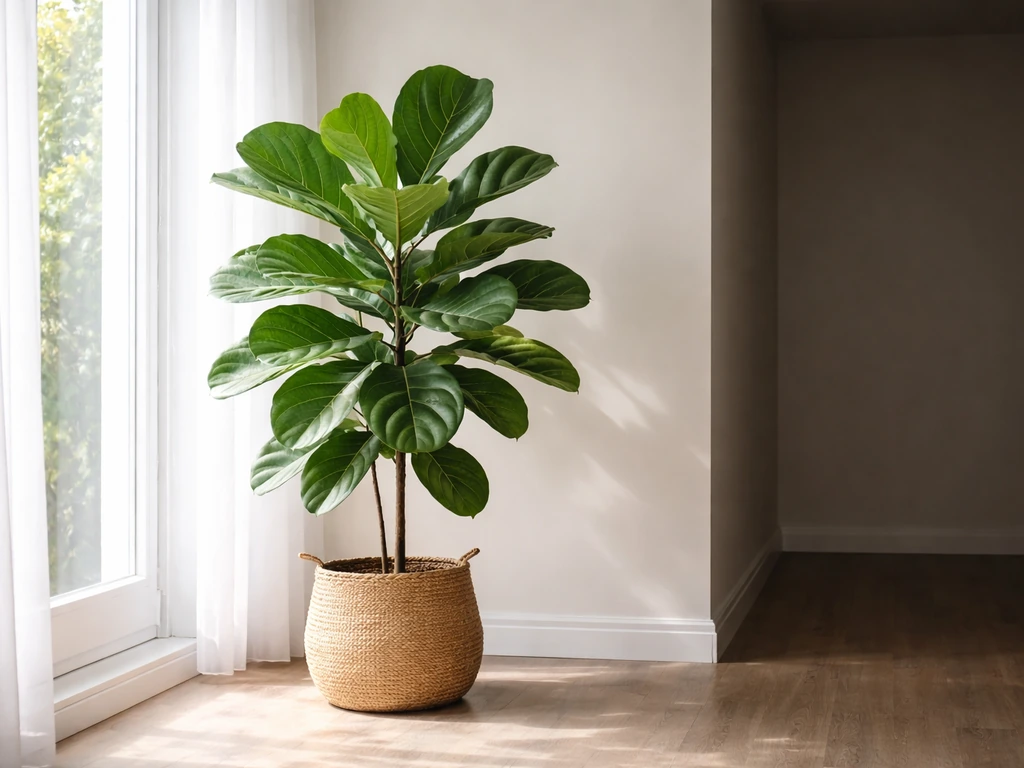
Surviving vs. actually growing: what low light does to a fiddle leaf fig
There's a meaningful difference between a plant that's alive and a plant that's thriving. Fiddle leaf figs (Ficus lyrata) are native to the tropical rainforests of West Africa, where they grow beneath a high forest canopy that still lets in plenty of filtered, bright light. When you move one into a dim corner of your apartment, it doesn't die overnight, but it does start running on empty.
Photosynthesis is the engine behind every new leaf, every inch of stem growth, every piece of structure the plant builds. In low light, photosynthesis slows dramatically because the plant simply isn't capturing enough photons to produce the energy it needs to grow. It will prioritize survival, shedding older leaves to reduce the energy it has to maintain, pulling resources toward its core. That's surviving. Growing is something else entirely, and it requires real light.
The honest answer: if your space is genuinely low light, a fiddle leaf fig is one of the more demanding choices you can make. It's not tolerant of dim conditions the way a pothos or a fittonia is. But if your space is borderline, or if you're willing to supplement with a grow light, you can absolutely keep one happy and growing.
What "low light" actually means in measurable terms
"Low light" gets thrown around a lot, but it actually maps to specific numbers. MU Extension also notes that blank" rel="noopener noreferrer">medium light intensity plants prefer about 250 to 1,000 foot-candles, and that growth is best with more light even within that range. Light intensity indoors is measured in lux or foot-candles. The conversion is simple: blank" rel="noopener noreferrer">1 foot-candle is roughly 10 lux (more precisely, 10.76 lux). A practical rule of thumb for indoor spaces is that low light falls around 500 to 2,500 lux. Bright indirect light, which is what a fiddle leaf fig actually wants, sits much higher, typically in the 2,500 to 10,000 lux range depending on the source and time of day.
You don't need a professional light meter to measure your space. A smartphone with a light-measuring app can give you a reasonable reading for plant placement decisions. These apps use your phone's ambient light sensor and can display readings in both lux and foot-candles. If you want more precision, a dedicated lux meter costs very little and takes the guesswork out entirely. The Missouri Botanical Garden recommends measuring light intensity at the actual location where the plant will sit, not just near the window, because light drops off dramatically with distance.
That distance effect is real and often surprises people. Research from plant placement guides suggests light can fall by around 75% at just 1 meter (about 3 feet) from a window. So a spot that feels bright to your eyes near a south-facing window can read as low light by the time you're 4 to 6 feet back into the room. Window direction, time of year, weather, and obstructions like curtains or nearby buildings all affect what your plant actually receives. Measure at the plant, not at the glass.
Signs your fiddle leaf fig isn't getting enough light
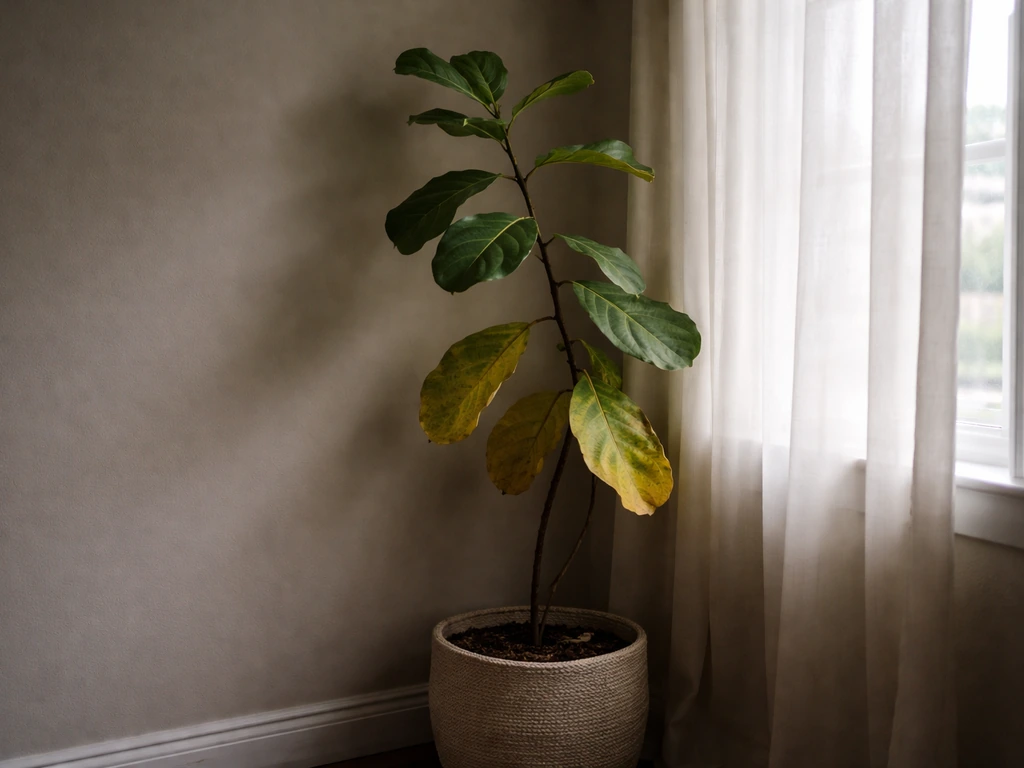
Your plant will tell you when the light is insufficient. The problem is that low-light symptoms overlap with other issues like overwatering, so it helps to know what to look for specifically.
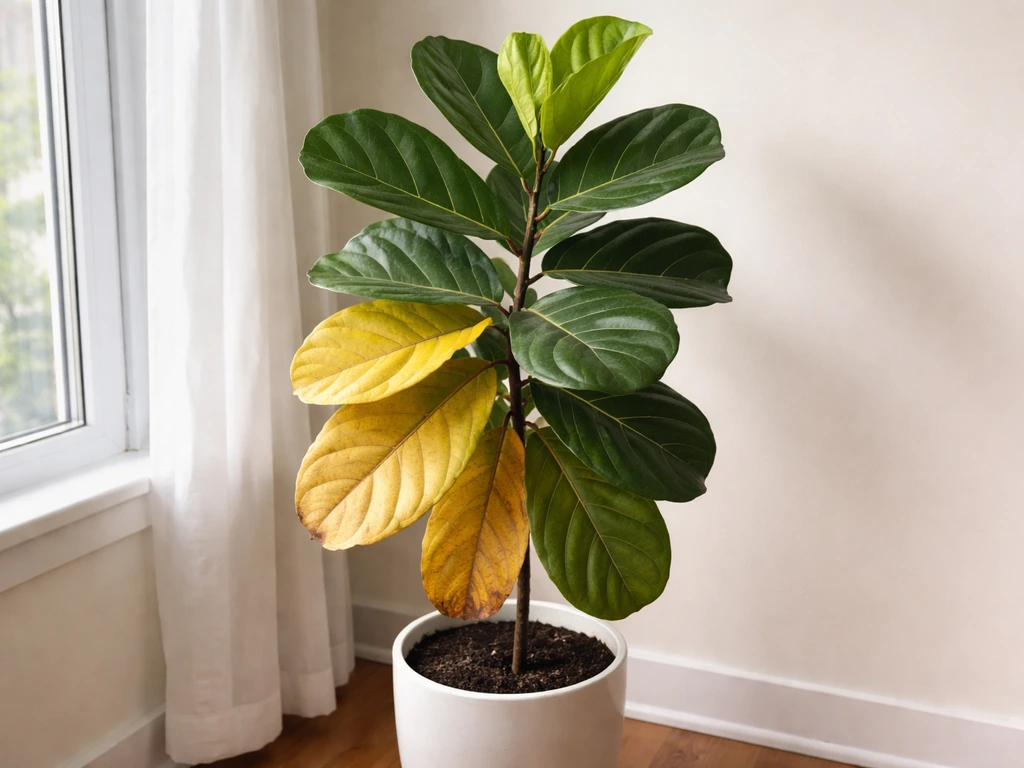
- Yellowing leaves, especially on lower or older growth, which signals the plant is pulling resources away from leaves it can no longer support
- Premature leaf drop, where healthy-looking leaves fall without obvious cause
- No new growth for weeks or months, even during the active growing season (spring and summer)
- Leggy or stretched growth, where the stem elongates and leans toward the nearest light source in an attempt to chase photons
- Smaller new leaves than the existing foliage, a sign the plant is producing growth but can't sustain full-sized leaves with the energy available
- Dull or pale green color instead of the deep, glossy green a healthy fiddle leaf fig should have
If you move your plant to better light or add a grow light, expect to see early improvement within 2 to 3 weeks. New leaf growth often appears within a few weeks after correcting the light situation, though it depends on how stressed the plant was before the change.
Where to put it: placement strategies that actually work
Placement is the single most impactful thing you can do before spending a cent on equipment. Fiddle leaf figs want bright indirect light for 6 to 8 hours a day. Here's how to give them that without burning the leaves or leaving them in the dark.
- Put the plant as close to your brightest window as possible, ideally within 3 to 5 feet of the glass. A north-facing window in the Northern Hemisphere typically delivers the least light; south or east-facing windows are usually better options.
- Use a sheer curtain rather than a thick drape to diffuse direct sun (which can scorch large leaves) while still letting in the volume of light the plant needs.
- Avoid placing the plant across the room from a window and calling it "near a window." Even a beautiful, sun-filled room can read as low light 8 feet back from the glass.
- Rotate the plant a quarter turn every 1 to 2 weeks so all sides receive relatively equal light exposure. Without rotation, you get lopsided growth as the plant stretches toward its light source.
- Keep it away from air conditioning vents, exterior doors, and drafty windows, because cold drafts trigger leaf drop that can look a lot like a light problem and compounds stress when light is already marginal.
Using grow lights to fill the gap
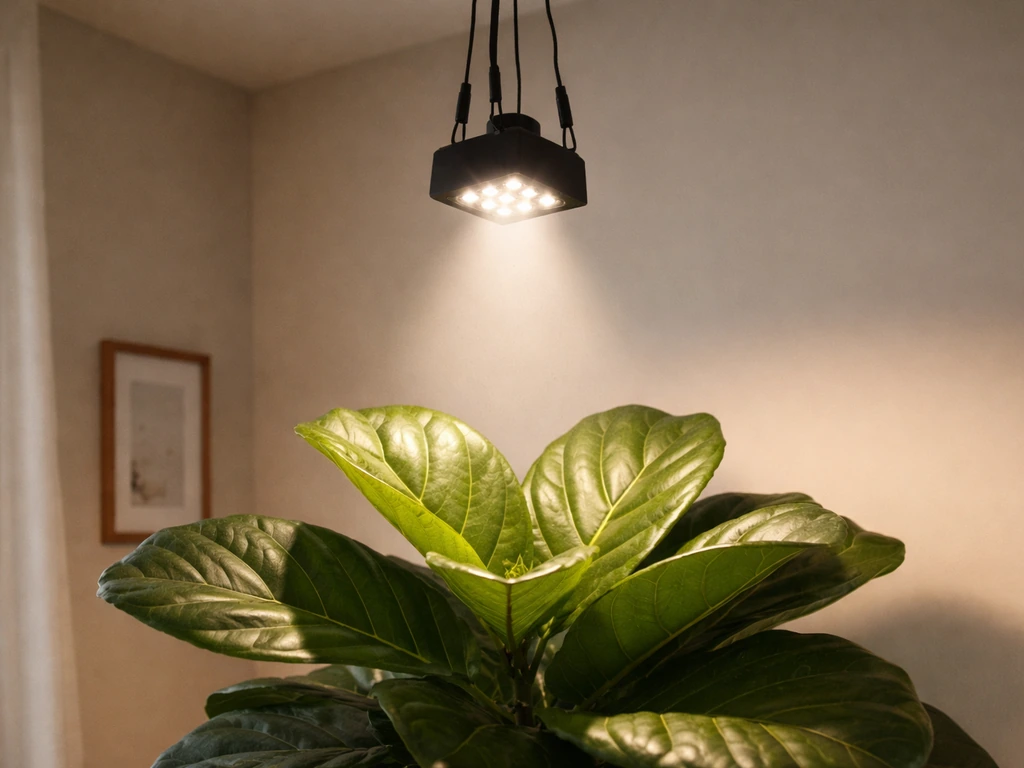
If your windows don't cut it, a grow light is genuinely worth considering. This isn't about turning your living room into a greenhouse. A single LED grow light positioned correctly can make the difference between a plant that's slowly declining and one that's actively putting out new leaves.
LED vs. fluorescent: which one to use
| Feature | LED Grow Lights | Fluorescent Grow Lights |
|---|---|---|
| Energy use | Low (most efficient) | Moderate |
| Heat output | Low | Low to moderate |
| Light output (PPFD) | High, adjustable with quality units | Lower, works for low to medium needs |
| Lifespan | Long (50,000+ hours typical) | Shorter (10,000–20,000 hours) |
| Cost upfront | Higher | Lower |
| Best for fiddle leaf fig | Yes, especially full-spectrum LEDs | Workable for supplementation in smaller spaces |
| Recommendation | First choice for most setups | Budget option for a single plant near a window |
For a fiddle leaf fig, a full-spectrum LED grow light is the best choice. It delivers the wavelengths plants actually use for photosynthesis (in the red and blue spectrum especially), runs cool enough to place near large leaves, and uses less electricity over time. Fluorescent grow lights can work as a supplement if your light is borderline rather than truly dark, but they won't give you the intensity a fiddle leaf fig needs as a standalone solution.
Distance, timing, and setup
The key metric grow-light guides use is PPFD, which stands for photosynthetic photon flux density and is measured in micromoles per square meter per second (µmol/m²/s). For foliage plants like Ficus lyrata, a PPFD in the 150 to 400 µmol/m²/s range is a reasonable target for supplemental lighting. The PPFD your plant receives depends heavily on the distance between the light and the plant canopy.
- Hang or position your LED grow light roughly 12 to 24 inches above the top of the plant for supplemental use. Closer increases intensity; farther reduces it. Check your light's specific PPFD chart if it has one.
- Use a timer set for 6 to 10 hours of supplemental light per day. Consistency matters more than heroic long sessions; plants do better with a predictable photoperiod.
- If the plant already gets some natural light, combine the two: natural light in the morning, grow light supplementing during darker parts of the day or in dim months.
- Don't leave grow lights on 24 hours a day. Plants need a dark period, and continuous light can actually stress them.
- Use the DLI (daily light integral) concept as a rough check: if your grow light delivers 200 µmol/m²/s at canopy level for 8 hours, you're providing a meaningful daily dose. More hours or higher PPFD increases the daily total.
You don't have to get into deep calculations to make this work. The practical takeaway is: get a decent full-spectrum LED, hang it 12 to 18 inches above the plant, run it for 8 hours a day on a timer, and check on your plant after 3 to 4 weeks. That's usually enough to see a real difference.
Adjusting watering and care when light is low
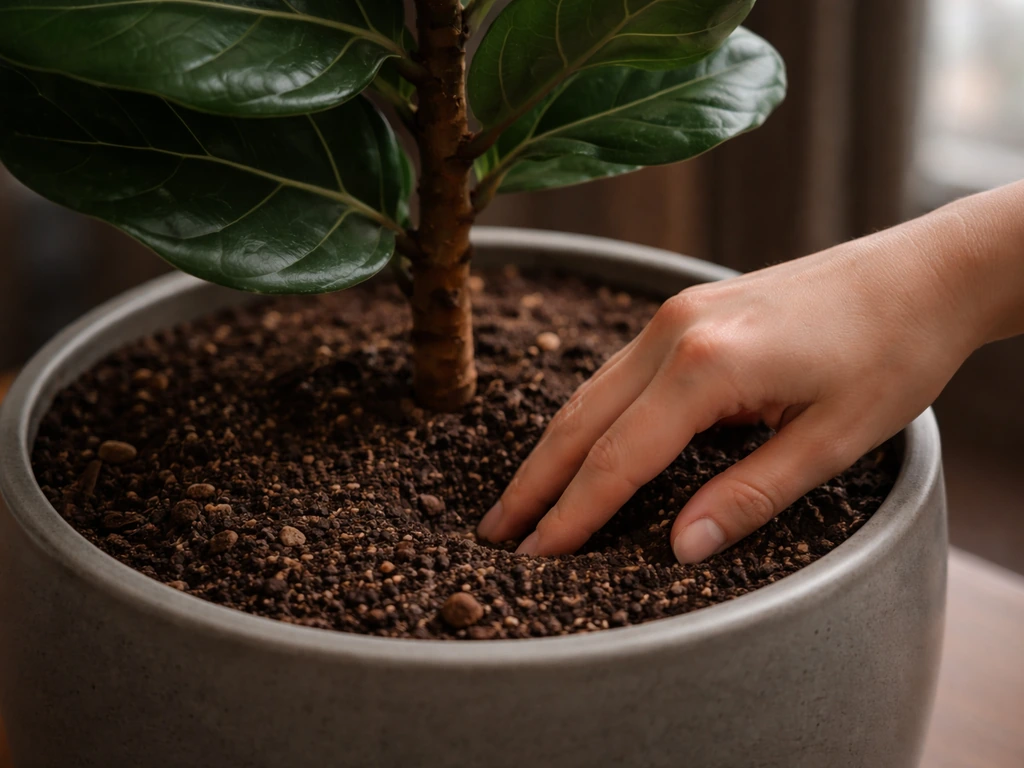
Low light and overwatering are a dangerous combination, and this is one of the most common ways people accidentally kill a fiddle leaf fig in a dim space. Here's the connection: in low light, the plant's photosynthesis slows, which means it uses water much more slowly than it would in bright conditions. If you're still watering on the same schedule you'd use in a bright spot, you'll almost certainly end up with soggy soil and root rot.
- Always check the top 1 to 2 inches of soil before watering. If it still feels damp, wait. In low light, this could mean watering every 10 to 14 days instead of weekly.
- Make sure your pot has drainage holes. Fiddle leaf figs need moist, well-drained soil. Sitting in water is a fast track to root rot, especially when they're not using water quickly due to low light.
- Don't fertilize heavily when light is poor. The plant can't use nutrients effectively without adequate light for photosynthesis, and excess fertilizer salts can damage roots. Hold off on feeding until you've improved the light situation.
- Keep the plant away from cold drafts and temperature swings. Low temperatures slow everything down further and trigger leaf drop that you might misread as a light problem.
- Wipe the large leaves with a damp cloth every few weeks to remove dust. Dusty leaves absorb light less efficiently, and when you're already working with limited light, every bit counts.
One more thing worth separating out: leaf drop can come from shock after moving the plant, from cold air, from overwatering, or from low light. Before assuming it's purely a light issue, run through the checklist. If you've moved the plant recently, give it 2 to 4 weeks to adjust before making further changes. Fiddle leaf figs are famously dramatic about being relocated.
If your space is truly too dark: what to do instead
Sometimes the honest answer is that a fiddle leaf fig just isn't the right plant for your space, and that's okay. If your brightest spot reads below 500 lux consistently and you don't want to use a grow light, a fiddle leaf fig will struggle no matter what you do. Rather than watch a beautiful plant slowly decline, it's worth either rehoming it somewhere it can thrive or swapping it for a species that genuinely tolerates low light.
Plants like pothos, peace lilies, ZZ plants, and snake plants are genuinely low-light tolerant in a way fiddle leaf figs simply are not. If you're exploring the ficus family specifically, it's worth knowing that other ficus relatives behave differently under low light, and some are more forgiving. English ivy is part of a different foliage group than the fiddle leaf fig, so it may tolerate dimmer spots than you’d expect for a tropical tree fig. Dieffenbachia is another option worth considering for lower-light rooms, as it handles dim conditions better than most tropicals.
If you're committed to the fiddle leaf fig and have even one reasonably bright window, invest in a grow light before giving up. A basic full-spectrum LED setup is inexpensive, takes up little space, and can realistically transform a marginal light situation into one that supports active growth. The fiddle leaf fig's reputation for being difficult is largely a light problem in disguise. Get the light right, dial in your watering, and most of the drama disappears.
FAQ
What counts as “low light” if I don’t know my lux or foot-candles?
Use a practical test. If the room is so dim that you struggle to read comfortably without turning on a lamp for several hours, it’s likely below what a fiddle leaf fig needs to grow. If you can read print at midday near the plant location, it’s more likely borderline. For certainty, measure at the exact spot where the leaves will sit.
Can I keep a fiddle leaf fig alive in low light, even if it won’t grow?
Yes, survival is possible, but expect stasis. The main goal is to avoid the common overwatering trap by watering far less often and letting the top portion of the soil dry thoroughly before watering again. If you see repeated leaf yellowing and drop, it’s a sign the “alive” phase is slipping into decline.
If my plant drops leaves after I move it, how long should I wait before changing anything else?
Give it 2 to 4 weeks after a move. Leaf drop can be shock from relocation, and changing light or watering again too quickly can compound stress. During the adjustment window, focus on stability (same watering rhythm, same temperatures, no frequent repositioning).
How should my watering schedule change when the plant is in a dimmer spot?
Water based on soil dryness, not on a calendar. In lower light, the soil stays wet longer, so wait longer between waterings and check by feel at least a couple inches down. If water runs through and the soil remains damp for days, you’re almost certainly watering too frequently for that lighting level.
What soil or pot choices matter most to prevent root rot in low light?
In dim conditions, drainage becomes more important than people expect. Use a pot with drainage holes and a chunky, airy mix that dries faster, and avoid decorative sleeves with standing water. If you notice a persistent sour smell or the soil never fully dries, switch the potting setup rather than “waiting it out.”
Should I rotate the fiddle leaf fig toward the light?
Yes, but rotate slowly and infrequently. Rotating often can trigger stress and leaf drop because the plant keeps adjusting. Aim for a small turn every couple of weeks, and only if you are not also changing light intensity or moving the plant to a very different spot.
How close can I place a grow light without burning leaves?
Start at about 12 to 18 inches above the canopy as a safe baseline, then observe. If leaves show bleached patches or crisp edges, move the light farther away and reduce daily hours. If there is no improvement after 3 to 4 weeks, increase light duration or slightly adjust distance rather than moving the plant around constantly.
If I use a grow light, should it run all day or on a schedule?
Use a timer and keep it to a consistent daily window, typically 8 hours to start. Running 16 hours or more often increases stress without necessarily improving growth. Consistency helps the plant acclimate, and it makes it easier to match watering to real light conditions.
Do fiddle leaf figs prefer full-spectrum or red-blue grow lights?
Full-spectrum LED is the best default choice because it covers multiple wavelengths the plant can use for photosynthesis. Red-blue lights can work as a supplement, but they may not deliver enough overall intensity for steady growth unless your setup is strong and well positioned.
What PPFD target should I aim for with supplemental lighting?
A reasonable practical target for supplemental lighting is in the 150 to 400 µmol/m²/s range at the leaf canopy. Since PPFD drops with distance, measure or adjust based on your plant response, and prioritize correct placement and duration before chasing exact numbers.
How can I tell whether my problem is light versus overwatering?
Look at timing and pattern. Overwatering often comes with persistently wet soil, soft stems, and leaves that yellow while the potting mix stays damp. Low light more commonly shows slow decline with older leaves dropping and no meaningful new growth, even when you are watering less often. If soil is staying wet longer than a week, treat watering first.
Does cold air or drafts in winter make low-light symptoms worse?
Yes. Cold drafts can cause additional leaf drop, and the plant also slows its water use further. In low light, temperature stress is extra risky because slower growth plus slower drying increases the chance of overwatering and stress-related shedding.
If my brightest window is under 500 lux, what are my best options?
If it’s consistently below that level and you do not want to use a grow light, rehome the plant or switch species. Choosing a low-light tolerant plant is usually more successful than trying to “fix” light with watering changes. If you are willing to supplement, a basic full-spectrum LED can turn a marginal spot into a workable growing setup.