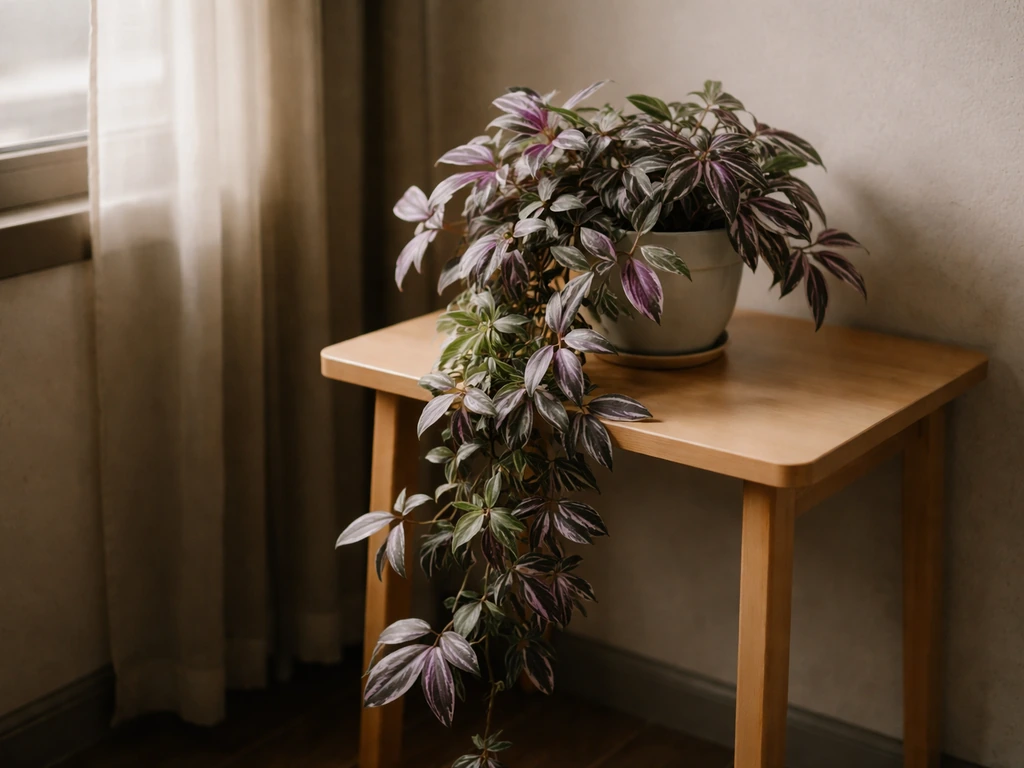
Wandering Jew (Tradescantia zebrina) can survive in low light, but it won't thrive there. You'll get leggy, stretched-out stems, faded coloring, and a plant that looks more sad than stunning. If your space is genuinely dim, you can absolutely keep one alive with a few adjustments, but going in with honest expectations matters. Can mint grow in low light too, and if so what conditions does it need to stay healthy? The good news: a modest grow light or a smarter window placement can close that gap fast.
Can Wandering Jew Grow in Low Light? Practical Care Guide
Marcus Hartley
14 May 2026
What 'low light' actually means in your home
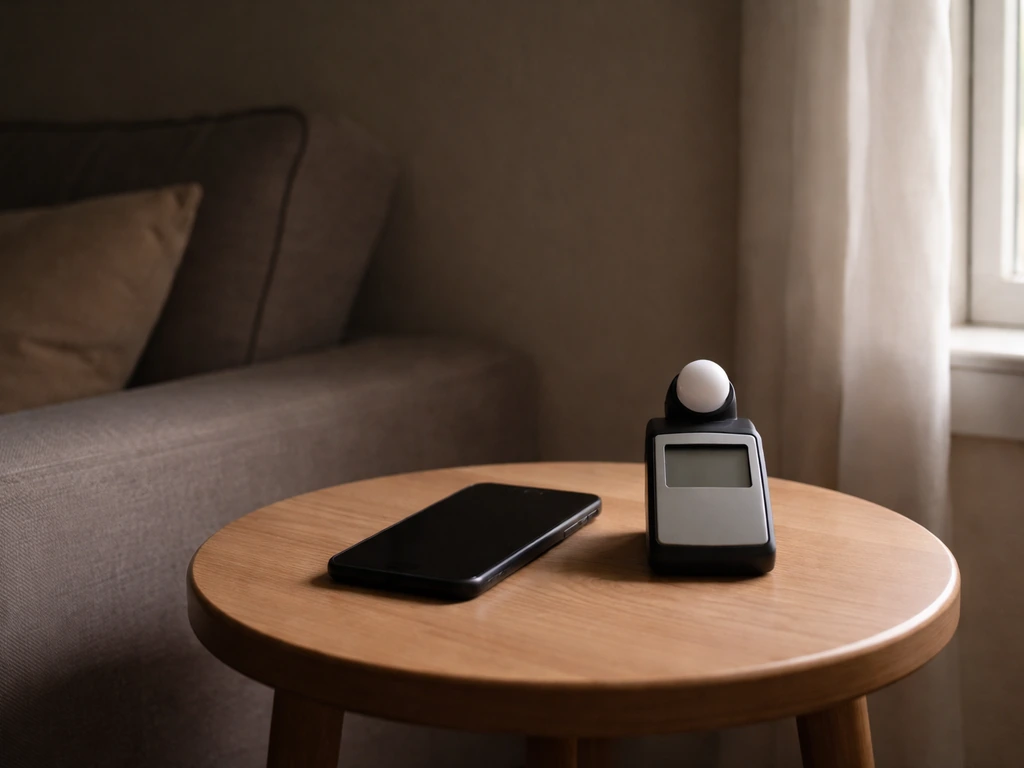
People throw around 'low light' loosely, but it covers a wide range of actual conditions. A room with no windows is dark, not low light. True low light indoors means a spot that gets some ambient natural light but no direct sun, like a north-facing windowsill or a spot 6 to 8 feet away from a bright window. In measurable terms, that's roughly 50 to 250 foot-candles (about 500 to 2,700 lux). Medium light bumps up to around 250 to 1,000 foot-candles. Tradescantia zebrina really wants medium to bright indirect light to look its best.
If you want to measure your actual light levels, the Photone app (available on Android and iOS) uses your phone's camera sensor to give you a lux or PPFD reading at the leaf surface. It's not a professional meter, but it's accurate enough to tell you whether you're in a 'this might work' zone or a 'buy a grow light' zone. Just hold the phone at plant height, point the camera toward the light source, and take a reading on a clear day around midday for the most useful snapshot.
Does Wandering Jew actually tolerate low light?
Technically yes, Tradescantia zebrina blank" rel="noopener noreferrer">can tolerate lower light conditions, but there's a real cost. The plant starts to lose the vibrant purple and silver striping that makes it beautiful in the first place. Leaf color fading is almost always a sign of insufficient light, not a watering or fertilizer problem. Beyond color loss, the stems stretch and become straggly, reaching toward any available light source in a process called etiolation. Gardening Know How defines etiolation as plant legginess that happens when plants stretch for light due to insufficient illumination a process called etiolation. What was a full, lush trailer becomes thin, spaced-out, and weak-looking. University of Wisconsin Extension specifically notes that Tradescantia zebrina gets straggly especially in low light conditions, and recommends renewing it with tip cuttings to keep the plant looking full.
The 'Tricolor' cultivar is sometimes noted as being growable at almost any light level, but even it loses color intensity in dim spaces. No Tradescantia cultivar escapes the basic biology: without enough light, chloroplasts can't do their job, and the pigment-rich cells that give those leaves their stripe pattern simply don't develop properly.
Reading the signs: what low-light stress looks like
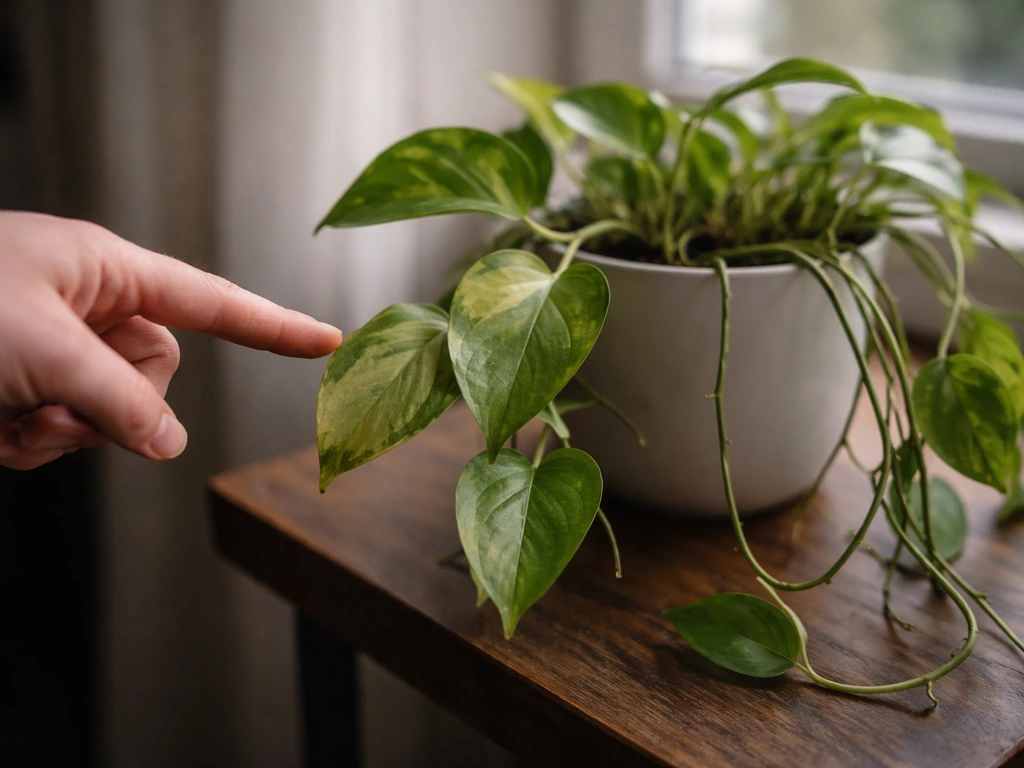
Your plant will tell you what's wrong if you know what to look for. The challenge is that some symptoms overlap with other problems like overwatering or pests, so a quick visual check can save you from making the wrong fix.
| Symptom | Likely Cause | Quick Check |
|---|---|---|
| Faded, washed-out leaf color | Not enough light | Move plant closer to window for 2 weeks, see if new growth has more color |
| Long, stretched stems with wide gaps between leaves | Etiolation / reaching for light | Measure light at the spot with an app or compare to a brighter location |
| Slow or stopped growth | Low light (or cold temps) | Rule out temps below 55°F first, then assess light |
| Stippled yellow/gray dots on leaves | Spider mites, not light | Check undersides of leaves for webbing or tiny moving dots |
| Dark brown or mushy leaves | Overwatering / root rot | Check soil moisture and drainage, not a light issue |
| Pale green leaves overall | Could be low light or nutrient deficiency | Test both: improve light AND consider a diluted balanced fertilizer |
The classic low-light combo is faded color plus leggy stems together. If you're only seeing one symptom, dig a little deeper before assuming light is the problem. Spider mites, for example, cause a stippled yellowing pattern that can look a bit like color fade but is actually physical damage to leaf cells, so always check the undersides of leaves when something looks off.
Getting the most out of natural light: placement strategies
The best setup for Wandering Jew with natural light is a spot about 2 to 6 feet from an east-facing window or a bright west-facing window. East windows give gentle morning sun without the intensity that can scorch the leaves. South-facing windows work well too if you pull the plant back 3 to 4 feet or filter the light with a sheer curtain. North-facing windows are the trickiest because they provide the least light overall, and while Tradescantia can technically survive there, it's the most likely scenario where you'll see significant legginess and color loss.
One thing that helps a lot and gets overlooked: rotate the pot a quarter turn every few days. Tradescantia grows fast, and it will lean aggressively toward the light source if you don't rotate it. This also helps the whole plant get more even exposure rather than one side getting all the good light while the other fades and stretches. It takes about ten seconds and makes a real difference over a few weeks.
If you're moving a plant from a darker spot to a brighter window, do it gradually over about a week. Going from dim to bright indirect light too quickly can cause temporary leaf stress, even though the plant ultimately wants more light. A few days near the window, then closer, and your plant adjusts without drama.
Supplementing with grow lights when natural light isn't enough
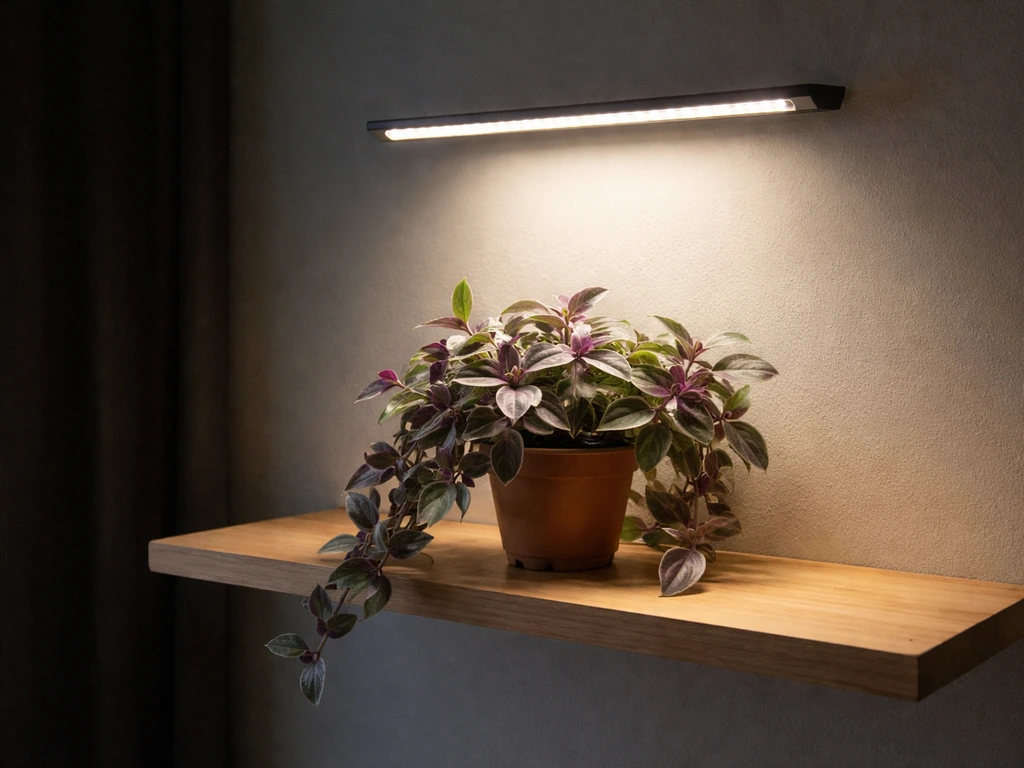
If your space genuinely doesn't have a usable window, or if you want your Wandering Jew to keep its color through a dark winter, a grow light is the practical solution. You don't need anything fancy or expensive. A basic LED or fluorescent full-spectrum grow light does the job.
LED vs fluorescent: which should you choose?
| Feature | LED Grow Light | Fluorescent (T5/T8) |
|---|---|---|
| Energy use | Lower (more efficient) | Moderate |
| Heat output | Low | Low to moderate |
| Lifespan | 50,000+ hours typical | 10,000–20,000 hours |
| Upfront cost | Higher | Lower |
| Spectrum quality | Excellent (full spectrum LEDs) | Good (full spectrum T5s available) |
| Best for | Long-term, multiple plants | Budget-friendly, smaller setups |
For a single Wandering Jew or a shelf of trailing plants, a simple LED panel or even a decent full-spectrum LED bulb in a clip-on lamp works well. The metric you actually care about is PPFD (micromoles per square meter per second, written as μmol/m²/s), which measures the light that plants can actually use for photosynthesis. For a foliage plant like Tradescantia, you're aiming for roughly 150 to 300 PPFD at the leaf surface. That's a moderate, achievable target with most consumer grow lights.
Placement matters more than most people think. A standard LED grow light panel placed 12 to 18 inches above the plant will typically hit that 150 to 300 PPFD range, but check the manufacturer's specifications if you can. Run the light for 12 to 14 hours per day. Many tropical foliage plants do well on a 12 to 14-hour photoperiod under artificial light, and Tradescantia falls right in that zone. A basic plug-in outlet timer costs a few dollars and removes all the guesswork.
If you want to calibrate more precisely, use the Photone app under your grow light (not sunlight) to get an estimated PPFD reading at the leaf surface. It's not lab-grade, but it tells you if you're in the ballpark. Soltech's free plant light calculator online is also a useful resource for dialing in light height and duration for specific plants.
Care adjustments for low-light conditions
When your Wandering Jew is in lower light, everything slows down, and your care routine needs to match that. The biggest mistake people make is keeping the same watering schedule regardless of light levels. A plant in low light grows more slowly, uses water more slowly, and is far more vulnerable to root rot if you're watering on a timer or habit rather than checking the soil.
- Water less frequently: let the top inch or two of soil dry out before watering again, which may be every 10 to 14 days in low light versus every 5 to 7 days in brighter conditions
- Skip heavy fertilizing: a slow-growing low-light plant doesn't need frequent feeding; once every 4 to 6 weeks at half strength during spring and summer is plenty
- Prune aggressively and often: leggy stems won't recover their compact form on their own; pinch or cut back straggly sections to encourage bushier new growth
- Propagate the cuttings: those trimmed tip cuttings root easily in water or moist soil and can be tucked back into the same pot to fill it out, which is exactly what Wisconsin Extension recommends for keeping containers looking full
- Watch for pests: lower-light environments can create conditions where spider mites take hold; check leaf undersides regularly and treat early with insecticidal soap if you spot stippling or webbing
If your plant is getting leggy despite being near a window, try propagation as a reset rather than a rescue. Take 4 to 6 inch tip cuttings, remove the lower leaves, let them root in water for a week or two, then plant several cuttings together in fresh soil. You'll end up with a much fuller-looking plant than trying to rehabilitate an overstretched one.
When Wandering Jew isn't the right plant for your space
If your space is genuinely dark, meaning no usable window light and you don't want to add a grow light, Wandering Jew is going to disappoint you. Can bird of paradise grow in low light, too? It usually needs much brighter light to stay healthy and bloom. It can survive, but it'll look rough, and the colorful foliage you're probably drawn to will fade out. In that case, it's worth considering plants that genuinely tolerate deep shade without losing their appeal.
Parlour palms are a solid alternative for truly low-light spaces, as are pothos and ZZ plants. If you love trailing plants but your light is limited, know that plants like string of hearts or string of pearls also struggle in low light, similar to Wandering Jew. Hoyas and pileas sit in a comparable zone too, where they'll survive dim conditions but need at least moderate indirect light to really look good. Can pilea grow in low light too, or will it fade the way some other houseplants do? The honest truth is that most plants with colorful or patterned foliage need a certain light threshold to maintain that color, and no amount of care compensates for a genuinely dark room without artificial help.
If you're set on Tradescantia zebrina for its striking purple and silver striped leaves, a $20 to $30 LED grow light on a timer is the most practical investment you can make. It transforms a marginal space into a workable one, and that plant will reward you quickly because it's a genuinely fast grower when conditions are right.
FAQ
How long can Wandering Jew handle low light before it starts looking bad?
Not for long. In deep shade, growth stalls and the purple-and-silver striping fades first, then the stems stretch. If you see color loss within a few weeks, treat it as a light issue and either move closer to a window or add a grow light to keep the plant looking healthy.
What watering schedule should I use if my Wandering Jew is in low light?
Use soil dryness, not the calendar. In low light, the mix stays wet longer, so water only after the top layer feels dry (and ideally after you’ve confirmed by weight or a moisture check). This reduces root rot risk, which is more common when light is limited.
Can artificial light like lamps replace natural low light for Wandering Jew?
Yes, but it depends on intensity and duration. A “low light” room may still work if the plant gets steady ambient brightness for most of the day. If there is absolutely no natural light reaching the plant area, expect legginess unless you use a grow light.
What grow light schedule and height works best for low-light homes?
If you use a grow light, keep it close enough and timed. For foliage like Tradescantia, many setups land around 150 to 300 PPFD at leaf height when the light is placed roughly 12 to 18 inches above the plant, and 12 to 14 hours per day usually works well. If you only run it a few hours, color and fullness may not hold.
Should I rotate my Wandering Jew in low light, and will it prevent legginess?
Rotating helps, but it does not solve a true light shortage. If the plant still stretches strongly between rotations, your light level is simply too low. At that point, increase light intensity (move closer to the window or lower the grow light) rather than only relying on rotation.
How can I tell if faded color is from low light or spider mites?
Watch for the pattern. Spider mites often cause stippling or speckled yellowing that looks like tiny dots, and the undersides may show webbing. Light deficiency usually causes broader color fading plus general stretching, not distinct stippling.
What is the best way to fix a very leggy Wandering Jew in low light?
“Rehabilitating” works best if you reset the plant, not just adjust conditions. Take tip cuttings (about 4 to 6 inches), root them, then plant several cuttings together so you get immediate fullness. This is especially effective when the original stems have become very long and sparse.
Can I slowly move my Wandering Jew from low light to brighter light without shocking it?
Yes, but only to a point. If you notice fading or slow growth, gradually increase brightness so the plant can ramp up photosynthesis without stress. Moving from a dim spot toward a brighter window over about a week is safer than jumping immediately to a brighter location.
Does low light mean I should keep the soil more consistently moist?
It’s a misconception. Wandering Jew prefers drying somewhat between waterings even in low light, but too-wet soil plus slow growth is what drives rot. If you use a self-watering system or a wick-style setup, monitor closely and avoid keeping the roots constantly moist.