
Pothos can survive in low light, but it cannot grow in true zero light. No plant can. What most people mean when they ask this question is whether pothos can get by without a window, and the honest answer is: yes, with the right artificial lighting, pothos can do more than just survive. It can actually put out new leaves and stay healthy. Without any light source at all, though, it will slowly decline no matter how tough its reputation is.
Can Pothos Grow Without Sunlight? Low-Light and Zero-Light Guide
Marcus Hartley
26 Apr 2026
Survival vs. real growth: what to actually expect
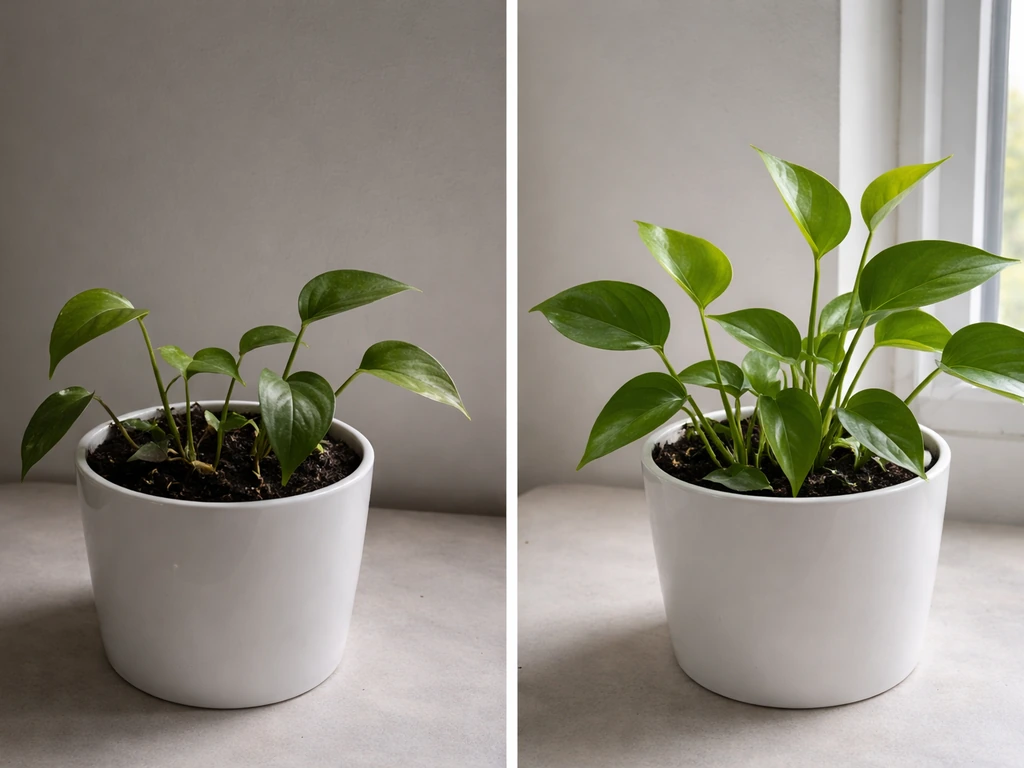
There is a meaningful difference between a pothos that is hanging on and one that is actively growing. In very dim conditions, pothos will stall. Leaves stop unfurling, stems stretch thin reaching for any photon they can find, and the plant essentially goes into conservation mode. It is not dead, but it is not thriving either. For real, visible growth, pothos needs enough light to run photosynthesis at a surplus, meaning it produces more carbohydrates than it burns. Research on Epipremnum aureum shows it can achieve net CO2 uptake even at low irradiance levels, which is exactly why it handles indoor conditions better than most plants. But that only applies when some light is actually present. True darkness breaks the whole system.
A practical way to think about it: survival mode kicks in somewhere below about 25 foot-candles of light. Between roughly 25 and 75 foot-candles (the range Extension programs describe as low light for houseplants), pothos will live and grow slowly. Above that, closer to 100 to 200 foot-candles, you get the kind of steady growth most plant parents are hoping for. No artificial light at all means the plant is stuck in the dark, burning through stored energy with no way to recharge. Within a few weeks you will see the consequences.
How pothos handles low light (and when it stops working)
Pothos has a genuinely low light compensation point, which is the minimum light level where photosynthesis output matches the energy the plant uses just to stay alive. That is the biological reason it gets recommended for dim offices and hallways. But "low light tolerant" does not mean "light optional." When light drops below that compensation point, the plant starts drawing down its reserves. Think of it like running a car on a battery with no alternator. It works for a while, then it does not.
In practice, here is what changes as light gets lower. Leaves come in smaller and further apart on the stem. Internodal spacing increases dramatically because the plant is stretching toward any available light source. Variegated varieties like Marble Queen or Golden Pothos lose their cream and yellow markings and revert toward plain green, since the plant prioritizes chlorophyll production over decorative pigmentation. Growth slows to almost nothing. And if the light is genuinely too low for long enough, older leaves start yellowing and dropping.
Checking your space: how to measure light and spot the warning signs
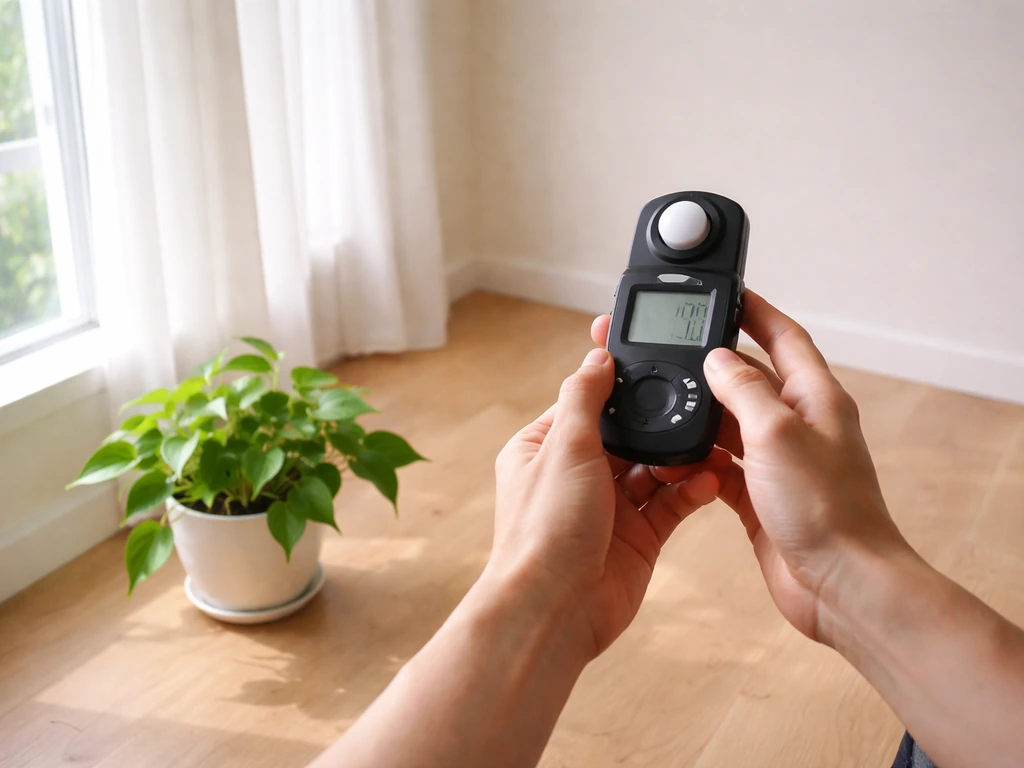
Before you move your pothos or buy a grow light, it helps to know what light level you are actually working with. For example, if you are wondering whether do pothos like grow lights, the quick answer is yes, they can use them to grow instead of only survive. You do not need expensive equipment. A free or cheap lux meter app on your phone gives a reasonable reading. Just hold the phone's camera sensor at the spot where the plant sits and take a reading on a typical day. Convert lux to foot-candles by dividing by about 10.76. You are looking for at least 25 to 100 foot-candles for basic low-light survival, and ideally closer to 200 or more for steady growth.
If you do not want to measure, the plant will tell you. Watch for these signs that light is insufficient:
- Stems are getting long and leggy with large gaps between leaves
- New leaves are noticeably smaller than the older ones
- Variegated leaves are fading toward solid green
- No new growth for six weeks or more during spring or summer
- Older leaves are yellowing and dropping without overwatering being the cause
- The soil stays wet for unusually long periods (low light slows water uptake)
The best ways to replace sunlight for pothos
If your space has no window access at all, artificial light is not optional. It is the only way to keep pothos healthy long-term. The good news is that pothos is not demanding about light quality, so you have real options across a range of budgets. African violets are a good example of a plant that benefits from grow lights when natural light is limited do african violets like grow lights.
| Light Source | Effective for Pothos? | Notes |
|---|---|---|
| Full-spectrum LED grow light | Yes, best option | Energy-efficient, runs cool, full spectrum supports growth and variegation |
| Fluorescent tube (T5 or T8) | Yes, solid option | Good output, affordable, works well in shelving setups or grow tents |
| Standard LED room bulbs | Marginal | Can supplement dim ambient light but usually not enough as a sole source |
| Incandescent bulbs | Not recommended | Produce too much heat, poor spectrum, inefficient |
| Full-spectrum CFL | Yes, budget option | Works for a single plant up close, less practical for multiple plants |
LED grow lights are the easiest recommendation for most people because they are inexpensive now, they run cool enough to leave on for long periods without risk, and a single panel can cover several plants. LED grow lights are the easiest recommendation for most people because they are inexpensive now, they run cool enough to leave on for long periods without risk, and a single panel can cover several plants, and if you want the best results you can also check what color grow light for pothos is typically most effective. Fluorescent tubes (T5 or T8) are a great alternative if you already have a fixture or are setting up a dedicated growing shelf. Standard room LED bulbs can help in a pinch but are rarely powerful enough on their own to fully replace sunlight for a plant that needs to keep growing, not just stay alive.
Grow light setup basics: distance, duration, and placement
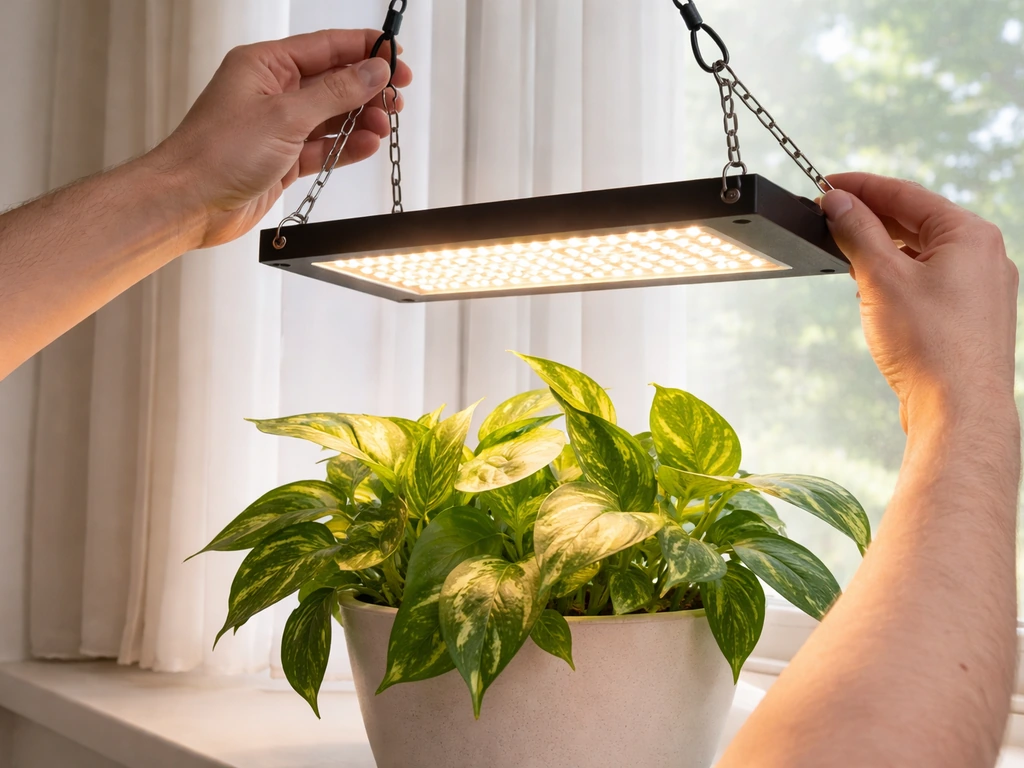
Getting the placement right matters more than most people realize. A grow light that is too far away delivers a fraction of the usable light, even if it looks bright to your eyes. Here are the practical numbers for pothos:
- LED grow light (low to mid wattage panel): place 6 to 18 inches above the plant canopy. Start at 12 inches and adjust based on how the plant responds over two to three weeks.
- Fluorescent T5 or T8: 4 to 12 inches above the plant is typical. Fluorescents lose intensity quickly with distance, so closer is usually better.
- Full-spectrum CFL: 6 to 10 inches above the plant for a usable intensity.
For duration, pothos does not have strict photoperiod requirements, but it does need a consistent dark period. A 12 to 14 hour light cycle works well for most indoor setups. If you are trying to push faster growth, 14 to 16 hours is fine. Do not run lights 24 hours a day. Plants use the dark period to process and move nutrients, and continuous light stresses many species including pothos. A basic plug-in timer costs a few dollars and takes all the guesswork out of this.
If you have a trailing or hanging pothos rather than a compact tabletop plant, position the light to hit as much of the canopy as possible. Light falls off fast with distance, so the leaves furthest from the source get significantly less than the ones right underneath. Rotating the plant weekly helps even out the coverage.
Troubleshooting leggy growth, yellowing, and fading variegation
Leggy stems with long gaps between leaves
This is the most common sign of insufficient light. The plant is literally stretching for more. Move it closer to your light source, add a grow light, or if there is a window nearby, move the plant within a few feet of it. Once you improve the light, new growth should come in tighter. The existing leggy stems will not compact themselves, but you can trim them back to encourage bushier regrowth from the nodes.
Yellow leaves
Yellow leaves have a few causes, but in a low-light setup the most likely culprits are insufficient light and overwatering (often related, since low-light plants use water more slowly). Rule out overwatering first by checking that the top inch or two of soil is dry before watering. If the watering schedule is fine and yellowing continues, increase light intensity or duration. Older leaves at the base naturally yellow and drop over time, so one or two occasionally is not a crisis.
Variegation fading to solid green
Variegated pothos varieties need more light than solid green ones to maintain their patterns. The cream, white, and yellow sections of the leaf contain little chlorophyll, so the plant needs a stronger light signal to sustain them. If your Marble Queen or Golden Pothos is going green, it needs more light. Under a quality LED grow light at the right distance and duration, variegation should return in new growth within a few weeks. The already-green leaves will not reverse, but new leaves will show the pattern again once light is adequate.
A practical plan for today based on your light situation
Here is how to think about your specific situation and what to do right now:
- You have a window but it is far away or north-facing: Move the pothos as close to that window as possible, ideally within 3 to 5 feet. North-facing windows provide low but real light. This setup supports survival and slow growth without any additional equipment.
- You have no windows in the room at all: You need a grow light to keep pothos healthy. Pick up a basic full-spectrum LED panel or a T5 fluorescent fixture. Set it 10 to 12 inches above the plant and run it for 14 hours a day on a timer. This setup can support genuine, steady growth.
- You have a room light but no dedicated grow light: Check your light level with a meter app. Standard room bulbs rarely hit the 100-plus foot-candles pothos needs for active growth, so treat this as temporary. Either add a grow light or move the plant to a better spot.
- Your pothos is already showing stress signs: Trim back leggy stems to just above a node to encourage new compact growth. Increase light immediately. Hold off on fertilizing until the plant is in better light since fertilizing a light-starved plant stresses it further.
- You want variegated pothos in a no-window room: This is doable with a decent LED grow light, but be realistic. You will need consistent light at the right intensity and duration. A basic setup with a timer will work. Skip low-budget clip lights for variegated varieties and invest in something with a proper full spectrum.
One last thing worth knowing: pothos is genuinely one of the most forgiving plants for artificial light setups. If you have ever wondered whether grow lights work for other shade-tolerant plants, the same principles apply broadly. Artificial light questions come up a lot for plants like snake plants too, and the general framework of measuring light, choosing a full-spectrum source, and setting a consistent timer carries over across many low-light-tolerant species. Snake plants do respond well to grow lights, especially when you give them enough hours for steady photosynthesis snake plants too. For pothos specifically, the bar is low enough that a modest grow light setup almost always works. You do not need to spend a lot, and you do not need to be precise. Just get some light on it, give it enough hours, and it will grow.
FAQ
What counts as “zero sunlight,” can pothos live in a room with artificial light only?
If the grow light is on, the plant is not in true zero light. Pothos needs some light intensity for net energy gain, so “no sunlight” is fine as long as artificial light is actually reaching the leaves at useful brightness. If you run a light, aim for at least basic low-light survival levels, then increase duration or intensity if you see stalling.
How reliable is a lux meter app for deciding whether my pothos is getting enough light?
Move beyond the phone-lux app if you want accuracy across different bulbs, because lux is measured for human vision and can mislead you about plant usable light. Lux is still a helpful screening tool, but if growth remains weak, increase light hours first, then bring the light closer, rather than chasing a precise lux number.
Can I leave a grow light on 24/7 to speed up pothos growth?
A timer is important because pothos still needs an adequate dark period to run normal processes. If you accidentally leave lights on all day, you may see slower, weaker growth and stress. Use a timer set to about 12 to 14 hours on for most setups, and only go longer when you are also meeting light intensity.
Will a regular LED room bulb work as a substitute for a grow light?
Yes, but it depends on where the light source is relative to the canopy. A single bulb can be enough if it is close and bright, but many “room LEDs” fall short because distance and beam spread quickly reduce usable light on the leaves. If you are using standard bulbs, expect slower results and be ready to supplement with a dedicated grow light.
My pothos is getting light but it’s leggy, how do I fix positioning?
For low-light situations, the direction matters less than distance. If the light is not positioned to cover the leaf surfaces, the plant will still stretch and stall. For trailing pothos, place the light so it reaches the top and outer leaves, and rotate weekly to reduce uneven stretching.
Why is my Golden Pothos losing its yellow and turning mostly green?
Variegation can fade even when the plant is technically surviving, because maintaining patterns requires stronger light than staying alive. If your variegated pothos is going green, increase light intensity or duration and watch new leaves rather than expecting older leaves to re-variegate.
If my pothos was kept in very low light for weeks, will it recover immediately once I add a light?
Yes. Pothos can decline after a period of darkness even if you later add light, because its root zone has been operating on depleted reserves. Restart gradually by improving light over several days, then re-evaluate watering (low-light plants usually need less water) to avoid root issues.
Does adding a grow light change how often I should water pothos?
The safest approach is to adjust watering to the new lighting, since higher light increases how quickly the plant dries and uses water. When moving from low light to a grow light setup, check soil dryness more frequently at first, water only when the top inch or two is dry, and avoid a rigid schedule.
My pothos leans toward the light, is rotating it enough?
A constant problem is light coming from the side of the plant, which causes one side to stretch and the other to stay comparatively dark. Rotating the plant weekly helps, but if the leaves farthest from the light remain pale or stretched, you likely need more coverage, not just rotation.
Can pothos grow in a room with no windows if it still gets indoor light sometimes?
Not exactly. Pothos can be managed in rooms with no window exposure by using artificial light, but “no sunlight” should still mean consistent light from a lamp or grow light. If the plant is in a closet, bathroom with no light, or an area without reliable illumination during the day, expect progressive decline.
Should I prune leggy pothos once I improve its lighting?
Even in low light, foliage growth is uneven across the stems. Expect new leaves only near the light source first, and slower growth elsewhere. If you want a fuller plant, you can trim leggy sections after you correct the light, because trimming encourages branching from nodes that are capable of producing new leaves.