Plants grow better in sunlight because sunlight drives photosynthesis, the process that turns carbon dioxide and water into sugar (fuel). More light means more fuel produced, which means faster cell growth, bigger leaves, stronger stems, and better flowering. But it's not just about brightness: the color of the light, how many hours per day plants receive it, and whether you're pushing past a plant's tolerance all determine whether your setup helps or hurts. If you're growing indoors and wondering why your plants look leggy, pale, or just stuck, the answer almost always traces back to one of those three variables.
Why Do Plants Grow Better in Sunlight and How to Replicate It Indoors
Marcus Hartley
28 Apr 2026
How plants actually turn light into growth
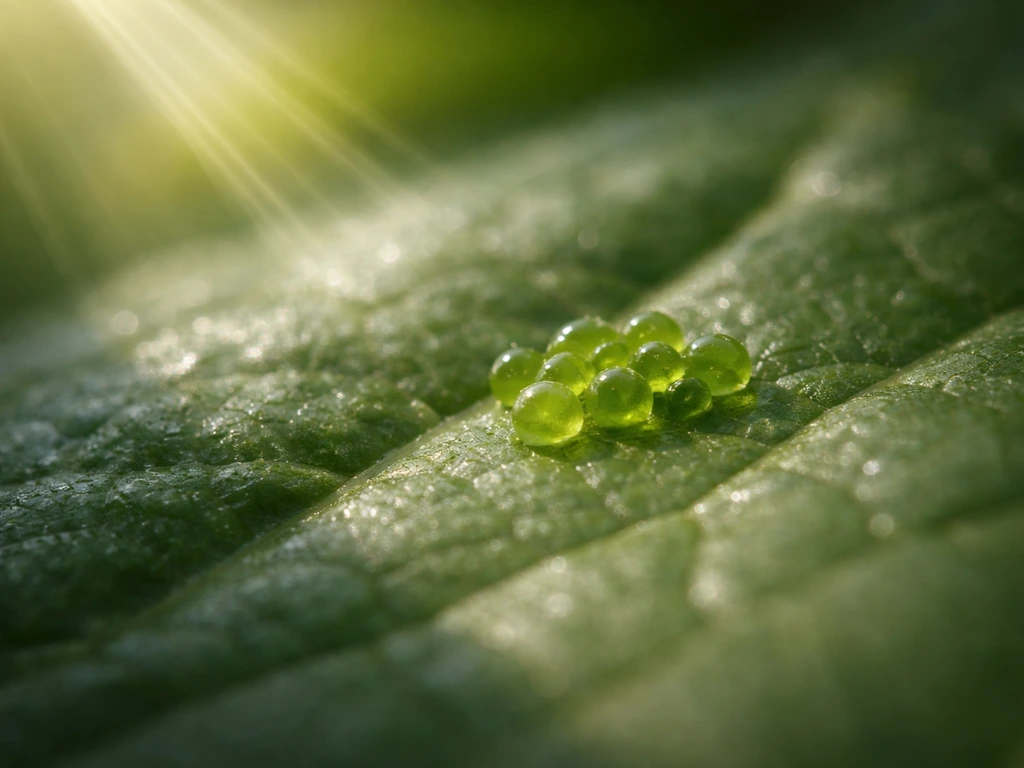
Photosynthesis happens inside chloroplasts, the green structures in plant cells. When light hits the chloroplast, the 'light reactions' kick off: water molecules are split, electrons are released, and that energy is captured as ATP and NADPH. Those two molecules are essentially chemical batteries. The plant then uses them in the Calvin cycle to pull CO₂ out of the air and build it into sugar molecules (carbohydrates). Those sugars are the raw material for every new leaf, root, and flower your plant produces.
Here's the practical implication of that: if light is too weak, the plant can't generate enough ATP and NADPH to fix meaningful amounts of carbon. There's actually a threshold called the 'light compensation point' where photosynthesis barely keeps up with respiration and net carbon gain is essentially zero. Your plant isn't dead at that point, but it isn't growing either. It's just surviving. This is why a pothos stuffed into a dark corner stays alive but never really thrives.
More light, faster growth (up to a point)
As light intensity increases above the compensation point, the rate of photosynthesis goes up and so does growth. Plants produce more sugar, build more tissue, and generally develop faster. This relationship is why greenhouse growers obsess over light intensity measurements, specifically PPFD (photosynthetic photon flux density, measured in µmol m⁻² s⁻¹) and DLI (daily light integral, which captures total light delivered over a full day).
DLI is calculated by multiplying your PPFD reading by the number of photoperiod hours and then by 0. 0036. So a grow light running at 200 µmol m⁻² s⁻¹ for 16 hours delivers a DLI of about 11. 5 mol m⁻² d⁻¹, which is on the low end for most flowering plants but workable for leafy greens and low-light tropicals.
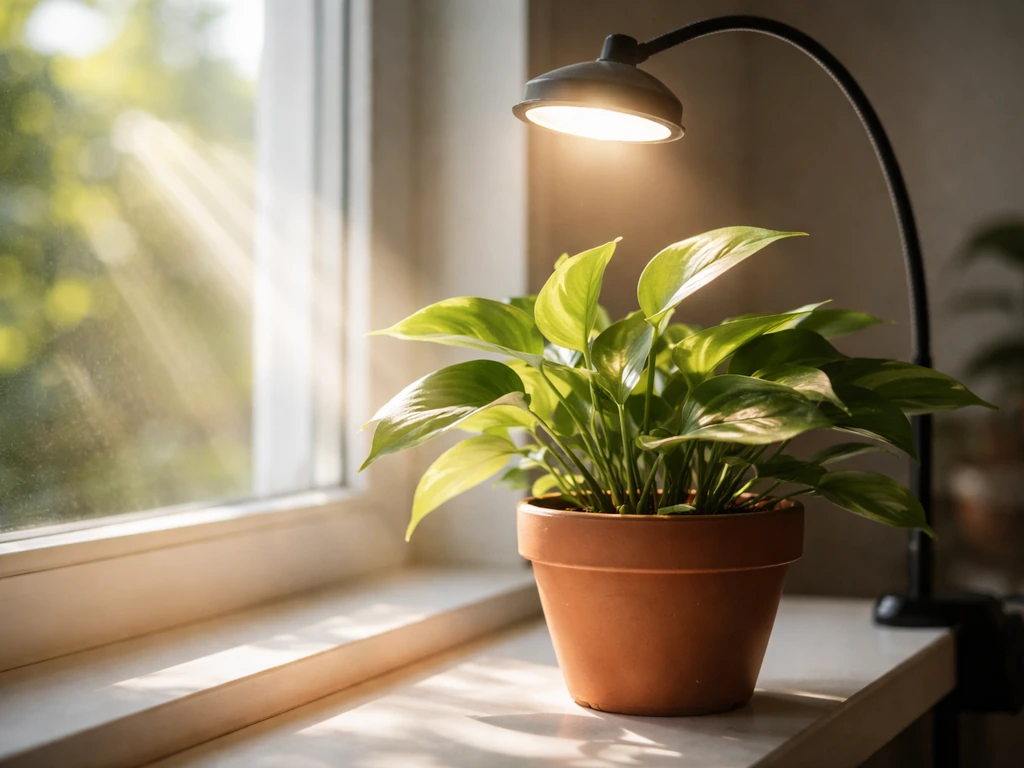
For indoor gardeners, the practical message is that intensity matters a lot more than people realize. A single incandescent bulb five feet from your plant is doing almost nothing for photosynthesis. Getting a proper grow light and placing it at the right distance makes a bigger difference than almost any other change you can make. If you're wondering what plants grow well with little sunlight, start with common low-light houseplants and then match the light level to the species.
Red vs. blue light: why color actually matters
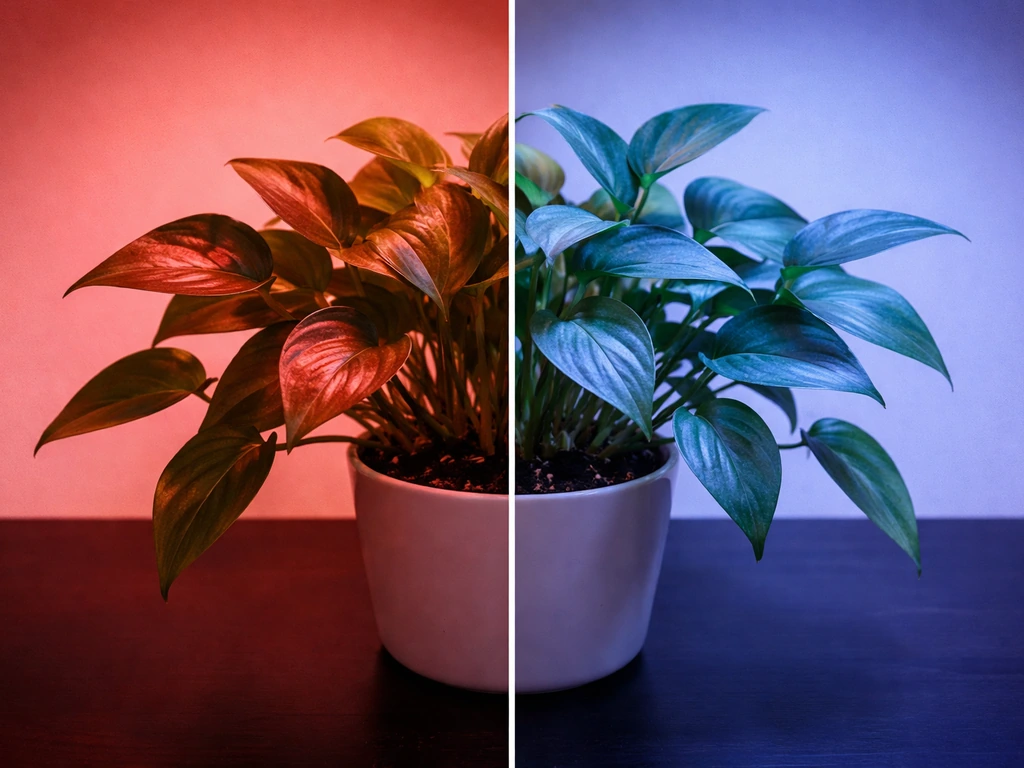
Sunlight contains the full visible spectrum, and plants use different wavelengths for different jobs. The two most important ranges for indoor gardeners are red light (roughly 630–700 nm) and blue light (roughly 400–500 nm), and they don't do the same thing.
Blue light is critical for stomatal opening. Guard cells in leaves respond to blue light by activating proton pumps (H⁺-ATPase) that force the stomata open. Open stomata means CO₂ can get in and photosynthesis can actually proceed. Research shows blue light is about 20 times more effective than red light at opening stomata, and the effect kicks in at pretty low intensities, around 5 to 10 µmol m⁻² s⁻¹ of blue light. Blue light also promotes compact, stocky growth and strong root development, which is why seedlings under blue-heavy light tend to look healthier and sturdier.
Red light is the heavy lifter for driving the actual photosynthetic reactions and is especially important for flowering and fruiting. Phytochromes, the light-sensing proteins in plants, primarily respond to red and far-red wavelengths to regulate flowering timing and other developmental signals. A grow light that's all blue with no red will produce dense vegetative growth but may never trigger flowering. A grow light that's all red with no blue may produce stretched, floppy plants with poor gas exchange. Full-spectrum LEDs that cover both ranges (and ideally some green wavelengths too, which help light penetrate into the canopy) are generally the best option for indoor growing.
How many hours of light per day: the photoperiod question
It's not just about how bright the light is. How long the light runs each day, the photoperiod, controls some of the most important plant behaviors, especially flowering. Plants are classified into three groups based on how they respond to day length. CAFE at UMass Amherst explains that bedding plants are long-day, short-day, or day-neutral depending on photoperiod, using rule-of-thumb flowering thresholds for short versus long days Plants are classified into three groups based on how they respond to day length..
| Plant type | Flowering trigger | Examples | Indoor lighting note |
|---|---|---|---|
| Long-day plants | Flower when day length exceeds ~13–14 hours | Many herbaceous perennials, lettuce, spinach | Run lights 14–16 hours/day to trigger flowering |
| Short-day plants | Flower when day length drops below ~12–12.5 hours | Poinsettia, chrysanthemum, cannabis | Reduce to 12 hours or less to trigger flowering |
| Day-neutral plants | Flower regardless of day length | Tomatoes, cucumbers, many herbs | Focus on intensity and DLI, not exact photoperiod |
The photoperiod effect can be dramatic. Research from UMass found that extending day length to around 16 hours delayed flowering by about 18 days and nearly doubled plant height in certain crops. That's a huge shift just from changing when you turn the lights off. For short-day plants like poinsettia, exposing them to long days (more than 12.25 hours of light) will prevent flowering entirely. If you've ever wondered why your poinsettia won't rebloom, that's almost certainly the cause: ambient indoor lighting after sunset is enough to disrupt its short-day requirement. A simple timer and a cardboard box placed over the plant each evening can fix it.
When too much light becomes a problem
More light is not always better, and this trips up a lot of indoor gardeners who move shade-tolerant plants directly under a powerful grow light or put sun-loving seedlings in a south-facing window during summer. There are three main ways excess light causes damage.
- Photoinhibition: When light intensity exceeds what the photosynthetic machinery can process, Photosystem II (PSII) takes the hit. Reactive oxygen species (ROS) build up, damage PSII components, and the plant's ability to fix carbon actually drops. You'll see this as bleached, washed-out patches on leaves, usually starting on the parts most exposed to the light source.
- Leaf burn and tissue damage: Direct high-intensity light, especially combined with low humidity, can cause physical scorching. The edges or tips of leaves turn brown and crispy. This is often called 'sunscald' and is common when plants are transitioned too quickly from lower light.
- Heat stress: Powerful grow lights, especially older HPS and HID fixtures, generate significant heat. When leaf surface temperature climbs too high, enzymes involved in photosynthesis start to denature and stomata close defensively, cutting off CO₂ supply. Even LED lights placed too close can raise canopy temperatures enough to slow growth.
The fix is usually distance and acclimation. Start new plants further from the light source and gradually move them closer over one to two weeks. Use a thermometer to check canopy temperature. Anything consistently above about 85°F (29°C) at the leaf surface warrants moving the light up or increasing airflow.
Replicating sunlight indoors: LEDs vs. fluorescents
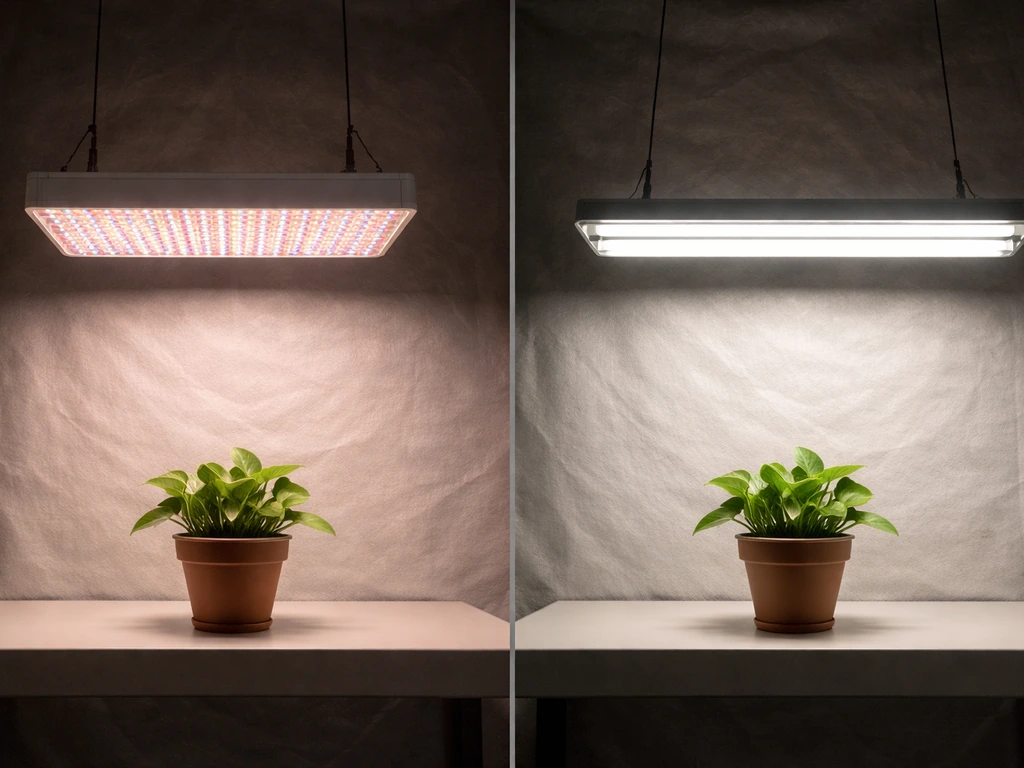
If you're growing indoors and trying to replace or supplement natural light, your two main options are LED grow lights and fluorescent grow lights (T5 or T8 fixtures). Here's how they compare on the factors that actually matter.
| Factor | Full-spectrum LED | T5/T8 Fluorescent |
|---|---|---|
| Spectrum coverage | Excellent: can cover red, blue, and full PAR range | Good for blue/green, weaker in deep red |
| Energy efficiency | High: less heat per µmol of light produced | Moderate: more heat relative to light output |
| Intensity (PPFD) | High: suitable for vegetables, flowering plants | Moderate: best for seedlings, herbs, low-light tropicals |
| Cost | Higher upfront, lower running cost | Lower upfront, moderate running cost |
| Best use case | Fruiting plants, full-cycle growing, larger setups | Seed starting, herbs, low-light houseplants, small shelves |
| Heat output | Low to moderate (depends on wattage and distance) | Moderate (bulbs stay warm) |
| Lifespan | 50,000+ hours typical | 10,000–20,000 hours typical |
For most indoor gardeners growing vegetables, herbs, or flowering tropicals, a mid-range full-spectrum LED panel (look for one rated at 150–300W actual draw, not 'equivalent' watts) placed 12 to 24 inches above the canopy and run on a timer for 14 to 16 hours a day covers the majority of plants well. For seedlings and leafy greens on a shelf, a T5 fluorescent strip placed 4 to 6 inches above the plants is affordable and effective. If you're growing fruiting crops like tomatoes or peppers indoors from start to finish, invest in the LED: the spectrum and intensity make a real difference in yield.
One important note on positioning: light intensity drops off quickly with distance. Doubling the distance between your light and your plant doesn't halve the intensity, it roughly quarters it (the inverse square law). A grow light that reads 400 µmol m⁻² s⁻¹ at 12 inches may only deliver 100 µmol m⁻² s⁻¹ at 24 inches. If your plants are stretched and pale, try lowering the light before buying a more powerful fixture. It's a free fix that works more often than people expect.
It's also worth knowing that some plants genuinely do fine with indirect or filtered light, and chasing high PPFD for every plant in your collection is unnecessary. Low-light tolerant plants and certain species that prefer shade will be perfectly happy with much less than what a tomato needs. That said, plants can often cope with indirect sunlight too, so long as the light level is still enough for healthy growth shade will be perfectly happy.
Low-light tolerant plants can do well in indirect sunlight if you still give them enough bright time each day. Some of those low-light tolerant plants can also handle the limited light conditions under a deck, especially in shaded areas. The goal is matching the light to the plant, not maximizing light everywhere.
Slow growth checklist: diagnosing your setup
If your plants are growing slowly and you suspect light is the problem, work through this list before spending money on new gear. Sunlight is the natural benchmark for many plants, so getting enough of it, or replicating it well indoors, usually leads to stronger growth. Most slow-growth issues have a simple cause.
- Check your light distance. Is the grow light or window further than 2 feet from most of your plant's leaves? Move it closer and watch for improvement over 1 to 2 weeks.
- Check your photoperiod. Are your lights running at least 12 to 16 hours per day (depending on plant type)? A timer costs under $15 and removes guesswork. Inconsistent schedules are a surprisingly common cause of stalled growth and failure to flower.
- Check for spectrum gaps. If you're using only warm white bulbs or old incandescents, you're likely short on blue light. Swap to a full-spectrum LED or T5 grow light and see if vegetative growth improves.
- Check for heat stress. Hold your hand at canopy level for 30 seconds. If it feels uncomfortably warm, the light is too close or the space is too hot. Raise the light or add a small fan.
- Check for photoinhibition. Look for bleached, yellowish, or papery patches on the leaves closest to the light. If present, raise the light and give the plant a week to recover before making other changes.
- Check your DLI estimate. Multiply your light's approximate PPFD (often listed in the product specs or measurable with a cheap PAR meter app) by your daily hours and then by 0.0036. Most leafy greens need a DLI of at least 10–15 mol m⁻² d⁻¹. Fruiting plants typically want 20–30+. If you're well below these ranges, you need more intensity, more hours, or both.
- Rule out other limiting factors. Light isn't the only growth limiter. Underwatering, overwatering, rootbound conditions, low humidity, and nutrient deficiency can all mimic the symptoms of low light. If your light setup looks adequate but growth is still slow, check the roots and soil next.
Getting light right indoors takes a little trial and error, and that's completely normal. Even experienced growers move lights up and down for the first few weeks with a new setup. Start with the basics: get the right type of light for your plants, run it on a consistent timer, and place it at a distance where the plants look healthy without showing stress. Once those three things are dialed in, most indoor plants respond noticeably within two to four weeks.
FAQ
If my plants are getting some sunlight, why do they still grow slowly or not at all?
Because plants need enough light not just to “run photosynthesis,” but to exceed the light compensation point (where photosynthesis matches respiration). If your light is below that threshold, the plant may stay alive but will not produce enough net sugar for new tissue.
Does a higher-watt grow light always make plants grow better indoors?
Two plants with the same wattage can perform very differently because what matters is photon delivery (PPFD) and total daily exposure (DLI). For example, a dimmer fixture that runs longer can support growth better than a brighter one you only leave on for a few hours.
Can too much light make plants worse, and what are the signs?
Yes, especially with high heat or very intense light. Watch for leaf-surface temperatures above about 85°F (29°C), bleaching or scorched spots, and rapid wilting even though the soil is moist. Those are signs to back off distance or increase airflow rather than increasing “brightness.”
Do plants really use green wavelengths, or is blue and red all that matters?
Green light can still be useful because it penetrates deeper into the canopy and helps light reach lower leaves. A fixture that covers blue and red plus some green often supports more even growth than a narrow-spectrum bulb aimed at the top of the plant.
Why won’t my poinsettia or other flowering plant bloom again even though it gets plenty of hours on a timer?
For flowering and certain “day length” requirements, timing matters more than many people expect. If you have a short-day plant (like poinsettia), even brief light exposure late in the day can prevent bloom, so use a strict timer and eliminate stray indoor lights.
How can I tell whether a south-facing window is actually enough, not just “bright enough”?
If you only measure daylight coming through a window, you may miss key variables like angle, cloud cover, and seasonal sun intensity. A better approach is to confirm with a PPFD meter or at least use a consistent fixture and timer, then adjust distance until leaves look evenly healthy.
Does turning lights on longer always improve growth and flowering?
Light duration affects flowering differently depending on plant type. Long days can delay or block flowering in short-day plants, while many long-day plants require a longer photoperiod to trigger blooms.
If my plants look pale, is it best to move the light closer right away or slowly?
It can, but it’s usually better to increase gradually. Start new plants further away, then move the light closer over 1 to 2 weeks, monitoring leaf color and temperature, so the stomata and photosynthetic machinery acclimate.
My plants are leggy, but my light is the right type, what should I check first?
Yes, because light drops off quickly with distance. If your plants are stretched and pale, lowering the light (or reducing distance) can restore PPFD and reduce spindly growth without buying a stronger fixture.
Should I measure PPFD for every plant in my home or just for the ones that struggle?
It depends on the plant. Shade-tolerant houseplants can thrive with indirect or filtered light, so chasing high PPFD for every plant often wastes money. Focus on matching intensity to the species, then refine placement for even coverage.
Why does my plant do fine one week but stall the next, even though I kept the same light?
Yes, because “light recipes” work only when delivered consistently. Use a reliable timer (and verify it) and keep the photoperiod stable, since random on off schedules can disrupt day length sensitive flowering.
What’s the most common mistake with grow light placement, shadows, or coverage?
If your goal is to replicate sunlight, intensity and spectrum coverage matter most, but also ensure the light covers the whole canopy rather than a small hotspot. Rotating or using a panel wide enough to reduce shadowing can prevent uneven growth between top and side leaves.