
Lotus can survive in low light for a short time, but it will not grow well and almost certainly will not flower without strong light. If you are wondering whether tulsi can truly grow without sunlight, the key question is how much light energy it can still receive can tulsi grow without sunlight.
Can Lotus Grow Without Sunlight? Indoor Light Setup Guide
Marcus Hartley
23 May 2026
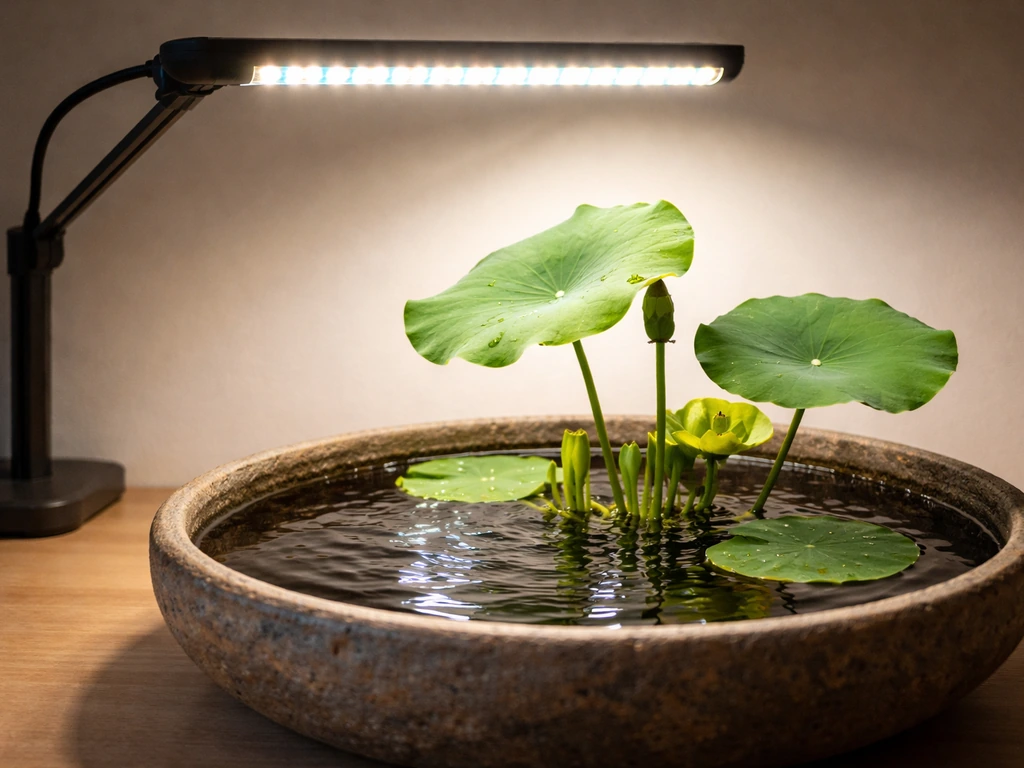
To actually grow lotus indoors without natural sunlight, you need a high-output full-spectrum LED grow light running at least 14 to 16 hours a day, blank" rel="noopener noreferrer">positioned 20 to 30 cm above the water surface, delivering somewhere in the range of 200 to 700 µmol·m−2·s−1 PPFD. That is a real commitment of hardware and electricity. If you can hit those numbers consistently, lotus is possible indoors.
If you cannot, you are better off choosing a different plant or moving your lotus to where the sun actually reaches.
Lotus light requirements: survival vs flowering
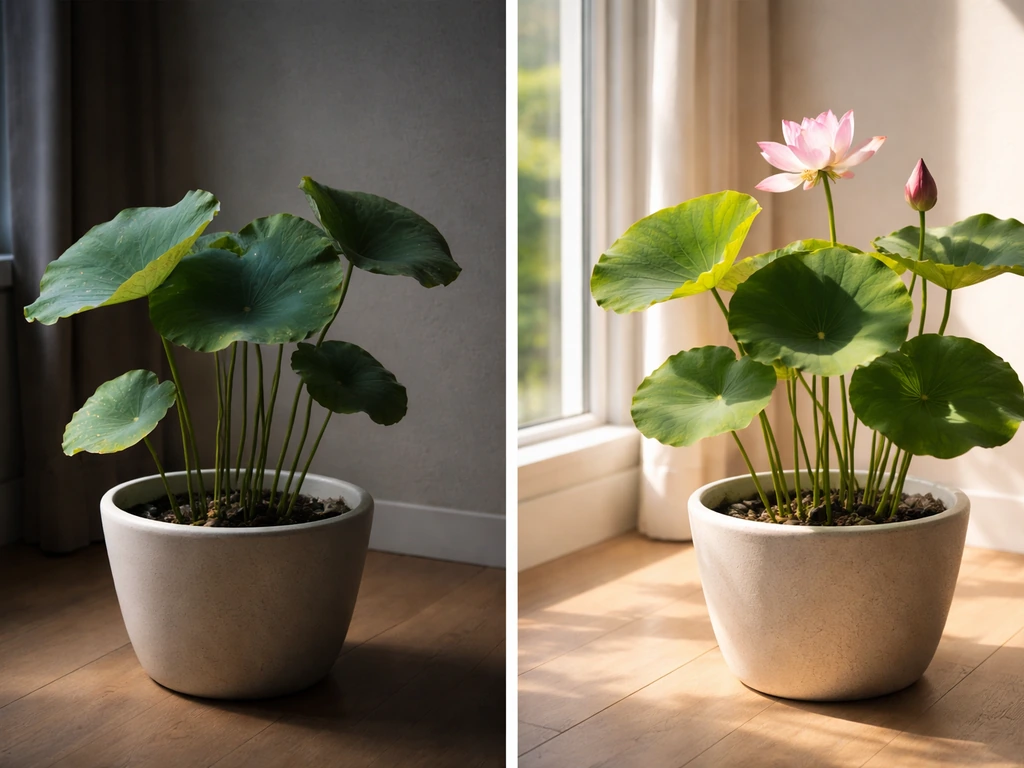
Lotus (Nelumbo nucifera for sacred lotus, Nelumbo lutea for American yellow lotus) is unambiguously a full-sun plant. Every major extension program that covers it, from North Carolina to Oklahoma State to UF/IFAS, lists the requirement as full sun, meaning six or more hours of direct sunlight daily. That is not a suggestion, it is what the plant evolved for: open water, long summer days, and intense overhead light.
Here is the practical split you need to understand. Survival and growth are two different things. A lotus rhizome sitting in a dim room will not immediately die, but it will stall. Leaves may emerge slowly, stay pale, and stay small.
The plant is essentially idling. Flowering is a completely separate bar, and it is much higher. Lotus needs consistently long days to stay in active growth mode. Research published in the Annals of Botany confirmed that short photoperiods actually trigger dormancy in lotus, meaning if your light period drops too low, the plant is not just growing slowly, it is physiologically shutting down for the season.
So the goal for any indoor setup is not just intensity but also duration.
For blooming specifically, studies have shown that extending the photoperiod with supplemental lighting measurably improves flowering in sacred lotus. Light is not one variable among many here. It is the central variable.
What "no sunlight" really means for lotus
When people ask whether lotus can grow without sunlight, they usually mean one of three very different things, and the answer changes depending on which one you are actually dealing with. Can mung beans handle the same kind of low-light, no-sunlight setup, or do they need direct light to form healthy leaves grow without sunlight.
| Situation | What the plant actually receives | Lotus outcome |
|---|---|---|
| True darkness (interior room, no windows) | Near zero light | Dormancy or death within weeks |
| Indirect/ambient light (bright room, no direct sun) | 50–200 lux, maybe 5–20 µmol·m−2·s−1 PPFD | Minimal survival, no real growth, no flowers |
| North or east window (indirect outdoor light) | Variable, rarely above 100 µmol·m−2·s−1 PPFD for lotus | Weak vegetative growth possible, flowering very unlikely |
| Strong south/west window (some direct sun) | Can reach 300–600+ µmol·m−2·s−1 PPFD briefly | Marginal growth, possibly one season of flowers if other conditions are right |
The reason this matters is that lotus photosynthesis responds strongly to higher light levels. Photosynthetic research on aquatic lotus relatives shows a steep increase in photosynthetic rate as PPFD climbs from 0 up through 400 to 700 µmol·m−2·s−1. Below roughly 200 µmol·m−2·s−1 you are not giving the plant enough energy to drive meaningful growth. A bright interior room almost never gets there without a grow light.
Can lotus grow indoors with artificial light instead?
Yes, but you need to take this seriously. Lotus is not like pothos or lucky bamboo, which adapt easily to low indoor light. This is a plant that grows in open ponds under full summer sun. Replacing that with artificial light is doable but requires a high-output fixture, not a basic grow bulb you screw into a desk lamp.
The good news is that full-spectrum LED grow lights have become genuinely capable and affordable over the last few years. Modern LEDs cover the red and blue wavelengths that drive photosynthesis, and many quality fixtures also include green and white channels that improve overall plant health and color visibility. Research using fluorescent lighting for lotus seed germination used intensities around 39 µmol·m−2·s−1 PPFD, which was enough for germination but not for sustained vegetative growth or flowering.
A planting and care guide from the Colo Water Garden Society (LotusNelumbo nucifera Planting, Dividing, & Care PDF) is a horticulture reference for lotus container and rhizome practices.
For a mature lotus plant you are targeting something much higher, closer to 300 to 600 µmol·m−2·s−1 at the water surface.
The photoperiod control that artificial light gives you is actually one area where indoor growing has an edge. You can use a timer to lock in 14 to 16 hours of light per day regardless of the season, preventing the short-day dormancy trigger that would shut the plant down in winter. That consistency is something outdoor growers cannot always provide.
Grow-light setup: what to buy, how to place it, and when to run it
What type of grow light to get
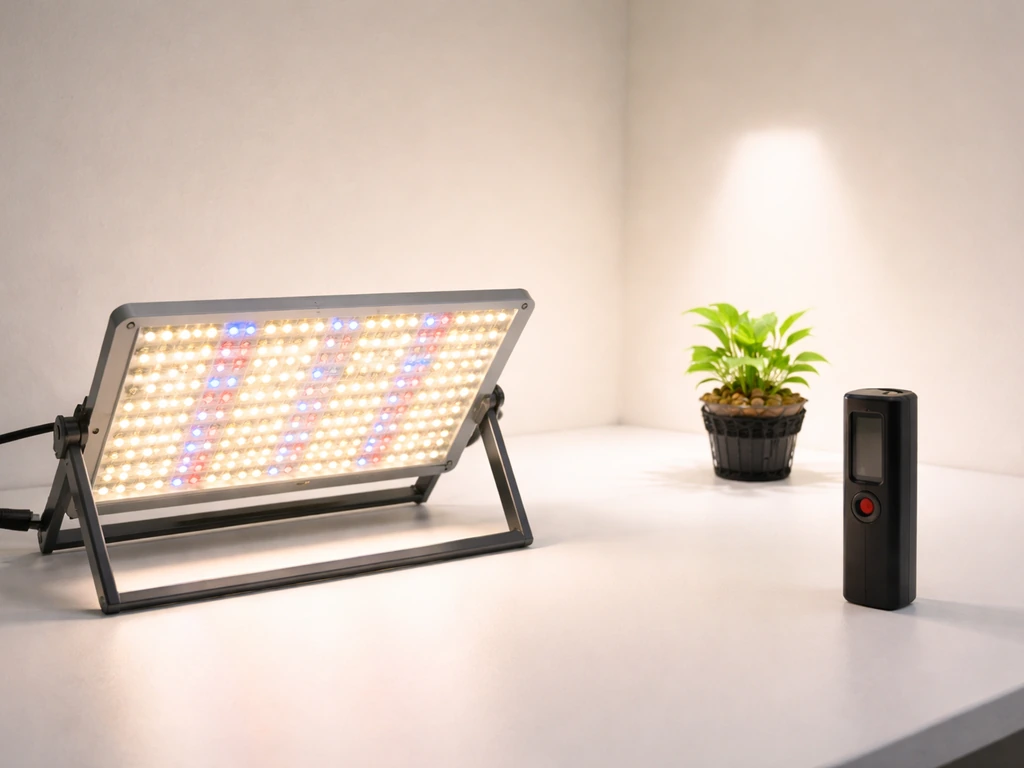
For lotus, skip anything marketed as a small seedling light or a basic clip-on LED. You want a full-spectrum LED panel that specifies its PPFD output at a given height. Brands like ViparSpectra publish these numbers, and you should look for a fixture that delivers at least 300 µmol·m−2·s−1 at 20 to 30 cm above the water. Full-spectrum LEDs that include both red and blue wavelengths (and ideally white and green too) are the right call. You are essentially building a mini outdoor pond light.
How high to mount it
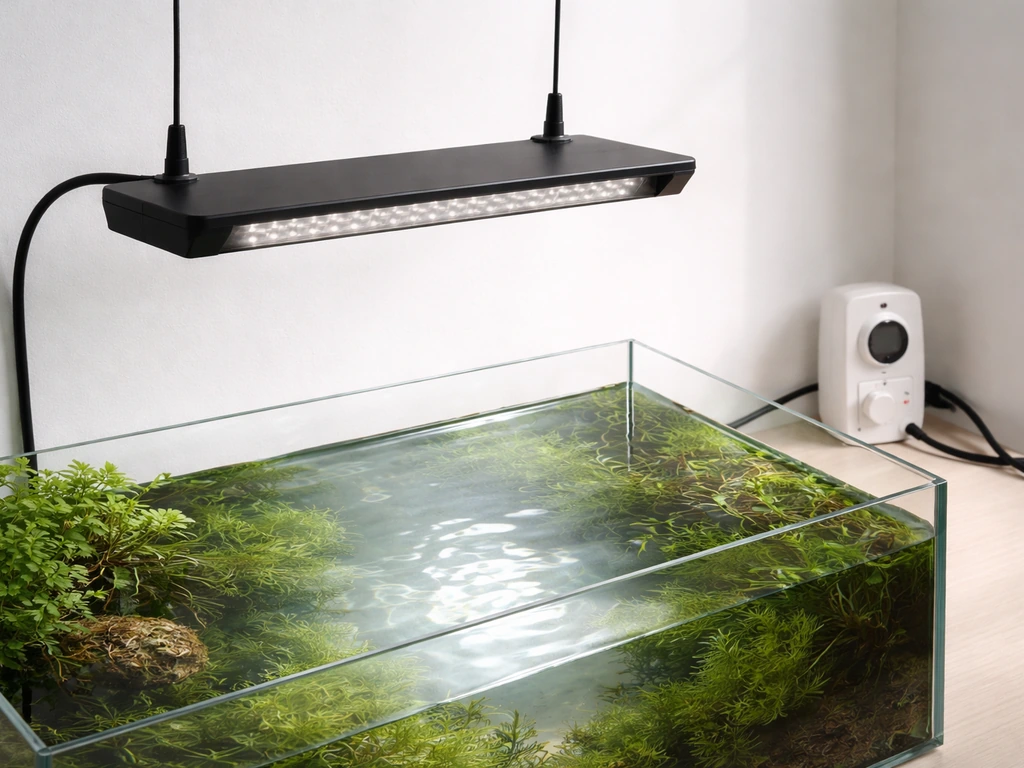
For aquatic containers, a starting height of 20 to 25 cm above the water surface works well for most standard LED panels. Aquatic plant lighting guides consistently use this range as a baseline for planted tanks of 60 to 90 cm width. If your lotus leaves are getting scorched (brown crispy edges), raise the light. If leaves stay pale and reach upward desperately, lower it or upgrade to a more powerful fixture. PAR meters are useful here if you want precision, but you can also read the plant's response over two to three weeks.
Daily schedule and timer setup
Run your grow light 14 to 16 hours a day during the growing season. This mimics the long summer days that lotus needs to stay in active growth and eventually flower. A mechanical or smart plug timer makes this effortless and consistent. Consistency is more important than perfection: a lotus getting exactly 15 hours every day will outperform one getting 10 hours some days and 18 hours others. Avoid running lights 24 hours a day. Plants, including lotus, benefit from a dark period for respiration and hormone regulation.
Step-by-step indoor lotus plan
- Choose a wide, shallow container. Lotus rhizomes grow horizontally, so width matters more than depth. A container at least 60 cm across and 25 to 30 cm deep is a reasonable minimum. Fill it one-quarter to one-half full with loamy, fertilizer-free soil before adding water.
- Place the rhizome at the edge of the container so it has room to grow horizontally toward the center. Plant it just below the soil surface, tip pointing upward and slightly angled.
- Add water slowly until there is about 5 to 10 cm of water above the soil surface. As the plant establishes and grows, you can deepen the water gradually, but keep it shallow to start.
- Position your LED grow light directly above the container, suspended 20 to 25 cm above the water surface. Make sure the light covers the full diameter of the container, not just the center.
- Set a timer for 15 hours of light per day. A simple schedule of 7 AM to 10 PM works well and keeps the room comfortable.
- Maintain water temperature between 21 and 30°C if possible. Lotus flowering is also tied to warm temperatures, so a cold indoor space will suppress blooms even if light is perfect. Ambient room temperature of at least 20°C during the light period is a good target.
- Top up water regularly as it evaporates. Do not let the container dry out, and do not let it become stagnant. A small aquarium pump or water change every one to two weeks keeps conditions healthy.
- Fertilize lightly once leaves are actively growing, using aquatic plant tablets pushed into the soil near the roots, not dissolved in the water column.
Troubleshooting low-light lotus growth and when to adjust
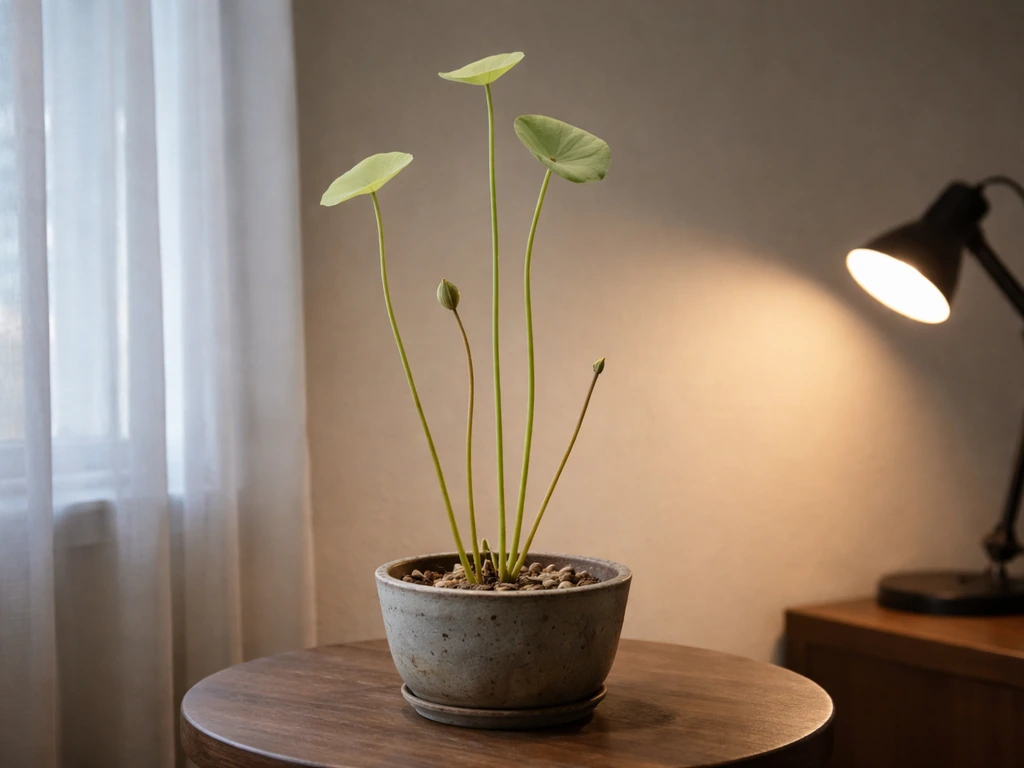
Lotus is pretty clear about telling you when it is not happy with its light. Here are the signs to watch for and what to do about each one.
- Leaves are tall, thin, and reaching upward (etiolation): This is classic light starvation. The plant is stretching toward any available light source. Lower your grow light, increase its output setting if it has one, or upgrade to a more powerful fixture.
- Leaves are pale green or yellowish: Insufficient light slows chlorophyll production. This can also be a nutrient issue, but if the light setup is marginal, fix that first. Increase light intensity or duration by two hours and monitor over two weeks.
- No new leaves emerging for four or more weeks during warm months: The plant may have entered dormancy triggered by short photoperiod. Check that your timer is actually running 14 to 16 hours. Also check water and air temperature, as cool conditions combined with short days accelerate dormancy.
- Leaves are emerging but staying very small: This usually means chronic low light or low temperature. Both suppress the growth hormones (like IAA) that drive cell expansion. Address light first, then check that water temperature is above 21°C.
- No flower buds after a full growing season: This is the most common complaint from lotus growers indoors. Flowering requires both high light intensity and long photoperiod sustained over months. If you have been running less than 14 hours at less than 300 µmol·m−2·s−1, you are unlikely to see flowers. Extend the photoperiod, raise the light intensity, and accept that the first indoor season is often just establishment.
- Brown leaf edges: Usually too much direct heat from the light or the light mounted too close. Raise the fixture 5 to 10 cm and check that the room temperature is not spiking above 35°C.
Realistic expectations and what to do if the light setup is not feasible
I want to be honest here, because lotus is one of those plants where the gap between "technically possible" and "realistically achievable" is large. Yes, you can grow lotus indoors with artificial light. But the setup requires a quality high-output LED panel, a reliable timer, a warm room, and consistent water management over months. If you are living in a studio apartment, working with a limited budget, or just want something that flowers without a lot of infrastructure, lotus is probably not your plant right now.
PondLotus.com puts it directly: lotus generally does not grow well indoors and would need a full-spectrum grow light system just to have a chance at blooming. That is not gatekeeping, it is just honest plant biology. Lotus evolved for conditions most indoor spaces simply cannot replicate easily.
If you genuinely cannot provide 14 to 16 hours of strong artificial light and warm temperatures, here are your practical alternatives:
- Move the lotus outside for summer. Even a balcony or patio with full afternoon sun will do more for lotus than almost any indoor grow-light setup. Bring it in only when temperatures drop below 10°C.
- Switch to a lower-light aquatic plant for your indoor water feature. Water lettuce, water hyacinth, and some aquatic mosses are far more tolerant of indirect indoor light.
- Try a smaller, less light-hungry plant with a similar aesthetic. Bamboo and lucky bamboo, for example, can adapt to lower light conditions far more readily than lotus, and they are worth considering if you want something sculptural in a low-light space.
- If you want to keep your lotus but cannot grow it indoors year-round, store the rhizome dormant in a cool, damp medium over winter and return it to full sun outdoors in spring.
There is no shame in admitting a plant needs more than your space can offer. The best indoor gardeners are not the ones who force every plant to survive in wrong conditions, but the ones who match the right plant to the right light. If lotus is your dream, work toward the outdoor or high-output-light setup that will actually let it thrive.
FAQ
How can I tell if my room light is enough for lotus, even if I add a grow light later?
Do a reality check using plant behavior. If leaves are pale, thin, and the plant stays “idle” for weeks, your ambient light is likely below what lotus needs. Also verify your grow light schedule early, because a short photoperiod can push lotus into dormancy even if intensity is improved later.
Can lotus survive without any sunlight if I keep the rhizome in a tub and run lights only when I remember?
It can stay alive for a time, but irregular lighting often causes stalling and can interrupt flowering cycles. Use a mechanical or smart plug timer so the light period is consistent every day, ideally 14 to 16 hours during the active growing window.
What’s the difference between keeping lotus alive and getting it to flower indoors?
Longevity and flowering are different thresholds. Indoor setups may maintain basic leaf activity at lower light, but flowering typically requires both sufficiently high PPFD and long, uninterrupted photoperiods to prevent dormancy signaling.
Is 14 hours of light always better than 12 hours, or is there a cutoff?
Longer usually helps as long as the plant is receiving enough intensity. However, dropping too far in photoperiod can trigger dormancy behavior, so aim for the top half of the target range (about 14 to 16 hours) rather than experimenting around 10 to 12 hours.
Can I run lotus lights 24/7 to maximize growth?
No, avoid continuous lighting. Lotus benefits from a daily dark period, which supports respiration and normal hormone regulation. A consistent 14 to 16 hour light window is usually the safer approach.
My grow light says “full spectrum,” but I do not know the PPFD. What should I do?
Prioritize fixtures that publish PPFD or PAR targets at a stated distance. If the product only lists spectrum colors without output numbers, you cannot reliably hit the intensity requirements, and you may end up with slow, non-flowering growth.
How high should I mount the LED panel above the water, and what if my leaves scorch?
Start around 20 to 25 cm above the water for common panel sizes. If you see brown, crispy edges, raise the light or reduce effective intensity. If leaves stay pale and stretch upward, lower the light (within safe limits) or upgrade the fixture.
Does sacred lotus need different lighting than American yellow lotus indoors?
Both are full-sun plants, but individual growth speed and flowering tendency can vary by cultivar and local conditions. The safest approach is to match the same indoor targets for photoperiod and intensity, then adjust based on leaf color and growth rate over 2 to 3 weeks.
Can I use fluorescent or cheaper LEDs instead of a high-output grow panel?
Fluorescents and weaker LEDs can sometimes support seed germination or very early growth, but they often lack the intensity for mature vegetative growth and especially flowering. For a mature indoor plant, plan on targeting substantially higher PPFD than what germination setups use.
Should I adjust the light during winter if I keep lotus indoors year-round?
If you are trying to avoid dormancy, keep the photoperiod consistent with a timer rather than following seasonal daylight trends. That said, make sure your room and water temperatures do not drop too low, because light consistency alone cannot fully compensate for cold stress.
What water and container factors affect whether my indoor lotus succeeds with the same light?
Light is central, but aquatic conditions still matter. Poor filtration, unstable temperatures, or inconsistent water depth can slow rhizome development even when PPFD is adequate. Aim for stable, warm conditions and avoid letting the water surface level swing significantly.