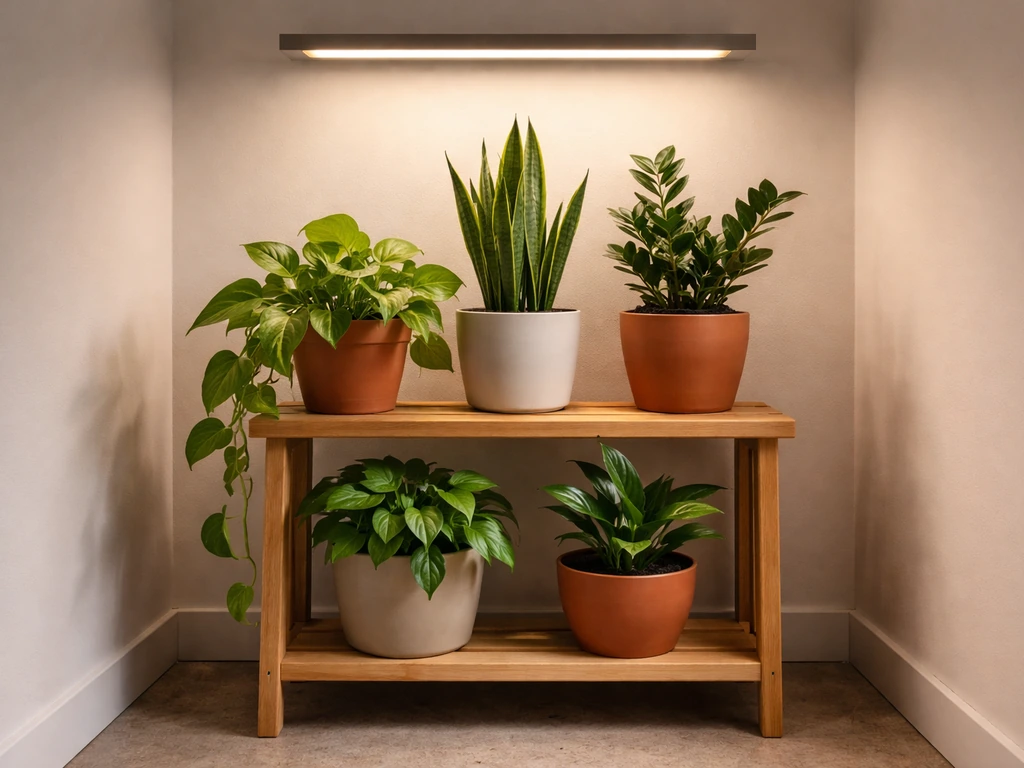
Yes, several plants can grow indoors with little to no natural sunlight, but the key is understanding what 'no sunlight' actually means for your space and replacing what's missing with the right artificial light. Plants like pothos, snake plants, ZZ plants, and cast-iron plants genuinely tolerate dim conditions. If you're in a windowless room or a spot more than eight feet from the nearest window, you'll want to add a grow light or fluorescent bulb to keep most of them alive and actually growing. The good news: you don't need an elaborate setup or expensive gear to make this work.
Plants That Can Grow Indoors Without Sunlight: Best Picks
Marcus Hartley
28 Apr 2026
What 'without sunlight' actually means for indoor plants
When most people say they have 'no sunlight,' they usually mean one of two different situations: a room with a window that gets poor or indirect light, or a genuinely interior space like a basement, hallway, or windowless office. These are very different growing environments, and the distinction matters.
The University of Arizona Cooperative Extension defines 'low light' indoors as areas more than eight feet from a window, such as the center of a room, a hallway, or a wall away from any glass. In foot-candles, that translates to roughly 25 to 75 fc. Medium light (75 to 150 fc) sits closer to windows but still out of direct sun. High light (150 to 1,000 fc) means right at or near a bright window. Most 'shade-tolerant' houseplants are rated for that 25 to 75 fc low-light zone, which is why they survive in dim apartments.
A truly windowless room, though, sits well below even that low-light threshold. Standard indoor ceiling lighting, the kind you'd have in an office, typically delivers somewhere between 10 and 50 fc at floor level, which is borderline for even the most forgiving plants. If you're in that situation, you're not really growing without light at all. You're replacing sunlight with artificial light, and that's completely doable as long as you set it up correctly.
How plants actually grow without sunlight (a quick biology note)
Plants don't technically need sunlight. They need light, specifically the kind that drives photosynthesis. Chlorophyll in plant leaves absorbs light in the red and blue parts of the spectrum and uses it to convert carbon dioxide and water into glucose, which powers growth. Sunlight happens to supply all of that naturally, but LEDs, fluorescent bulbs, and other grow lights can replicate the same spectrum.
The practical number to focus on is PPFD, which stands for photosynthetic photon flux density and is measured in micromoles per square meter per second (µmol·m⁻²·s⁻¹). PPFD (photosynthetic photon flux density) is defined as micromoles per square meter per second (μmol·s⁻¹·m⁻²) by the Illuminating Engineering Society (IES) PPFD is measured in micromoles per square meter per second. Unlike wattage, PPFD tells you how many usable photons are actually hitting the leaf surface, which is what actually matters for growth. Most low-light houseplants need somewhere around 50 to 150 µmol·m⁻²·s⁻¹ to thrive. You don't need to memorize the number, but knowing it exists helps you choose a grow light that lists PPFD values rather than just wattage.
Duration matters just as much as intensity. Plants also respond to photoperiod, meaning the length of the light period each day. Most foliage houseplants do well with 12 to 16 hours of artificial light per day in low-light setups. Running a grow light for only 6 or 8 hours in a dim room usually isn't enough to compensate for the lack of natural light.
The best indoor plants for low light or no natural sunlight
These are the plants I'd actually recommend to someone setting up a low-light or windowless space. They've been well-tested in real indoor environments, not just greenhouses, and they have genuinely low light requirements compared to most houseplants.
| Plant | Light Tolerance | Growth Rate in Low Light | Best For |
|---|---|---|---|
| Pothos (Epipremnum aureum) | Very low light, tolerates fluorescent only | Moderate, trails well | Shelves, hanging baskets, beginners |
| Snake Plant (Sansevieria / Dracaena trifasciata) | Very low light, nearly indestructible | Slow but steady | Corners, bedrooms, neglect-prone spots |
| ZZ Plant (Zamioculcas zamiifolia) | Extremely low light, stores water in roots | Slow | Offices, windowless rooms |
| Cast-Iron Plant (Aspidistra elatior) | One of the lowest light needs of any houseplant | Very slow | Dim hallways, interior rooms |
| Peace Lily (Spathiphyllum) | Low to medium indirect light | Moderate | Spaces with some ambient light or a grow light |
| Chinese Evergreen (Aglaonema) | Low to medium light, tolerates fluorescent | Moderate | Offices, dim living spaces |
| Heartleaf Philodendron | Low light, similar to pothos | Fast for a low-light plant | Beginners wanting fast results |
| Dracaena (various) | Low to medium light | Slow to moderate | Statement plants in darker corners |
| Boston Fern (Nephrolepis exaltata) | Low to medium indirect light, needs humidity | Moderate | Bathrooms, humid low-light spaces |
A few honest caveats: 'low light tolerant' doesn't mean 'thrives in near-darkness forever. In general, the best crops and leafy greens for very low light still tend to need a grow light to produce consistent harvests what crops can grow without sunlight. ' Even the ZZ plant and cast-iron plant will eventually stall or decline if there's truly no usable light for months on end. They just have a longer runway than most. If you're growing in a genuinely dark room and want real growth (not just survival), you will need a grow light.
If you’re wondering will algae grow without sunlight, the answer depends on whether light is available for photosynthesis truly no usable light. That same idea is why can trees grow without sunlight depends on whether they can still get enough light to power photosynthesis. If you are wondering what crops can grow without sunlight, the same basic rule applies: they still need enough usable light to support photosynthesis can trees grow without sunlight.
You can apply the same logic to an areca palm: it will only keep growing without sunlight if it still gets enough light for photosynthesis can trees grow without sunlight. In general, an areca palm can only keep growing without sunlight if you provide enough light for photosynthesis using a grow light or another strong indoor light source areca palm grow without sunlight. The plants above give you the best starting odds either way.
If you're curious about specific plant types beyond foliage, the rules shift a bit. Flowering plants generally need more light than foliage plants, and crops like vegetables need significantly more. Flowering plants are the hardest category for true no-direct-sunlight setups, so choosing bloom-capable low-light varieties and using a grow light is usually the difference between buds and nothing at all. Those are worth looking at separately.
How to set up growing without sunlight: a step-by-step approach
You don't need to overthink this. Here's a practical setup that works for a low-light room or a windowless space.
Step 1: Measure or estimate your current light level
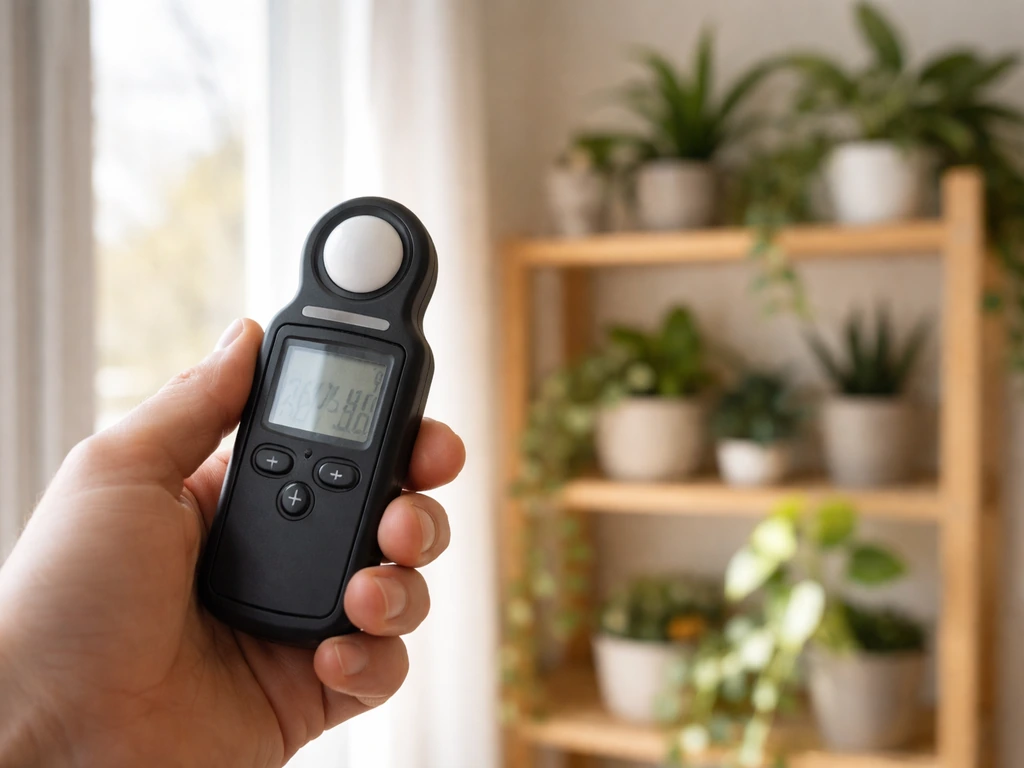
Before you buy anything, figure out what you're working with. A basic lux meter (available for under $20) lets you measure light intensity at the spot where you'll place the plant. Take readings at plant-leaf height at different times of day, because a single snapshot at noon can be misleading. Readings below 500 lux consistently mean you're in low-light territory. Below 200 lux and you're at the borderline of what even the toughest plants can sustain without supplemental lighting.
Step 2: Choose the right light source
For a low-light plant setup, you don't need a high-powered grow light designed for tomatoes. A full-spectrum LED grow bulb or a T5 fluorescent bulb positioned 12 to 24 inches above the plant is enough for most foliage houseplants. Look for a grow light that lists its PPFD output rather than just wattage. For the plants listed above, you're targeting 50 to 150 µmol·m⁻²·s⁻¹ at leaf height. Many affordable clip-on or panel LED grow lights hit that range easily for a small plant collection.
Step 3: Set distance and placement
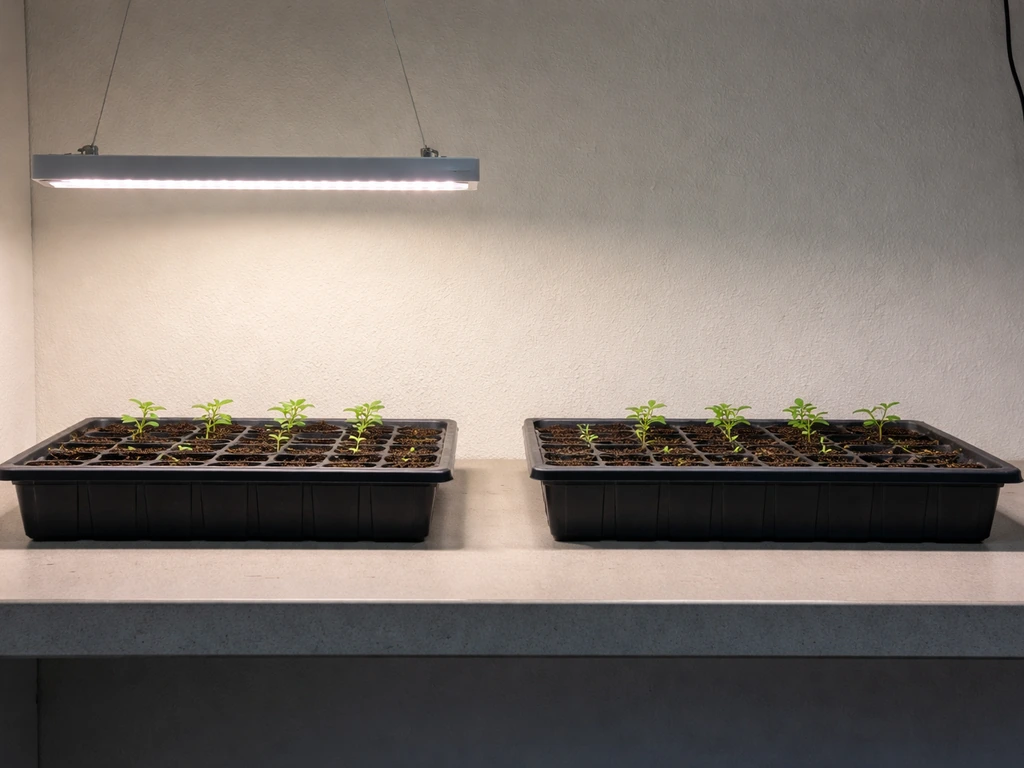
Light intensity drops off fast as you move away from the source. A grow light that delivers adequate PPFD at 12 inches may deliver less than half that at 24 inches. Start with the manufacturer's recommended distance, then check for signs the plant is getting too much (bleached or crispy leaves) or too little (leaning, stretching toward the light). For most low-light houseplants, 12 to 18 inches from a moderate LED panel is a reasonable starting point.
Step 4: Set a timer and stick to a schedule
Get a simple plug-in timer and set it for 12 to 16 hours of light per day. I run mine for 14 hours in rooms with no window light. Consistency matters more than perfection here. Plants adapt to a predictable photoperiod, so try to keep the on/off times the same each day. Avoid running lights for 24 hours straight. Plants do need a dark period to complete certain physiological processes, even low-light species.
Step 5: Position plants thoughtfully
If you're using a single grow light, group plants by light need. Put your most light-hungry species closest to the bulb and your most tolerant ones (ZZ, cast-iron plant, snake plant) toward the edges. Rotate plants every week or two so all sides get even exposure. This is especially important for anything with directional growth habits.
Care adjustments when you're growing in low light
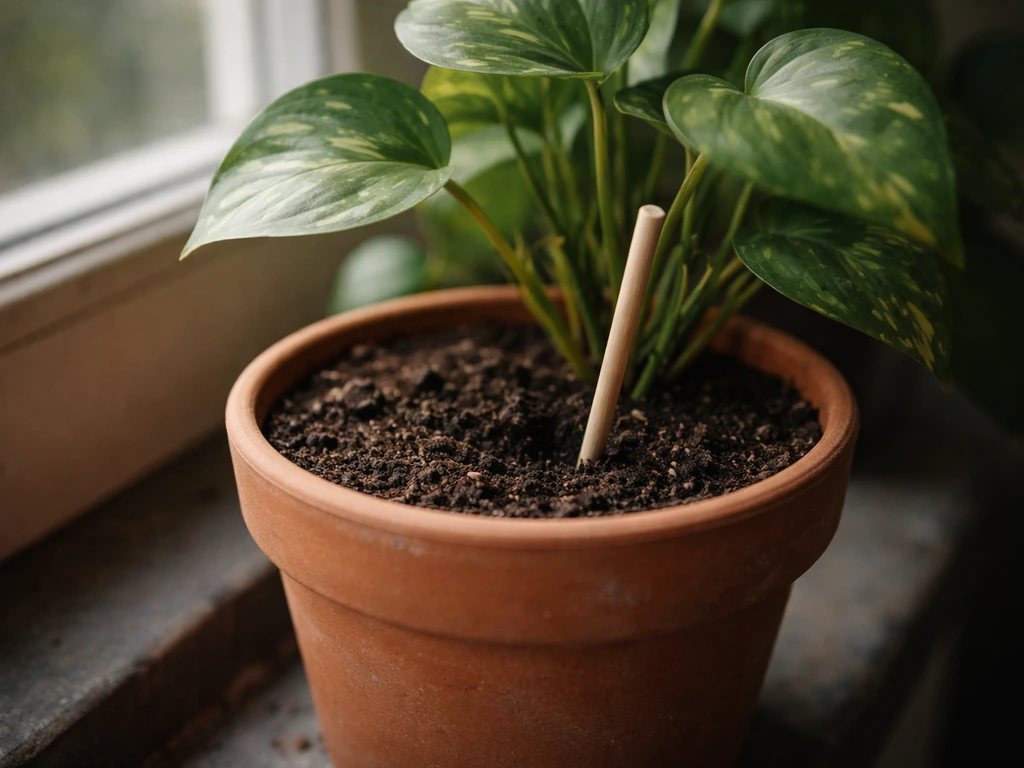
One of the most common mistakes I see is people watering low-light plants the same way they water plants in bright windows. Low-light conditions slow everything down, including how fast soil dries out. Overwatering in dim rooms is the number one killer of otherwise tough plants.
- Watering: Water less frequently than you think you need to. Check soil moisture by sticking your finger two inches into the soil. Only water when it's dry at that depth. In low light, many plants need watering once every 10 to 21 days rather than weekly.
- Soil: Use a well-draining potting mix. Adding a small amount of perlite (around 20 to 30% by volume) helps prevent the waterlogged soil that causes root rot in dim conditions.
- Fertilizing: Cut back significantly. Low-light plants grow slowly, and excess fertilizer with nowhere to go builds up as salts in the soil. Feed at quarter-strength during the growing season (spring and summer), and don't fertilize at all in fall and winter.
- Humidity: Many low-light plants, especially ferns and peace lilies, appreciate higher humidity. A small humidifier or a pebble tray with water nearby helps, especially in heated or air-conditioned rooms.
- Growth expectations: Be realistic. A ZZ plant in a dim room under a grow light might put out two or three new leaves over an entire season. That's normal and healthy, not a sign something is wrong.
Troubleshooting: what to do when things go wrong
Leggy, stretched-out growth
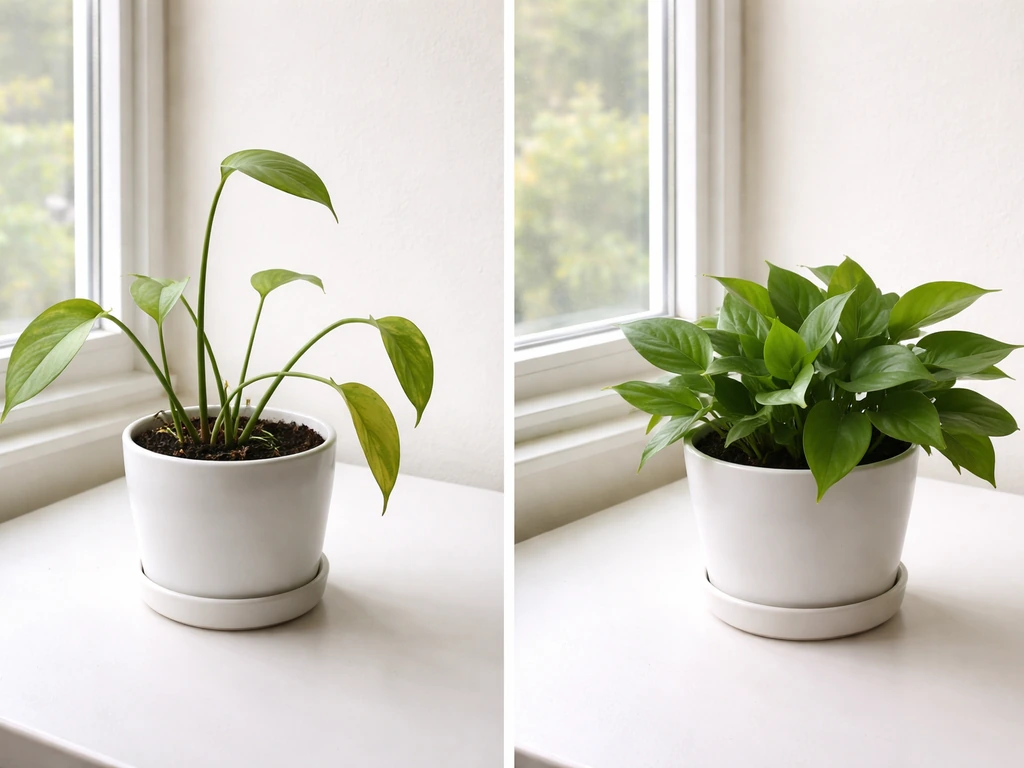
Long, spindly stems with wide gaps between leaves (called etiolation) are a classic sign your plant isn't getting enough light. The plant is literally reaching for a better source. Fix this by moving the grow light closer, increasing daily light hours, or upgrading to a higher-output bulb. Pinching back leggy stems on plants like pothos and philodendron also helps encourage bushier new growth once the light situation improves.
Yellow leaves
Yellow leaves in low-light plants are usually caused by one of two things: too little light or too much water. Check both. If the soil is consistently soggy, reduce watering and consider repotting into fresh, drier soil. If the soil is fine but the plant is putting out pale, uniformly yellow new leaves, more light is the likely answer. Lower leaves yellowing and dropping on an otherwise healthy plant is normal aging, not a problem.
Slow or stalled growth
Some slow growth is expected in low-light setups, especially in fall and winter. But if a plant hasn't produced a single new leaf in three or four months during spring or summer, something's off. First check light duration and intensity. Then check roots. A rootbound plant (roots circling the bottom of the pot or poking through drainage holes) can stall growth even with adequate light.
When to change the plant or the setup
Not every plant works in every space, and that's genuinely okay. If a peace lily keeps dropping and yellowing despite a grow light and careful watering, it might just need more ambient humidity or a brighter spot. Some plants, like most succulents, cacti, and flowering houseplants, simply aren't candidates for low-light or windowless growing no matter how good your grow light setup is. Knowing when to swap in a more suitable species is part of getting good at this, not a failure.
The plants most likely to reward you in a tough low-light setup are the ones that evolved on forest floors under a thick canopy. Think of pothos in a tropical jungle understory, or cast-iron plants in deep shade. Those species already have the biology for dim conditions. Start there, get your light setup dialed in, and expand from that foundation once you know what works in your specific space.
FAQ
If my room gets absolutely no direct sun, can I still skip a grow light?
Yes, but only if you treat “no sunlight” as “no natural light,” not as “no usable light at all.” If the room receives a few minutes of bright window light or strong indoor daylight, you can often use shorter grow-light schedules (for example 8 to 12 hours instead of 12 to 16). The most reliable approach is to measure at leaf height and adjust by observation, plants will still stretch if they are getting too little.
Do grow lights need to be high-wattage to work in windowless rooms?
Wattage alone is unreliable for indoor low-light growing. Two bulbs with the same wattage can deliver very different photon output at the leaf, which is why PPFD or at least PAR-like specs matter. If a light only lists brightness in watts and no intensity metrics, plan on buying a different one or running it closer than recommended, then confirm with plant response.
How many hours per day should I run the light to keep low-light plants actually growing?
For most foliage plants, aim for a consistent daily light period, 12 to 16 hours is a practical range. If you run too short, growth stalls and leaves may pale, if you run too long (like 18 to 24 hours), many plants show stress even if they survive. Use a plug-in timer to avoid drifting schedules.
My “low-light” plant isn’t growing, what should I troubleshoot first?
If you’re seeing slow growth after setting up a grow light, the most common causes are (1) the light is too far away, (2) the timer schedule is too short, or (3) the plant is being overwatered in dim conditions. Check soil moisture first (top inch should dry before watering) and then look for etiolation, leaning, or bleaching to decide whether to adjust distance or duration.
Can a grow light give too much light to low-light houseplants?
Direct light at close distance can be damaging even indoors. Signs include crispy edges, bleached or overly pale patches, and leaf scorch. If you see that, move the light farther, reduce photoperiod slightly, or switch to a dimmer setting if your LED has one.
How do watering needs change for plants in dim or windowless spaces?
Yes, low-light setups can still dry out unevenly and cause root problems. Use the pot’s drainage as your guide, empty saucers after watering, and consider a moisture meter or a simple finger test. In dim rooms, it’s normal for soil to stay wet longer, so watering should be based on dryness, not a fixed calendar.
Do I need to rotate plants under a grow light?
Rotating the plant helps prevent one-sided leaning, especially if you use a single light. If growth is noticeably directional, rotate every 1 to 2 weeks. Also keep the light height steady, raising or lowering during the experiment makes it harder to tell whether your adjustment worked.
Is a lux meter enough to choose the right grow light for plants that need little sunlight?
A lux meter is useful for a quick “am I in low light?” check, but it cannot convert directly to the photosynthetic values plants use. If you want to be more precise, look for grow lights that list PPFD at a stated distance, and then measure plant results over 2 to 4 weeks. Lux is great for screening, PPFD is better for choosing a light.
What light type works best for windowless rooms, LED or fluorescent?
Most foliage plants respond well to a single full-spectrum LED or T5-style fluorescent placed above the canopy. If you’re growing taller plants, you may need either multiple lights or a taller mounting structure, because intensity drops quickly with distance. For very small plants, use a closer setup within the manufacturer’s safety guidance to avoid wasting output.
How can I tell if yellow leaves are from too little light or too much water?
If your plant is continuously yellowing, pale new growth plus stretching usually points to too little light, while yellowing with consistently wet soil points to overwatering or poor drainage. For a definitive check, inspect roots after gently removing the plant, healthy roots are firm and light-colored, mushy dark roots suggest root rot.
What does it mean if my low-light plant stops producing new leaves for months?
If you don’t see any new leaves for 3 to 4 months in spring or summer, even “tolerant” plants may be stuck. First confirm your light schedule and distance, then check roots for being rootbound or staying wet too long. Rootbound plants can stall growth even when light is adequate, and overly tight pots can worsen drying time.
Is it harmful to run indoor grow lights 24/7 so my plant gets more light?
Yes, many plants need a dark period. Running light continuously can interfere with normal cycles and increase stress, even if the plant looks okay at first. A simple safeguard is to stay within a 12 to 16 hour on window and use a timer so the off period is consistent.
Should I keep trying with succulents or flowering plants in a windowless room?
Some plants struggle because they are simply not suited to low-light indoor survival, even with supplemental light. Succulents, cacti, and most flowering houseplants typically require far more usable light than foliage understory plants. If you can’t reach the needed light levels without extreme setups, switching species is often the fastest fix.