Nightshades don't grow at night because of their name. Tomatoes, peppers, eggplant, and potatoes are all nightshades (family Solanaceae), and every single one of them needs plenty of light to thrive. The name has nothing to do with when they grow. Indoors, your nightshade crops need 14 to 18 hours of quality light per day under grow lights, a consistent dark period to rest and recover, and the right light intensity to actually set fruit. Here's what's really going on and how to set things up properly.
Do Nightshades Grow at Night? Indoor Light Guide
Marcus Hartley
28 Apr 2026
The name 'nightshade' has nothing to do with growing at night
The word nightshade traces back to Old English 'nihtscada,' which literally means 'shade of night.' That's a reference to the dark, often sinister reputation of plants like deadly nightshade (Atropa belladonna), not a clue about when the plants photosynthesize or prefer to grow. Over centuries, the name stuck to the entire Solanaceae family, which includes both the genuinely toxic species and the completely edible crops most of us are trying to grow indoors.
So when someone asks whether nightshades grow at night, they're usually either curious about the name or wondering if these plants have some unusual light preference. They don't. Tomatoes, peppers, eggplant, and potatoes are all heavy light users. If anything, they're among the most light-hungry vegetables you can try to grow indoors, which makes getting your lighting setup right even more important.
What plants actually do in the dark
Plants aren't just sitting idle when the lights go off. During the dark period, a few important things happen. First, they stop photosynthesizing, but they keep respiring, converting the sugars built up during the day into energy for growth, cell repair, and moving nutrients around. That's part of why a proper dark period matters: it's genuinely productive for the plant, just in a different way than light hours are.
There's also a whole developmental program that runs in darkness called skotomorphogenesis. If a seedling gets too much darkness and not enough light, it goes into an etiolated state: stems stretch long and pale, leaves stay small, and the plant essentially panics and reaches upward for light it isn't finding. The moment good light hits, the plant switches to photomorphogenesis and starts developing normally. This is the science behind why leggy, pale seedlings are a light problem, not a watering or fertilizer problem.
The dark period also matters for flowering and fruiting in some species. Plants read the length of the uninterrupted dark period as a signal about what time of year it is. This is called photoperiodism, and it has real consequences for some nightshade crops, especially potatoes, which I'll get into below. For general growth purposes though, the rule of thumb is simple: more high-quality light hours (up to a point) means more photosynthesis and more growth.
Light requirements for common nightshade crops indoors
Each nightshade crop has its own light appetite. They're all high-light plants, but there are meaningful differences between them that affect how you set up your grow space.
| Crop | Daily Light Hours (Grow Lights) | Target DLI (mol·m⁻²·day⁻¹) | Notes |
|---|---|---|---|
| Tomato | 14–18 hours | 20–30 | Very light-hungry; fruiting drops off below 20 mol·m⁻²·day⁻¹ |
| Pepper | 14–16 hours | 20–25 | Similar to tomatoes; tolerates slightly lower DLI than tomatoes |
| Eggplant | 14–16 hours | 18–25 | Needs strong light for fruiting; shade causes poor set |
| Potato | 12–14 hours | 15–25 | Short days trigger tuberization; long days favor foliage growth |
Tomatoes
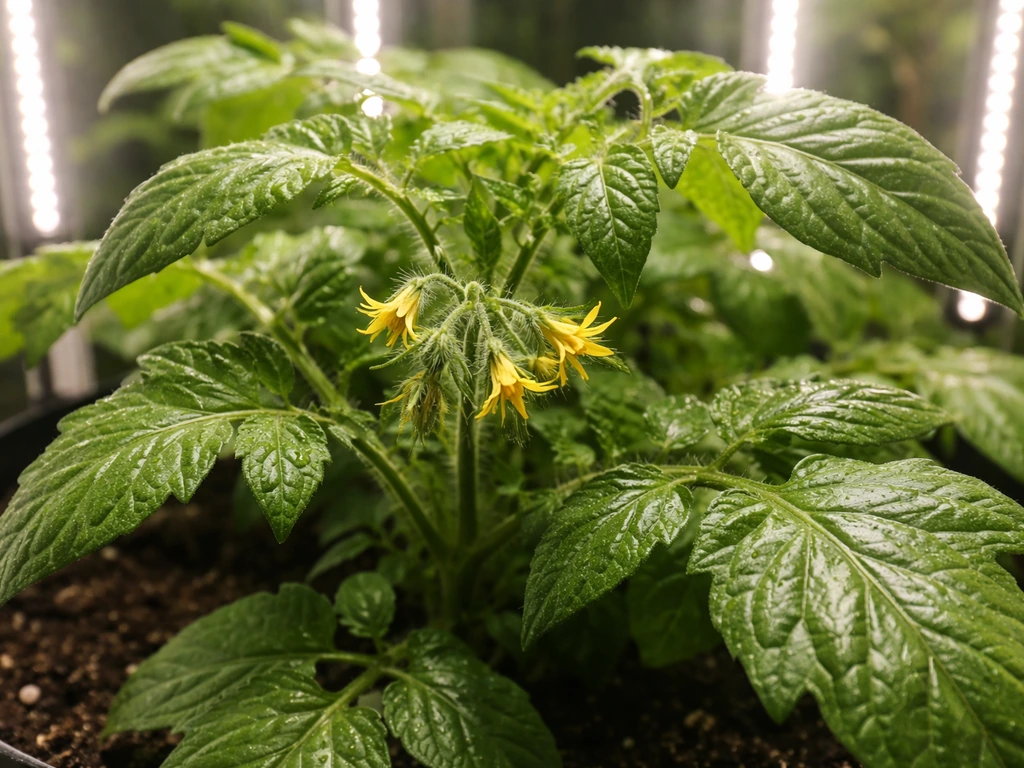
Tomatoes are arguably the most demanding nightshade crop when it comes to light. Virginia Tech Extension research puts the target DLI for tomatoes at around 20 to 30 mol per square meter per day. In practical terms, that means you need a genuinely powerful grow light running for most of the day, not just a basic desk lamp. Indoors, 16 hours of light at a decent intensity is a solid starting point for fruiting tomatoes.
Peppers
Peppers are close to tomatoes in their needs but are slightly more forgiving. A 14 to 16 hour photoperiod under grow lights works well. They're day-neutral for flowering, meaning they'll bloom and fruit without needing a specific day length, so you have flexibility in how long you run your lights as long as you hit the intensity targets.
Eggplant
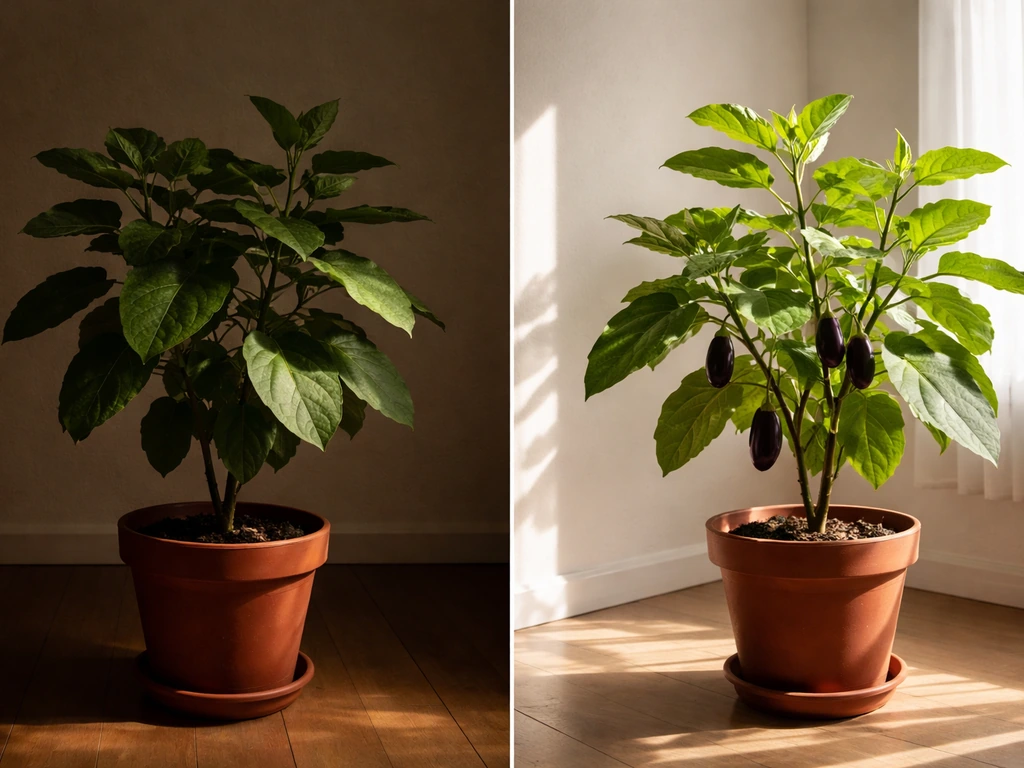
Eggplant is often underestimated in how much light it needs. In a dim apartment setup, it'll grow leaves but fruit set will be poor or nonexistent. It needs strong, direct light, making it one of the trickier nightshades for indoor growing. Position it as close to your grow light as safely possible and don't expect much below a solid 18 mol·m⁻²·day⁻¹.
Potato
Potato is where photoperiodism really comes into play. Many potato varieties are short-day plants for tuberization, meaning they need shorter day lengths (and crucially, longer uninterrupted dark periods) to start forming tubers. Longer days and interrupted nights push the plant toward foliage and flowering instead. If you're growing potatoes indoors and want actual tubers, keep your photoperiod around 12 hours or less and make sure the dark period isn't interrupted by any light leaks. Even a 15-minute light pulse during the dark period can disrupt the tuberization signal in sensitive varieties.
Setting up a proper light/dark cycle with grow lights
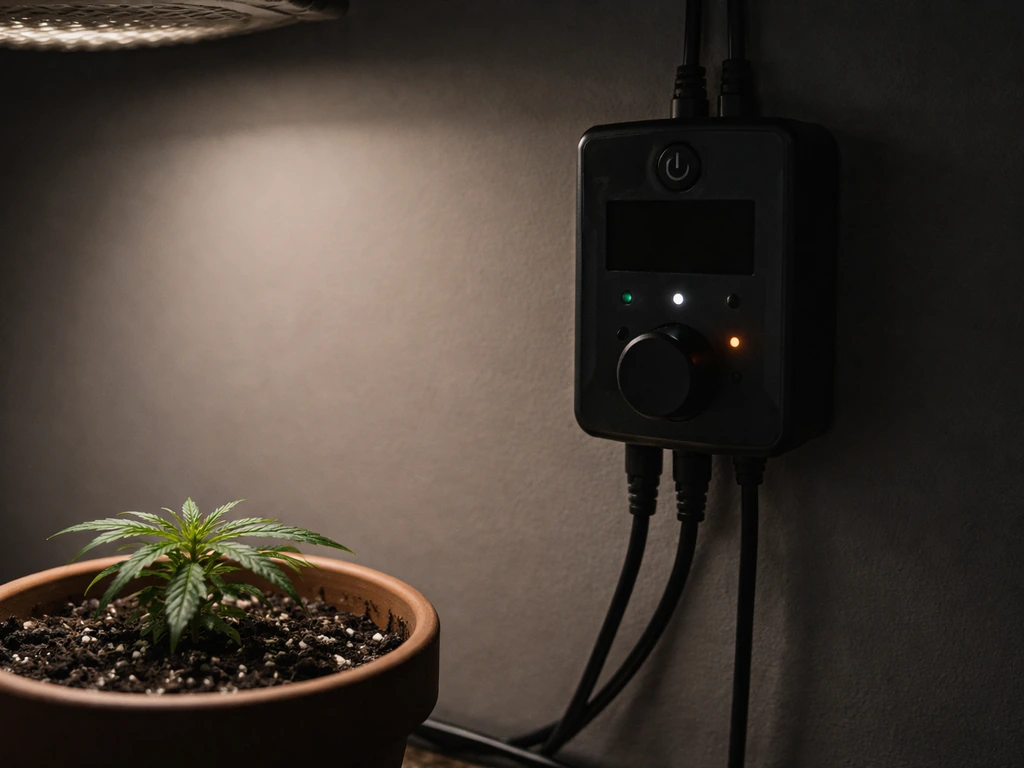
The single most useful thing you can do for indoor nightshades is put your grow lights on a timer. Consistent photoperiods matter more than most people realize, and manually switching lights on and off leads to drift and inconsistency that stresses plants over time. A basic plug-in mechanical timer costs a few dollars and is completely worth it.
For most nightshade crops (tomatoes, peppers, eggplant), start with a 16-hour light, 8-hour dark cycle. This gives you a long growing day without going into the territory where some plants start to show light-stress symptoms. For potatoes where you want tubers, drop to 12 hours on, 12 hours off, and keep that dark period completely uninterrupted.
To figure out if your setup is delivering enough light, use the DLI formula: DLI = PPFD (in micromoles per square meter per second) multiplied by hours of light per day, multiplied by 0.0036. So if your light delivers 500 µmol·m⁻²·s⁻¹ at canopy level and you run it for 16 hours, that's 500 × 16 × 0.0036 = 28.8 mol·m⁻²·day⁻¹, right in the sweet spot for tomatoes. A cheap PAR meter or even a free smartphone app can give you a rough PPFD reading to work with.
- Buy a mechanical or digital outlet timer rated for your grow light's wattage
- Set tomatoes, peppers, and eggplant to 16 hours on / 8 hours off
- Set potatoes to 12 hours on / 12 hours off if you want tubers
- Run your light schedule during daytime hours if possible to avoid heat buildup at night
- Block any ambient light leaks during the dark period, especially for potatoes
- Stick to the same schedule every day; avoid randomly extending or shortening light periods
Choosing and placing LEDs and fluorescents for nightshades
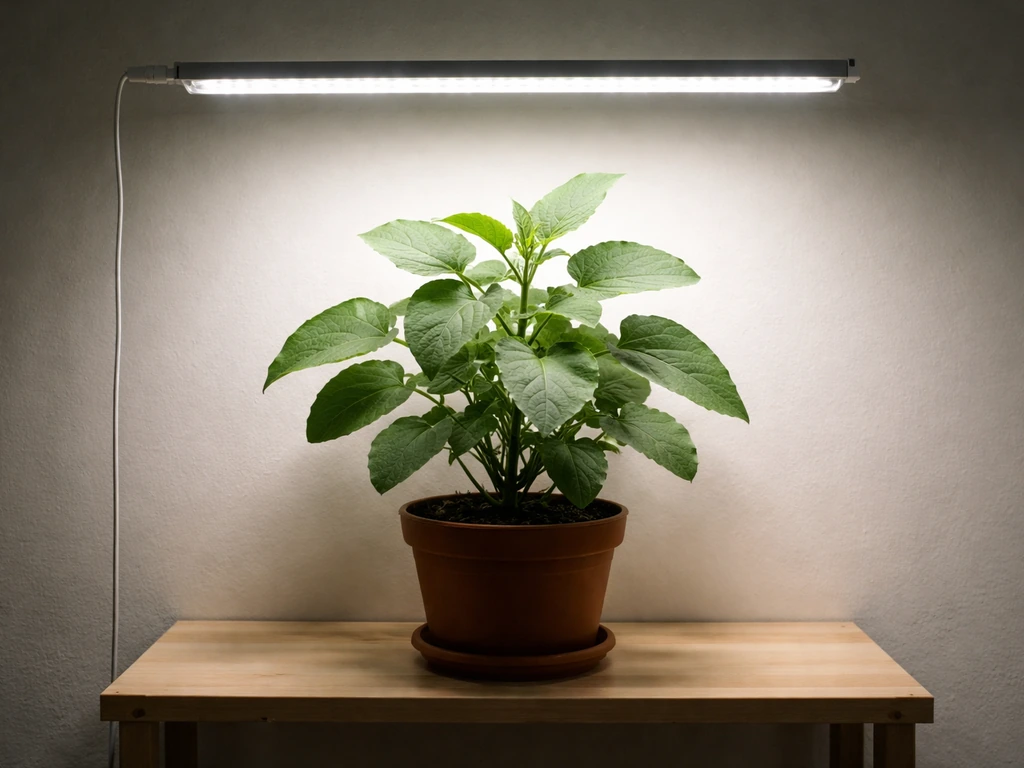
Full-spectrum LED grow lights are the best practical choice for indoor nightshades in 2026. They're energy-efficient, they don't produce as much heat as old-style HID lights, and modern LED panels cover the full photosynthetically active radiation (PAR) spectrum well. For fruiting crops like tomatoes, peppers, and eggplant, you want a light that emphasizes both the blue (400 to 500 nm) and red (600 to 700 nm) wavelengths, though full-spectrum white LEDs also work well and are easier to live with in a home environment.
Fluorescent lights (T5 or T8 high-output) are a budget-friendly option for seedlings and young plants, but they generally lack the intensity for fruiting nightshades unless you pack a lot of tubes close to the canopy. They work great for starting tomato and pepper seedlings, but once plants are pushing toward flowering, you'll want to upgrade to a quality LED panel.
Placement distance matters a lot. Most LED grow light manufacturers give a recommended hanging height, but those are often optimistic. For fruiting nightshades, aim for a PPFD of 400 to 600 µmol·m⁻²·s⁻¹ during vegetative growth and 600 to 900 µmol·m⁻²·s⁻¹ during flowering and fruiting. A good 200 to 300 watt LED panel is typically hung 18 to 24 inches above the canopy for this range, but measure with a meter if you can.
- Use full-spectrum LEDs for fruiting crops: tomatoes, peppers, and eggplant
- Fluorescents work for seedlings but aren't powerful enough for fruiting stage
- Target 400–600 µmol·m⁻²·s⁻¹ PPFD for vegetative growth
- Target 600–900 µmol·m⁻²·s⁻¹ PPFD during flowering and fruiting
- Start with a hanging height of 18–24 inches and adjust based on plant response
- Add reflective surfaces (white walls, mylar) to maximize light coverage without buying more fixtures
- Make sure your light covers the entire canopy evenly; move or rotate plants to address hot spots or dead zones
Troubleshooting: signs your nightshades aren't getting the right light
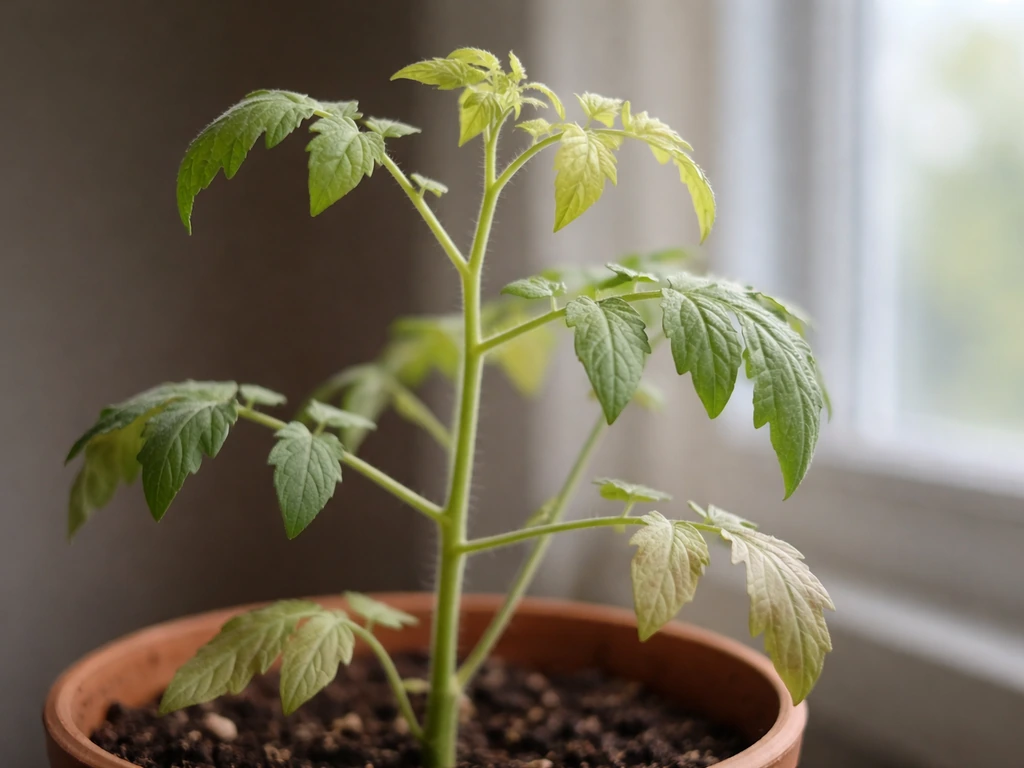
Plants are pretty good at telling you when the lighting is off. The trick is knowing what to look for, because under-lighting and over-lighting symptoms can sometimes look similar at first glance.
Signs you're under-lighting
- Leggy, stretched stems with long gaps between leaf nodes (classic etiolation)
- Pale green or yellowish leaves, especially on new growth
- Flowers drop before setting fruit, or the plant doesn't flower at all
- Very slow overall growth despite adequate water and fertilizer
- Leaves tilting or twisting dramatically toward the light source
If you're seeing any of these, the fix is almost always more light intensity, not more light hours. Moving your light 6 inches closer or upgrading to a higher-output fixture will do more than adding an extra hour or two to your timer.
Signs you're over-lighting or the light is too close
- Leaf edges turn brown or crispy, especially on upper leaves closest to the light
- Leaves curl upward or inward (a response to excessive light or heat stress)
- Bleached, washed-out patches on leaves directly under the light
- Wilting during light hours even when the soil is moist (heat stress from a light that's too close)
Over-lighting is less common in home setups but does happen, especially with very powerful LED panels hung too close. Raise the light a few inches, check whether the temperature under the canopy is getting above 85°F (30°C), and see if the symptoms ease within a few days.
Inconsistent fruiting or photoperiod issues
If your tomatoes or peppers flower but don't set fruit, light quantity is often the culprit, but so is inconsistent scheduling. Plants that get irregular light cycles can drop flowers or produce poorly. For potatoes that aren't tuberizing, check whether any light is reaching them during the dark period, even from a hallway or phone screen. A light leak you barely notice is enough to interrupt the tuberization signal in sensitive varieties.
Can you run your grow lights at night? What that actually means in practice
Yes, you absolutely can run grow lights at night (during the hours when it's dark outside) and there's nothing wrong with doing so. If you want to try it, you can run grow lights during dark hours, as long as you keep the total light hours and the dark period consistent grow lights at night. The plant doesn't care whether its 'light period' aligns with the sun. Even when the lights are on, the plant still needs a consistent dark period to rest and recover, which is why nightshade growth is not actually about “growing at night.” do vegetable plants grow at night. What matters is the total hours of light and the consistency of the schedule, not whether the light comes from the sun or a grow lamp. Black light still counts as light for photosynthesis, but most nightshades will not thrive unless the intensity and spectrum are high enough.
Running lights at night is actually useful in some home setups. If your apartment heats up during the day in summer, running lights at night when temperatures are lower can reduce heat stress. Some people also run their lights on a night schedule so their plants get 'light' during off-peak electricity hours, which can lower energy bills depending on their utility plan.
The only practical caution here is light leakage. If you're running grow lights at night and growing potatoes that need an uninterrupted dark period during the day, make sure your setup doesn't let any ambient daytime light reach them. Flipping the day/night cycle for photoperiod-sensitive crops requires actually controlling both sides of the schedule, not just the light-on hours.
One thing worth knowing: horticultural researchers do sometimes use a 'night break' technique, where a brief pulse of light is given in the middle of the dark period. For photoperiod-sensitive plants like short-day potato varieties, this can manipulate whether the plant tuberizes or flowers. It's a commercial greenhouse tool, but it's also a good reminder that the quality and timing of that dark period matters, not just the light period. For tomatoes, peppers, and eggplant (all day-neutral for flowering), you don't need to worry about this at all.
If you're also growing other vegetable crops indoors alongside your nightshades, the same principles apply broadly. Nightshades just happen to sit at the higher-light end of what most indoor setups serve. Getting this right for tomatoes or peppers means you're almost certainly set up well for other crops too. The dark period question comes up a lot for indoor growers in general, and understanding that plants do real biological work in the dark (not just wait around) is one of those things that changes how you think about the whole setup.
FAQ
If I grow nightshades with lights on 24 hours a day, will they grow faster?
Usually no. Nightshades still need an uninterrupted dark period to support normal respiration, repair processes, and proper development. Running 24/7 light often increases stress and can contribute to leggy growth or weak flowering because the plant never completes the full day-night cycle it expects.
How strict does the dark period need to be for potatoes?
Very strict. Short-day tuberizing potatoes can be sensitive to even brief light during the dark. If you must use a night schedule, keep the “lights off” window dark with no stray light from LEDs, TVs, hallway lamps, or phone screens, and avoid schedules that get interrupted on weekends.
Can I use a smart plug and change the schedule automatically based on my day, or will that confuse the plants?
It can. Plants respond best to consistent photoperiod timing. If your smart plug causes frequent on-off changes, drift, or “catch-up” behavior, you can end up with irregular flowering or poor fruit set. A simple fixed timer schedule is safer for reliable results.
Do nightshades care if I start the timer at a different time each day?
They care about consistency, not about alignment with sunrise. Starting at a different clock time daily is fine only if the total light hours and the dark period length remain unchanged. Try to keep the start time within a narrow range so the uninterrupted dark period stays reliable.
What should I do if my seedlings look leggy, but my timer schedule matches what the article says?
Leggy growth can still come from low intensity at canopy level, even when the hours are correct. Re-check your PPFD with a meter, or raise the intensity by moving the light closer (while watching temperature), using a stronger fixture, or reducing the distance so the seedlings actually receive enough photons.
My tomatoes flower, but they drop flowers or fail to set fruit. How can I tell if it is light intensity versus timing?
Check for consistency first, then intensity. If the light schedule varies day to day, flower drop is more likely. If the schedule is consistent but plants stay pale, grow slowly, or have small new leaves, intensity is often the limitation. In many cases, increasing PPFD by adjusting hanging height or upgrading the fixture improves results more than adding extra light hours.
Will full-spectrum LED “white” lights work as well as blue-red grow lights for nightshades?
Yes, as long as intensity and coverage meet crop needs. Full-spectrum white LEDs typically include both blue and red wavelengths, but the key practical factor is delivered PPFD at the canopy. You can choose simpler white/full-spectrum options if you can measure or confirm sufficient brightness for flowering.
How close can I safely hang LEDs above nightshades without causing heat stress?
Use canopy temperature as your guide, not just the manufacturer height. If the area around the leaves exceeds about 85°F (30°C), raise the light. Heat stress can mimic nutrient issues or cause slowed growth, and it can also reduce fruiting performance even when the PPFD looks adequate.
Do “light leaks” matter for all nightshades or only potatoes?
Potatoes are the most sensitive to uninterrupted dark because tuberization relies on photoperiod signals. Tomatoes, peppers, and eggplant are more flexible for flowering timing (day-neutral), but light leaks can still reduce performance if they significantly alter the dark period you think you are providing. Control leaks completely if you are optimizing results.
If I switch from a daytime light schedule to a nighttime schedule, do I need a gradual transition?
Usually you can switch once, but do it in a way that preserves the same light-hour total and an uninterrupted dark window. Avoid “in-between” days where the dark period is cut short, especially for tuberizing potatoes. For best results, change the schedule and then maintain it without variation.
Does “black light” or UV help nightshades grow at night?
It counts as light for the sense that it can affect plant signaling, but it does not replace the photosynthetically active light needed for growth. For nightshades, you still need sufficient PAR (and usually enough blue and red) delivered at high PPFD. Use UV only as an add-on if at all, not as a substitute for grow-light intensity.
I can’t measure PPFD, what is a practical way to estimate whether my light is enough?
Start with a conservative setup and watch the plant’s response. If growth is slow, leaves are small, or flowering under-performs, intensity is likely too low. The most reliable workaround without a meter is to compare fixtures by output ratings, place the light at an appropriate height for the crop, and adjust in small steps while monitoring leaf color and flowering behavior.