Carrots need light to grow, but they don't strictly need outdoor sunlight. They're a full-sun crop, meaning they want at least 6 hours of direct light per day and do best with 8 to 10 hours. Indoors, you can absolutely hit that target using a very bright south-facing window, a capable LED grow light, or a combination of both. The catch is that most indoor spaces don't deliver enough natural light on their own, so if you're serious about growing carrots inside, you'll almost certainly want supplemental lighting.
Do Carrots Need Sunlight to Grow? Indoor Light Guide
Marcus Hartley
25 Apr 2026
What carrots actually need from light
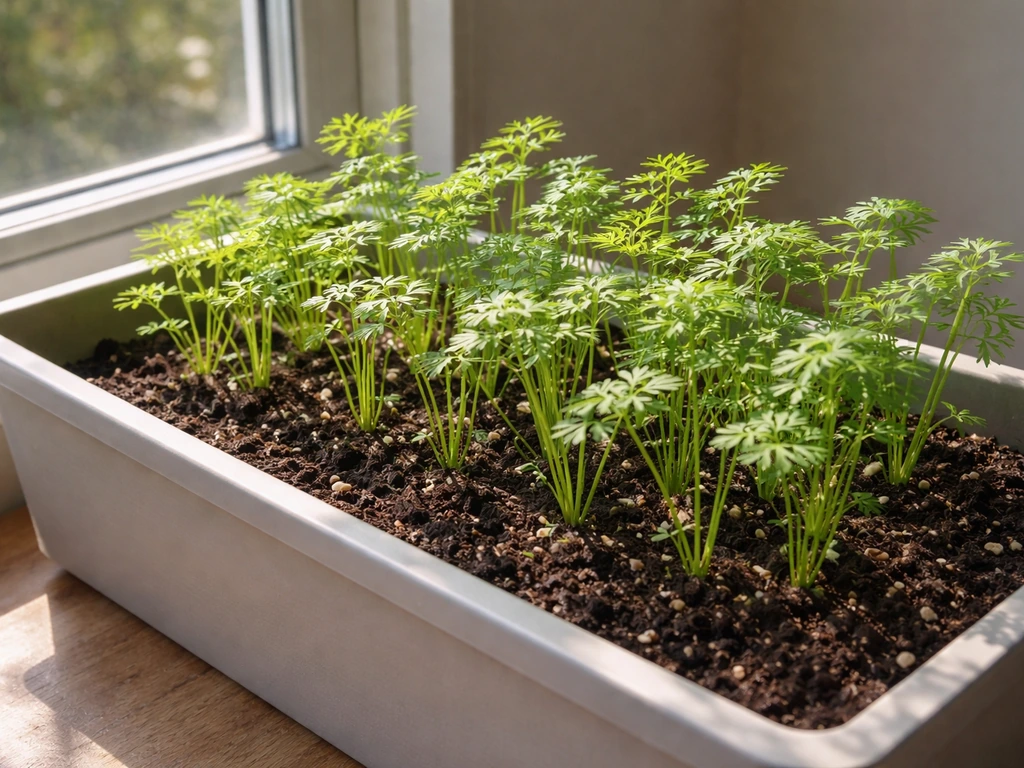
Carrots are classified as a full-sun vegetable. University of Maryland Extension puts the minimum at 6 hours of direct light per day, with 8 to 10 hours being the sweet spot for healthy tops and good root development. They will tolerate very light shade, which is good news for indoor growers, but "very light shade" is not the same as a dim apartment window. If light drops below that 6-hour threshold consistently, you'll see it in the plant: slow growth, weak foliage, and underwhelming roots.
The reason hours matter so much is that what plants actually care about is total daily light, not just intensity at any given moment. This concept is called Daily Light Integral (DLI), which is a measure of the cumulative light a plant receives over 24 hours. You can reach the same DLI with bright light for fewer hours, or slightly lower intensity light held for longer hours. For practical indoor growing, this means you have some flexibility: a moderately bright grow light running 14 to 16 hours can compensate for lower intensity compared to a blazing outdoor summer sun.
Seasonality matters too. In winter, even a south-facing window in a northern climate might only deliver 4 to 5 hours of usable light. That's below the minimum for carrots and is exactly when a grow light stops being optional and starts being essential. Spring and summer windowsill growing is a different story, especially if you're in a sun-rich climate.
Window vs. grow light: which setup actually works
Let's be honest about windows first. A bright south-facing window in summer can genuinely support carrots, especially if the light hits the container directly for most of the day. East or west-facing windows are borderline, typically delivering 3 to 5 hours of direct sun, which puts you below the ideal range. North-facing windows almost always fall short for carrots and will need grow light support no matter the season.
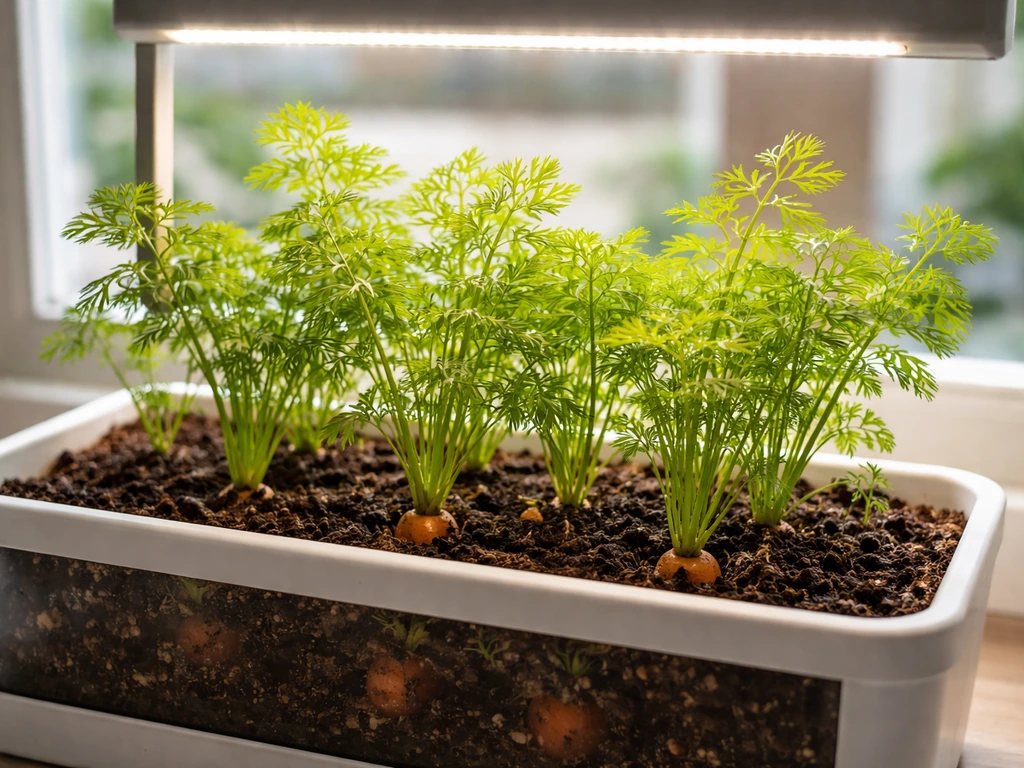
A dedicated LED grow light removes most of the guesswork. You set the timer, dial in the hours, and the plants get consistent light every day regardless of cloud cover, season, or window direction. For indoor carrot seedlings, aim for 12 to 14 hours of light per day under LED, which mirrors what University of Florida IFAS recommends for starting seeds indoors. As the plants mature, you can drop to 10 to 12 hours if your light is powerful enough.
| Setup | Light hours delivered | Best season | Verdict for carrots |
|---|---|---|---|
| South-facing window | 6–8 hrs (summer) | Late spring to early fall | Can work, but weather-dependent |
| East/west-facing window | 3–5 hrs direct | Summer only | Usually not enough on its own |
| North-facing window | 1–3 hrs indirect | Any season | Not suitable without grow lights |
| LED grow light only | Set to 12–16 hrs | Any season, any window | Most reliable indoor option |
| Window + LED supplement | 6–10 hrs combined | Year-round | Best of both worlds |
Choosing and positioning your grow light for carrots
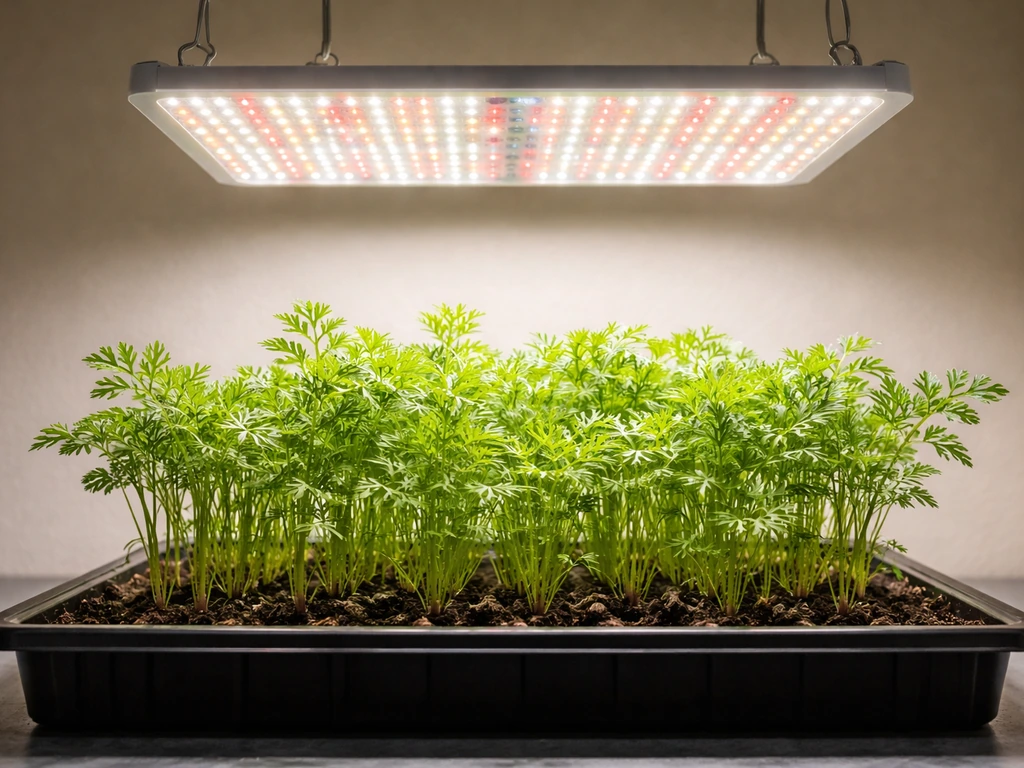
For root crops like carrots, you don't need an elaborate lighting rig. A full-spectrum LED panel that covers your container size and runs in the 200 to 400 PPFD range (micromoles per square meter per second) is plenty for the vegetative growth stage. PPFD is essentially a measure of light intensity, and for leafy, non-fruiting plants like carrot tops, you're in the lower-to-mid range of what grow lights can offer. You don't need a high-intensity flowering light, and you don't need to spend a fortune.
Distance from the light source to the plant canopy is the most underestimated variable. Light intensity drops off quickly as you move the fixture away from the plant, which is why most LED panels come with a recommended hanging height. As a general rule, most mid-range LED panels work well at 12 to 18 inches above the seedling canopy. Once your carrot tops are 4 to 6 inches tall, check that you're still within that range and adjust the light upward if needed to avoid bleaching the foliage.
- Choose a full-spectrum LED (red and blue wavelengths, or broad white spectrum) rated for the footprint of your container
- Hang or position the light 12 to 18 inches above the soil surface at germination, then adjust as tops grow
- Run the light for 12 to 14 hours per day for seedlings, 10 to 12 hours for established plants
- Use an outlet timer so light hours stay consistent, which matters more than most people realize
- If combining a window with a grow light, run the grow light during morning or evening hours to extend the day, not simultaneously at peak sun (though overlap won't hurt)
One thing worth noting for anyone also looking at growing other root crops indoors: peas, radishes, and most other vegetables follow similar logic when it comes to light intensity and daily hours. If you also want to grow radishes indoors, they similarly rely on providing enough light, but they can handle a bit more flexibility than carrots. Radishes are actually a bit more forgiving with light than carrots, so if you're testing the waters with indoor root vegetables, radishes are a good starting point.
What goes wrong when light isn't right
The most obvious sign of insufficient light is leggy, spindly tops. The carrot foliage shoots upward fast, looks pale or yellowish-green, and feels weak rather than sturdy. Iowa State Extension identifies poor light as a primary cause of this kind of spindly indoor seedling growth. The plant is stretching toward any available light source, burning energy it should be directing into root development.
Slow overall growth is the other common light-related symptom. If your carrots have been in a container for four weeks and barely look like they've moved, insufficient light is high on the suspect list, though not the only one. Check your watering habits and temperature too, since Iowa State Extension notes that excessive watering, high temperatures, and crowding can compound light issues and produce the same symptoms.
Forked or deformed roots are a separate problem that often gets blamed on light but is almost always a soil issue. According to University of Maryland Extension and UC IPM, forking happens when the developing root hits resistance: rocky soil, compacted mix, root-to-root contact with a neighbor plant, or damage from pests or overwatering. If your carrot tops look healthy but the roots come out twisted or forked, look at your soil and spacing first, not your light setup.
Practical steps to actually grow carrots right now
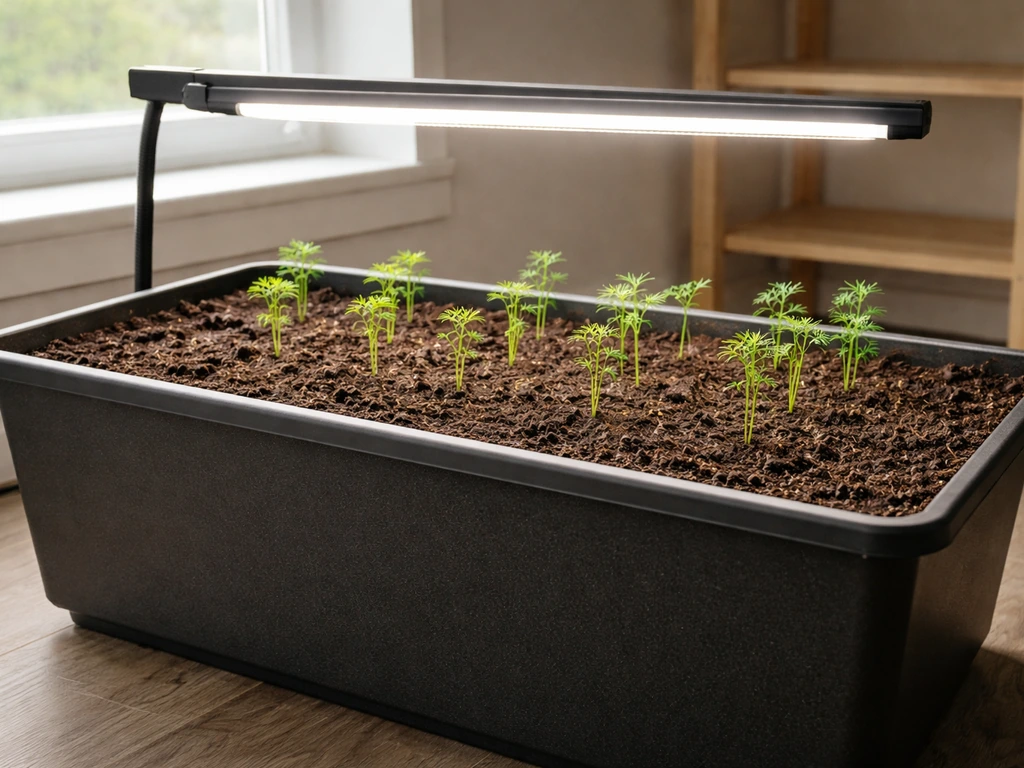
Light is only part of the equation. Here's what else you need to get right to grow carrots successfully in a container indoors.
- Use a deep container: carrots need at least 10 to 12 inches of soil depth. Shorter varieties like Chantenay or Danvers work better in containers than long Imperator types. Purdue Extension recommends a minimum of 10 to 12 inches for container vegetable growing, and for carrots you want to be at or above that.
- Fill with loose, well-draining potting mix: avoid any media with rocks, bark chunks, or heavy garden soil. Compaction is the enemy of straight roots. A quality potting mix or one blended with perlite works well.
- Sow seeds shallowly: carrot seeds are tiny and only need about a quarter inch of coverage. Direct sow them in the container; they don't transplant well.
- Thin ruthlessly: once seedlings are 1 to 2 inches tall, thin to 2 to 3 inches apart. Crowded carrots fork, compete for light, and produce small roots. This step is non-negotiable.
- Water consistently but don't overwater: keep the soil evenly moist, not soggy. Inconsistent watering leads to cracked or split roots. Bottom watering can help keep surface moisture more even.
- Keep temperatures cool: carrots prefer 60 to 70°F. A warm, stuffy grow space can slow germination and stress the plants. If your setup is near a window in winter, the cooler temps actually help.
- Be patient with germination: carrot seeds can take 14 to 21 days to sprout. Keep the soil moist and don't give up early.
How to tell you've got the light dialed in
When your light setup is working, the carrot tops will be a rich, deep green, compact and upright rather than stretched and floppy. New feathery foliage will appear consistently every few days. The stems at the soil line will be sturdy, not thin and pale. These are the signs that your plant is getting enough light and using it efficiently.
If you're seeing pale, stretched, or yellowish growth, the fastest fix is to move the grow light closer (staying within the manufacturer's recommended range) or to add a few more hours to the daily timer. If you're near a window and it's a cloudy stretch, supplement with LED for a week and see if the foliage color and posture improve. Changes usually show up within 7 to 10 days of adjusting the light.
- Deep green, feathery foliage that stands upright: good light
- Pale, yellowish, or stretched tops reaching toward the window: not enough light or light too far away
- Strong stems at soil level with no flopping: healthy light and watering balance
- Forked or stubby roots at harvest: check soil texture and spacing, not the light
- Slow germination beyond 21 days: check soil temperature and moisture before blaming light
Growing carrots indoors is genuinely doable, but it rewards people who get the light right from day one. A reliable LED on a timer, a deep container with loose soil, and consistent thinning will take you most of the way there. The light doesn't have to be sunlight, it just has to be enough. The light doesn't have to be sunlight, it just has to be enough not just sunlight.
FAQ
If I use a grow light, do carrots still need sunlight from a window?
Not necessarily. A properly set LED on a timer can supply the full daily light requirement. Window light can help reduce hours, but if your light schedule already targets the needed daily hours and intensity, you can run carrots entirely under the grow light.
How can I tell whether my window is giving “direct light” or just bright light?
Direct light means the sunbeam actually hits the container for at least part of the day. If the plant only receives sky brightness with no visible beam on the foliage, it often falls short of the “6 hours” threshold. An easy test is to mark the times when sunlight touches the pot, not when the room is generally bright.
What should I do if my carrots are stretching, but I’m already running the grow light 16 hours?
Stretching despite long hours usually points to insufficient light intensity or lights that are too far from the canopy. First, check that the fixture is within the recommended hanging height, then consider increasing intensity rather than just extending the timer.
Can I run my LED 24 hours a day to make up for low intensity?
For carrots, it’s better to avoid nonstop lighting. Use a consistent daily schedule (for example, 12 to 16 hours early on) so plants get a dark period, which helps keep growth more stable. If you need more light, adjust intensity and distance before going to 24 hours.
Do different carrot varieties need more or less sunlight indoors?
Most container-friendly carrot types follow the same general light needs because the key factor is total daily light. If you choose a longer-maturing or top-growing variety, plan on matching the same minimum daily light target, then monitor foliage color and growth rate to fine-tune hours.
How close should the grow light be, and how do I prevent bleaching?
Place the LED so the canopy stays within the manufacturer’s recommended distance, and recheck height as seedlings grow. If you see pale or scorched patches, raise the light slightly. If foliage stays dark green but growth is slow, lower the fixture within the safe range or increase run time.
Does light affect root shape, or is it only the greens?
Light mainly drives healthy tops, but it also influences root development indirectly. When carrots get too little light for long periods, roots often end up smaller and slower to mature, even if the foliage looks “alive.” For deformed or forked roots, soil resistance and spacing are the more common causes.
Are there other common reasons my indoor carrots look weak besides light?
Yes. Overwatering, high temperatures, and crowding can mimic light stress, leading to slow growth and pale foliage. If you suspect light, compare multiple days in a row, then also check moisture level, container size, and spacing between seedlings.
How long after adjusting the light will I see results?
Expect changes within about a week. Color and posture typically improve in 7 to 10 days if light is the main limiting factor. If nothing changes after that window, reassess distance, timer settings, and watering or temperature.
Does the Daily Light Integral concept mean I can mix window light and grow light freely?
Yes, as long as the combined daily light you deliver meets the carrot requirement. In practice, you can use the window for part of the day, then let the LED cover the rest, but be consistent. Track how many hours of direct sun the window actually provides, then set the grow light to cover the deficit.