
A money plant (pothos) does not need direct sunlight to grow, but it does need some form of light to stay healthy and put out new growth. Bright, indirect light is the sweet spot: think a few feet back from a sunny window, or near an east-facing window where morning sun comes in gently.
Does Money Plant Need Sunlight to Grow? Easy Guide
Marcus Hartley
11 May 2026
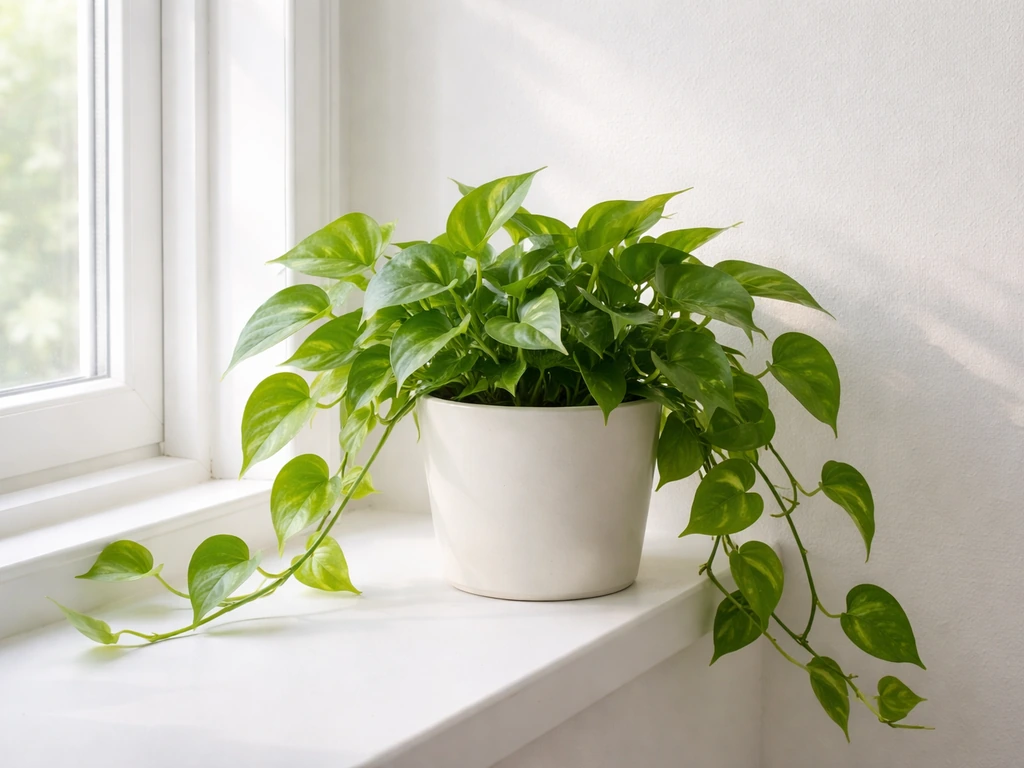
It can survive in genuinely low-light spots for months, but in very dim conditions it slows down dramatically, loses its leaf color, and eventually just lingers rather than grows. No light at all means no photosynthesis, which means no real growth. So the honest answer is: pothos is one of the most forgiving plants you can own when it comes to light, but 'can tolerate low light' is not the same as 'thrives in darkness. '
What light actually does for your money plant
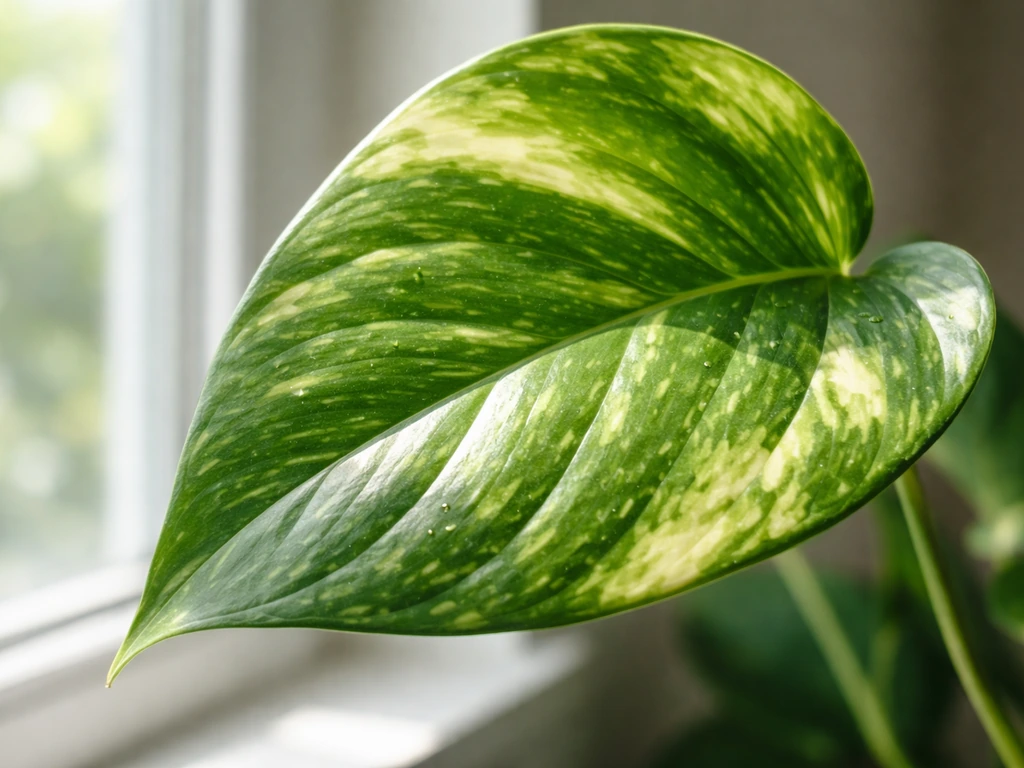
Pothos uses light to drive photosynthesis, the process that converts carbon dioxide and water into the sugars it needs to build new cells. Light is essential because plants use it for photosynthesis, which powers the growth process plants need light. More available light (up to a comfortable threshold) means faster growth, larger leaves, stronger stems, and better color, especially in variegated cultivars like Golden Pothos or Marble Queen.
When light drops below what the plant needs, it starts rationing energy: growth slows, new leaves come in smaller and paler, and those beautiful cream or yellow variegation patterns tend to fade back toward solid green. This is the plant trying to produce more chlorophyll to capture whatever light is available. It is a survival response, not a sign the plant is thriving.
Growing money plant in water: what changes with light
Growing pothos in water (sometimes called a hydro or soil-free setup) is genuinely easy and looks great in a clear glass jar on a shelf. The light rules do not change just because the plant is in water instead of soil. You still need to give it bright, indirect light to keep it actively growing. What does change is that the water-based setup introduces a few extra variables you need to manage alongside light.
- Place your water-grown cutting so the node (the bumpy joint on the stem where roots emerge) sits below the waterline, but keep leaves out of the water or they will rot.
- Use bright, indirect light, not a dark shelf or a window with full afternoon sun. Too much direct light on a glass vessel warms the water, stresses the roots, and accelerates algae growth.
- If you notice green algae building up inside the glass, scrub it off and switch to an opaque or tinted container to block some of that light from hitting the water directly.
- Change the water every two to three weeks to replenish oxygen and prevent stagnation, which can suffocate roots even if light is perfect.
- Add a diluted liquid fertilizer every four to six weeks. Soil provides a buffet of nutrients automatically, but water-grown plants rely entirely on what you add to the jar.
In low light, a water-grown pothos will root and survive but growth will be noticeably slower than a soil-planted one in a brighter spot. If you are starting cuttings in water specifically to propagate new plants, give them the best light you have while they root. Once you see a few inch-long roots developing, you can move them to their permanent (dimmer) spot if needed.
Low light and no-sunlight options: survival vs actual growth
Pothos is genuinely one of the better plants for low-light rooms. A useful rule of thumb from extension gardening guidance: if you can comfortably read a newspaper in the spot without turning on a lamp, that is enough light for a pothos to survive.
A useful rule of thumb from extension gardening guidance: if you can comfortably read a newspaper in the spot without turning on a lamp, that is enough light for a pothos to survive, and if you want a more specific answer for how much sunlight do plants need to grow, see the guide for sunlight requirements. This same idea also applies to space gardening, where people ask whether there is enough sunlight on Mars to grow plants.
That is a low bar, and survival is different from thriving, but it does mean pothos can handle spots that would kill most other houseplants.
In practice, 'low light' indoors usually means something like 500 lux or below at the plant's leaves. Bright indirect light near a window sits closer to 1,000 to 2,500 lux, sometimes higher. At the low end, your pothos will stay alive for a long time, but expect slower growth, smaller leaves, and gradual loss of variegation. University of Illinois Extension similarly notes that pothos [leaf color tends to disappear in low light](https://extension.
illinois. edu/houseplants/pothos) and that it is best grown in bright, indirect light. What it cannot handle is true zero-light conditions: a windowless bathroom with no artificial light, a storage room, or a deep interior hallway where no daylight reaches at all. In those spots, the plant will decline slowly over weeks and eventually die.
'Tolerates low light' does not mean 'grows in the dark. '
Direct sunlight: when it helps and when it hurts
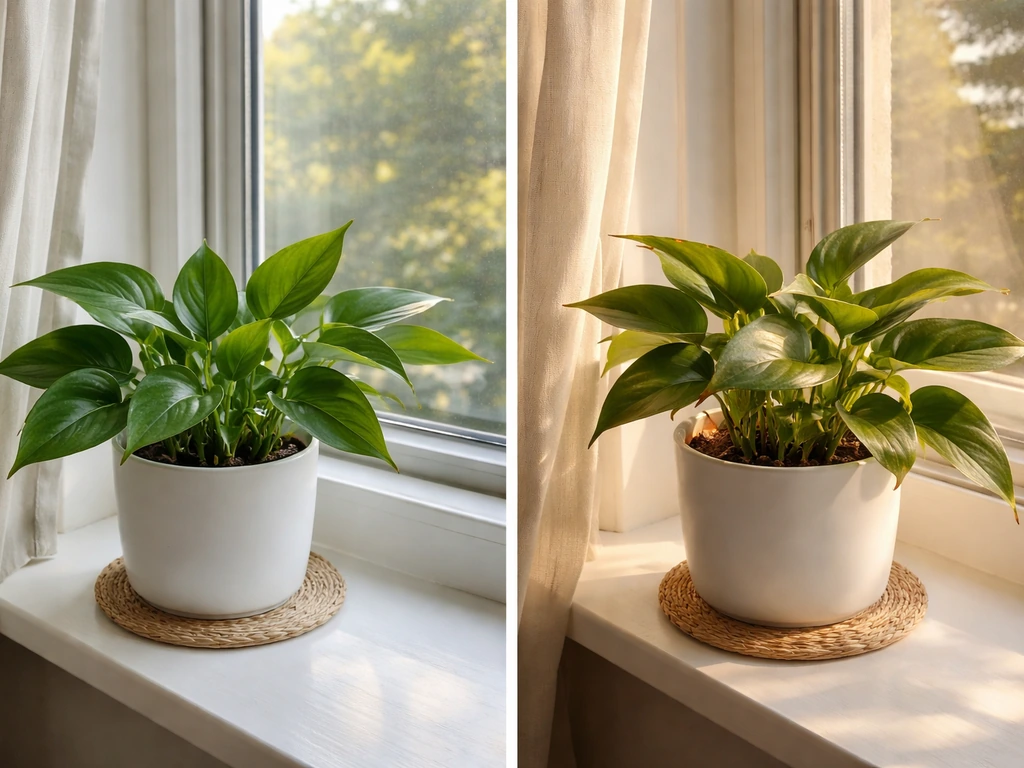
Here is where a lot of people get surprised: pothos does not handle direct sun well, especially the harsh afternoon sun through a south- or west-facing window. Direct sunlight can cause the leaves to yellow, which feels counterintuitive because you might associate yellowing with not enough light. But intense, direct sun is actually a stress response, and in worst-case scenarios you will see brown, papery patches on the leaves, which is leaf scorch from too much light intensity hitting the tissue at once.
A short burst of gentle morning sun, like from an east-facing window, is generally fine and can actually give your pothos a nice boost in growth and color. The problem is sustained, intense midday or afternoon sun. If your only window faces south and gets strong direct sun all day, pull the plant back two to three feet from the glass or filter the light with a sheer curtain. That simple change can take a struggling, sun-scorched pothos and turn it back into a happy, growing plant within a few weeks.
Where to put it and how much light to aim for
The best placement for a money plant is near an east- or west-facing window, close enough to get good ambient brightness but not in the direct beam of the sun. If you only have a south-facing window, step it back or use a sheer curtain. North-facing windows work, especially in summer, but in winter the light levels can drop low enough that you might want to supplement with a grow light.
| Window direction | Light quality | Ideal distance from glass | Expected growth |
|---|---|---|---|
| East-facing | Gentle morning sun, bright indirect rest of day | Right next to the window is fine | Active, healthy growth |
| West-facing | Strong afternoon sun | 1 to 3 feet back, or use a sheer curtain | Good growth, watch for scorch |
| South-facing | Strongest, most direct light all day | 3 to 5 feet back, or sheer curtain | Good growth if filtered properly |
| North-facing | Soft, consistent indirect light | As close to the window as possible | Slower but steady growth; supplement in winter |
One practical tip: pothos grows toward the light source, which means if you leave it in one spot all the time, it will get lopsided. Rotating the pot a quarter turn every week or two keeps the foliage growing more evenly on all sides.
When grow lights make sense and how to set them up
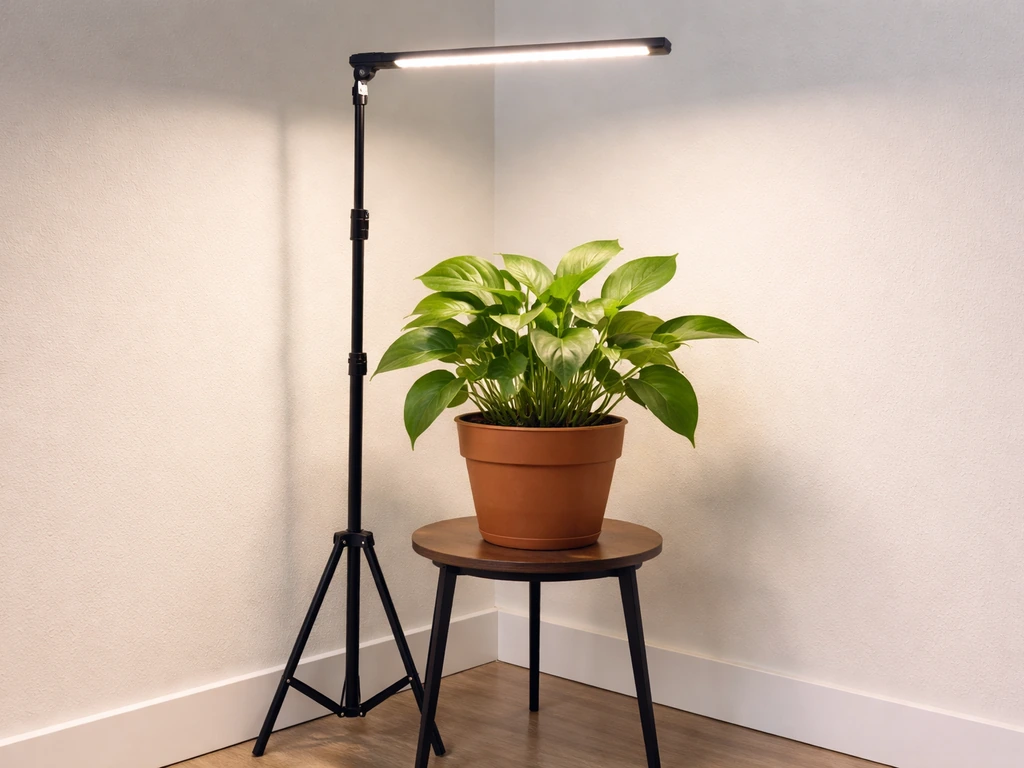
If you want to grow a pothos in a room with no natural light, or your windows just do not deliver enough light in winter, a simple LED grow light can absolutely do the job. You do not need anything fancy or expensive. For a low-to-moderate light plant like pothos, a basic full-spectrum LED panel or even a standard LED shop light on a timer is enough to keep it healthy.
For light intensity, you are aiming for a PPFD (the measure of photosynthetically active light hitting the leaf surface) of roughly 50 to 150 µmol/m²/s, which is similar to what you would get near an east- or west-facing window. You do not need a meter to hit this range: a mid-range LED grow light positioned 12 to 18 inches above the canopy for 12 to 14 hours a day will generally land in the right ballpark for pothos. Use a basic outlet timer so you are not relying on remembering to switch it on and off. Consistent light periods matter more than most people realize.
- Choose a full-spectrum LED grow light (one that covers both the blue and red wavelengths plants use most for photosynthesis and growth).
- Position the light 12 to 24 inches above the plant's leaves. Closer delivers more intensity; further back softens it. Start at 18 inches and adjust based on how the plant responds.
- Run the light for 12 to 14 hours per day using a timer. Pothos does not need a complex light schedule, just consistent daily exposure.
- You do not need a purpose-built grow light if you already have bright LED bulbs in a nearby lamp. A high-output LED bulb (around 800 to 1,000 lumens) positioned 12 inches above a pothos can provide meaningful supplemental light.
- If leaves start bleaching or looking washed out under the grow light, move it farther away. If the plant is still stretching toward it despite the light being on, move it a bit closer or increase the daily hours.
Artificial light works for pothos, and this is one of the most satisfying plants to grow under a grow light because the results are fast and obvious. Within two to three weeks of moving a dim-spot pothos under a grow light, you will typically see a new leaf unfurl, and the existing leaves will deepen in color. It is a quick win.
Signs your money plant is not getting enough light
The tricky part about diagnosing a light-starved pothos is that some of the symptoms overlap with overwatering or underwatering, so it is worth looking at the full picture before you make a change.
- Long gaps between leaves on a vine (called internode stretching or etiolation): this is the most reliable sign. The plant is literally reaching for more light, producing long, spindly stem sections between leaves.
- New leaves coming in noticeably smaller than older leaves on the same plant.
- Pale green or yellowing new growth (as opposed to yellowing on older lower leaves, which can be normal aging).
- Variegated leaves losing their pattern and turning mostly solid green.
- Very slow or no new growth over several weeks during spring or summer when the plant should be actively growing.
If you are seeing these signs, the fix is straightforward: move the plant closer to a light source, or add a grow light. Do not do both at once and also change watering habits simultaneously, or you will not know what worked. Make one change, give it two to three weeks, and see how the plant responds. Pothos bounce back quickly once they get the light they need, which is one of the reasons they are such a good plant for anyone still figuring out their space.
One more thing worth keeping in mind: if you have been curious about how much light all your plants actually need in general, or whether UV light specifically plays a role in plant growth, those are rabbit holes worth exploring separately. The principles behind why plants need light and how different light sources compare apply to your pothos just as much as any other houseplant, and understanding them makes it a lot easier to troubleshoot confidently when something looks off.
FAQ
Will a money plant survive in a windowless room if I run a light at night?
It can survive if the light actually reaches the leaves for enough hours each day. Use a timer, keep the grow light close enough (often 12 to 18 inches), and expect it to need 12 to 14 hours of illumination to maintain color and steady growth, not just occasional on-and-off light.
Is yellowing on pothos always a sign it needs more light?
Not always. Yellowing can come from too little light, but it can also be sun stress, especially near a south- or west-facing window. If the leaves also look scorched or develop brown, papery patches, move it back or behind a sheer curtain rather than moving it closer to the glass.
How far should I place my pothos from a south- or west-facing window to avoid leaf scorch?
A good starting point is two to three feet back, then adjust based on how intense the sun is in your home. If you notice crispening edges or pale, washed-out leaves after a few weeks, increase the distance or add filtered light with a sheer curtain.
If my pothos is variegated, does it require more light than a green pothos?
Yes, variegated types usually need brighter conditions to keep their pattern. In low light, Golden Pothos, Marble Queen, and similar cultivars often revert toward solid green, so give them brighter indirect light before increasing watering or fertilizer.
Should I rotate the pot less often than every week or two?
You can rotate more slowly, but weekly to every couple of weeks is a practical cadence. If you wait too long, the plant will become noticeably lopsided toward the light, and new growth may be concentrated on one side.
My pothos is growing, but slowly. How do I tell if it is just in low light versus truly unhealthy?
Look for ongoing new leaves, stable leaf texture, and no rapid decline. Low-light pothos typically grows slowly and may lose some variegation, but it should not keep deteriorating. If leaves are dropping steadily or the plant becomes limp, reevaluate light intensity, watering, and whether the light period is consistent.
Does pothos need a different lighting schedule when it is in water (hydro) versus soil?
The schedule stays basically the same, because the plant still needs light for photosynthesis. The extra factor with water is that poor light can make the plant root but not grow much above water, so prioritize bright indirect light while roots establish.
Can I use only artificial light for my pothos all year?
Yes, many people do. Keep the light duration consistent (commonly 12 to 14 hours), maintain the same distance from the canopy, and use an outlet timer so you do not accidentally create long dark stretches that slow growth.
What’s the fastest way to correct a light-starved pothos without causing new problems?
Change one variable at a time. Move it closer to bright indirect light or start a grow light, then wait two to three weeks before changing watering. This makes it easier to confirm that light was the real issue.
Is it better to increase light intensity or increase light hours for a pothos?
Start with a balance, then adjust gently. If the plant has been in dim light, adding hours with a timer often helps, but avoid sudden blasts of intense sun. With LEDs, keeping distance and using a steady daily schedule usually produces more consistent results than frequent, large intensity swings.