No, plants do not need UV light to grow. The short, practical answer is that photosynthesis runs on visible light, specifically the wavelengths between 400 and 700 nanometers that scientists call photosynthetically active radiation, or PAR. UV light sits below that range, and while it can influence how a plant develops, it is not the engine behind growth.
Do Plants Need UV Light to Grow? UVB vs PAR for Indoors
Marcus Hartley
21 Apr 2026
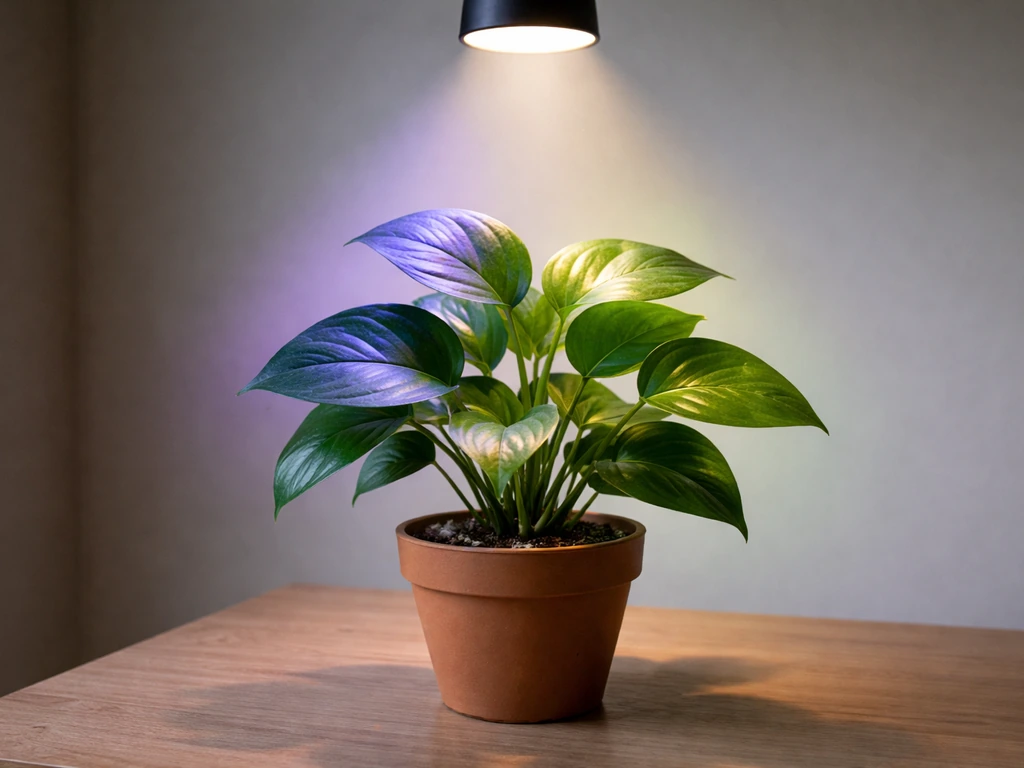
If your grow light, window, or fluorescent fixture puts out zero UV, your plants can still thrive, as long as they are getting enough of the right visible light at the right intensity and duration. In a science fair project, you can test whether plants grow better under visible light versus UV light while keeping other conditions the same still thrive.
That said, UV is not completely irrelevant, and depending on what you are growing, a little UVA or UVB can actually push quality in a useful direction. This guide breaks all of that down so you know exactly what your plants need, what they can live without, and how to set up your indoor space to get results.
UV vs. visible light: what plants actually run on
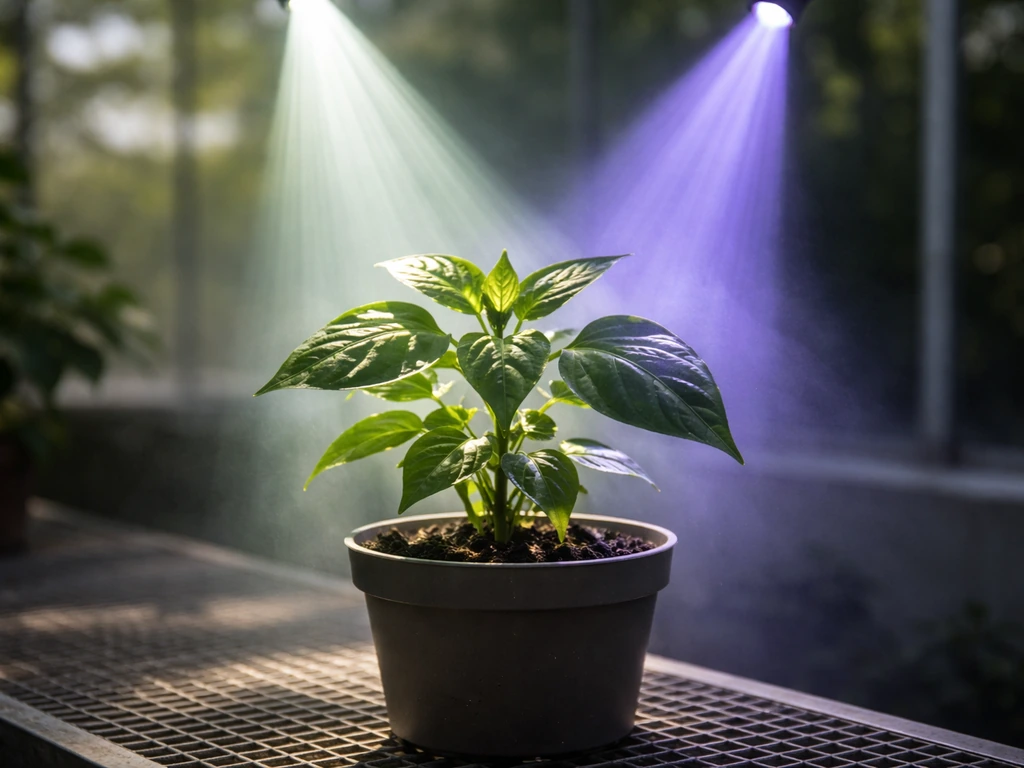
Sunlight contains the full electromagnetic spectrum, but plants are selective about what they use. Chlorophyll, the pigment that captures light energy for photosynthesis, absorbs most strongly in the red (around 660–680 nm) and blue (around 430–450 nm) ranges of visible light. The PAR range (400–700 nm) is what horticulturalists and researchers measure when they want to know how much useful light a plant is actually receiving. That is why grow light specs reference PPFD (photosynthetic photon flux density), which tells you how many of those PAR photons are landing on your plant per second per square meter.
UV light, on the other hand, sits below 400 nm. UVA runs roughly 315–400 nm and UVB from 280–315 nm. Neither wavelength drives photosynthesis in any meaningful way. What UV does instead is act as a signal. Plants have a specific UVB photoreceptor called UVR8, and when it gets activated, it can trigger gene expression changes that affect things like leaf thickness, pigmentation, and the production of secondary metabolites like flavonoids and terpenes. Think of UV as a quality dial, not a growth dial. More UV can mean more aromatic herbs, thicker succulent leaves, or more intensely colored flowers. But without any UV at all, the plant can still grow, flower, and fruit just fine.
The confusion often comes from the fact that sunlight delivers UV and visible light together. When people compare outdoor plants to their indoor counterparts and notice the indoor ones look a little leggier or less vibrant, they sometimes blame UV. Usually, the real culprit is insufficient PAR intensity, not missing UV. Sunlight is genuinely hard to match indoors.
Growing plants indoors without UV: what to focus on instead
Most standard indoor environments, whether lit by windows, LED grow lights, or fluorescent bulbs, provide little to no UV. And most common houseplants do perfectly well in those conditions. What they cannot do without is adequate PAR intensity, the right light spectrum, a consistent photoperiod, and light delivered at the right distance. Get those four things right and the absence of UV will not matter for the vast majority of plants you are likely growing.
Light intensity: hitting the right PPFD
University of Maine Extension research gives useful PPFD targets for common indoor plants. Succulents generally want a PPFD of 100–200 micromoles per meter squared per second, while herbs need 100–500 depending on variety. University of Maine Cooperative Extension’s houseplant guidance under artificial lighting lists PPFD targets of about 100, 500 µmol/m²/s for herbs and 100, 200 µmol/m²/s for succulents PPFD targets of 100–500 µmol/m²/s for herbs and 100–200 µmol/m²/s for succulents. Most low-light houseplants like pothos or snake plants are happy below 100. The key is matching your light source's output to the plant's actual needs, not just pointing any old lamp at it and hoping.
Duration: how long the light stays on
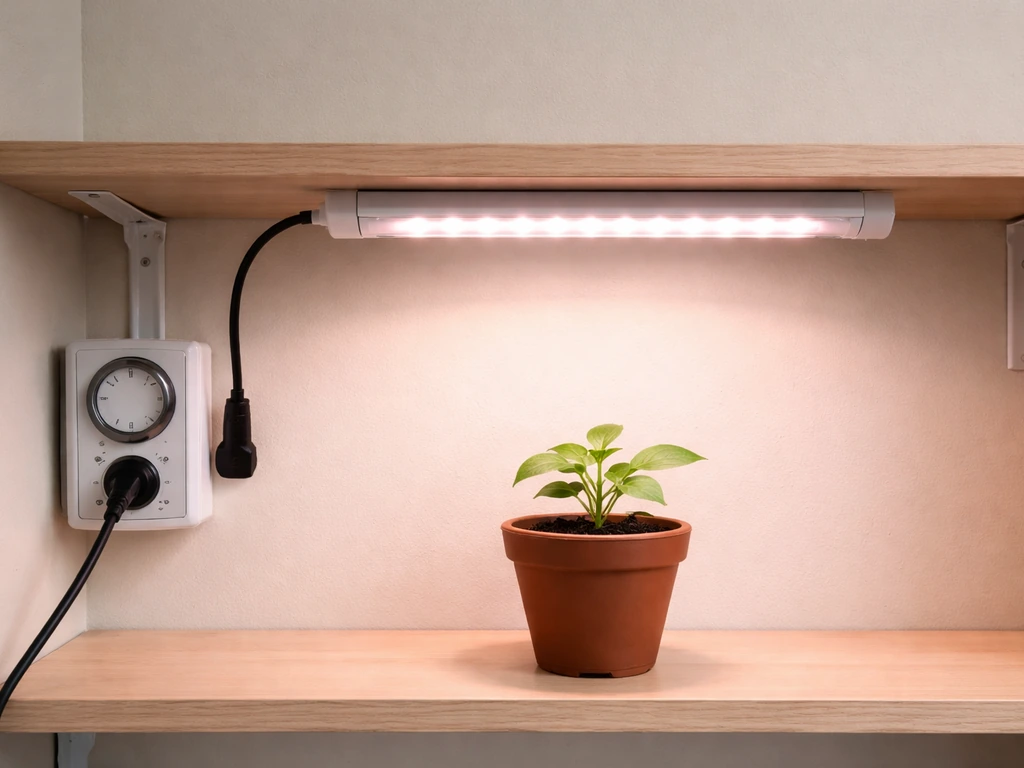
University of Missouri Extension recommends 16 to 18 hours of artificial light per day for plants that receive no outdoor light at all. That sounds like a lot, but it compensates for the lower intensity of most indoor fixtures compared to actual sunlight. If your plants get some ambient window light as well, you can trim that down. The total daily light dose, what researchers call the DLI or daily light integral, is what matters most for growth and flowering outcomes. In r/BudScience, the discussion explains DLI as a unit of mol/m²/day and how it is used to compare different lighting schedules to sunlight DLI or daily light integral.
Distance: closer than you think
UNH Cooperative Extension recommends keeping T8 fluorescent shop lights less than one foot away from plants and running them for approximately 22 hours per day to reach ideal DLI for sun-loving seedlings. That is closer than most beginners place their lights. Light intensity drops off fast with distance, so a fixture that looks bright from across the room may be delivering almost nothing to a plant sitting two feet below it. LED grow lights are generally more efficient, so they can often be placed a bit farther back, but check the manufacturer's PPFD chart for that specific fixture.
Do you actually need UVB? It depends on what you are growing
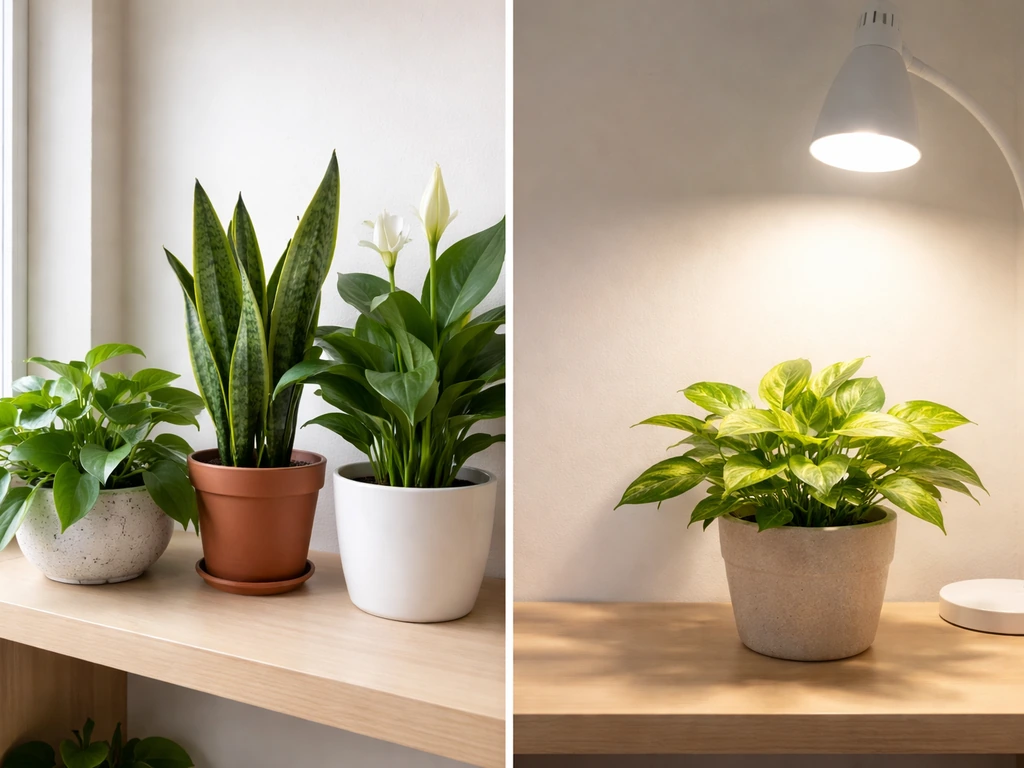
For most indoor plant parents, the honest answer is no, you do not need UVB. Here is a quick breakdown by plant type:
| Plant type | Needs UVB to grow? | Benefits from UVB? | What to focus on instead |
|---|---|---|---|
| Common houseplants (pothos, snake plant, peace lily) | No | Minimal | Consistent PAR light, correct photoperiod |
| Herbs (basil, mint, rosemary) | No | Slightly (more aroma, potency) | PPFD 100–500, 14–16 hrs/day |
| Succulents and cacti | No | Yes (compact growth, color) | PPFD 100–200, bright-white LED or full sun |
| Fruiting plants (tomatoes, peppers) | No | Possibly (flavor, secondary metabolites) | High PPFD, long photoperiod, red/blue spectrum |
| Cannabis / specialty crops | No, but noteworthy | Yes (terpenes, resin) | Full-spectrum LEDs with UV option |
Succulents are the one category where I would say UVB is genuinely interesting, not because they need it to survive, but because without it they can etiolate (stretch toward the light and lose their compact shape) or lose some of their stress-induced coloration. If you are growing succulents under artificial light and they keep getting leggy and pale, adding more visible light intensity is still the first fix to try. UVB is a secondary tweak for people who want exhibition-quality color.
With herbs, a small amount of UV exposure can boost the concentration of essential oils, which is why basil grown outdoors often smells more intense than basil grown under fluorescent lights. But your herb garden will produce plenty of perfectly usable leaves without any UV at all. Prioritizing the right amount of visible light is always the first move.
Signs your plants need more light (not more UV)
When plants are struggling indoors, UV deficiency is rarely the problem. Insufficient visible light is almost always the real issue. Here is how to tell what is actually happening:
- Etiolation (stretching, long internodes, leaning toward the light source): this is a classic low-PAR response, not a UV problem. Move the light closer or add a second fixture.
- Pale or yellowing leaves: often a sign of too little light or too little light combined with overwatering. Rule out watering issues first, then evaluate light intensity.
- Slow or stopped growth: could be low light, but also check temperature, fertilizer, and pot size before assuming it is a light issue.
- Leaves dropping or curling away from the light: usually too much heat from the fixture, not a spectrum problem.
- Leggy seedlings: almost always insufficient intensity or lights placed too far away. Not a UV issue.
- Washed-out or bleached coloration in succulents and colorful foliage plants: paradoxically, this can mean too much direct light intensity, not too little.
If you are seeing any of those symptoms, the fix is almost always adjusting your visible light setup: moving lights closer, increasing the photoperiod, switching to a higher-output bulb, or moving the plant to a brighter window. I have gone down the UV rabbit hole myself before realizing my sad little basil just needed to be two inches closer to the shop light. Simple fixes first, always.
Choosing the right grow light: LED, fluorescent, and full-spectrum
You do not need an expensive or specialized UV-emitting light to grow healthy plants indoors. Here is a practical comparison of the most common options:
| Light type | UV output | PAR efficiency | Best for | Approx. cost |
|---|---|---|---|---|
| T5/T8 fluorescent | Minimal to none | Moderate | Seedlings, herbs, low-light houseplants | Low ($20–$50) |
| Full-spectrum LED grow light | Minimal unless specified | High | Most indoor plants, versatile setups | Medium ($40–$150+) |
| Broad-spectrum LED (red/blue) | None | High (targeted) | Seedlings, flowering/fruiting plants | Low–Medium ($25–$100) |
| Full-spectrum LED with UV diodes | Yes (UVA/UVB) | High | Succulents, herbs, specialty crops | Higher ($100–$300+) |
| Metal halide / HID | Some UVA | High | Large indoor gardens, commercial use | High ($150–$500+) |
For most indoor plant parents, a quality full-spectrum LED grow light in the $40–$150 range covers everything you need. Look for lights that list their PPFD output at specific distances, not just wattage, since wattage alone tells you nothing useful about what the plant actually receives. A 45-watt LED that delivers 400 PPFD at 12 inches is far more useful than a 100-watt LED that delivers that same PPFD only at 6 inches and scorches anything placed that close.
Fluorescent shop lights are still a solid, budget-friendly option, especially for seedlings and herbs. They just need to be placed very close to the plant canopy, ideally under a foot, and run for longer hours to compensate for lower intensity. They are how I got started with indoor growing and they absolutely work. If you are using fluorescents and your plants look okay but not great, try moving the light closer before spending money on anything new.
If you are growing succulents that you want to keep compact and colorful, or you are growing aromatic herbs and want to maximize essential oil production, then a full-spectrum LED with dedicated UV diodes becomes worth the extra cost. But treat it as an upgrade for specific goals, not a baseline requirement.
It is also worth noting that understanding how much sunlight your plants ideally need, which varies significantly by species, is a helpful baseline before choosing any artificial light setup. On Mars, you would still need enough usable light for photosynthesis, even if UV is present. In other words, the best starting point is figuring out how much sunlight plants need based on their species so you can match it with the right light indoors how much sunlight your plants ideally need. Plants that naturally want a lot of direct sunlight will need higher PPFD from your fixtures, while low-light species are much more forgiving.
Do this today: your troubleshooting checklist
If you are worried your indoor setup is not giving your plants what they need, work through this list in order before assuming UV is the missing piece:
- Check your light distance. Is your grow light or fluorescent fixture within the recommended distance for that fixture? For fluorescents, that usually means under 12 inches. For LEDs, check the spec sheet.
- Check your photoperiod. Are plants getting 14–18 hours of light per day if they have no access to outdoor light? Set a timer if you have not already.
- Match the PPFD to the plant. Low-light houseplants need under 100 PPFD, herbs need 100–500, succulents need 100–200. If you do not have a light meter, use the manufacturer's listed PPFD at your current placement distance as a rough guide.
- Rule out other problems first. Yellowing, drooping, and slow growth can all come from overwatering, underwatering, pests, or nutrient deficiency. Check roots and soil moisture before blaming the light.
- Evaluate your light spectrum. Most full-spectrum LEDs and fluorescents cover the PAR range well. If you are using a single-color LED (only red or only blue), consider upgrading to something that covers both ends of the visible spectrum.
- Decide if UV is actually relevant for your goals. If you are growing common houseplants or standard herbs, UV is not your issue. If you are growing succulents for color or specialty crops for potency, then look into LEDs with UV diodes as a deliberate upgrade.
- Adjust one variable at a time. Move the light closer for one week and observe. Then adjust duration. Changing everything at once makes it impossible to know what actually helped.
The bottom line is that UV light is an interesting bonus for specific plant goals, not a requirement for growing healthy plants indoors. Focus your energy on delivering consistent, well-placed, adequately intense visible light with the right photoperiod, and the vast majority of indoor plant problems will sort themselves out without ever touching the UV question.
FAQ
If my grow light says it has “UV,” do I still need to worry about PPFD and DLI?
Yes. Any “UV” feature is usually a quality or secondary effect, not the main driver of growth. Plants still rely on PAR (400 to 700 nm), so you should choose lights and placement based on PPFD at your target distance and then ensure your daily light integral (DLI) is adequate.
Can I add UVB to improve growth, or is it safer to avoid UV entirely indoors?
UVB can be a useful “tweak” for certain goals, like more compact succulent growth or stronger stress-related pigmentation, but it can also increase plant stress and leaf damage if the dose is too high. If you want to experiment, start with minimal exposure and prioritize improving PAR intensity and photoperiod first.
Do seedlings need UV light, or only stronger visible light?
Seedlings generally do not need UVB to grow. Focus on stable, high enough PAR intensity and a sufficient photoperiod (especially if they are not near a window). If seedlings are stretching or pale, the fastest fix is bringing the light closer and/or increasing daily light dose.
Will lack of UV make plants more “leggy,” or is it usually something else?
Legginess indoors is usually from insufficient PAR intensity or an incorrect light schedule (too short a photoperiod or lights placed too far away). Missing UV may affect coloration or secondary metabolites for some species, but stretching is far more often a measurable light intensity problem.
Is UV harmful to indoor plants, especially from strong “sunlamp” bulbs?
It can be. Some UV-emitting bulbs, particularly if used too close or for too long, may cause bleaching, spotting, or hardened, stressed growth. If you use any UV-emitting light, treat distance and time like dosing variables and do not assume “more UV” is always better.
Do houseplants and herbs respond the same to UV compared with succulents?
No. Succulents are the most likely to show noticeable compactness or color changes from UVB-like signals, while many herbs produce perfectly usable leaves without UV. For herbs, the bigger levers for leaf quality and flavor are usually visible light intensity, cultivar, nutrients, and harvest timing.
What should I check first if my plants look dull or not as vibrant indoors?
Check light intensity and distance first (PPFD at the leaf), then verify the photoperiod and total daily light dose. Only after those are corrected should you consider whether UV is relevant for your specific plant goal, because most “vibrancy” issues are PAR-related.
If I have natural window light, do I still need artificial UV or special bulbs?
Usually no. Window light already provides visible light for photosynthesis, and most setups lack meaningful UV exposure anyway. If growth is slow, the fix is typically supplementing PAR with a grow light and positioning plants to get more usable light rather than chasing UV.
How can I tell whether my light setup is failing from PAR shortage versus UV absence?
Do a controlled change: improve PAR first by moving lights closer, increasing runtime, or switching bulbs, while keeping everything else stable (watering, nutrients, temperature). If the plant rebounds with stronger visible light, UV absence was not the limiting factor.
Are “full-spectrum” LEDs the same as UV lights?
Not necessarily. Full-spectrum generally refers to visible wavelengths, even if the label is marketing-heavy. To know whether UV is present, check whether the product specifies UV output, but still rely on PAR-based specs like PPFD at distance for growth decisions.