
Duckweed cannot grow without light, and it will not survive long in complete darkness either. It is a photosynthetic plant, which means light is not optional, it is the engine behind every bit of growth you will ever see from those tiny green fronds. That said, 'no light' and 'low light' are very different situations, and understanding the difference is what actually helps you fix the problem today.
Can Duckweed Grow Without Light? Low-Light Survival Guide
Marcus Hartley
15 May 2026
Duckweed basics: does it need light to live or to grow
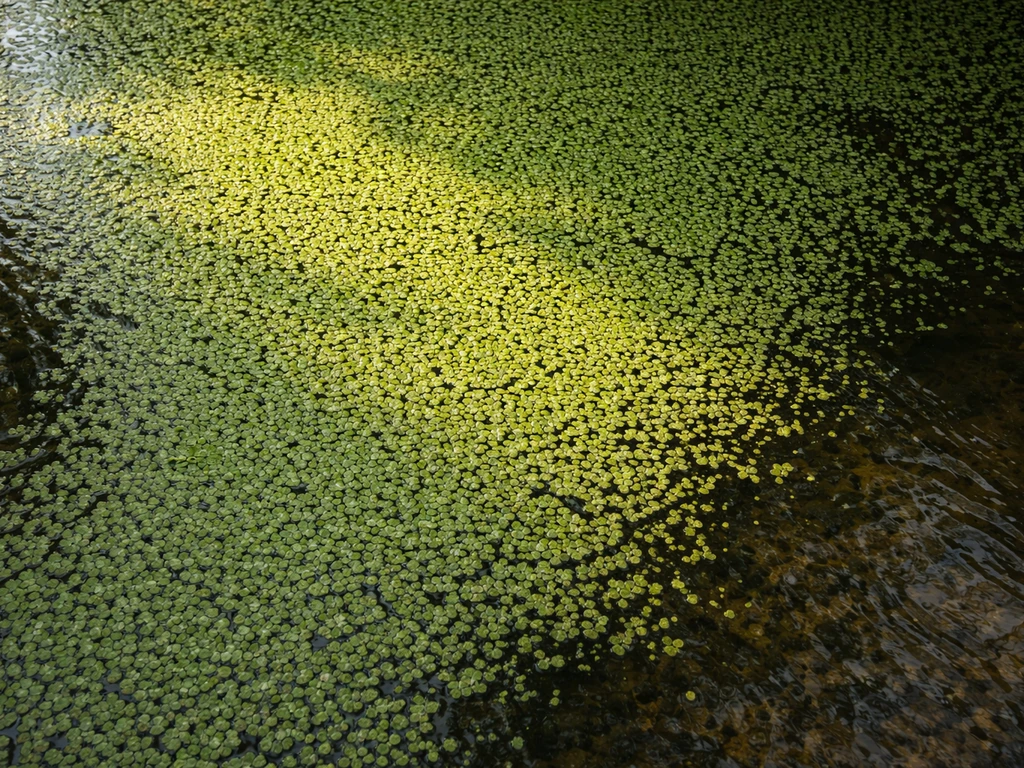
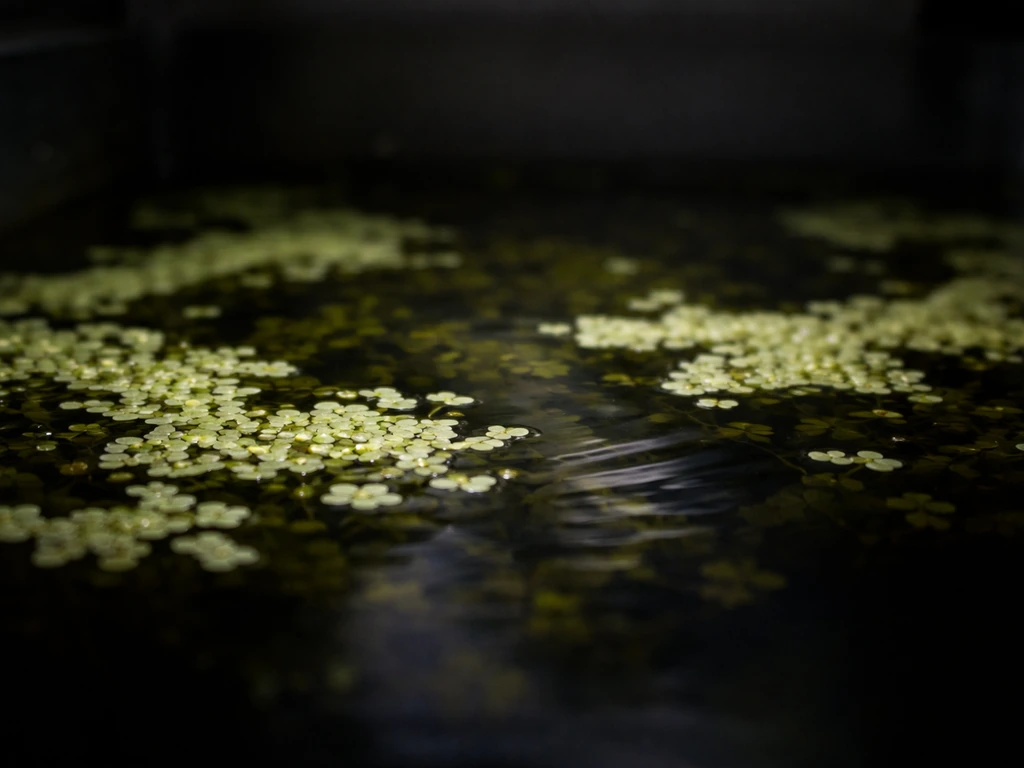
Duckweed is a flowering aquatic plant, most commonly from the genera Lemna, Spirodela, and Wolffia. Despite its reputation as a tough, fast-spreading pond plant, it is entirely dependent on photosynthesis. Without light, it cannot convert water and CO2 into the sugars it needs to grow, reproduce, or even maintain itself. Think of it like any other green plant: the chlorophyll in its fronds is there for one reason, to capture light and turn it into energy.
What makes duckweed interesting is that it does have a built-in survival trick. Some species, particularly Spirodela polyrhiza, can form dormant structures called turions, basically little starch-packed buds that sink to the bottom and wait out harsh conditions. But here is the catch: turions do not germinate in complete darkness. blank" rel="noopener noreferrer">Light is a required trigger for dormancy to break and growth to resume. So even the plant's survival strategy depends on light eventually returning.
For indoor aquarists and gardeners, the practical takeaway is this: duckweed is not a shade plant, and it is definitely not a dark-tank plant. It thrives in bright conditions and tolerates partial shade, but anything below a useful light threshold just leads to slow decline.
What 'no light' means in practice
When people ask whether duckweed can grow without light, they usually mean one of a few different real-world situations. A tank in a windowless basement is genuinely dark. A tank across the room from a window gets some ambient room light. A tank near a north-facing window gets indirect daylight. These are all very different from a duckweed perspective, even though none of them feel particularly 'bright' to you.
True darkness, meaning a tank or container that gets essentially zero light, is fatal for duckweed given enough time. So if you are trying to keep duckweed without meaningful light, plan on it failing over time can weed grow without light. blank" rel="noopener noreferrer">Research on Lemna minor kept in the dark shows that while chlorophyll and key proteins like RuBisCO can stay relatively stable for up to about 8 days, there is no growth happening and selective protein degradation begins. Beyond that window, the plant starts to deteriorate. In my experience, duckweed in a genuinely dark spot starts looking pale and sparse within a week or two, and it does not bounce back well once it has gone downhill.
Dim ambient room light, the kind you get from overhead bulbs or light coming in from a distant window, is a gray zone. It might keep a small amount of duckweed barely alive for a while, but it is not enough to support real growth. The plant will stagnate, fronds may yellow, and you will see no doubling of the colony the way healthy duckweed does.
How duckweed performs across different light levels
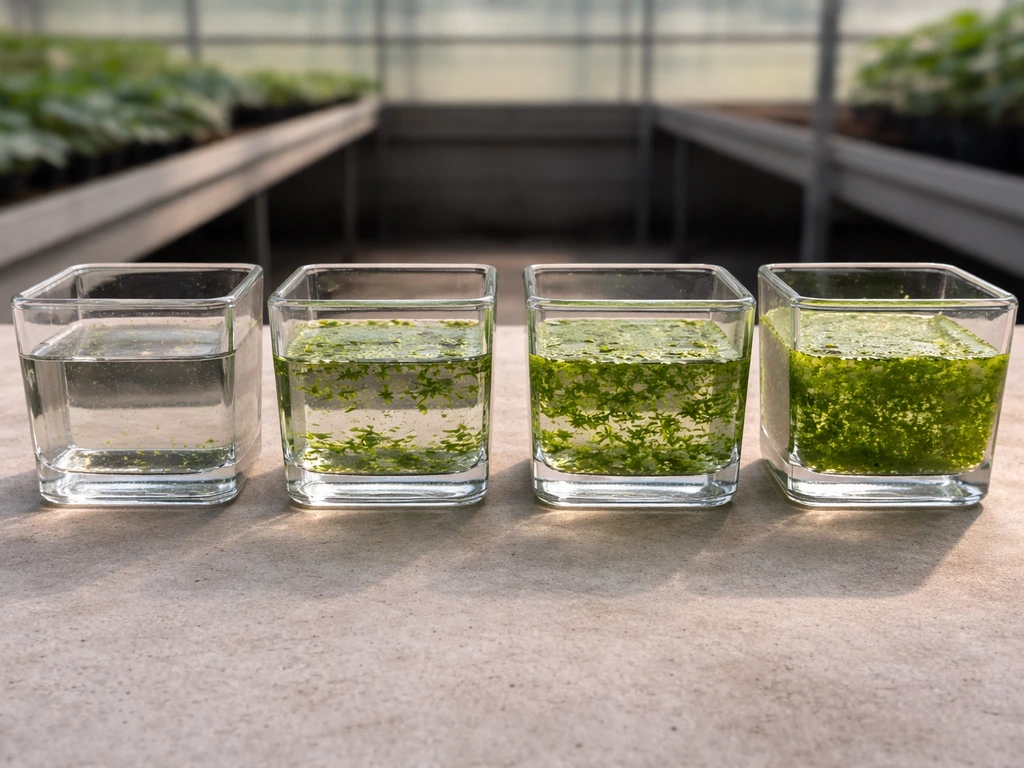
Here is an honest breakdown of what to expect at different light levels. Light for plants is measured in PPFD (photosynthetic photon flux density), expressed in micromoles per square meter per second (µmol m⁻² s⁻¹). This is more useful than lux for plant work because lux is weighted for human vision, not plant photosynthesis.
| Light Situation | Approx. PPFD | What Duckweed Does |
|---|---|---|
| Complete darkness | 0 µmol m⁻² s⁻¹ | Survives a few days, then declines; no growth at all |
| Dim room light / far from window | 1–10 µmol m⁻² s⁻¹ | Barely survives; no meaningful growth; fronds may yellow |
| Indirect window light / bright room | 10–40 µmol m⁻² s⁻¹ | Minimal survival; very slow or no net growth |
| Low grow light / close indirect sun | 50 µmol m⁻² s⁻¹ | Growth begins but is slow; protein content and chlorophyll are affected |
| Moderate grow light | 100 µmol m⁻² s⁻¹ | Decent growth rate; viable for indoor cultivation |
| Good grow light | 150 µmol m⁻² s⁻¹ | Strong growth; close to optimized indoor cultivation conditions |
Research testing Lemna minor and Wolffiella hyalina under controlled indoor lighting found that increasing light intensity from 50 to 150 µmol m⁻² s⁻¹ directly increased the relative growth rate. Interestingly, low light does not just slow things down, it actually changes the plant's physiology. Chlorophyll a decreases at higher intensities (the plant adjusts), and protein composition shifts. So 'a little light' is not just a slower version of good light; it is a different metabolic state entirely.
The minimum light duckweed needs to actually grow
If you want duckweed to grow, not just hang on for dear life, aim for a PPFD of at least 50 µmol m⁻² s⁻¹ at the water surface, and ideally closer to 100–150 µmol m⁻² s⁻¹. For reliable growth, you should provide a photoperiod of light and aim for at least about 50 µmol m⁻² s⁻¹ at the water surface does weed need light to grow. One feasibility study on indoor Lemna minor cultivation recommended 110 µmol m⁻² s⁻¹ under continuous light as a baseline for reliable culture. For a home setup with a standard LED grow light on a timer, 100–150 µmol m⁻² s⁻¹ over a 16-hour photoperiod is a solid target.
On photoperiod: you might think running your grow light 24 hours a day would maximize growth, but the research actually suggests otherwise. Studies on indoor duckweed cultivation found that a 16-hours-on, 8-hours-off schedule outperformed continuous 24-hour light in some cases. Duckweed, like most plants, benefits from a rest period. It is not just about total daily light, timing and rhythm matter too.
How to measure the light in your setup
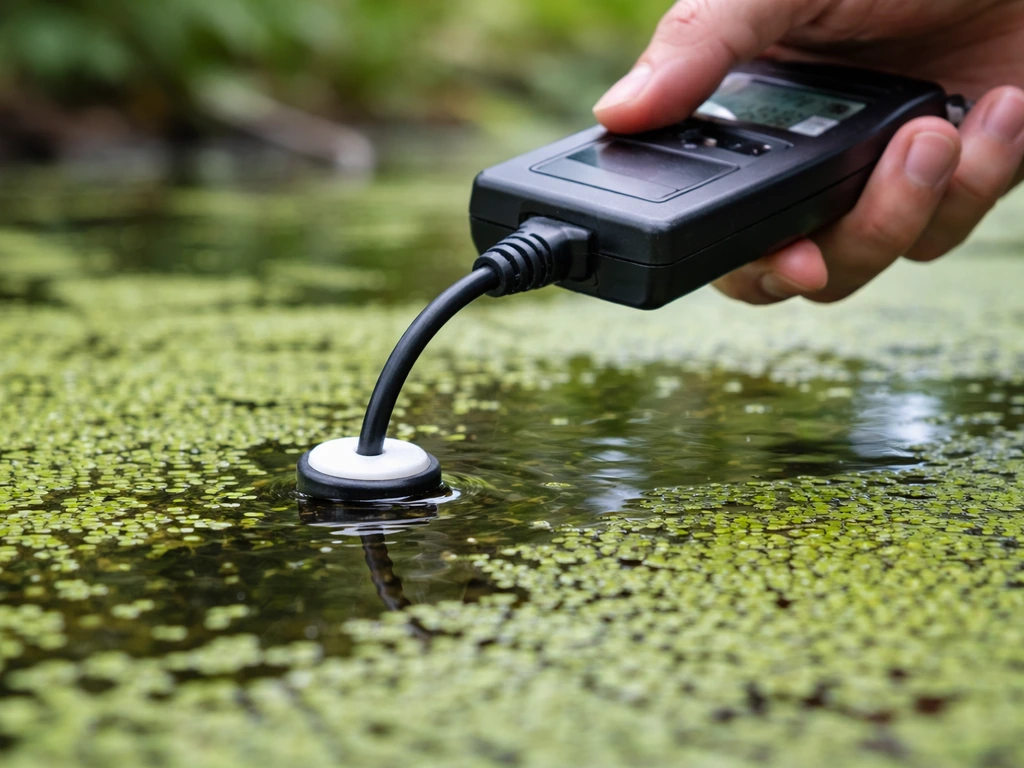
The most reliable way to check your light levels is with a PAR meter (also called a quantum sensor). You hold it at the water surface where your duckweed floats and get a direct PPFD reading in µmol m⁻² s⁻¹. Entry-level PAR meters are available for around $30–60 and are genuinely worth it if you are serious about indoor plant growing.
A word on smartphone lux apps: they are not reliable for this purpose. Phone camera sensors are not calibrated for plant-relevant light measurement, and lux itself is a human-vision metric rather than a plant-photosynthesis one. Converting lux to PPFD requires knowing the exact spectrum of your light source, and that conversion is not straightforward. If you are troubleshooting a real duckweed problem, skip the phone app and either get a basic PAR meter or compare your setup against the known output specs of your grow light.
Quick troubleshooting: check your setup today
If your duckweed is struggling, yellowing, thinning out, or just not spreading the way it should, work through this checklist before assuming something is wrong with the plant itself.
- Measure or estimate your actual light level: Use a PAR meter at the water surface. If you do not have one, check the specs of your grow light and the manufacturer's PPFD chart at the distance you have it mounted. Anything under 50 µmol m⁻² s⁻¹ is likely too low for growth.
- Check how many hours your light is on: Duckweed needs at least 12–16 hours of light per day to grow well. If you are relying on a window, check how many actual direct or bright-indirect light hours it gets, not just whether the room looks light.
- Look at the distance between your light source and the water: PPFD drops off quickly with distance. A grow light that delivers 150 µmol m⁻² s⁻¹ at 6 inches might only deliver 40–50 µmol m⁻² s⁻¹ at 18 inches. Bring the light closer or raise your tank.
- Check the spectrum of your light: Duckweed, like most plants, responds to red and blue wavelengths. A standard warm white incandescent bulb or a decorative LED is not the same as a grow-spectrum LED. Full-spectrum or red/blue grow lights work much better.
- Rule out other stressors: Once light is addressed, check water temperature (duckweed prefers 63–86°F / 17–30°C), nutrients, and whether the water is stagnant or has too much surface agitation (which can damage fronds).
- Give it a few days after improving light: Duckweed that has been light-starved may take 3–5 days to visibly respond once conditions improve. Do not immediately assume the fix is not working.
The best light solutions for growing duckweed indoors
If you are growing duckweed in a tank or container indoors, an LED grow light is genuinely the most practical solution. If you do not have a grow light, standard light bulbs usually do not put out enough PPFD for reliable duckweed growth grow light is genuinely the most practical solution. Here is how to set one up well.
Choosing the right LED
You do not need an expensive commercial grow light. A mid-range full-spectrum LED panel rated for aquariums or small indoor gardens will work. Look for one that specifies at least 100 µmol m⁻² s⁻¹ PPFD output at your intended mounting distance. Red and blue spectrum LEDs are effective, but a balanced full-spectrum (white) LED that covers 400–700 nm PAR range works well and is easier to find at low cost.
Placement and distance
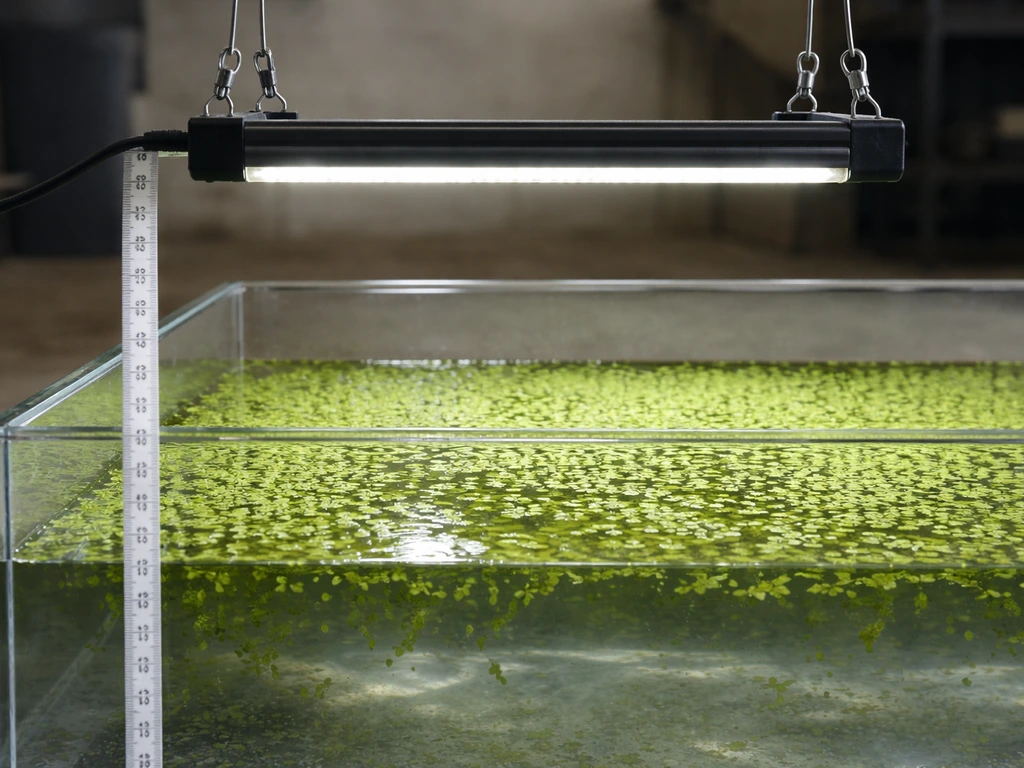
Mount your light 6–12 inches above the water surface as a starting point, then measure or estimate PPFD. Most small grow lights hit their rated output at a fairly short distance, so do not hang them too high. If the light is too intense (which is unlikely in most home setups but possible), duckweed will show signs of stress like whitening of fronds at the surface.
Photoperiod and timers
Set your light on a 16-hour on, 8-hour off schedule. A simple plug-in outlet timer costs a few dollars and removes the guesswork entirely. Avoid 24-hour continuous light, which research suggests is not optimal for duckweed and wastes energy. Consistent timing also helps if you have other plants or fish sharing the setup.
What if you cannot use a grow light?
If a grow light is truly not an option, place your container as close as possible to a south- or east-facing window that gets at least a few hours of direct or bright indirect sunlight daily. Bright indirect window light can occasionally get into the 50–100 µmol m⁻² s⁻¹ range close to the glass on a sunny day, which is marginal but workable. That said, if your space genuinely gets very little natural light and you cannot add artificial light, duckweed is probably not the right plant for that spot. In that case, you are better off switching to something genuinely shade-tolerant rather than fighting a losing battle.
Common myths worth clearing up
- "It's a pond plant, so it must be tough enough for a dark tank." Outdoor ponds get enormous amounts of light, often thousands of µmol m⁻² s⁻¹ on a sunny day. A dark indoor tank is nothing like a pond. The 'tough' reputation comes from duckweed's ability to grow fast and spread in good conditions, not its ability to survive darkness.
- "A little light is better than nothing, so dim room light should be fine." It is marginally better than zero, but dim ambient room light (typically under 10 µmol m⁻² s⁻¹) is not enough to sustain growth. The plant may limp along for a while, but it will not thrive and will likely decline.
- "If I add more nutrients, it will compensate for less light." Nutrients support growth, but they cannot replace the photosynthesis process. Without light, duckweed cannot use the nutrients anyway. Extra fertilizer in a dark tank just feeds algae.
- "Any colored light bulb works." Standard incandescent or warm decorative LEDs do not deliver meaningful PAR output. You need a light source that emits in the photosynthetically active range (400–700 nm) at adequate intensity.
Should you keep your duckweed or switch to something else?
If your setup can support at least 50–100 µmol m⁻² s⁻¹ of PAR for 14–16 hours a day, either through a window or an LED grow light, duckweed is absolutely worth keeping. It grows fast, oxygenates water, absorbs nutrients, and is genuinely satisfying to watch once it takes off. Add a simple timer and a decent grow light, and you will have a thriving colony within a couple of weeks.
If your space is truly dim or dark, and adding a grow light is not practical, be honest with yourself about the mismatch. Duckweed is not going to be the plant that proves the rule. There is no workaround for photosynthesis. In that case, look for genuinely low-light aquatic plants that can manage on ambient room light, and save duckweed for a spot in your home where you can actually give it what it needs.
FAQ
How long can duckweed survive in complete darkness before it dies?
Expect decline within days, and death over a couple of weeks. In dark conditions, turions can persist as dormant buds, but they do not resume unless light returns, so the colony will not recover into steady growth once it starts degrading.
If my duckweed looks pale or sparse, is it always a light problem?
Not always. Low light is common, but poor water quality (low dissolved CO2, nutrient imbalance), overcrowding from thick mats, or shading from algae can also reduce new frond production. If you fix light and the colony still thins, check nutrients and clear surface films so light actually reaches the fronds.
Can duckweed grow under “moonlight” or infrared lighting?
Moonlight-like levels are far below what duckweed needs for photosynthesis, so it will only survive briefly at best. Infrared-only sources do not drive photosynthesis because chlorophyll responds to PAR wavelengths (about 400 to 700 nm), so “warm” or IR lighting will not substitute for proper light.
Is it enough to leave a normal room bulb on nearby, even if the tank is not in the light beam?
Often no. Household bulbs usually produce too little PPFD at the water surface, especially if the tank is several feet away. If you cannot measure with a PAR meter, assume standard lighting is marginal and upgrade to an LED grow light aimed at the water surface.
What PPFD should I target for duckweed specifically, and how do I measure it correctly?
A practical target for growth is at least 50 µmol m⁻² s⁻¹ at the water surface, ideally 100 to 150 µmol m⁻² s⁻¹. Measure at the water level where the fronds sit, not at desk height, and repeat the reading after you change the light height or distance.
Does duckweed need darkness at all, or will it grow faster with 24/7 light?
Duckweed benefits from a rest period. Continuous lighting can be less effective than a timed cycle (for example, 16 hours on, 8 hours off), and it also increases heat and energy costs. Use a timer so the light rhythm stays consistent day to day.
Can I grow duckweed in a tank with a lid or strong tank cover?
A lid can reduce PPFD significantly depending on material and thickness. If you must use a cover for fish safety or evaporation control, leave it transparent where possible and re-check PPFD after installing it, since even small losses can push you below the 50 µmol m⁻² s⁻¹ threshold.
Will duckweed’s turions let it “wait out” a dark period and then bounce back?
Turions can help survival during harsh conditions, but they require light to break dormancy. If your setup goes dark for long enough that fronds degrade, you may see slower regrowth or a smaller recovery, so treat light interruptions as something to minimize.
If I increase light intensity, can duckweed overheat or get stressed?
Yes, too much intensity can cause surface stress such as whitening or bleaching of fronds. If you move to a stronger LED, raise it slightly first, then dial down by adjusting height or using dimmer control, and re-measure PPFD at the water surface.
What can I plant instead if my space stays genuinely dim and I cannot add a grow light?
If your tank reliably falls below the 50 µmol m⁻² s⁻¹ range, duckweed is a poor match. Consider aquatic options that tolerate low light better, and prioritize species with slower growth needs so you are not constantly fighting the lighting mismatch.