
Yes, most seeds can germinate in complete darkness, and many actually do better without light during that early sprouting phase. The catch is that once the seedling pushes up and unfurls its first leaves, darkness becomes a problem fast. So the short version: dark for germination is usually fine (and sometimes preferred), but you need to get seedlings under light quickly after they emerge, or they'll go leggy and weak within days.
Do Seeds Grow in Darkness? Indoor Germination Guide
Marcus Hartley
3 May 2026
Can seeds germinate in darkness
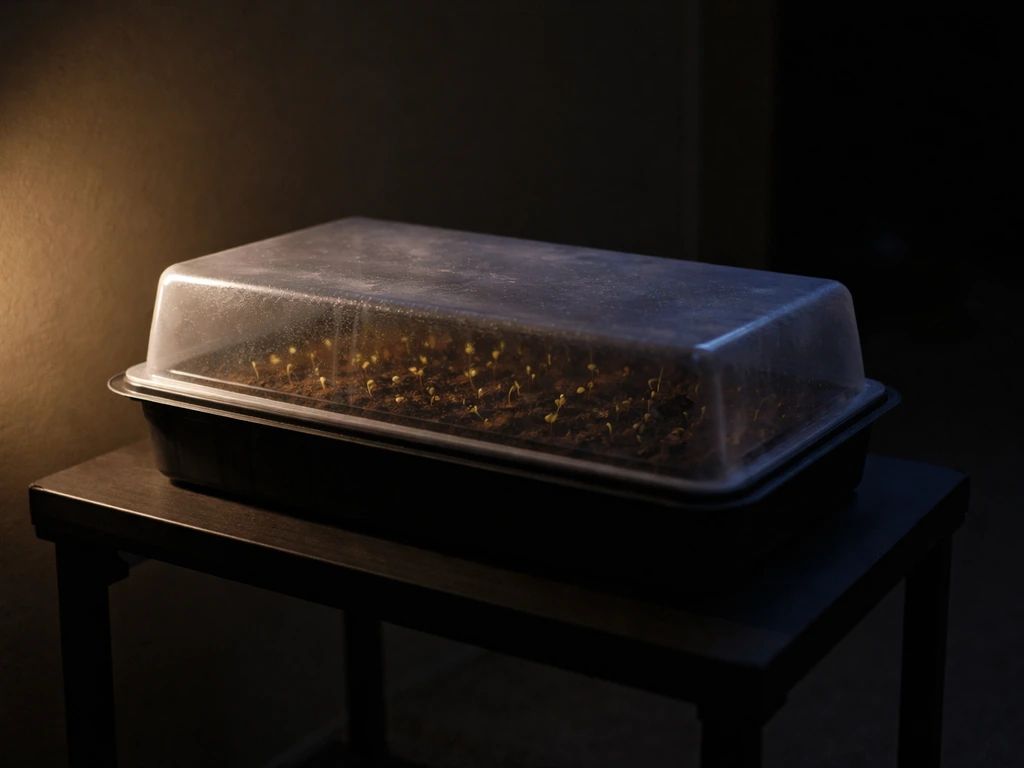
Most seeds can germinate in total darkness, and Penn State Extension actually states that most seeds germinate best under dark conditions. This surprises a lot of indoor gardeners who assume seeds need light from day one, the same way seedlings do. They don't. The embryo inside the seed already has everything it needs to start the germination process: stored energy (endosperm), a viable embryo, and the right triggers from moisture, oxygen, and temperature. Light isn't part of that equation for the majority of vegetables and herbs.
That said, there's an important distinction between germination (the seed cracking open and sending out a root and shoot) and seedling growth (what happens after the plant breaks the soil surface). Darkness can support the first stage for most species, but it actively works against the second. Once a seedling emerges, it needs light to start photosynthesizing and building real plant tissue. Once seedlings emerge, they need the right light conditions, and the goal is to understand whether they can grow in the dark or require light soon after sprouting Once a seedling emerges. Without it, the seedling burns through its seed reserves and etiolates, growing tall and pale in search of a light source that isn't there.
How light affects germination: which seeds need it and which don't
Seeds respond to light through a class of photoreceptor proteins called phytochromes. These receptors detect red light (roughly 600 to 700 nm) and far-red light (700 to 750 nm) and essentially tell the seed whether it's at or near the soil surface, where conditions favor germination. When red light activates phytochrome, it can trigger hormonal changes, specifically boosting gibberellin (GA) production and dialing back abscisic acid (ABA), which together release the seed from dormancy and allow germination to begin. For light-requiring seeds, this signal is genuinely necessary.
Seeds in this category are often called positively photoblastic. Lettuce is the classic example: it germinates reliably after red light exposure, and that effect is cancelled if you immediately follow with far-red light. In practical terms, this means if you bury lettuce seeds too deeply in dark soil, you may get poor germination. University of Minnesota Extension recommends covering light-requiring seeds with only a thin layer of fine vermiculite, which is porous enough to let some light through while keeping the medium moist.
On the other side, some seeds are actually inhibited by light. Penn State Extension lists Phacelia and Allium species (onions and relatives) as examples of seeds that prefer darkness for germination. That can help explain why mung beans often grow better in the dark during germination, before you transition them to light for healthy seedling growth prefer darkness for germination. Many common vegetables, including tomatoes, peppers, cucumbers, squash, and most herbs, are largely indifferent to light during germination and will sprout fine in either condition. Whether beans prefer light or dark for germination depends on the variety and the stage of growth you are working with. Knowing which category your seeds fall into is genuinely useful before you start.
| Seed behavior | Examples | Best germination setup |
|---|---|---|
| Light-requiring (positively photoblastic) | Lettuce, celery, petunias, snapdragons | Surface sow or cover with thin vermiculite; leave exposed to ambient light |
| Dark-preferring (negatively photoblastic) | Onions, Allium spp., Phacelia, pansies | Cover seeds and keep in darkness until sprouted |
| Light-indifferent | Tomatoes, peppers, cucumbers, basil, squash | Either works; dark setup is convenient for moisture control |
Why some seeds seem to grow faster or better in the dark
This comes up a lot, especially if you've ever noticed that seeds kept in a covered tray germinated faster than uncovered ones sitting on a windowsill. There are a few solid explanations for this, and none of them are mysterious.
- Moisture stays more consistent. Covering a tray or placing it in a dark plastic bag dramatically reduces evaporation from the surface. The germination medium stays evenly moist, which seeds need constantly. On a sunny windowsill, the surface can dry out between waterings and stall germination.
- Temperature is more stable. Direct sun or grow lights can heat the surface of a tray unevenly, and high temperatures can actually inhibit germination in some seeds. Research on lettuce shows germination is nearly 100% in darkness at 20°C but drops sharply at 27°C and above, a phenomenon called thermoinhibition. A covered, dark setup typically holds a steadier temperature.
- No light-triggered inhibition. For seeds that are light-inhibited, even a few hours of light exposure per day can reduce germination rates. Keeping them dark removes that variable entirely.
- Skotomorphogenesis supports early shoot elongation. In darkness, seedlings operate in a mode called skotomorphogenesis, driven by proteins called PIFs (phytochrome-interacting factors). This promotes upward elongation of the shoot, which helps the seedling push through soil to reach the surface. It's a normal, temporary developmental program, not a sign of a problem.
The takeaway is that faster germination in darkness isn't magic. It's usually a combination of better moisture retention, more consistent temperature, and the removal of any light-inhibiting signals. Once the seedling breaks the surface, that same darkness becomes a liability.
When darkness helps vs harms: real examples to know
Not every seed responds the same way, and getting this wrong wastes time and seeds. Here's how darkness plays out across the most common scenarios indoor gardeners run into.
| Seed/Plant | Darkness during germination | Notes |
|---|---|---|
| Tomato | Fine | Germinates well in dark; move to light within 1-2 days of emergence |
| Pepper | Fine | Benefits from warm dark setup (75-85°F); can take 10-21 days |
| Lettuce | Risky | Light-requiring; surface sow or use thin vermiculite cover |
| Basil | Fine | Indifferent; warm and moist matters more than light at germination |
| Onion/Allium | Preferred | Does better in darkness; light can inhibit germination |
| Celery | Avoid full darkness | Light-requiring; needs surface exposure or very thin cover |
| Cucumber/Squash | Fine | Fast germinators; dark and warm works well |
| Mung beans | Often faster | Commonly observed to sprout faster in dark due to moisture and temperature stability |
| Petunias/Snapdragons | Avoid | Small-seeded, light-requiring; surface sow and do not cover |
A good habit is to check the seed packet before you start. If it says 'surface sow' or 'do not cover,' that's a light-requirement signal. If it says 'cover lightly' or lists a specific planting depth, darkness during germination is usually fine or even preferred. When in doubt, the majority of kitchen garden vegetables are safe to germinate in dark, covered conditions.
Practical indoor steps for germinating seeds without light
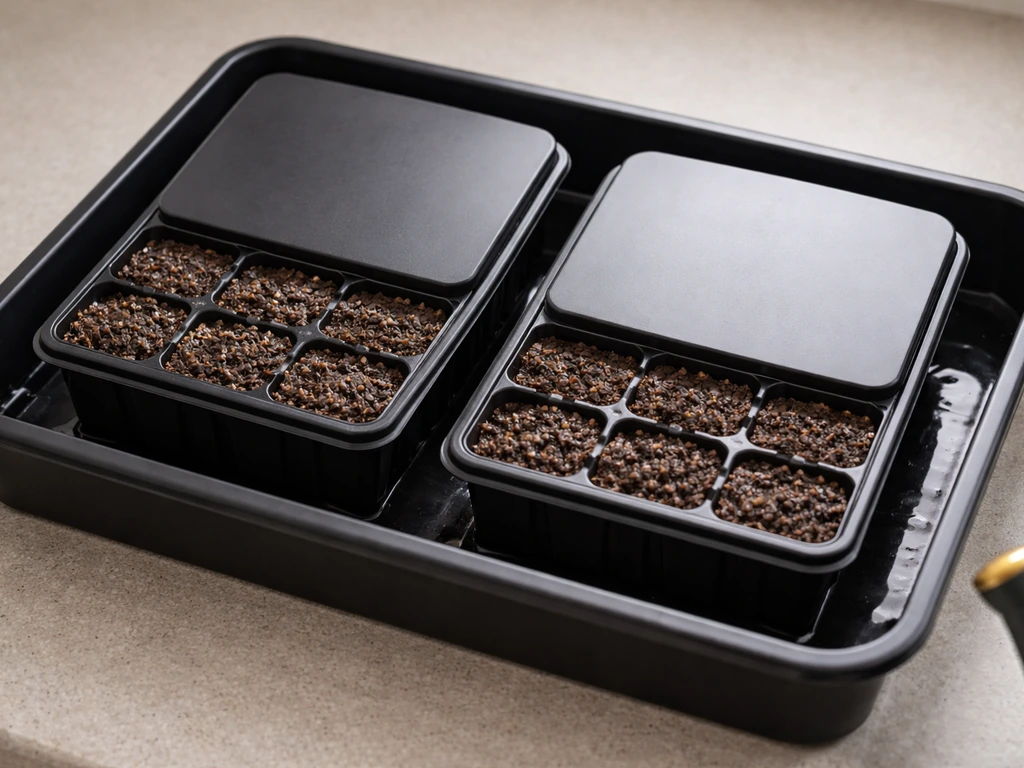
This is the setup I use, and it works reliably for tomatoes, peppers, cucumbers, herbs, and most flowers that don't specifically need light to germinate. It's simple, low-cost, and doesn't require any special equipment.
What you need
- Seed trays or small pots with drainage holes
- Sterile seed-starting mix (not garden soil, which carries fungal pathogens that cause damping-off)
- A spray bottle for watering
- Dark plastic bags, a tray dome, or several layers of newspaper
- A thermometer if you want to be precise about temperature
Step-by-step setup
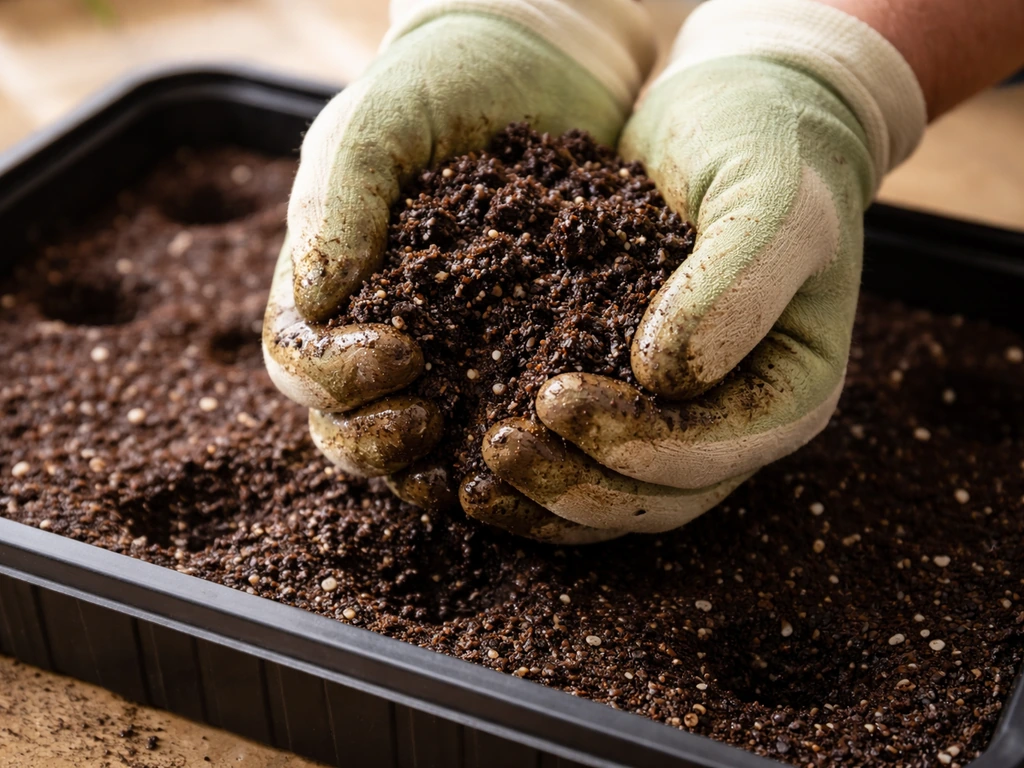
- Pre-moisten your seed-starting mix before filling the trays. It should feel like a wrung-out sponge, damp throughout but not dripping. Dry mix pulls moisture away from seeds; waterlogged mix cuts off oxygen, which is just as critical for germination as water.
- Fill trays or cells and sow seeds at the depth indicated on the packet. Most vegetable seeds go in at a depth of about twice their diameter. Light-requiring seeds (lettuce, celery, petunias) go on the surface or under a thin layer of fine vermiculite.
- Mist the surface gently with a spray bottle after sowing. This settles the seeds into contact with the medium without washing them out.
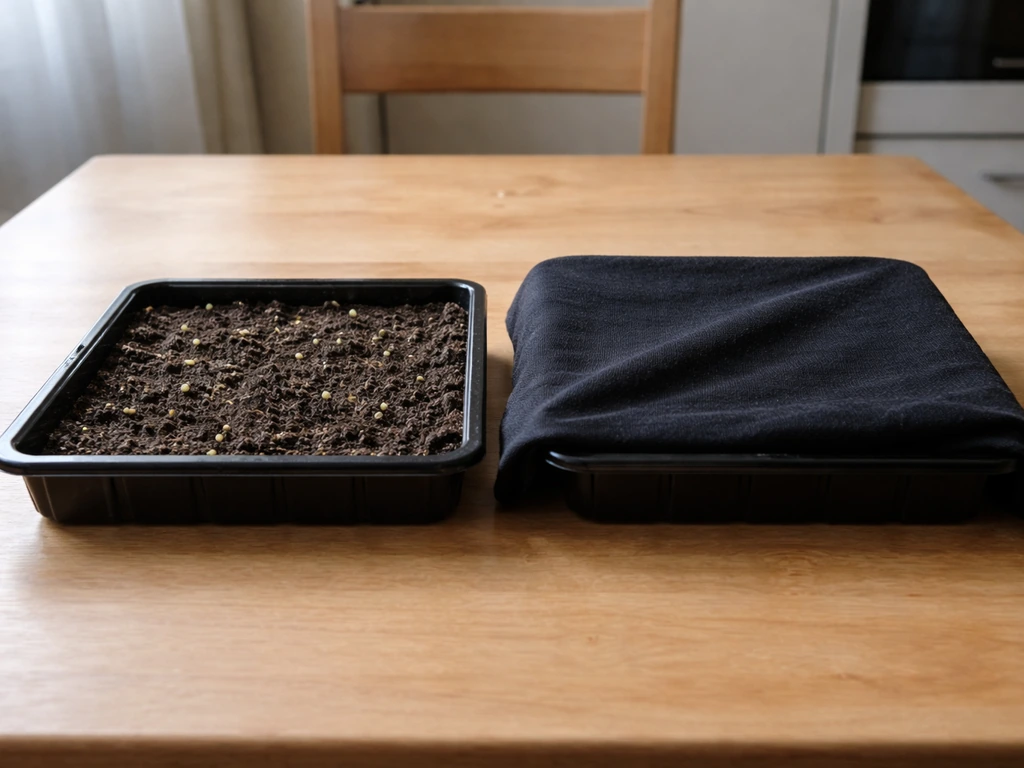
- Cover the tray to create a dark, humid environment. Use a solid tray dome, slide the tray into a dark plastic bag and seal loosely, or cover with several layers of newspaper. UMN Extension specifically recommends the dark plastic bag method for seeds that need darkness.
- Place the covered tray somewhere warm. Most vegetable seeds germinate fastest between 65°F and 85°F (18-29°C). The top of a refrigerator, near a water heater, or on a seedling heat mat works well. Avoid spots with big temperature swings.
- Check moisture every 1-2 days without exposing to prolonged light. If the surface looks dry, mist lightly and re-cover. The enclosed environment usually keeps things moist enough that you rarely need to add water during germination.
- Watch for sprouting. Most vegetable seeds germinate within 5-14 days under these conditions. As soon as you see the seedling pushing up, move the tray to light immediately.
One important note on oxygen: the mix needs to be moist but not saturated. A waterlogged medium cuts off oxygen to the seeds, and research shows that limited oxygen supply can severely retard or stop germination entirely. If your medium is dripping wet when you squeeze it, let it drain or add dry mix to correct it before sowing.
Transitioning seedlings to light: preventing legginess and setting a grow-light schedule
The moment you see seedlings breaking the surface, the dark phase is over. Don't wait until they've fully straightened out, and definitely don't wait until they look leggy. Leggy seedlings, those tall, pale, floppy ones, are the result of too little light for too long. UNH Extension flags this as one of the most common mistakes: leaving seedlings in dark or dim conditions too long leads to stunting or excessive stretching that's hard to reverse. Once seedlings have emerged, they need supplemental lighting to prevent them from becoming leggy, because insufficient light leads to long, weak stems as they reach for light blank" rel="noopener noreferrer">leaving seedlings in dark or dim conditions too long leads to stunting or excessive stretching.
Moving to a windowsill
A south-facing window is your best natural light option indoors, but even a good window in most homes doesn't deliver consistent or intense enough light for seedlings, especially in spring when the sun angle is still changing. UMN Extension is direct about this: low lighting is not sufficient for starting seeds indoors, and plants in low light grow more slowly and use less water. A windowsill can work for a week or two for low-light-tolerant species, but for tomatoes, peppers, and most vegetables, you'll get much better results with supplemental grow lights.
Using LED grow lights or fluorescent bulbs
LED grow lights are the most practical choice for indoor seed starting right now. Full-spectrum LEDs (covering both the blue and red wavelengths that plants use most) are energy-efficient, don't run hot, and work well at close range without burning seedlings. T5 fluorescent shop lights are a cheaper entry-level option and work well if you already have them. Position LEDs 4 to 6 inches above seedlings for most vegetables and herbs, and adjust as they grow.
A simple light schedule
- 14 to 16 hours of light per day works well for most vegetable and herb seedlings. Use a simple plug-in timer so you don't have to think about it.
- 8 to 10 hours of darkness per day is fine and actually beneficial. Plants have their own metabolic processes that happen in darkness, and 24-hour light isn't more effective and can stress some species.
- Start this schedule immediately when seedlings emerge, not a few days later.
- Raise the light as seedlings grow to maintain the same distance. Most LEDs can move up to 10 to 12 inches as plants get taller without losing effectiveness.
If you notice seedlings leaning hard toward a light source, that's a sign the light intensity or duration isn't quite enough. Either move the light closer, extend the photoperiod by an hour or two, or add a second light source. Rotating trays 180 degrees every few days helps too if you're using a single directional light source like a window.
Troubleshooting if seeds won't germinate in the dark
If you've followed the dark germination setup and nothing is happening after two weeks, here's how to figure out what went wrong.
Old or low-viability seeds
This is the number one silent cause of germination failure. Seeds lose viability over time, and old seed from a packet that's been sitting in a drawer for three or four years may have a germination rate of 10 to 20 percent, regardless of how perfect your conditions are. Do a quick germination test: place 10 seeds between two moist paper towels, seal in a bag, keep warm, and check after a week. If fewer than 5 sprout, the seed lot is the problem, not your setup. Fresh seed from a reputable supplier makes a bigger difference than any technique.
Wrong temperature
Seeds are temperature-sensitive in ways that often surprise people. Pepper seeds, for example, can sit dormant for weeks at 65°F but germinate in 7 to 10 days at 80°F. If your dark setup is too cool (below 60°F for most vegetables) or too warm (above 85-90°F), germination will stall. A lettuce seed germination study found that germination in darkness was nearly 100% at 20°C but was inhibited at 27°C and higher (thermoinhibition) lettuce seed germination in darkness was nearly 100% at 20°C but was inhibited at 27°C and higher. Add a seedling heat mat if your home runs cool, and keep the covered tray away from heating vents that cycle hot and cold air.
Too wet or too dry
Both extremes stop germination. Overly wet medium saturates air pockets in the mix and cuts off oxygen, which seeds need actively during germination. Overly dry medium means seeds can't absorb enough water to trigger metabolic activity. The damp-sponge rule is still the best guide: squeeze a handful of mix and only a few drops should come out. If it pours, drain it and let it air briefly before using.
You used a light-requiring seed in full darkness
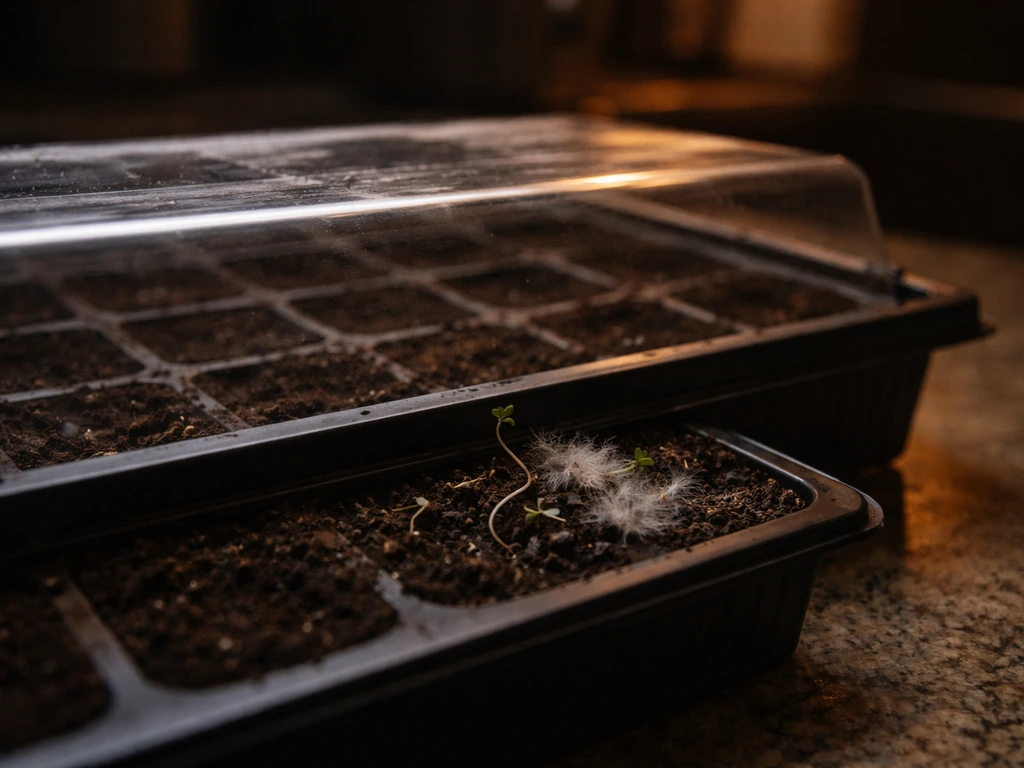
If you're trying to germinate lettuce, celery, or small-seeded flowers like petunias or snapdragons in a fully covered dark setup, that's likely the issue. These seeds need at least some light exposure to break dormancy. Move them to a surface sow situation with no cover, or use a thin layer of fine vermiculite and place under ambient or grow light. They don't need full sun, just some light signal to activate the phytochrome response.
Damping-off and fungal problems
If you see seeds or seedlings that have rotted at the soil line, or a cottony mold on the surface, you're dealing with damping-off, a fungal issue that's more common in dark, warm, wet conditions. Penn State Extension describes it as rotting of seeds in soil and destruction of newly emerged seedlings, with excessive moisture and overhead misting as key risk factors. Prevention is much easier than cure: always use sterile seed-starting mix (never garden soil), don't overwater, and make sure there's a little airflow around the trays even when covered. If damping-off appears, remove affected seedlings immediately, let the surface dry slightly, and improve airflow.
Quick diagnostic checklist
- Seeds older than 2-3 years: test viability with a paper towel germination test before investing in a full setup
- Temperature below 65°F or above 90°F: use a heat mat and check with a thermometer
- Medium too wet: improve drainage, reduce watering frequency, ensure the mix has good aeration
- Medium too dry: mist more frequently or seal the cover more completely to retain humidity
- Light-requiring seeds kept fully dark: switch to surface sowing under ambient or grow light
- Mold or damping-off visible: switch to sterile mix, reduce watering, increase airflow
Germination troubleshooting is almost always about narrowing down which variable is off. It's rarely all of them at once. Start with seed viability and temperature because those two account for the majority of failures, then work through moisture and light requirements. Once you get a consistent setup dialed in for your space, you'll be able to germinate almost any seed reliably, in the dark or out of it.
FAQ
If seeds can germinate in darkness, do I need to cover the container completely?
You do not need total light exclusion for every seed lot, but you should avoid stray light right at the germination stage for light-sensitive seeds. For light-requiring crops like lettuce, covering (or using a thin vermiculite layer only) is critical, while for indifferent seeds a loosely covered tray often works. The key is consistency, so keep the lid on or use opaque covering during the dark phase, then switch to light immediately after emergence.
How long can seeds stay in darkness before I must move them under light?
As soon as you see the first seedlings breaking the surface, the dark phase is over for most crops. Even a one to two day delay can cause noticeable stretching in fast growers under weak indoor light. Practical approach: start checking daily once germination is expected, then move trays under your lights the same day you notice emergence.
Do light requirements apply to the first root, or only after seedlings emerge?
They mainly matter after the seedling begins active growth and photosynthesis, but some species use light signals to trigger germination itself (positively photoblastic or light-inhibited types). That means you can germinate many vegetables in the dark and still need light right after emergence, while others may fail to germinate unless they receive a light cue.
Can I use a “dark closet” approach for all seeds by keeping them in the dark until transplant time?
No, because the later seedling stage depends heavily on light. Keeping seedlings in a dark closet until they are large usually leads to etiolated, pale, weak plants that are harder to harden off and more prone to collapse. Use darkness only for germination, then switch to a defined light schedule and intensity as soon as seedlings emerge.
How should I adjust watering during the dark germination phase?
Aim for evenly moist, not saturated. A good signal is the damp-sponge rule, but also watch for condensation inside a covered tray, since that can increase overhead moisture and encourage damping-off. If you see constant pooling or dripping, reduce misting, crack vents slightly for airflow, or switch to bottom watering so seeds stay moist without flooding pore spaces.
What light schedule works best once seedlings emerge?
A common starting point is 12 to 16 hours of light per day, with lights timed so they start before your indoor daytime peaks and avoid long dark gaps right after emergence. If you only provide a couple hours of light from a window or inconsistent indoor lighting, seedlings often stretch. Use a simple timer for steady photoperiod, especially if you are relying on grow lights.
Are heat mats compatible with dark germination, and where should the tray sit?
Yes, heat mats can improve germination if you keep temperatures in the right range for the seed type. Place the tray on the mat and keep it away from vents or drafty spots that create hot-cold cycling, which can slow germination. Also, ensure the mat does not dry out the medium too fast, use a consistent cover strategy, and monitor moisture daily during warm setups.
Do I need to rotate trays in darkness?
No, rotation mainly helps once seedlings are actively growing under a directional light source. If your germination is truly dark, plants are not leaning toward light. After you switch to light, rotate 180 degrees every few days if you have one-sided lighting so stems develop more evenly.
How do I tell the difference between slow germination and a complete germination failure?
First check the seed packet and your temperature range, because slow germination at the low end of the recommended temperature can look like failure for a week or more. If nothing emerges after the seed type’s typical window, then do a viability test on the same lot using moist paper towels, warm conditions, and a clear timeline. Also confirm you are not drying out the medium, because very dry mix delays germination even when temperatures are correct.
What should I do if seedlings start rotting at the soil line (damping-off)?
Remove affected seedlings immediately to stop spread, then reduce surface wetness and improve airflow around the trays. Avoid frequent overhead misting and consider bottom watering instead. Also replace contaminated mix with sterile seed-starting mix and ensure trays are not overcrowded, since dense spacing traps humidity and worsens damping-off risk.