
Yes, dieffenbachia can grow in low light, but there's a real difference between surviving and actually looking good. In a dimly lit room it'll hold on, but you'll notice slower growth, stretched stems, and fading variegation fairly quickly. The sweet spot is bright indirect light, and the further you move from that, the more compromises you make. That said, some cultivars handle low light better than others, and a simple grow light setup can close the gap entirely if your space is genuinely dark.
Can Dieffenbachia Grow in Low Light? How to Thrive Indoors
Marcus Hartley
12 May 2026
What 'low light' actually means indoors
The phrase 'low light' gets thrown around loosely, but it has a measurable definition. University of Maryland Extension puts low light at roughly 25 to 100 foot-candles (about 250 to 1,000 lux). To put that in perspective, a north-facing window on a cloudy day might read around 50 to 100 foot-candles right at the glass, and a corner across the room from any window can easily drop below 25 foot-candles. That's the range where most 'low-light plants' are just barely getting by.
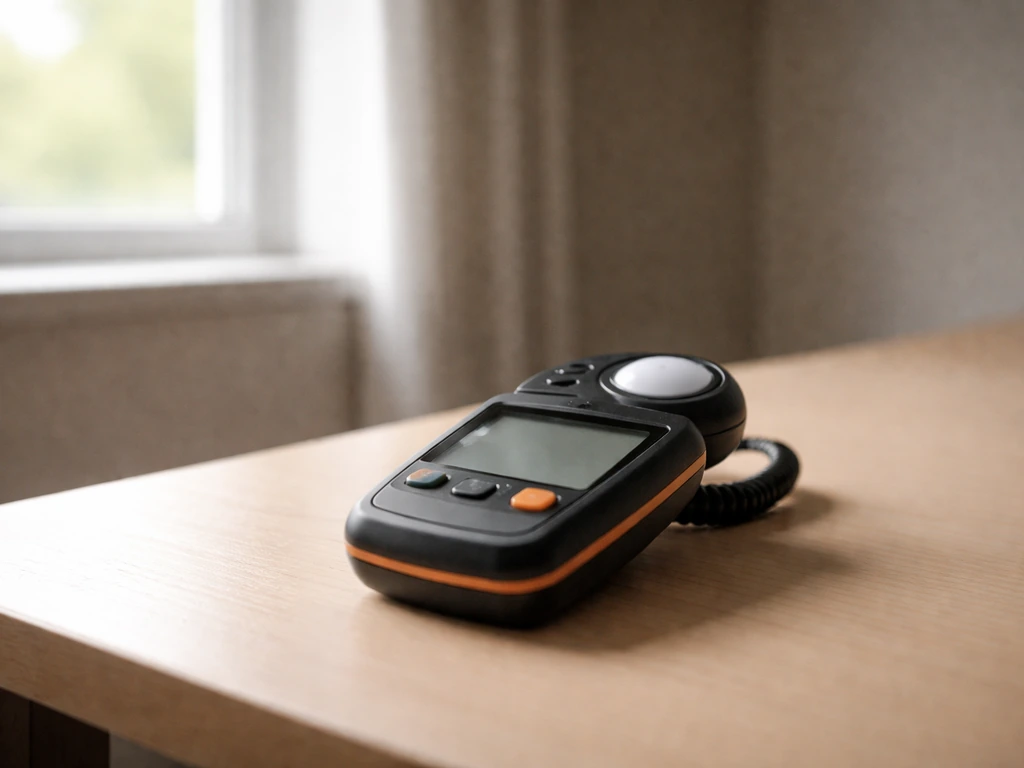
Distance is the thing most people underestimate. Light intensity drops off fast as you move away from a window, and even a few extra feet makes a huge difference. Penn State Extension recommends using an affordable light meter (one that reads both foot-candles and lux) to actually check your space rather than guessing. Penn State Extension also explains that using a light meter that reads both foot-candles and lux can be especially helpful for gardeners in the U.S. You can find basic lux meters for under $20, and that single purchase will save you a lot of dead plants.
A practical way to think about it: if you'd need a lamp to read comfortably in that spot during the day, your light level is probably at or below 50 foot-candles. That's the low end of what most houseplants can use for photosynthesis, and it's where dieffenbachia starts to struggle.
Dieffenbachia's real light needs vs what low light delivers
Dieffenbachia genuinely does best in bright indirect light, the kind you'd get a few feet back from an east or west-facing window, or directly in front of a sheer-curtained south window. Both University of Connecticut and the University of Illinois Extension agree on this: bright indirect light produces the best growth, and lower light is tolerated rather than preferred.
Where it gets interesting is the cultivar difference. UF/IFAS research on interiorscape production found that some varieties handle low light much better than others. 'Star Bright' and 'Snow Flake' can tolerate as low as 50 foot-candles and still look reasonably good. 'Camille,' one of the most popular varieties you'll find at garden centers, needs 150 to 250 foot-candles to stay attractive. So if you bought a 'Camille' for a dim corner, you've already set yourself a harder challenge than if you'd chosen 'Star Bright.'
| Cultivar | Minimum foot-candles for attractive foliage | Low-light suitability |
|---|---|---|
| Star Bright | ~50 foot-candles | Good |
| Snow Flake | ~50 foot-candles | Good |
| Camille | 150–250 foot-candles | Fair (needs more light) |
| Generic / unlabeled | 100–150 foot-candles (estimated) | Moderate |
If you don't know which cultivar you have, aim for at least 100 foot-candles as your minimum target. Below that, you're basically keeping the plant on life support rather than growing it.
What low light actually does to your dieffenbachia
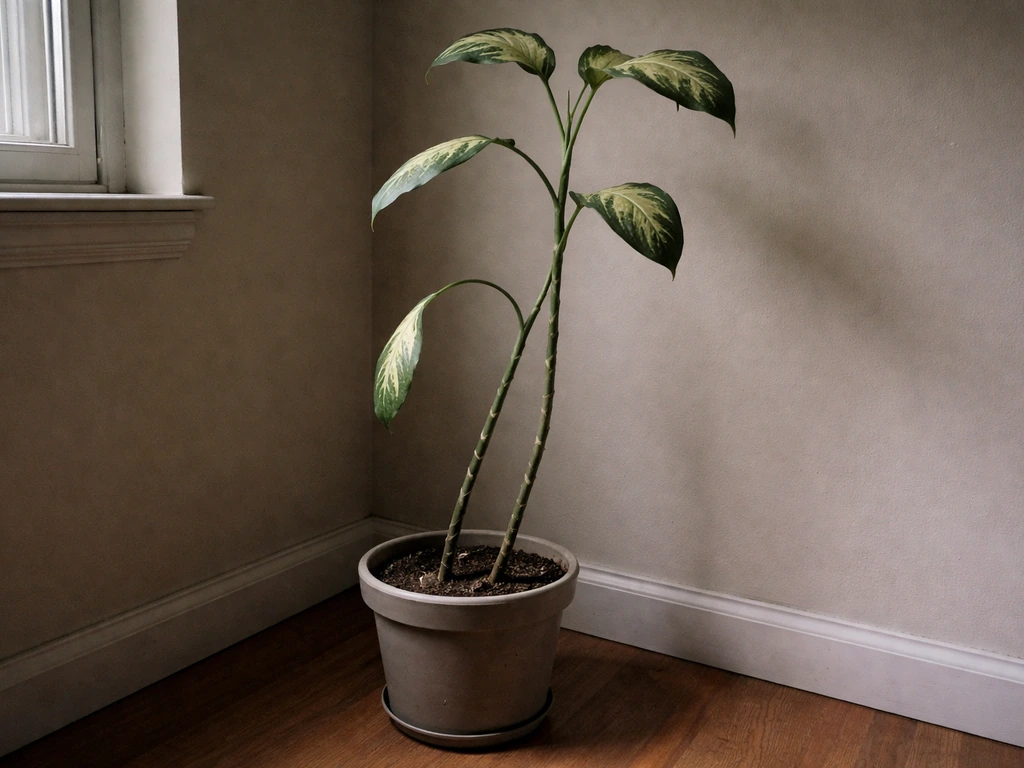
When light drops below what a dieffenbachia needs, the plant does a few predictable things, and none of them are subtle once you know what to look for.
Leggy, stretched stems
The most obvious sign is internode elongation, which is just the fancy term for the spaces between leaves getting longer and longer. The plant is essentially reaching for light it can't find. UMN Extension describes this directly: insufficient light causes plants to grow long spaces between leaf nodes. In a dieffenbachia, this means you end up with a tall, bare-stemmed plant with leaves only at the top, which is not the full, lush look most people want.
Smaller leaves and faded variegation
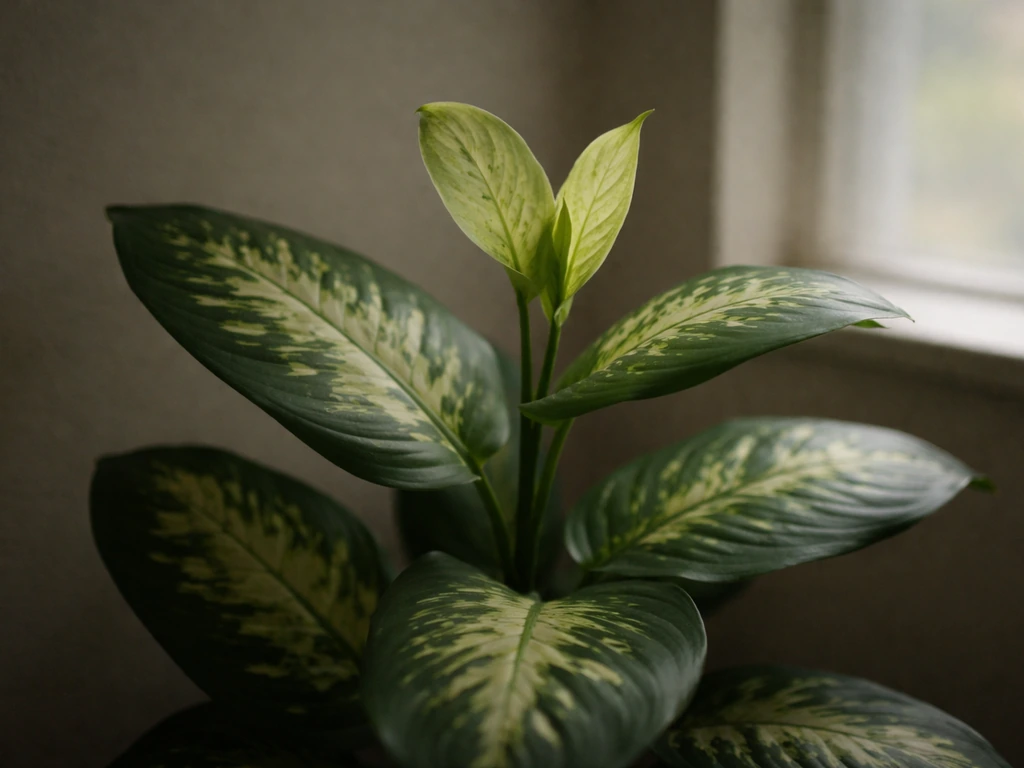
New leaves that emerge in low light tend to be smaller than normal. The beautiful cream, white, or yellow markings that make dieffenbachia so attractive will also fade over time. The plant responds to less light by producing more chlorophyll (going greener) to capture whatever photons it can, which gradually washes out the patterning. A heavily variegated cultivar in a dark room will eventually look like a plain green plant.
Slow growth or no growth at all
UF/IFAS notes that little or no new growth is a reliable sign your dieffenbachia isn't getting enough light. If weeks are going by without a new leaf unfurling, light is usually the first thing to check, especially in winter when natural light drops significantly even at south-facing windows.
Leaf drop
Leaf drop is a little trickier to diagnose because it can come from multiple causes. Prolonged low light will eventually cause older leaves to yellow and drop, but UConn's dieffenbachia research specifically notes that lower leaf drop is also commonly caused by sudden temperature changes and drafts, not just light. Before blaming the light, check whether the plant is near an air vent, a drafty window, or a door that opens to cold air.
How to assess and place your dieffenbachia for the best light
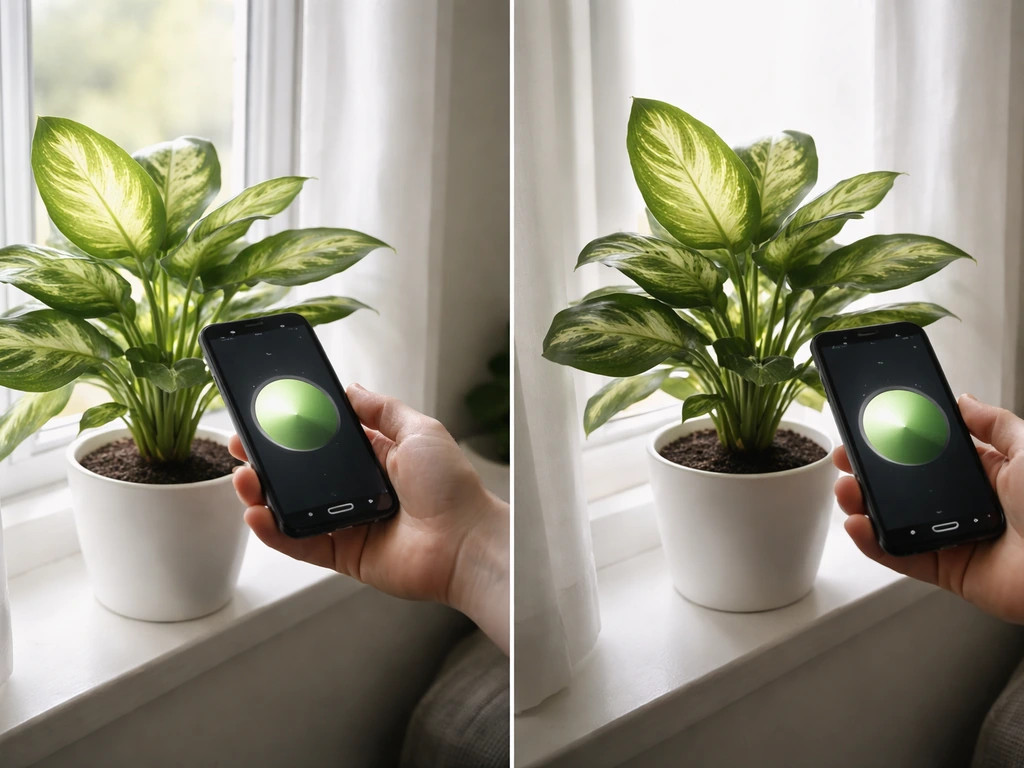
Placement decisions are much easier once you stop guessing and start measuring. Here's a practical process:
- Get a light meter: A basic lux meter (under $20) or a lux app on your phone gives you a real number. Penn State Extension recommends a meter that reads both foot-candles and lux. To convert: divide lux by roughly 10 to get approximate foot-candles.
- Measure at plant height during peak daylight: Take your reading between 10 a.m. and 2 p.m. on a clear day, at the exact spot where the plant will sit. This gives you the realistic maximum your spot can deliver.
- Target at least 100–150 foot-candles: For most dieffenbachia varieties, this is the floor for maintaining healthy, attractive foliage. If you have 'Star Bright' or 'Snow Flake,' you can get away with 50 foot-candles.
- Prioritize east or west-facing windows: North-facing windows are borderline, typically delivering 50–100 foot-candles right at the glass. South-facing windows with sheer curtains can work well a few feet back.
- Keep the plant within 3 to 5 feet of the window: Light drops off fast with distance. A dieffenbachia sitting 8 feet from a north window is probably receiving 25 foot-candles or less, which is too dark for even the most tolerant cultivars to thrive.
- Rotate the plant every week or two: This ensures all sides get equal light exposure and prevents one-sided, lopsided growth.
Using grow lights to fill the gap in low-light rooms
If your space genuinely can't deliver 100 foot-candles of natural light, a grow light is the most reliable fix. The good news is you don't need anything elaborate. Dieffenbachia is a foliage plant, not a fruiting crop, so its light demands are modest compared to vegetables or flowering plants.
What intensity to aim for
For foliage plants like dieffenbachia, University of Maine Extension's PPFD guidance places the target range at around 50 to 250 µmol/m²/s (PPFD). For a low-light supplementation setup, aim for at least 75 to 100 PPFD at leaf level. In lux terms, that's roughly 4,000 to 8,000 lux from the grow light, which sounds high but is achievable with a modest LED panel or even a full-spectrum fluorescent tube positioned close to the plant.
LED vs fluorescent: which to choose
Both work well for dieffenbachia. LED grow lights are more energy-efficient and run cooler, which means you can place them closer to the plant (12 to 18 inches) without heat stress. Full-spectrum fluorescent tubes (T5 or T8) are cheaper upfront and easy to find, but they need to be positioned very close, within 6 to 12 inches, to deliver useful intensity. For a set-and-forget setup, an LED panel on a timer is the easier long-term choice.
How long to run the light
The Royal Horticultural Society suggests around 16 hours per day for supplemental plant lighting. For dieffenbachia in a room with some ambient natural light, 12 to 14 hours per day is usually enough. Set the timer to run during daylight hours so the plant keeps a natural rhythm. Plug a basic outlet timer into the wall, set it, and forget it. You don't need a smart controller for this.
Placement tip
Position the grow light directly above the plant rather than to the side. Dieffenbachia grows upright, and overhead light mimics natural conditions while reaching the lower leaves more evenly. If you're using a small LED clip light, angle it so the beam covers the full spread of the foliage, not just the center.
Troubleshooting: legginess, leaf drop, and stalled growth
Low-light symptoms can look a lot like other problems, so here's how to tell them apart and what to do about each one.
| Symptom | Likely cause | What to do |
|---|---|---|
| Long gaps between leaves (leggy stems) | Insufficient light | Move closer to a window or add a grow light |
| Variegation fading, leaves going plain green | Insufficient light | Increase light intensity; rotate the plant regularly |
| No new leaves for weeks | Insufficient light (or winter dormancy) | Check foot-candle reading; supplement with grow light in winter |
| Lower leaves yellowing and dropping | Drafts, temperature swings, or overwatering | Check for cold air vents or drafty windows; reduce watering frequency |
| Yellowing from sun exposure | Too much direct sun | Move back from window or add a sheer curtain |
| Pale, washed-out leaves overall | Etiolation (severe light deficit) | Increase light immediately; leggy stems may need to be pruned back |
| Wilting despite moist soil | Root rot from overwatering (often worsened by low light slowing drying) | Let soil dry more between waterings; improve drainage |
One thing worth knowing: low light slows the soil drying cycle too. A dieffenbachia in a dim spot uses less water because it's photosynthesizing less. That means your normal watering schedule is almost certainly too frequent in a low-light setup, and overwatering is one of the fastest ways to kill a dieffenbachia regardless of how good your light is.
When to accept that your space needs a different plant
If you've measured your light at under 50 foot-candles, you don't have a bright enough 'low-light cultivar' like 'Star Bright,' and you're not willing to add a grow light, then dieffenbachia is probably not the right plant for that spot. That's not failure, it's just matching the plant to the space.
There are genuinely shade-tolerant alternatives that will thrive where dieffenbachia only survives. UF/IFAS recommends Limelight dracaena as a strong low-light interior plant. Pothos and heartleaf philodendron handle very low light better than almost any other common houseplant. Cast iron plant (Aspidistra) is practically indestructible in shade. ZZ plant manages on almost nothing. If you're comparing your options, English ivy and fittonia are also commonly placed in low-light situations, though they each have specific humidity and temperature preferences worth checking before you commit. Fittonia can sometimes handle low-light corners, but it will usually look best with brighter indirect light and consistent humidity. English ivy is commonly grown in shade, but whether it can thrive in low light depends on your exact light level and how you manage humidity can english ivy grow in low light.
Fiddle leaf figs and ficus are at the opposite end of the spectrum, requiring much more light than dieffenbachia and almost always struggling in low-light rooms. If you're wondering about fiddle leaf figs specifically, they usually need brighter conditions than most people can provide in low light Fiddle leaf figs and ficus. So if you're weighing a dieffenbachia against either of those, dieffenbachia is the considerably more shade-tolerant choice.
The honest bottom line: dieffenbachia is a reasonable choice for moderate low-light spaces, especially if you pick a tolerant cultivar and supplement with a basic LED on a timer. But if your room is genuinely dark and you want a plant that looks good year-round without extra gear, you'll be happier starting with something that doesn't need convincing to stay alive.
FAQ
Can I put my dieffenbachia in a north-facing room or dim corner and expect it to stay attractive year-round?
Yes, but expect slower growth and paler patterning. If you move it to low light, acclimate gradually over 2 to 4 weeks (move it a little farther from the window each week), and watch new leaves for reduced size or fading variegation. A full stop into a dark corner usually triggers stretching and a “top-heavy” look.
Does low light change how often I should water dieffenbachia?
Plan to water less often. In low light the plant uses less energy, so the pot stays wet longer, increasing root rot risk. Use a finger or moisture meter to check the top 1 to 2 inches of soil before watering, and empty any saucer so excess water never sits at the base.
If my dieffenbachia is in low light and looks sick, could it actually be pests?
Not reliably. Many pests worsen with stress, and low light itself can mask or mimic other issues because the plant grows slower. Check weekly for spider mites (fine webbing or speckling), mealybugs (white cottony clusters), and scale on leaf undersides. If the plant is also stretching or dropping leaves, improve light and then treat pests if you find them.
What if my dieffenbachia drops leaves right after moving it to a lower-light spot?
Sudden leaf drop after the move is often from combined stress, not just light. Temperature swings, drafts, and dry indoor air can trigger it, especially if the plant is near an HVAC vent. Keep it away from doors and vents, maintain steadier temps, and avoid fertilizing right after relocation.
Is there a minimum window distance or room area where dieffenbachia can handle low light?
It depends on whether your low-light is “glare-free bright” or truly dim. If you can achieve roughly 50 to 100 foot-candles at the plant location, it may survive and sometimes look decent (especially tolerant cultivars). Below that, you’ll usually see stretching, slower new leaves, and fading unless you use supplemental light.
If I use a grow light, how do I avoid overcomplicating it and still get good growth?
Yes, and the cheapest fix is often a better bulb schedule and placement rather than higher intensity. Start with 12 to 14 hours per day if there is some ambient daylight, and place the light overhead so the lower leaves receive similar intensity. If growth still stalls for 3 to 4 weeks, increase height coverage or intensity rather than changing everything at once.
How can I tell whether my grow-light setup is strong enough for dieffenbachia?
Aim for consistent light timing and enough intensity to support new leaf production. If the plant is putting out tiny leaves or not unfurling anything, the setup is likely too weak or too far away. Also ensure the light runs long enough, and check for “dead zones” where the brightest part of the beam hits only the center.
Can low light cause brown spots or leaf problems that look like disease?
It can. Fungal or bacterial spots are more likely when leaves stay wet and airflow is poor, and low light makes drying slower. Water at the soil line, avoid misting, and make sure the pot has drainage and the room has normal air movement to prevent persistent dampness.
Should cultivar choice change when my low-light conditions are only slightly dim versus very dark?
Choose a cultivar based on the actual light you can measure, not the label alone. If you do not have at least about 100 foot-candles, “tolerant” types may still survive but may not stay lush without a grow light. If you know the cultivar, treat that as your baseline requirement.