
Plants grow taller in low light because they are desperately trying to reach more of it. It is a survival response called etiolation, and it means your plant is spending all its energy on stem length instead of building leaves, roots, or flowers. The stretched, leggy look you are seeing is not your plant thriving. It is your plant panicking.
Why Do Plants Grow Taller With Less Light? Fix Leggy Growth
Marcus Hartley
28 Apr 2026
What "stretching" actually looks like (and how to spot it)
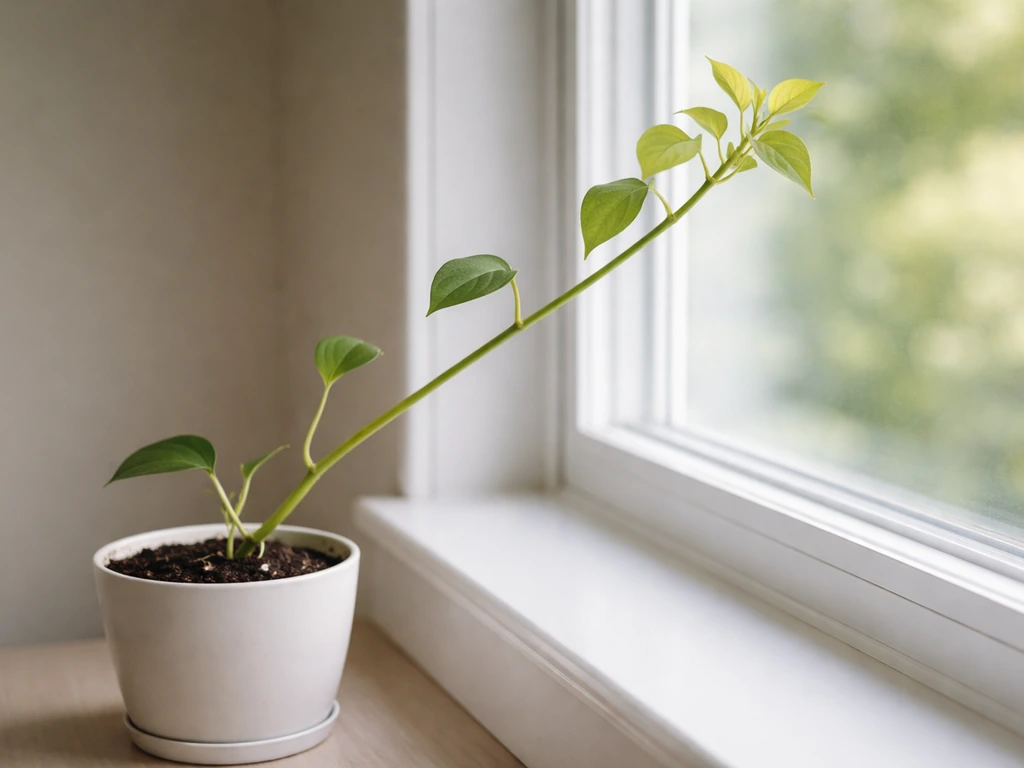
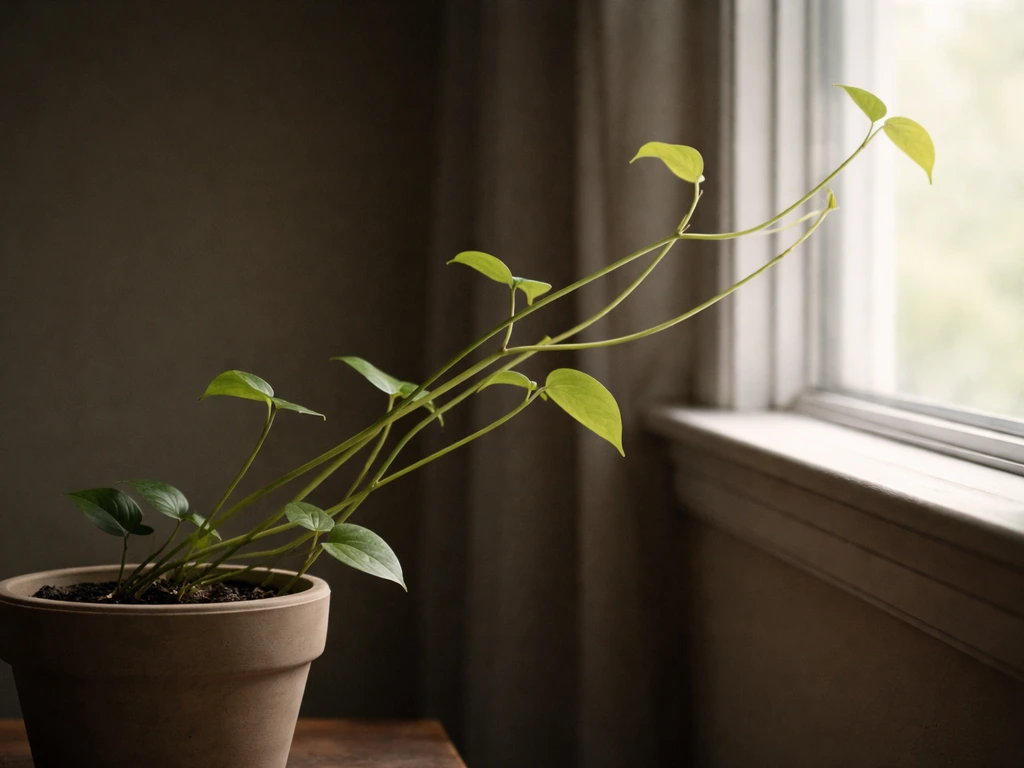
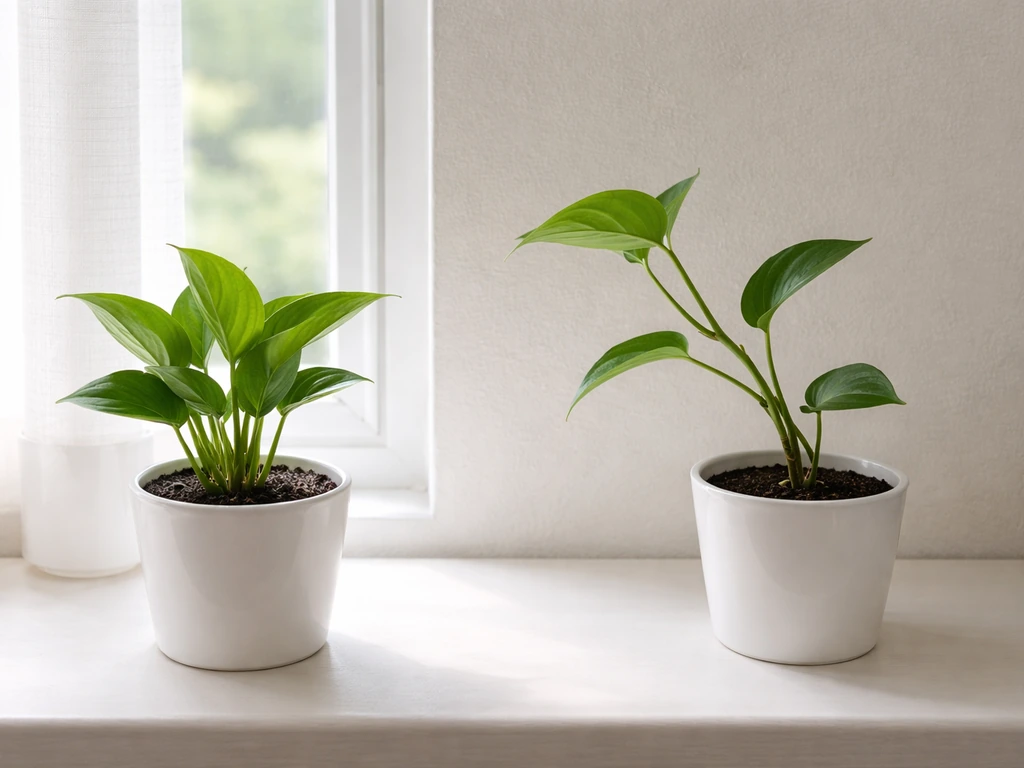
The technical term is etiolation, but most indoor gardeners just call it legginess or stretching. Whatever you call it, the signs are pretty hard to miss once you know what to look for. The most obvious is long gaps between leaf nodes, called internodes. On a healthy plant, the nodes where leaves attach are relatively close together. On an etiolated plant, those gaps stretch out and the stem looks thin and wiry, sometimes flopping over under its own weight.
Beyond the stretched stems, the leaves themselves tend to be smaller than normal and noticeably pale, a yellowish or light green instead of a rich, deep green. That pallor comes from low chlorophyll production, which happens when a plant is not getting enough light to bother building much of it. Experiments by scientists such as Engelmann showed that plants need light to grow healthily. You might also notice the whole plant leaning or bending hard toward the nearest window, or new growth pointing aggressively in one direction if you have a light source off to the side. Leaf drop, especially on lower stems, is another sign things have gone too far.
- Long, stretched internodes (gaps between leaf nodes are noticeably wide)
- Thin, weak stems that flop, bend, or split easily
- Smaller-than-normal leaves
- Pale yellow-green leaf color instead of rich green
- Plant leaning heavily toward the nearest light source
- Lower leaves dropping off
- Slow or stalled overall growth despite the stretched appearance
The biology behind it: why low light makes plants taller
Here is the short version of what is happening inside the plant. Plants sense light using proteins called photoreceptors, particularly one called phytochrome. When light levels drop, phytochrome signals the plant that it may be shaded by competing vegetation. Shade-avoidance signaling increases blank" rel="noopener noreferrer">PIF4 and PIF5 and promotes auxin and stem elongation responses. Research on shade-induced petiole elongation concludes that blank" rel="noopener noreferrer">auxin and brassinosteroid cooperate in the shade response controlled by phytochrome photoreceptors and signaling. The plant's response to that signal is to surge upward fast, trying to outgrow whatever is blocking the light. This worked great in a forest. It works terribly on your windowsill.
The hormone driving all that upward growth is auxin. In normal light, auxin gets spread out more evenly and also gets partially broken down by exposure to light, which keeps growth balanced. In dim conditions, auxin accumulates and drives rapid cell elongation in the stem. The plant is not building stronger cells or more leaf tissue. It is just stretching existing cells out, which is why etiolated growth is so weak and fragile compared to compact, light-grown stems.
At the same time, without enough light to power robust photosynthesis, the plant does not have the energy to invest in chlorophyll production, thick leaf tissue, or root development. Everything gets deprioritized in favor of that one goal: get taller, find more light.
Why stretching instead of just growing more leaves
It is a reasonable question. Why does the plant not just put out more leaves to catch whatever light is available? The answer comes down to evolutionary strategy. In the wild, if a plant is shaded, the most efficient path to survival is vertical escape, not sideways expansion. Building more leaves in deep shade costs energy and those leaves would not be capturing much light anyway. Shooting upward toward the canopy gap is the faster return on investment, at least in nature.
Indoors, that strategy backfires because there is no canopy to escape. Your plant keeps stretching toward a window that is 10 feet away or a grow light that is too dim or too far, and it just keeps getting leggier and weaker with no payoff. If you are wondering will a plant grow higher with more light, it depends on getting enough intensity without triggering stretching conditions. The plant is essentially running a program that made sense for millions of years but is completely wrong for a pot on a bookshelf.
Diagnosing the real cause: it is not always just "not enough light"
Before you go repositioning everything, it helps to figure out exactly why your plant is stretching. The cause is usually one of three things: insufficient light intensity, the wrong light spectrum, or an off photoperiod. If you are wondering what color light plants grow best in, start by matching the red-to-blue balance to support compact, healthy growth wrong light spectrum.
The question can colored lights affect how plants grow is often really about the light spectrum, which changes growth form. For a science fair, you can test a few red and blue ratios to see which one gives the most compact growth what color light plants grow best in.
One idea tested in plant lighting research is the plants grow best in white light hypothesis, which you can use to think about how “white” light affects growth under different conditions. The idea is that the quality of light, not just brightness, can affect how well plants grow plants grow best in white light hypothesis. They can look similar but have different fixes.
Intensity: is the plant just not getting enough light overall?
This is the most common culprit. Intensity is measured in PPFD (micromoles of photons per square meter per second) or loosely in foot-candles or lux. Most houseplants need somewhere between 100 and 500 PPFD for healthy growth; seedlings and light-hungry vegetables want 400 to 800 PPFD or more. A bright windowsill on a sunny day might deliver 1,000 to 2,000 PPFD for a few hours. A dim corner, a cloudy climate, or a grow light placed 3 feet away might deliver 50 PPFD or less. If your plant is far from any window and you do not have a grow light, intensity is almost certainly the problem.
Spectrum: is the light the wrong color?
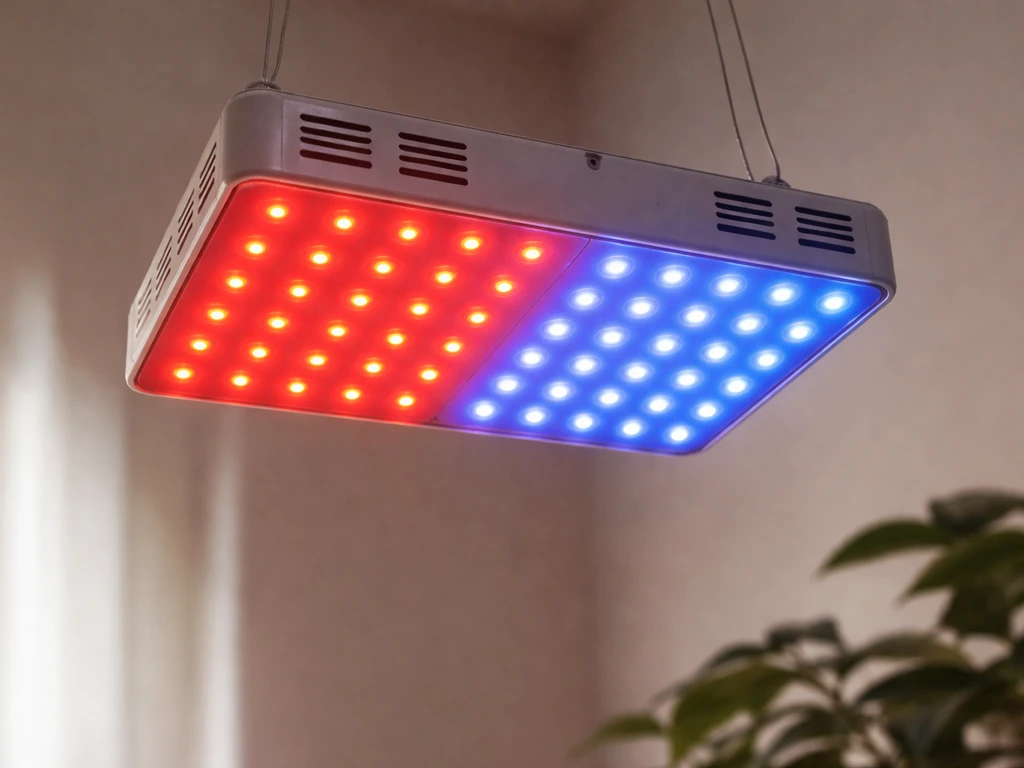
Plants use primarily red and blue wavelengths for photosynthesis, and the ratio between them affects growth form. Would a plant grow well in only green light? In most cases, green light is not as effective for compact growth because plants rely mainly on red and blue wavelengths. Blue light (around 400 to 500 nm) specifically suppresses the kind of stem elongation that causes legginess.
Red light (around 600 to 700 nm) promotes it. If you are growing under a warm-toned light that is heavy on red and lacking in blue, like some cheap LED strips or old warm-white fluorescents, your plant may stretch even if the intensity is technically adequate. For a science fair experiment, use the right color light, since red-heavy or blue-poor lighting can cause extra stretching even when intensity looks okay warm-toned light. This is worth knowing if you are trying to optimize your setup. Growing under a full-spectrum light, or one with a good balance of red and blue, helps keep growth compact.
Photoperiod: is the light schedule off?
Plants also track how long the light period lasts each day. Many houseplants and vegetables want 14 to 16 hours of light per day under grow lights, since indoor light is never as intense as full sun and the longer duration makes up for it. If your grow light is only on for 6 or 8 hours, even a decent light may not be delivering enough total energy. On the flip side, some flowering plants are sensitive to day length and will behave oddly with the wrong schedule. For most foliage plants and seedlings, 14 to 16 hours on and 8 to 10 hours off is a solid starting point.
| Cause | Key symptom | Quick diagnostic | Fix |
|---|---|---|---|
| Low intensity | Stretching toward light, pale leaves, leaning hard toward window | Plant is far from window or grow light is dim/distant | Move plant closer to light source or upgrade grow light |
| Wrong spectrum (low blue) | Leggy even under a lit grow light, soft weak stems | Light is warm-toned, reddish, or very yellow | Switch to full-spectrum or add blue-heavy supplemental light |
| Short photoperiod | Slow growth, stretching despite decent light when on | Grow light is on less than 12 hours/day | Extend light schedule to 14 to 16 hours with a timer |
Quick fixes you can do today
Good news: most of these do not require buying anything. Start here before spending money.
- Move the plant closer to your window. Even a foot or two makes a significant difference because light intensity follows the inverse square law: double the distance from the source and you get roughly one quarter the light. A plant sitting 4 feet from a window may be getting a fraction of what it would receive at 1 to 2 feet.
- Rotate the plant every few days. This prevents one-sided leaning and distributes growth more evenly while you work on improving overall light levels.
- Add reflective surfaces. A piece of white foam board, a mylar emergency blanket, or even a white wall behind and beside the plant bounces ambient light back onto the leaves. This is a free way to increase the effective light your plant receives without moving it.
- Remove obstructions. Sheer curtains, dirty window glass, nearby furniture, or even other plants can block a surprising amount of light. Clean the windows. Move what you can.
- Consolidate plants near your best light source. Instead of spreading plants around a dim room, group your most light-hungry ones right at the brightest window and let the shade-tolerant ones fill the rest of the space.
Choosing and setting up grow lights that actually work
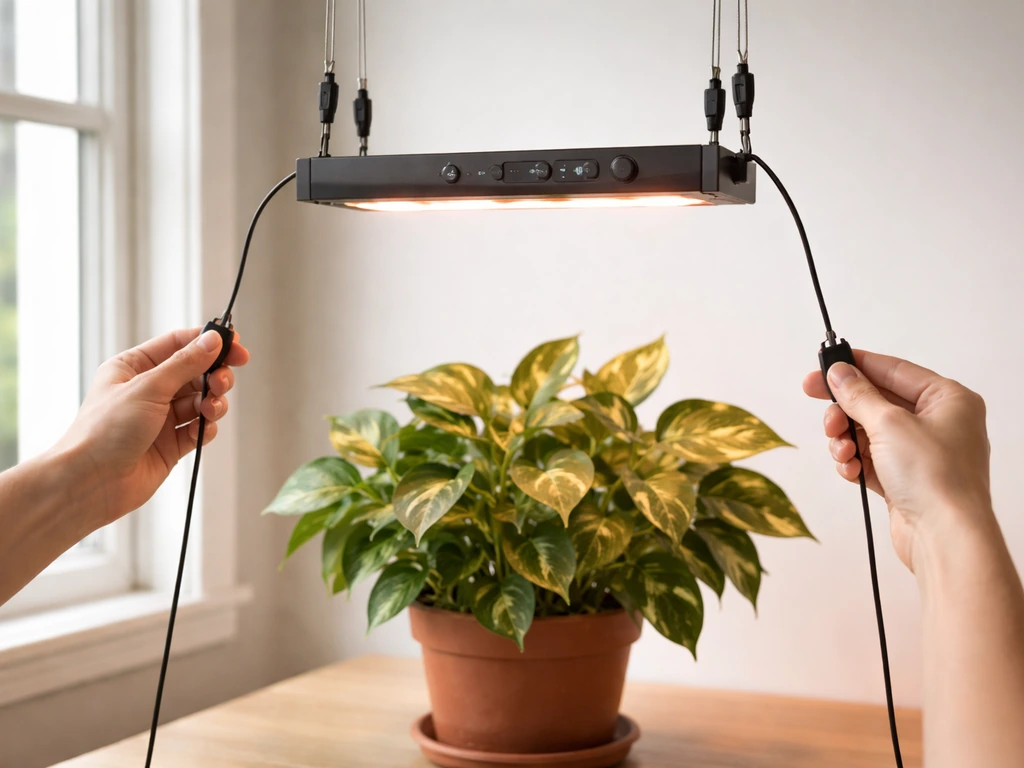
If your space does not have a good natural light source, or if you are growing seedlings year-round, a grow light is the real solution. The key is picking the right one and positioning it correctly. A lot of stretching problems indoors come not from having no grow light but from having one that is too weak, too far away, or on for too little time.
LED grow lights
Modern LED grow lights are the best all-around option for most indoor gardeners. They are energy-efficient, produce less heat than older options, last a long time, and come in full-spectrum versions that cover the red and blue wavelengths plants need most. When shopping, look for PPFD ratings rather than just watts. A good quality LED delivering 200 to 400 PPFD at your plant canopy will support healthy foliage growth. For seedlings or high-light plants, aim for 400 to 800 PPFD. Positioning matters enormously: most LEDs work best 6 to 24 inches above the canopy depending on their power. A common mistake is hanging a grow light 3 or 4 feet up and wondering why the plant is still stretching.
Fluorescent and T5 lights
T5 fluorescent lights are still a solid, affordable option, especially for seedlings and low to medium light houseplants. They do not penetrate deep canopies as well as LEDs, but placed close (2 to 6 inches for seedlings, 6 to 12 inches for established plants), they deliver decent intensity. Choose daylight-spectrum bulbs (5000K to 6500K color temperature) for best results, since these are higher in blue light and will help keep growth compact.
What specs actually matter
| Spec | What it means | What to aim for |
|---|---|---|
| PPFD | Micromoles of usable light per square meter per second at the canopy | 200 to 400 for foliage plants; 400 to 800 for seedlings and high-light plants |
| Color temperature (K) | Warm (red-heavy) vs cool (blue-heavy) light tone | 5000K to 6500K for compact vegetative growth |
| Spectrum | Which wavelengths are in the light | Full-spectrum or red/blue balance; avoid lights heavy only on red or only on warm white |
| Light duration | How many hours per day the light runs | 14 to 16 hours for most plants under grow lights; use a timer |
| Distance to canopy | How far the light hangs above the plant | Follow manufacturer specs; start at 12 to 18 inches and adjust based on plant response |
One note on wattage: the watt rating on grow lights tells you how much electricity the light uses, not how much useful light it delivers. Two lights rated at 45 watts can have very different PPFD outputs depending on the quality of the LEDs. When comparing lights, always look for PPFD data or independent reviews rather than relying on wattage alone.
How to fix a leggy plant and stop it happening again
Improving the light situation stops future stretching, but it does not undo the leggy growth that already happened. Here is how to deal with both.
Pruning and propagating leggy stems
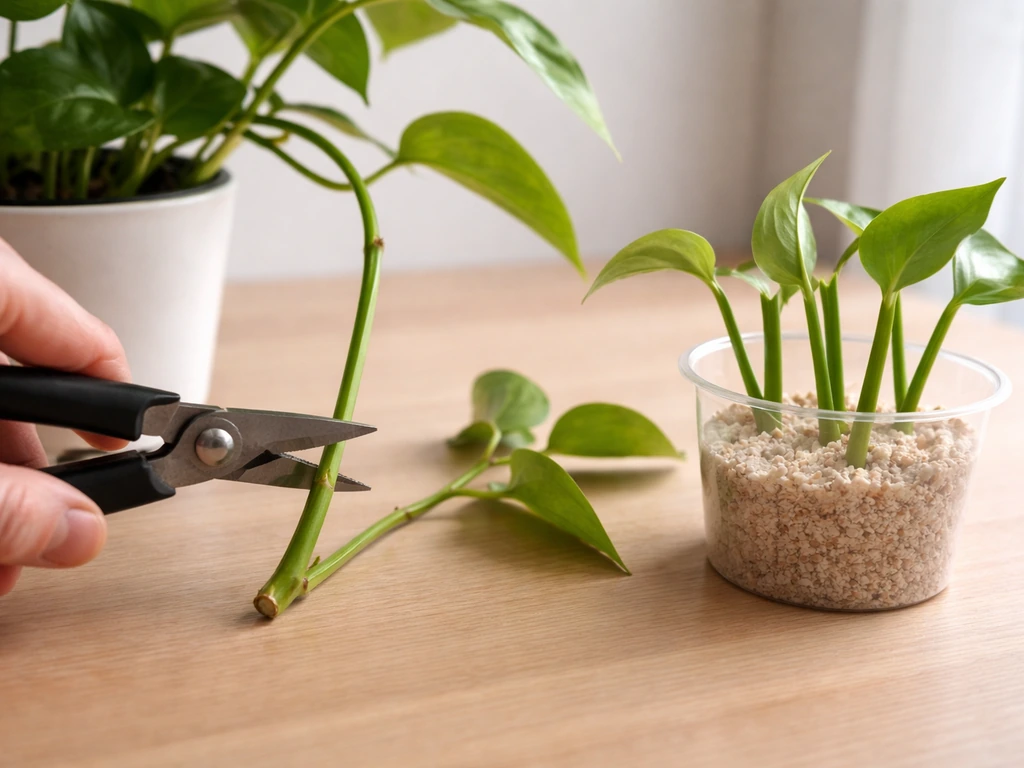
For most houseplants, the best thing you can do with a very leggy stem is cut it back. Prune just above a node (the point where a leaf attaches) to encourage the plant to send out new, bushier growth from that point. If the stem you are cutting off is healthy, try propagating it in water or moist soil. Many common houseplants like pothos, philodendrons, and most herbs root easily from cuttings, so you can turn a leggy problem into extra plants.
Gradually acclimate to stronger light
Do not just move a plant that has been sitting in a dim corner straight into bright direct sun or a powerful grow light. The leaves that developed in low light are not built for high intensity and can burn easily. Move the plant to slightly brighter conditions over one to two weeks, increasing exposure gradually. If using a grow light, start with it higher up and lower it over several days as the plant adjusts.
Preventing it next time
- Match the plant to the space. If your room has low natural light, choose genuinely shade-tolerant plants like pothos, ZZ plants, cast iron plants, or snake plants rather than trying to force a high-light plant to survive there.
- Use a timer on your grow light so the photoperiod is consistent and long enough (14 to 16 hours for most setups).
- Check grow light distance every few weeks as plants grow taller, especially fast-growing seedlings that can outgrow a correctly set-up light quickly.
- Rotate plants regularly so all sides get even exposure.
- Watch new growth. Compact, normally sized new leaves with rich color mean the light is working. Stretched new growth or pale new leaves means you need more intensity or a longer photoperiod.
It is worth remembering that the light spectrum your plant gets matters beyond just intensity. Research into what colors of light drive the best plant growth shows that blue wavelengths play a direct role in keeping stems compact, which is why a full-spectrum setup consistently outperforms single-color or warm-toned lights for preventing legginess. Getting both the intensity and the spectrum right is the real fix, and once you do, the difference in how your plants look and grow is pretty dramatic.
FAQ
Will more light make the already-leggy growth compact again?
Yes. If the plant has already stretched, it usually will not “rewind” past growth. Once you increase light intensity and correct the spectrum, new growth should tighten up, with shorter internodes and deeper green leaves. Expect the most visible improvement on the newest leaves, not the old, leggy stems.
Where exactly should I cut a leggy stem so it regrows bushier?
Pruning works best when you cut above a healthy node, not in the middle of empty stem. If you cut too low (removing the nodes that could regrow), the plant may pause for a long time or regrow only from lower parts. For tall, thin plants, you can prune in stages rather than removing everything at once.
Can I propagate the leggy top, or should I wait?
Often, yes, but timing matters. Propagation is usually easiest from healthy, non-mushy cuttings taken when the plant is actively growing. If your plant is very stressed with leaf drop, focus on fixing light first, then take cuttings a week or two later once it’s producing new growth.
How can I increase light without burning my plant?
Move slowly and watch the leaves. Sudden jumps to strong direct sun or a much closer grow light can cause leaf scorch, crispy patches, or rapid wilting. A practical approach is to increase intensity gradually over 7 to 14 days, and keep a close eye on leaf color and turgor.
If my grow light looks bright but my plant still stretches, is it the spectrum?
Green-tinted lamps can still support growth, but they may not prevent stretching if they are low in blue relative to red. If you notice legginess despite decent brightness, check the red-to-blue balance (or choose full-spectrum lights with a meaningful blue component) rather than relying only on “looks bright” or color.
Can an incorrect light schedule cause legginess even with a good grow light?
Yes, and the common mistake is confusing “time on” with total energy the plant receives. Even with a strong light, running it too few hours can lead to weak, stretched growth. For most foliage plants under grow lights, 14 to 16 hours per day is a typical starting point, but always match the specific plant type.
Why is my plant leaning instead of growing straight up?
It can, especially if the light is off to one side. Plants chase the strongest direction of light, leading to leaning and uneven leaf spacing. Rotating the pot every few days helps keep growth symmetrical, and it can reduce the urge to “escape upward” in one direction.
How do I know if my grow light is too far away?
Yes. If the light is strong enough but too far away, the plant still experiences low intensity at the canopy, which triggers stretching. Measure or estimate placement, then bring the light closer in small increments while watching for heat stress and leaf bleaching.
Why doesn’t “high-watt” mean my grow light will prevent stretching?
Wattage alone is a poor guide because two lights with the same watts can deliver very different PPFD. Use PPFD at the canopy or reliable independent PPFD measurements for choosing a light, and treat watts as only an energy-use number.
Is there a point where too much blue light becomes a problem?
For many houseplants and seedlings, blue helps keep stems compact, but the relationship is not “more blue always better.” Too little blue promotes elongation, but extremely unbalanced setups can still cause other issues like slow recovery or odd coloration. Aim for a balanced red-and-blue (often described as full-spectrum with adequate blue), then adjust intensity and height.
Could legginess be caused by something other than low light?
It’s possible when the plant is in a weak state, such as after leaf drop or when the root system is underperforming. If the plant cannot photosynthesize well or lacks water, it may look pale and thin for reasons beyond light alone. Confirm basics like watering consistency and pot drainage before assuming light is the only cause.