Plants grow best under blue and red light, and for most indoor gardeners, a full-spectrum white LED grow light that covers both of those ranges is the most practical choice. That is the short answer. The longer answer matters, though, because the right color depends on what you are trying to do: start seeds, build bushy leafy growth, or push a plant into flowering. Get the color wrong and you will either end up with a leggy, pale plant or one that refuses to bloom. Here is exactly how it all works and what to buy or adjust.
What Color Light Do Plants Grow Best In: A Guide
Marcus Hartley
19 Apr 2026
How plants actually use light color
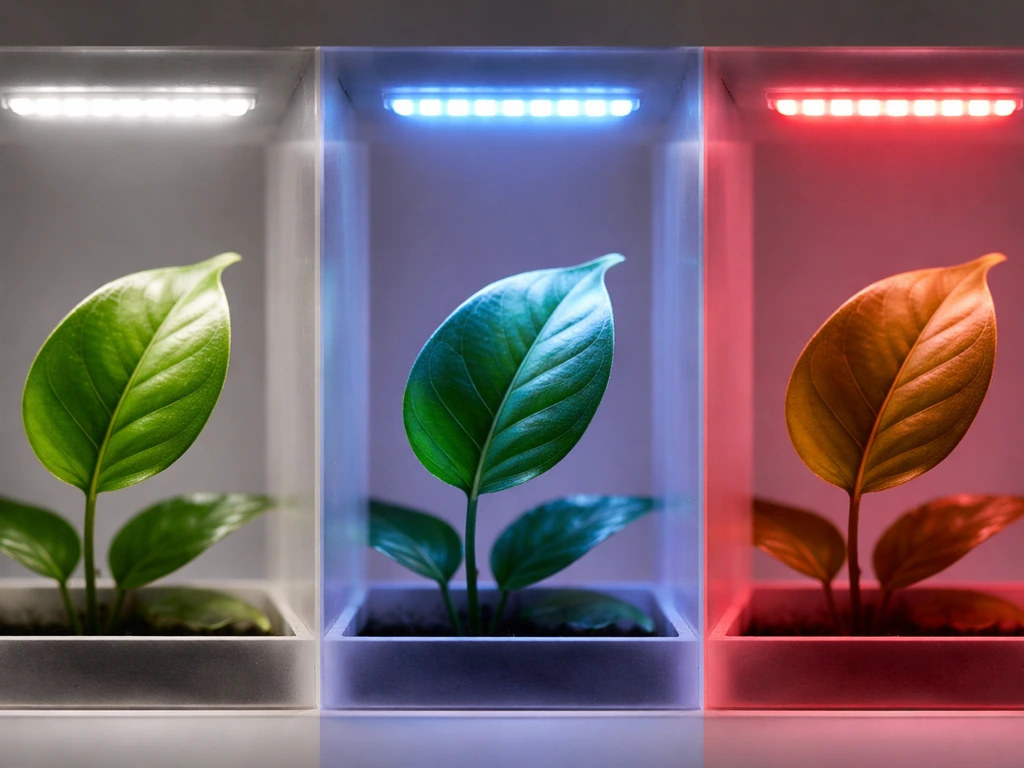
Light color is really just wavelength, measured in nanometers (nm). Plants do not respond to all wavelengths the same way, and understanding even the basics here saves you a lot of guesswork. blank" rel="noopener noreferrer">The range from 400 to 700 nm is called PAR, or photosynthetically active radiation, and it is what powers photosynthesis. But within that range, different wavelengths trigger different responses inside the plant. Color matters because plants respond differently to different wavelengths, which can change how fast they grow and whether they stay vegetative or bloom how different wavelengths trigger different responses inside the plant.
Chlorophyll a and b, the main pigments doing the photosynthesis work, absorb most strongly in the blue range (around 430 to 450 nm) and the red range (around 640 to 680 nm). That is why plants evolved to use those colors so efficiently. Green light (around 500 to 560 nm) is mostly reflected, which is why plants look green to us, though green is not completely useless. Research has shown that green light can actually reduce stem elongation when it partially replaces blue light, meaning it plays a subtle role in controlling plant shape.
Beyond photosynthesis, plants use a different set of pigments called phytochromes to sense light quality, specifically the ratio of red light (600 to 700 nm) to far-red light (700 to 800 nm). This red to far-red ratio, often written as R:FR, is like a signal the plant uses to figure out where it is in the world. High R:FR means open sunlight. Low R:FR means shade (because leaves above absorb red and let far-red through). When that ratio drops, plants switch into shade-avoidance mode: they stretch toward the light, expand their leaves, and in some species, they change their flowering behavior. When light is reduced, plants often enter this mode and stretch more to compete, which is why they grow taller with less light shade-avoidance mode. This is the mechanism behind why plants grown under the wrong light get leggy.
Blue vs. red vs. white: which grow light color wins?
Blue light, in the 400 to 500 nm range, is the powerhouse for vegetative growth. It drives compact, stocky development, promotes thick leaves with good chlorophyll density, and keeps internode spacing tight. If you have ever seen a seedling stretch wildly toward a window, that is what happens when blue light is too low. Blue is especially important in the early stages of a plant's life.
Red light, in the 600 to 700 nm range, is equally critical and works with blue to drive strong photosynthesis. But red's other big job is controlling flowering. For many plants, the duration and intensity of red light exposure signals whether to stay in vegetative mode or shift into reproductive mode. A high red-to-far-red ratio promotes flowering in short-day plants, while a shift toward more far-red can delay or change flowering timing depending on the species. This is not just theory: controlled studies have directly measured how changing the R:FR ratio from LED lighting controls flowering and extension growth in short-day plants.
White LED grow lights are essentially blue LEDs coated with phosphors that convert some of that blue into a broad spectrum including green, yellow, and red wavelengths. A quality full-spectrum white LED will cover both the blue and red peaks well enough for most houseplants, herbs, and vegetables. The plants grow best in white light hypothesis is a useful way to think about why full-spectrum white LEDs often outperform single-color setups for overall growth and health. For a general indoor gardener, a full-spectrum white LED is the most versatile and visually comfortable option because the light does not turn your space pink or purple the way blurple (blue plus red) LEDs do.
Dedicated red and blue LED combinations, sometimes called blurple lights, can be more energy efficient for pure plant output, but they make it hard to check your plants' true color and health under that light. Most indoor gardeners find full-spectrum white LEDs easier to live with and nearly as effective.
| Light Color | Wavelength Range | Primary Effect | Best Used For |
|---|---|---|---|
| Blue | 400–500 nm | Compact vegetative growth, chlorophyll production | Seedlings, leafy greens, herbs |
| Red | 600–700 nm | Photosynthesis efficiency, flowering trigger | Fruiting plants, flowering plants, all-purpose growth |
| Far-red | 700–800 nm | Shade avoidance, stem extension, modified flowering | Used carefully to extend photoperiod or enhance canopy penetration |
| White (full-spectrum) | 400–700 nm+ | Covers blue and red peaks broadly | General indoor gardening, herbs, houseplants, vegetables |
| Green | 500–560 nm | Minor photosynthesis, can reduce elongation | Incidental; not a primary growth driver |
Choosing the right light type for your indoor setup
You have three realistic options for most home setups: LED grow lights, fluorescent bulbs (including T5 and T8 fixtures), and natural sunlight supplemented by artificial light. Each has its place depending on your budget, space, and how serious you are about growing.
LED grow lights
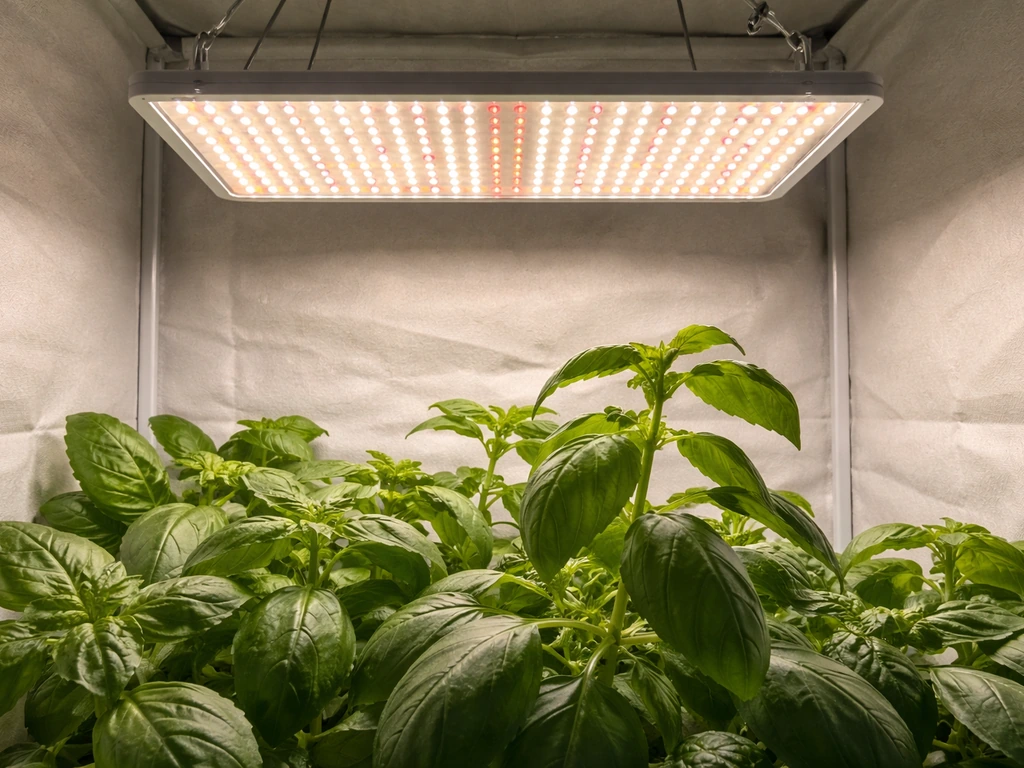
Modern full-spectrum LED panels are the best all-around choice for most indoor gardeners today. They run cool, use less electricity than older bulb types, and last tens of thousands of hours. Look for LEDs labeled full-spectrum or with a color temperature between 3000K and 6500K. Lower color temperatures (3000K to 4000K) lean warmer and richer in red, which is better for flowering and fruiting. Higher color temperatures (5000K to 6500K) are cooler and richer in blue, better for seedlings and leafy growth. Many growers use a 4000K to 5000K light as a reliable middle ground for all growth stages.
Fluorescent lights (T5, T8, CFL)
T5 fluorescent fixtures are still a solid, budget-friendly option, especially for seedlings and low-light herbs. They do not penetrate deep canopies well, so they work best for shallow trays and plants under about 18 inches tall. CFL bulbs (compact fluorescent) work for small setups like a single shelf or a few pots. Choose 6500K tubes for vegetative growth and 2700K for flowering if you want to optimize. Fluorescents run warmer than LEDs and use more electricity for the same light output, but upfront costs are low.
Natural sunlight
Unfiltered sunlight is still the gold standard because it delivers the full spectrum including the ultraviolet and far-red edges that indoor lights often miss. The challenge in most apartments and homes is that south-facing windows get usable sun for only part of the day, and light drops off fast as you move plants back from the glass. If you have a bright south or west window, you can supplement with a simple LED panel for cloudy days or winter months rather than trying to replace sunlight entirely.
| Light Source | Best Spectrum Coverage | Cost | Best For | Drawbacks |
|---|---|---|---|---|
| Full-spectrum LED | Excellent (covers blue and red peaks) | Medium upfront, low running cost | Most indoor setups, all growth stages | Higher initial price than fluorescent |
| T5 Fluorescent | Good for vegetative growth | Low upfront | Seedlings, herbs, shallow trays | Less canopy penetration, higher running cost |
| CFL Bulb | Decent for small setups | Very low | Single plants, propagation shelves | Low output, needs to be very close |
| Natural sunlight | Full spectrum, unmatched | Free | Any plant near a bright window | Inconsistent, limited in apartments |
Match the light color to your plants
Not every plant needs the same light color emphasis, and knowing what you are growing helps you dial in the right setup.
Seedlings and cuttings
For seeds and young cuttings, prioritize blue-rich light in the 5000K to 6500K range. For a science fair project, you can test a few common light colors side by side to see which one produces the best growth for your chosen plant. Blue light keeps seedlings compact and prevents that dreaded leggy stretching. At this stage, you do not need a lot of red. Keep the light close (6 to 12 inches above the tray) and run it for 16 hours per day to simulate long summer days.
Leafy greens and herbs
Basil, lettuce, spinach, mint, parsley, and similar plants thrive under blue-dominant or balanced full-spectrum light. They want to stay vegetative, so you are not trying to trigger flowering. A 4000K to 5000K full-spectrum LED is ideal. These plants also do well under fluorescent T5s kept just a few inches above the canopy.
Flowering and fruiting plants
Tomatoes, peppers, orchids, African violets, and any plant you want to flower or fruit need more red light. A warmer spectrum, around 3000K to 4000K, or a dedicated grow light with enhanced red output, will push plants toward flowering. If you have been growing a plant under a cool blue-heavy light and it is not flowering, switching to a warmer light or adding a dedicated red channel is often the fix. Far-red light (just beyond 700 nm) can also be added strategically: it enhances canopy penetration and, in some species, promotes flowering or speeds development, but too much far-red without adequate red shifts the R:FR ratio and can cause unwanted stem elongation.
Low-light and shade-tolerant houseplants
Pothos, snake plants, peace lilies, and ZZ plants evolved under a low R:FR canopy environment. They can survive under almost any moderate light source, including the warm ambient light from regular room bulbs, though a small full-spectrum LED will definitely help them look their best. For these plants, color precision matters less than just getting enough light intensity.
Getting the intensity and placement right
Color is only half the equation. This is why, at a minimum, plants need light to grow, even if the exact color spectrum changes what kind of growth you get. Even the perfect light spectrum will fail your plants if the intensity is too low or the fixture is too far away. Light intensity drops off dramatically with distance, so placement matters more than most beginners expect.
- Seedlings and shallow trays: hang the light 6 to 12 inches above the canopy for compact growth.
- Leafy greens and herbs: 12 to 18 inches is the typical sweet spot for most LED panels.
- Flowering and fruiting plants: follow the manufacturer's recommendation, often 18 to 24 inches, since these plants usually need higher intensity but are also more sensitive to heat stress if the light is too close.
- Low-light houseplants: 24 to 36 inches is usually fine; these plants do not want intense direct light.
For photoperiod (day length), most vegetative plants do well on 14 to 16 hours of light per day. Flowering plants that are short-day types need a period of uninterrupted darkness, usually 12 hours or more, to trigger blooming. Long-day plants flower with 14 to 18 hours of light. If you are not sure which category your plant falls into, 12 to 14 hours of light per day is a safe default that works for most common houseplants and herbs without accidentally disrupting their natural cycles.
A basic outlet timer costs a few dollars and is one of the most useful things you can add to your setup. Running your lights at random or forgetting to turn them off leads to inconsistent results, especially with plants that care about day length. Set it once and leave it.
Signs your plant is getting the wrong light (and how to fix it)
Plants are pretty honest about whether the light is working. Here are the most common signals and what they are telling you. If you are wondering would a plant grow well in only green light, the key is that green is reflected more than absorbed, so it usually is not enough by itself for strong growth.
Leggy, stretched stems with wide spacing between leaves
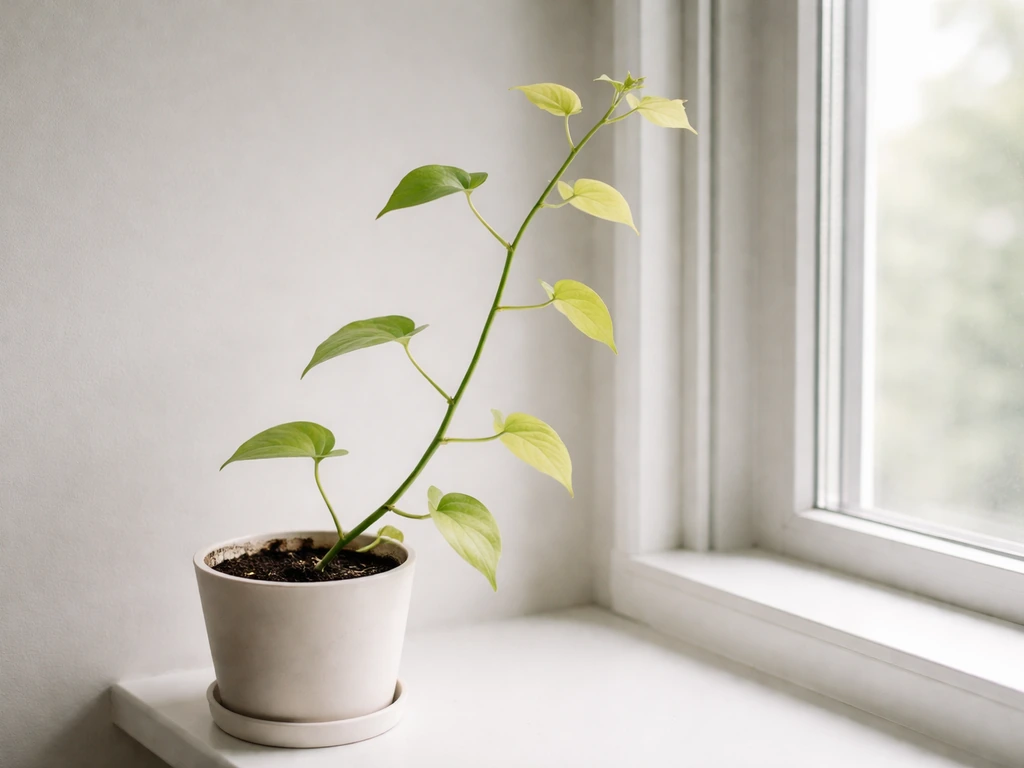
This is the classic shade-avoidance response. The plant is detecting a low R:FR ratio or simply not enough light intensity overall. Fix: move the light closer, increase the duration, or switch to a light with more blue content. This is especially common when seedlings are grown under warm household bulbs instead of a proper grow light.
Pale, yellowing leaves (not from overwatering)
Light-green or yellowing new growth often means the plant is not producing enough chlorophyll, which typically points to low light intensity rather than the wrong color. Check how close the light is and whether the plant is actually in the light footprint of the fixture, not just near it.
Plant is growing well but not flowering
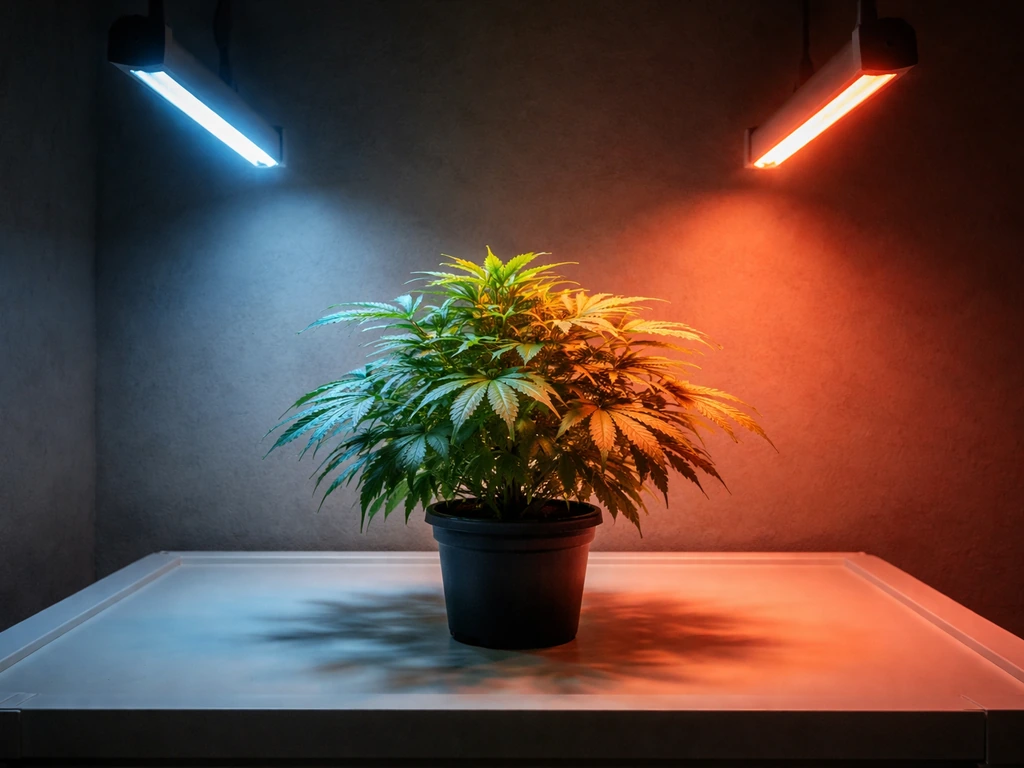
If your plant is healthy and bushy but refusing to bloom, the light is probably too blue-heavy or the photoperiod is wrong. Pure yellow light has almost no blue or red, so it often leaves plants unable to photosynthesize and grow normally. Try shifting to a warmer spectrum (3000K to 4000K), reduce the daily light hours to around 12 if it is a short-day plant, or check whether ambient light in the room is interrupting the dark period at night.
Scorched or bleached patches on leaves
Bleached spots or a washed-out appearance usually mean the light is too intense or too close. Raise the fixture a few inches and see if new growth comes in normal. High-intensity LEDs can cause light stress even in plants that supposedly love full sun, especially if they were acclimated to lower light before.
Small, curled, or stiff leaves
Overly compact, stiff, or downward-curling leaves can sometimes indicate too much blue light intensity, particularly with seedlings. This is less common than the other problems but worth knowing. Try raising the light slightly or reducing daily hours by an hour or two and see if new growth normalizes.
The honest truth is that most light problems indoors come down to not enough intensity, not the wrong color spectrum. Color optimization matters most once you have the basics right: a decent full-spectrum light at the right distance and run time. Start there, watch your plants for a couple of weeks, and then fine-tune from there.
FAQ
Will plants grow in only blue or only red light, and which one is better to start with?
They can survive longer on red than on blue alone, but neither is ideal for most plants. Blue-only light usually produces compact growth but can limit overall health and, for many plants, flowering control. Red-only light can drive photosynthesis but often leads to stretched or less sturdy growth. If you must choose one for general success, start with blue-rich light for seedlings, then add red later once the plant has enough leaf mass.
What is the difference between “LED color temperature” (like 4000K, 6500K) and “light color” (blue, red)?
Color temperature describes how the spectrum is balanced inside a white LED, not a single blue or red wavelength. For example, a “6500K” bulb typically includes relatively more blue, while “3000K to 4000K” includes relatively more red. You cannot assume all 5000K lights have the same blue-to-red ratio, so it helps to look for full-spectrum labeling and, ideally, product photos of the emitted spectrum or PAR ratings.
How close should I place the light to avoid bleaching while still preventing leggy growth?
Use a “new growth test” rather than a fixed distance. Start near the recommended range (often 6 to 12 inches for seedlings), then look at the next 7 to 14 days of growth. If you see washed-out or bleached patches, raise the fixture a few inches. If plants are stretching or internodes lengthen, lower it or increase daily hours.
Do I need far-red light to get better flowering, or is it risky?
Far-red can help mimic shade cues and sometimes supports flowering or faster development, but it also changes the red to far-red ratio, which can push unwanted stretch. Use far-red only if you are deliberately optimizing flowering timing for a species that responds well to it, and avoid adding far-red without also maintaining adequate red and total intensity.
If my plant is not blooming, how can I tell whether it is a light-color problem or a day-length problem?
First check the photoperiod. If you are growing a short-day plant, even perfect spectrum often fails when the dark period is interrupted by room lights or a timer mistake. If the plant is getting correct darkness, then spectrum becomes more likely, especially if it has been under a cool, blue-heavy setup for weeks without shifting toward a warmer (more red) spectrum or increasing red output.
Can ambient room light during the night stop flowering even if my grow light timer is correct?
Yes. Many flowering plants require uninterrupted darkness, even low ambient light can count as “day” to them. Cover the area around the grow setup at night, turn off nearby lamps, and avoid reflections from bright windows so the dark period is truly dark.
What should I do if my seedlings are getting too stiff, clumpy, or curling downward?
That pattern can happen when blue light is too intense for the seedling stage. Try raising the light slightly, reducing daily hours by 1 to 2, and keep the light footprint covering the whole tray rather than blasting only the center. Recheck leaf posture in the next week of new growth.
Is full-spectrum white always the best choice, or are targeted red-blue mixes sometimes better?
Full-spectrum white is the most forgiving for most indoor gardeners because it covers both blue and red and is easier to maintain. Red-blue mixes can be efficient when you have a specific goal, like maximizing flower output, but they make it harder to visually judge plant health and can lead to overdoing one band if you guess. If you use a mix, measure distance and follow up with plant response, not just color labels.
Why does “more light” sometimes still fail even when the spectrum is correct?
Because distance and schedule control intensity and daily light dose. If the fixture is too far, plants may still be underpowered even with the right colors. If you run lights too long, you can cause stress, washed-out leaves, or weak acclimation. The fix is to adjust placement first, then fine-tune duration, and verify by watching new growth over 1 to 2 weeks.
Should I use a timer for all plants, or only flowering plants?
Use a timer for everything that you care about, even vegetative plants. Consistent day length helps prevent unnecessary stress and makes growth easier to interpret when you troubleshoot. This is especially important if you are trying to grow short-day or long-day plants, but it also reduces variability for herbs and leafy greens.