Short answer: not very well. A plant can survive for a while under pure yellow light, but it won't thrive. [Yellow light sits in the 580–600 nm range](https://pubmed. ncbi.
How Well Would a Plant Grow in Pure Yellow Light?
Marcus Hartley
22 Apr 2026
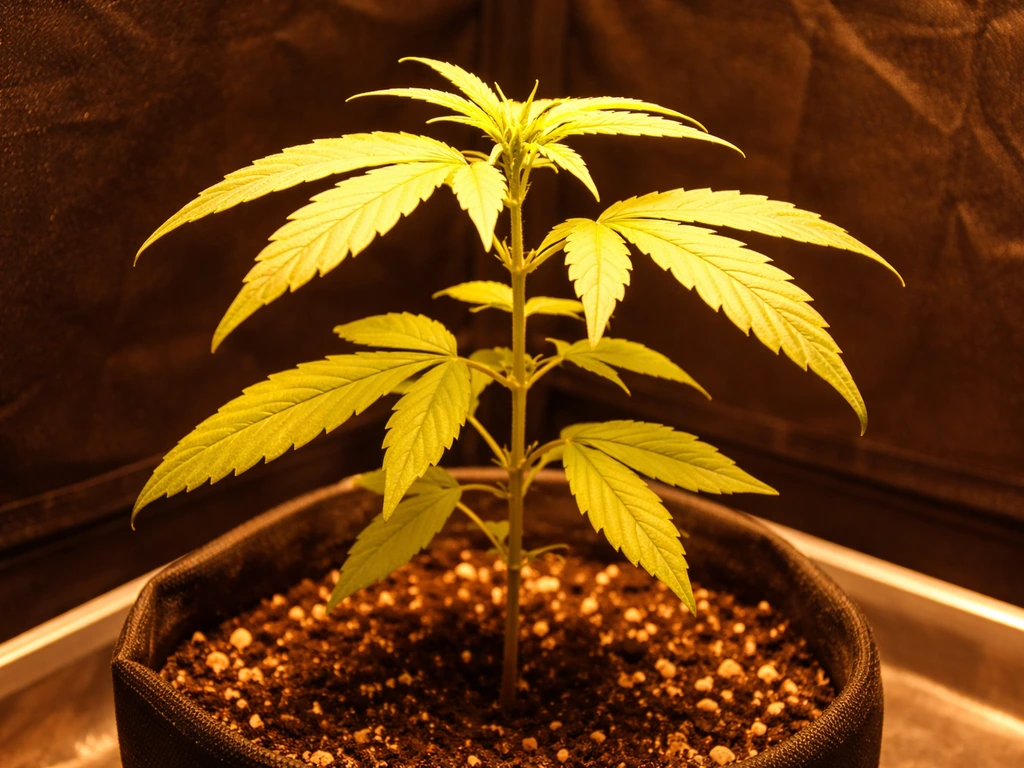
nlm. nih. gov/11272736/), and while that's technically inside the photosynthetically active radiation (PAR) window, it's one of the least efficient wavelengths for driving photosynthesis. [Research on lettuce, one of the most studied crops in grow-light science, has shown that monochromatic yellow light actively suppresses chlorophyll and chloroplast formation](https://ntrs.
nasa. gov/citations/20040112509), which is about as fundamental a problem as you can have. If you're trying to decide whether a yellow bulb or yellow LED will work for your plants, the answer is: it won't do the job on its own. But let's get into the why, what you'd actually see, and what to do about it.
If you want a quick extension of this idea, see can colored lights affect how plants grow for how wavelength choices change growth.
Why yellow light is different from full-spectrum light for plants
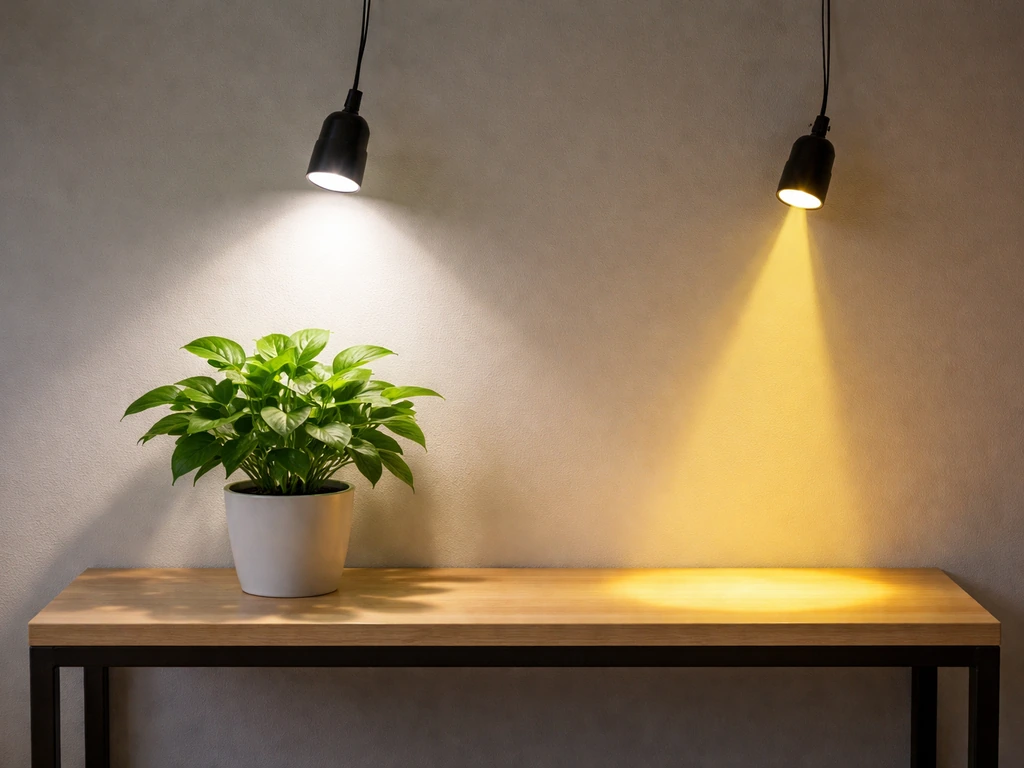
Full-spectrum white light (like sunlight or a good broad-spectrum LED) covers the entire PAR range from roughly 400 to 700 nm. Plants have evolved to use different parts of that spectrum for completely different jobs. It's not just one system doing one thing, it's more like a control panel where different wavelengths flip different switches.
The two main photoreceptor systems are chlorophylls (which absorb best at around 430 nm in the blue range and again at 642–663 nm in the red range) and photoreceptors like cryptochromes, phototropins, and phytochromes. Blue-light receptors handle stomatal opening, phototropism, and chloroplast movement. Red and far-red wavelengths toggle phytochrome between active and inactive states, which governs whether a plant stretches toward shade or stays compact, and whether it flowers. Yellow light at 590 nm doesn't do much for either group. Chlorophyll barely absorbs it. The photoreceptors largely ignore it. You're essentially sending a signal on a frequency nobody is tuned to.
That's the core problem. Pure yellow light isn't just a weaker version of full-spectrum light, it's missing the specific wavelengths that plants have spent millions of years evolving to respond to. Compared to the broader question of what color light plants grow best in, yellow is genuinely one of the worst single-color options you could choose, edged out only by green (which plants largely reflect) as the most inefficient choice. In general, the best results come from using a fuller spectrum of light rather than a single color.
Photosynthesis impact: what plants use vs. what they miss in pure yellow
Yellow light does have some photosynthetic activity. The McCree action spectrum, a standard reference for how different wavelengths drive photosynthesis, shows a minor shoulder of activity around 590–620 nm. So it's not zero. But the peaks are at blue (~420–430 nm) and red (~660–670 nm), and those are the wavelengths where chlorophyll really gets to work. Yellow sits in a valley between those peaks.
There's also the Emerson effect to consider. These findings trace back to classic work by scientists who demonstrated that plants require light to grow properly which scientists showed that plants need light to grow. Photosynthesis is most efficient when red light around 660 nm is present alongside longer wavelengths. Pure yellow at 590 nm doesn't contribute to that synergy. The result is that even if your yellow light is bright enough to register on a lux meter, the plant isn't converting much of it into chemical energy. A plant under yellow light is basically running on reduced power.
Beyond raw photosynthesis, the missing blue wavelengths mean stomata won't open as readily. Stomatal opening is triggered by blue light at very low intensities, around 5 to 10 micromoles per square meter per second, and blue light is roughly 20 times more effective at opening stomata than red light. No blue means partially closed stomata, which limits CO2 uptake and gas exchange, compounding the photosynthesis problem. And without the red/far-red balance that phytochromes depend on, the plant's developmental signaling goes haywire. It can't tell whether it's in shade or full light, and it responds accordingly.
What you'd actually see: growth outcomes under pure yellow light
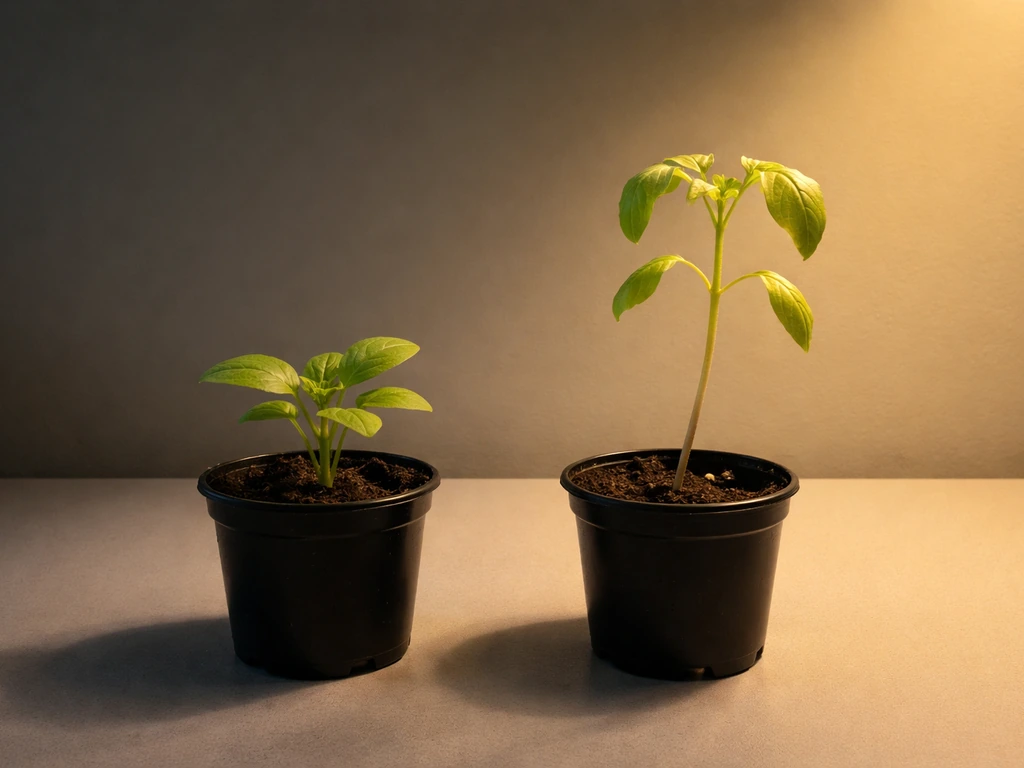
This is where it gets practical. Here's what research and real-world observation suggest you'd notice if you ran a plant exclusively under yellow light:
- Etiolation and stretching: Without blue light suppressing hypocotyl elongation, and without a proper red/far-red ratio signaling 'you're in good light,' plants tend to stretch toward where they think better light might be. Stems get long and weak, internodal spacing increases, and the plant looks leggy fast. Amber light around 595 nm has been shown in tomato studies to cause strong shoot elongation when blue wavelengths are absent.
- Smaller, paler leaves: Suppressed chlorophyll and chloroplast formation means leaves can't build the photosynthetic machinery they need. Expect lighter green, yellowish, or pale leaves rather than deep, healthy green.
- Slower growth overall: Even at adequate PPFD levels, plants under yellow-dominant light show slower biomass accumulation than those under red and blue light. Studies comparing narrowband amber to mixed-spectrum treatments consistently show reduced growth rates.
- Poor flowering and fruiting: Phytochrome signaling (which depends on red and far-red wavelengths) governs flowering for most species. Without the right red/far-red balance, short-day plants won't get the night-break signal they need, and long-day plants may not trigger properly either. Expect little to no flowering under pure yellow.
- No phototropism response: Phototropins need blue light to orient leaves and stems toward the light source. Under yellow-only, plants may not track the light efficiently, reducing the light they actually capture.
Plant-by-plant expectations: who can tolerate it and who really can't
No plant is going to thrive under pure yellow light long-term. But there's a real difference between a plant that slowly declines over months and one that deteriorates within weeks. Here's a rough breakdown of common houseplants and how they'd likely fare:
| Plant | Yellow-light tolerance | What you'd likely see |
|---|---|---|
| Pothos (Epipremnum aureum) | Relatively higher — can survive | Slow growth, leggy vines, pale leaves, will decline over time |
| Snake plant (Sansevieria) | Moderate — can hold on | Very slow to no growth, color may fade, roots stay alive but dormant-ish |
| Philodendron (heartleaf) | Moderate — can survive short-term | Stretchy stems, smaller leaves, gradual decline without spectrum fix |
| Peace lily (Spathiphyllum) | Low — won't flower, may survive | No blooms at all, leaves stay green but growth nearly stops |
| African violet (Saintpaulia) | Very low — flowering stops immediately | Blooms fail, leaves may yellow, plant won't produce new healthy growth |
| Lettuce / herbs (edibles) | Very low — growth suppressed | Research directly shows yellow light suppresses lettuce growth and chlorophyll formation |
| Orchids | Very low — flowering and morphology affected | Phytochrome-dependent flowering cycles disrupted, weak growth, no blooms |
| Succulents / cacti | Low to moderate — slow growth | Etiolation is likely (stretching toward imaginary better light), color loss, structural weakness |
| Tomatoes / fruiting plants | Very low | Strong etiolation, no fruit set, biomass severely reduced vs. red/blue spectrum |
The pattern here is that low-light-tolerant foliage plants with minimal flowering demands can hang on longest under yellow light, but even they will decline. Actively growing plants, seedlings, anything that flowers or fruits, and edibles will show problems quickly. This lines up with the broader principle that <a data-article-id="E021D29A-9A34-45B1-8BE7-08C326C76542">plants grow taller with less useful light because of shade-avoidance responses</a>, and yellow-only triggers those same responses even when photon intensity is technically present. If you are wondering whether more light would fix this, note that plants can still grow taller with less useful light due to shade-avoidance responses plants grow taller with less useful light.
How to test it at home: a simple setup and what to watch for
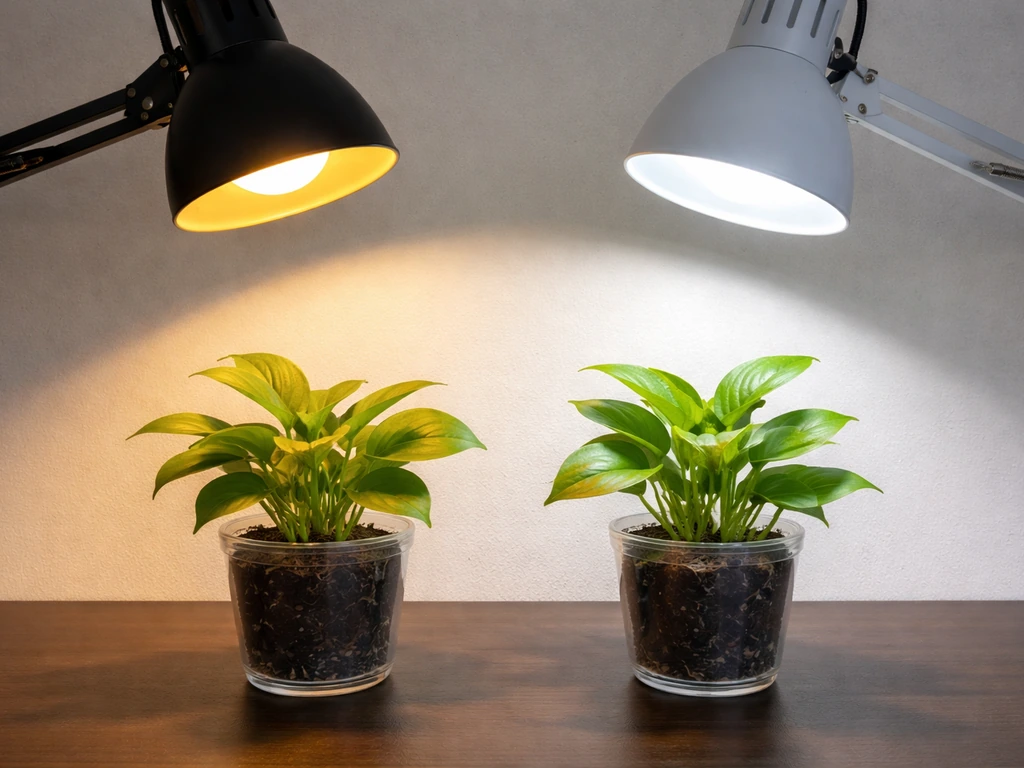
If you're curious whether your yellow light source is doing anything useful, or you want to document the effect as a project (this makes a great science fair comparison too), here's how to set it up cleanly and what to measure.
Basic setup
- Pick a fast-responding plant for the experiment. Lettuce, basil, or pothos cuttings all show results within 2–4 weeks. Avoid slow-growing succulents if you want clear data.
- Set up two identical containers side by side: one under your yellow light source, one under a standard white/full-spectrum LED or near a window.
- Place the yellow light close enough to deliver real intensity — at least 100 lux measured at leaf level, ideally more. Use a cheap smartphone lux meter app or a dedicated light meter to check. Note: lux isn't a perfect plant metric, but a rough conversion for yellow light puts 1,000 lux at around 15–18 micromoles per square meter per second of PAR.
- Run both lights on the same schedule: 14–16 hours on, 8–10 hours off. This photoperiod is appropriate for most foliage and edible plants.
- Keep watering, soil, temperature, and humidity identical between the two setups so light is the only variable.
What to measure and when
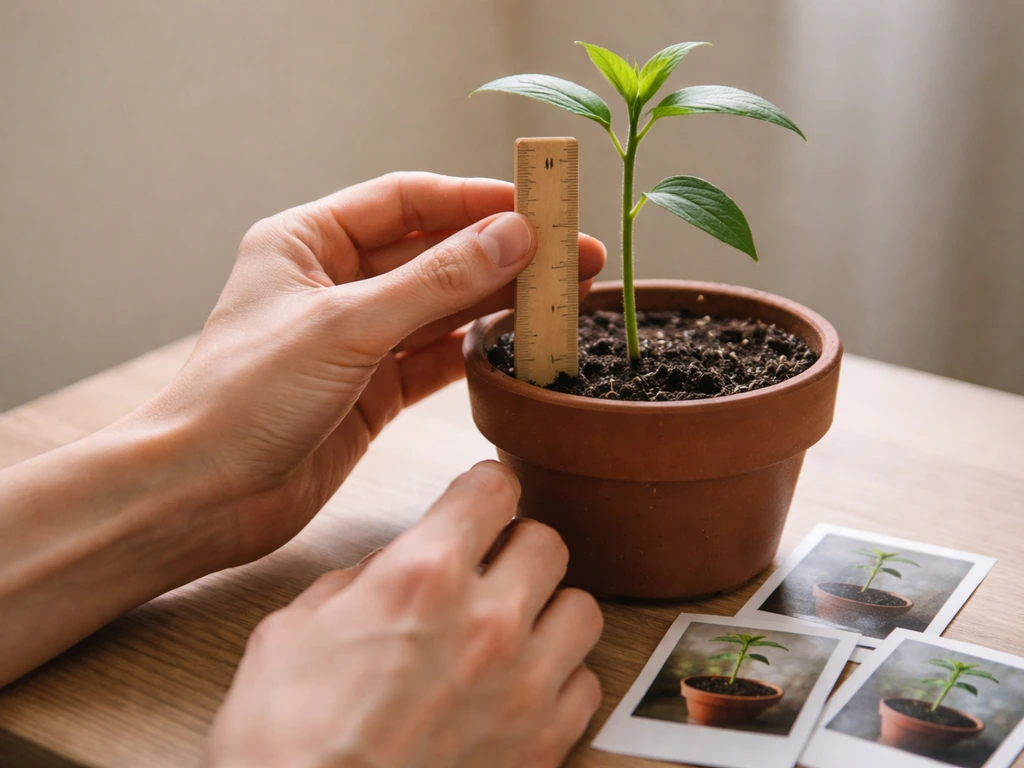
Check both plants every 5–7 days and note the following. You don't need lab equipment, just your eyes, a ruler, and a few photos.
- Stem height and internode length: Measure from soil to the growing tip. Longer internodes (the gaps between leaf attachment points) signal etiolation and stretching.
- Leaf color: Hold a leaf from each plant next to each other. Is the yellow-light plant paler, more yellow-green, or showing yellowing at the edges?
- New leaf production: Count how many new leaves appear each week. A healthy plant under adequate light produces new leaves regularly. Slowing or stopping new growth is a red flag.
- Stem thickness and firmness: Etiolated stems feel soft and weak. Healthy stems are firm. You can usually tell by gently pinching.
- Root health (at end of trial): When you finish, unpot both plants and compare root development. Yellow-light plants often show stunted root systems because reduced photosynthate means less energy for root growth.
What does 'good enough' look like? A plant that's producing at least one new leaf per week, keeping its color, and not stretching dramatically is at minimum maintaining itself. Anything less than that and your light source isn't cutting it.
How to improve results: fix the spectrum, intensity, and photoperiod
If you've confirmed that your yellow light isn't delivering, here are your real options, in order of how much they help.
Add the missing spectrum (this is the biggest fix)
The most direct solution is adding blue light. Even a small amount of blue (around 430 nm) changes outcomes dramatically. Studies on tomato show that adding narrow blue to an amber-dominant spectrum suppresses the excess stretching and increases biomass. You don't need an expensive setup, a second bulb that emits cool white or daylight spectrum (5000–6500K color temperature) contains enough blue to make a difference. Alternatively, swap the yellow light entirely for a broad-spectrum LED that covers 400–700 nm. A 'daylight' or 'full-spectrum' LED bulb from any hardware store is a better grow light than a yellow one.
Add red light for photosynthesis and flowering
If you want flowering plants to actually bloom, or if you're growing edibles, you need red light in the 640–670 nm range. Dedicated red LEDs are cheap. A warm white bulb (2700–3000K) has a red-shifted spectrum that at least adds more red than a yellow source. For flowering control specifically, red and far-red ratio matters: phytochromes respond to the balance between the two, so a spectrum that includes both (as any decent grow light does) will give you control over flowering that pure yellow simply can't provide.
Check your intensity
Even with a better spectrum, intensity matters. Most foliage houseplants like pothos and philodendrons need around 50–250 micromoles per square meter per second (PPFD) at the leaf surface. African violets want 50–150. Orchids range from 40–500 depending on the genus. Succulents need at least 100–200. Fruiting or flowering plants in active growth need 400–1,200. If you're relying on a light meter that reads lux, use a rough conversion: for a warm white or yellow source, about 1,000 lux translates to roughly 15–18 PPFD. That means many 'bright' lamp setups are delivering far less plant-useful light than they appear to.
Get the photoperiod right
Plants need a dark period. Continuous light causes abnormal responses in many species, especially orchids. A 14–16 hour photoperiod works well for most foliage plants and herbs. For short-day flowering plants (like some orchids, kalanchoe, or poinsettia), you'll need to provide 12 hours or less of light to trigger blooming. The phytochrome system reads the length of the dark period to regulate these responses, which is another reason why spectrum quality (specifically red/far-red presence) matters alongside the timer.
Practical grow-light recommendations for your indoor setup
You don't need to spend a lot to fix a yellow-light situation. Here's what actually works, scaled from minimal budget to more serious indoor growing:
| Setup type | Best for | What to buy / use | Placement tip |
|---|---|---|---|
| Daylight LED bulb (5000–6500K) | Low-demand foliage plants, maintaining growth | Standard screw-in LED from hardware store, look for 'daylight' label | 6–12 inches above plant canopy, 14–16 hrs/day |
| Warm white + cool white combo | Mixed houseplants, seedlings | One 2700K bulb + one 5000K bulb in adjacent fixtures | Overlap coverage so both spectra reach leaves |
| Full-spectrum LED grow light (T5 or bar-style) | Herbs, foliage, low-light plants that need more reliability | Any T5 fluorescent or LED panel rated 'full spectrum' or 'grow light' | 12–18 inches above canopy for most plants |
| Dedicated red/blue LED grow light | Seedlings, edibles, active vegetative growth | Budget grow panels from garden centers; look for red 660 nm + blue 450 nm | Follow manufacturer distance guide; start farther away |
| Broad-spectrum quantum board LED | Fruiting, flowering, serious indoor gardens | Quantum board or COB LED with full PAR coverage | Hang 18–24 inches above canopy; use a lux meter to confirm adequate PPFD at leaf level |
For most indoor plant parents, the sweet spot is a full-spectrum LED grow light in the $20–$60 range paired with a simple outlet timer. That replaces your yellow light entirely and solves the spectrum problem without any science-fair complexity. If you're growing anything that flowers or fruits, spend the extra few dollars on a light that lists specific wavelength output (blue around 450 nm and red around 660 nm), rather than one that just says 'plant light' on the box.
The honest takeaway: yellow light as a sole light source for plants is a losing setup. It's not a question of intensity or hours, the spectrum itself is missing what plants are built to use. Switching to almost any broad-spectrum white light is an immediate upgrade. The plants grow best in white light hypothesis is largely supported by how full-spectrum lighting matches the wavelengths plants evolved to respond to. If you've been watching a plant look worse under a yellow bulb and wondering what's wrong, that's your answer. Get the right spectrum in there, give it the intensity the plant actually needs, run it on a timer, and you'll see the difference within a couple of weeks.
FAQ
If my yellow bulb is very bright, will the plant grow better than you’re saying?
Brightness alone cannot replace missing wavelengths. Even at high intensity, pure yellow still delivers little blue and the red/far-red balance plants use for stomata control and development signaling, so you may see slow decline, stretching, and poor new growth rather than healthy progress.
How can I tell whether the problem is spectrum versus insufficient intensity in my setup?
Do a simple A/B test: keep the distance and timer identical, then compare the yellow light against a broad-spectrum “daylight” or full-spectrum LED at similar brightness. If the plant’s new leaf rate improves and stretching drops under the broad-spectrum light, the spectrum was the limiting factor. If both look the same, intensity may be too low.
Does a yellow light window from a “yellow” LED still count as pure yellow?
Often it is not truly monochromatic. Many “yellow” LEDs have broader emission tails that include some blue or some red. That can slightly improve outcomes, but unless the spectrum includes substantial blue and meaningful red wavelengths, it will still underperform compared with a full-spectrum or blue-plus-red grow light.
Will plants in pure yellow light become etiolated (leggy) even if they are not reaching for the lamp?
Yes. Shade-avoidance can be triggered by missing red/far-red cues and an incomplete wavelength mix, not just by plant movement toward a lamp. You might see internodes lengthen and leaf spacing increase even when the plant stays at a fixed position.
Can a yellow-light setup be okay for plants that are “low light tolerant”?
They may survive longer, but “survival” is not “thriving.” Low-light-tolerant foliage plants can persist with reduced growth, but they still need enough blue for efficient gas exchange and enough red/far-red signaling for normal development, so you should expect gradual thinning or slow decline over time.
What should I look for first, chlorosis, stretching, or something else?
Common early signs are slower new leaf production, reduced coloration (often looking dull rather than classic leaf-yellowing), and noticeable stretching or longer gaps between leaves. Stomata-related limitations also show up as weak growth even when the plant looks “green enough.”
Is it possible to use a yellow bulb outdoors or near windows and get decent growth?
If your plants also receive some natural daylight spectrum, then yellow is not the only light quality influencing them. Outdoors, sunlight covers the full PAR range, so pure yellow is unlikely. Indoors near a window, the window light plus your yellow lamp can still be workable, but the results depend on how dominant the yellow source is.
How much blue do I actually need to see improvement if I’m adding blue to yellow?
You do not need equal amounts across colors, a modest blue addition around the blue peak region (roughly 430 to 450 nm) can shift outcomes. Practically, if your plant’s new leaf rate increases and stretching decreases after adding a small cool or daylight source while keeping total hours constant, you have likely crossed the minimum blue effectiveness threshold.
What photoperiod is safest to start with for a plant that’s currently under yellow light?
Start with a conservative 12 to 14 hours of light per day for most foliage plants, then adjust toward 14 to 16 hours if growth improves and you do not see stress. If you’re working with species that flower based on short days, use 12 hours or less and keep the dark period consistent.
Does using a timer and giving “more hours” fix pure yellow light problems?
It can slightly reduce how fast the plant deteriorates, but it does not solve the spectrum gap. Longer photoperiods can also increase abnormal responses in some species, so it is better to change the spectrum first, then fine-tune hours.
If my light meter reads high lux, should I trust it for plant growth under yellow light?
No. Lux reflects human brightness perception, not how efficiently plants use the wavelengths. Under warm or yellow-shifted sources, lux can be misleadingly high. If possible, target PPFD values for your plant type, or at least compare setups using the same meter and method to look for relative changes.
For flowering plants, is adding red to yellow enough, or do I need far-red too?
Adding red helps flowering more than yellow alone because it supports the red-light pathway. For better control over flowering timing and compactness, include both red and a far-red component (or use a spectrum that naturally contains them), since the phytochrome system responds to red-to-far-red balance rather than red alone.
How long should I wait before concluding the yellow light setup is a failure?
For most active growers, check weekly. If you see no meaningful new leaf production and persistent stretching within about 2 to 4 weeks, plan to change the spectrum. Seedlings, fast-growing edibles, and flowering attempts often show failure sooner, sometimes within a couple of weeks.