
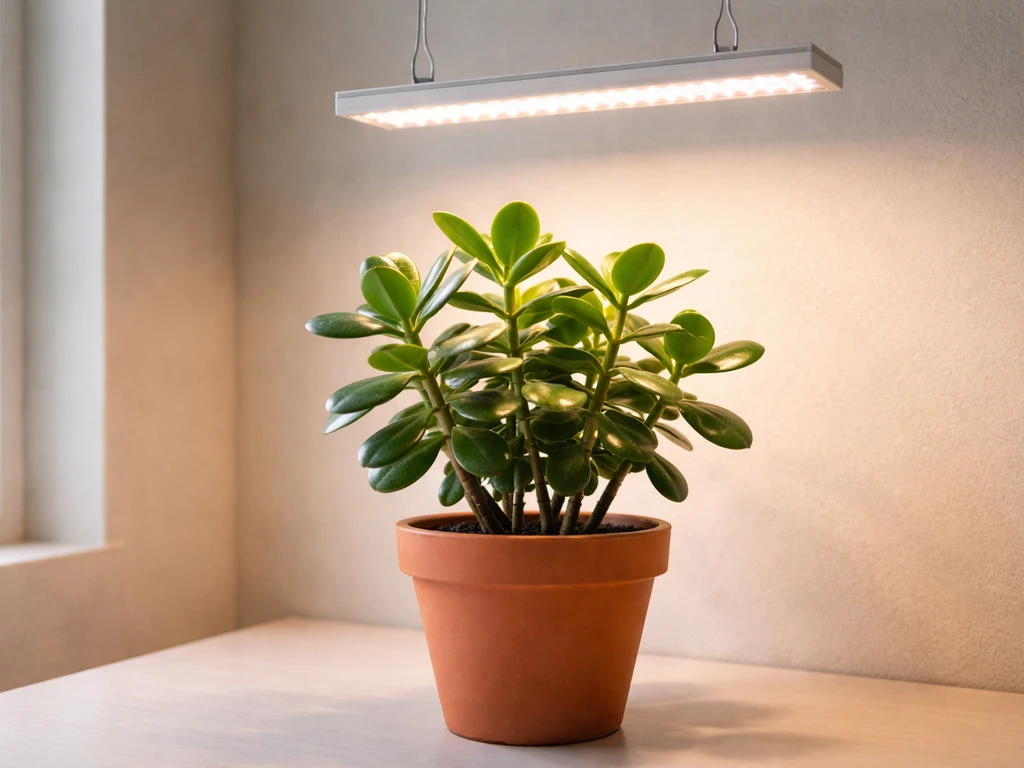
Yes, jade plants absolutely benefit from grow lights, especially if your home doesn't get at least four to six hours of direct sun per day. Jade (Crassula ovata) is a succulent that wants real, intense light to stay compact, healthy, and deep green. A dimly lit apartment corner will keep it alive, but you'll end up with a stretched, leggy plant that looks nothing like the lush, tree-like jade you're aiming for. A well-positioned LED grow light running 12 to 14 hours a day can fully replace or supplement a weak window and keep your jade thriving year-round.
Do Jade Plants Like Grow Lights? A Practical Guide
Marcus Hartley
12 May 2026
Does jade actually need grow lights, or will a window do?
Jade plants are not low-light plants, even though they're often sold as easy, forgiving houseplants. They come from South Africa, where they get intense, direct sun for hours every day. Indoors, they do best with four or more hours of direct sunlight. A south-facing window in a house with no shade obstructions can sometimes pull this off, but most apartments, north-facing rooms, or windows blocked by buildings and trees simply can't deliver enough light intensity.
Bright indirect light keeps jade alive, but according to Wisconsin Master Gardener guidance, growth won't be as compact or normal as it would be with direct sun. That's the real world truth: survival and thriving are two different things. If your jade is sitting more than a couple feet from a window, or your window just doesn't get direct sun, a grow light isn't optional for healthy growth. Philodendrons have different light preferences than jade, but many do well with grow lights when you match the intensity and photoperiod to their needs grow light isn't optional for healthy growth. It's the practical solution.
If you're also growing other light-hungry houseplants like fiddle leaf figs or philodendrons under grow lights, you already know the drill. Jade fits right into that same supplemental lighting routine, though its intensity needs are a bit higher since it's a succulent rather than a tropical foliage plant. If you are also wondering whether other houseplants like do fiddle leaf figs like grow lights, the same idea of matching light intensity to the plant's needs applies.
What good light actually looks like for jade
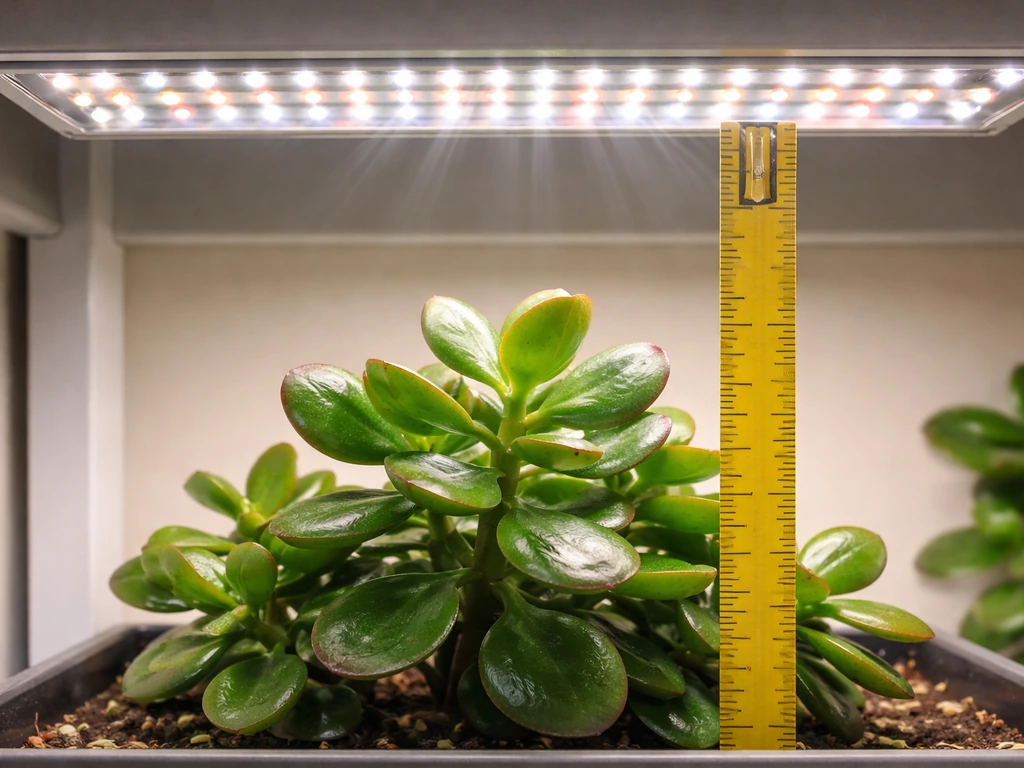
Jade wants four to six hours of direct sun or the equivalent in bright light each day. If you’re growing corals instead of jade, the key question is what light level and type your coral needs to grow properly four to six hours of direct sun. Chaetomorpha also grows best under strong, consistent light, typically from a bright full-spectrum LED best light to grow chaetomorpha. Indoors under grow lights, that translates to a longer photoperiod because artificial light is usually less intense than direct outdoor sun. If you are using grow lights for supplementation, keep the photoperiod in mind because indoors under lights often needs longer hours than direct sun. A 12 to 14 hour daily light period is the target when using grow lights as supplementation or as the primary light source.
Distance matters a lot. Position your LED grow light 6 to 12 inches above the plant as a starting point. That range gives jade enough intensity without scorching the leaves. If you're using a lower-wattage panel, lean toward the 6-inch end. Higher-output lights can stay at 10 to 12 inches. The intensity at the leaf surface drops dramatically as you move the light further away, so don't just set it at ceiling height and hope for the best. A University of Minnesota Extension page explains that PPFD measures PPF at the plant surface and that PPFD decreases as distance from the light source increases the intensity at the leaf surface drops dramatically as you move the light further away.
| Factor | Target for Jade Under Grow Lights |
|---|---|
| Daily light hours | 12 to 14 hours |
| Light distance from plant | 6 to 12 inches above |
| Light type | Full-spectrum LED (includes red and blue) |
| Light period consistency | Same time each day, use a timer |
| Natural light supplement | South or west window if available |
How to tell if your jade is underlit or overlit
Jade is pretty good at telling you when something's off. You just need to know what to look for. The symptoms of too little light and too much light are distinct, which makes diagnosing the problem pretty straightforward once you know the signs.
Signs of too little light
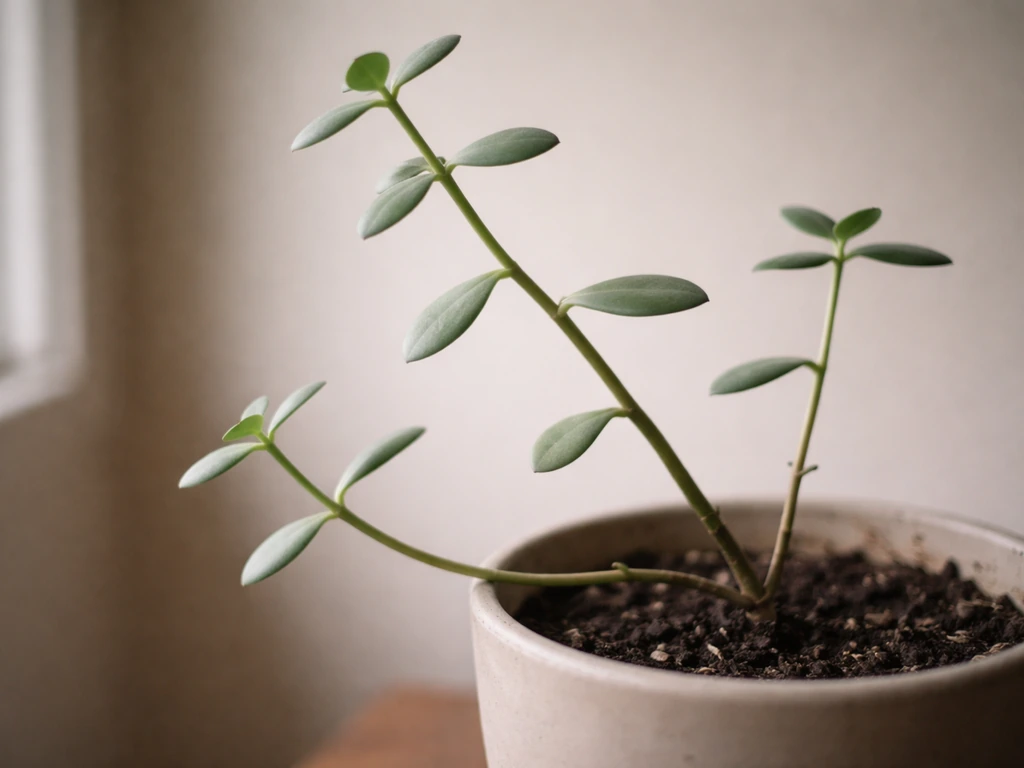
- Leggy, stretched stems with long gaps between leaves (etiolation): the plant is literally reaching for more light
- Pale, dull, or washed-out leaf color instead of deep glossy green
- Small, widely spaced new leaves that look weak compared to older growth
- Leaves dropping off more than usual, especially lower leaves
- Overall slow or stalled growth even during spring and summer
Etiolation is the classic sign. Once a jade stem stretches out like that, it won't compact back down. You can prune it and fix the conditions going forward, but that stretched growth is permanent. Catching underlighting early saves you a lot of reshaping work later.
Signs of too much light
- Brown or reddish patches on leaves, especially on the side facing the light source: this is leaf scorch
- Leaves developing an overall reddish or stressed tint across the whole plant (distinct from the healthy red edge tint jade can get in bright light)
- Wilting or shriveling leaves despite adequate watering
- Leaf drop following a sudden increase in light intensity
A quick note on the red edge thing: it's normal and actually attractive for jade leaves to develop slightly red or pinkish tips when they're getting bright light. The New York Botanical Garden notes this happens naturally at the leaf edges. That's not stress. What you're watching for is brownish patches or scorching on leaf surfaces, or a deep red flush across the whole plant that comes on suddenly after a light change.
Setting up LED grow lights for jade: placement and schedule
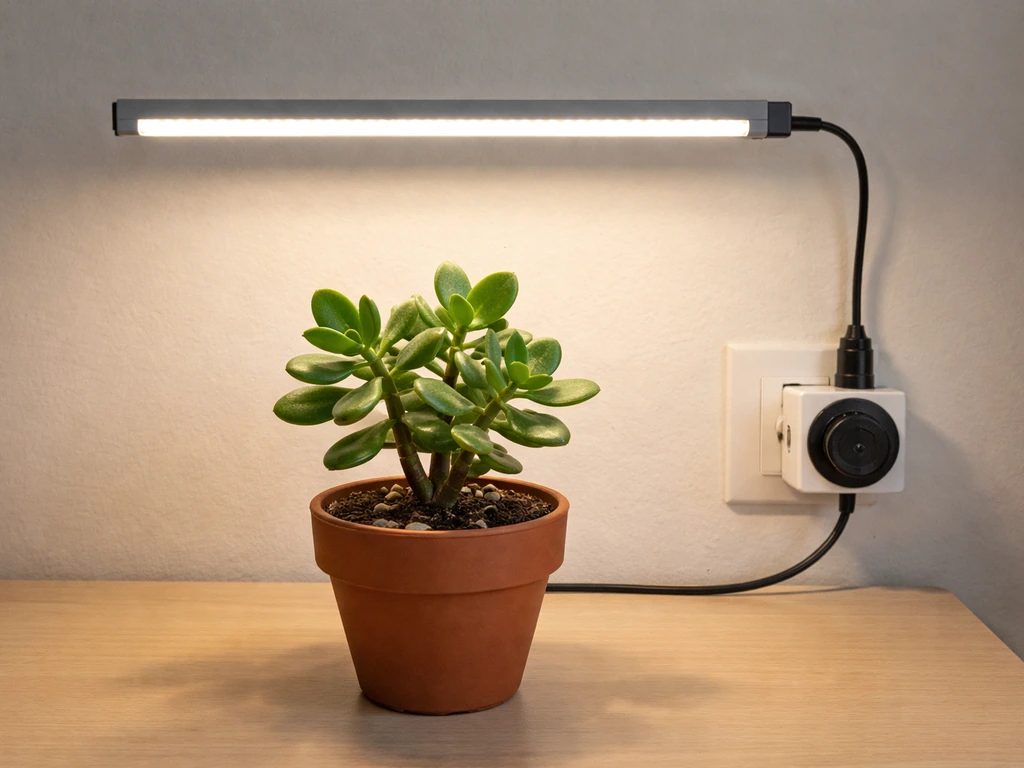
The setup itself isn't complicated. You don't need a fancy grow tent or specialized equipment. A decent LED panel or grow light bar placed correctly and put on a timer is all you need. Once you dial in the light duration, you'll have the grow light requirements for jade nailed down snake plant grow light requirements.
- Position the light 6 to 12 inches directly above the plant. If you have an adjustable arm lamp or a hanging panel, this is easy to dial in. Start at 10 to 12 inches and move closer only if the plant isn't responding after a few weeks.
- Set a timer for 12 to 14 hours of light per day. Consistency matters more than perfection here. Running the light from 7am to 7pm or 8am to 8pm keeps things predictable for the plant.
- Make sure the light covers the whole plant canopy. A small clip-on light might not spread evenly across a wide jade. Position it so you're not lighting just one side.
- Give jade a dark period. Plants need uninterrupted darkness to rest, so don't leave the grow light running 24 hours even if you read somewhere that more light is always better.
- Combine with a window when possible. If you have any window light at all, let the grow light supplement it rather than replace it entirely. Even a few hours of morning sun through a window plus grow light coverage the rest of the day is ideal.
Picking the right grow light: wattage, lumens, PPFD, and spectrum
Shopping for grow lights can feel overwhelming when you see specs thrown around like lumens, PAR, PPFD, and wattage. Here's the honest breakdown of what actually matters for jade.
PPFD is the number that matters most
PPFD stands for photosynthetic photon flux density, and it measures how many light photons useful for photosynthesis are hitting the plant surface each second. Iowa State University Extension notes that PPFD is a more accurate metric for plant growth than lux, which measures brightness as humans perceive it. Lumens are similarly a human-eye metric, not a plant metric. When you're comparing grow lights for jade, look for PPFD ratings at a given distance rather than just wattage or lumen output. Oklahoma State University Extension’s LED grow light fact sheet discusses PPFD as a key plant-light metric and includes PPFD ranges used in plant growth contexts PPFD ratings at a given distance rather than just wattage or lumen output..
You can measure the PPFD your current setup is delivering using a free or low-cost phone app. Photone is one widely used option that measures PAR as PPFD in micromoles per square meter per second. It won't be lab-accurate, but Iowa State Extension confirms that light apps are accurate enough for typical home gardeners. Use it to check whether your jade is actually getting enough light at the leaf surface.
What spectrum to look for
For jade and most succulents, a full-spectrum LED is your best bet. Full-spectrum lights include both blue wavelengths (which drive compact, bushy growth and healthy foliage) and red wavelengths (which support photosynthesis and metabolism overall). Blurple lights, which are the purple LEDs with only red and blue, work but make it harder to visually assess your plant's health because everything looks purple. A white or warm-white LED that includes red and blue in its spectrum is easier to work with and gives you a better visual read on the plant.
How much power do you actually need?
For a single jade plant in a 4 to 6 inch pot, you don't need a high-wattage panel meant for a grow tent. A small LED bar or panel in the 10 to 20 watt range positioned correctly at 6 to 10 inches can do the job. For larger jade plants or a collection of succulents on a shelf, step up to a 30 to 45 watt panel. The key is distance and position, not just raw wattage. A lower-wattage light closer to the plant often outperforms a higher-wattage light hung too far away.
| Metric | What it measures | Useful for jade? |
|---|---|---|
| Lumens | Brightness as humans perceive it | Not the most useful; ignore as primary metric |
| Wattage | Power consumption of the light | Use as a rough sizing guide only |
| PPFD (µmol/m²/s) | Photons useful for photosynthesis at leaf surface | Yes, this is the most useful spec |
| Spectrum (nm) | Wavelengths of light emitted | Yes, look for full-spectrum with red and blue included |
Acclimating jade to grow lights without stressing it out
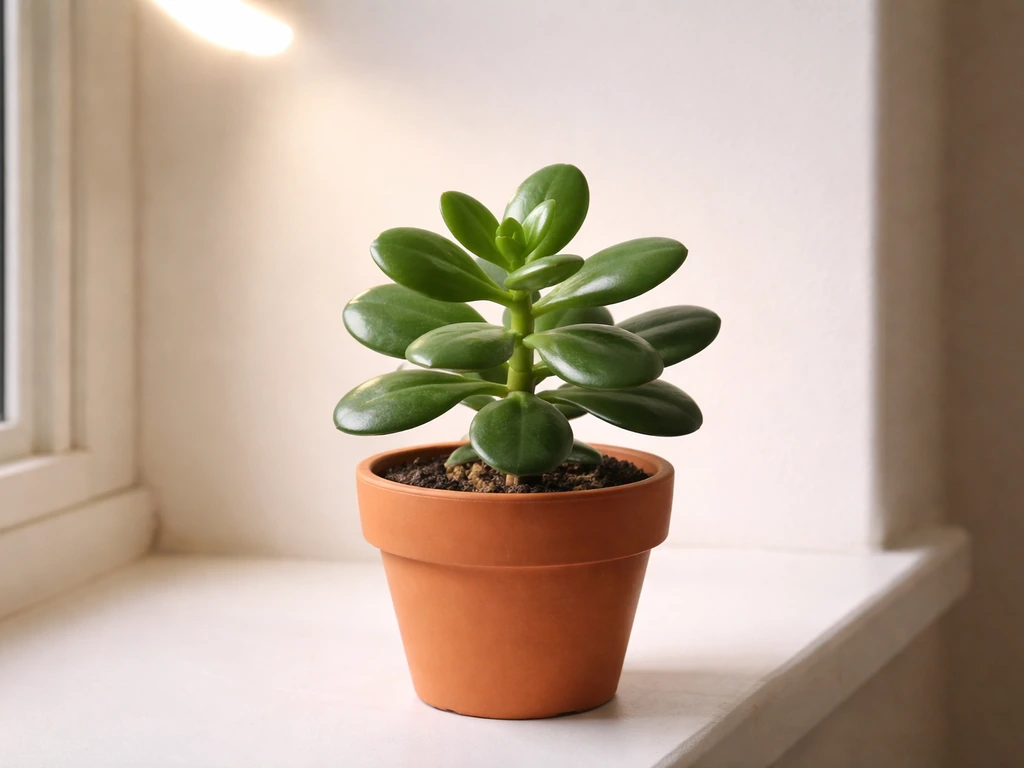
If your jade has been sitting in low light or relying solely on a weak window, you can't just slam a grow light on it at full intensity for 14 hours a day and expect no problems. Any sudden spike in light intensity can shock a plant that's been adapted to lower levels.
Start with the light further away, around 18 to 24 inches, and run it for about 8 hours per day in the first week. Then move it closer by 2 to 3 inches and add an hour or two of daily light time each week until you reach your target setup of 6 to 12 inches and 12 to 14 hours. The whole acclimation process typically takes three to four weeks. It feels slow, but it prevents the scorch and stress that comes from rushing it.
Watch the leaves closely during this period. If you see browning patches or the deep red stress flush mentioned earlier, back the light off a few inches or reduce the daily hours and hold steady for another week before moving forward again. Every jade is a little different depending on how dark its previous environment was, so treat this as a dial to adjust rather than a fixed recipe.
Watering and rotation: the care habits that work with your lighting setup
Getting the light right doesn't exist in a vacuum. Two other habits connect directly to how well your jade responds to its lighting setup.
Adjust your watering as light increases
More light means more photosynthesis, more transpiration, and faster soil drying. When you move your jade under a grow light (or increase the intensity), the soil will dry out faster than it did in its previous location. This is a good thing for a succulent, but it means your watering schedule needs to shift with the lighting change. The University of Minnesota Extension notes that as light increases, so does the plant's need for water.
The rule for jade stays the same regardless of light level: let the soil dry out completely before watering again. What changes is how often that happens. Under good grow light conditions, you might water every seven to ten days in summer versus every two to three weeks in low light. Stick your finger two inches into the soil and only water when it's completely dry. Jade is very susceptible to root rot, and root rot can happen fast if you're over-watering a plant that's also sitting in warm, brightly lit conditions.
Rotate the plant regularly
Even a well-positioned grow light doesn't illuminate every side of a jade plant equally. Jade will naturally grow toward the brightest light source, which means one side gets stronger growth and the other side weakens. Rotating the pot a quarter turn every one to two weeks keeps growth balanced and prevents the plant from leaning awkwardly to one side. It takes ten seconds and makes a real difference in how symmetrical and full the plant looks over time.
If you're also using a window alongside your grow light, rotation is especially important since the natural and artificial light will be coming from different directions. Make it a habit when you check the soil moisture and you'll never forget it.
FAQ
Can I leave a grow light on for 24 hours for my jade plant?
Usually, yes, but only if you keep the light intensity moderate and use a timer. Jade can handle 12 to 14 hours for healthy growth, but if you see browning patches, excessive red flush, or crispy leaf tips, reduce the daily hours by 1 to 2 or move the light farther away for a week.
My jade has been in a dark room, can I jump straight to 14 hours at close distance?
Best practice is to acclimate if your jade is currently in low light. Start with the light farther away (about 18 to 24 inches) and shorten exposure to around 8 hours per day, then increase time and decrease distance gradually over 3 to 4 weeks to avoid scorch.
Do I still need to rotate my jade if I use only a grow light and no window?
You should rotate the pot even when using only a grow light, because LEDs create stronger intensity in the center or at specific angles. Turn the pot about a quarter turn every 1 to 2 weeks, especially if you notice one side growing faster or the plant leaning.
What should I look for on a grow light spec sheet for jade, wattage or PPFD?
Consider PPFD at the leaf surface rather than lumen or watt numbers. A phone light meter app can help you spot whether you are under-delivering for jade, and then you adjust distance (often 6 to 12 inches) because distance changes intensity dramatically.
How do I change my watering routine when I add grow lights?
Let the soil dry completely, then water thoroughly until excess drains. With stronger grow light, expect more frequent watering (often weekly in summer), but never water on a fixed schedule, instead check dryness about two inches down and adjust based on temperature and airflow.
How can I tell the difference between normal red leaf edges and light damage?
Yes, even healthy jade can show mild pink or red at the leaf edges under brighter light. What is not normal is brown, scab-like patches, white or tan scorching on leaf surfaces, or a sudden whole-plant deep red that appears right after the light is changed.
My jade looks leggy. What is the first thing I should adjust?
If your jade is stretching, leggy, or leaves look spaced out, it is usually underlit or the light is too far away. Move the light 2 to 3 inches closer and increase daily time gradually, then prune and reshape only after new compact growth starts.
Will a small LED bar work, or do I need a wide light for multiple jade plants?
Yes. Place the grow light so it reaches the plant evenly, typically 6 to 12 inches above the leaves, and if the panel is narrow, consider raising the number of hours slightly or using a larger light to prevent uneven coverage.
Can I run my grow lights at night instead of during the day?
Yes, but only if the schedule stays consistent. If you want to run lights at night, make sure the total daily photoperiod still lands around 12 to 14 hours, and keep the timing stable to avoid stress from irregular light exposure.
Do full-spectrum grow lights matter, or will any LED work for jade?
Usually you should be fine if you place it correctly and acclimate. Full-spectrum LEDs are generally the easiest option because the white or warmer appearance helps you visually assess leaf color and stress, and the red and blue balance supports compact growth.