
Yes, pothos do well under grow lights, and if your space is genuinely dim, a grow light can be the difference between a trailing, healthy plant and a sad, leggy one reaching desperately for a window. That said, pothos are one of the most forgiving houseplants when it comes to light, so you don't always need a grow light. Whether you actually need one depends on how dark your room really is, what you want from your plant, and whether you're seeing signs of stress.
Do Pothos Like Grow Lights? Light Guide for Indoor Homes
Marcus Hartley
27 Apr 2026
How pothos grows in natural light
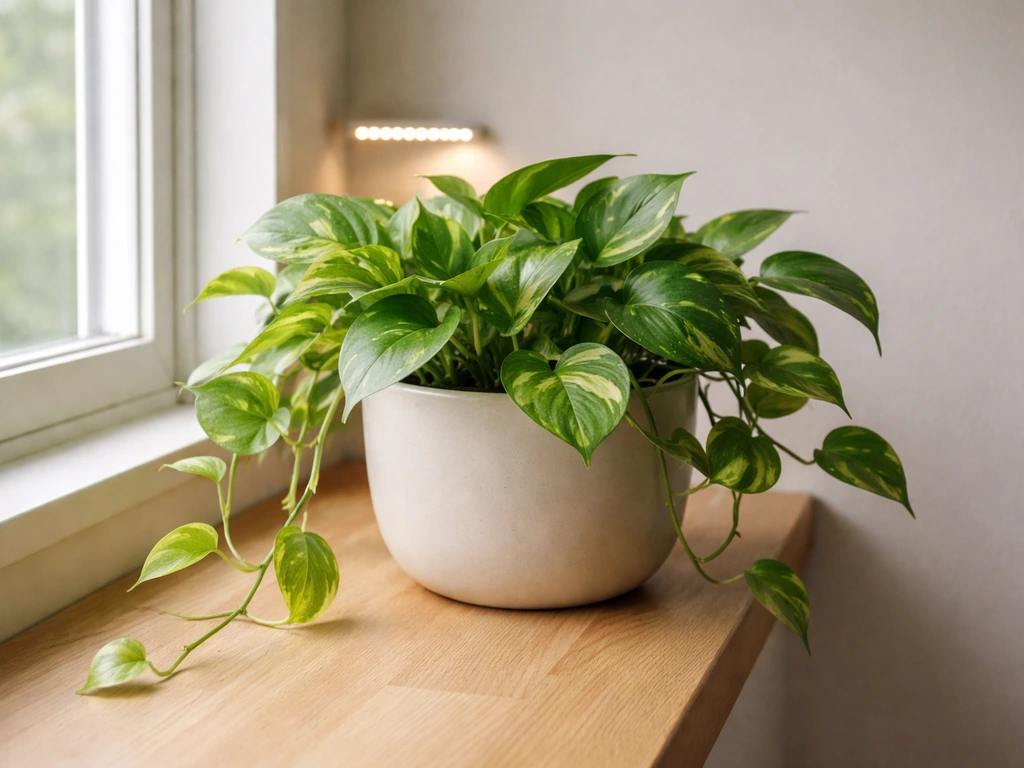
In the wild, pothos (Epipremnum aureum) grows as a forest understory plant, which means it evolved under a canopy where light is filtered, dappled, and never harsh. That's exactly why it handles low-light homes better than most houseplants. North Carolina Extension notes that pothos prefers bright, indirect light but can survive for long periods in low light. The University of Illinois Extension echoes this, and it's backed up by what most experienced plant owners have observed: pothos won't die in a dim corner, but it won't thrive there either.
The key word is "survive." A pothos in a bright spot with indirect light will push out larger leaves, maintain vivid variegation, and grow noticeably faster than the same plant sitting three meters from a north-facing window. Bright indirect light is the sweet spot where pothos genuinely thrives. Direct sunlight is too much and scorches the leaves. Deep shade keeps it alive but stunted. Grow lights are useful precisely because they let you replicate that bright indirect sweet spot indoors, regardless of what your windows can offer.
Do you actually need a grow light? A quick decision guide
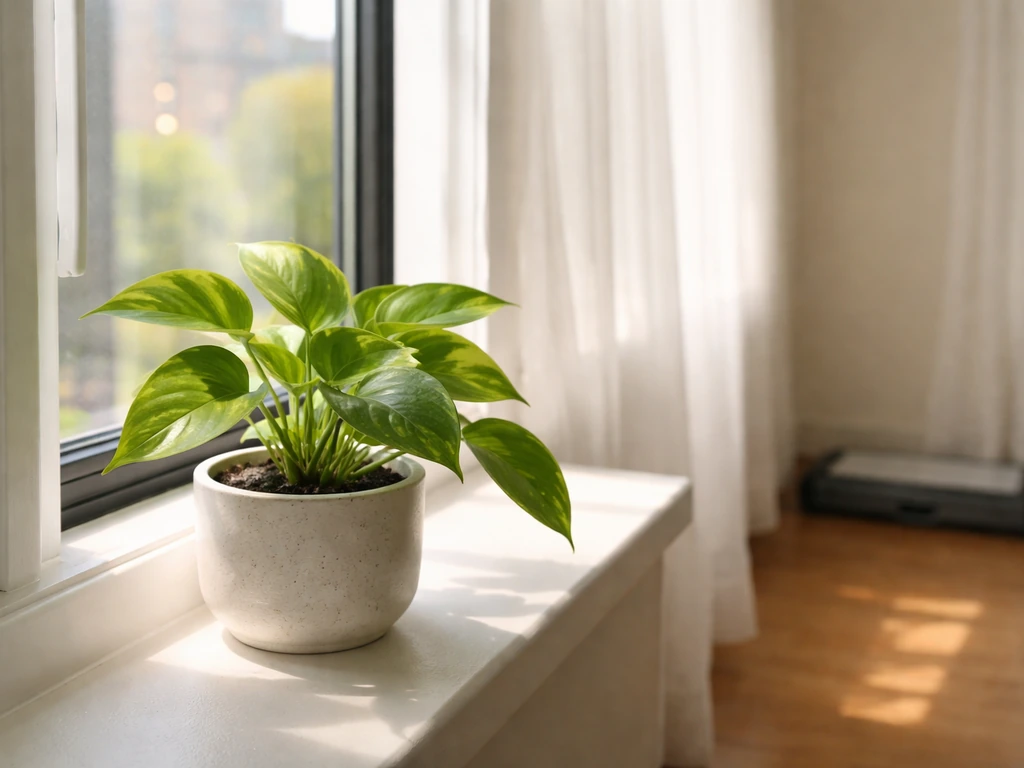
Not every pothos needs a grow light. Here's a practical way to think about your specific situation:
| Your light situation | Grow light needed? | What to expect |
|---|---|---|
| Bright indirect light within 1–2m of a south or west window | No | Good growth, strong variegation, healthy leaves |
| Medium indirect light (north or east window, unobstructed) | Probably not | Decent growth, may slow in winter |
| Low light (far from windows, obstructed, north-facing room) | Yes, strongly recommended | Without a light: slow growth, small leaves, legginess |
| No natural light at all (interior room, basement, office) | Absolutely yes | Pothos can survive briefly but will deteriorate without supplemental light |
| Variegated pothos (golden, marble queen, neon) in low light | Yes | Variegation fades without adequate light, even if plant survives |
The RHS frames this well: artificial lighting is best used where natural light is genuinely insufficient, not as a substitute for every plant in every room. If you have a decent window, your pothos is probably fine. If you're sticking a pothos on a bookshelf in a hallway with no window nearby, a grow light isn't optional if you want the plant to look good.
Signs your pothos is telling you it needs more light
Pothos are pretty communicative once you know what to look for. These are the signs that light is the limiting factor, not water, soil, or temperature. University of Nebraska Extension describes the classic symptoms of insufficient light as small leaves, long thin stems, and lighter-than-normal colored foliage. University of Maine Extension adds spindly new growth and light-colored foliage as key indicators.
- Long, skinny stems with wide spacing between leaves (etiolation): the plant is stretching toward light it can't reach
- New leaves coming in noticeably smaller than older ones
- Variegation fading: golden or marble queen pothos losing their color patterns and going plain green
- Very slow or stalled growth over weeks (especially in spring/summer when it should be actively growing)
- Stems leaning or growing heavily toward one direction (toward the nearest light source)
- Pale or yellowish new growth rather than healthy green
One thing worth knowing: pothos naturally grows more slowly and with slightly smaller leaves in low light, and that's not always a crisis. It becomes a real problem when the growth is so etiolated that the stems are weak and thin, the leaves are tiny compared to what you expect from the variety, or variegated leaves are reverting entirely to green. That's when a grow light goes from "nice to have" to "necessary."
Which grow light type works best for pothos
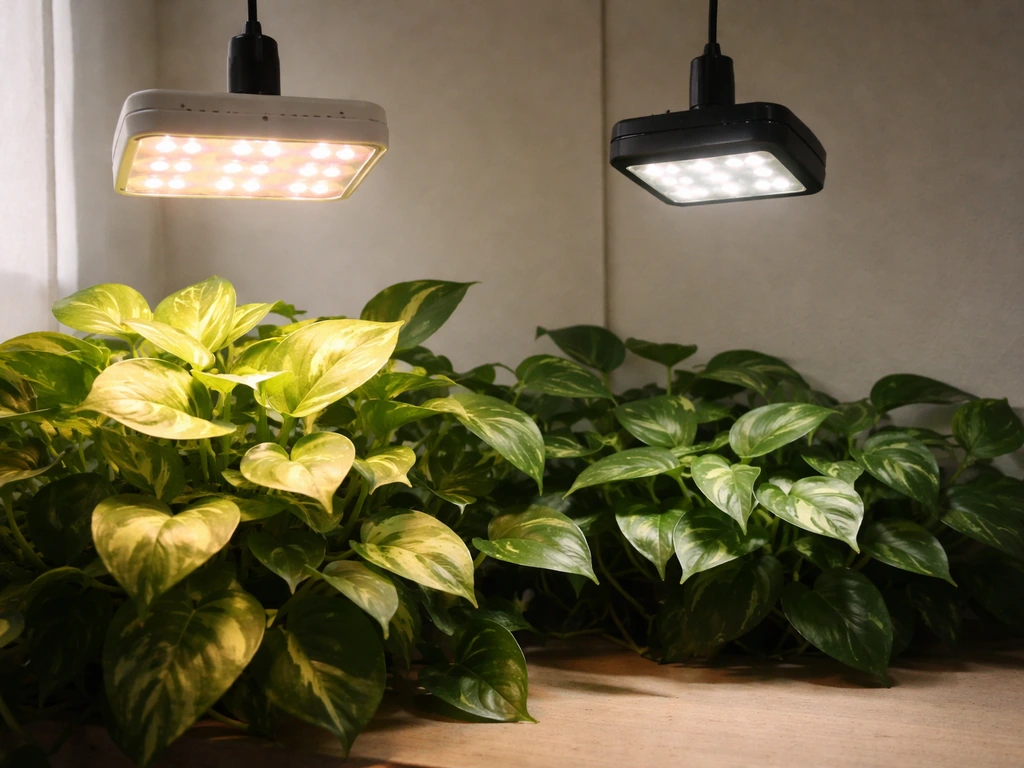
You have a few realistic options, and the good news is that pothos aren't demanding. They don't need a high-powered horticultural LED designed for fruiting plants. A simple, affordable light is usually enough. If you want to choose the right light for pothos, focus on the color and spectrum that mimic bright indirect sunlight what color grow light for pothos.
LED grow lights
Full-spectrum LED grow lights are the best overall choice for pothos. They're energy-efficient, run cool, last a long time, and modern ones give a balanced spectrum that supports healthy leaf growth without overdoing it in any direction. The RHS cautions that lights too heavily weighted toward red or far-red can actually promote tall, spindly growth rather than compact, healthy foliage, so a balanced full-spectrum LED is better than a cheap purple-only LED panel. Look for one labeled "full spectrum" or with a color temperature in the 3000K–6500K range. For pothos, you don't need anything expensive or commercial-grade.
Fluorescent lights (T5, T8, or CFL bulbs)
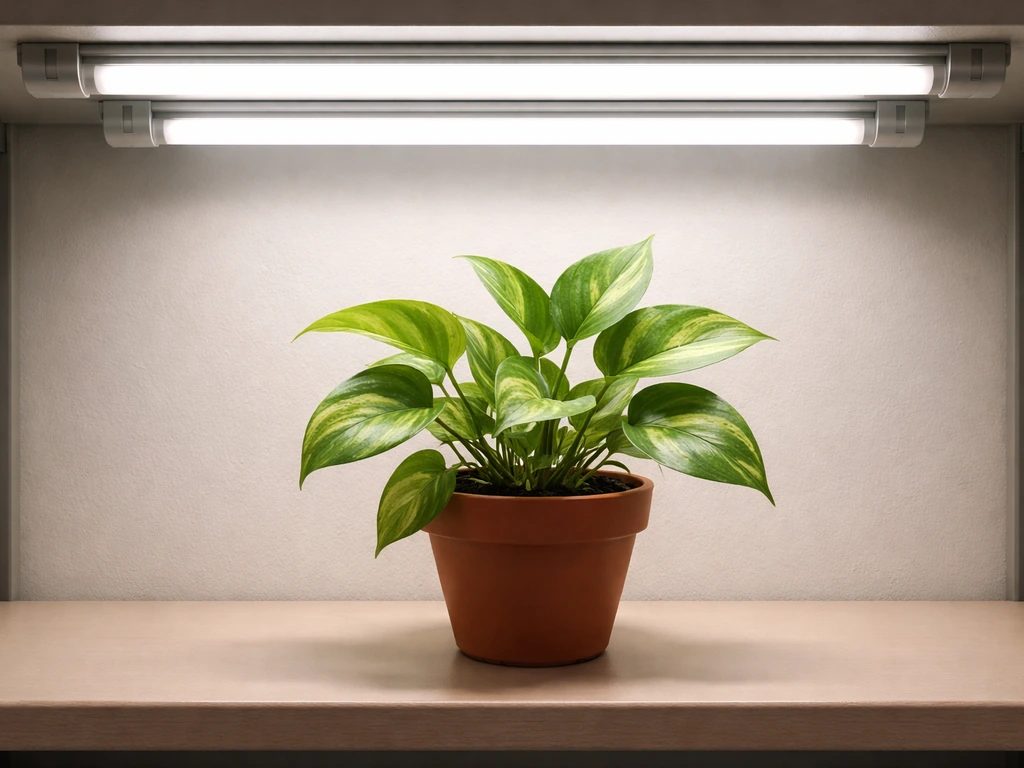
Fluorescent shop lights and T5/T8 tubes are a perfectly valid option, especially if you're on a budget or already have them. University of Missouri Extension notes that a single 4-foot 40W fluorescent tube can provide enough light for low-light houseplants, though more tubes or higher output is better for active growth. The limitation with fluorescent is that intensity drops off fast with distance, so placement matters a lot. University of New Hampshire Extension advises keeping fluorescent lights less than one foot away for plants that need real light output, though for low-light-tolerant pothos you can push that to 30–40cm with a multi-tube fixture.
Quick comparison
| Light type | Cost | Energy use | Spectrum quality | Best for pothos? |
|---|---|---|---|---|
| Full-spectrum LED panel | Medium upfront, low running | Very low | Excellent (balanced) | Yes, best overall choice |
| LED clip-on grow light | Low | Very low | Good (varies by model) | Yes, great for single plants |
| T5/T8 fluorescent tubes | Low | Moderate | Good | Yes, especially for shelves |
| CFL (spiral grow bulb) | Very low | Moderate | Decent | Fine for one plant, limited coverage |
| Purple/blurple LED panel | Low | Low | Unbalanced (heavy red/blue) | Acceptable but not ideal |
For most people, a clip-on full-spectrum LED or a simple T5 strip light is all you need for one or two pothos plants. Save the serious grow light setups for fruiting plants or seedlings.
How much light, how long, and how far away
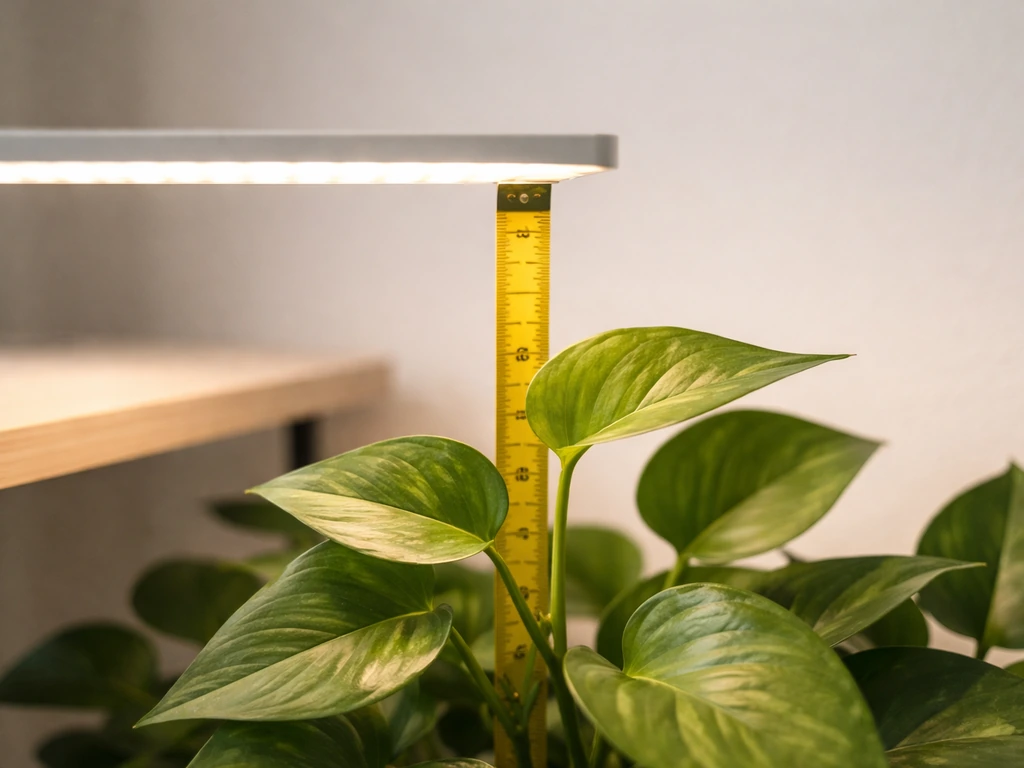
Light intensity and distance
Distance from the light source matters more than most people realize. University of Maryland Extension explains that light intensity drops off rapidly as distance increases, meaning a light that's effective at 20cm becomes much weaker at 60cm. For pothos, you want the top of the plant to receive a useful amount of light, which means keeping the grow light relatively close. A practical starting point is 20–40cm (8–16 inches) above the plant canopy for most LED grow lights and fluorescents. University of Maine Extension's PPFD guidance places vegetative plants in the 100–500 PPFD range, and pothos sits comfortably in that bracket. You don't need intense horticultural lighting.
How many hours per day
For pothos under grow lights, 12–16 hours per day is a solid target. Pothos doesn't have strict photoperiod requirements for flowering (it rarely flowers indoors anyway), so you have some flexibility. The goal is to deliver enough total light energy per day to compensate for what your room can't provide. The RHS recommends not running artificial lighting longer than necessary for healthy growth, so there's no benefit to running lights 24 hours. A simple outlet timer set to 14 hours on and 10 hours off is an easy, low-maintenance setup that works well.
Rotating the plant
Whether you're relying on a window or a grow light, rotating your pothos every week or two helps it grow more evenly. Nebraska Extension notes that plants grow toward their light source, so one-sided light exposure creates lopsided plants over time. A quarter turn every 7–10 days is all it takes to keep growth balanced.
Simple setups to get started today
You don't need an elaborate system. Here are three setups depending on your situation:
The simplest setup: one plant, one clip light
- Buy a clip-on full-spectrum LED grow light (anything in the 10–15W range works for a single pothos)
- Clip it to a shelf or nearby surface so the light sits about 20–30cm above the trailing vines or hanging basket
- Plug it into an outlet timer set to run 14 hours per day
- Rotate the plant a quarter turn every week
Shelf setup: multiple plants in a low-light room
- Mount a T5 or T8 fluorescent strip light (or an LED equivalent) underneath a shelf, pointing downward at the plants on the shelf below
- Position plants so the top growth is within 20–40cm of the fixture
- Run on a timer for 14 hours per day
- Check monthly whether plants are getting leggy or staying compact, and adjust height accordingly
Supplemental boost: windowsill plant in winter
- Keep the pothos at the window during daylight hours
- Add a clip LED on a timer to supplement during early morning or evening hours, extending the effective photoperiod to 14 hours total
- This works especially well in winter when days are short and window light is weak
Troubleshooting common grow light problems
Even with a grow light in place, things can still go wrong. Here's what to check:
- Still leggy and stretching: the light is probably too far away or too dim. Move it closer (aim for 20–30cm above the canopy) or upgrade to a brighter fixture. Running more hours won't fix weak intensity.
- Leaves yellowing or bleaching near the light: the light is too close or too intense for that position. Raise it by 10–15cm and check again after a week. The RHS identifies yellow-green foliage near tubes as a sign of excessive intensity.
- Uneven growth, one side much longer: rotate the plant more frequently, or position the light directly overhead rather than to one side.
- Variegation still fading despite the grow light: check that your light has a balanced spectrum and isn't heavily red-biased. A full-spectrum LED with a daylight-range color temperature works better for maintaining variegation than a red-dominant light.
- Leaves look healthy but growth is still slow: this one is usually not about the light. Once light is sorted, slow growth often points to underwatering, rootbound conditions, or low humidity. Run through those factors before adding more light.
- Petioles (leaf stalks) look elongated or weak: the plant may be getting too much far-red or the light is too dim overall. Revisit distance and spectrum balance.
One last thing worth mentioning: if you're also wondering whether pothos can grow with no natural light at all, or what the best light color specifically is for pothos under grow lights, those are closely related questions worth exploring once you have your basic setup running. Yes, pothos can grow in artificial light, but it will do best with enough brightness to mimic bright, indirect conditions can pothos grow in artificial light.
If you’re wondering whether can pothos grow without sunlight, the short answer is that it can survive in low light, but growth will be much slower than with sufficient bright, indirect light. If you're wondering what color grow light for pothos works best, it's mainly about choosing the right spectrum (often full spectrum) for healthy growth best light color specifically is for pothos under grow lights.
And if you're comparing pothos to other low-light tolerant plants like snake plants, the same general principles around grow light placement and duration apply, though the exact intensity needs differ. Snake plants can also benefit from grow lights when natural light is limited, but their needs are a bit different than pothos. Snake plants can also use grow lights to make up for low window light, but they may need different intensity and spacing than pothos.
Pothos is genuinely one of the easier plants to get right under artificial light, which makes it a great starting point if you're new to indoor grow light setups. African violets have different light needs than pothos, so it's worth checking whether they like grow lights for healthy growth do African violets like grow lights. African violets have different light needs than pothos, so it’s worth matching the light intensity and duration to what they require do African violets like grow lights.
FAQ
Can pothos live on a grow light with no nearby window?
Yes, but it should be treated as supplemental, not a permanent replacement for high-quality natural light. If you use a light on a dim schedule, pothos may stay alive and keep some leaves, but you will usually see slower, smaller growth and weaker variegation. For best results, aim for bright coverage over the canopy (not just the leaves closest to the bulb) and run the light long enough to compensate for your room’s low brightness, typically 12 to 16 hours.
Will a purple grow light work for pothos?
You can, but it often creates leggier growth and weaker, smaller leaves if the spectrum or intensity is off. A common mistake is using a cheap purple LED panel and placing it too far away. If you already have one, try moving it closer to the canopy and ensure the fixture is labeled full spectrum (or use a 3000K to 6500K range) so the plant gets a balanced spectrum for compact, healthy growth.
Do I need a high-powered horticultural LED for pothos?
Generally no. Pothos is low-need compared with fruiting crops, so a high-power grow light can scorch if it’s too close or if it concentrates heat and intensity in a small area. Start with a moderate fixture, keep it at the recommended distance, and watch for leaf edge browning or bleached, overly pale foliage as a sign to increase distance or reduce time.
How many hours a day should I run grow lights for pothos?
Use a timer, but avoid running it 24 hours. Pothos does not require a strict photoperiod to flower indoors, but it does benefit from a daily dark period for healthier growth rhythm and to prevent you from overcompensating for weak lighting. A practical approach is 14 hours on and 10 hours off, then adjust based on how quickly new leaves form and whether growth gets leggy.
How do I tell if my pothos light is too far or too intense?
Yes, start with your fixture close enough that the top of the plant receives useful light, then fine-tune. If your pothos is stretching, moving away from the light, or forming thin, long stems, the light is usually too weak or too far rather than a watering issue. If leaves are yellowing, scorching, or developing brown tips, the light may be too intense or too hot at the canopy.
Should I rotate my pothos under a grow light?
Rotate the pot consistently, especially when the plant is near the center of the light. If you rotate by 1 quarter turn every 7 to 10 days, you reduce leaning and uneven leaf size between sides. This matters most with clip-on lights or single-tube fixtures that illuminate one side more strongly than the other.
Where exactly should the grow light be placed for trailing pothos?
For pothos, the goal is top-of-canopy coverage rather than lighting the whole room. If your plant is in a trailing position, position the light so the highest active growth point and newer leaves receive the strongest portion of the beam. With spot-style fixtures, you may need to raise or lower the light or choose a wider fixture to avoid the top portion getting adequate light while the trailing section stays in dim shade.
Do I need a PPFD meter to set the right grow light for pothos?
It can help, but it’s not required if you place the fixture correctly. The best approach is to ensure the plant shows signs of improving growth, such as larger leaves and less stretching, rather than chasing numbers. If you do have a PPFD meter, vegetative plants often fall into a broad range that includes pothos, and you still want to prioritize distance and even coverage over raw maximum output.
Will my pothos grow slower without a grow light, or will it just stay alive?
Not always. Pothos can survive in low light without a grow light, but you may be sacrificing the look you want, especially if the variety is variegated. Variegated pothos often reverts toward green when light is too weak, even if the plant stays alive. Treat a grow light as a tool to preserve pattern and leaf size, not only to prevent death.