
Yes, anthurium can grow in low light, but it will slow down, stop blooming, and eventually struggle if the light is too dim for too long. The honest answer is that anthuriums are more light-tolerant than most flowering houseplants, and certain cultivars have been documented flowering continuously at around 100 foot-candles for over a year under interior conditions. But "surviving" and "thriving" are different things. A rubber plant can also survive in low light, but it will grow more slowly and needs brighter conditions to stay lush. If you want those waxy red spathes to keep appearing, you need at least a modest amount of indirect light, and you need to make a few care adjustments to compensate for what the plant isn't getting.
Can Anthurium Grow in Low Light? Yes, But Here’s How
Marcus Hartley
7 May 2026
What "low light" actually means in your home
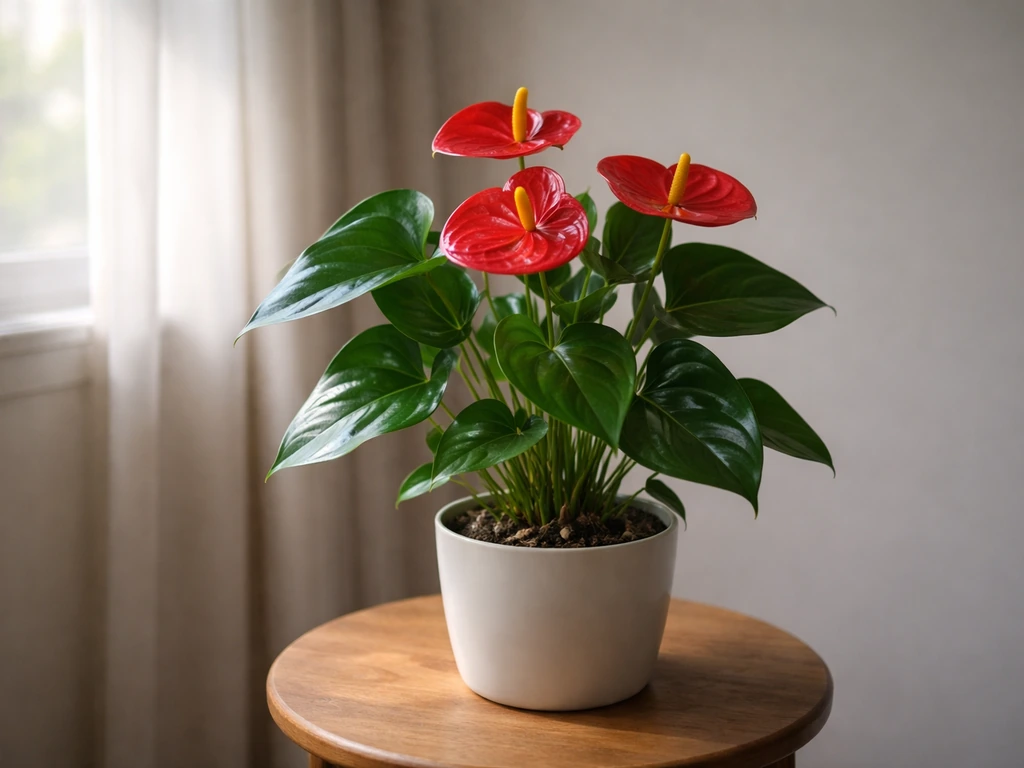
"Low light" gets thrown around a lot, but it's worth pinning down what it actually means in measurable terms before deciding whether your space qualifies. University of Maryland Extension defines low light as roughly 25 to 100 foot-candles (FC), which corresponds to north-facing windows or fairly dim interior rooms. For context, a bright south-facing windowsill on a sunny day can hit 5,000 foot-candles or more. The spot where you're thinking about putting your anthurium is probably somewhere in between.
Anthurium andraeanum grows best in the range of 1,500 to 2,000 foot-candles under production conditions, with commercial interiorscape growers typically targeting 1,000 to 2,500 foot-candles at around 80 to 90 percent shade. That sounds high, but in practice it translates to a spot near a bright window without direct sun hitting the leaves. A north-facing window qualifies as low light. An east or west window a few feet back qualifies too. A corner in the middle of a room with no windows nearby is genuinely too dark for an anthurium to do much of anything.
If you want a real number for your space, a basic light meter or a free smartphone app can give you a foot-candle reading in seconds. Anything under 100 FC is genuinely low light. Between 100 and 500 FC is marginal but workable for an anthurium that you're not expecting to bloom. Above 500 FC with no direct sun is where anthuriums start to perform well.
Signs your anthurium isn't getting enough light
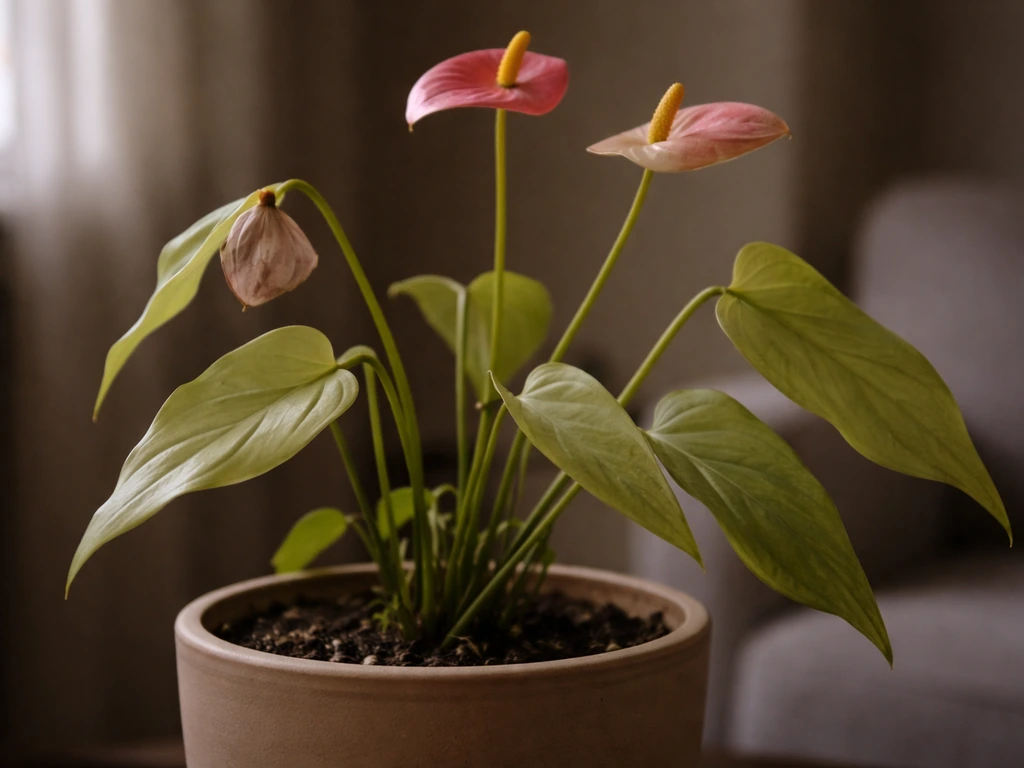
Plants are pretty honest about what they need once you know what to look for. With anthuriums, light stress shows up gradually, which is why people often don't catch it until the plant has already been struggling for a while. Here are the main signals to watch for:
- No new blooms, or blooms that appeared months ago and never came back. Insufficient light is one of the most common reasons anthuriums stop flowering indoors.
- New leaves that are smaller and paler than the older ones. The plant is essentially trying to grow with less fuel, so new growth comes out undersized and washed out.
- Long gaps between leaf nodes on the stem, sometimes called leggy or etiolated growth. The plant stretches toward any available light, spacing its leaves far apart in the process.
- Very slow or completely stalled growth over several weeks. One or two new leaves per month is normal in good conditions; zero new leaves over two months in growing season is a red flag.
- Yellowing lower leaves, especially if the plant otherwise seems healthy. While overwatering can also cause this, low light slows the plant's ability to process water and nutrients, compounding the problem.
- The plant visibly leaning or tilting toward a window. This is the plant's way of voting with its body.
If you're seeing two or more of these at once, light is almost certainly the culprit, or at least a major contributor. The good news is that anthuriums recover reasonably well once conditions improve.
How to place anthuriums in dim rooms
Placement is everything when you're working with limited light, and there are a few practical rules that make a real difference.
Window direction and distance
East and west-facing windows are genuinely the sweet spot for anthuriums in low-light homes. East windows deliver gentle morning sun that won't scorch the leaves. West windows give afternoon light that's a bit stronger but still manageable if the plant is set back a foot or two. North-facing windows are workable but marginal: you'll get survival without much blooming. South-facing windows are ideal if you can buffer the plant from direct midday sun with a sheer curtain or by placing it a foot or two off to the side.
Distance from the window matters a lot more than most people realize. Light intensity drops off quickly as you move further into a room. In practical terms, keeping your anthurium within 3 to 5 feet of a window is a reasonable target. Beyond 6 to 8 feet from any window, light levels typically fall into that true low-light zone (under 100 FC) where anthuriums will struggle to do more than hold on.
Rotation and positioning habits
Rotate the pot a quarter turn every week or two. This keeps the plant from growing lopsided as it leans toward the light, and it ensures all sides get equal exposure over time. If you have a brighter spot in your home, even moving the anthurium there for a few days each month can make a noticeable difference in how it performs. Avoid deep corners, spots behind furniture, and areas more than a foot below a skylight with no side windows, those locations rarely provide enough light even for genuinely shade-tolerant plants.
Low-light care tweaks that actually help
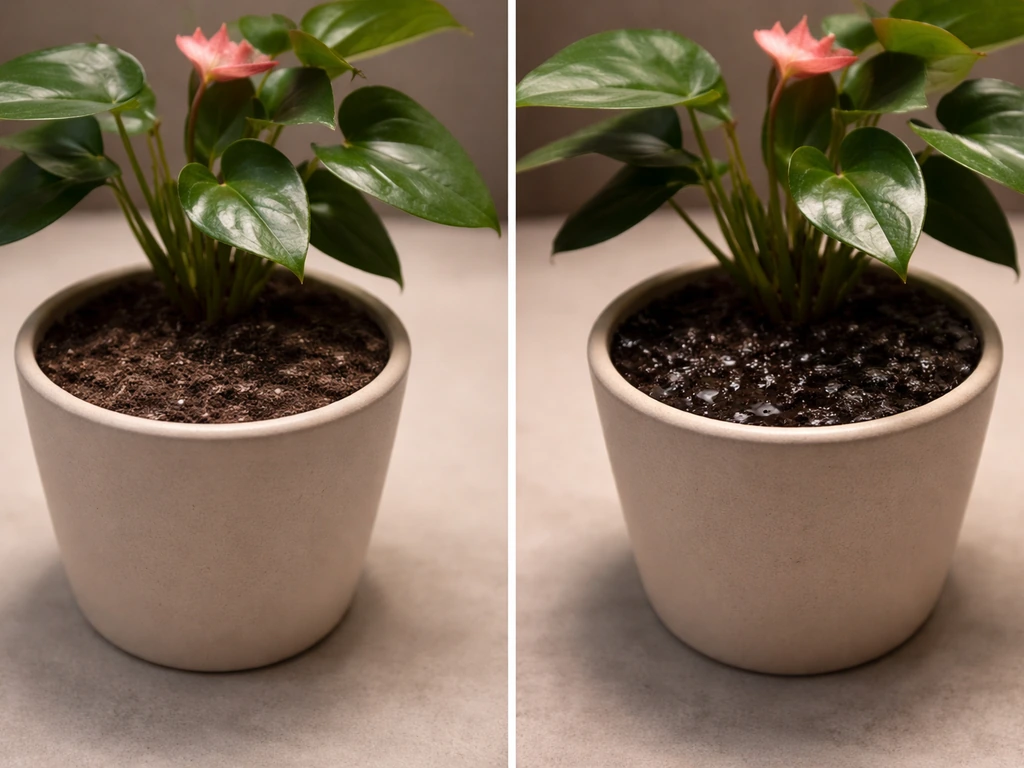
When light is limited, the plant's overall metabolism slows down. That changes how you should be caring for it in a few important ways.
- Water less frequently. A low-light anthurium processes water more slowly, so the soil stays wet longer. Overwatering is a much bigger risk in dim conditions. Let the top inch or two of soil dry out before watering again, and always make sure the pot drains freely.
- Cut back on fertilizer. In bright conditions, anthuriums benefit from a balanced fertilizer every four to six weeks during the growing season. In low light, the plant isn't growing fast enough to use that nutrition, and excess fertilizer salts can build up and damage roots. Fertilize at half strength, and only once every two months or so if the plant isn't actively pushing new growth.
- Keep temperatures stable. Anthuriums prefer 65 to 85 degrees Fahrenheit and are sensitive to cold drafts and sudden temperature swings. In a low-light room (often a cooler north-facing room), be especially careful about proximity to drafty windows or exterior walls in winter.
- Use a well-draining mix. A chunky, airy potting mix (orchid bark blended with standard potting soil and a bit of perlite works well) helps prevent the root rot that becomes more likely when the plant is sitting in moist soil without enough light to drive transpiration.
- Skip the large pot upgrade. When light is limited, anthuriums grow slowly. Potting up into a significantly larger container means more soil around the roots that can stay wet for extended periods. Keep it snug in the pot until you see roots actively circling the drainage holes.
When low light isn't enough: using grow lights
If your space genuinely can't provide enough natural light, supplemental grow lights are the most reliable fix. This isn't about buying fancy equipment. A modest setup can make an anthurium in a dim apartment behave like it's sitting in a bright window.
LED vs fluorescent: which to choose
| Light Type | Energy Use | Heat Output | Lifespan | Best For |
|---|---|---|---|---|
| Full-spectrum LED grow light | Low | Very low | 50,000+ hours | Long-term setups, multiple plants, tighter spaces |
| LED grow bulb (standard fixture) | Low | Low | 25,000+ hours | Single plants, using a lamp you already own |
| T5 fluorescent | Moderate | Moderate | 10,000–20,000 hours | Budget-friendly starter option, wide coverage |
Full-spectrum LED grow lights are the practical choice for most indoor gardeners today. They run cool, use less electricity than fluorescents, and last much longer. For a single anthurium or a small shelf of plants, even an inexpensive LED grow bulb screwed into a regular clamp lamp gets the job done. If you want something more capable and are willing to spend a bit more, a panel-style LED (like the kind made by Mars Hydro or similar brands) gives you consistent, measurable coverage.
Distance and placement
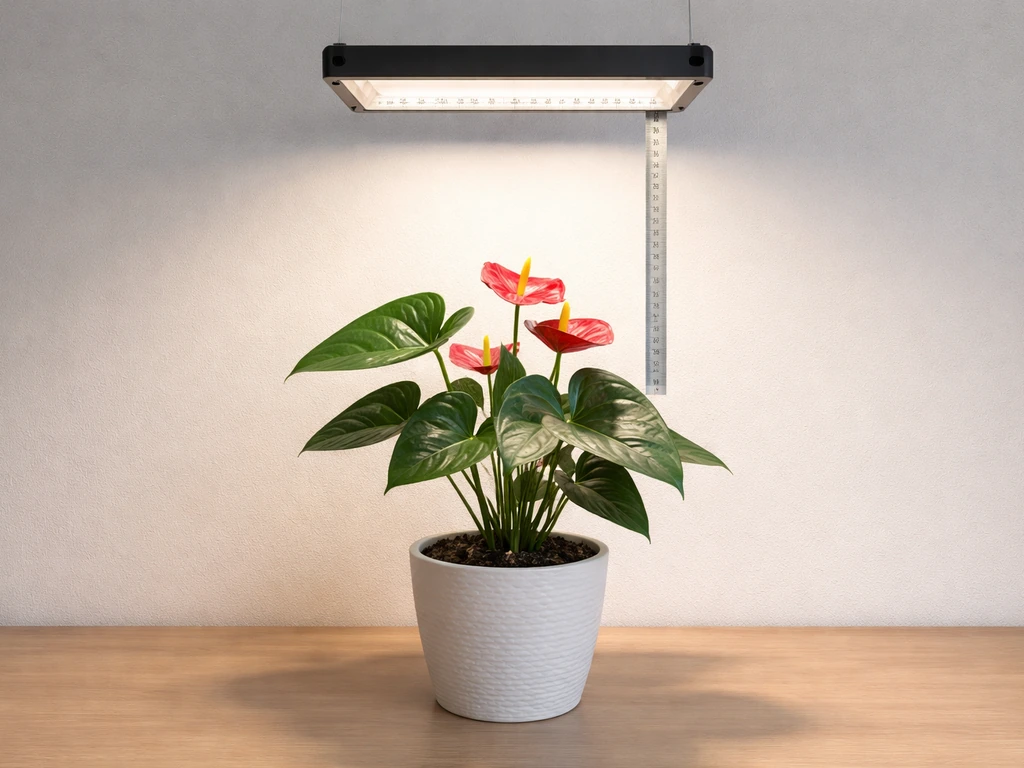
Distance from the light source is the most important variable. As a general rule, place your anthurium so the tops of its leaves sit about 12 to 18 inches below the grow light. Closer than 12 inches can be too intense for a plant accustomed to lower light and may cause bleaching or leaf burn. Further than 24 inches and the intensity often drops too low to be useful. Manufacturer guidelines vary by bulb wattage and design, so check the specs for whatever light you're using and err toward the middle of the recommended range.
How long to run the light each day
Anthuriums don't need an extreme photoperiod. Running your grow light for 12 to 16 hours per day is a solid target for a plant you want to keep healthy and blooming. A basic outlet timer (they cost a few dollars) takes the guesswork out of this entirely. Set it and forget it. More than 16 hours of continuous light isn't beneficial and may actually interfere with the plant's natural rest cycle, so don't leave lights on around the clock thinking more is better.
If your space is too dark: better alternatives
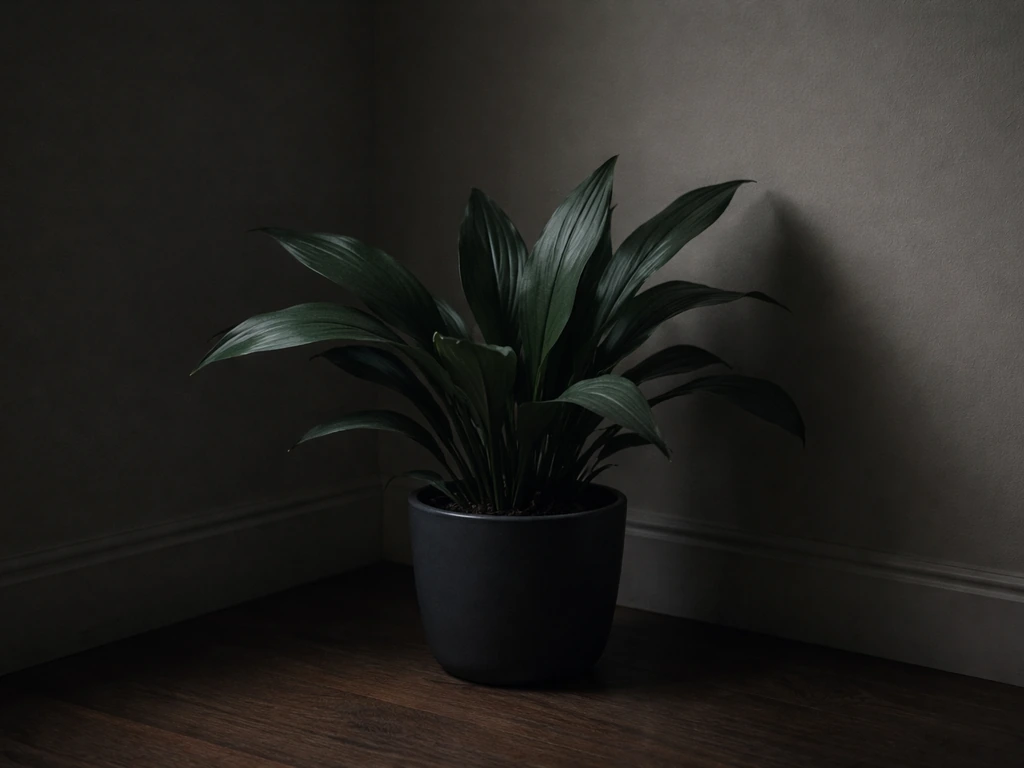
If you're dealing with a truly dark room (consistently under 50 to 100 foot-candles, no practical way to add a grow light, and no window within range) then an anthurium is going to disappoint you, and that's not a failure, it's just the wrong plant for the space. Yes, though many low-light houseplants can survive indoors, not all species like rubber trees will adapt well to dim conditions can rubber trees grow in low light. Some plants genuinely thrive where anthuriums struggle. Penn State Extension notes that cast iron plants (Aspidistra spp.) can tolerate neglect and low light with occasional watering, making them a good fit for alternative low-light plant options blank" rel="noopener noreferrer">Some plants genuinely thrive where anthuriums struggle.. If you are looking beyond anthuriums, there are plenty of plants that can grow in low light without constant special care.
- Cast iron plant (Aspidistra elatior): This is the gold standard for deep shade. It can get by at around 200 foot-candles and produces dependable, dark-green foliage in conditions that would finish off most other houseplants.
- Pothos: One of the most light-flexible plants you can own. It stays attractive and grows reasonably well even in dim rooms, and it's extremely forgiving of irregular care.
- Spider plant: Another reliable low-light performer that handles the kind of dim corners and north-facing rooms where anthuriums give up.
- ZZ plant (Zamioculcas zamiifolia): Exceptionally tolerant of low light and infrequent watering. It won't put on fast growth in dim conditions, but it holds its form beautifully.
- Peace lily (Spathiphyllum): A close relative of anthurium that handles lower light better and will still occasionally bloom even in moderately dim conditions.
Other low-light tolerant plants like dracaena and rubber trees (which share some overlap with this question) are also worth considering if you want something with more vertical presence or a different leaf texture. The broader point is that matching the plant to the actual light in your space is always more satisfying than trying to force a mismatch. If your light situation improves, or you add a grow light, you can always revisit the anthurium then.
For right now, today: check how far your anthurium is from a window, measure the light if you can, look for those warning signs of strain, and decide whether a small positional change or a basic grow light gets you to where the plant needs to be. In most homes, the answer is closer to a window and a timer-controlled LED, and that's genuinely enough to keep an anthurium healthy and blooming.
FAQ
If my anthurium is in low light, will it still bloom or only survive?
Usually yes, but blooming is the first thing to fail in low light. If you notice flower spathes stop appearing for several weeks and you also see slow new leaf growth, that suggests the light is below the level needed for sustained blooming rather than just temporarily “adjusting.”
How can I tell if “low light” in my home is actually enough at leaf level?
Don’t judge light by window brightness alone. Reflections off walls, furniture, and sheer curtains can help or hurt, but the only way to know is measuring at plant height with a light meter (or a phone app that you calibrate consistently).
Can low light locations still damage an anthurium if they get some direct sun?
East and west windows often work, but the leaf can still scorch if the plant is too close to a sunbeam or a window that heats up. Keep a buffer distance and watch for crisp, bleached patches, especially during summer.
My anthurium is declining, should I move it closer to light immediately or slowly?
If your plant is already struggling, make changes gradually. Move it closer to light or start supplemental lighting in steps over 1 to 2 weeks, because sudden bright exposure can cause leaf whitening or tip burn even though the new light is “good for it.”
Does low-light growth mean I should water less often?
In low light, growth slows, so it usually changes the watering needs. The mix stays wet longer, so let the top portion of the potting mix dry more before watering and make sure the pot drains well to prevent root stress.
If I add a grow light, can I overdo it and still end up with problems?
Yes, but there is a ceiling. Even if you add a grow light, too much intensity or too little distance can burn leaves, while too much height can make it functionally low light again. Use the same “12 to 18 inches” guideline from the light and adjust if you see bleaching or drooping.
What placement mistakes make low-light anthuriums fail even when I think they’re close enough to a window?
Avoid placing the plant on the floor or behind tall furniture where air movement and light both drop. Low light plus poor airflow often makes issues look like “light problems,” but they can actually be related to wet conditions and slower drying.
Does rotating the pot really matter in low light, or is it just a minor tip?
Turn the pot regularly, but also watch the plant’s pace. If new growth comes from only one side and the other side stays bare for months, you may need more light or a stronger grow light rather than just rotating the pot.
If my anthurium shows yellow leaves and no blooms, is low light always the cause?
Yes. If you frequently see multiple yellowing or soft leaves along with reduced flowering, it is often low light plus something else like watering issues. Check soil moisture, pot drainage, and whether any leaves are staying wet, then correct light second or simultaneously.
At what point is it better to replace the anthurium rather than trying to grow it in my space?
If your light meter reads under about 50 to 100 foot-candles consistently at plant height and you cannot reposition near a window, an anthurium may only hold on, not thrive. In that situation, choosing a different plant that tolerates dim interiors or planning for a grow light is usually the more successful path.