
Calathea can survive in low light, but it won't thrive there. It tolerates dim conditions better than most houseplants with striking foliage, but expect slower growth, smaller leaves, and less vivid patterning the further you push it from a decent light source. The workable minimum is roughly 100–200 foot-candles (about 1,000–2,000 lux) at leaf level. Foliage Factory's grow-lights guide also recommends checking PPFD and setup distance because blank" rel="noopener noreferrer">leaf fading tends to show up on exposed leaves first when light is too low or improperly positioned. Below that, the plant stalls, colors fade, and you're fighting a losing battle no matter how carefully you water.
Can Calathea Grow in Low Light? A Practical Guide
Marcus Hartley
18 May 2026
What low light actually means for calathea
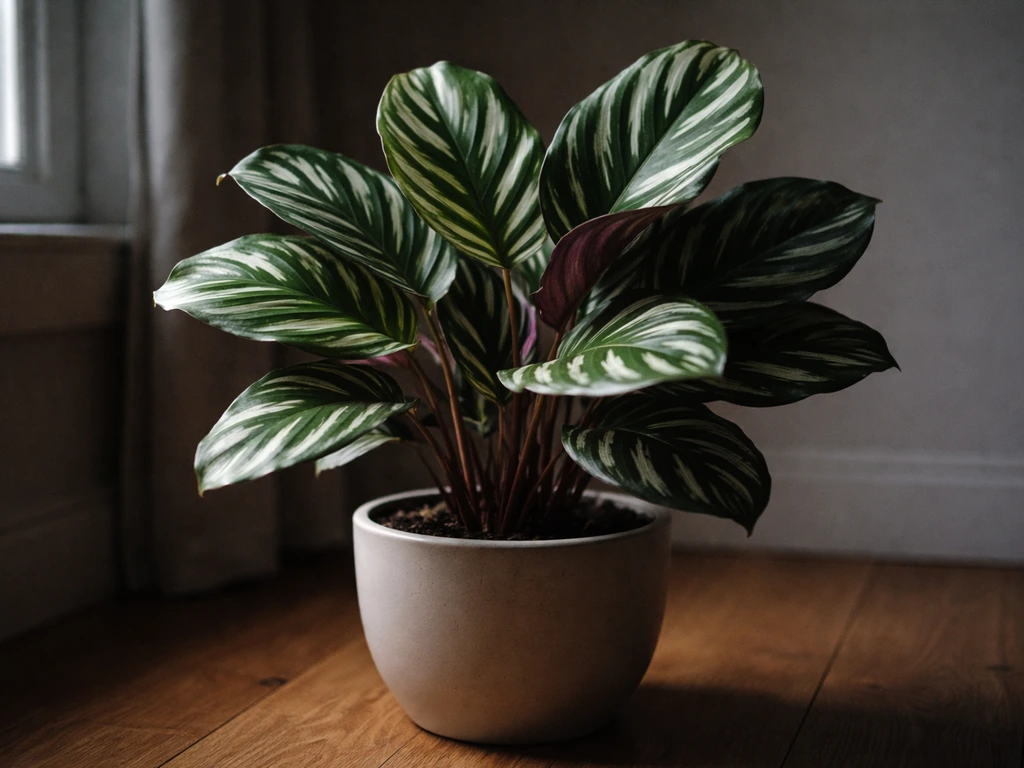
"Low light" is one of those phrases that gets thrown around loosely, so let's make it concrete. In a typical home, a north-facing window on a bright day delivers roughly 200–400 foot-candles (about 2,000–4,000 lux) right at the glass. Step three feet back from that same window and you might be down to 100–200 foot-candles. A dim corner with no window nearby can drop below 50 foot-candles, which is essentially too dark for almost any foliage plant to do meaningful photosynthesis over time.
Calathea is a tropical understory plant, which means in the wild it lives under a forest canopy. That sounds like it should make it a natural for dark rooms, but "understory" still means filtered, shifting light for many hours a day, not the static dimness of an interior apartment wall. The RHS recommends bright but indirect light for calatheas, with an east-facing windowsill as the ideal indoor spot. North-facing windows are listed as a good summer option precisely because the softer, cooler light from that direction suits the plant without scorching it. The sweet spot is medium indirect light: enough brightness that you can comfortably read a book, but no direct sun patches hitting the leaves.
What happens when the light is too weak
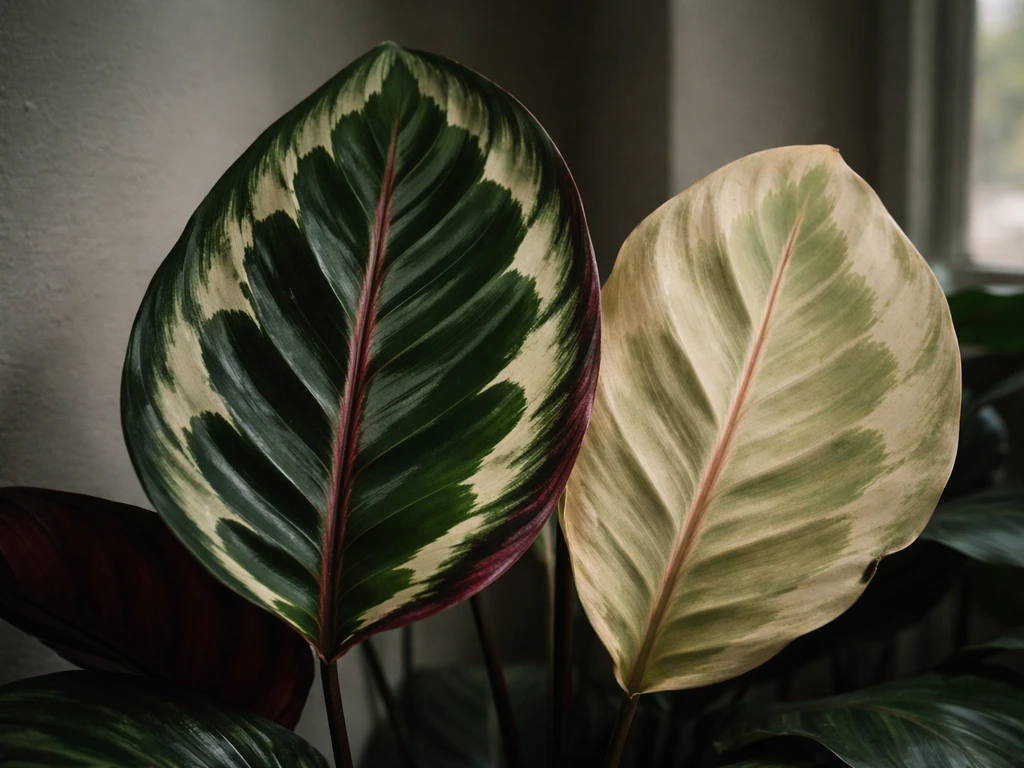
The symptoms of insufficient light on calathea are pretty readable once you know what to look for. The most telling sign is color loss: those gorgeous cream, green, and burgundy patterns start to look washed out, flatter, and dull. NCSU Extension directly links fading leaf color to insufficient light in calathea, and it's one of the more reliable early warnings. Alongside that, leaves often come in smaller than usual, and new growth slows noticeably or stops altogether. In longer-term low-light situations, the plant can become leggy, with longer petioles reaching toward any available light source.
Leaf curling is trickier to diagnose because it has multiple causes. Yes, very low light can weaken the plant enough that it starts curling, but curling is more commonly a sign of low humidity (below 50%), underwatering, or cold draft exposure. Brown crispy edges, similarly, usually point to humidity problems or inconsistent watering rather than light shortage. If your plant has faded, dull patterning AND slow growth, light is likely the issue. If it has brown edges but still looks colorful, check your humidity and watering routine first.
The best spots in a dim room
If you're working with a genuinely low-light room, placement strategy matters more than most people realize. Light intensity drops fast with distance from a window, following a roughly inverse-square relationship. Moving your calathea from six feet away from a window to three feet away doesn't just double the light it receives, it can quadruple it. That kind of repositioning is free and often makes an enormous difference.
- Place the plant as close to the brightest window in the room as possible, ideally within two to three feet of a north- or east-facing window.
- If your only windows face south or west, set the plant a few feet back and hang a sheer curtain to filter direct sun. The goal is bright, diffused light, not shade.
- Avoid corners that are far from any window, especially if the room feels noticeably dark even during the day.
- Rotate the pot a quarter turn every week or two so all sides of the plant get roughly equal exposure and growth stays even.
- Keep calathea away from air vents, radiators, and exterior doors. Low-light setups often push plants into corners near heating or cooling ducts, which creates draft and humidity problems on top of light problems.
Bathrooms with frosted glass or skylights are genuinely good spots for calathea if they have any natural light at all, because the consistently higher humidity suits the plant perfectly. The RHS specifically mentions bathrooms as an appropriate environment for calatheas, and it's a pairing that works well in practice.
Using grow lights to fill the gap
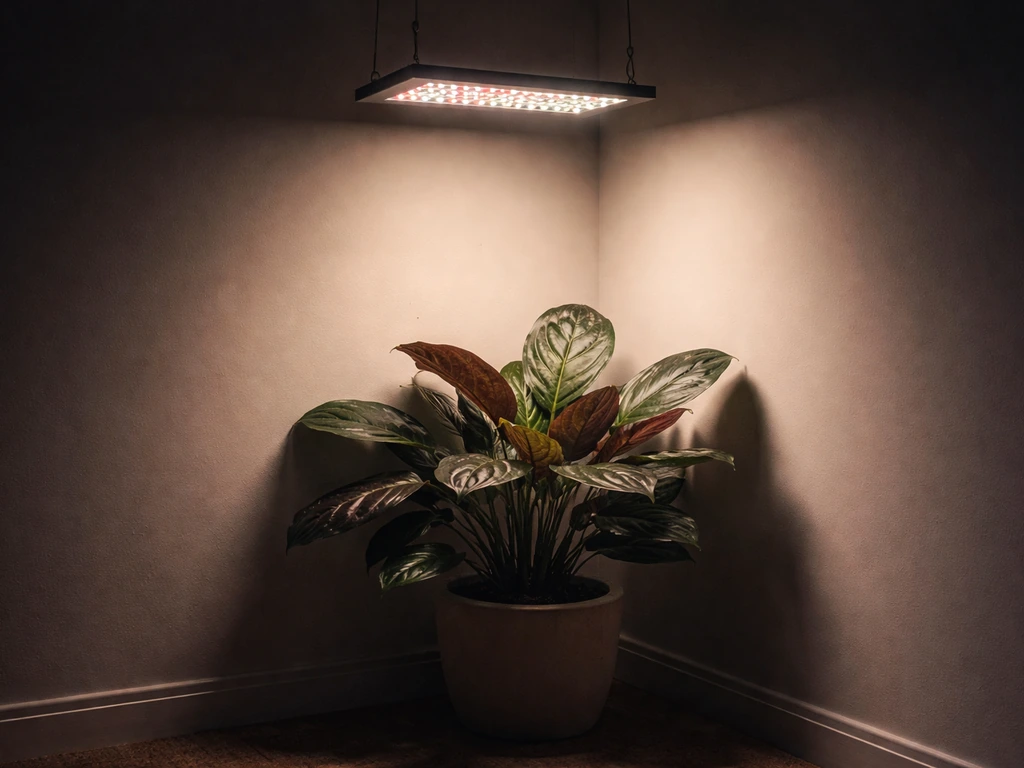
If your natural light genuinely falls short, a grow light is the most reliable fix and it doesn't need to be complicated or expensive. Full-spectrum LED panels or fluorescent grow bulbs both work well for calathea, which doesn't need high light intensity to function. Calathea's photosynthesis saturates at around 600 micromoles of photons per square meter per second (PPFD), and it does well at a gentler 200–400 PPFD range, making it a good candidate for modest grow-light setups.
- Use a full-spectrum LED grow light or a fluorescent grow bulb. Full-spectrum LEDs run cooler, last longer, and are more energy-efficient, but a simple fluorescent shop light works too.
- Position the light 12–18 inches above the top of the plant. Closer than 12 inches risks light stress; further than 18 inches from a low-output bulb may not deliver enough intensity to make a difference.
- Run the light for 10–12 hours per day, ideally on a plug-in timer so you don't have to think about it. This mimics a natural light cycle and prevents the plant from being under constant light, which it doesn't need.
- In winter especially, a grow light can maintain the leaf pattern sharpness and slow the usual seasonal growth dip.
- If you're supplementing natural light rather than replacing it entirely, even a modest LED running 10 hours a day next to a dim window makes a significant combined difference.
One thing worth knowing: grow lights work best when you measure at the leaf level, not at the lamp itself. A light that looks bright when you look at it directly can be delivering much less usable intensity at plant canopy height. The 12–18 inch placement rule accounts for this with typical consumer grow lights.
Adjusting your care routine in low light
Low light changes the whole care equation, and this is where a lot of well-meaning plant parents run into trouble. When a calathea is growing slowly in dim conditions, it uses water and nutrients at a much slower rate. Keeping the same watering schedule you'd use in a brighter room is one of the fastest ways to kill the plant. Soil that would dry out in a week near a bright east window might stay wet for two to three weeks in a dim corner, and prolonged wet soil around calathea roots invites root rot fast.
- Water only when the top inch or so of soil feels dry. In a low-light room this might mean watering every 10–14 days rather than every 7.
- Make sure the pot has drainage holes and that you're not letting it sit in standing water in a saucer.
- Pull back on fertilizing significantly. In low light, the plant isn't actively growing enough to use nutrients, and excess fertilizer salts build up in the soil. If you fertilize at all during low-light periods, use a low-nitrogen liquid fertilizer at half strength, roughly every four to six weeks at most.
- Keep humidity above 50% if you can. Calathea wants moist air regardless of light level, and in low-light rooms that often coincide with indoor heating in winter, humidity tends to drop. A small pebble tray with water under the pot or a nearby humidifier helps.
- Avoid cold water directly on the roots. Use room-temperature water and, if your tap water is heavily fluoridated, consider letting it sit overnight or using filtered water, since calathea is sensitive to fluoride buildup.
Not all calatheas are equal in low light
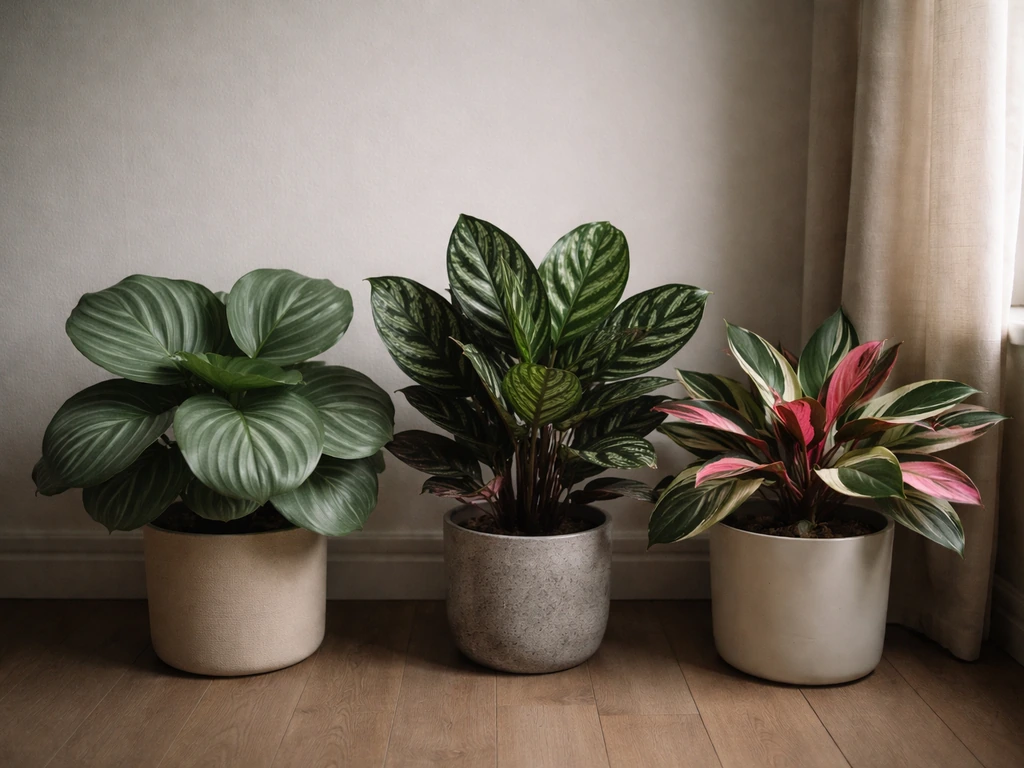
There's some meaningful variation within the calathea/goeppertia group when it comes to low-light tolerance. Calathea orbifolia and Calathea makoyana (peacock plant) are often cited as among the more forgiving of lower-light conditions compared to varieties with more intense variegation or pinstripe patterning. The more elaborate the leaf pattern, the more light the plant generally needs to maintain it. A heavily patterned variety like Calathea ornata or Calathea 'White Fusion' will show fading and pattern loss faster in dim conditions than a simpler-leaved variety.
Calathea 'Triostar' (now Stromanthe sanguinea 'Triostar') is on the more demanding end and really does need bright indirect light to keep its striking tricolor foliage looking sharp. If you have a very dark room and want to start somewhere, calathea orbifolia or a basic Maranta (the closely related prayer plant) will give you the best chance of success with minimal supplemental lighting.
When to switch plants instead of fighting the light
If you've repositioned your calathea, added a grow light, adjusted watering, and the plant is still producing small, pale leaves and barely growing after a month or two, the honest answer is that the space probably isn't right for it. Calathea is tolerant of low light but it has a floor, and a plant that's just surviving rather than growing is stressed, which makes it more vulnerable to pests, root rot, and other problems.
In spaces where natural light is genuinely minimal, plants like pothos, ZZ plants, cast iron plants, and certain snake plants will outperform calathea without complaint. If you love the tropical foliage look but your room is dim, it's also worth comparing calathea against other medium-light species. Can areca palm grow in low light? It can handle dim rooms better than many tropicals, but you still need enough brightness to keep growth steady. Peperomia and money trees, for example, can tolerate lower light conditions with a bit more resilience than most calatheas, and they tend to be more forgiving of watering inconsistency in low-light setups.
That said, if you've got even a modest grow light and can commit to the adjusted care routine, calathea in a low-light room is genuinely doable. It won't grow as fast or as lush as one sitting a foot from a bright east window, but it can look healthy, hold its patterns, and move at a steady (if slow) pace. That's a reasonable outcome for a beautiful plant in an imperfect space. Peperomia can also do well with low light, but it still needs enough indirect brightness to avoid slow, weak growth.
Quick reference: calathea in low light at a glance
| Condition | What to expect | What to do |
|---|---|---|
| North-facing window (within 2–3 ft) | Slow but steady growth, good pattern retention | Best natural low-light option; rotate weekly |
| 3–6 feet from any window | Noticeably slower growth, some color fading | Add a grow light 12–18 inches above on a 10–12 hr timer |
| Dim interior corner (no nearby window) | Stalled growth, significant fading, risk of decline | Grow light is essential or move the plant |
| Grow light only (no natural light) | Manageable if light is full-spectrum and well-placed | 12–18 inch distance, 10–12 hrs daily, full-spectrum LED |
| Any low-light setup | Slower water use, risk of overwatering | Water only when top inch of soil is dry; cut fertilizing back |
FAQ
How can I tell if my calathea is getting “low light” versus not enough humidity or watering?
Use a two-signal check. If leaf color fades or patterns look washed out and growth stays slow, light is the likely driver. If leaves curl while color remains fairly strong, look first at humidity (especially under 50%), watering consistency, and cold drafts, since those more often trigger curling.
What is the lowest distance from a window I should place a calathea in a low-light home?
Start within about 1 to 3 feet of a window where light is indirect, then adjust based on results. Light drops fast with distance, so moving the plant closer is often safer than trying to “compensate” with more water or fertilizer when light is the real limit.
Should I rotate my calathea to even out uneven light in a room?
Yes, rotate gradually every 1 to 2 weeks so one side does not stretch more than the other. In very dim rooms, rotation helps the plant develop more evenly, but it does not replace the need for adequate overall brightness.
Can a calathea survive on indirect light from a dark north window during winter?
It can survive, but winter often reduces usable intensity even at the glass, which is when fading and stalling show up. If your plant is slower and colors dull, add a grow light to maintain steady brightness rather than relying on seasonal light changes.
If my grow light is on for many hours, will that solve low-light problems?
Not always. If intensity at the leaf level is too low, longer hours only partially helps and can still leave the plant weak. Aim for usable brightness at the canopy (not just what the lamp looks like) and use a consistent daily schedule, typically matching the duration you would get from a bright indirect window.
What grow-light mistake causes calatheas to keep stalling?
Common mistake is measuring or judging light at the lamp or from across the room. Calatheas respond to intensity at the leaf surface, so bulbs that seem bright can still be insufficient when positioned far above or off to the side.
How often should I water a calathea in low light?
Less often than in brighter spots, but base it on soil dryness instead of a calendar. In dim conditions, soil may take 2 to 3 weeks to dry, so water only after the top layer is dry and ensure the pot drains freely to reduce root rot risk.
Will fertilizer help a calathea grow in low light?
It usually won’t fix the core issue. In low light, roots use nutrients more slowly, so feeding on the same schedule can increase salt buildup and stress. If you do fertilize, reduce frequency and prioritize light first.
Does low light make calathea more prone to pests?
Yes. Stressed, slow-growing plants generally become more vulnerable, especially to spider mites and other sap-feeders. If you notice webbing, stippling, or persistent dullness, treat promptly and also address the light level and watering conditions.
Are some calathea varieties better in low light than others?
Generally, simpler and less intensely patterned varieties handle lower light better than heavily variegated or heavily patterned types. If you have a very dim room, start with a more forgiving calathea, then only move to demanding cultivars after you can provide steady medium indirect brightness.
If my calathea is not improving after a grow light, what should I check next?
Check root-zone health and placement. Make sure the pot has drainage, the soil is not staying soggy, and the light is positioned correctly for the leaf height. Also inspect for cold drafts near windows, since cool stress can mimic low-light symptoms like slow growth and weak new leaves.