
A handful of plants genuinely survive and even look decent in a dark corner: ZZ plant, snake plant, cast iron plant, peace lily, and pothos are your most reliable options. But here's the honest truth most plant content skips, even these tough species need at least 25 foot-candles of light to stay alive, and they'll only look full and healthy closer to 75–100 foot-candles. Below that, you're not growing a plant so much as slowly losing one. The good news is that a cheap LED bulb or a simple light meter reading can tell you exactly where you stand, and from there you can match the right plant to your specific corner instead of guessing.
Plants That Can Grow in Dark Corners: Low Light Guide
Marcus Hartley
21 May 2026
What 'dark corner' actually means for a plant

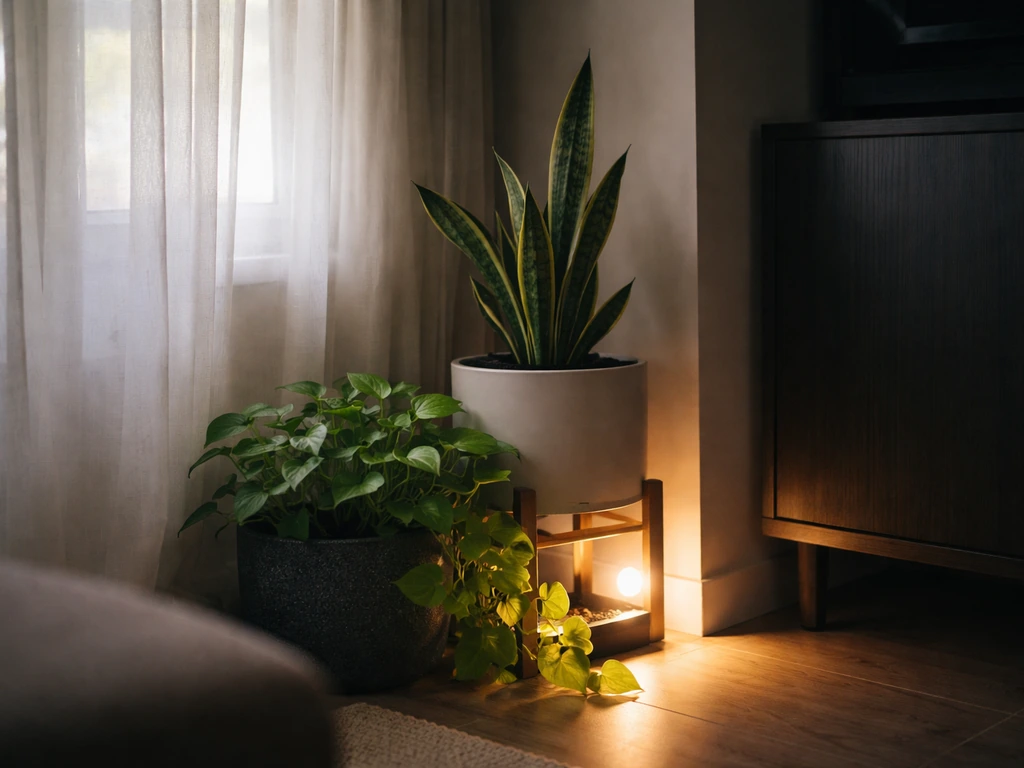
When plant people say 'low light,' they mean something specific: roughly 25 to 100 foot-candles (FC) of illumination. University of Maryland Extension puts shade-tolerant houseplants squarely in that 25–100 FC range. The University of Arizona Cooperative Extension breaks interior plant light into three bands: low (25–75 FC), medium (75–150 FC), and high (150–1,000 FC). A true dark corner, say, a far wall that never gets direct sun and sits more than 8 feet from any window, typically lands in that 25–75 FC zone, sometimes dipping below 25 FC in the evening or on overcast winter days.
The critical distinction is low light versus near-total darkness. A corner with ambient room light filtering in from across the space has some usable light. A closet, a basement room with no windows, or a corner blocked by furniture and thick curtains may have essentially zero photosynthetically active light. No plant grows in actual darkness, not even the ones people claim are 'no-light' plants. What you're looking for is whether your corner has meaningful ambient light (even dim), or whether it's genuinely lightless. That determines whether you can grow anything without a grow light.
How to check your corner's actual light level
You don't need a scientific instrument, but a basic check makes a huge difference. Here are three approaches, starting with the simplest.
- The shadow test: Hold your hand about a foot above a piece of white paper in the corner during the brightest part of the day (usually 10am–2pm). A sharp, well-defined shadow means decent light. A faint, blurry shadow means low light. No shadow at all means you're probably below the survivable threshold for most plants.
- Phone light meter app: Free lux meter apps (search 'lux meter' in your phone's app store) use the camera sensor to give a rough reading. Lux and foot-candles aren't the same unit, but a quick conversion helps: divide lux by 10.76 to get foot-candles. A reading under 270 lux (about 25 FC) is a red flag for most houseplants.
- A dedicated foot-candle meter: If you're serious about it, Penn State Extension recommends using a foot-candle meter for accurate readings. Handheld models run $15–30 online. One Penn State example showed a snake plant location reading as low as 25 FC in mid-morning — right at the absolute survival floor. Readings like that are common in interior corners.
Take your reading at multiple times during the day and average them. A corner that gets 80 FC at noon but only 15 FC in the late afternoon is averaging out to conditions that will stress most plants over time. The goal is a consistent reading, not a peak.
The best plants for low-light corners (and which just survive vs. actually thrive)
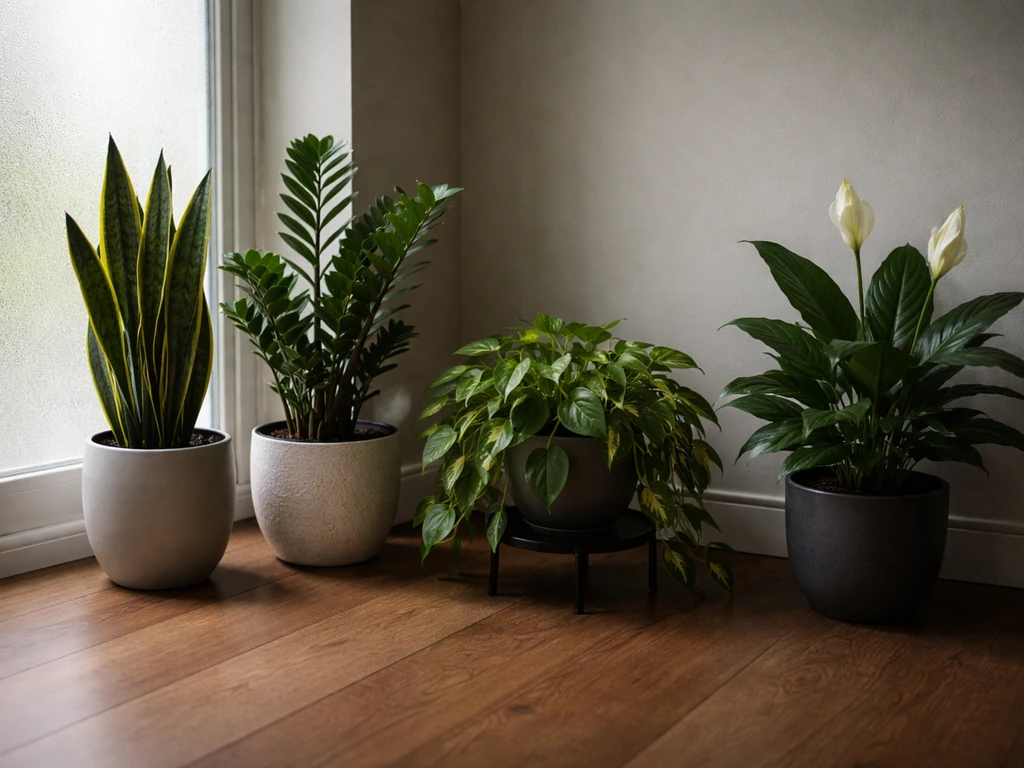
There's a real difference between a plant that can hold on in low light and one that grows well there. Keeping this distinction in mind will save you a lot of disappointment. Here's how the main candidates stack up.
| Plant | Min. Survivable Light | Sweet Spot for Growth | Honest Verdict |
|---|---|---|---|
| ZZ Plant (Zamioculcas zamiifolia) | ~25 FC | 50–75 FC | Best overall dark-corner plant. Holds up under neglect and dim light better than almost anything. |
| Snake Plant (Dracaena trifasciata) | ~25 FC | 50–100 FC | Extremely tolerant. Slows way down in deep shade but rarely looks terrible. |
| Cast Iron Plant (Aspidistra elatior) | ~25 FC | 50–75 FC | Earns its name. Slow-growing but genuinely unfazed by dim corners. |
| Peace Lily (Spathiphyllum) | ~25 FC | 75–100 FC | Survives low light, but won't flower without at least medium light. Foliage holds. |
| Pothos (Epipremnum aureum) | ~50 FC | 75–150 FC | Fast grower in brighter low light, gets leggy and pale in true deep shade. |
| Chinese Evergreen (Aglaonema) | ~25–75 FC | 75–150 FC | Dark-green varieties tolerate low light; colorful cultivars need more. |
| Philodendron (heartleaf) | ~50 FC | 75–200 FC | Similar to pothos — handles low light but shows it with stretched stems quickly. |
| Dracaena (various) | ~50 FC | 75–150 FC | Adapts well; lower-light varieties like 'Janet Craig' are your best bet. |
If your corner reads below 50 FC consistently, stick to ZZ plant, cast iron plant, or snake plant. These three are as close to 'grow in the dark' as the plant world gets. The others will survive for a while but tend to get leggy, lose variegation, and slowly decline after a few months. Worth noting: snake plants in very dark rooms and money plants (pothos) in low light come up constantly as reader questions, and the honest answer in both cases is the same, they tolerate it, but they won't look their best without at least a small boost. If you’re asking can money plant grow in a dark room, the answer is yes in low light, but it usually won’t look its best without some extra ambient light or a small grow light can money plant grow in dark room.
Care habits that prevent low-light problems
Plants in low light have lower energy budgets. They photosynthesize less, which means they use water and nutrients more slowly. The most common way people kill corner plants isn't the darkness, it's overwatering while the plant is running on dim light. University of Maryland Extension also advises checking mealybug issues by watching for white or cottony masses on stems, leaves, or roots, and monitoring again after treatment each time you water overwatering while the plant is running on dim light. Here's how to adjust your routine.
Watering
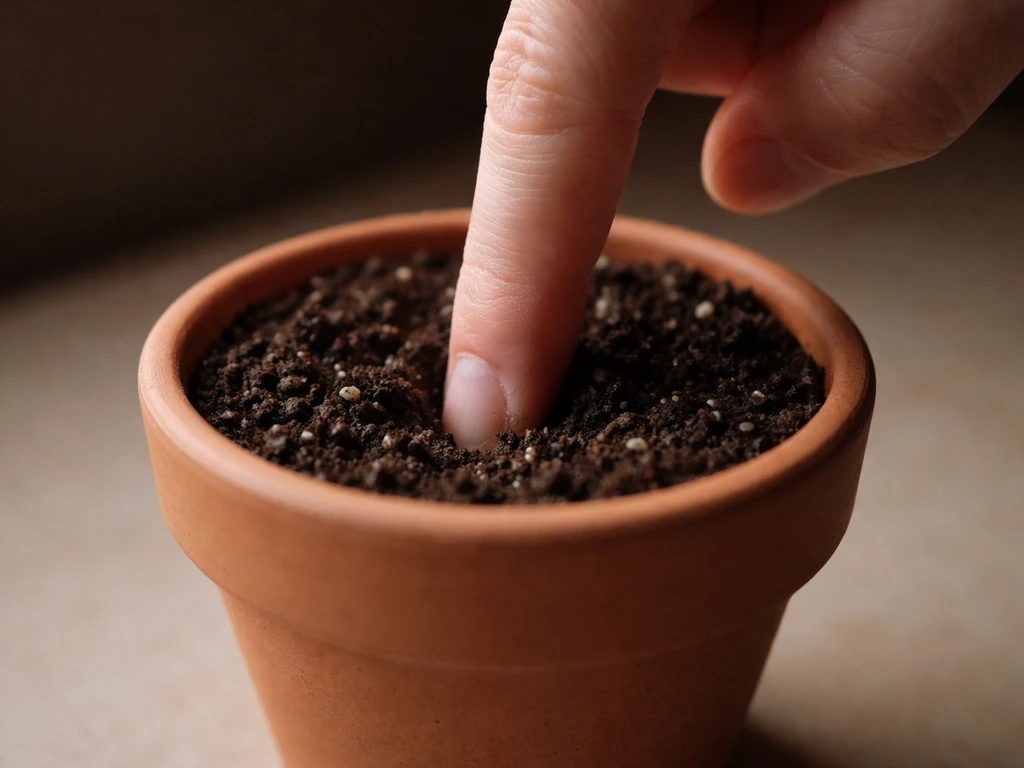
Water less frequently than you think you need to. Oregon State University Extension's simple rule is to push your finger into the soil to the second knuckle, if it feels moist, wait. UMN Extension adds a useful weight trick: lift the pot right after watering so you know what 'heavy' feels like. A light pot means dry soil; time to water. A heavy pot means the soil is still holding moisture. In a dark corner, a plant that normally needs water weekly might only need it every 10–14 days. Follow the soil, not a schedule.
Fertilizing
Cut fertilizer frequency in half compared to what the label says, and skip it almost entirely in winter. A low-light plant isn't growing fast enough to use the nutrients, and excess fertilizer salts build up in the soil and burn roots. A light, diluted feed once a month during spring and summer is plenty for most corner plants.
Rotation and pruning
Rotate your plant a quarter turn every couple of weeks so all sides get equal exposure to whatever ambient light exists. Prune leggy stems, long, stretched growth with wide gaps between leaf nodes, back to a node to encourage denser, healthier new growth. Don't be afraid to cut; it's usually the right call.
Soil and pots
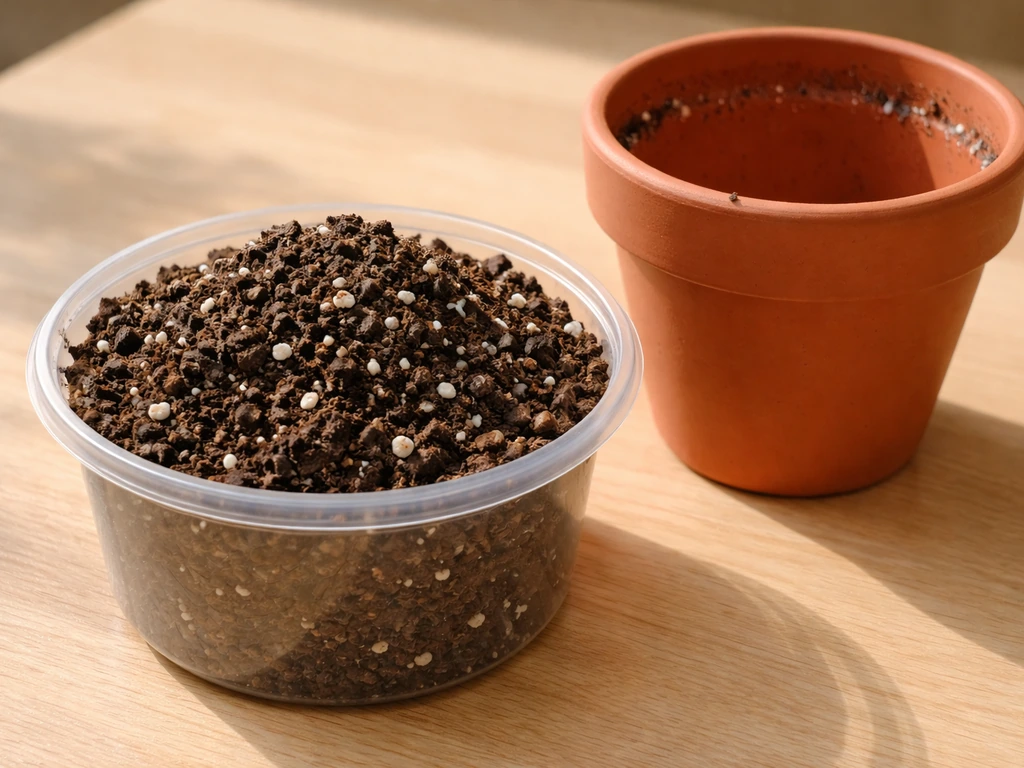
Use a well-draining mix, not dense potting soil that holds water for a long time. Adding a small amount of perlite (about 20–30%) helps drainage significantly and reduces root rot risk in low-light corners where the soil stays wet longer. Make sure your pot has drainage holes, this is non-negotiable in a dark corner.
When you actually need a grow light (and which type to pick)
If your corner reads below 25 FC, or if you want your plants to actually grow rather than just survive, a grow light is worth it. This doesn't have to be expensive or complicated. Here's a quick comparison of your main options.
| Bulb Type | Efficiency | Heat Output | Best For | Cost |
|---|---|---|---|---|
| LED (full-spectrum) | Excellent | Very low | Any corner plant; long-term use | $15–$60 for a bulb or panel |
| Fluorescent / CFL | Good | Low to moderate | Budget setups; small spaces | $10–$30 |
| Incandescent / spotlight | Poor | High | Not recommended for plants | Low upfront, high running cost |
LED grow lights are the clear winner for most people today. They use less electricity, produce very little heat (so you can position them closer to plants without burning leaves), and last for years. University of Vermont Extension recommends looking at correlated color temperature (CCT) on the product label: a full-spectrum LED around 5000–6500K mimics natural daylight well. A high color rendering index (CRI of 90+) is a bonus. For foliage plants in a corner, a simple screw-in LED 'grow bulb' in a clip-on lamp or a dedicated desk lamp fixture works perfectly well, no grow tent or fancy setup needed.
University of Missouri Extension notes that spotlights can work but aren't ideal because their beam is narrow and doesn't cover a plant evenly. A broader panel or bulb gives more even coverage. The main thing is that whatever you choose, you should be able to adjust its distance from the plant as the plant grows.
How to set up and place a grow light in a corner
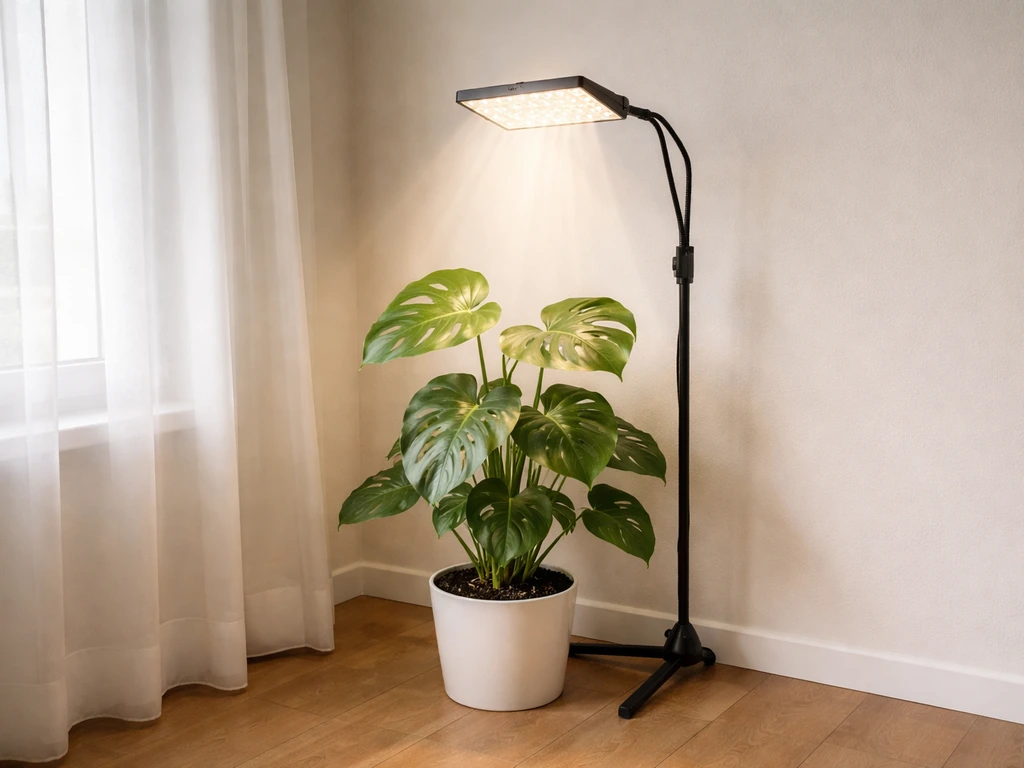
Placement matters more than most people realize. Too far away and the plant stretches toward the light; too close and leaves bleach or burn. University of Maine Extension specifically flags both of these outcomes as feedback signals you should watch for and adjust accordingly.
- Start distance at 12–18 inches from the top of the plant for most LED grow bulbs. Move closer (8–12 inches) if you see stretching after a week or two; move farther if you see bleaching or crisping leaf tips.
- Run the light 12–14 hours per day. UMN Extension and Iowa State Extension both cite this photoperiod as optimal for foliage houseplants. A simple plug-in timer costs about $10 and removes all the guesswork.
- Point the light downward at an angle toward the plant's canopy, not straight down from above if that would miss the lower leaves. Corner plants often benefit from a slight forward tilt.
- Use a clip-on lamp or adjustable arm lamp so you can change the height easily as the plant grows. Missouri Extension emphasizes keeping the fixture position adjustable.
- Don't leave the light on 24 hours. Plants need a dark period. Stick to 12–14 hours on, 10–12 hours off.
Virginia Tech Extension explains the concept of Daily Light Integral (DLI), the total amount of photosynthetically active light a plant receives over a full day, combining intensity and duration. You don't need to calculate DLI precisely, but the concept is useful: a weaker bulb run for more hours can approximate a stronger bulb run for fewer. If your grow bulb is on the dimmer side, running it for 14 hours instead of 12 compensates somewhat.
Yellowing, leggy stems, and slow decline: what's going wrong and how to fix it
Most corner plant problems are one of three things: not enough light, too much water, or a plant that was simply the wrong choice for the space. UMN Extension links insufficient light directly to pale or yellow leaves and leggy growth with wider-than-normal gaps between leaf nodes. Here's how to diagnose and respond.
Yellowing leaves
Yellow leaves in a corner plant are usually either too little light or too much water (or both together). Check your soil first with the finger test. If the soil is wet and the plant is yellowing, pull back on watering immediately and check that drainage holes aren't blocked. If the soil is dry and the plant is still yellowing, the light level is the culprit, time to add a grow light or move the plant closer to a window.
Leggy, stretched growth
Long stems with few leaves and wide spaces between nodes mean the plant is reaching for light it isn't finding. This is a classic low-light stress signal. Add or move closer to a light source, prune the stretched stems back to a healthy node to encourage bushier regrowth, and rotate the plant regularly going forward.
Slow decline with no obvious symptoms
Sometimes a corner plant just slowly gets worse over months, dropping a leaf here and there, failing to produce new growth, looking vaguely sad. This is usually chronic light deficiency combined with stale soil and possibly root issues from intermittent overwatering. Repot into fresh, well-draining mix, add a grow light on a timer, cut back on fertilizer, and let the plant stabilize for 6–8 weeks before judging. If it still declines, it may simply be the wrong plant for that spot.
A simple decision framework for your corner
- Measure your corner's light level using the shadow test, a phone app, or a foot-candle meter.
- If you're above 50 FC consistently: choose from the full low-light list (ZZ, snake plant, pothos, peace lily, Chinese evergreen). Adjust watering down and skip heavy fertilizing.
- If you're 25–50 FC: stick to ZZ plant, cast iron plant, or snake plant. Add a modest grow light on a 12-hour timer to push conditions into a safer range.
- If you're below 25 FC: a grow light isn't optional, it's necessary. Choose a full-spectrum LED, set it 12–18 inches above the plant, run it 12–14 hours daily.
- Monitor for yellowing and leggy growth every two weeks. Adjust light distance or duration based on what you see.
- If problems persist after 6–8 weeks of corrected conditions, reconsider the plant choice rather than fighting the space.
The bottom line: dark corners are workable spaces for plants, but only if you're honest about how much light is actually there. The right plant, correct watering habits for low light, and a simple grow light when needed will take you from 'slowly dying corner plant' to a genuinely healthy one. It's less about the corner and more about matching conditions to plant needs, which, once you measure your light level, is surprisingly straightforward.
FAQ
Can “no-light” corners really support plants without a grow light?
Not in the sense people usually mean. If the area has essentially no usable light (for example, a closet with the door closed most of the time), even the hardiest plants will only survive briefly. The practical fix is to either move the plant to an area with some ambient spill light or add a grow bulb, then treat the plant like a low-light one (less water, reduced fertilizer).
How often should I water plants in a dark corner?
In low light, the plant’s water demand often slows a lot, so a strict weekly schedule usually causes root problems. Use the finger test and pot-weight method together: only water when the lower soil is dry and the pot feels light, then water thoroughly and let excess drain out. If you see yellow leaves while soil is still wet, stop watering immediately.
What happens if I move a dark-corner plant to a brighter spot?
Yes, but look for acclimation failure. If you move a dark-corner plant to a brighter window, do it gradually over 2 to 4 weeks by increasing exposure in small steps. Otherwise, the plant can bleach (washed-out leaf color) or drop older leaves even if it is a low-light tolerant species.
Does rotating a plant matter in low light, and how often should I do it?
Rotate with a purpose. A quarter turn every couple of weeks helps keep growth more even, but if you are using a grow light, make sure the light also has consistent coverage across the plant. Otherwise, rotation helps appearance but won’t fully correct uneven stretching.
My plant’s leaves are yellow in a dark corner. How do I know if it’s light or water?
Look at soil, not just leaf color. Yellowing can be low light, overwatering, or both. If the soil is moist or heavy, treat it as overwatering first (check drainage holes, let it dry more, delay watering). If the soil is dry and the plant is still yellowing, increase light (move closer or add a grow bulb).
How can I tell whether my corner plant is stretching due to light or nutrient issues?
Leggy growth and wider gaps between leaf nodes usually mean the plant is reaching for more light, not that it needs a different fertilizer. Prune back stretched stems to a node to encourage denser new growth, then address the light level by moving the plant closer to ambient light or using a grow light.
Will variegated pothos or other variegated plants keep their color in low light?
With variegated plants, “tolerates low light” often means it survives, not that it keeps its pattern. In dim corners, variegation can fade and growth can slow, so plan on brighter ambient light or a small grow light if you want the leaves to stay noticeably variegated.
Should I repot before or after adding a grow light to a declining corner plant?
Yes, but reduce risk by changing one variable at a time. Repot into a well-draining mix with perlite and confirm drainage holes, then wait until the plant has stabilized under the same light level. If you repot and add a grow light at the same time while also changing watering, it can be harder to tell what caused improvements.
How do I position a simple LED grow bulb for a corner plant?
A clip-on LED grow bulb works well, but the key is distance and coverage. Start with a conservative height, watch for leaf bleaching or droop, then adjust. As the plant grows, you will likely need to raise the light slightly to keep intensity consistent.
At what light level should I stop trying to “make it work” and use a grow light?
If the corner reads below about 25 foot-candles consistently, you can keep plants alive with patience, but they usually won’t look their best. A grow light becomes the upgrade that changes the outcome, especially in winter when ambient light drops. If you want real growth rather than slow survival, that’s the threshold to plan around.
What’s the biggest fertilizer mistake people make with low-light plants?
Even low-light plants can be stressed by salt buildup if you fertilize like it’s summer growth. In dim corners, cut fertilizer frequency (about half, or skip most of winter), and prefer a diluted feed. If you suspect fertilizer burn, flush the soil lightly and let it drain fully before resuming a gentler schedule.
Why does my light meter reading not match how the plant looks over time?
Thick curtains, furniture, and “corner shadows” can change light dramatically during the day. Measure at multiple times, and consider seasonal changes, especially in winter. If the reading swings from moderate to very low, you may need the plant in a different spot or a consistent grow light on a timer.