
Yes, plants can grow with window film on the glass, but whether they thrive depends almost entirely on how much visible light the film lets through. You can also grow plants using reflected sunlight, but the effectiveness depends on how much photosynthetically active light actually reaches the leaves can reflected sunlight grow plants. Some films barely dent the light your plants receive. Others cut it so dramatically that even shade-tolerant species start to struggle. The key number to look for is VLT (visible light transmittance): a film at 70% VLT gives your plants roughly 70% of the light they would have gotten through bare glass. A film at 22% VLT? That's like moving your plants into a dim hallway. Know that number, and you can make a smart call about which plants stay, which go, and whether you need a grow light to fill the gap.
Can Plants Grow With Window Film? Yes If Light Fits
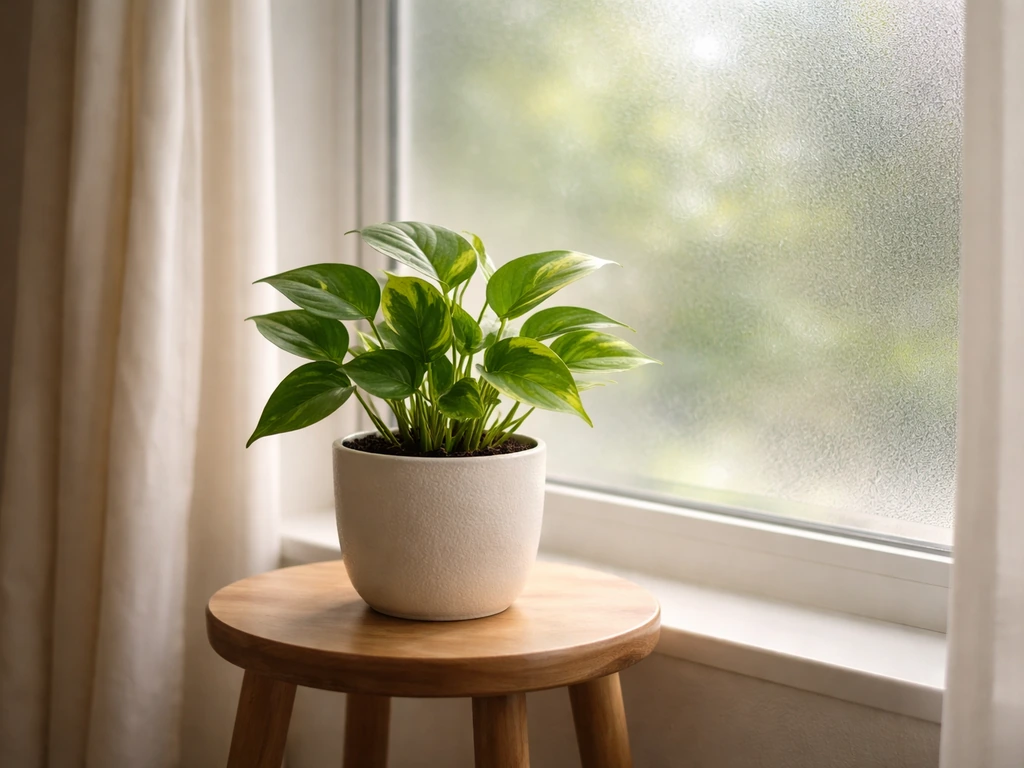
How window film changes the light plants get
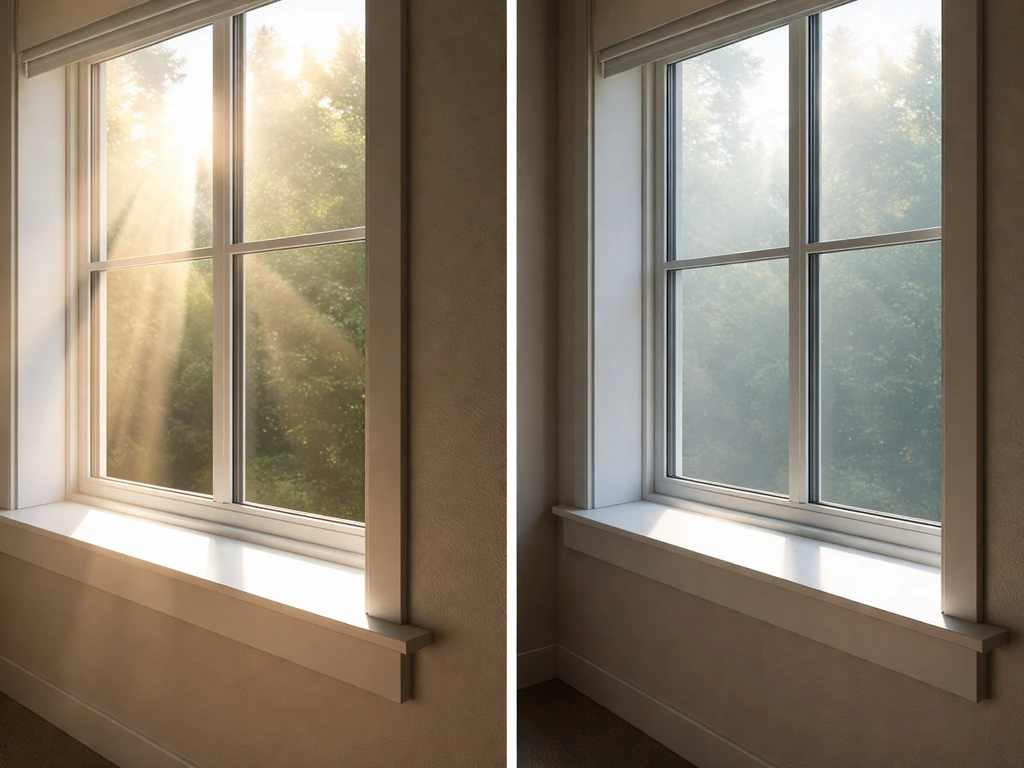
Window film works by filtering, reflecting, or absorbing portions of the light spectrum before it reaches your room. Reflective or mirrored films can further change how much usable light reaches your plants, so it helps to evaluate VLT and PAR when you choose the film filtering, reflecting, or absorbing portions of the light spectrum. For plants, the portion that matters most is called blank" rel="noopener noreferrer">PAR, or Photosynthetically Active Radiation. This is the 400–700 nm band of visible light, primarily blue and red wavelengths, that powers photosynthesis. When a film cuts into that range, it directly reduces the energy available for your plant to make food.
Most window films are rated for Visible Light Transmittance (VLT), which is the percentage of visible light in the 400–700 nm range that passes through the glass after the film is applied. Because PAR maps closely onto the visible spectrum, VLT is a reasonably good proxy for how much photosynthetically useful light your plants are actually getting. A film with 77% VLT means plants get about 77% of what they would through uncoated glass. A film rated at 35% means they're getting just over a third.
There's one more layer to this: UV light. Most quality window films block 99% or more of UV (300–380 nm). For human skin and furniture, that's great. For plants, UV sits just outside the main PAR range, so blocking it doesn't dramatically harm photosynthesis. What matters far more for your plants is the reduction in visible, PAR-range light, not the UV block. Don't be distracted by UV claims when evaluating film for plant-friendly use.
Types of window film and which ones reduce plant growth most
Not all films are created equal when it comes to plant impact. Here's a practical breakdown of common film types and roughly how much light each one passes through.
| Film Type | Typical VLT Range | Plant Impact |
|---|---|---|
| Clear low-E (e.g., SolarGard Ecolux) | 67–75% | Minimal. Close to uncoated glass. Most plants adapt fine. |
| Lightly tinted solar/ceramic (e.g., 3M CA80) | ~77% | Very low impact. Near-clear performance for plants. |
| Mid-range solar/ceramic (e.g., 3M CA55, CA62) | 55–62% | Moderate reduction. Shade-tolerant plants do well; sun-lovers may struggle. |
| Darker solar/ceramic (e.g., 3M CA35, CA40) | 22–40% | Significant reduction. Only shade-tolerant species recommended near these windows. |
| Frosted/decorative privacy film | Varies (often 50–73%) | Depends on density of frost pattern. Diffuses light rather than blocking all of it. |
| Reflective/mirror film (heavy tint) | 15–35% | Severe reduction. Very few houseplants will thrive without supplemental lighting. |
The darkest films (VLT under 35%) are the real problem cases. Something like a 3M CA35 ceramic film transmits only about 22% of visible light. That's a dramatic reduction from baseline. In my own apartment, I installed a mid-range solar film on a south-facing window and immediately noticed my pothos and monstera slowing down. It wasn't until I measured the light and did the math that I understood why. The film was only passing about 55% of the light, and I hadn't accounted for that at all when I placed my plants.
How to tell if your plants will still get enough light
You don't need a fancy setup to check whether your filmed window is still giving plants enough to work with. Here are a few practical ways to gauge it.
Use a phone lux meter app
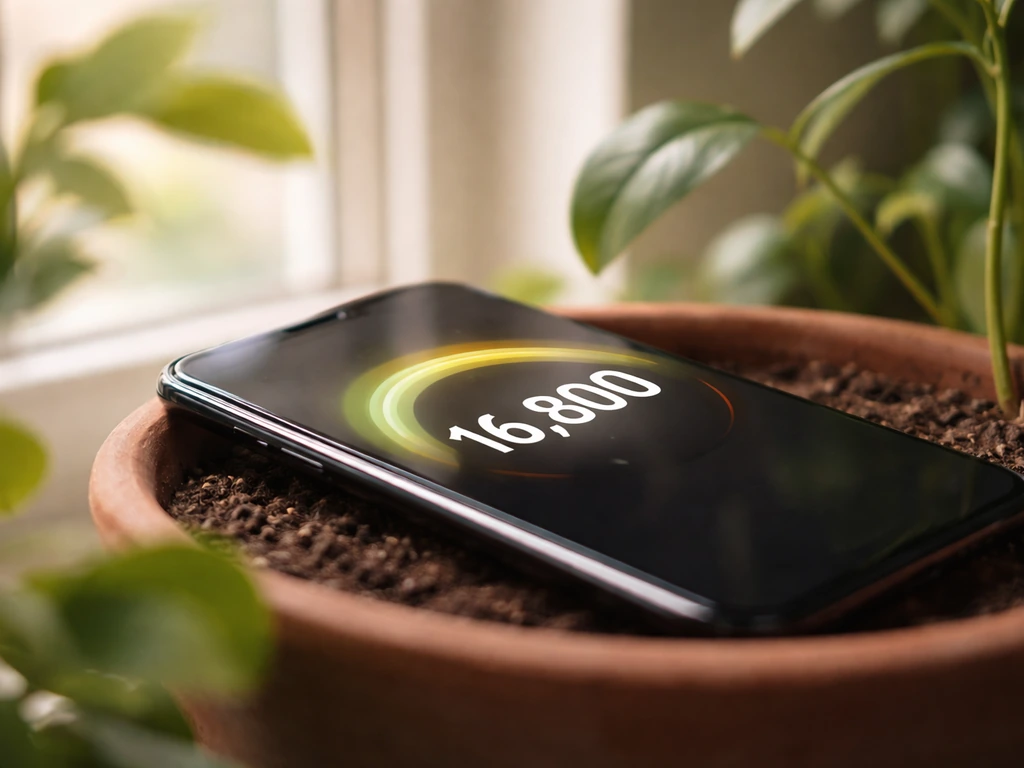
Free light meter apps (search "lux meter" in your app store) are imperfect but genuinely useful for before/after comparisons. Take a reading at plant height near the window before filming, then take the same reading after. If you see a drop from, say, 8,000 lux to 4,000 lux, you know you've lost about half your light. That's a meaningful change that will affect most medium-light houseplants.
Know your plant's baseline light need
Extension researchers typically classify indoor light for houseplants in foot-candles. Low light is roughly 25–100 foot-candles (270–1,075 lux). Medium light is 100–500 foot-candles. High light is 500+ foot-candles. A snake plant or peace lily can survive at 25–100 foot-candles. A fiddle-leaf fig or herbs want much more. Knowing where your plant falls helps you decide whether the post-film light level is still in the acceptable range.
The shadow test (quick and rough)

Hold your hand about a foot above a white piece of paper near the window during peak daylight hours. If you see a clear, sharp shadow, there's adequate light for medium-light plants. A faint or fuzzy shadow means low light only. No shadow at all? You're in survival-mode territory, and most plants won't be happy there long-term.
Calculate the reduction from VLT
If you know your film's VLT percentage, you can estimate your post-film light level directly. Measure baseline lux, then multiply by the VLT decimal. A baseline reading of 6,000 lux through clear glass with a 55% VLT film applied gives you roughly 3,300 lux at that same spot. Compare that number to your plant's known light requirement and you'll know whether you're still in a workable range.
Plants that tolerate reduced light vs plants that need strong light
The good news is that plenty of popular houseplants are genuinely shade-tolerant, meaning they'll do fine even if your window film drops available light significantly. The plants that struggle are the ones that evolved in open, sunny environments and simply can't photosynthesize fast enough at low intensities to stay healthy.
| Plant | Light Need | Handles Window Film? |
|---|---|---|
| Snake plant (Sansevieria) | Low (25–100 fc) | Yes, even with darker films |
| Peace lily (Spathiphyllum) | Low (25–100 fc) | Yes, tolerates significant reduction |
| Pothos (Epipremnum) | Low-medium | Yes, though growth slows with heavy film |
| ZZ plant (Zamioculcas) | Low | Yes, very tolerant |
| Cast iron plant (Aspidistra) | Low | Yes, excellent for filmed windows |
| Chinese evergreen (Aglaonema) | Low-medium | Yes, most varieties handle it well |
| Monstera deliciosa | Medium | Partially, may slow with VLT under 50% |
| Fiddle-leaf fig (Ficus lyrata) | High | Struggles with most films, needs supplemental light |
| Herbs (basil, mint, thyme) | High | Generally poor match for filmed windows without grow lights |
| Succulents and cacti | Very high | Poor match unless film is near-clear (VLT 70%+) |
If your window has a dark film (VLT below 40%), honestly lean into it and stock that spot with low-light champions: snake plants, ZZ plants, peace lilies, and cast iron plants. They were practically designed for these conditions. Trying to force a succulent or herb to survive there is just setting yourself and the plant up for disappointment.
How to set up plants with window film
Getting placement right matters more than ever once you've added film to a window, because you've already reduced the total light budget and you want to use it as efficiently as possible.
Get plants as close to the glass as possible
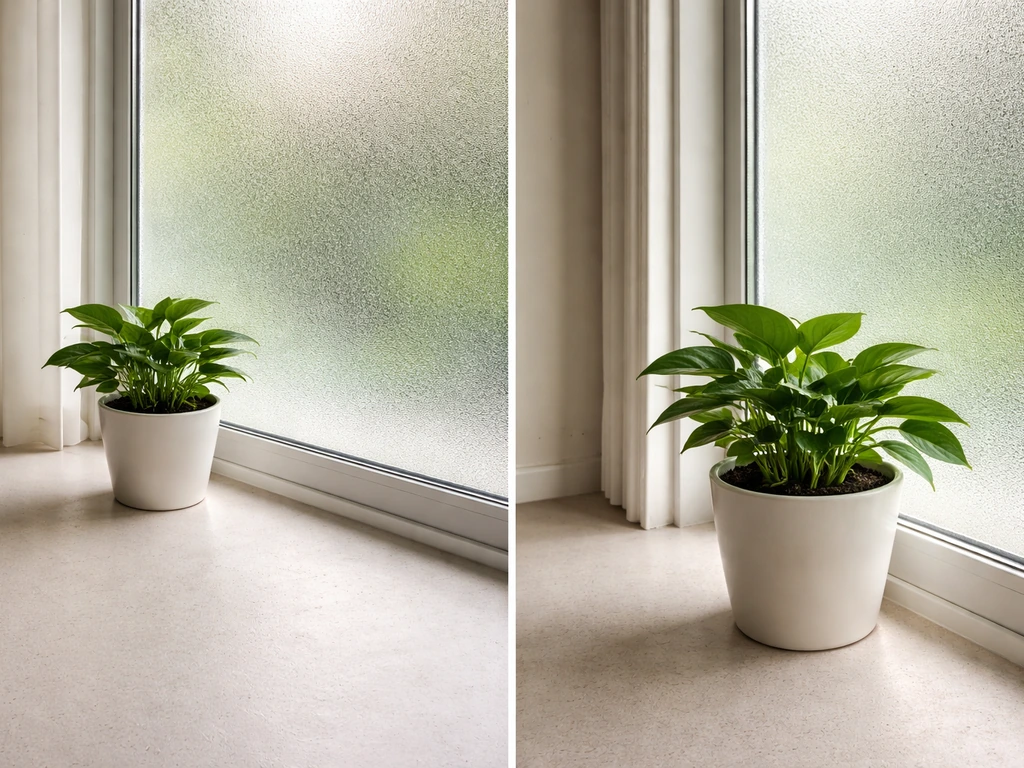
Light intensity drops off fast as you move away from a window, even without film. With film reducing what's coming through in the first place, every foot of distance between your plant and the glass costs you meaningful light. A pothos sitting 4 feet from a filmed window might be getting a fraction of what it needs. Move it right up to the sill if you can.
Rotate plants regularly
Plants grow toward their light source through a process called phototropism. If you leave a plant in the same orientation for months, one side gets more light and the plant grows lopsided. This effect is more noticeable when light is limited, as it is with window film. Give your plants a quarter turn every week or two to keep growth even and prevent them from reaching dramatically toward the glass.
Thin out crowded growth and space plants well
With less light available overall, crowding becomes a bigger problem. Dense, overlapping foliage blocks the lower leaves from getting any useful light at all. Remove dead or dying leaves promptly, and don't cluster too many plants in front of the same window unless it's a high-VLT film and a bright exposure.
Adjust watering to match slower growth
Plants growing in lower light photosynthesize more slowly, which means they use water more slowly too. If you keep watering on the same schedule you used before the film was installed, you risk overwatering. Check soil moisture before watering and let it guide you rather than sticking to a fixed routine.
Supplementing with grow lights to offset film light loss
If your film is cutting light significantly and you still want to grow plants that need medium to high light, a grow light is the most reliable fix. Modern LED grow lights are affordable, energy-efficient, and genuinely effective at supplying the red and blue wavelengths plants need for photosynthesis. You don't need anything elaborate or expensive to make a real difference.
What to look for in a grow light
Skip lights marketed purely in watts or lumens. For plants, the useful measurement is PPFD (Photosynthetic Photon Flux Density), which measures how many photons in the PAR range (400–700 nm) are hitting your plant per second. Look for lights that list PPFD values or are labeled as full-spectrum LED or "broad-spectrum PAR" lights. A basic full-spectrum LED panel providing 100–300 PPFD is enough for most low-to-medium light houseplants. For herbs or flowering plants, aim for 300–600 PPFD at the canopy.
Placement and distance
PPFD drops off sharply with distance, so placement really matters. Most affordable LED grow lights work best positioned 12–24 inches above the plant canopy. Check the manufacturer's distance recommendations, but if you're not sure, start at 18 inches and watch for signs of bleaching (too close) or stretching (too far). Running the light 12–16 hours per day is a reasonable target for most houseplants, since plants also need a dark period to complete their biological cycles properly.
Grow lights as a complement, not just a backup
Even in spaces with no window film, indoor light levels are often lower than plants would prefer. Adding a grow light near a filmed window isn't an admission of failure: it's just smart indoor gardening. You're making up for a real physical limitation, and it works. The combination of filtered natural light plus a few hours of supplemental LED light can keep medium-light plants genuinely healthy even through winter months or behind darker films. This is especially worth considering if you're also dealing with rooms that have minimal or no window access at all. This approach can also help when you need to grow can plants grow in a room without windows.
Troubleshooting poor growth after installing window film
If you installed window film and your plants have started to look unhappy, low light is the most likely culprit. Here's what to look for and what to do about it.
Signs your plants aren't getting enough light
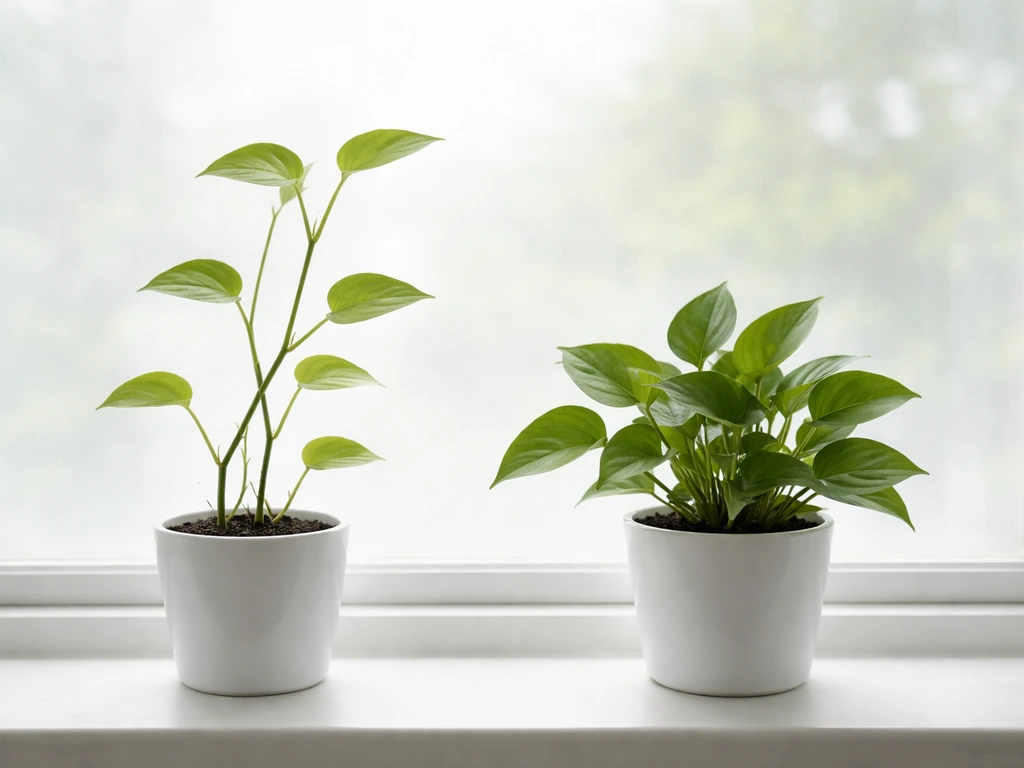
- Etiolation: stems grow long and weak with large gaps between leaves, reaching toward the window
- New leaves come in smaller than normal and look pale or washed-out
- Older leaves turn yellow and drop, starting with the lower or interior leaves
- The plant leans strongly toward the light source and won't stay upright
- Growth has slowed dramatically or stopped, especially if it's spring or summer when the plant should be active
- Variegated plants lose their patterning and revert to solid green (the plant is conserving chlorophyll to capture more light)
What to do about it
- Measure your current light level with a lux meter app and compare it to your plant's known requirements. Confirm the film is actually the cause before making changes.
- Move plants closer to the window, ideally within 12–18 inches of the glass.
- Swap to a higher-VLT film if the current one is below 50% and you want to keep light-hungry plants near that window. Films in the 65–75% VLT range have minimal plant impact.
- Relocate light-demanding plants (herbs, succulents, fiddle-leaf figs) to an unfilmed window or a bright skylight.
- Add a full-spectrum LED grow light above or beside the affected plants and run it for 12–16 hours daily.
- Replace heavy-light plants with low-light species that genuinely suit the space: snake plants, peace lilies, ZZ plants, or pothos.
- Avoid moving stressed plants directly into intense direct sunlight without acclimation: sudden high light exposure can bleach or scorch foliage that has adapted to low light.
The honest takeaway is that window film doesn't have to end your indoor gardening, but it does change the parameters you're working within. Treat the film's VLT as your new light budget, match your plant choices to that budget, and fill any remaining gap with a simple grow light. That combination handles nearly any filmed window situation, regardless of whether you're dealing with heat-control film, privacy frosting, or a reflective solar film on a bright apartment window.
FAQ
Does window film reduce UV and is that bad for plants?
Most decent films block most UV, but UV is not the main driver of photosynthesis for houseplants. The bigger issue is whether the film reduces the 400 to 700 nm band that powers photosynthesis, so always focus on VLT and PAR, not UV claims.
Will reflective, one-way, or mirrored films prevent plant growth even if the room feels bright?
Not necessarily, but reflections can make your room look brighter than what the leaves receive. Check the film’s VLT and, if available, its PAR or spectrum notes, because some films reflect a lot of usable wavelengths back out, lowering the effective light at the plant.
What if my window film is old, peeling, or has bubbles, can that affect plants?
Yes. Surface damage, dust trapped under the film, or bubbles can scatter light and reduce the amount reaching leaves evenly, even if the labeled VLT seems fine. If plants struggle after installation, visually inspect the film and consider cleaning or replacing it.
How do I know if I need a grow light after adding window film?
Do a before-and-after lux (or foot-candle) check at plant height, then compare the post-film reading to your plant’s category (low, medium, high light). If you fall below the plant’s typical range, supplement with a grow light positioned 12 to 24 inches above the canopy.
Are lux meter readings enough, or should I use PPFD?
Lux is a helpful proxy for before/after changes, but it doesn’t directly measure plant-usable photons. If you are shopping for a grow light, PPFD is more reliable, since PPFD tells you how many photons in the 400 to 700 nm range reach the leaves per second.
Does plant type matter more than the window film type?
Both matter, but plant type determines how much light you can afford to lose. If your film is low-VLT (for example below 40%), stick to shade-tolerant plants and avoid light-hungry herbs or figs unless you plan to add a grow light.
Can I place plants closer to the window to offset low VLT film?
Yes, and it’s often the most effective low-cost fix. Light intensity drops quickly with distance, so moving plants right up to the sill or as close as practical can recover a meaningful portion of the lost light.
Will window film make watering schedules change?
Usually, yes. Slower photosynthesis in lower light often means the soil stays moist longer, so watering too soon after film installation can cause root issues. Use soil moisture checks instead of sticking to the old routine.
How often should I rotate plants after adding window film?
Rotate about once every week or two. With reduced light, phototropism effects become more noticeable, so rotating helps prevent one side from reaching toward the glass and leaving you with uneven, stressed growth.
Should I remove lower leaves or prune after adding window film?
If leaves are dying or heavily shaded, removing them can help reduce wasted effort and improve airflow. Avoid aggressive pruning if the plant is already struggling due to low light, since the plant may need all available leaf area while you correct the light.
Can plants grow with window film in winter or in a north-facing window?
It’s possible, but the margin gets smaller. Winter and north-facing light are usually weaker to begin with, so a mid or low-VLT film can push many plants into low-light only. Plan on using a grow light more often in these conditions.