Most houseplants need somewhere between 12 and 16 hours of light per day, at an intensity that actually supports photosynthesis. Foliage plants like pothos, peace lilies, and ferns do well with 12 to 14 hours. Seedlings and fast-growing plants want 16 to 18 hours. Succulents and other high-light plants need at least 10 hours of bright, direct or near-direct light.
How Much Sunlight Do Plants Need to Grow Indoors
Marcus Hartley
22 May 2026
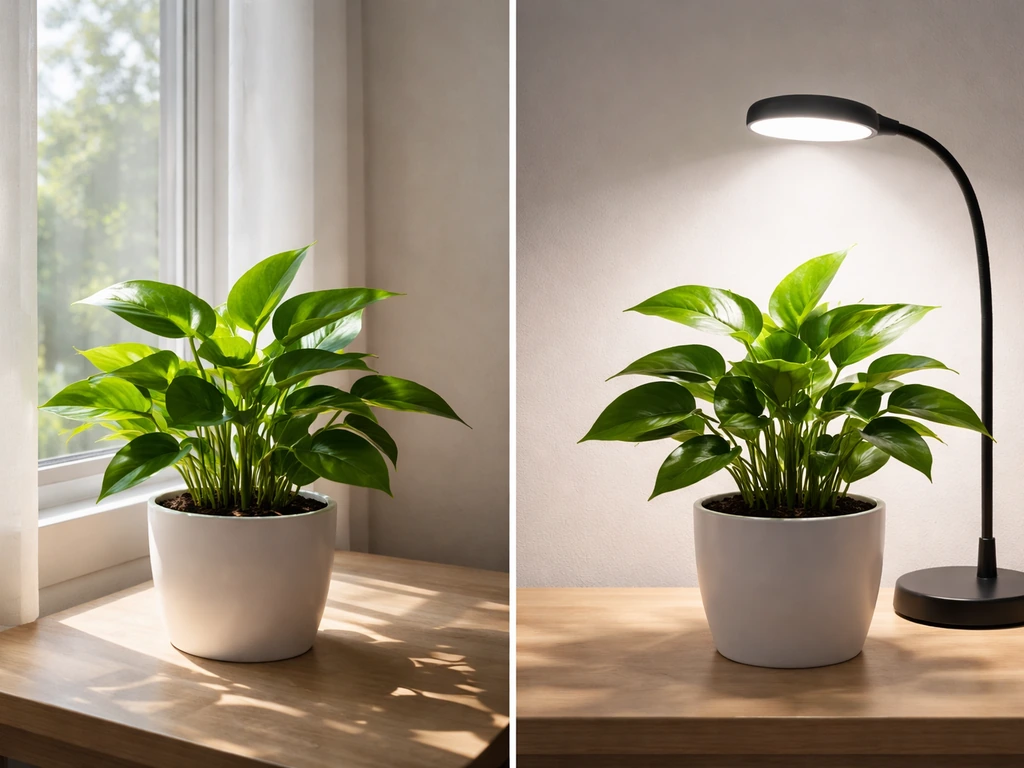
If you are doing a science fair project, focus on testing whether your plants grow with enough light, since light availability can make or break results do plants need sunlight to grow science fair project. The tricky part isn't the hours, it's the intensity. A few feet from a north-facing window is not the same as a few feet from a south-facing one, and window light in January is genuinely weaker than in July.
That's what this guide is here to sort out.
Quick rule of thumb for sunlight hours
If you want a fast starting point before diving into details, here it is. These ranges come from university extension guidelines and are reliable enough to start with:
| Plant Type | Daily Light Hours | Notes |
|---|---|---|
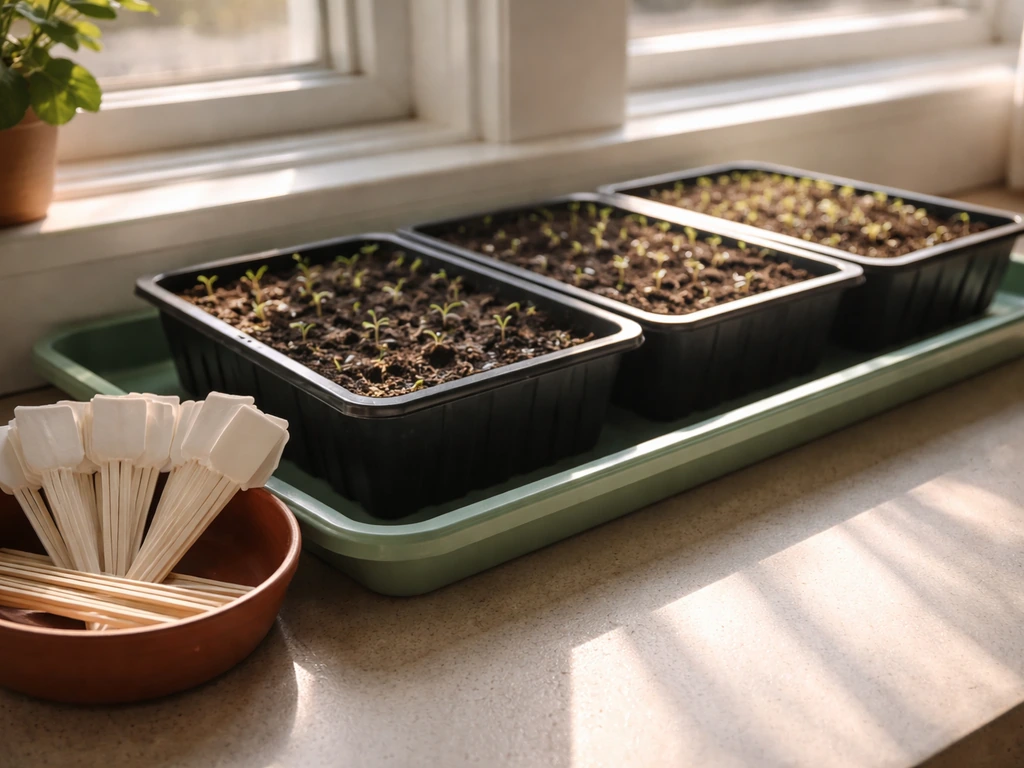
| Seedlings | 16–18 hours | Need consistent, bright light to avoid leggy growth |
| Foliage houseplants (pothos, philodendron, snake plant) | 12–14 hours | Tolerates lower intensity but still needs adequate hours |
| Succulents and cacti | 10+ hours | Requires bright light; will stretch and pale without it |
| Flowering and fruiting plants (tomatoes, herbs) | 14–16 hours | More light generally means better blooms and yield |
| Low-light specialists (ZZ plant, cast iron plant) | 10–12 hours | Can survive less, but 'low light' doesn't mean no light |
One thing worth saying plainly: 'hours of sunlight' and 'hours of adequate light' are not always the same thing. A window that gets 6 hours of direct sun in summer might only deliver enough usable intensity for 3 or 4 of those hours in winter. That's why intensity matters just as much as duration.
How to measure the light in your space
You don't need fancy equipment to get a workable read on your light levels. There are a few practical approaches, and each gives you a slightly different piece of the picture.
Window direction as a first estimate
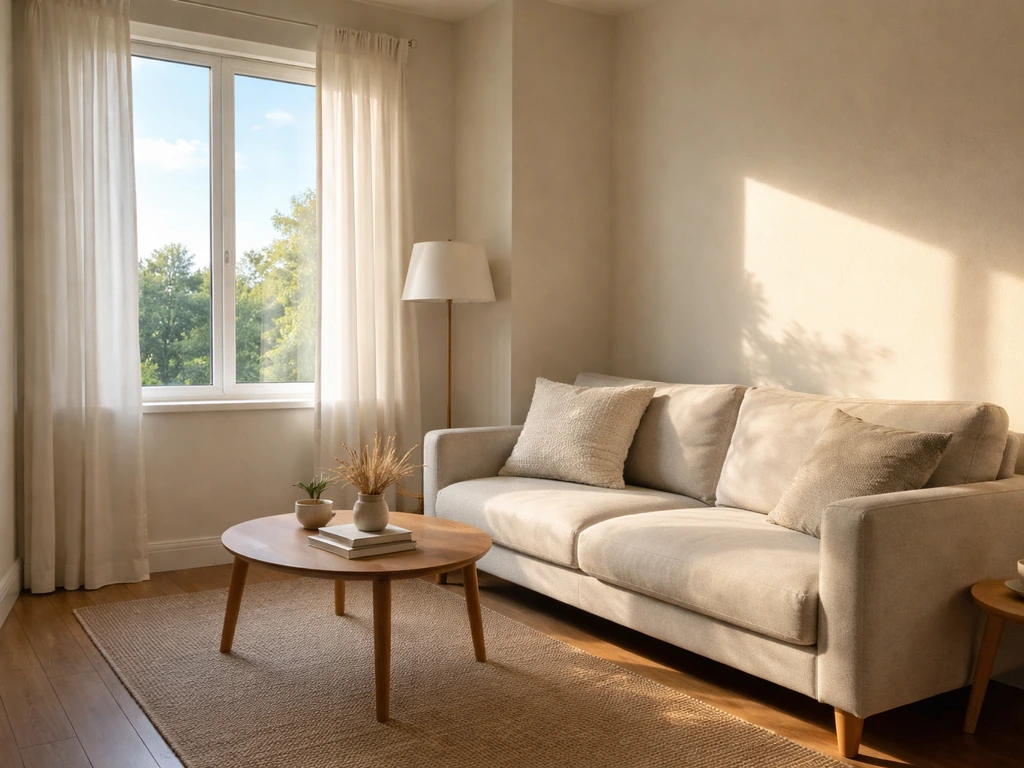
In the northern hemisphere, south-facing windows get the most light year-round, west-facing windows get strong afternoon sun, east-facing windows offer gentle morning light, and north-facing windows provide the least. This isn't just a rule of thumb, it's a real, consistent difference. A south-facing window at 2 feet distance can deliver 1,000 foot-candles or more on a sunny day, while a north-facing window might max out at 75 to 200 foot-candles. That's the difference between a high-light and a low-light environment, and no amount of 'moving the plant closer' fully bridges it if the window orientation isn't there.
Using your phone to measure lux
Free lux meter apps (search 'lux meter' in your app store) use your phone's ambient light sensor to give a rough intensity reading. They're not lab-accurate, but they're genuinely useful for comparing spots in your home. Hold the phone at leaf level, face the sensor toward the light source, and take a reading. A reading below 1,000 lux is low light. Around 1,000 to 10,000 lux is medium. Above 10,000 lux is bright, high-light territory. To convert to foot-candles, divide the lux reading by about 10.76. So 5,000 lux is roughly 465 foot-candles, which falls squarely in the medium-light range.
Understanding foot-candles and PPFD
University extension programs often describe indoor light requirements in foot-candles. Mississippi State University Extension defines low light as 50 to 500 foot-candles, medium as 500 to 1,000 foot-candles, and high light as 1,000 foot-candles and above. University of Maryland Extension groups indoor plant light levels into high, medium, and low categories and uses foot-candles, with [medium-bright light described as 100 to 500 foot-candles](https://extension. umd.
edu/resource/lighting-indoor-plants). Those numbers are useful anchors. If you're using grow lights, you'll also encounter PPFD (Photosynthetic Photon Flux Density), measured in micromoles per square meter per second. PPFD measures only the wavelengths plants actually use for photosynthesis, making it more precise than lux.
For most foliage houseplants, a PPFD of 100 to 200 is sufficient. Succulents and herbs prefer 200 to 400. Fruiting plants can want 400 to 600 or higher. Most consumer grow lights list their PPFD output at a given distance, so you can use that to position them correctly.
Other factors that affect your real light levels
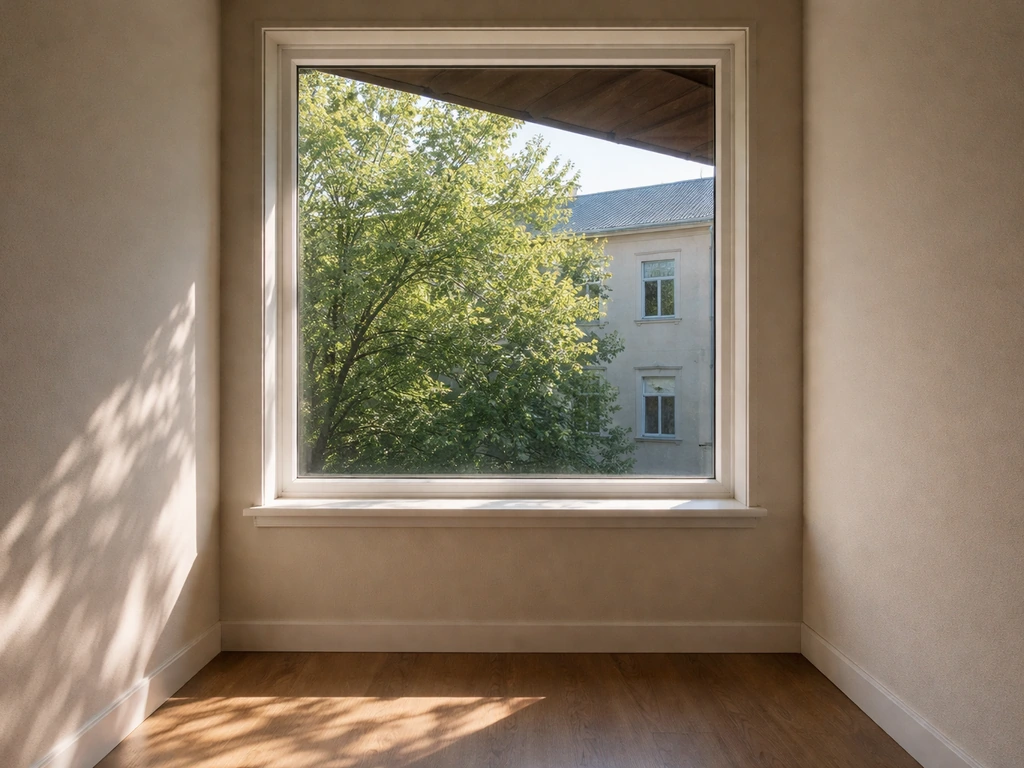
Window direction is the starting point, but UF/IFAS extension research points out that what's outside the window matters too: trees, overhangs, neighboring buildings, and even dirty glass can cut your actual light significantly. Seasons change everything. In my apartment, the same east-facing window that gives my herbs enough light in June barely keeps them alive in December without supplemental lighting. Check your actual light levels in both summer and winter before committing a plant to a spot.
Sunlight needs by plant type
Plants group naturally into three light tiers. Knowing which tier your plant belongs to tells you which window it belongs near, and whether you'll need artificial lighting to fill the gap.
Low-light plants (50–500 foot-candles)
These are plants adapted to the forest floor, where they get filtered, indirect light. They won't thrive in a dark corner with zero natural light, but they do tolerate being several feet from a window. Good examples include pothos, snake plants, ZZ plants, cast iron plants, and peace lilies. 'Low light' tolerance doesn't mean they grow fast under dim conditions, it just means they survive without declining quickly. Give them 10 to 12 hours of ambient light and they'll hold steady.
Medium-light plants (500–1,000 foot-candles)
This is the sweet spot for most popular houseplants: philodendrons, monstera, spider plants, Chinese evergreens, and most tropical foliage plants. They want bright indirect light, ideally within 3 to 6 feet of a south- or east-facing window. Aim for 12 to 14 hours of light at this intensity. These plants will often signal when they're not getting enough by slowing their growth significantly or producing smaller, paler leaves.
High-light plants (1,000+ foot-candles)
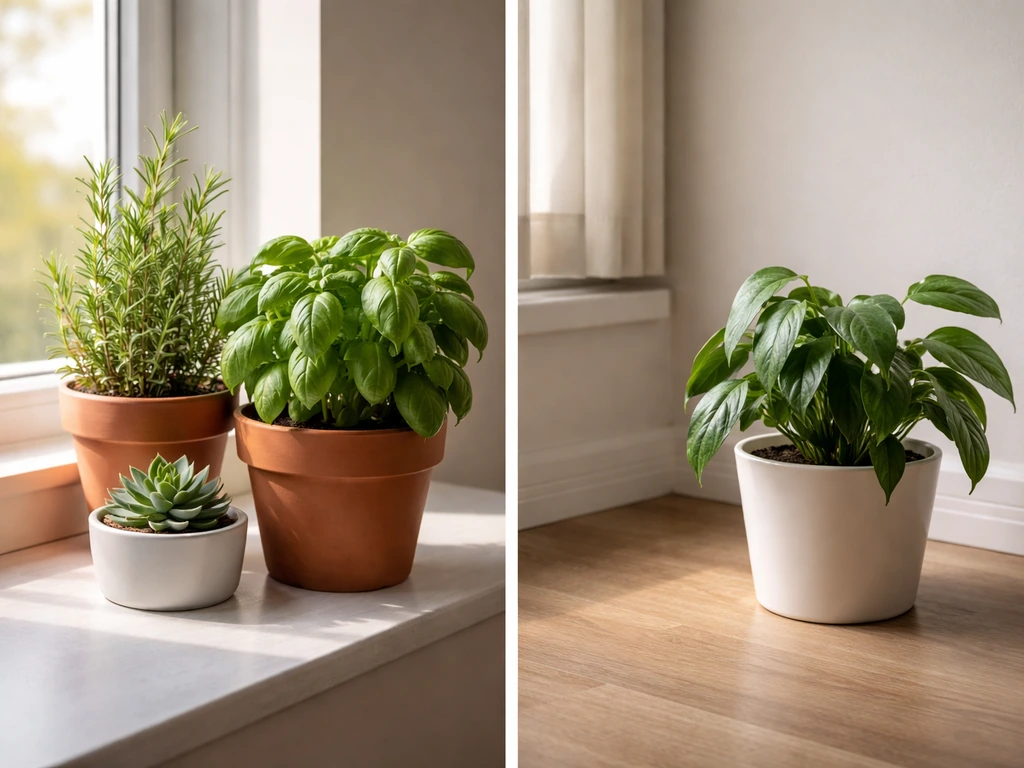
Succulents, cacti, most herbs (basil, rosemary, thyme), and edible plants like lettuce, tomatoes, and peppers fall here. Iowa State University Extension specifically notes that succulents need 10 or more hours of bright, indirect light indoors, and that without it, they stretch out, lose color, and get weak. These plants want to be as close to your brightest window as possible, or under dedicated grow lights. A south-facing window in direct sun is ideal. Most of these plants will struggle in north-facing rooms without artificial light supplementing.
Using artificial lights: LED vs fluorescent
If your windows can't provide what your plants need, either because of direction, season, or apartment layout, grow lights are the practical fix. You don't need an elaborate setup. Even a single good LED panel can transform a dim corner into a productive growing space.
LED grow lights
Modern LED grow lights are the better choice for almost every indoor gardener right now. They're energy efficient, run cool enough to place relatively close to plants, and the better models cover a full spectrum that supports both vegetative growth and flowering. Look for a full-spectrum LED panel with a listed PPFD output, that number tells you how much usable light actually reaches your plants at a given distance. For foliage plants, hang the light 12 to 24 inches above the canopy. For high-light plants like succulents or herbs, bring it to 6 to 12 inches. Always check the manufacturer's recommended hanging distance, since output varies a lot between models.
Fluorescent grow lights
T5 fluorescent bulbs and shop-light-style fixtures are still a solid, affordable option, especially for seedlings and low- to medium-light plants. They produce less heat than old incandescent bulbs and emit a useful light spectrum. The main limitation is intensity: fluorescents fall off quickly with distance, so you need to keep them within 2 to 4 inches of seedlings and 6 to 12 inches of foliage plants to get adequate PPFD. They also cost more to run over time than LEDs of equivalent output. If you already have fluorescent fixtures, they'll work fine. If you're buying new, a quality LED is worth the upfront difference.
| Feature | LED Grow Lights | Fluorescent (T5) |
|---|---|---|
| Energy efficiency | High | Moderate |
| Heat output | Low | Low to moderate |
| Upfront cost | Moderate to high | Low to moderate |
| Long-term running cost | Lower | Higher |
| Best for | All plant types, full setups | Seedlings, low-medium light plants |
| Ideal distance from plants | 6–24 inches depending on output | 2–12 inches |
| Spectrum quality | Full spectrum available | Good but less tunable |
Common artificial lighting mistakes
- Hanging lights too high and wondering why plants are still stretching. Distance kills intensity fast. Drop the light.
- Using decorative bulbs or regular LED room lights. These aren't bright enough or the right spectrum to drive photosynthesis.
- Running lights 24 hours because 'more is better.' Most plants need a dark period. Stick to a consistent schedule.
- Ignoring PPFD ratings and buying based on wattage alone. Wattage tells you electricity use, not plant-usable light output.
- Never rotating plants under a single-point light source, leading to uneven growth.
Signs your plant needs more or less light
Plants are pretty good communicators once you know the signals. Too little light and too much light look different, and catching them early saves you from losing plants you've been nurturing for months.
Signs of too little light
- Leggy, stretched stems reaching toward the light source (called etiolation)
- New leaves coming in noticeably smaller than established ones
- Pale, washed-out, or yellowing leaves on plants that should be deep green
- Slow or zero growth over several weeks during the growing season
- Variegated plants losing their pattern and reverting to solid green
- Succulents getting soft, floppy, or losing their compact rosette shape
Signs of too much light
- Bleached, whitish, or brown-scorched patches on leaves (especially the tops)
- Leaves curling inward or drooping as a heat-stress response
- Crispy leaf edges on plants that prefer shade
- Soil drying out far faster than expected, causing drought stress
- Fading of deep green color to a dull yellow-green on shade-preferring plants
How to adjust
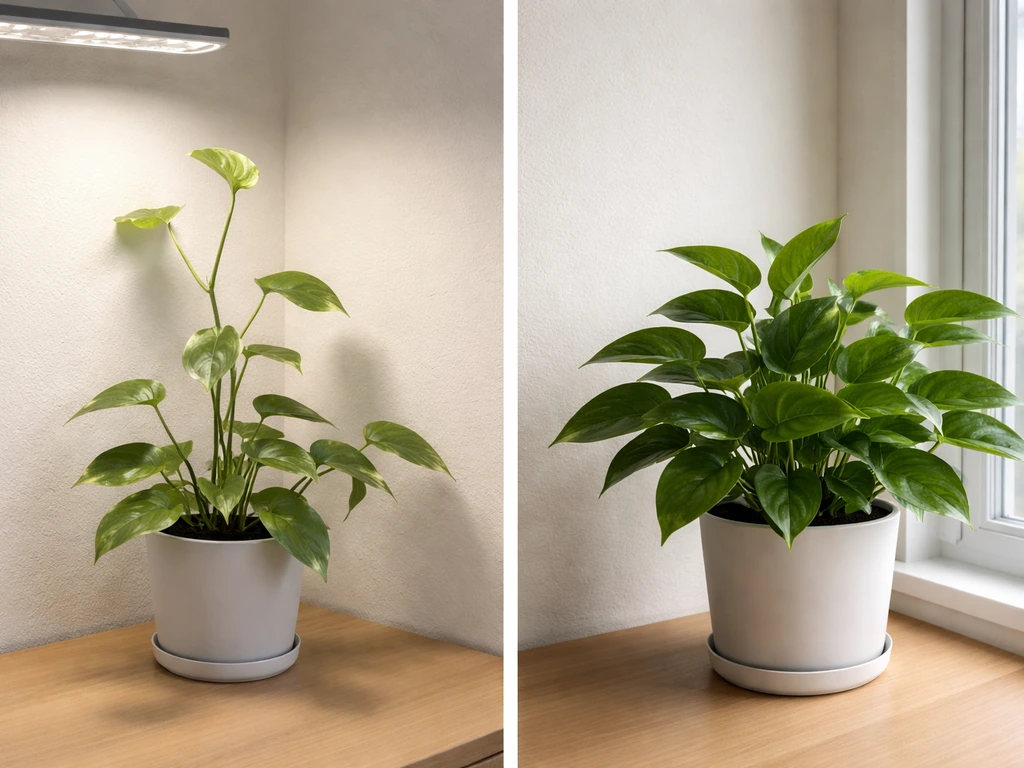
- If the plant is stretching toward light: move it 1 to 2 feet closer to the window or lower your grow light by 4 to 6 inches, then wait 2 weeks before assessing.
- If leaves are bleaching or scorching: move the plant back from the window or raise the grow light. For direct sun scorching, add a sheer curtain to diffuse.
- If growth is just very slow: check both intensity (use your lux app) and hours. It could be duration, not intensity, that's the problem.
- If the plant looks fine but you know it needs more: add a grow light on a timer for 4 to 6 supplemental hours rather than moving the plant and disrupting its environment.
- Rotate plants a quarter turn weekly to ensure even light exposure on all sides.
Setting a lighting schedule and handling seasonal shifts
Plants respond to light cycles (called photoperiodism), so consistency matters. The simplest setup is a plug-in timer on your grow light, set to deliver the hours your plant type needs and to run at the same time each day. I run mine from 7 a.m. to 9 p.m. for most foliage plants, giving 14 hours. For seedlings, I extend that to 6 a.m. to midnight for 18 hours. The exact start and end time doesn't matter much, consistency does.
Seasonal changes are real and worth planning for. In summer, a south-facing window may give your plants all they need without supplemental light. In winter, that same window loses hours of useful light and drops significantly in intensity, especially if you're in the northern half of the country. A smart approach is to measure your light levels in both December and June. If there's a big gap, use grow lights to maintain consistent hours through fall and winter. Think of it as filling in what the sun can't provide rather than replacing it.
Short-day plants (like poinsettias and Christmas cacti) actually need long, uninterrupted dark periods to trigger flowering. If you're growing these, make sure your grow light schedule doesn't bleed into their dark period, even brief exposure to light during the dark cycle can delay or prevent blooming.
Matching plants to your actual space
The most practical thing you can do after reading this is assess your actual light conditions before choosing plants, not after. If you are wondering about Mars specifically, you will need to think about whether the planet’s sunlight is strong enough for plant photosynthesis and how much additional protection or artificial lighting you would require is there enough sunlight on mars to grow plants. That saves a lot of failed experiments. Here's how to close the loop:
- Identify your window directions and measure lux levels in each spot you're considering using a phone app. Do this on a typical day, not a rare sunny one.
- Compare your readings to the foot-candle ranges: below 500 fc is low light, 500 to 1,000 is medium, above 1,000 is high. (Divide your lux number by 10.76 to get foot-candles.)
- Match that light level to the appropriate plant tier. If your best spot is 400 foot-candles, you're in low-medium territory. Snake plants and pothos will thrive there. Succulents won't.
- If you want high-light plants but don't have the windows for it, budget for a decent LED grow light rather than fighting a losing battle with inadequate natural light.
- Set a timer for your grow lights to deliver consistent hours: 12 to 14 for foliage plants, 16 to 18 for seedlings, and 10 to 14 for succulents depending on the season.
- Check your plants every two weeks for the light stress signals listed above and adjust position or light schedule before problems become serious.
It's also worth knowing what you're working with on a deeper level. Understanding why plants need light in the first place, how chlorophyll absorbs specific wavelengths to drive photosynthesis, makes a lot of these guidelines make intuitive sense rather than feeling like arbitrary rules. And if you're curious about whether all light sources are equal, the science of UV light and plant growth is a genuinely interesting layer on top of what's covered here.
The honest reality is that most indoor spaces are light-limited, not light-saturated. If your plants aren't thriving, insufficient light is one of the first things to check. The good news is it's one of the easiest problems to fix, either by repositioning or by adding a grow light. You don't need a perfectly sunny apartment to grow healthy, beautiful plants, you just need to know what you have and choose accordingly.
FAQ
Do plants need sunlight specifically, or will any light work indoors?
Any light that delivers usable intensity for photosynthesis can work, including full-spectrum grow lights. What matters most is the plant’s usable output (PPFD if you measure it, or comparable lux/foot-candles), and the photoperiod timing, not whether the source is the sun.
How can I tell if my plant is getting too much light, not too little?
Excess light often shows up as leaf bleaching or fading, crispy or scorched edges, and unusually slow growth even though the plant is in a bright spot. If you recently moved it closer to a window or raised grow light intensity, step back and reduce either duration or distance.
Is 12 to 14 hours enough for every plant in the medium tier?
Not necessarily. Two plants in the same “tier” can still differ by how sensitive they are to intensity and direct sun exposure. If growth is slow or new leaves are small, keep the hours but increase intensity (move closer to the brightest window or raise PPFD) rather than simply adding more hours.
Should I keep my grow lights on 24/7 to maximize growth?
No. Most houseplants need a dark period as part of their daily cycle, and many growers use a simple timer to maintain a consistent photoperiod. Running lights continuously can stress plants and disrupt normal rhythms, so use a schedule with a clear off window each day.
What distance should I hang a grow light if my fixture doesn’t list PPFD?
Use the distance you can verify with either lux/foot-candles readings or by checking the manufacturer’s stated measured distance for brightness output (some list intensity at a specific height). Without PPFD, start conservatively (far enough to avoid scorching), measure at leaf level, then adjust upward gradually over a week.
Do I need to measure light at the top of the plant or at soil level?
Measure at the height where the leaves are (leaf canopy), because that is where photosynthesis occurs. If you measure only at the windowsill or floor, you may underestimate how much light reaches taller plants or overestimate it for trailing growth.
How do I handle plants near a window that gets bright sun but also heat and glare?
A bright window can still cause problems from temperature swings and direct glare. If leaves sit right against cold glass in winter or are exposed to strong afternoon sun, consider moving the plant slightly back (hours may stay adequate but intensity can be too high at the leaf surface).
What if my light readings change a lot between summer and winter, should I keep the same hours?
If winter sunlight is much weaker where you live, keeping the same hours often won’t compensate for the drop in intensity. The practical approach is to measure in both seasons and use grow lights to maintain either the same photoperiod or the same usable intensity target during the darker months.
Can I use lux meter readings to choose grow light strength reliably?
Lux can help you compare spots, but it is not as precise as PPFD because lux is weighted for human vision. If you only have lux, treat it as a relative guide, and validate by plant response (growth rate and leaf color) since two lighting setups can produce similar lux but different usable wavelengths.
Do I need to rotate plants to get even light exposure?
Yes, especially with windows or directional grow lights. Rotating the plant every 1 to 2 weeks helps prevent leaning toward the light source and encourages more uniform leaf growth, even if the total daily hours are correct.
Will dirty windows or window film affect whether my plants meet their light needs?
Yes. Dust, smudges, and some films can reduce light transmission enough to matter in winter or low-light rooms. If your plants suddenly decline without changes to schedule, clean the glass and re-measure at leaf height before increasing grow light duration.
How much light do seedlings actually need compared with mature foliage plants?
Seedlings typically need stronger light than the “survive and hold steady” level used for low-light mature plants. Use the longer photoperiod target, and keep fixtures close enough that intensity stays high at the seedling canopy, because fluorescent and many LED setups lose PPFD quickly with distance.
For short-day plants like poinsettias, what’s the biggest scheduling mistake to avoid?
The biggest issue is light leaking into their uninterrupted dark period. Even small exposures like leaving a lamp on in the room or having grow light spill can delay flowering, so separate their schedule from other plants and block stray light during the dark cycle.