Plants grow better in the light. That's the short version, and for almost every plant you'll ever grow indoors, it holds true. Light is the energy source that powers photosynthesis, and without it, plants can't produce the sugars they need to build leaves, stems, roots, and flowers. A plant kept in the dark will stretch desperately toward any light source, turn pale, and eventually die. Light isn't just helpful for plants, it's the engine of everything they do.
Do Plants Grow Better in the Dark or Light? Indoor Test Guide
Marcus Hartley
5 May 2026
Why light wins: the biology behind the answer
When light hits a plant's leaves, chlorophyll absorbs it and uses that energy to convert carbon dioxide and water into glucose. That glucose is what the plant burns to grow. No light means no photosynthesis, no glucose, no real growth. A plant in complete darkness isn't resting peacefully, it's slowly running out of fuel.
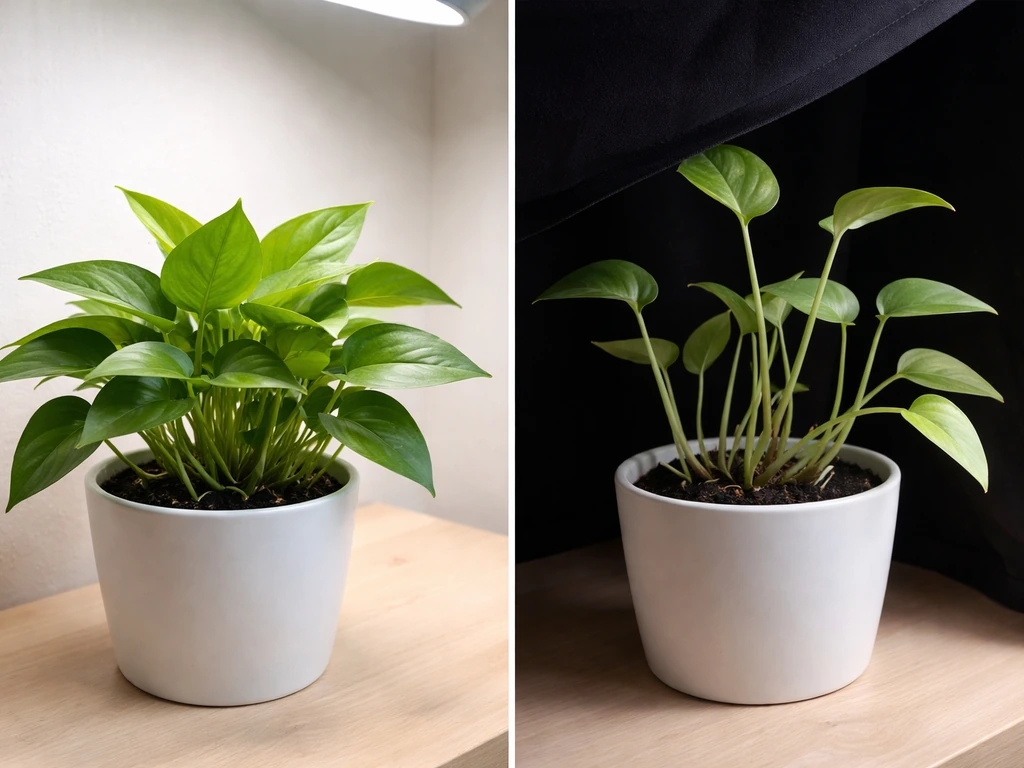
But light doesn't just feed the plant, it also shapes how the plant grows. This is called photomorphogenesis, and it's why a seedling grown in the light looks completely different from one grown in the dark. Light-grown seedlings have short, sturdy stems, open green leaves, and working chloroplasts. Dark-grown seedlings go through what scientists call etiolation: the stems stretch dramatically (sometimes reaching 30 mm or more in some species compared to around 5 mm in light), the leaves stay closed and pale, and the chloroplasts never fully develop. The plant is essentially in survival mode, burning stored energy to reach the surface and find light.
There's also the concept of photoperiod, which is simply how many hours of light versus darkness a plant gets in a 24-hour cycle. Plants use this information to time flowering, fruiting, and dormancy. A 12-hour photoperiod means 12 hours of light and 12 hours of dark. An 8-hour photoperiod means 8 hours of light and 16 hours of dark. The ratio matters enormously, and getting it right for your specific plant is one of the most underrated things you can do as an indoor gardener.
Even within the light period, plants aren't just passively soaking up photons. Hormones like auxin and cytokinin follow daily rhythms tied to light exposure, and the plant's internal circadian clock modulates how it responds to light signals throughout the day. This is part of why a consistent daily light schedule tends to produce better results than erratic on-and-off lighting.
Run your own light vs dark experiment at home
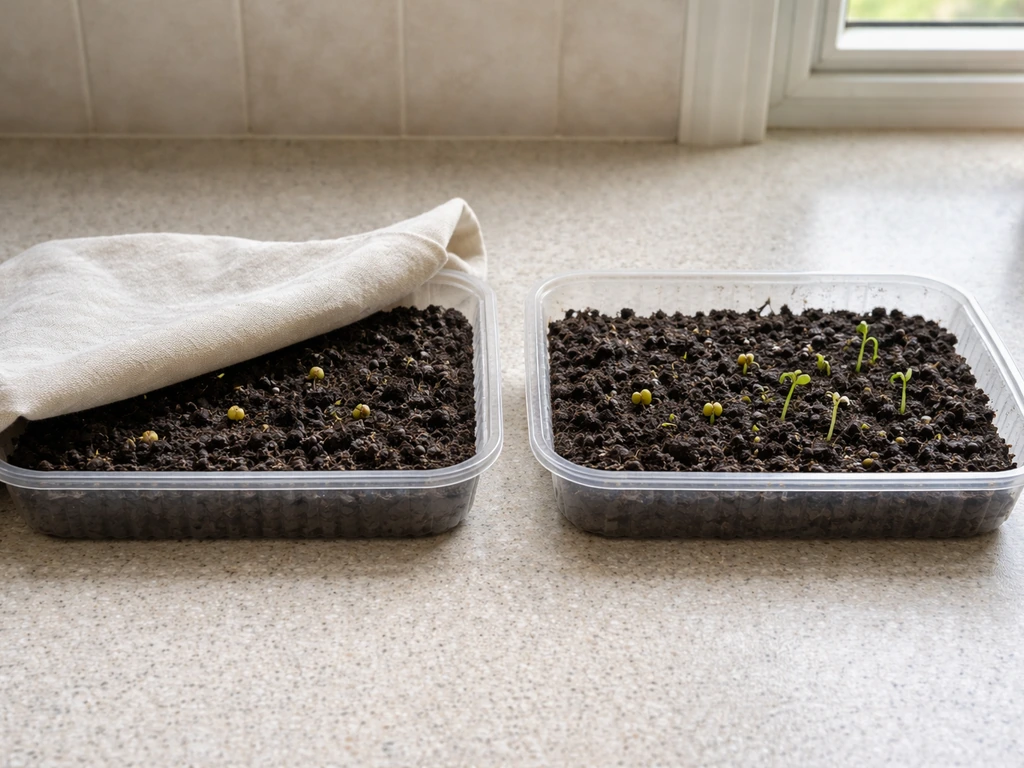
Honestly, one of the best ways to really understand this is to see it yourself. It's a satisfying experiment, and you don't need a lab or special equipment. Beans (mung beans, pinto beans, or even lentils) work great for this because they sprout fast and show the differences clearly within a week. If you want to see the difference yourself, do beans grow better in light or dark, then run the same setup for a few days to compare results. This is also the basis for a classic school science project, and it works just as well on your kitchen counter.
- Soak 10 to 12 seeds overnight in water to speed up germination.
- Fill two identical small pots or cups with the same potting mix. Label one 'Light' and one 'Dark.'
- Plant 2 to 3 seeds per pot at the same depth, about 1 cm deep.
- Place the 'Light' pot on a windowsill or under a grow light set to 14 to 16 hours per day.
- Place the 'Dark' pot inside a cardboard box or dark cupboard with no light source at all.
- Water both pots equally. Check and water every 2 days, making sure the dark pot gets no accidental light exposure.
- Measure stem height and note leaf color every 2 days for 7 to 10 days.
- At the end, compare stem height, leaf color, and overall health side by side.
You can keep notes in a simple table or just take photos each day. The results are usually pretty dramatic by day five or six. If you want to go deeper, you can add a third condition, a 'low light' pot placed in a dim corner, to see how reduced light compares to full dark and full light.
What you'll actually see: growth signs to watch for
Here's what to expect from each condition so you know what you're looking at and can interpret the results correctly.
| Condition | Stem height | Leaf color | Leaf shape | Overall health |
|---|---|---|---|---|
| Full light (14-16 hrs) | Short, compact | Deep green | Open, well-developed | Strong, vigorous |
| Low light (dim corner) | Slightly stretched | Pale green | Smaller than normal | Alive but stressed |
| Complete darkness | Very long, spindly (etiolated) | Yellow-white, no chlorophyll | Closed, tiny | Declining quickly |
The pale, stretched dark-grown plant is showing etiolation. The elongated stems are the plant's last-ditch effort to reach light. The white or yellow color means chloroplasts haven't developed, which is why research comparing light-grown and dark-grown mung bean seedlings, for example, found carotenoid levels roughly 13 times higher in the light-grown plants after just 8 days. Carotenoids and chlorophyll are what make leaves green and functional, and they need light to form.
When you bring an etiolated plant back into the light (a process called de-etiolation), you'll see the apical hook straighten, cotyledons open up, and the leaves start greening as etioplasts convert into proper chloroplasts. It's a genuinely cool thing to watch happen over a few days. Whether the plant fully recovers depends on how long it was kept dark and how much stored energy it had left.
Practical light schedules for indoor gardeners
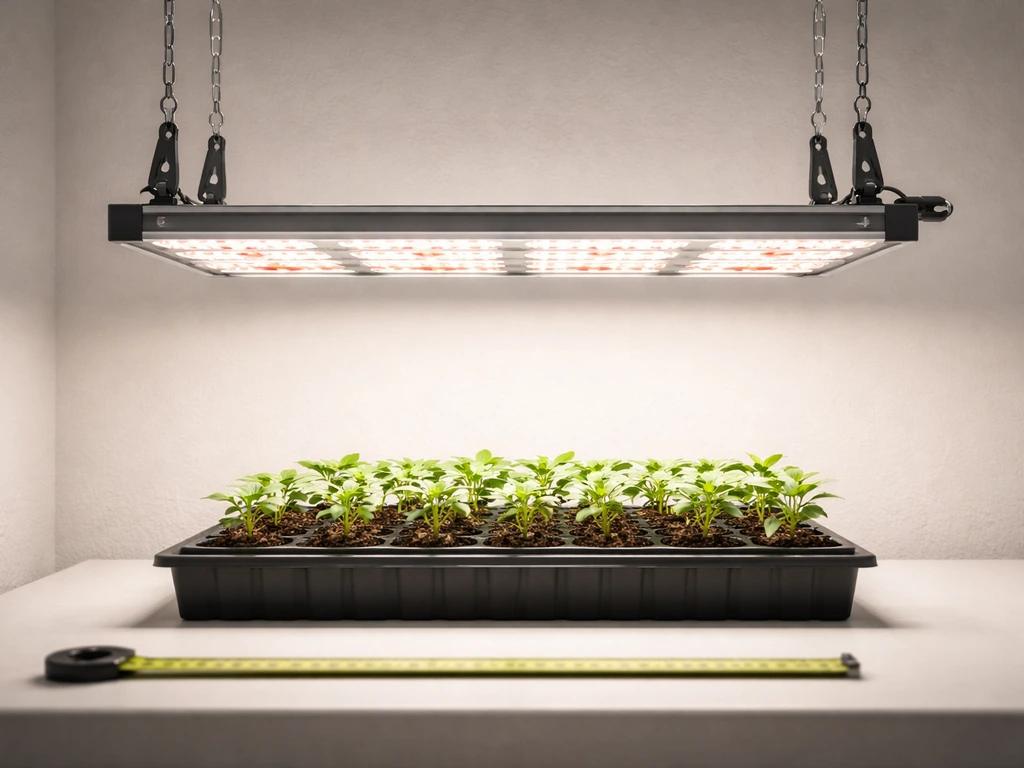
So how much light does your indoor plant actually need? The answer depends on the plant, but here are solid starting rules for the most common indoor growing situations.
Seedlings and young plants
Seedlings are hungry for light. UMN Extension recommends 16 to 18 hours of supplemental light per day for seedlings under grow lights, with some guidance suggesting a range of 12 to 16 hours minimum. I'd aim for 16 hours when using LED or fluorescent lights, because indoor light is almost always weaker than full sun and you need the extra hours to make up the total daily dose. That total dose is measured as DLI (daily light integral), which combines both intensity and duration into a single number expressed in mol·m⁻²·day⁻¹. If your lights aren't very bright, running them longer helps compensate.
Established houseplants and foliage plants
For most leafy houseplants (pothos, philodendrons, peace lilies), 12 to 14 hours of moderate light works well. These aren't high-DLI plants and won't need intense grow lights. A bright window or a basic fluorescent or LED fixture kept within 30 to 60 cm of the canopy is usually enough.
Fruiting and flowering plants
Tomatoes, peppers, herbs, and flowering annuals need more. Plan for 14 to 16 hours under a decent LED grow light (one that puts out real PPFD, not just watts). Placement matters as much as duration: a light that's too far away will leave plants stretching upward even if it's on for 16 hours, because intensity drops sharply with distance.
A note on measuring light
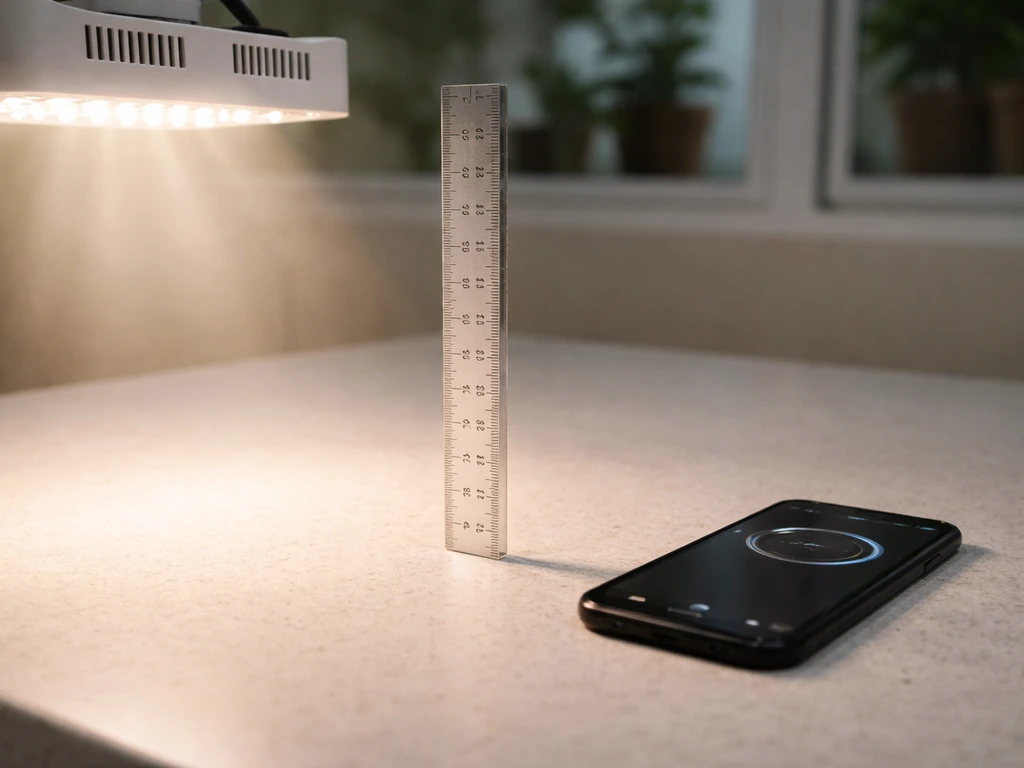
Lux meters and lux apps on your phone measure light the way human eyes perceive it, not the way plants use it. For plants, the relevant measurement is PPFD (photosynthetic photon flux density), measured in µmol·m⁻²·s⁻¹. Lux can't be reliably converted to PPFD without knowing the spectrum of your light source, so if you want to get serious about measuring your setup, a quantum sensor or a PPFD-calibrated app is worth using. That said, you don't need to get technical to grow plants well indoors. A simple rule of thumb: if you can comfortably read a book by the light with no other light sources, it's probably enough for low-light tolerant plants. If you need squinting, your plants are probably struggling.
Quick schedule reference
| Plant type | Recommended daily light | Light source options |
|---|---|---|
| Seedlings | 16 to 18 hours | LED grow light or T5 fluorescent, close to canopy |
| Foliage houseplants | 12 to 14 hours | Bright window, LED, or fluorescent |
| Herbs and lettuce | 14 to 16 hours | Full-spectrum LED or T5 fluorescent |
| Fruiting plants (tomatoes, peppers) | 14 to 16 hours | High-output LED grow light |
| Low-light tolerants (pothos, snake plant) | 10 to 12 hours | Any indoor light source or dim window |
When darkness actually helps: the exceptions worth knowing
Light wins for growth, but darkness isn't the enemy. Plants need a genuine dark period every day, and running lights 24 hours a day is generally not recommended for most species. The dark period is when certain hormonal processes run, and some research suggests continuous light can actually stress certain plants. Sixteen hours on, eight hours off is the standard recommendation for a reason.
Some seeds actually need darkness to germinate. This is a separate question from whether the growing plant needs light, and it trips people up sometimes. If you're starting seeds and they're not sprouting under your lights, check whether your specific species needs to be covered or kept dark until the sprout emerges. Once sprouted, almost all seedlings need light immediately.
Then there are shade-tolerant plants. Species like pothos, snake plants, ZZ plants, cast iron plants, and certain ferns have adapted to low-light environments and genuinely do fine in dim conditions. They won't match their growth rate in better light, but they'll stay healthy where sun-loving plants would fail. If your apartment has a dark corner, choose a shade-tolerant plant for it rather than trying to force a sun lover to survive there.
Dormancy is another case where reduced light is fine and sometimes appropriate. Bulbs, tubers, and deciduous perennials often go through a natural rest period where low light and cooler temperatures are what the plant actually needs. Forcing light on a plant that wants to be dormant can disrupt its natural cycle and reduce flowering the following season.
Photoperiod-sensitive plants (short-day plants like chrysanthemums and poinsettias, or long-day plants like certain lettuces and spinach) use the length of the dark period specifically to trigger flowering or bolting. For these plants, controlling darkness is just as important as controlling light. A poinsettia needs long, uninterrupted dark periods to develop its red bracts. Even a brief exposure to light during the dark period can reset the clock and delay flowering.
Troubleshoot your setup and build a lighting plan that works
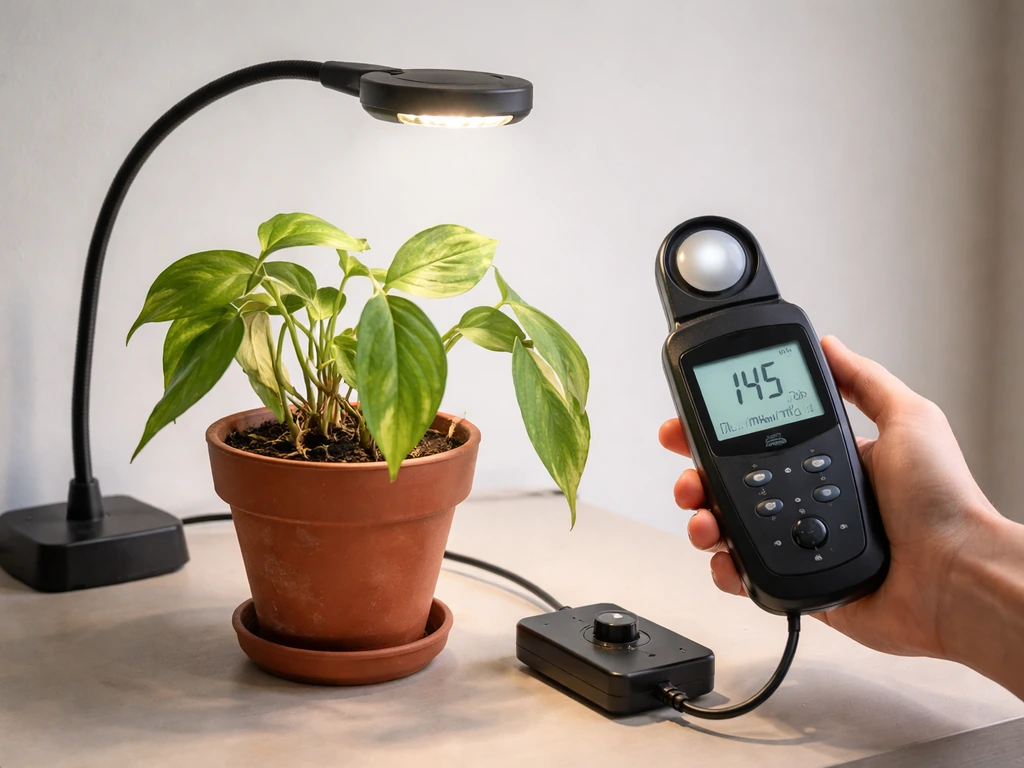
If your plants are struggling indoors, light is usually the first thing to look at. Here's how to work through the most common problems and build something that actually works for your space.
Signs your plant isn't getting enough light
- Stems are elongating and leaning hard toward the window (etiolation starting)
- Leaves are smaller than normal or spaced far apart on the stem
- Leaf color is fading to pale green or yellow
- Growth has basically stopped, even during the growing season
- Variegated leaves are reverting to solid green (the plant is prioritizing chlorophyll over pattern)
Deciding whether to add a grow light
If you're near a south- or west-facing window and the plant is within a meter of the glass, you probably don't need a grow light for shade-tolerant species. But if you're more than 1.5 to 2 meters from any window, or you're growing seedlings, fruiting plants, or herbs indoors year-round, a grow light will make a real difference. You don't need to spend a lot: a decent full-spectrum LED panel or a T5 fluorescent shop light mounted close to the plants (within 15 to 30 cm for seedlings, 30 to 60 cm for established plants) is a solid starting point.
Building your lighting plan step by step
- Identify what you're growing and look up its light category: high light (full sun), medium light, or low light tolerant.
- Assess your space: count your windows, note which direction they face, and estimate how many hours of direct or bright indirect light you actually get.
- If you have a light gap (plants needing more than your space provides), choose a light source: full-spectrum LED for most situations, T5 or T8 fluorescent as a budget option for seedlings and greens.
- Set a timer. Consistent daily photoperiods matter more than most people realize. 16 hours on / 8 hours off for seedlings and high-light plants; 12 to 14 hours on for foliage and low-light tolerants.
- Position the light correctly. Too far away is the most common mistake. Start close (15 to 30 cm for seedlings), watch for leaf bleaching or heat stress, and adjust outward as needed.
- Check in weekly. Look for the warning signs listed above and adjust duration or height if something isn't right.
- Match the plant to the space honestly. Some low-light spots are better served by a shade-tolerant plant than by trying to compensate with more gear.
One last thing: if you're curious about specific cases, like whether seeds need darkness to germinate, why mung beans behave differently than other seedlings in the dark, or how beans specifically compare under different light conditions, those are genuinely interesting rabbit holes that relate directly to what we've covered here. This is exactly why the science project question of whether a plant needs some darkness to grow comes up so often, because darkness is not just absence of light, it is part of how many plants regulate growth whether seeds need darkness to germinate. Whether seeds grow in darkness depends on the species, but most still need light after sprouting to develop properly do seeds grow in darkness. The core principle stays the same across all of them: light drives growth, but understanding exactly how much, what kind, and when to give darkness is where the real nuance lives.
FAQ
Will plants keep growing faster if I leave the grow lights on all day and night?
Not for most indoor growing. A consistent dark period (commonly around 8 to 10 hours) supports normal hormone signaling and helps prevent stress associated with never-ending illumination. If you run lights 24 hours, you may see weaker growth, stretched habits, or leaf decline depending on the species.
Do all seeds need darkness to germinate, or does it vary by species?
Yes, but it depends on the plant and the stage. Some seeds need darkness to germinate, while others germinate under light. After sprouting, most seedlings need light immediately to avoid etiolation, so the safest approach is to follow the seed’s instructions and then switch to light for the next stage.
My plant isn’t growing well even though I have a light schedule, what should I check first?
Depth matters. Two setups with the same lamp “hours” can produce different results if the light intensity at the leaf is different. If your plant stretches, it usually means PPFD is too low at the canopy, so move the light closer, use a stronger fixture, or adjust height before simply increasing duration.
Can I grow any houseplant in a dark room if I use enough lighting hours?
It varies by species, but a common mistake is choosing a plant that matches the space rather than fighting the light level. Shade-tolerant plants can stay reasonably healthy in dim corners, but sun lovers will become pale and leggy. If your space is consistently dim, select low-light species instead of trying to “light through” the problem.
Why doesn’t my lux meter number tell me whether my plants are getting enough light?
Not exactly. Lux describes brightness to human eyes, plants care about usable photon energy, captured better by PPFD. If you only have a phone lux reading, use it as a rough indicator of “enough for you to read by” but expect inaccuracies when you need fine-tuning.
What happens if I move a plant from a dark corner to brighter light overnight?
A sudden change from low light to high light can stress plants, causing temporary paling or leaf damage. Increase exposure gradually over several days, especially for houseplants moved from a dim room to a bright window or stronger grow light.
If my plant is supposed to get uninterrupted dark, how strict do I need to be?
Yes. “Dark” should usually mean true absence of light, not just reduced light. Even small light leaks at night, such as from a hallway or a nearby screen, can shift photoperiod-sensitive flowering triggers in plants like poinsettias and chrysanthemums.
If my seedlings get etiolated, can I save them after I add more light?
Usually, no. Many seedlings will show etiolation within days under near-dark conditions, but the visible recovery after moving to light depends on how long they were in the dark and how depleted their stored energy became. If they were dark for only a short time, they often green up within days after de-etiolation.