Mycelium does not need light to grow and colonize. During the spawn run (the stage where mycelium spreads through its substrate), darkness is actually the standard condition used by growers worldwide. If your mycelium isn't progressing, light is almost certainly not the problem. Temperature, moisture, CO2 levels, and contamination are the real culprits, and those are what you should check first.
Does Mycelium Need Light to Grow? Practical Indoor Guide
Marcus Hartley
2 May 2026
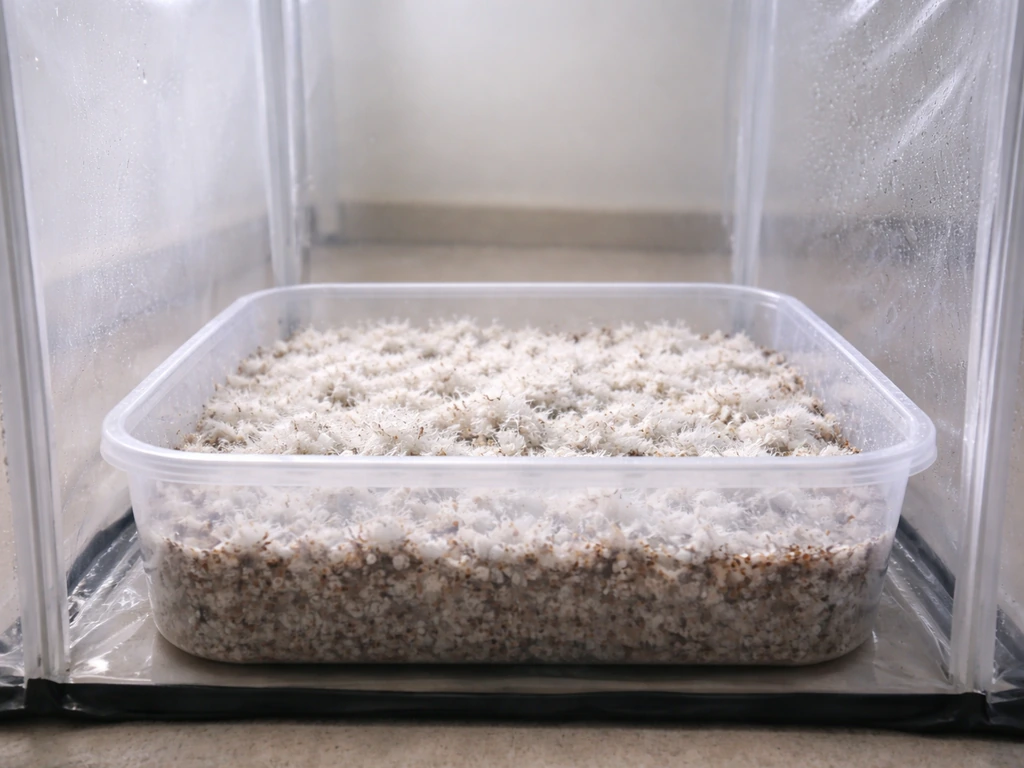
Does mycelium need light to colonize?
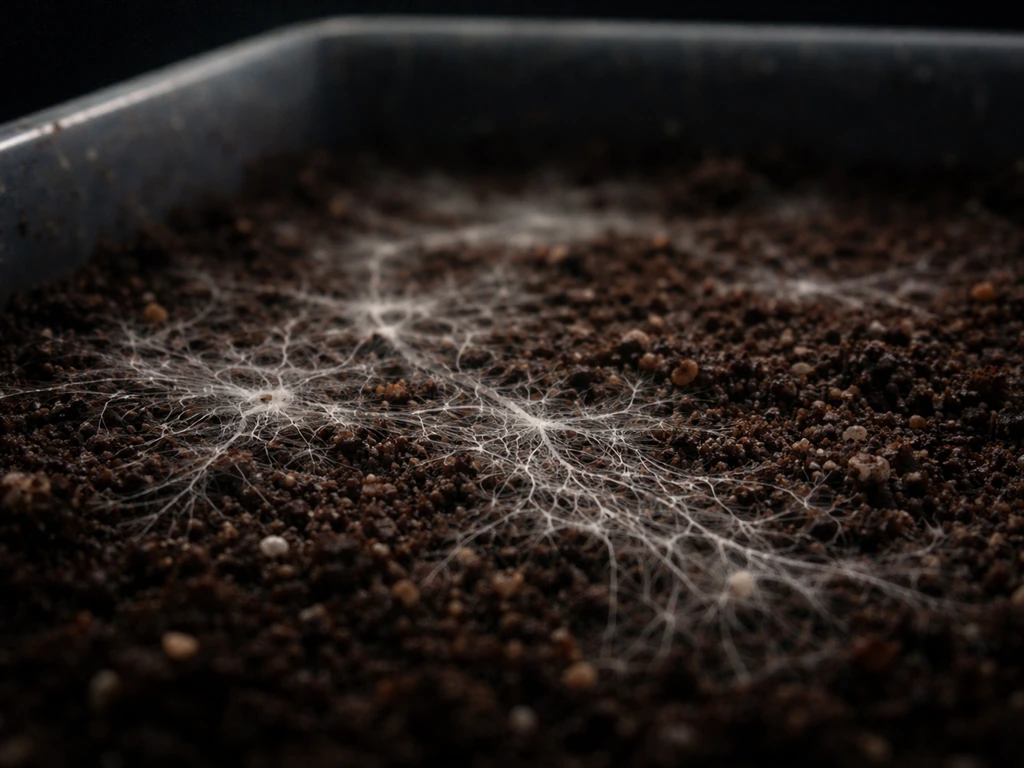
The short biological reality is this: mycelium is the vegetative part of a fungus, and it grows by absorbing nutrients from its substrate, not by photosynthesizing. It has no chlorophyll, no need to capture energy from the sun, and no biological requirement for light during colonization. Authoritative cultivation handbooks are explicit about this: no light is necessary during the spawn run. Growers routinely incubate jars and bags in dark closets, cabinets, or boxes, and the mycelium colonizes just fine.
Research on Coprinus macrorhizus backs this up cleanly: continuous darkness produces healthy vegetative mycelia. What darkness does NOT produce is fruiting bodies. That distinction matters a lot, and we'll get into it in the next section. For now, if you're in the colonization phase and wondering whether your dark setup is hurting growth, you can stop worrying about light entirely. Do crystals grow better in the dark too? It depends on the growth conditions, but darkness is often not the deciding factor.
Light's role in fruiting vs vegetative growth
This is where it gets genuinely interesting. Light doesn't feed mycelium, but it does act as an environmental signal that tells the fungus when to switch from vegetative spreading into reproductive mode, meaning pins and fruiting bodies. Think of it like a trigger rather than a fuel source.
Oyster mushrooms (Pleurotus ostreatus) are a great example. Studies have shown that when 50 lux of light was introduced during the spawn-running stage, primordia (the tiny pin formations that precede mushrooms) appeared in nearly all test containers. The dissertation record on Effect of Light and Reductones on Differentiation of Pleurotus ostreatus describes this light-driven differentiation, including primordia appearing when light is introduced under specific culture conditions Primordia appeared in nearly all test containers. In the dark-only control group, no primordia formed at all. For Pleurotus and several other basidiomycetes, light is not optional during fruiting. It is a required environmental cue, along with temperature drops and fresh air exchange.
The specific wavelengths matter too. Blue light (around 387 to 430 nm) appears to be particularly influential in triggering fruiting development. Transcriptomic research on oyster mushrooms shows that blue light and red light produce distinctly different gene expression responses in primordia, and some species only initiate fruiting within specific visible light bands. A 2025 Frontiers in Horticulture PDF on Pleurotus ostreatus primordia development also notes that blue light during development can affect outcomes blue light during development can affect primordia development. For home growers, this translates to a practical rule: keep it dark during colonization, then introduce indirect light when you're ready to trigger pinning.
| Stage | Light Needed? | What to Focus On |
|---|---|---|
| Spawn run (colonization) | No | Temperature, moisture, sterility, darkness |
| Primordia initiation (pinning) | Yes, indirect light helps most species | 50–150 lux, fresh air, humidity drop |
| Fruiting body development | Yes, indirect/ambient light | 85–95% RH, fresh air, gentle indirect light |
Will mycelium grow in light? What levels and types actually matter
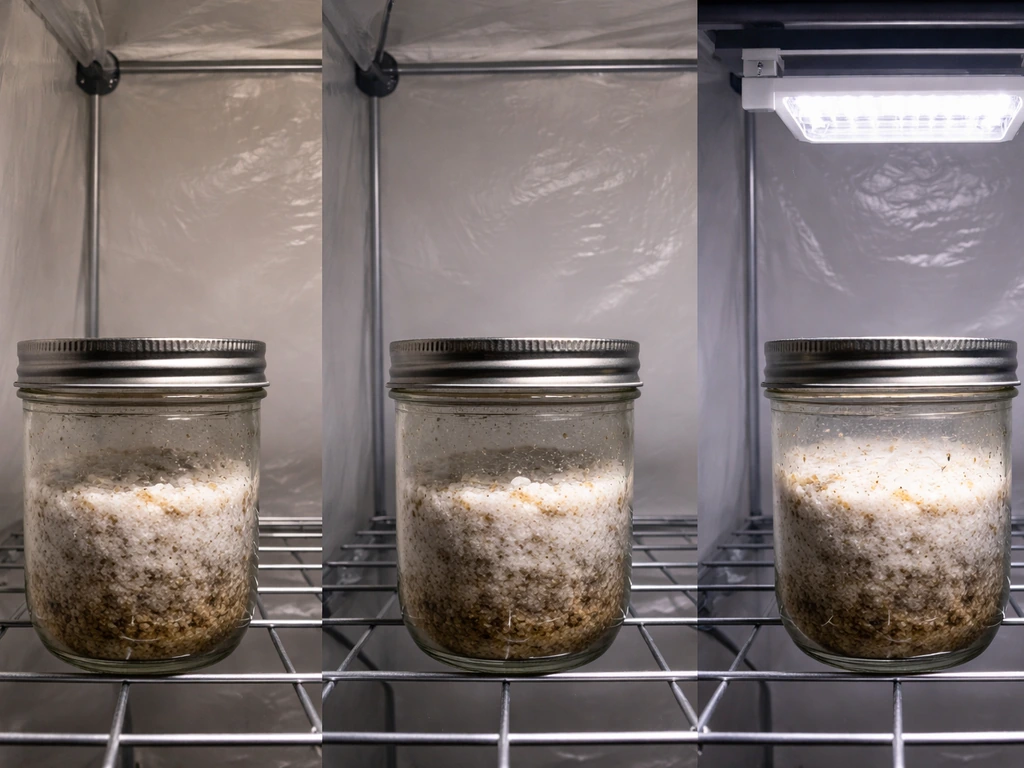
Yes, mycelium will generally grow in light. Indirect ambient light, the kind you'd get in a normally lit room, won't stop colonization. But intensity and light type do matter, particularly once you get into stronger sources.
Research on Pleurotus ostreatus found that higher-intensity fluorescent light can actually inhibit mycelial growth at the mononucleate and binucleate stages. So while low-level ambient light is essentially harmless during colonization, blasting your substrate with a powerful fluorescent or running a high-intensity grow light right next to it is a different story. The issue is a combination of photoinhibition at higher intensities and the practical problem that strong lights generate heat, which dries out the surface of your substrate and raises temperatures beyond the ideal range.
UV light is a separate concern. UV-B radiation can eliminate fungal spores and some mould mycelium, which is relevant if you're worried about contamination. However, the effects are dose- and organism-specific, so this isn't a simple tool for home growers to lean on.
Direct sunlight is the one source to genuinely avoid, especially during fruiting. The UV component and heat can scorch and abort pins, and sunlight will dry out your substrate much faster than you want. If you're growing on a shelf near a window, that indirect ambient glow is fine; just don't put fruiting blocks in a south-facing sunny window.
If mycelium isn't growing, check these things first (not light)
Stalled colonization almost always comes down to one of five non-light factors. Work through these before changing anything else.
Temperature
Most culinary mushroom species colonize best between about 70 and 77°F (21 to 25°C). Too cold and colonization slows dramatically or stops. Too warm and you risk encouraging contamination and stressing the mycelium. Use a thermometer at substrate level, not just in the room, because temperatures can vary a lot between a shelf and the floor.
Moisture and humidity
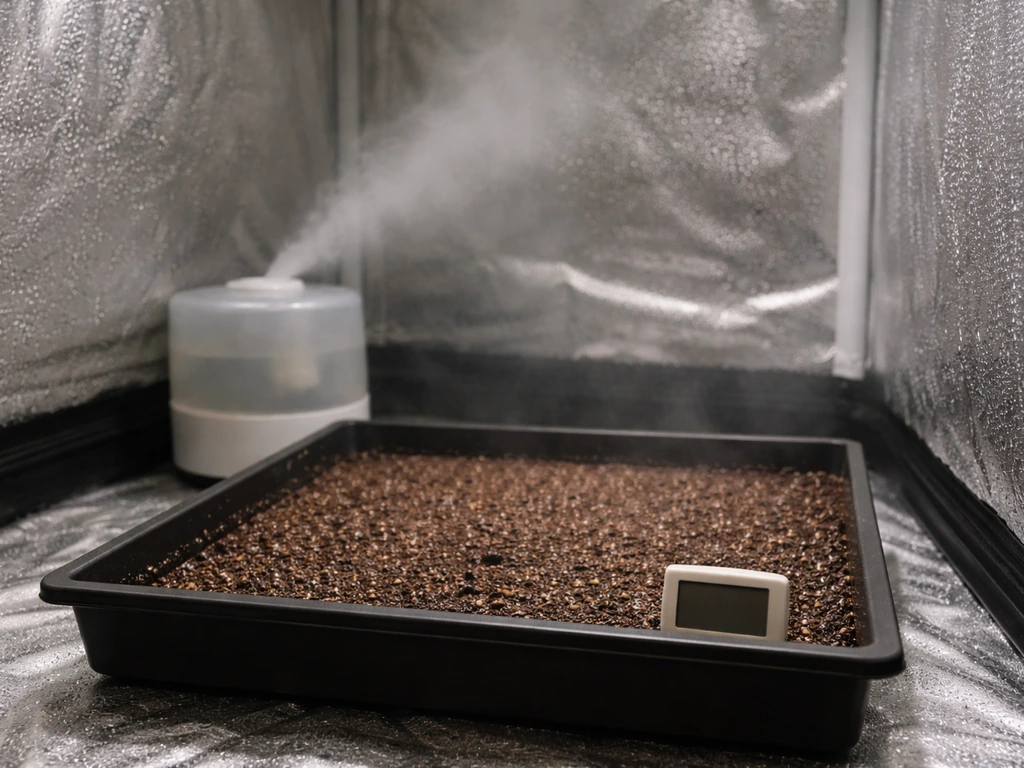
Your substrate needs to hold the right amount of water from the start. Field capacity is the classic benchmark: when you squeeze a handful, only a few drops should come out. During fruiting, target 85 to 95% relative humidity. If your substrate dries out, colonization slows and pins abort. A simple hygrometer is worth every penny for troubleshooting this.
CO2 and fresh air exchange
This is probably the most underestimated factor in home growing. Mycelium respires and releases CO2, and in a sealed or poorly ventilated container, CO2 builds up fast. High CO2 during the transition to fruiting is a very common reason pins don't form. Penn State Extension guidance puts the target at 0.08% CO2 (about 800 ppm) or lower, depending on the cultivar. Commercial oyster production typically reduces CO2 to 600 to 1,000 ppm when transitioning from spawn run to fruiting. If you're growing in a tent or enclosed shelf, this is worth actively managing through fan timing and fresh air exchange.
Sterility and contamination
Green, black, or pink patches on your substrate are mould contamination, not a light problem. Contamination usually means something went wrong during substrate prep (inadequate pasteurization or sterilization), inoculation (non-sterile tools or environment), or storage (a seal failed). If you see contamination, isolate the block immediately so it doesn't spread. If you're seeing fuzzy, rope-like mycelium at the surface rather than fluffy white growth, that can sometimes indicate CO2 buildup and inadequate fresh air exchange rather than contamination.
Substrate quality and preparation
Wrong substrate ratios, incorrect pH, or using materials that weren't properly hydrated can all slow or stop colonization. Most species like a substrate pH between 5.5 and 7. Hardwood sawdust, straw, and similar materials need to be pasteurized (not sterilized, for most species) at the right temperature and duration. If you're using a grain spawn, make sure the grain was fully cooked and dried to the right moisture level before inoculation.
What to do with common indoor lights around mycelium
If you're growing mushrooms on the same shelf or in the same tent as plants, you're probably already running LED grow lights or fluorescent bulbs. Here's how to think about each.
LED grow lights
Modern LEDs run cool and produce low UV output, which makes them much safer around mycelium than older lighting options. During colonization, an LED grow light running in the same room or tent won't meaningfully harm your mycelium as long as it's not positioned right on top of the substrate generating localized heat. During fruiting, indirect LED light at low intensity (50 to 150 lux) is actually helpful for many species. Just make sure the light isn't causing your substrate surface to dry out faster than you can compensate with humidity.
Fluorescent bulbs
Standard T5 or T8 fluorescent bulbs work fine as an indirect light source for triggering fruiting. Keep them at a reasonable distance (2 to 3 feet is typical) and don't run them continuously at high intensity directly over colonizing blocks, since research has shown high-intensity fluorescent light can inhibit mycelial growth at cellular stages. A few hours of indirect fluorescent light per day is plenty to signal the fruiting trigger in most species.
Sunlight through a window
Indirect, diffused natural light from a window is acceptable during fruiting and won't harm colonizing mycelium either. Direct sunlight is a different matter: the UV and heat will dry out and potentially scorch pins, and the temperature swings near a window can be hard to manage. Use a sheer curtain to diffuse direct sun if your setup is near a window.
Simple experiments and next steps you can do today
If you're not sure whether your setup is optimized, here's a practical way to test it without overcomplicating things. The key principle from cultivation research is to hold your non-light variables constant before you change anything about light. That way you actually know what's working.
- Check your thermometer right now, at substrate level, and confirm you're in the 70 to 77°F range. This is the most common silent killer of colonization.
- Squeeze a small sample of your substrate. Only a few drops should come out. If it's bone dry or dripping wet, that's your answer before anything else.
- If you're in a closed container, tent, or bin, open it briefly and smell for a sour, fermented, or ammonia-like odor. That usually signals contamination or anaerobic conditions, not a light problem.
- For fruiting: introduce 12 hours of indirect low-level light per day (50 to 150 lux is the research-backed range). A standard lamp or room light on a timer will do this.
- Open your fruiting container or tent for 2 to 3 minutes of fresh air exchange twice a day if you aren't doing so already. This drops CO2 and often triggers pins within a few days in healthy, fully colonized blocks.
- If you want to run a simple comparison: set up two similar colonized blocks side by side. Give one indirect light during the transition to fruiting and keep the other fully dark. Keep temperature, humidity, and fresh air exchange identical for both. You'll likely see primordia on the lit block first.
- If pins are forming but aborting, check humidity before changing your light setup. Aborting pins almost always mean humidity dropped below 85% RH, not a light problem.
- If colonization is genuinely stalled after two weeks with no visible white growth spreading, suspect contamination or a temperature issue rather than adding or removing light.
The honest bottom line is that mycelium is a forgiving organism when you get the basics right. Light sits low on the list of colonization concerns, and once you understand that it's mainly a fruiting trigger rather than a growth requirement, most of the mystery clears up fast.
Nether wart is a good example of how light conditions can matter differently depending on what stage you are optimizing, so it helps to know the specific growth rules for it nether wart grow faster in the dark. Sort out your temperature, moisture, and fresh air first. Then add gentle indirect light when you're ready to push for pins, and you'll be in good shape.
If you're curious about how other organisms respond differently to darkness and light cues, it's worth noting that some species like lion's mane mushrooms have their own specific light and environmental preferences during fruiting that are worth exploring separately. Lion's mane has its own light and environmental preferences during fruiting, which can be helpful to look up separately lion's mane mushrooms.
If you're wondering why rhubarb grows in the dark, that's a different biology story than mushroom fruiting triggers, but the same idea applies: plants and fungi respond to light cues in specific ways. Glow berries have different growth requirements than mycelium, so darkness needs can vary by species and stage do glow berries need darkness to grow.
FAQ
How dark do I need to keep my setup during the spawn run?
No. During colonization (spawn run), “dark” means you should avoid exposing the substrate to strong, direct illumination for long stretches, but normal room light is fine. What matters is avoiding localized heating and photoinhibition by bright lamps placed right next to the blocks.
If I keep it dark, will my mushrooms never fruit, even if the mycelium is healthy?
Often, yes. If pins are not forming, you may have waited too long to introduce a fruiting trigger. Try switching to a fruiting routine (fresh air exchange, correct humidity, appropriate temperature range, and low indirect light) rather than changing only the light intensity.
Can I switch from darkness to light suddenly to force pinning?
Move gently and expect a transition. When switching from colonization to fruiting, introduce light gradually and keep it indirect, then verify other fruiting triggers are correct (especially CO2 reduction and airflow). A sudden bright light can dry the surface or raise temperature near the substrate.
Do I need to run lights on a schedule during fruiting?
A timer helps. For many species, you only need low-intensity “signal” light during fruiting, so set it like a day/night rhythm rather than running high output continuously. If your surface is drying faster, reduce light duration or intensity and increase humidity.
My mycelium looks weird in the light, how do I tell contamination from an environmental issue?
Watch the substrate surface and airflow, not just color. If you see slower colonization with patchy or ropey growth, check temperature at substrate level, moisture (field capacity), and CO2 control first. Mould typically shows distinct colored patches (green, black, pink) rather than uniform suppression.
What’s the most common way light actually harms results?
Yes, and it’s a common mistake. Strong lights can warm the immediate area and accelerate drying, which then stresses the mycelium or aborts pins. Use the “touch test” and an inexpensive thermometer near the substrate, and keep lamps a safe distance from the blocks.
Should I use UV light to sterilize or prevent contamination?
For most home setups, indirect visible light is fine, and UV is not needed. UV concerns are mainly about dose and exposure, and it can also harm beneficial cultures. If contamination is your issue, focus on sterile handling and proper substrate prep rather than adding UV.
If my light is correct, why do pins still not form?
Not necessarily. Some growers get delayed fruiting because the CO2 level stays too high in the transition stage, even when light is correct. If you have good pin conditions but no primordia appear, measure or manage CO2 via timed fans and consistent fresh air exchange.
Is sunlight ever okay for fruiting blocks?
Indirect ambient light near a window is usually acceptable, but direct sun can cause rapid drying and temperature swings that abort pins. Use a sheer curtain or shade so the light stays diffuse, and avoid placing fruiting blocks on a south-facing sill.
Do LEDs guarantee that light cannot affect my mycelium?
Yes, if the issue is heat and drying. LED output can still raise surface temperature if placed too close or used at high intensity. Keep a gap, monitor substrate-level temperature, and ensure your humidity setup compensates for any added evaporation.
What’s a simple troubleshooting plan if I suspect light is the problem?
It depends on species and stage, but the key decision rule is: keep colonization dark-ish and trigger fruiting with low indirect light plus CO2 reduction, fresh air, and the right temperature range. If you want a “one change at a time” troubleshooting step, adjust light only after you have verified moisture, temperature, and airflow.