
No, nether wart does not grow faster in the dark. Light level has zero effect on nether wart growth speed in any direction. It doesn't grow faster in darkness, it doesn't grow faster in bright light, and it doesn't require any particular light level at all. The short answer is: darkness is irrelevant to nether wart. What actually controls how fast it grows is a random tick system, soul sand, and whether your farm chunk is even loaded. That's it.
Does Nether Wart Grow Faster in the Dark? Best Setup

Marcus Hartley
18 Apr 2026
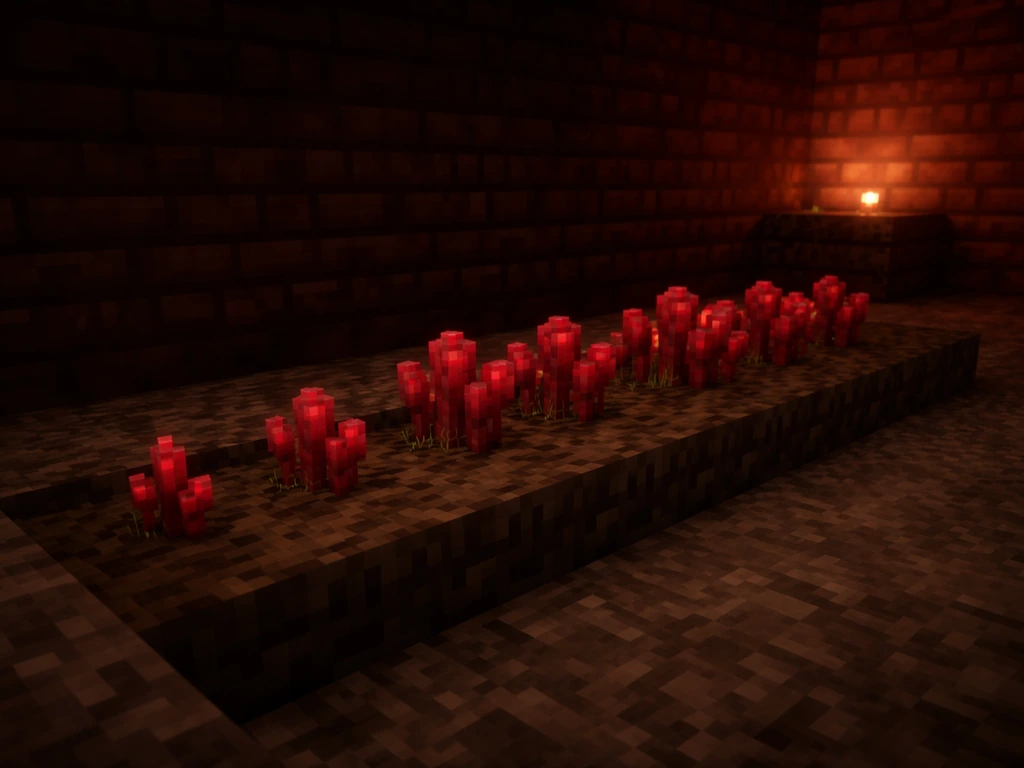
Nether Wart Growth Basics: What Light Actually Does (and Doesn't Do)
Nether wart is one of the most light-independent crops in Minecraft. Unlike wheat, carrots, or potatoes, which most players assume need some light to grow (and which many guides associate with well-lit farms), nether wart has no light-level requirement whatsoever. It can grow in pitch darkness, in broad torch-lit corridors, or anywhere in between. This is confirmed across all dimensions, meaning you can grow nether wart in the Overworld, the End, or the Nether itself without worrying about ambient light at all.
It also doesn't need water. If you're used to growing crops that need hydrated farmland, nether wart breaks that rule entirely. There's no moisture mechanic at play here. The only block it will grow on is soul sand, and that's a hard requirement with no substitutes. One soul sand per plant. That's the whole environmental checklist.
This sometimes surprises players who come from other farming backgrounds, in Minecraft and in real life. We're conditioned to think crops need light. Certain Minecraft blocks, like mycelium, actually do have explicit light requirements for spreading (mycelium needs a light level of 9 or above to spread to adjacent dirt). Mycelium’s need for light is a good reminder that some organisms are light-sensitive, unlike nether wart which is not mycelium, actually do have explicit light requirements for spreading. Nether wart doesn't follow those rules at all, which is exactly why the confusion shows up so often.
Does Darkness Actually Speed Up Growth? The Direct Answer
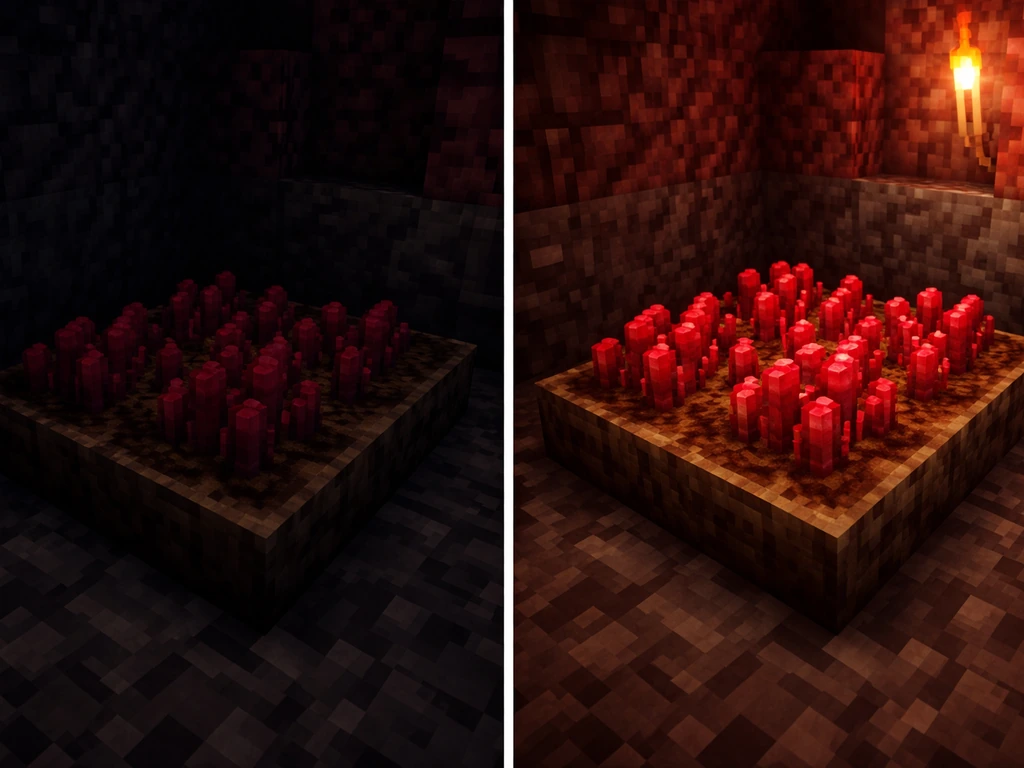
No. Darkness does not increase nether wart growth speed. There is no mechanic in Minecraft that gives nether wart a bonus for being in a dark space. The growth rate is completely identical at light level 0 and light level 15. If you've read somewhere that keeping your nether wart farm dark makes it grow faster, that's a myth, and it's probably been borrowed from observations about other mechanics entirely, like glow berries, which can grow in complete darkness and which many players generalize into a broader 'darkness helps crops' assumption. You may be wondering why rhubarb would even be grown in the dark, since its needs can be very different from nether wart darkness. Do glow berries need darkness to grow? No—like many players assume about “darkness helps crops,” their behavior is driven by other mechanics, not ambient light being required. That assumption doesn't apply here.
The growth of nether wart is, in the game's own terms, bound to time and RNG. Specifically, it advances one growth stage at a time through random block ticks, and each random tick has exactly a 10% chance of triggering a stage advance. No light manipulation, no potion, no special block placement changes that probability. You cannot speed it up with bone meal either. That shortcut is simply disabled for nether wart.
What Actually Controls How Fast Nether Wart Grows
Understanding the real mechanics here makes building an efficient farm much more straightforward. There are four things that actually matter: the growth stage system, soul sand as the required block, whether the chunk containing your farm is loaded, and random tick behavior.
The Growth Stage System
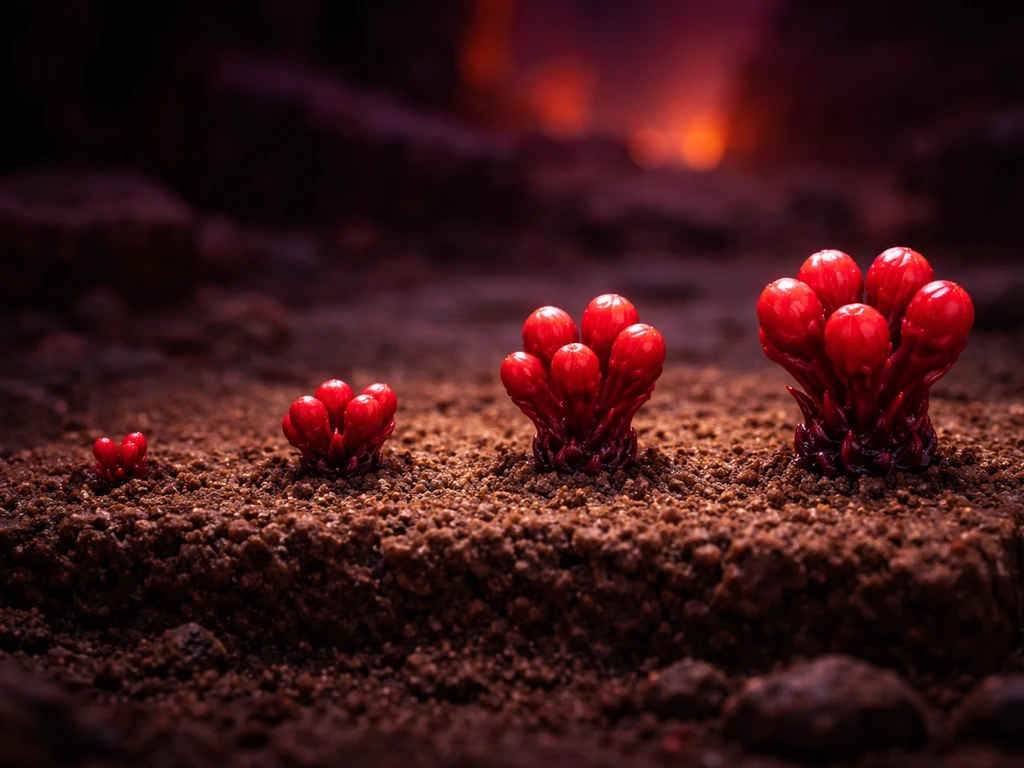
Nether wart has three growth stages after planting. It starts at age 0 (freshly planted), advances to age 1, then age 2, and finally reaches age 3, which is harvestable. Each stage transition depends on receiving a random tick and then passing a 10% chance roll. At the default random tick speed, blank" rel="noopener noreferrer">a single plant takes about 13,653 game ticks per stage on average, which works out to roughly 11 minutes and 23 seconds per stage. The full grow cycle from planting to harvest averages around 40,960 game ticks, or about 34 minutes total. Those numbers assume the chunk is being ticked consistently, which is the other major variable.
Soul Sand Is Non-Negotiable
Nether wart only grows when planted on soul sand. Not soul soil, not regular sand, not any other block. If your farm isn't growing, the first thing to check is whether every plant has exactly one soul sand block beneath it. It's a simple requirement, but it's easy to mix up materials when building quickly.
Chunk Loading: The Factor Most Players Miss
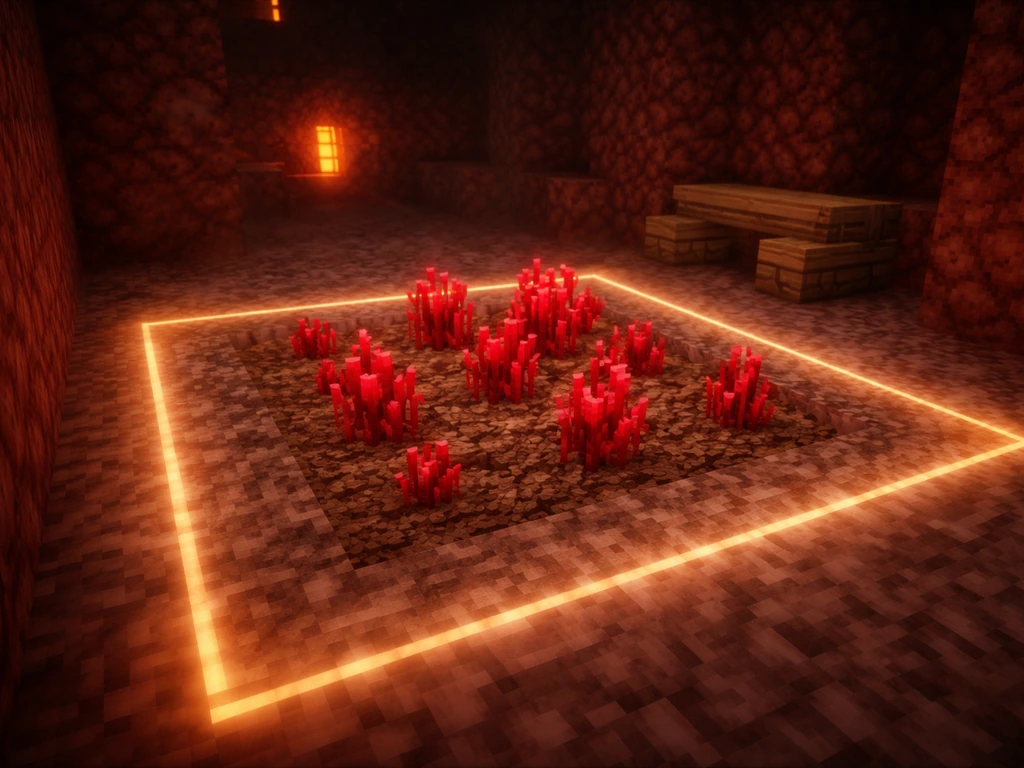
This is the one that catches people off guard. In Java Edition, random block ticks, including the ones that drive crop growth, only happen in chunks that are actively being ticked. On the Minecraft Wiki, the Tick page notes that Java Edition random tick behavior is tied to chunks that are being ticked, explaining why farms stop progressing when you are far away. That requires you (or another non-spectator player) to be within roughly 128 blocks of the farm. If you build your nether wart setup far from where you spend time and then wander off, the farm essentially pauses. The chunks go unloaded, ticks stop, and nothing grows until you come back into range. Simulation distance settings can also affect which chunks receive random ticks, so if you've reduced simulation distance for performance reasons, that can slow down your farm without any obvious sign of what's happening.
Random Tick Speed
If you're playing in a world where you have access to game rules, increasing the randomTickSpeed value is the one lever that actually does accelerate nether wart growth. The default is 3. Raising it increases how frequently random block ticks are distributed across chunks, which means plants get more chances to advance their growth stage per real-world minute. This is technically the only way to make nether wart grow faster, and it affects all random-tick-based mechanics in the game, not just nether wart.
Building a Practical Nether Wart Farm Setup
Since darkness doesn't help and light doesn't hurt, your main farm design goals should be maximizing soul sand coverage, keeping the farm within your active range, and protecting your plants from mob damage. If you’re also curious about how darkness affects other crops, crystals are another common comparison point do crystals grow better in the dark. Here's how to set that up in a way that's efficient and easy to maintain.
- Choose a location within 128 blocks of where you regularly play or AFK. This keeps the chunks loaded and ticking consistently.
- Lay down soul sand as your planting surface. Plan your rows with at least one block of walking space between them so you can harvest without trampling plants.
- Plant nether wart directly on the soul sand, one per block.
- Light the farm with torches, lanterns, or any light source you prefer. Light won't speed growth, but it will prevent hostile mob spawns that can destroy your setup. Creepers in particular can blow up soul sand blocks and wipe out sections of your farm.
- Enclose the farm with walls and a ceiling. This isn't required for growth, but it keeps mobs out and makes the space easier to manage.
- Avoid placing blocks directly above your nether wart that would prevent it from reaching full height at age 3. Leave at least two blocks of clearance above each plant.
- Harvest only when nether wart has fully matured to age 3 (it looks fully red and bushy). Harvesting early gives you only one nether wart back, no extras. A fully mature plant drops two to four warts.
- Replant immediately after harvesting. The cycle starts over from age 0 and the clock resets on the random tick count.
If you want to push output further, expand the footprint of your farm rather than trying to manipulate growth conditions. More soul sand blocks means more plants ticking simultaneously, which means more harvests in any given time window. A 9x9 grid of soul sand gives you 81 plants cycling at different stages, which produces a much steadier supply than a tiny farm where you're waiting on a handful of plants.
Does It Matter Whether You Build in the Nether or Overworld?
Not for growth speed. Nether wart grows at the same rate in any dimension. The Nether has the aesthetic advantage of fitting the crop thematically, but if you want a farm in your Overworld base, that works just as well. Some players prefer Overworld farms specifically because their main base is there and they're always within ticking range without any extra effort.
Common Myths and Troubleshooting When Nether Wart Won't Grow
A few persistent misconceptions cause a lot of unnecessary farm redesigns. Here's what's actually going on when players think their nether wart isn't working.
| Myth or Problem | What's Actually Happening | Fix |
|---|---|---|
| Darkness makes it grow faster | Light level has no effect on growth rate in either direction | Ignore light level as a growth variable entirely |
| Bone meal will speed it up | Bone meal is disabled for nether wart, it has no effect | There is no speed shortcut; expand your farm size instead |
| It's not growing because there's too much light | Light level 0 to 15 all produce identical growth rates | Check soul sand placement and chunk loading instead |
| It won't grow in the Overworld | Nether wart grows in any dimension with no environmental restrictions | Plant on soul sand anywhere and it will grow normally |
| It grew fast last time but is slow now | Chunk may not be loaded while you're far away, pausing all ticks | Stay within 128 blocks or set up a chunk loader |
| Wrong block underneath | Nether wart placed on anything other than soul sand will not grow | Replace the base block with soul sand specifically |
| Harvested too early and got no extras | Early harvest (age 0, 1, or 2) returns only one wart with no bonus | Wait for full age 3 maturity before harvesting |
The darkness myth in particular likely comes from player experiences with other Minecraft crops or blocks where light behavior is more nuanced. Glow berries are a good example: they grow on cave vines in low-light environments and the whole aesthetic implies a darkness connection, which is easy to generalize incorrectly. Mycelium is another example that goes the opposite direction, it actually requires decent light levels to spread, which can make players think all Minecraft biology follows strict light rules. Nether wart sits in a different category from both of those.
If your farm has been set up correctly and still feels slow, the most likely culprit is chunk loading. Spend some time near the farm and watch a plant across a few minutes. If it advances even one stage in roughly 10 to 15 minutes, the mechanics are working exactly as intended. If you're also growing lion's mane, you may wonder whether it needs light—its requirements are different from typical “light-dependent crop” myths does lion's mane need light to grow. The average growth time just feels long when you're actively waiting on it. The best approach is to set up the farm, go do something else nearby, and come back to harvest when you're passing through.
One last note: if you increase randomTickSpeed via commands, keep in mind it will accelerate all random-tick-based processes simultaneously, including things like grass spread and fire behavior. It's a powerful lever, but it changes more than just your nether wart farm. For most survival players, expanding the farm's physical footprint is the cleaner and more reliable way to increase output without side effects.
FAQ
If darkness does not help, can I speed up nether wart with torches or lanterns anyway?
No. Nether wart cannot be accelerated with bone meal, and adding extra light sources, skylight, or torches will not change the stage-advance chance (the 10% roll per random tick remains the same).
Does having more nether wart plants make them grow faster, or does it only increase total yield?
Yes, it can. If you plant multiple nether wart blocks in the same chunk, all of them still rely on the same random tick system, so a bigger soul sand footprint increases the number of plants that are eligible to receive stage-advance rolls, even though each plant’s light behavior is unchanged.
Why did my nether wart stop growing when I went far from my base?
It depends on server setup. In Java, random block ticks happen only for chunks that are actively ticked, so even if your farm is built correctly, players far away (or a lowered simulation distance) can pause growth until the chunk is within the active ticking range again.
Does chunk ticking work the same way on Bedrock, or is my growth rate limited by different settings?
In Bedrock, the exact mechanics differ, but the key takeaway is the same: the growth you want requires regular ticking, and those ticks can stop when chunks are unloaded. If you have render distance high but simulation or ticking effectively low, the farm will feel slower.
My farm is dark and well within range, but nothing grows, what’s the most common setup mistake?
Check that every planted wart has soul sand directly underneath. Even one block off (soul soil, regular sand, or a misplacement) will prevent that plant from growing, and the farm can look “stuck” even if darkness and light are irrelevant.
Should I keep my nether wart farm dark to prevent mobs, does it affect growth speed?
You can still use darkness-related room changes, but they won’t boost growth. However, reducing light can increase hostile mob presence elsewhere if your farm area is accessible, so the practical focus should be protection, not darkness for speed.
If I use commands to raise randomTickSpeed, will it only speed up nether wart?
Changing the randomTickSpeed value accelerates all random-tick mechanics globally, so you might see side effects like faster grass spread (where applicable), altered fire behavior, or other environmental changes. If you only care about nether wart output, expanding the farm footprint is the safer lever.
Is there any dimension where nether wart grows faster, like the Nether versus the Overworld?
Dimension is not the limiting factor for growth speed. Nether wart grows at the same rate regardless of whether the farm is in the Nether, the Overworld, or another dimension, so choose location based on travel and chunk-ticking convenience.
How can I tell quickly if my farm is actually ticking, versus just waiting too long to notice progress?
Not directly. The reliable “works or not” test is to confirm at least one plant advances a stage during a short monitoring window while you stay close enough for chunk ticks to run. If it advances, your light setup is fine and the issue is usually ticking range or soul sand placement.