
Yes, Anubias can grow in high light, but it really doesn't need it and actually does better with less. High light won't kill Anubias outright, but it creates the perfect storm for algae to coat those slow-growing leaves, which is the plant's biggest vulnerability. If you do want to keep Anubias in a brighter setup, it's absolutely doable, you just have to be deliberate about intensity, photoperiod, CO2, and where you position the plant relative to the light source.
Can Anubias Grow in High Light? Yes, Here’s How
Marcus Hartley
18 May 2026
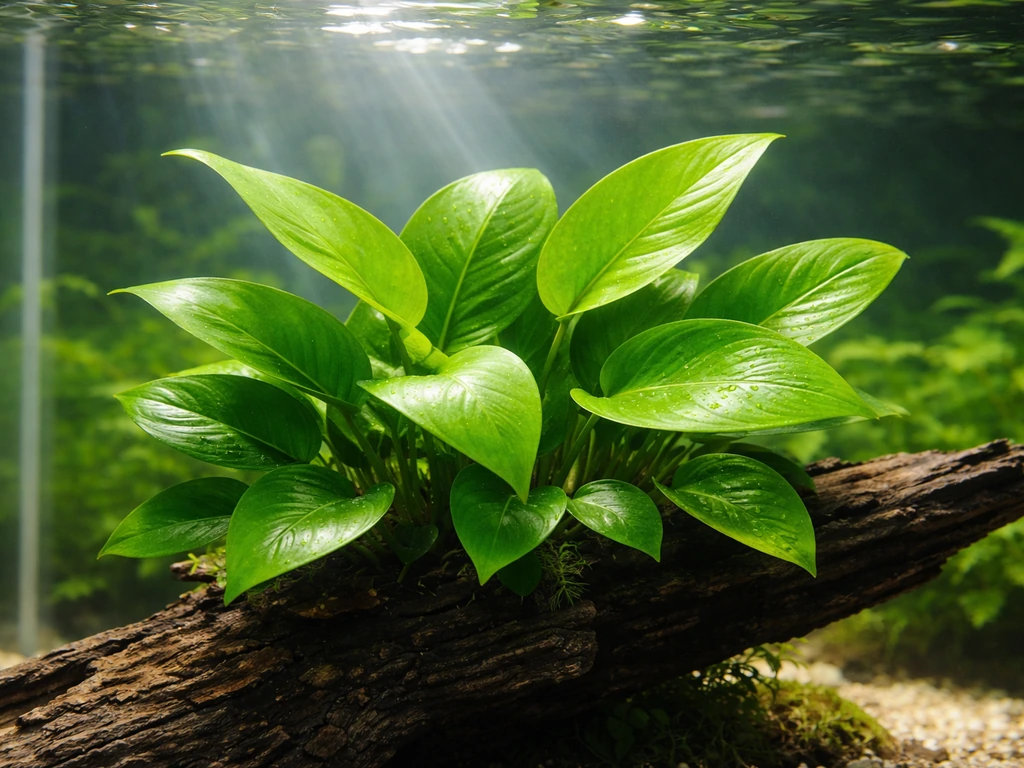
What 'high light' actually means for a planted tank
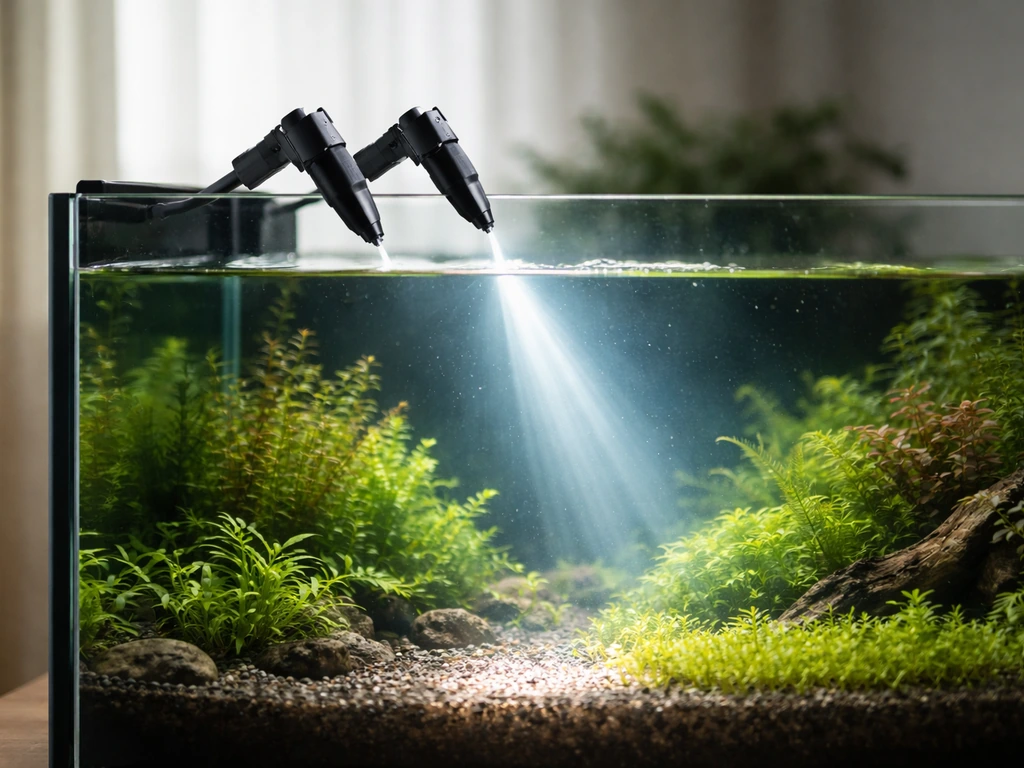
Light intensity for aquarium plants is measured in PAR (photosynthetically active radiation), specifically PPFD in units of µmol/m²/s. That number tells you how many usable light photons are hitting your plants per second. For Anubias, the sweet spot is genuinely low: around 15–30 µmol/m²/s. Medium light sits at roughly 35–50 µmol/m²/s, and high-tech, high-light setups push 50–80+ µmol/m²/s. In wattage terms, that translates to about 0.5–1 W per gallon for low light and 2–4 W per gallon for high-light tanks. Anubias is firmly in that low-light band by nature.
Photoperiod, meaning how many hours per day your lights run, matters just as much as intensity. A common starting point for planted tanks is 6–8 hours per day at full intensity, ramping up to 8–10 hours once your tank finds its balance. Diana Walstad's research on planted tanks points out that daylengths longer than 8–9 hours combined with intense light can trigger serious algae problems, giving algae an 'afternoon advantage' over slow-growing plants like Anubias. Walstad also warns that intense light combined with daylengths longer than about 8 to 9 hours can drive severe algae issues, partly by creating an “afternoon advantage.” daylengths longer than 8–9 hours combined with intense light can trigger serious algae problems. So when we talk about high light, we're really talking about both the brightness and how long it runs each day.
What actually changes when Anubias gets more light
The potential upside
Anubias is a notoriously slow grower, and one reason people experiment with higher light is hoping to speed that up. In a well-balanced system with stable CO2 and nutrients, slightly higher light (say, pushing into the 35–50 µmol/m²/s medium range rather than extreme high-tech levels) can encourage a bit more growth activity. Some hobbyists report Anubias staying cleaner and more vigorous when it's not crammed into a dark corner with zero flow. A little more light can also make the deep green color more vivid and the leaf structure tighter.
Where things go wrong
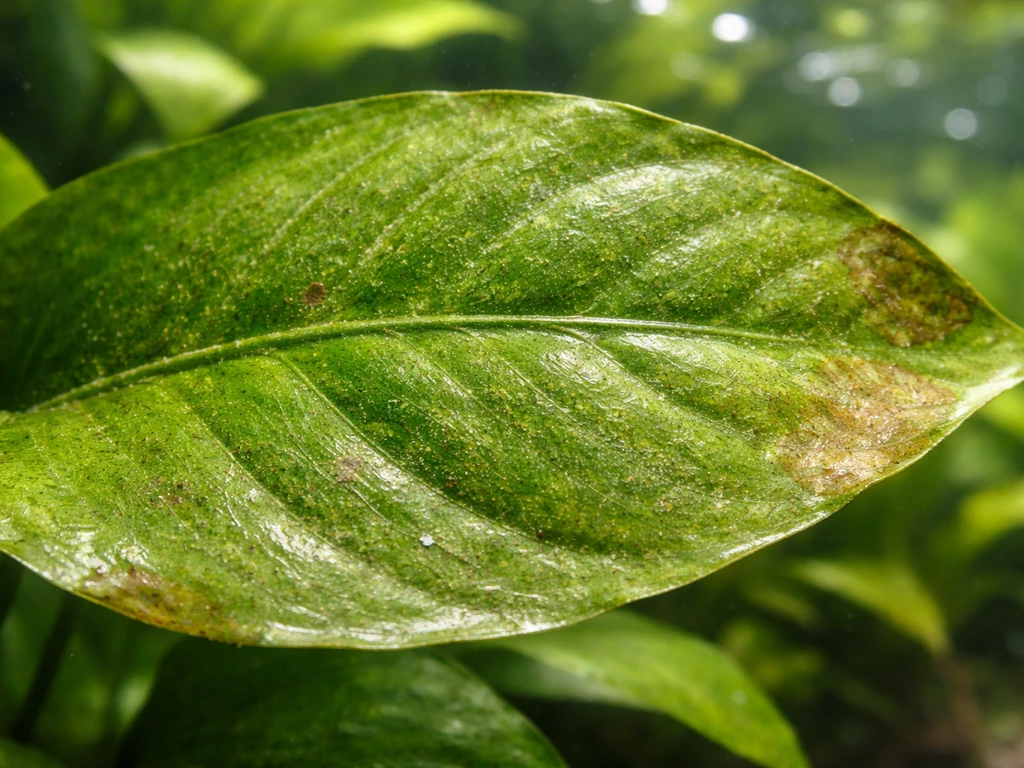
Here's the core problem: Anubias grows very slowly. Its leaves can sit in your tank for months or even years. Algae absolutely loves slow-moving leaf surfaces under bright light. The more intense the light, the more energy is available, and if the plant isn't photosynthesizing fast enough to use it all (because Anubias just doesn't work that way), algae steps in to claim the excess. You'll start seeing green spot algae and green dust algae coating the leaves, and once that happens, it's genuinely difficult to clean off without damaging the plant. That's not a cosmetic issue, it's a sign the whole system is out of balance.
Melt is the other risk. Sudden changes in light intensity, especially a sharp jump upward, can stress Anubias and trigger leaf melt, where leaves turn yellow, go mushy, and fall apart. This is especially common when plants are transitioning from emersed (above-water) to submerged growth, or when a dramatic environmental shift hits them all at once. Melt isn't always fatal, but it's stressful for the plant and frustrating to watch.
Algae and leaf damage: the real risks under bright light
Algae in a high-light tank isn't just an aesthetic annoyance. It's a signal that your system has more light energy available than your plants can convert. For Anubias specifically, green spot algae (GSA) is the most common offender. GSA tends to show up when phosphate levels are too low or CO2 is deficient, conditions that are more likely in a low-tech tank being pushed under high light. The algae moves faster than Anubias does, so it colonizes those long-lived leaves before the plant can outcompete it.
Green dust algae and other green algae variants respond strongly to bright light combined with imbalanced CO2 and nutrients. In a no-CO2 tank running high light, the CO2 in the water gets depleted faster than it can replenish naturally, which stalls plant growth while algae (which can use carbon more efficiently at low concentrations) keeps going. This is exactly why CO2 injection is considered almost mandatory for genuine high-light setups: without it, you're essentially throwing a party for algae.
On leaf health specifically: Anubias leaves are thick and waxy, which makes them durable, but it also means algae that grows on them is hard to scrub off without scratching. Over time, heavily algae-coated leaves can block the plant's own photosynthesis, weakening it gradually. Direct, intense light hitting the rhizome area can also stress the plant, especially if the rhizome is already partially buried or poorly positioned.
How to set up high light safely with Anubias
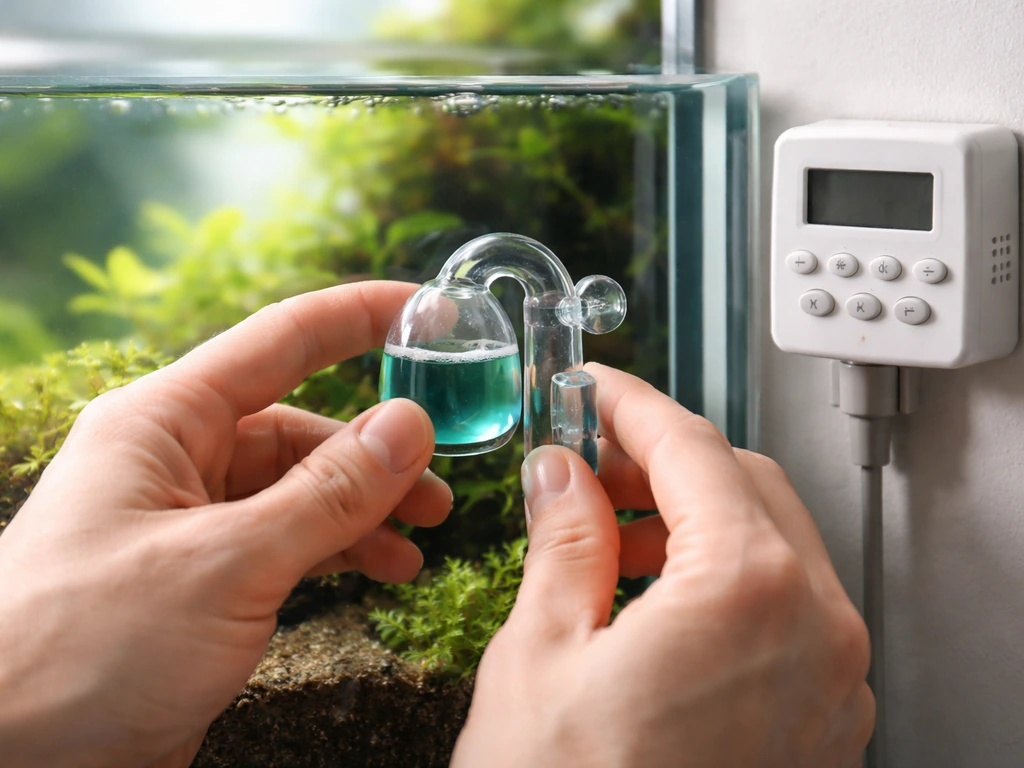
If you're committed to a bright tank and want Anubias in it, the setup process matters a lot. Going from dim to bright overnight is almost guaranteed to cause problems. Here's how to do it without wrecking your tank.
- Start with a short photoperiod: Run your lights at 6 hours per day initially, even if your fixture is capable of much more. This gives the tank time to find biological balance before you add more photon energy.
- Ramp gradually: After two weeks of stability (no algae spikes, plants looking healthy), extend the photoperiod by 30 minutes. Wait another two weeks. Repeat. The same patience applies if you're increasing intensity: make one change at a time and observe for at least two weeks before adjusting again.
- Use a ramp-up/ramp-down schedule: If your LED fixture supports it, program a gradual sunrise and sunset rather than a hard on/off switch. This mimics natural light cycles and reduces the shock of sudden brightness changes.
- Add CO2 if you're pushing into true high-light territory: For anything above ~40–50 µmol/m²/s, CO2 injection becomes important. Without it, plant growth stalls and algae wins. If CO2 injection isn't an option, keep your light intensity in the low-to-medium range.
- Keep nutrients balanced: Target nitrate around 10–50 mg/L and keep phosphate levels healthy (around 1–2 mg/L). Low phosphate is directly linked to green spot algae on Anubias leaves, so don't starve the tank on nutrients thinking it'll control algae.
- Position Anubias in shade within the tank: Even in a high-light setup, you can place Anubias under a rock overhang, tucked behind taller plants, or in the lower corners where direct light intensity is naturally reduced by depth and hardscape.
Troubleshooting: what you're seeing and what to do about it
| Symptom | Likely Cause | Quick Fix |
|---|---|---|
| Green spot algae on leaves | CO2 deficiency or low phosphate under bright light | Reduce photoperiod to 6 hours, check and raise phosphate, add CO2 if possible |
| Green dust or film algae everywhere | Too much light energy for the system's nutrient/CO2 balance | Drop intensity by 20–30% or shorten photoperiod; do a 3-day blackout as a reset if severe |
| Leaves turning yellow and melting | Sudden light/environment change, poor water quality, or stressed rhizome | Reduce light immediately, check water parameters, ensure rhizome is not buried |
| Slow or no new growth | Insufficient light (below ~15 µmol/m²/s), poor nutrients, or CO2 crash | Slightly increase intensity or extend photoperiod by 30 min; dose fertilizer |
| Algae only on Anubias, other plants fine | Anubias getting too much direct light while faster plants shade themselves | Reposition Anubias to a shadier spot or block direct light with hardscape |
One thing worth emphasizing: algae problems are almost always a lighting duration and intensity issue working together with a nutrient or CO2 imbalance. If you see algae exploding, don't just cut light in half and call it done. Check your nutrients, check CO2, and make changes one at a time. Two weeks between adjustments is the rule of thumb that keeps you from creating a new problem while solving the first one.
When to skip high light entirely and just go low-to-medium
Honestly? Most of the time. Anubias is a low-light plant by design. It evolved in shaded, slow-moving African rivers, often growing on rocks and wood under overhanging vegetation. It doesn't need high light, doesn't particularly benefit from it over the long term, and is genuinely easier to keep healthy and algae-free at 15–35 µmol/m²/s. If you're running a low-tech tank without CO2 injection, keeping your light intensity in that low range and your photoperiod at 6–8 hours is the path of least resistance.
Avoid pushing into high-light territory if any of these apply to your setup:
- You're not running CO2 injection and don't plan to
- Your tank is less than a few months old and still cycling biologically
- You've already had algae problems that haven't fully resolved
- Anubias is the main or only plant in the tank (no fast-growing plants to compete with algae)
- You don't want to monitor and adjust nutrients regularly
This is a useful contrast to faster-growing aroids like monsteras, which can actually benefit from more light to push out larger leaves. Monsteras are aroid plants too, and they can handle brighter conditions, but whether they grow under artificial light depends on getting enough intensity and duration. Monsteras also tend to do better with stronger light, but they still need protection from harsh direct sun. Anubias doesn't work that way. More light doesn't reliably produce more or better growth, it just raises the maintenance overhead. Other shade-tolerant plants like sansevierias and certain low-light species share this same practical logic: sometimes the 'can it tolerate high light? Sansevierias are often used as low-light houseplants, so it's worth considering how that tolerance compares to your aquarium lighting. ' question is less useful than 'does high light actually help it?'
Choosing and positioning grow lights for Anubias
If you're setting up a tank specifically for Anubias or adding Anubias to a mixed planted tank, you don't need a high-powered fixture. An LED that delivers 15–30 µmol/m²/s at the substrate level is genuinely all this plant needs. In wattage terms, that's roughly 0.5–1 W per gallon for most setups. Fixtures marketed as 'planted tank' or 'full spectrum' LEDs with a PAR rating are ideal because you can actually see what you're getting at depth.
Tank depth matters more than many people realize. PAR drops significantly as you go deeper, so a light that delivers 60 µmol/m²/s right at the surface might only push 20–25 µmol/m²/s at the bottom of a 20-inch deep tank. That's actually helpful for Anubias: mount your fixture at the manufacturer's recommended height, let the physics of depth work in your favor, and position Anubias lower in the tank or under hardscape to naturally reduce the light it receives.
If you're in a mixed high-light tank where other plants genuinely need brightness, the placement trick is your best tool. Tuck Anubias behind rocks or driftwood (which is how it grows in the wild anyway, attached to hardscape with its rhizome exposed). Anubias should be attached to hardscape with its rhizome exposed, and it also helps to avoid excessive direct light because it can encourage algae on the plant’s slow leaves. The shadow created by a piece of wood can drop PAR dramatically in a very small distance. This way your high-light stem plants get what they need at the midground and surface, while your Anubias sits comfortably in a shaded microhabitat nearby.
For scheduling, program your LED with a ramp-up period of 30–60 minutes before peak intensity and a matching ramp-down at the end of the day. Start with 6 hours of peak intensity and only increase once you're confident algae is under control. If you're running a dimmable fixture, 20–40% intensity for Anubias is often more than enough, and that lower setting can run for a longer photoperiod without the algae payoff you'd get at full blast. Some hobbyists run low-intensity light for 10 hours with zero algae problems because the total daily light dose stays within a manageable range.
The bottom line is this: Anubias can survive and even look great in a high-light tank, but only if you manage the system carefully. If you're willing to dial in CO2, keep nutrients balanced, position the plant strategically, and ramp light changes slowly, it works. If you'd rather keep things simple, just give it low-to-medium light, attach it to some driftwood, and let it do what it's naturally good at. If you're also wondering about syngonium, it can often thrive with low light as well can syngonium grow in low light. Either approach can produce a beautiful, healthy plant.
FAQ
If my aquarium is called a high-light tank, will Anubias definitely struggle?
Yes, but the key is what the plant is actually receiving at its position. If PAR at the Anubias rhizome is in the roughly 15–30 µmol/m²/s range, it usually stays healthy. If your fixture is “high light” by marketing but the Anubias is shaded by wood or mounted deeper, it can function like low-to-medium light.
How should I transition Anubias into a brighter setup without causing melt?
Avoid sudden changes in light duration and intensity, and do not increase both at once. A practical approach is to change only one variable, for example increase photoperiod by 1 hour while keeping intensity the same (or increase intensity slightly while keeping photoperiod the same). Wait about two weeks and watch for algae and early melt signs.
What early signs tell me my high light is causing trouble for Anubias?
Use a “spot check” method: clean a small area of the glass or hardscape near the Anubias, then inspect the plant 3 to 7 days after any light change. If you see green dust starting on older leaves early in the photoperiod, it often indicates carbon or nutrient imbalance rather than a purely lighting problem.
Should I just lower the light if I see algae on Anubias?
If algae already has a foothold, cutting light alone can reduce it, but it often comes back unless you also address CO2 and nutrients. For instance, in low-CO2 tanks, green spot algae commonly improves when CO2 and phosphate availability are corrected, then light is held steady. Otherwise, Anubias remains too slow to outcompete algae.
Can high light damage the Anubias rhizome itself, not just the leaves?
Yes. Anubias rhizomes are more sensitive to direct, intense light than many people expect, especially if partially buried. Keep the rhizome exposed, and reduce glare by placing it slightly under wood shade or angling the plant so bright rays are not constantly hitting the newest growth point.
Can Anubias survive high light in a no-CO2 tank?
If you use a bright setup with Anubias in a low-CO2 or no-CO2 system, the risk of algae increases because plant growth usually cannot use the available light fast enough. You can partially compensate by lowering intensity or shortening photoperiod, but the margin for error is smaller, so algae management becomes more labor-intensive.
How do I remove green spot algae without harming Anubias?
When you see green spot algae, physical removal is hard because it is tightly attached and Anubias grows slowly. Focus on stabilizing conditions, then use gentle spot cleaning (soft brush or careful scraping) only on heavily affected leaves. Expect the process to take weeks because the plant replaces tissue slowly.
Where should I place Anubias in a high-light layout to make it work?
Placement matters more than people think. Put Anubias in the lowest-PAR microhabitat available, behind rocks, under overhang wood, or on the shaded side of a tank. Even a small change in distance from the light source can significantly change PAR.
What’s the best way to fine-tune light in a tank where algae keeps returning?
Aim for stable “daily light dose” rather than constantly chasing peak intensity. For troubleshooting, keep photoperiod and intensity steady for a couple weeks, then adjust either CO2, nutrients, or light dose based on what the algae and plant respond to, one change at a time.
In a mixed tank, how do I balance the light needs of Anubias and faster-growing plants?
If you are running high light primarily for faster-growing stem plants, treat Anubias like a shade plant in the same ecosystem. Keep Anubias in the shaded zones, let the stems take the brunt of the light, and do not assume Anubias will benefit just because the tank is bright overall.