
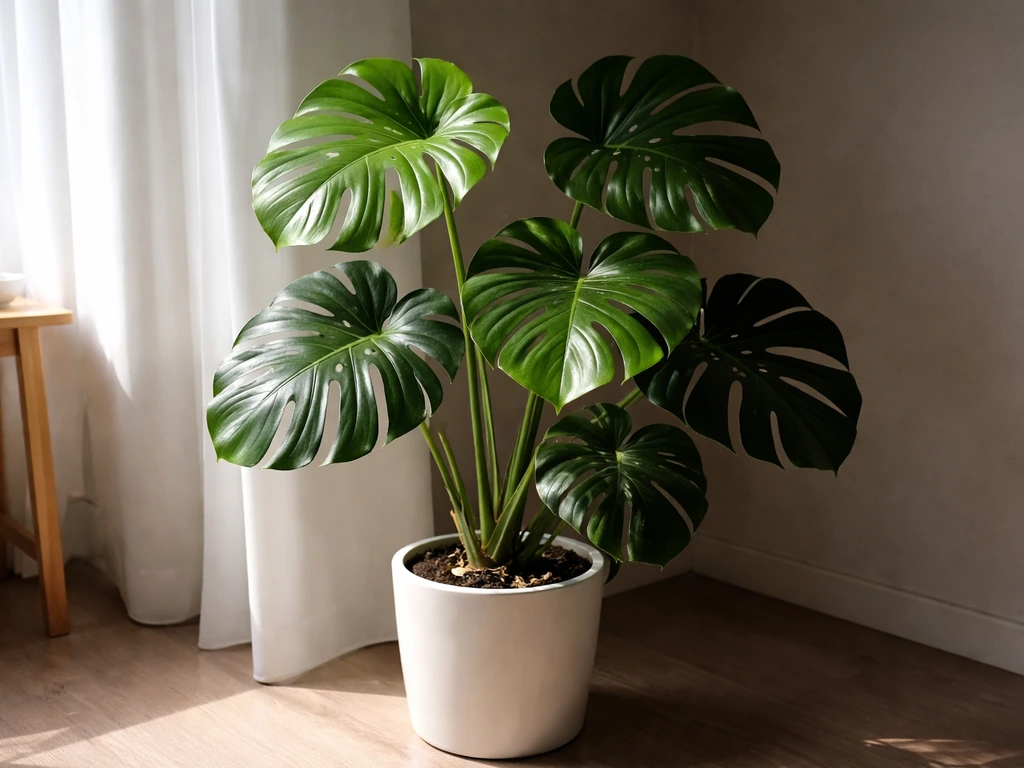
Yes, a monstera can survive in low light, but it won't really grow there, at least not in any way that'll make you happy. If you've got a dim room and you're hoping your Monstera deliciosa will produce those big, dramatically split leaves, you need to know what you're actually working with before you commit to a spot. The good news: there's a lot you can do to push things in the right direction, including some simple placement tricks and, if you're willing, a basic grow light setup that doesn't cost a fortune.
Can Monstera Grow in Low Light? How to Make It Thrive
Marcus Hartley
22 Apr 2026
What 'low light' actually means for a monstera
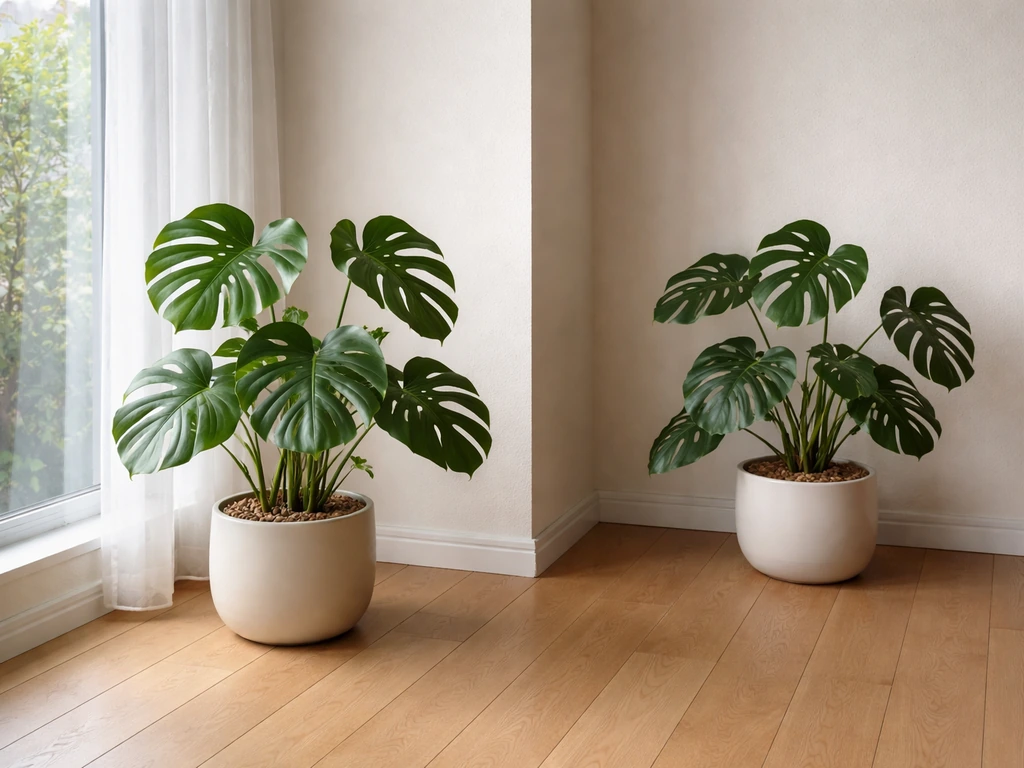
People throw around 'low light' like it's a well-defined plant category, but it really isn't. In measurable terms, indoor light is often described in foot-candles (FC) or, for grow light planning, in PPFD (micromoles of photons per square meter per second, written µmol/m²/s). University of Maryland Extension puts 'medium-bright' indoor conditions at roughly 100 to 500 foot-candles, which is what you'd get near an east- or west-facing window. True low light falls below that, maybe 20 to 50 FC, and is typical of spots several feet from a window or in north-facing rooms.
For a monstera, the practical difference between surviving and thriving comes down to this: at low light levels, the plant has just enough energy to maintain itself, but not enough to fuel new growth, especially the kind of growth that produces large, fenestrated (split and holey) leaves. Think of it like running on empty. The plant isn't dead, but it's not going anywhere. For actually healthy vegetative growth, you want to be hitting something closer to 100 to 500 PPFD at the canopy level, which corresponds to that medium-bright window range. Below that, you're in survival mode.
What happens to a monstera when the light is too dim
I've seen this play out in my own space. A monstera I moved to a darker corner of my apartment went months without producing a single new leaf. When it finally did push one out, it was noticeably smaller than the ones before it, and there wasn't a single split or hole in it. That's not a coincidence. Research comparing sun and shade conditions for Monstera deliciosa has confirmed that reduced light directly corresponds to smaller leaf size and less fenestration. The splits and holes that make monstera so iconic are essentially a luxury the plant can't afford when light is scarce.
Here's what you'll typically see when a monstera is struggling with low light:
- Slow or completely stalled growth (new leaves may appear once every few months instead of regularly)
- New leaves that are smaller than older ones, sometimes significantly so
- Leaves with little to no fenestration, even on a mature plant that previously had splits
- Leggy, stretched stems as the plant reaches toward whatever light it can find (this is called etiolation)
- Older leaves that gradually yellow and drop as the plant conserves resources
The stretching is worth paying attention to. University of Maine Extension specifically lists 'spindly, leggy, or weak growth' as a symptom of insufficient light intensity or duration. If your monstera's stems are getting long and floppy between leaves, that's not healthy vigor. That's desperation.
How to actually check your light level at home

You don't need fancy equipment to get a useful read on your light situation. Start with the basics: window orientation matters a lot. South-facing windows in the northern hemisphere get the most light through most of the day. East and west windows get moderate light, morning or afternoon respectively. North-facing windows get the least, and anything more than a few feet back from any window drops off quickly. If you're in a room with no direct window access, or if buildings or trees block the outside, you may already be in true low-light territory.
For a more precise check, your smartphone can help. Apps like Photone can report both lux and PPFD readings right at your plant's canopy level. Photone notes it requires a small paper diffuser over the camera lens for accuracy, and results vary by phone model, but it's genuinely useful for getting a ballpark. Just don't obsess over exact numbers. You're looking to confirm whether you're well below that 100 FC threshold or hovering around it, not calibrate a scientific instrument.
A dead-simple observation test also works: hold your hand about a foot above a white piece of paper in your plant's spot during the brightest part of the day. If you see a sharp, well-defined shadow, the light is decent. A soft, blurry shadow means low-medium light. No visible shadow at all means you're in true low light, and your monstera is going to have a hard time there without help.
Practical ways to get more light without moving homes
Before you go buying any gear, there are real gains to be made just through smart placement and a few tweaks around the room.
- Get as close to the window as physically possible. Light intensity drops dramatically with distance, so moving your monstera from 6 feet away from a window to 2 feet away can dramatically increase how much usable light it receives.
- Use sheer curtains instead of blackout curtains or blinds. Sheer fabric diffuses direct sun without blocking it, which is actually ideal for monstera since harsh, direct afternoon sun can scorch the leaves.
- Rotate the plant every week or two. Monsteras grow toward the light source, and rotating them ensures all sides of the plant get even exposure and prevents that one-sided, leaning look.
- Clean the leaves. Dust on leaves blocks light absorption. A damp cloth wipe-down every month or so makes a real difference and takes two minutes.
- Use reflective surfaces nearby. Light-colored walls, mirrors, or even a sheet of white foam board positioned to bounce light back toward the plant can meaningfully increase the ambient light the plant receives.
- Remove competing objects between the plant and the window. Shelves, furniture, or other plants casting shade can rob your monstera of what little light is coming in.
These steps won't turn a dark room into a bright one, but they can move you from genuinely inadequate light to marginal-but-workable, especially if you combine them with the next step.
When and how to use grow lights for monstera
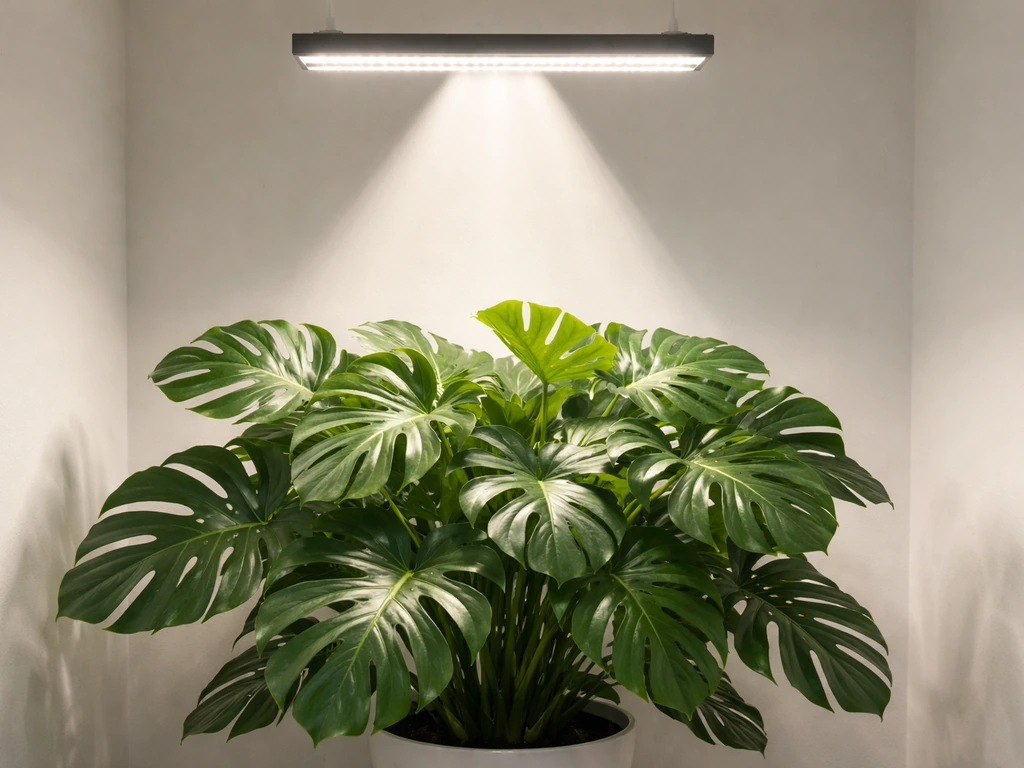
If your space genuinely can't provide enough natural light, a grow light is the honest fix. So yes, a monstera can grow in artificial light, as long as the light is strong enough and you keep a consistent schedule can monstera grow in artificial light. And before you picture an elaborate rack of equipment, know that for a single monstera, you don't need much. A basic LED grow light or a full-spectrum fluorescent bulb in a clip-on fixture can make a real difference.
Which type of grow light to use
| Light Type | Best For | Energy Use | Heat Output | Notes |
|---|---|---|---|---|
| LED grow light (full-spectrum panel) | Most indoor setups, single plants to small collections | Low | Low | Best long-term value; look for one that reports PPFD output, not just watts |
| LED grow bulb (in standard fixture) | Budget setups, single plants | Low to medium | Low | Easy to find; results vary by bulb quality; decent for supplementing existing light |
| Fluorescent (T5 or T8 full-spectrum) | Budget option, smaller plants | Medium | Low to medium | Works well, widely available; needs to be closer to the plant than LED panels |
| Standard incandescent or warm-white LED | Not recommended | High (incandescent) | High (incandescent) | Wrong light spectrum for plant photosynthesis; lumens don't equal plant-usable light |
Iowa State University Extension makes an important point here: lumens (which is how regular light bulbs are rated) measure light as humans perceive it, not as plants use it. What matters for plant growth is PAR (photosynthetically active radiation), measured as PPFD. A warm, cozy-looking bulb might be bright to your eyes and useless to your monstera. Stick with lights marketed for plant growth that provide full-spectrum output.
Distance and schedule
Distance matters a lot. For a standard grow light panel at typical output, a starting distance of around 18 inches (about 1.5 feet) from the canopy is a reasonable baseline. If you're using a lower-intensity supplemental bulb in a clip fixture, you can go closer, sometimes as little as a few inches at minimum brightness. Start at the manufacturer's recommended distance and watch for signs of light stress (bleaching or curling toward the light means too close; no response after several weeks means too far or too dim).
For schedule, foliage plants like monstera generally do well with 12 to 16 hours of light per day under artificial conditions. If you're supplementing existing natural light (meaning the plant still gets some window light), 12 hours is a solid starting point. If the grow light is the primary or only light source, push toward 14 to 16 hours. Use a simple outlet timer so you don't have to think about it. For context, the target PPFD range for vegetative growth indoors is roughly 100 to 500 µmol/m²/s at the canopy, so your setup doesn't need to be intense, it just needs to be consistent.
Will a grow light bring back fenestration?
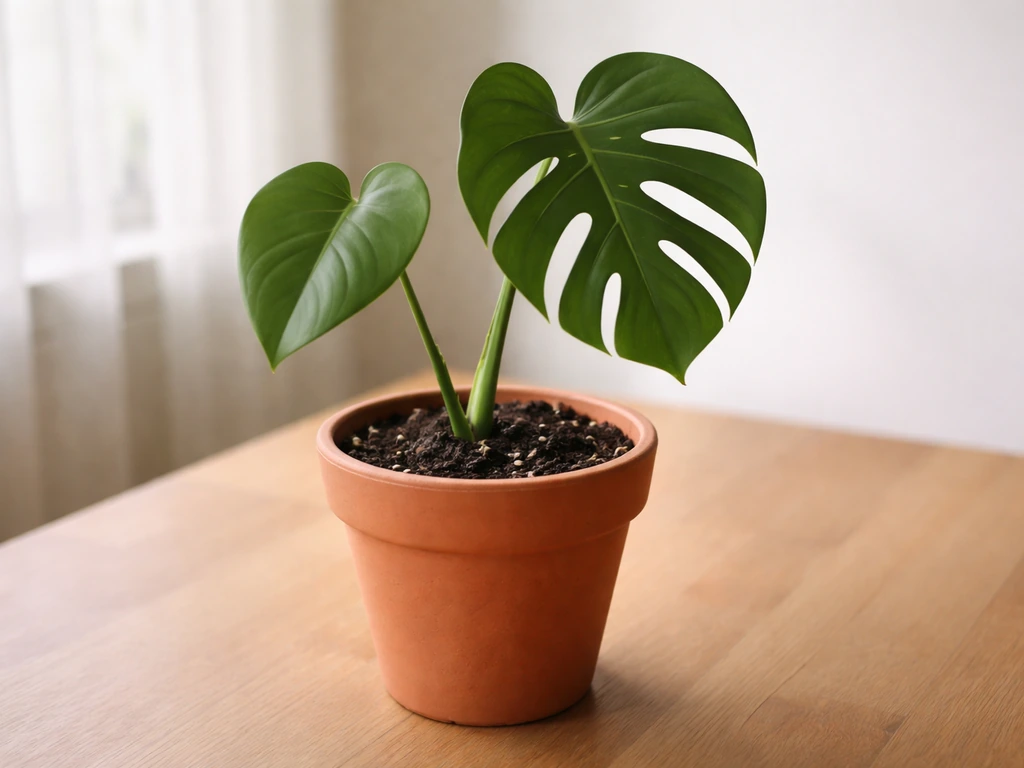
If your monstera has been putting out unfenestrated leaves due to low light, adding adequate supplemental light can absolutely help future leaves develop splits and holes. Yes, anubias can grow in high light, but you’ll want to balance intensity with good water quality and not let it get scorched by sudden changes. Don't expect overnight results. The leaves already on the plant won't change. But new growth that unfurls under better light conditions should gradually start showing more of those signature splits, especially as the plant matures and light levels are consistently adequate. Patience is non-negotiable here.
Troubleshooting when your monstera still isn't doing well
Low light causes specific problems, but it can also make other problems worse, especially overwatering. Here's the sneaky part: a monstera in low light grows much more slowly and uses water far more slowly too. If you're still watering on the same schedule you used when the plant was in a brighter spot, you're probably overwatering it. Soil that stays wet too long reduces oxygen at the root zone, damages roots, and produces symptoms (yellowing, wilting, drooping) that look almost identical to light deficiency. University of Missouri Extension and others are clear that consistently wet soil is one of the most reliable ways to kill a houseplant's root system.
So before you assume it's just a light problem, check the soil. If it's still damp more than a week after your last watering, you're watering too frequently for your current light conditions. Let it dry out more between waterings and re-evaluate.
Here's a quick reference for the most common symptoms and their likely causes in a low-light monstera:
| Symptom | Most Likely Cause | What to Do |
|---|---|---|
| Leggy, stretched stems | Not enough light | Move closer to window or add grow light |
| Small new leaves, no splits | Insufficient light intensity | Increase light level; check PPFD with app |
| Yellowing older leaves | Overwatering or low light (or both) | Check soil moisture; reduce watering frequency; improve light |
| Drooping despite moist soil | Root rot from overwatering | Inspect roots; repot if rotted; reduce watering going forward |
| No new growth for months | Light too low or plant is too cold | Check light levels and room temperature; avoid cold drafts |
| Pale or washed-out leaf color | Too much direct sun or a nutrient issue | Check if light source is too intense or too close |
One more thing to watch: cold drafts and temperature drops can look a lot like light stress. If your monstera is near an air conditioning vent, a drafty window frame, or an exterior wall that gets cold in winter, that stress will compound any light issue. Monsteras prefer temperatures consistently above 60°F (15°C). Keep that in mind when you're choosing a placement.
Your next steps right now
Here's the short version of what to actually do today if you've been searching this question because your monstera isn't thriving:
- Go look at where your monstera is sitting and identify the nearest window. Is it within 2 to 3 feet? If not, move it closer today.
- Do the shadow test. Hold your hand over a white paper in the plant's spot at midday. If you can't see a shadow, you have a light problem that placement alone may not fix.
- Check the soil before watering again. If it's still damp, wait. Low-light plants need far less water.
- Download a light meter app (Photone works well with the paper diffuser trick) and take a reading at canopy level during the brightest part of the day. Aim for at least 100 FC or 100 PPFD as a floor.
- If light levels are genuinely inadequate and can't be improved by placement, pick up a simple full-spectrum LED grow light and set a timer for 12 to 14 hours per day.
- Give it 6 to 8 weeks before judging results. New leaf production takes time, especially if the plant is recovering from a period of stress.
Monstera is more adaptable than a lot of plants, and it's worth noting that other shade-tolerant species like Sansevieria or Syngonium can genuinely handle low light with less intervention. Yes, Sansevieria can grow in low light, and in many cases it is an even more forgiving choice than monstera can sansevieria grow in low light. If you're wondering whether can syngonium grow in low light, it's generally one of the better low-light choices among common houseplants.
Monstera sits in the middle: it won't die quickly in dim conditions, but it also won't give you the lush, fenestrated growth you're probably hoping for without at least moderate, consistent light. If you want a comparison plant you can still try in weaker conditions, the question of can swiss cheese plant grow in low light is often worth considering alongside monstera placement. The steps above give you the best realistic shot at getting there, even in a less-than-ideal space.
FAQ
How can I tell whether my monstera is merely surviving in low light or actually getting enough to thrive?
If your monstera is producing new leaves that are smaller and unfenestrated, it is a sign you are in true low-light conditions. The quickest way to confirm is to check the stem, are the new leaves showing long gaps along the vine (leggy growth)? Then adjust light first, and only after that reassess watering frequency, since low-light growth also means lower water use.
If I move my monstera from low light to brighter light, will the existing leaves develop splits and holes?
Yes, but expect slower, less impressive growth. Leaves that already formed will not suddenly change, fenestration comes from how the plant grows during leaf formation. Give consistent brighter light for several weeks to a couple of months, then evaluate the next unfurling leaves rather than the current ones.
My plant is near a window, but I still think it is low light. How far is too far?
For most people the fastest practical indicator is orientation plus distance to the window. Use the shadow test during the brightest part of the day, and also observe plant stretch. If your plant is more than a few feet from a window, or there is no visible shadow, plan on supplementing with a grow light rather than relying on repositioning alone.
What watering mistake usually happens when a monstera is kept in low light?
Overwatering is the most common mistake when people fixate on light. In low light, monstera uses less water, so soil that stays damp for over a week after watering is a red flag. Switch to watering based on dryness (for example, water only after the top portion of the mix is dry) and make sure the pot drains freely.
Should I rotate my monstera in low light, and does it affect fenestration?
If the plant reaches for light, you may be increasing light exposure but at the wrong angle. Rotate the pot about once a week so the same side does not always face away, and consider that variegated monstera forms usually need more light than green ones to maintain their pattern.
How do I avoid shocking my monstera when increasing light or adding a grow light?
Start gentle and increase gradually, especially if you are moving from a dark corner to a bright window or turning on a strong grow light. Watch for bleaching, leaf scorching, or curling toward the light that suggests the fixture is too close. A safer approach is to raise brightness or shorten distance over several days to a week.
If I buy a grow light, what scheduling mistake most often prevents good growth?
Yes, a grow light can work in low-light rooms, but inconsistent schedules can stall growth. Use a timer and aim for a reliable daily photoperiod (often 12 to 16 hours depending on whether it is supplemental or the only light), and keep the light at the correct distance so the plant actually receives enough usable light at the canopy.
My monstera looks worse after moving it. Could temperature or drafts be the real cause?
If your monstera stops producing leaves after you changed light, the issue may be slow adjustment plus seasonal effects. Temperature and drafts matter too, monsteras prefer steady warmth, and cold air movement near vents or windows can mimic light stress. Check that temperatures stay consistently above about 60°F (15°C) before concluding the light change failed.
If my room is truly low light, should I switch to a different plant instead of forcing monstera growth?
It can, even though it is not ideal for monstera. Low-light suited alternatives like syngonium and sansevieria often tolerate dim interiors with less struggle. If your space is consistently below medium-bright conditions, choosing a more naturally shade-tolerant plant may give you better results than trying to force monstera fenestration.