A SAD light therapy box can keep a few tough, low-light plants alive, but it almost certainly won't grow them well. The light intensity is in the right ballpark for survival-level photosynthesis in very forgiving species like pothos or snake plant, but the spectrum and photon delivery aren't optimized for plants, and most SAD lamps aren't bright enough at usable distances to do much more than prevent a plant from dying slowly. If you're hoping to grow herbs, seedlings, or anything that actually needs to thrive, you'll want a real grow light.
Can SAD Lights Grow Plants? What to Expect Indoors
Marcus Hartley
23 May 2026
What SAD lights actually are (and what they're not)
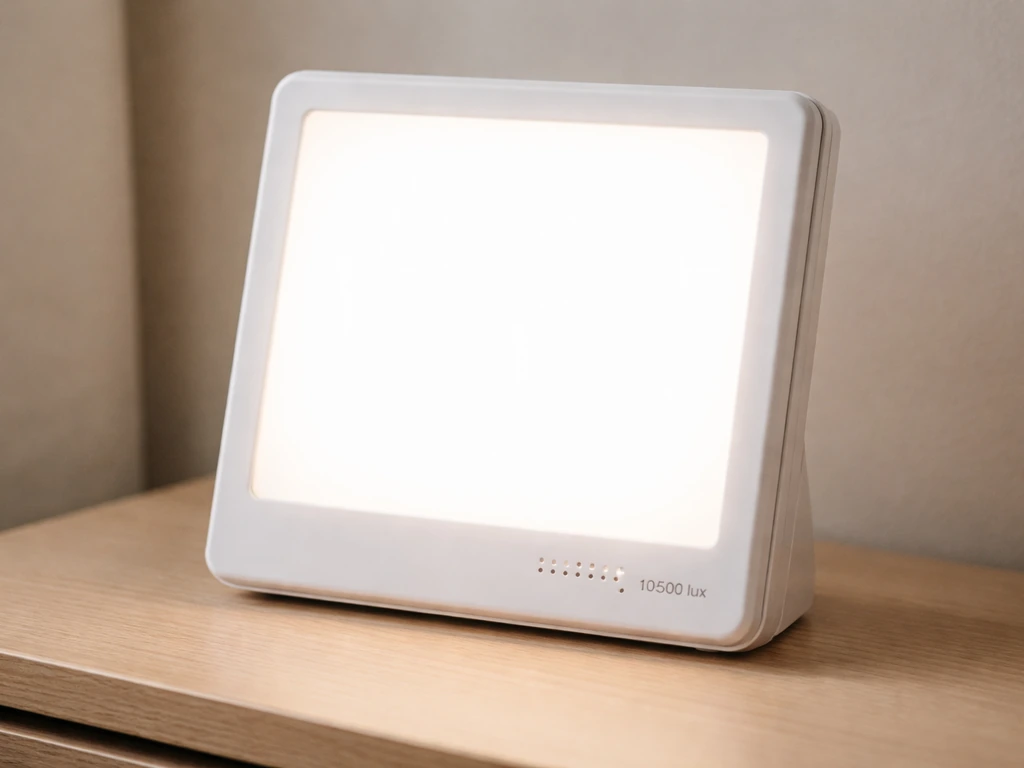
SAD stands for seasonal affective disorder, and the lights designed to treat it are called light therapy boxes. They're built for one job: delivering a high-intensity burst of bright white light to your eyes in the morning so your brain gets the signal that it's daytime. Most of them advertise 10,000 lux at a specific distance, usually around 12 to 24 inches from your face. Some use fluorescent bulbs, some use LED arrays, and a few older models use full-spectrum or "daylight" fluorescent tubes.
The term "full spectrum" gets thrown around a lot in SAD lamp marketing, and it sounds like exactly what plants need. But in the lighting world, "full spectrum" typically means the light looks white and natural to human eyes, with a high CRI (color rendering index) of 90 or above and a color temperature around 5000-6500K. That's great for your circadian rhythm. For plants, though, what matters isn't how the light looks, it's how many usable photons in the 400 to 700 nanometer range actually hit the leaves. That measurement is called PPFD (photosynthetic photon flux density), and SAD lamps almost never publish it.
How plants actually use light
Plants don't care about lux. Lux is a human-centered measurement that weights light by how sensitive our eyes are to different wavelengths. Green light, which our eyes are very sensitive to, scores high in lux even though plants reflect most of it. What plants need is PAR, which stands for photosynthetically active radiation, the photons between 400 and 700 nm that chlorophyll can actually absorb and use to drive photosynthesis.
PPFD measures how many of those photons hit a square meter of leaf surface every second, expressed in micromoles per square meter per second (µmol/m²/s). Virginia Tech Extension explains how PPFD is calculated and used to compute DLI, the integrated photon dose across the photoperiod [PPFD measures how many of those photons hit a square meter of leaf surface every second](https://www. vt. edu/content/dam/vteduextension_assets/spes/spes-720/SPES-720.
pdf). From there, you can calculate DLI, or daily light integral, which is simply the total photon dose a plant receives over a full day. DLI is the number that really predicts whether a plant will grow, stall, or stretch. Low-light houseplants can survive on a DLI of around 4 to 6, while herbs and most vegetables need 15 to 25 or more.
The practical problem with SAD lamps is that nobody publishes the PPFD or DLI output for them. You get lux, maybe a CRI number, and a rated distance. That makes it genuinely difficult to know whether the light is delivering enough plant-usable photons, which is exactly why the answer to "can SAD lights grow plants" is complicated by a lack of data rather than a clear yes or no.
What actually happens when you put a plant under a SAD lamp
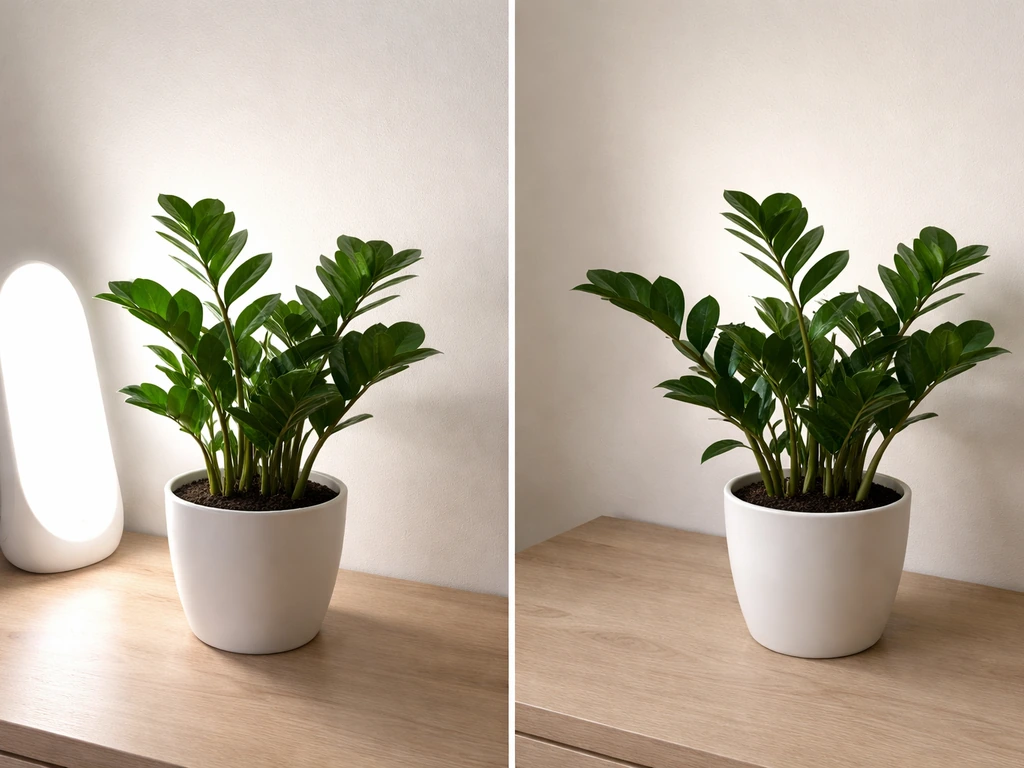
In practice, most people who try this report mixed results. Very low-light tolerant plants like ZZ plants, snake plants, and pothos tend to hold on and even put out the occasional new leaf. But they grow slowly, and you'll often see the new growth reaching and stretching toward the lamp, a sign called etiolation, where the plant is trying to find more light. Seedlings are a disaster under SAD lamps: they go leggy within days, producing long, weak stems because the light intensity drops off fast with distance and the photon dose just isn't enough to fuel compact, stocky growth.
A SAD lamp rated at 10,000 lux at 12 inches is delivering a fairly decent illuminance level at close range. The problem is that light intensity follows the inverse square law: double the distance and you get roughly a quarter of the intensity. Most SAD lamps are designed to sit on a desk at face level, so if your plant is 18 to 24 inches away, you might be down to 2,500 to 4,000 lux or less, which translates to marginal PPFD for even low-light plants. The spectrum is also weighted toward human vision rather than chlorophyll absorption peaks, so some of that lux number is effectively wasted from the plant's point of view.
How to test whether your SAD lamp is doing anything useful
You don't need a PAR meter (though they're useful if you already have one). There are a few practical ways to get a real sense of what your light is delivering.
- Check the lux at plant distance: Most smartphones can run a free lux meter app using the front camera. They're not perfectly accurate, but they'll tell you whether you're in the hundreds or thousands. Anything under 1,000 lux at the plant's canopy level is very low. 2,000 to 5,000 lux is workable for shade-tolerant species only.
- Watch for stretching: If new growth is longer and leggier than the existing stems, the plant is telling you it's not getting enough light. This usually shows up within 2 to 3 weeks of a new lighting setup.
- Check leaf color: Pale, yellowing new leaves on a plant that was previously healthy often mean insufficient light intensity, not a nutrient problem. If older leaves stay green but new leaves emerge lighter, light is likely the culprit.
- Try the hand shadow test: Hold your hand about a foot above a white piece of paper directly under the light. A sharp, defined shadow means decent intensity. A faint, fuzzy shadow means the light is weak. It's crude, but useful.
- If you have a PAR meter or know someone who does, take a PPFD reading at canopy level. Anything below 15 to 20 µmol/m²/s is essentially survival light. 50 to 150 µmol/m²/s supports real low-light growth.
Better alternatives for actually growing plants indoors
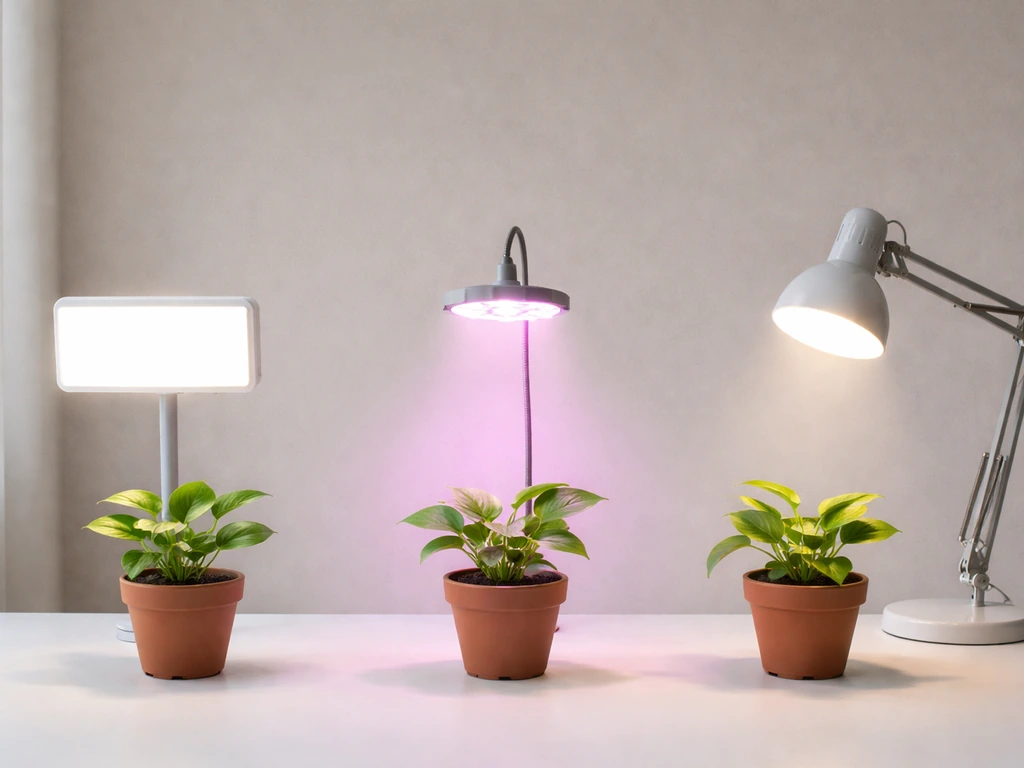
If you've tested your SAD lamp and decided it isn't cutting it (or if you just want to skip the experiment and go straight to something that works), here's what actually delivers results.
| Light Type | Typical PPFD Output | Best For | Rough Cost |
|---|---|---|---|
| SAD Light Therapy Box | Low, unknown (not published) | Keeping very tolerant plants alive at close range | Already own it |
| LED Grow Light (bar/panel) | 150–1000+ µmol/m²/s depending on model | Herbs, vegetables, seedlings, most houseplants | $25–$150+ |
| T5/T8 Fluorescent Grow Tube | 50–300 µmol/m²/s | Seedlings, low to medium-light plants, propagation | $20–$80 |
| Full-Spectrum LED Bulb (screw-in) | 20–80 µmol/m²/s at close range | Low-light tolerant houseplants, small setups | $10–$25 |
LED grow lights are the top recommendation for most indoor gardeners right now. A basic bar-style LED grow light in the $30 to $60 range will dramatically outperform any SAD lamp for plant purposes. They publish PPFD data, they run cool, they're energy efficient, and you can dial in the distance to hit the right intensity for whatever you're growing. Fluorescent grow tubes (T5 or T8) are also excellent, especially for seedlings and propagation, and are very similar in principle to the fluorescent-based SAD lamps, but with a spectrum and output actually calibrated for plant growth. These are closely related to the fluorescent lighting options worth exploring if you're building out a more serious indoor setup.
Placement, timing, and which plants to try in low-light setups
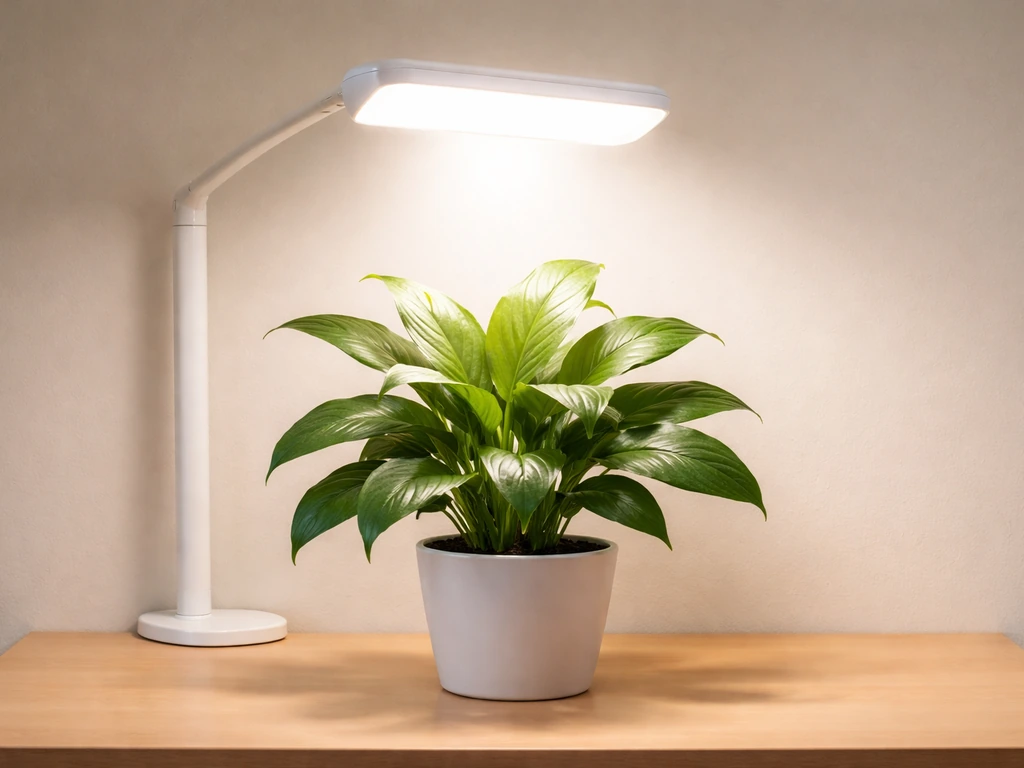
If you're working with a SAD lamp or any other non-dedicated grow light (including a bright desk lamp or overhead fluorescents), the same principles apply: get the light as close as safely possible, run it long enough to accumulate a useful DLI, and choose plants that are genuinely adapted to low light.
- Distance: Position the lamp 6 to 12 inches above the plant canopy for maximum intensity. Most SAD lamps are designed for 12 to 24 inch face distance, so moving plants closer than the rated distance is actually beneficial for plant use.
- Duration: Run the light for 12 to 16 hours a day for low-light plants. Since intensity is lower than a purpose-built grow light, extending the photoperiod helps accumulate enough total daily photons (DLI). Note that plants do need a dark period, so don't run it 24 hours.
- Best plant choices: ZZ plant, snake plant (Sansevieria), pothos, heartleaf philodendron, peace lily, Chinese evergreen, and cast iron plant. These are genuinely adapted to low light and won't punish you for imperfect setups.
- Avoid under a weak light source: seedlings, herbs like basil or mint, succulents, cacti, most flowering plants, and anything labeled 'full sun' or 'bright indirect light.'
Constant light is a separate consideration. Some people assume more light hours always means more growth, but many plants need a dark period for cellular processes and to regulate flowering cycles. Constant light can stress many plants, so it is usually better to provide a dark period as well. Running a SAD lamp around the clock isn't a good idea for most species. Most lettuces prefer a consistent light schedule like 12 to 16 hours a day, because constant 24 hour light can reduce growth quality and cause stress can lettuce grow under 24 hour light.
Step-by-step: setting up a SAD lamp for plants today
If you want to give your SAD lamp a real shot before investing in new gear, here's how to set it up in a way that gives you the best chance of success.
- Pick the right plant: Start with pothos, snake plant, or ZZ plant. These are your most forgiving options and will give you honest feedback about whether the setup is working.
- Position the lamp close: Aim for 6 to 10 inches above the plant's top leaves. Many SAD lamps run warm, so hold your hand at leaf level for 30 seconds. If it feels uncomfortably hot, add a few more inches of distance.
- Check the temperature: Use a simple thermometer at canopy level. You want air temperature at the plant to stay below 85°F (29°C). If the lamp is heating the space significantly, add a small fan to keep air circulating around the plant.
- Set a timer: Plug the lamp into a cheap outlet timer (under $10 at any hardware store) and set it for 14 hours on, 10 hours off. Morning and afternoon hours are fine; just keep it consistent.
- Observe for 3 to 4 weeks: New growth direction, leaf color, and stem length are your feedback. Compact new leaves in the same direction as existing growth means light is adequate. Stretching toward the lamp or pale new leaves means it's not enough.
- Rotate the plant weekly: SAD lamps illuminate from one angle, so rotate the pot a quarter turn each week to prevent lopsided growth.
- Decide at week 4: If growth looks healthy and compact, your setup is working for that plant. If you're seeing leggy stems or stalled growth, it's time to invest in a proper LED grow light and move the SAD lamp back to your breakfast table.
The honest answer is that most SAD lamps will keep a tough low-light plant ticking along but won't give you the kind of lush, vigorous growth you'd get from even a budget LED grow light. That's not a failure, it's just a mismatch between what the tool was designed to do and what plants need. If you're serious about growing indoors, a dedicated grow light is worth every dollar.
But if you're curious whether your SAD lamp can help a pothos survive a dark winter corner while you're already using it in the mornings, the answer is: probably yes, with the right expectations. That same question, can flowers grow with artificial light, has a similar answer: it depends on getting enough plant-usable light. However, a dedicated LED grow light is a much better option than a tube or fluorescent-style lamp for consistent plant growth.
FAQ
If my SAD lamp claims “full spectrum,” is it still unlikely to grow herbs or seedlings?
Yes, in most cases. Even when the light looks natural to people, plants need enough PAR photons in the 400 to 700 nm range, and SAD lamps usually do not publish PPFD or DLI. Without those numbers, herbs and seedlings often end up leggy because the photon dose is too low at practical plant distances.
Can I improve results by moving a SAD lamp closer to the plant?
Sometimes, but you must balance distance and safety. Illuminance drops quickly with distance, so closer can help, but many SAD lamps are meant for a face-level setup and may not be safe or effective at very close range (heat, glare, and eye exposure). Also, the lamp’s spectrum is still not optimized, so you may get survival rather than strong growth.
Will a SAD lamp work for low-light plants like pothos or snake plant if I run it longer each day?
Longer exposure can raise DLI, so it may help those plants stay greener, but it still may not reach the DLI highs needed for faster growth. Also, extending the photoperiod too much can stress some species. Try a consistent schedule first, and look for signs like etiolation (stretching) as a signal you need more intensity or a real grow light.
How can I tell whether my SAD lamp is giving enough light without a PPFD meter?
Use practical indicators. If leaves are staying compact and not reaching toward the lamp, you are probably near survival-level needs. If stems elongate, internodes lengthen, or new growth is weak, your photon dose is likely too low. For seedlings, leggy growth within days is a common giveaway that the lamp is not providing enough intensity.
Is it better to use a SAD lamp at a fixed spot, or rotate it across plants?
Fixed, consistent positioning is usually better. Rotating can reduce uneven shading if you have multiple plants in one area, but it also complicates the light schedule and may still leave each plant with too few usable photons. If you want uniform coverage, a grow light designed for plants is much more reliable than trying to “average out” output.
Can I use a SAD lamp for germination or early propagation?
Germination is often unreliable, and propagation cuttings tend to stall. Seedlings and young plants are especially sensitive to both intensity and spectrum, and SAD lamps typically lack the published PPFD you would want. If you do experiment, expect slower development and keep a close eye on stem length and leaf size.
Does lux tell me anything useful for plant growth when I only have the SAD lamp’s lux rating?
Lux alone is not enough. Lux is weighted for human vision, so two lamps with similar lux at the same distance can deliver very different PAR and PPFD to leaves. The more you rely on lux without PPFD or DLI data, the more you are guessing.
What light schedule should I use with a SAD lamp if I’m also treating myself in the morning?
For most plants, start with a standard daily photoperiod like 12 to 16 hours, rather than running it 24/7. A SAD lamp is designed for short morning use for humans, and constant light can reduce growth quality and stress many species. If you notice yellowing, slow growth, or persistent stretching, adjust duration and consider upgrading the light source.
If my plant survives under a SAD lamp, does that mean it is actually growing enough?
Not necessarily. Many low-light plants can remain alive with marginal light, but “alive” can mean slow growth, small leaves, or poor rooting. Compare new growth size and stem thickness over time. If growth is minimal or stretched, your DLI is likely below what you want for vigorous growth.
Could a SAD lamp combined with natural window light work better?
It can, because window light can supply additional PAR, and your SAD lamp can top up during darker morning hours. However, window light changes with season and weather, so growth may be inconsistent. A simple check is to track plant shape and growth rate through winter, then decide whether the SAD lamp is truly contributing or whether a dedicated grow light would be more efficient.