A plant can survive under only green light, but it will not grow well. You will see slower growth, stretched or leggy stems, and generally weaker plants compared to what you get with a full spectrum or even a simple red-and-blue LED setup. Green light is not useless, plants do absorb and use some of it, but on its own it is simply not enough to drive healthy, vigorous photosynthesis. In pure yellow light, you can expect similar issues to other incomplete spectra because plants rely heavily on red and blue for the strongest photosynthesis signals. If you are running a green-only light right now, the good news is this is fixable quickly and cheaply.
Would a Plant Grow Well in Only Green Light? DIY Test
Marcus Hartley
4 May 2026
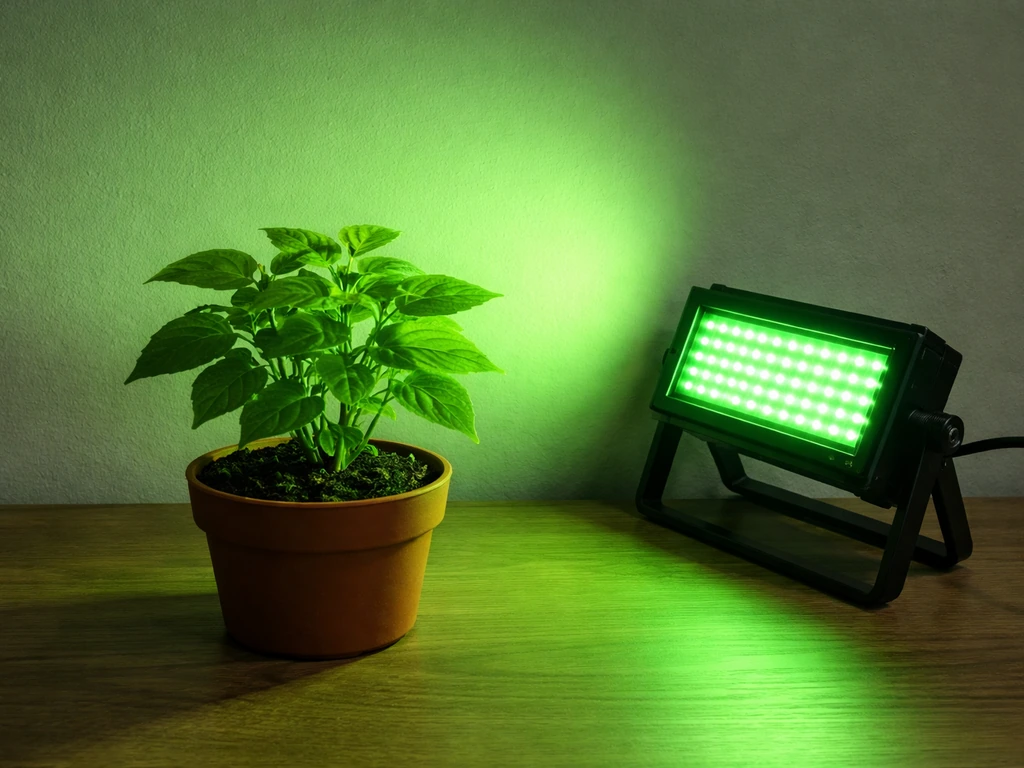
Can plants actually grow in green light?
Yes, they can grow, but the key word in your question is "well." Plants are not blind to green light. Chlorophyll does absorb some green wavelengths, and research shows green light (roughly 500 to 600 nm) can actually drive photosynthesis with a quantum yield that is comparable to, or even slightly higher than, blue light under certain conditions. So the old textbook idea that plants simply reflect all green light and can't use it at all is a misconception.
That said, green light on its own is a very incomplete diet for a plant. If your goal is to grow higher or faster, using green light alone will usually not give you the results you want compared with a fuller spectrum green light on its own.
That is also why plants commonly get taller when they have less light overall, since stretching is part of their attempt to reach better light green light on its own is a very incomplete diet for a plant. Studies on lettuce, Arabidopsis, and other species consistently show that red and blue wavelengths are the heavy lifters for photosynthesis, growth, and normal plant development.
Green-only lighting misses the peaks of the action spectrum where your plant's photoreceptors and chlorophyll work most effectively, and the results show up pretty fast in how the plant looks and performs.
Why green light is less effective (the biology in plain language)
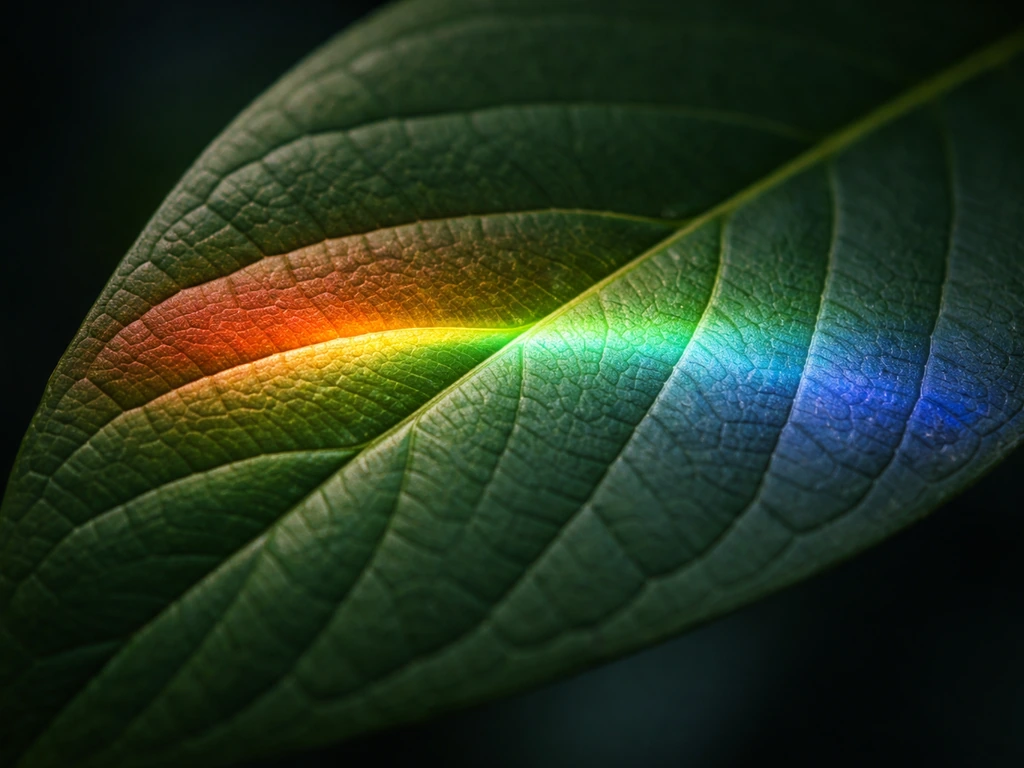
Chlorophyll a and b, your plant's main light-harvesting pigments, have their strongest absorption peaks in the red (around 660 to 680 nm) and blue (around 430 to 450 nm) ranges. Green sits right in the middle of the visible spectrum and is much less efficiently absorbed by chlorophyll, which is actually why leaves look green to us: they are reflecting a lot of that wavelength rather than capturing it.
What is especially interesting is what green light does to plant growth signals. [Research on Arabidopsis found that pure green light actively promotes stem elongation during the first two to three days of exposure](https://pmc. ncbi. nlm.
nih. gov/articles/PMC10118266/), and this happens through brassinosteroid signaling, not through the usual photoreceptors like phytochromes or cryptochromes that regulate normal photomorphogenesis. In plain terms, green light can trigger a shade-avoidance response: the plant senses something is off and starts stretching to find better light. The Plant Cell also reports that green light can promote hypocotyl elongation through brassinosteroid signaling in Arabidopsis, showing a green-specific early growth effect linked to BR pathways [green light can trigger a shade-avoidance response](https://academic.
oup. com/plcell/article/35/5/1304/7022159). That is the opposite of the compact, healthy growth you want.
Green light also affects the plastid transcriptome during early development, meaning it changes which genes are active in chloroplasts at a fundamental level. This is part of why plants grown under green-dominant light end up looking and functioning differently, not just growing slower, but developing differently from the ground up.
What "grow well" actually means in practice
When I talk about growing well, I mean four things: healthy growth rate, normal plant shape and structure, the ability to flower or fruit if that is the goal, and no visible stress signs. Under green-only light, you will likely struggle with all four.
- Growth rate: Slower biomass accumulation compared to plants under red/blue or full-spectrum light. A meta-analysis of green light research confirmed that green light's effect on overall biomass is minimal compared to red and blue.
- Morphology: Expect elongated, stretched stems (etiolation-like behavior) because the plant is reaching for better light. Leaf size may increase as the plant compensates, but shoot-to-root ratio shifts unfavorably.
- Flowering and fruiting: Most flowering plants need the right spectral cues, especially red wavelengths, to trigger and sustain blooming. Green-only light is likely to delay or prevent flowering entirely.
- Stress signs: Reduced stomatal conductance, which affects how efficiently the plant regulates water and gas exchange, has been documented under altered light spectra. You may see pale or yellowish leaves, weak new growth, and general low energy in the plant.
Which plants handle green-heavy light better (and which really don't)
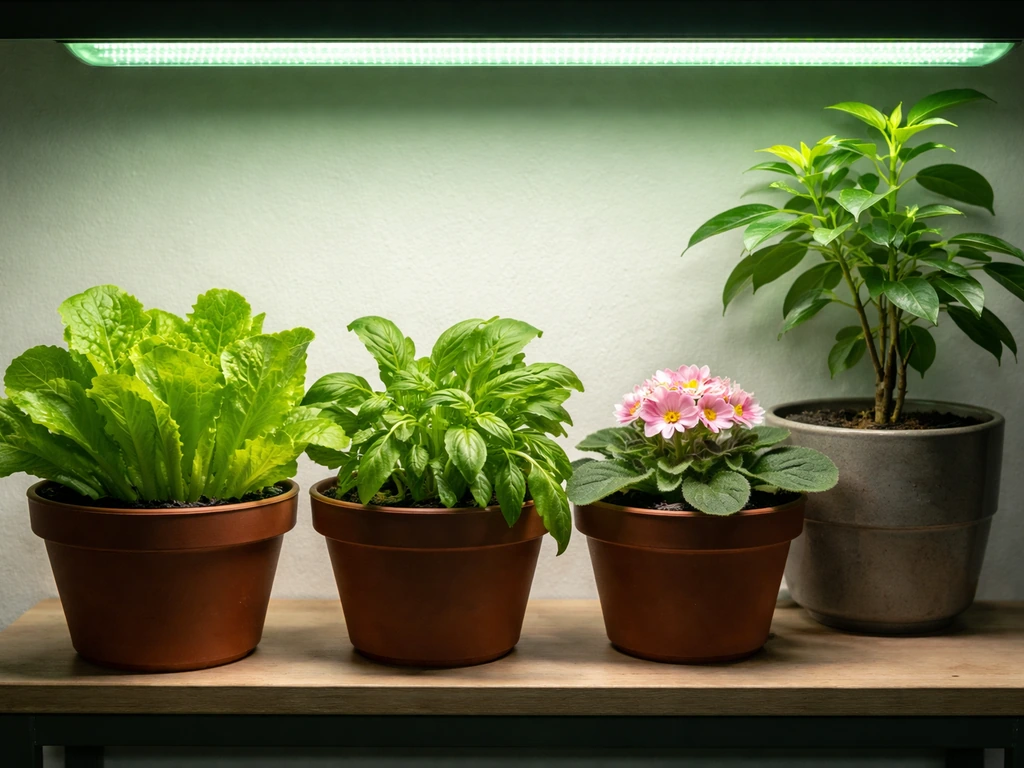
Not all plants react the same way to a poor light spectrum. Some are more forgiving than others, though none will truly thrive long-term under green-only light. Think of it on a spectrum from "will hang on for a while" to "declines quickly."
| Plant Type | Tolerance for Green-Heavy Light | What to Expect |
|---|---|---|
| Low-light houseplants (pothos, philodendron, ZZ plant) | Relatively better | Slow but possible survival; stretching and pale growth over weeks to months |
| Shade-tolerant ferns and peace lilies | Moderate | Can persist but will not put out vigorous new growth; leaves may lose luster |
| Herbs (basil, mint, cilantro) | Poor | Visible decline within weeks: legginess, weak stems, reduced flavor compounds |
| Lettuce and leafy greens | Poor without red/blue supplement | Reduced dry weight and leaf area; bolting risk increases without proper spectrum |
| Succulents and cacti | Poor | Already demand high light intensity; green-only will cause rapid stretching and loss of compact form |
| Fruiting plants (tomatoes, peppers) | Very poor | Flowering failure likely; fruit set requires proper spectrum and intensity |
The general rule is: the more light-hungry a plant is, the faster it will show stress under green-only lighting. Low-light tolerant houseplants like pothos or philodendrons are your best bet if you are stuck with a green-heavy situation temporarily, but even they will not thrive indefinitely. This is worth keeping in mind when you are also thinking about what color light do plants grow best in more broadly, since the answer involves the full spectrum picture, not just one wavelength. In general, plants grow best under a full spectrum that includes strong red and blue wavelengths what color light do plants grow best in more broadly.
How to test your setup today
If you are already running a green-dominant or green-only light and want to know how your plants are doing, you do not need fancy equipment to assess the damage. Here is a simple observation timeline you can start right now.
- Week 1: Check stem internodes. Are new stems noticeably longer between leaves than before you switched to the current light? Rapid elongation in the first week is a red flag and matches what research shows about green light promoting hypocotyl elongation within the first two to three days.
- Week 2 to 3: Look at leaf color. Pale green or yellowing new leaves suggest the plant is not photosynthesizing efficiently. Healthy new growth should be a rich, saturated green.
- Week 4 to 6: Measure overall size. Compare new growth to a photo you took at the start. If growth is minimal or the plant looks leggy relative to its pot, the spectrum is the likely culprit.
- Week 6 to 8: Check for flowering plants. If a plant that should be blooming is not setting buds, or an herb like basil is bolting without producing dense foliage, your spectrum and intensity need adjustment.
- Ongoing: Watch the soil. Reduced stomatal conductance under poor lighting can affect transpiration, which means you may be watering on a schedule that no longer matches the plant's actual uptake. Adjust watering if the soil is staying wet longer than usual.
One thing I always tell people: take a photo on day one and pin it somewhere you will see it. It is genuinely hard to notice slow decline in a plant you are looking at every day. A side-by-side comparison at week four tells you more than weeks of daily observation.
How to fix your lighting setup
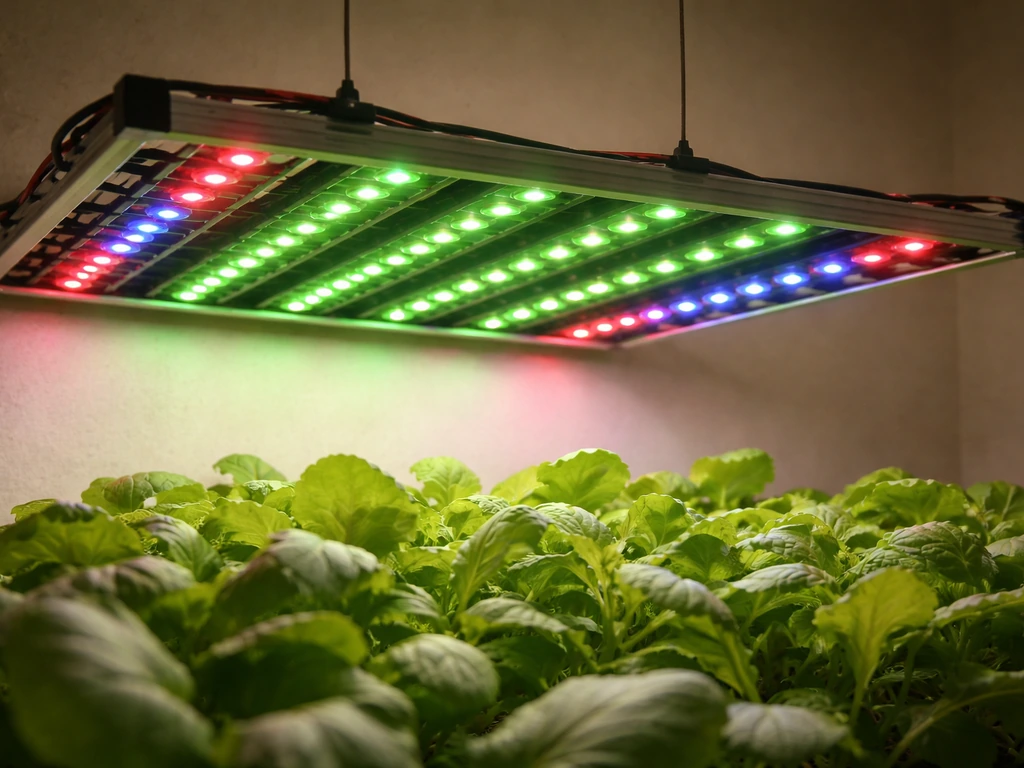
The straightforward fix is to get red and blue wavelengths back into the picture. You do not need to throw out your current setup entirely, you just need to supplement or replace. Here is how to approach it.
Add red and blue wavelengths
NASA research on lettuce found that adding green light to a red-and-blue LED system improved growth, but the key was that red and blue were already the foundation. Many scientists have shown that plants grow better with red and blue light rather than green-only lighting, which is why light quality matters red-and-blue LED. Green worked as a supplement, not a substitute.
Some people also ask whether the plants grow best in the white light hypothesis, which is why comparing a true white spectrum to narrow LEDs can be useful plants grow best in white light hypothesis. Aim for a light source that provides a broad spectrum with peaks in the 430 to 450 nm (blue) and 640 to 680 nm (red) ranges.
A full-spectrum LED grow bulb or strip that covers 400 to 700 nm is the most practical fix for most indoor gardeners.
Get the intensity right
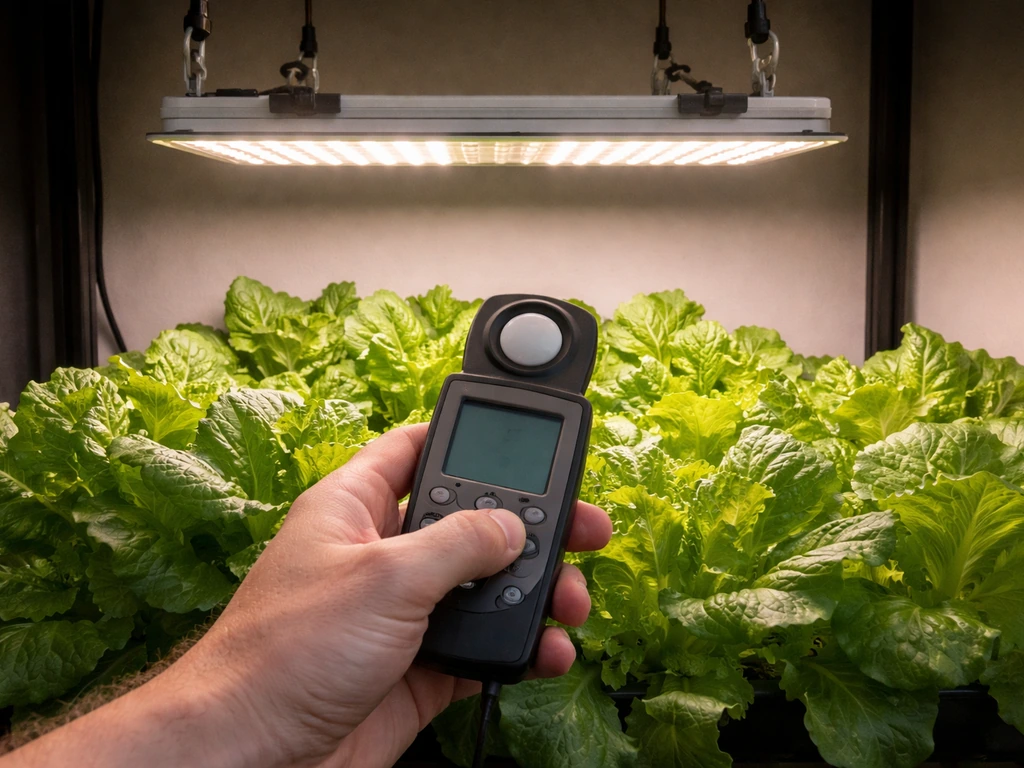
Spectrum is only half the story. You also need enough photons reaching the plant. PPFD (photosynthetic photon flux density) measured in micromoles per square meter per second is the most useful unit here, far more meaningful than watts or lumens. As a practical benchmark: seedlings and clones need under 100 PPFD, vegetative houseplants and herbs need 100 to 500 PPFD, and flowering or fruiting plants need 400 to 1,200 PPFD. A basic PPFD meter or even a smartphone app using the camera sensor can give you a rough reading to start.
Dial in your mounting distance
PPFD drops significantly as you move the light further from the plant canopy. Mounting a fixture at 8 inches above your plants can roughly double the effective PPFD compared to 20 inches, which can halve the hours of light needed to meet your daily light integral (DLI) goal. For most vegetative houseplants and herbs, starting at 12 to 18 inches above the canopy with a quality LED panel is a reasonable starting point, then adjust based on what you observe in the plant.
Set the right photoperiod
Most foliage houseplants do well with 12 to 16 hours of light per day under artificial lighting. Herbs and leafy greens generally want 14 to 16 hours. Flowering plants may need specific day-length triggers depending on whether they are short-day or long-day species. A simple outlet timer costs a few dollars and removes all the guesswork. Consistency matters more than perfection here.
Also keep in mind that the symptoms from a poor-spectrum setup can reverse once you correct it. Research on lettuce found that stomatal conductance changes from spectral treatments were reversible when the spectrum was corrected. So if your plant looks rough right now, switching to a proper spectrum promptly gives it a real chance to bounce back.
Practical grow light picks for indoor gardeners
You do not need to spend hundreds of dollars to get a workable spectrum for most indoor plants. Here is how I would approach it depending on your situation.
| Setup Type | Best For | What to Look For | Mounting Tips |
|---|---|---|---|
| Full-spectrum LED bulb (screw-in, A19 or PAR style) | Single plants, small spaces, low-light apartments | 5000K to 6500K color temperature, CRI 90+, labeled as "full spectrum" or "grow" | 6 to 18 inches above canopy depending on wattage; use a clamp socket or desk lamp |
| LED grow strip or bar light | Shelving setups, propagation trays, herbs under cabinets | Red/blue or full-spectrum diodes, 400 to 700 nm coverage | Mount 6 to 12 inches above plants on shelves; daisy-chain for wider coverage |
| Panel LED grow light (50W to 200W) | Multiple plants, 2x2 ft to 4x4 ft grow areas, flowering plants | Check PPFD charts at your intended mounting height, not just wattage | Follow manufacturer PPFD maps; typically 18 to 24 inches above canopy for vegetative growth |
| T5 fluorescent or LED tube | Seed starting, clones, leafy greens | 6500K for veg, 3000K for flowering; or a mixed color-temp setup | 2 to 4 inches above seedlings, raise gradually as plants grow |
When evaluating any grow light, skip the wattage marketing and look for actual PPFD data at the mounting heights you plan to use. Reputable manufacturers publish PPFD footprint charts for their fixtures at different heights. If a light's spec sheet does not include this, that is a signal to look elsewhere. Even coverage across your grow area matters as much as peak intensity at the center.
For most people in low-light apartments growing herbs, pothos, or starting seeds, a $15 to $30 full-spectrum LED bulb in a clamp fixture is genuinely enough to see a dramatic improvement over a green-only or no-supplemental-light setup. Start there, observe your plants over two to four weeks, and scale up only if your specific plants need more intensity. You can always add a second fixture later. The important thing right now is getting the right wavelengths to your plants, and that does not have to be complicated or expensive.
FAQ
If my plant is surviving under green-only light, will it still be unhealthy long-term?
Yes, but only for short periods. A green-only light can trigger stretching early, and if you keep it as the main light, plants usually become leggy and weaker even if they survive. Use green-only as a temporary stopgap, then correct the spectrum (add red and blue) as soon as you can.
Can I make green light work by using a brighter green bulb or more watts?
Usually not. Many people try a single green bulb and expect the color itself to be enough, but the issue is missing strong red and blue wavelengths. If you want to keep the green light, treat it as a supplement and ensure the fixture also provides strong peaks around 430 to 450 nm (blue) and 640 to 680 nm (red).
Will plants do better under “green” LED grow lights than under a true green-only flashlight?
Sometimes, but it depends on what you mean by “green light.” If your light is truly narrowband green (roughly 500 to 600 nm only), growth will lag. If “green” actually comes from a broader white or full-spectrum lamp that includes green plus strong red and blue, plants can still do well. Check the spectrum or the fixture’s PPFD data rather than the color label.
What are the earliest signs that green-only light is harming my plant?
Green light can make plants stretch, so you may see more spacing between leaves and longer stems even if the plant isn’t dying. The quickest way to tell is to compare leaf thickness and internode length against your day-one photo, not just whether the leaves stay green.
How can I tell if my green-only setup has enough light without buying expensive gear?
Use your own measurements if possible, but don’t rely on phone “lux” readings. Lux is weighted for human vision and can mislead for plant growth. The better target is PPFD at the plant canopy (micromoles per square meter per second), then adjust distance and time to hit a DLI that matches the plant type.
If I increase intensity, will green-only light overcome the spectrum problem?
No, the effects are not purely from “not enough light.” Even at the same brightness, a narrow green spectrum typically drives weaker growth than red and blue. If you increase intensity with green-only, you may reduce starvation symptoms, but you usually still get abnormal shape and slower development.
Would plants flower or fruit under only green light?
Usually, flowering and fruiting are harder to achieve. Many plants require specific light cycles and adequate red to support normal transitions and energy demands. If you are trying to get buds or fruit, prioritize a full spectrum with strong red and blue, then use a timer to keep the correct day length.
Do all plants respond the same way to green-only lighting?
Some houseplants tolerate poor spectra better, so they may look “fine” for a while. In general, faster-growing or higher-light-demand species will show problems sooner. A practical rule is that the more you care about compact growth, harvest quality, or faster results, the less tolerance you should assume.
If my plant already looks leggy, will it recover after I add red and blue light?
Yes. Many growth issues improve after the spectrum is corrected, including changes tied to gas exchange and early development responses. However, any already-formed damage like permanently elongated internodes may not fully revert, so focus on getting healthy new growth starting immediately.
What should I look for on a grow light label if I want to stop green-only problems?
A common mistake is confusing “full spectrum” with “green-dominant.” Some “greenish white” LEDs still have weak red and blue peaks. Look for a true 400 to 700 nm coverage (or at least documented blue and red output) and, ideally, PPFD footprint charts at the mounting height you plan to use.