
Yes, snake plants can genuinely grow in low light indoors, and they're one of the few houseplants where that claim isn't just marketing. They won't thrive the way they would in a bright room, but they'll hold their own, stay upright, and keep their leaves looking sharp in spaces where most plants would slowly give up. The catch is that "low light" has limits, and knowing where those limits are makes all the difference between a plant that survives and one that quietly declines over months.
Can Snake Plants Grow in Low Light? Indoor Guide
Marcus Hartley
24 Apr 2026
What snake plants actually need from light
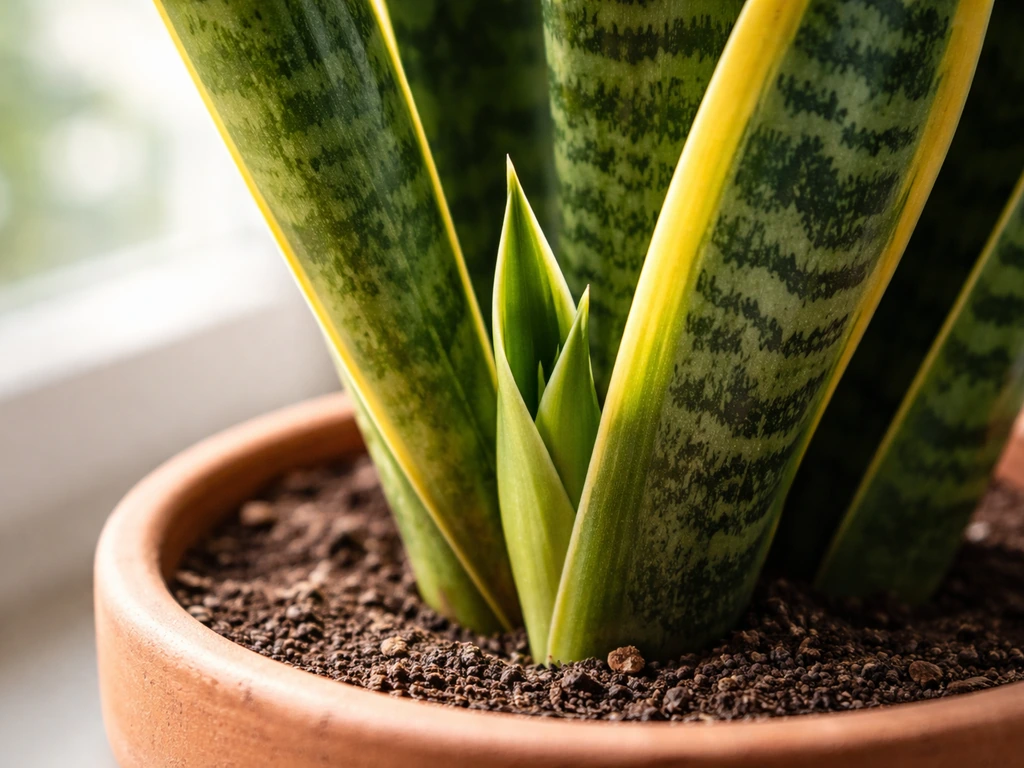
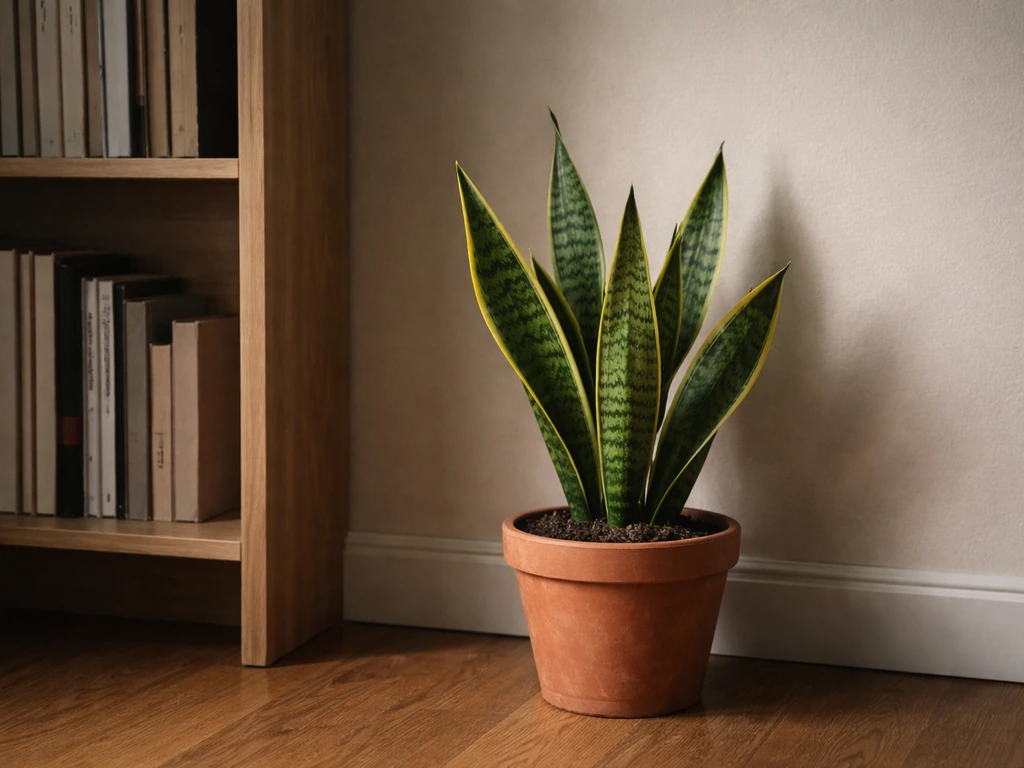
Snake plants (Dracaena trifasciata, formerly Sansevieria) are naturally adapted to the understory of dry forests and rocky landscapes where light is filtered and inconsistent. That background means their chlorophyll is reasonably efficient at capturing whatever light is available, but they still need some light to run photosynthesis. The University of Missouri Extension defines "low light" for houseplants as roughly 50 to 250 foot-candles. Penn State Extension has documented snake plants managing at readings as low as 25 foot-candles in study settings, which is genuinely dim. So they can survive at the very bottom of that range, but survival and healthy growth are different things. For growth you actually want to see, aim for the upper end of that band, around 150 to 250 foot-candles.
Snake plants are also slow growers to begin with. In low light, they simply slow down more. That's not failure, it's the plant being conservative with its energy. As long as you match your care to that slower pace (especially watering), they do fine. The risk isn't usually death from low light alone; it's the combination of low light plus overwatering that causes real damage.
Low-light window spots that actually work
Not all "low light" corners are created equal. A room with a north-facing window is genuinely dim, delivering around 50 to 100 foot-candles on a typical day. An east-facing window gets gentle morning sun and can hit 200 to 500 foot-candles in the morning hours before dropping off. Even a south or west-facing room where the snake plant sits 8 to 12 feet back from the window can land in that 100 to 250 foot-candle zone, which is workable.
You don't need fancy equipment to get a rough read on your space. A free light meter app on your phone (most use the camera sensor) gives you a ballpark lux reading you can convert to foot-candles by dividing by about 10. So if your phone reads 1,500 lux, you're at roughly 150 foot-candles, which is solidly in the low-to-moderate zone for a snake plant. Penn State Extension recommends this kind of simple measurement approach before deciding where to place a plant or whether you need to supplement with artificial light. A dedicated light meter is more accurate and costs around $15 to $30 if you want to take the guesswork out entirely.
- North-facing window: 50 to 100 foot-candles, workable for survival but expect very slow growth
- East-facing window (direct morning light): 200 to 500 foot-candles in the morning, great for snake plants
- 8 to 12 feet back from a south or west window: 100 to 250 foot-candles, solid low-to-moderate light
- Interior hallways or rooms with no windows: below 50 foot-candles, not enough without artificial light
The direction your windows face matters more than most people realize. If you're not sure whether your spot is genuinely too dim, just check whether you can comfortably read a book there without turning on a lamp at midday. If the answer is no, your snake plant probably needs help.
Using artificial light: LED grow lights vs household bulbs
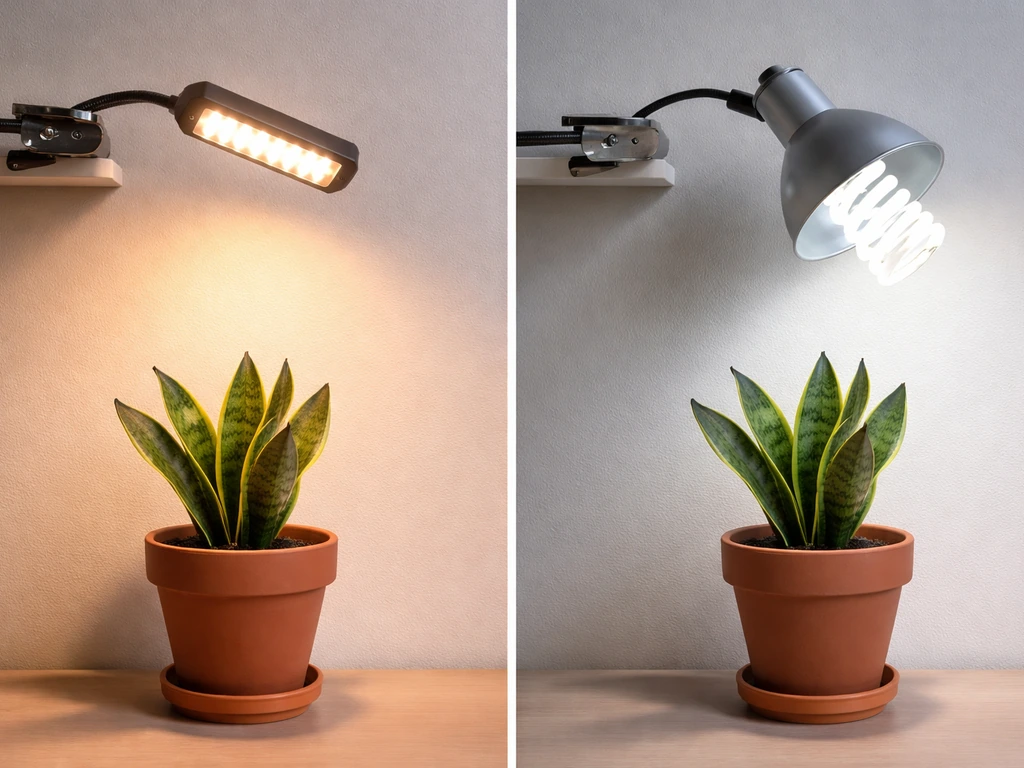
If your space is genuinely too dark, artificial light is a reliable fix and you don't need to spend a lot to make it work. The three main options are LED grow lights, fluorescent/CFL bulbs, and HID lights. For most home setups, LEDs and fluorescents are the practical choices.
| Light Type | Efficiency | Heat Output | Spectrum Quality | Best For Snake Plants |
|---|---|---|---|---|
| Full-spectrum LED grow light | Excellent | Very low | Optimized for plant growth (red + blue peaks) | Best overall choice, especially for long-term use |
| Fluorescent / CFL bulb | Good | Low to moderate | Decent broad spectrum, less red wavelengths | Budget-friendly, works well for low-light plants |
| Standard incandescent bulb | Poor | High | Weak in blue/red range plants need most | Not recommended, wastes energy and heat |
| HID (metal halide / HPS) | Very high | High | Excellent but overkill | Not practical for a single snake plant at home |
For a snake plant in a dim spot, a full-spectrum LED grow light is the most practical and cost-effective choice long-term. LED lights run cool, use far less electricity than equivalent fluorescent setups, and their spectrums are designed to hit the wavelengths (especially red around 660nm and blue around 450nm) that plants use most for photosynthesis. Fluorescent and CFL bulbs are a perfectly fine budget option, especially compact grow-specific CFLs. They've been used for decades to grow low-light houseplants successfully. Standard incandescent bulbs won't cut it because the spectrum skews heavily toward heat-producing infrared rather than the blue and red wavelengths plants need.
In terms of target intensity for a snake plant under artificial light, aim for a PPFD (photosynthetic photon flux density, basically the photon delivery rate to the leaf surface) of around 100 to 200 micromoles per square meter per second. University of Maine Extension explains that supplemental lighting guidance uses PPFD measured with a PAR meter and provides an example range for succulents of 100 to 200 blank" rel="noopener noreferrer">aim for a PPFD of around 100 to 200 micromoles per square meter per second. blank" rel="noopener noreferrer">University of Maine Extension puts succulents and similarly adapted plants in that range under artificial lighting. Snake plants sit comfortably in the lower half of that window.
Setting up your light schedule and finding the right distance
Distance between your light and your plant is the single biggest factor most people get wrong. Too far away and the intensity drops off dramatically (light follows an inverse square relationship with distance, so doubling the distance cuts intensity to about a quarter). For a compact LED grow light, a hanging height of 12 to 24 inches above the plant is a practical starting point that covers roughly 1 to 2 square feet of canopy, which is right-sized for a single snake plant. For fluorescent shop lights or tube fixtures, 6 to 12 inches is a better target since they put out less intensity per unit area.
For the photoperiod (how long to run the light), think in terms of daily light totals. The concept here is DLI, or daily light integral, which is basically the sum of light energy the plant receives over the course of a day. For a low-light snake plant, you don't need aggressive schedules. Running a grow light for 12 to 14 hours per day at a moderate intensity delivers a reasonable DLI for a slow-growing plant like this. A simple timer outlet (around $8 to $15) makes this effortless.
- Place your LED grow light 12 to 24 inches above the plant (or 6 to 12 inches for fluorescent tubes)
- Set a timer to run the light for 12 to 14 hours per day
- Keep the off period consistent, plants use darkness as a cue for their internal rhythms
- After two to three weeks, check the plant: no new growth and pale leaves means move the light closer or add more hours
- If leaf tips are crisping or the plant looks washed out, the light may be too close or too intense, move it up a few inches
One thing worth knowing: snake plants don't need intense light to stay healthy under artificial lighting. Unlike a fruiting vegetable that needs maximum photons, your snake plant just needs a consistent, moderate dose. Consistency beats intensity for this species.
How to tell if your snake plant isn't getting enough light
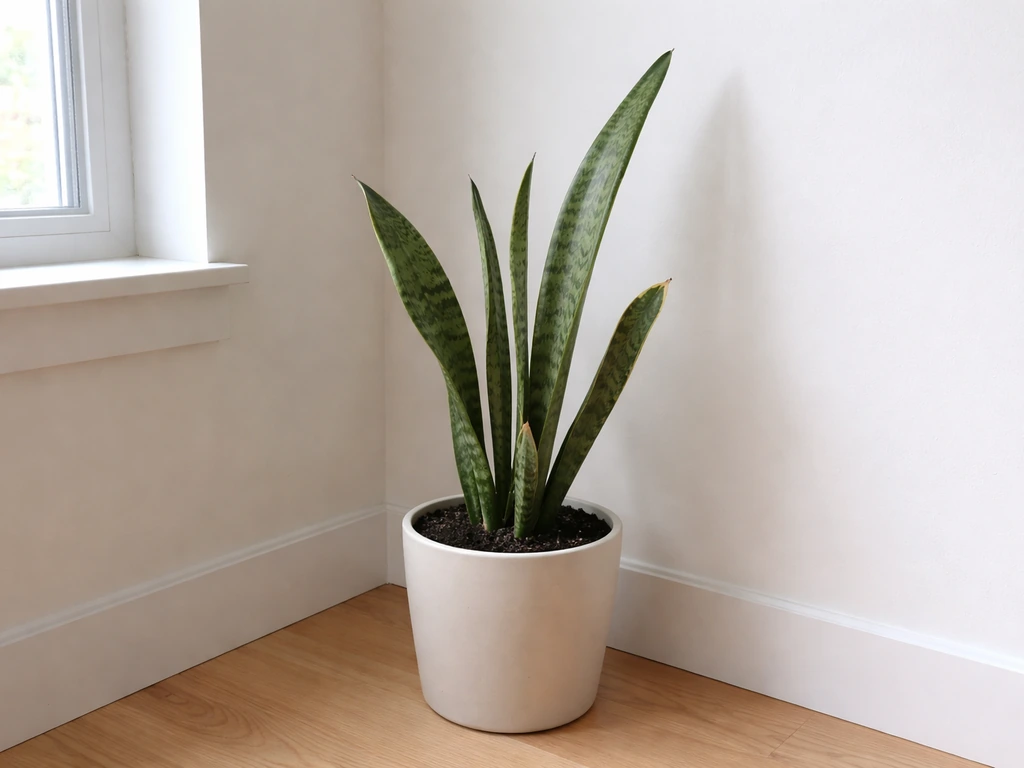
Snake plants are slow to show stress, which is both a blessing and a trap. They won't dramatically wilt overnight the way a fern would. Instead, the signs of insufficient light are subtle and build over weeks or months. Knowing what to look for lets you course-correct before the plant actually suffers.
- Slow or zero new growth over an entire growing season (spring through summer): a healthy snake plant should put out at least one or two new leaves
- Leaves becoming thinner, softer, or more elongated than usual, a form of etiolation where the plant stretches toward available light
- The plant leaning noticeably toward a light source, or curving leaves seeking the brightest direction in the room
- Colors looking dull, pale, or washed out, especially on variegated varieties where the yellow margins may fade
- Leaves feeling softer than the firm, stiff texture a healthy snake plant should have
If you're seeing any of these signs, the fix is usually simple: move the plant closer to a window, add a grow light, or increase the hours your existing light runs. Gardening Know How notes that lighting problems are among the most common snake plant mistakes, and the solution almost always involves adjusting light before anything else. Don't immediately change your watering routine or repot the plant; fix the light situation first, then reassess after four to six weeks.
One thing that's easier to miss: very low light combined with cool temperatures (like a north-facing windowsill in winter) can make a snake plant look almost completely dormant. This isn't necessarily a problem if the leaves are firm and the roots are healthy, but it's a signal to either move the plant or supplement with light during the darker months.
Adjusting your care routine for low-light conditions
Here's where a lot of snake plant deaths happen: people keep watering at the same frequency regardless of light levels, and in low light, the soil just doesn't dry out fast enough. Snake plants store water in their thick leaves and rhizomes, and their roots absolutely need the soil to dry out completely between waterings. In low light, photosynthesis slows, water uptake slows, and evaporation from the soil slows. A watering schedule that worked in a bright window can cause root rot within a few weeks in a dark corner.
Gardening Know How recommends watering snake plants as infrequently as once every month or two in winter when growth slows. In a genuinely low-light setup year-round, that kind of conservative schedule is appropriate regardless of season. The rule of thumb is simple: stick your finger two inches into the soil. If there's any moisture at all, wait. When it's completely dry all the way down, water thoroughly and let it drain completely. Never let the pot sit in standing water.
- Use a fast-draining potting mix: a standard houseplant mix cut 50/50 with perlite or coarse sand works well
- Choose a pot with drainage holes, terracotta is ideal in low-light setups because it wicks moisture from the soil faster than plastic or glazed ceramic
- Water deeply but infrequently: every 3 to 6 weeks in low light is realistic for most indoor conditions
- Skip the fertilizer from fall through winter, or any time the plant isn't actively growing, feeding a slow or dormant plant in low light just builds up salts in the soil without benefit
- If you've added a grow light, you can bump watering frequency slightly but still always check the soil first before watering
Root rot from overwatering in low-light conditions is the number one way snake plants die, and it's almost entirely preventable. The good news is that if you're in a dark apartment or an office with no windows, a grow light on a timer paired with very conservative watering and a well-draining mix is a completely reliable setup. I've kept snake plants alive and growing in a windowless room this way for over a year, and they were putting out new leaves by month three.
Snake plants vs other low-light options
If you're shopping around for the right plant for a dim space, snake plants are genuinely one of the top choices alongside pothos, ZZ plants, and spider plants. If you are also considering spider plants, you may wonder can spider plants grow in low light and what adjustments they need. ZZ plants are arguably even more tolerant of very low light and extreme drought, making them slightly easier in the darkest spots. If you’re comparing options, ZZ plants are often even more reliable for low light than snake plants. Pothos tend to adapt faster and show you more quickly whether conditions are working. Philodendrons are in a similar category to pothos. Philodendrons can also manage in low light, but the key is giving them enough brightness to keep growth steady. Snake plants sit in the middle: extremely tough, slow to stress, and able to handle dim light, but they reward you more if you give them at least moderate light. If your space is truly a windowless interior room, ZZ plants or pothos with a grow light might be slightly more forgiving starting points.
But if you already have a snake plant you love and you're trying to make it work in a low-light space, the answer is: yes, you can do this. If you’re curious about aloe too, the same light-limit idea applies to see whether it can grow in low light can aloe grow in low light. If you're also wondering about other plants, can pothos grow in low light is a common question with a surprisingly manageable answer. Measure your light if you can, position it in the best available natural light spot, add a modest LED grow light if the natural light is truly inadequate, water far less often than you think you need to, and use fast-draining soil. That combination handles almost every low-light snake plant challenge you're likely to run into.
FAQ
Can a snake plant survive in a windowless room if I use a grow light? What’s the best setup?
Yes, but only if the pot can dry out completely. Use a well-draining cactus or succulent mix, confirm the pot has a drainage hole, and when water drains, empty the saucer. In very low light, terracotta can help the mix dry faster, but the main priority is letting the soil fully dry down before the next watering.
What are the early signs my snake plant isn’t getting enough low light?
If you see leaves stretching, leaning, or becoming noticeably wider and less rigid than before, that usually points to light being too weak or too far away from the plant. Correct by moving the plant closer to the light or increasing the daily hours slightly, then wait 4 to 6 weeks before judging results.
If I add a grow light, should I water more often right away?
You generally should not increase watering when you add artificial light unless you also see that the soil is drying faster. In low-light setups, the soil drying rate changes slowly, so keep the same “dry all the way down” check (finger test) and only adjust frequency after you confirm the soil dries sooner.
Does moving a snake plant to brighter light automatically prevent root rot?
Not always. If the plant is already in a heavy or moisture-retaining mix, moving it to a brighter spot can still leave it at risk for root rot until the soil dries well between waterings. Before changing light, check that the potting mix is fast-draining and that the pot drains freely.
What should I look for when buying a grow light for low-light snake plants?
Choose a grow light with both blue and red output (full-spectrum is fine as a category), and consider a reflector if your light is small so more light reaches the leaves. Also keep the light on a timer so the photoperiod stays consistent, since this plant performs better with steady daily light totals than with random “on and off” schedules.
How close should the grow light be, and how do I avoid the distance mistake?
A common mistake is chasing higher brightness by placing the lamp too far away. For most compact LED units, start around 12 to 24 inches from the plant as a baseline, then adjust based on the plant’s look. If you can, measure PPFD or lux at leaf height rather than at the light fixture.
Should I rotate my snake plant in low light to keep it growing evenly?
Rotating the plant can help prevent uneven growth, but don’t rotate constantly. A half turn every 3 to 6 weeks is enough, and it works best after you’ve stabilized the lighting setup so you can judge changes due to light, not movement.
Does winter dormancy change how often I should water a snake plant in low light?
It depends on soil and watering more than the plant’s “seasonal dormancy.” In low light, growth slows regardless of season, so the real rule is soil dryness at depth. In practice, keep watering as infrequent as once every month or two during dim, cool periods, but only after the soil is completely dry down in the pot.