
Yes, pothos can grow in low light. You can also ask the same question about aloe—aloe has its own lighting needs and won’t thrive in true low light the way pothos does. That's the honest, direct answer. But 'can survive' and 'will thrive' are two different things, and knowing the difference will save you a lot of confusion when your pothos starts throwing out tiny pale leaves or vines that look like they're trying to escape toward the nearest window. Pothos is genuinely one of the most light-tolerant houseplants you can own, but it still has a minimum threshold below which it just stalls out. Here's exactly what to expect and what to do about it.
Can Pothos Grow in Low Light? How to Tell and Fix It
Marcus Hartley
18 Apr 2026
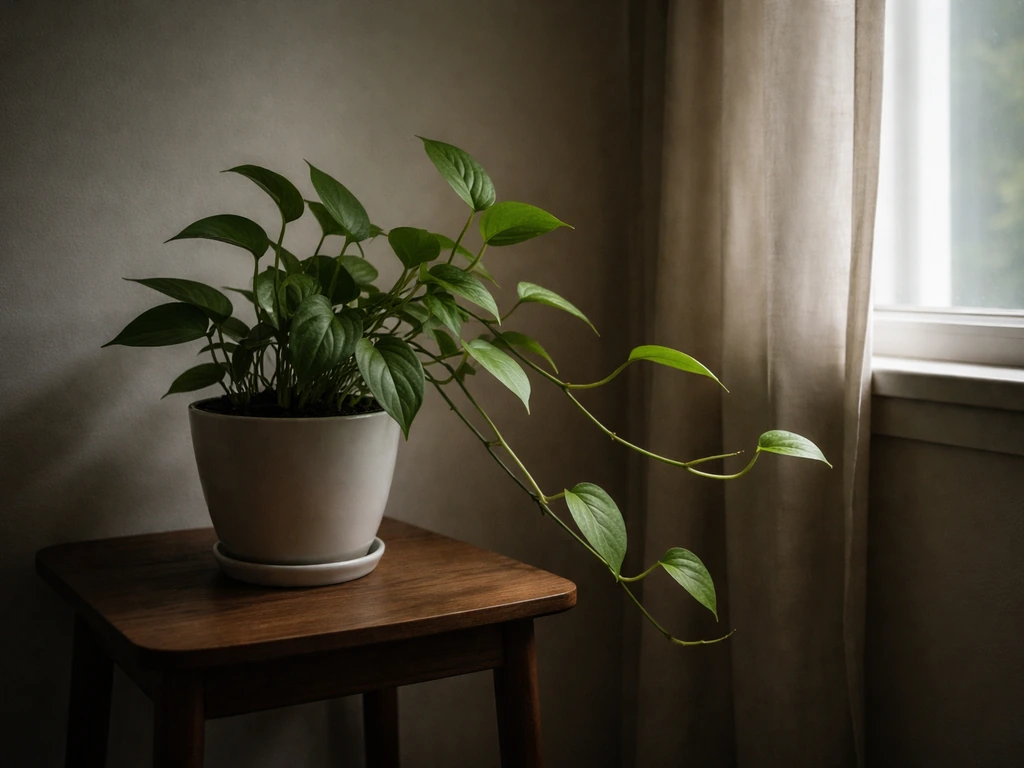
What 'low light' actually means for pothos (and how to check it at home)
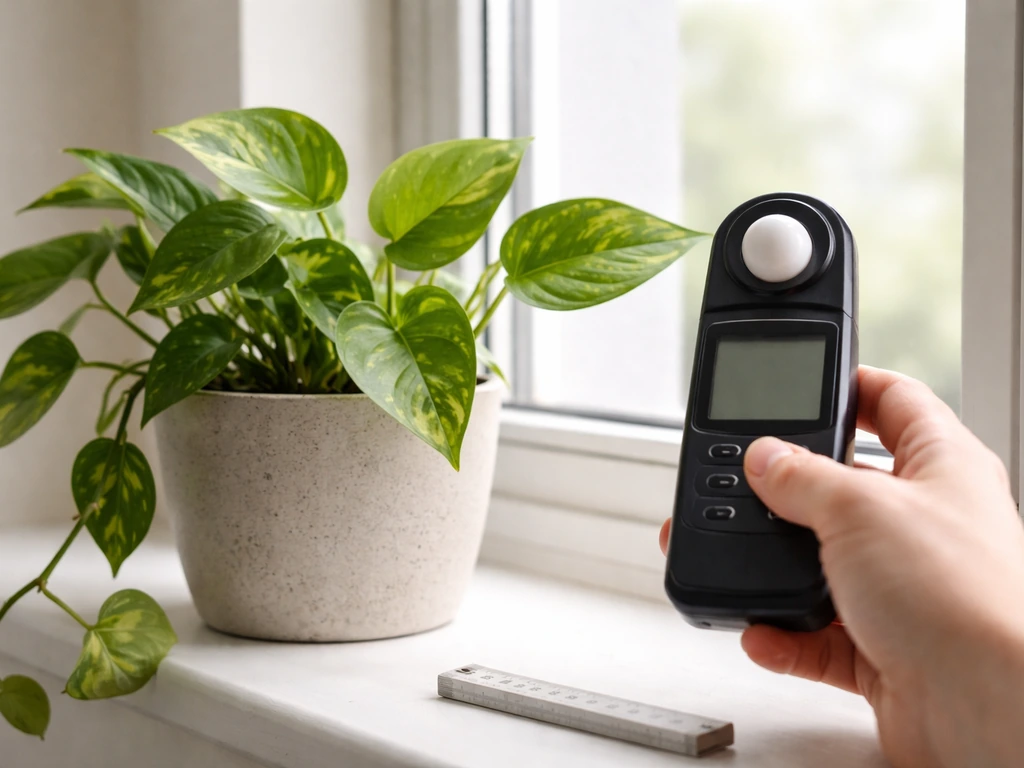
The term 'low light' gets thrown around loosely, and it means something specific when we're talking about plant growth. For pothos, the functional low-light range sits around 50 to 200 µmol/m²/s PPFD (photosynthetic photon flux density), which is the measurement of light that's actually usable for photosynthesis. If foot-candles are more familiar to you, that's roughly 250 to 1,000 foot-candles. In lux, you're looking at about 2,700 to 10,000 lux. Anything below 50 PPFD (under about 250 foot-candles or 2,700 lux) is essentially darkness from a plant's perspective, and pothos placed there will slowly decline rather than grow.
You don't need a PAR meter to get a rough sense of your light levels at home. A free or cheap lux meter app on your phone (most smartphone cameras can estimate this reasonably well) will give you a ballpark reading. Take the reading at mid-morning on a clear day, hold the phone face-up at the height where the plant will sit, and check the number. Above 2,700 lux? Pothos will manage. Above 5,000 lux with no direct sun hitting the leaves? That's the sweet spot for steady growth. Below 1,000 lux? You're looking at a plant that may technically stay alive but won't do much, and you should plan on supplementing with a grow light.
Another dead-simple test: if you hold your hand about a foot above a white piece of paper in the spot where you want to put your pothos, a sharp, clear shadow means bright light. A soft, blurry shadow means medium to low light. No visible shadow at all means very low light, and that's where things get dicey even for a tough plant like pothos.
Do pothos, golden pothos, and neon pothos grow in low light? What changes to expect
All three varieties will survive in low light, but each one responds a little differently. Understanding that up front helps you set realistic expectations rather than wondering why your plant looks 'off' when it's actually behaving completely normally for its conditions.
Standard pothos (Epipremnum aureum)
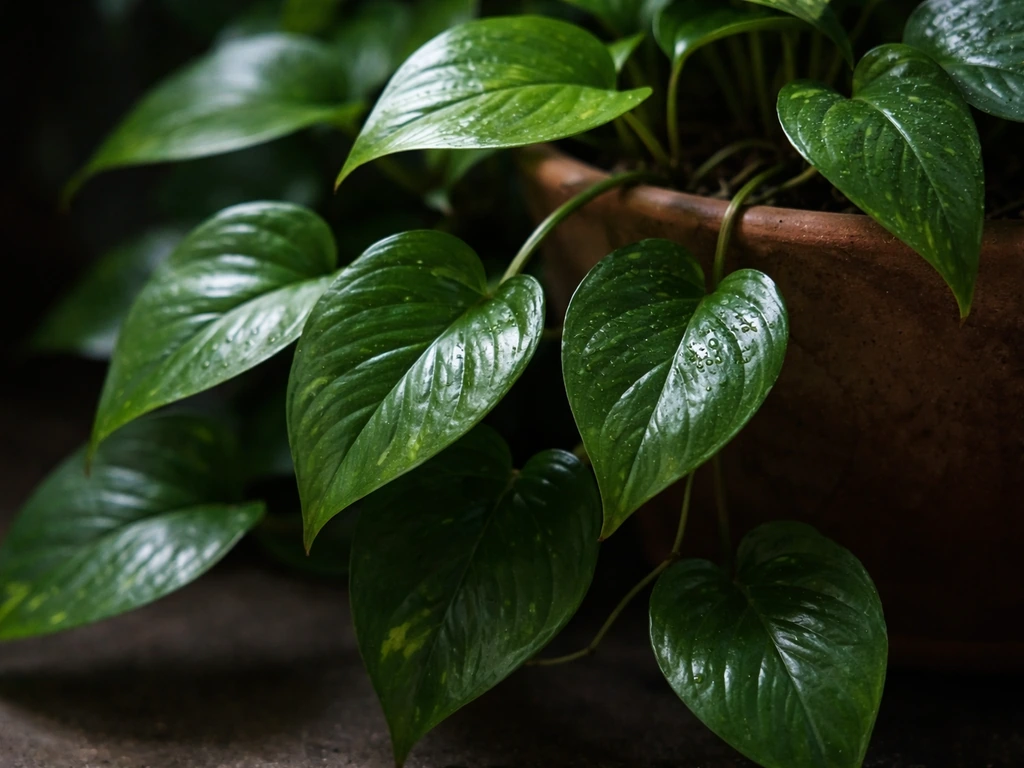
The plain green or mostly green pothos is the most tolerant of genuinely low-light conditions. It has more chlorophyll per leaf than its variegated cousins, which means it can squeeze more energy out of less light. In low light it will grow more slowly, produce smaller leaves, and put out longer internodes (the stem sections between leaves), making the vine look sparse and leggy. But it holds together reasonably well and stays green.
Golden pothos
Golden pothos has that signature yellow and green variegation, and here's where the biology gets interesting: the yellow or cream patches on the leaves contain very little chlorophyll. That means golden pothos has less photosynthetic capacity per leaf to begin with. In low light, the plant compensates by reducing or even eliminating variegation, producing leaves that are much greener than usual. A Wisconsin Master Gardener horticulture handout also notes that golden pothos can reduce or eliminate variegation in low light, producing much greener leaves reduce or even eliminating variegation. This is the plant's survival strategy, not a disease. University of Illinois Extension specifically notes that leaf color tends to disappear in low-light conditions. If you love the golden pattern and you're putting this plant in a dim corner, expect it to go mostly green and stay that way.
Neon pothos
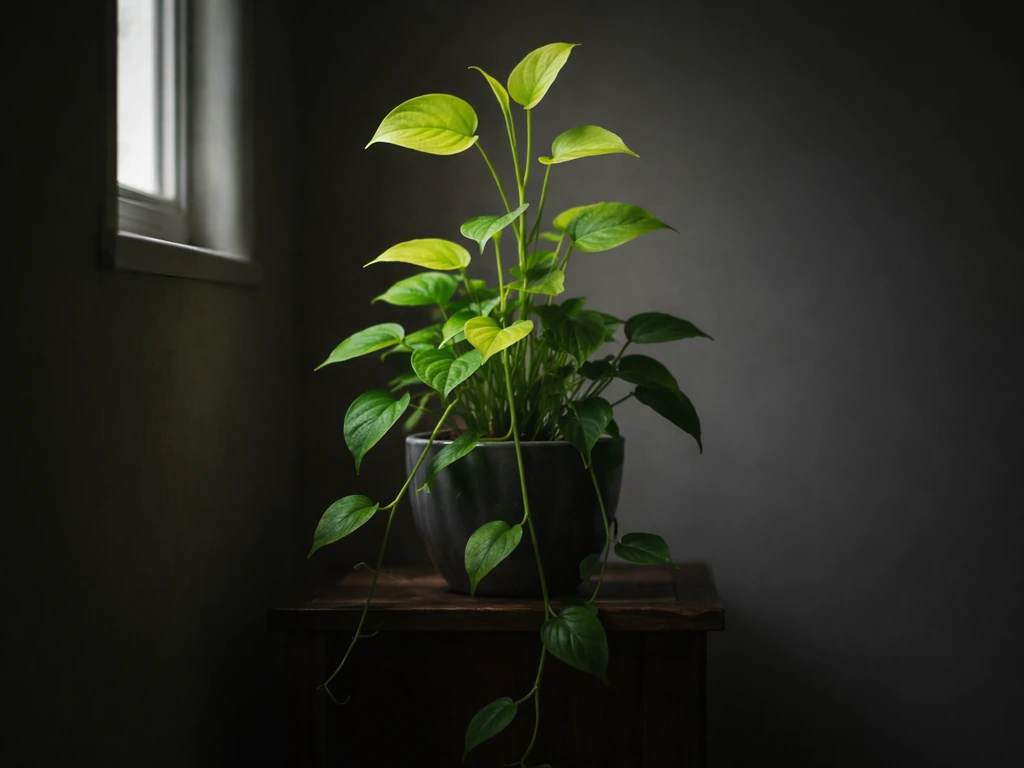
Neon pothos, with its bright chartreuse-yellow leaves, is perhaps the most eye-catching of the three, but that vivid color requires decent light to maintain. In low light, neon pothos leaves will fade toward a dull, pale yellow-green rather than that electric lime color. Growth slows significantly, and the plant tends to look washed out. It's still more tolerant than, say, a calathea or a fiddle-leaf fig, but if you want the neon effect, this variety really does better with brighter indirect light or a decent grow light.
| Variety | Low-Light Tolerance | Color Change in Low Light | Growth Rate in Low Light |
|---|---|---|---|
| Standard pothos (green) | Best of the three | Stays green, may deepen slightly | Slow, leggy vines |
| Golden pothos | Good | Loses yellow variegation, goes greener | Slow, smaller leaves |
| Neon pothos | Moderate | Fades from lime to pale yellow-green | Slowest, most affected |
If you're stocking a genuinely dark corner and want the best odds of success, choose plain green or a mostly-green pothos variety. If you're set on golden or neon, plan for a grow light or a closer window position.
Signs of too little light vs. other problems
This is where a lot of plant parents get tripped up, because some low-light symptoms look a lot like overwatering symptoms, and vice versa. Here's how to tell them apart.
Classic signs of insufficient light
- Etiolation: vines grow long and spindly with large gaps between leaves. The plant is literally stretching toward light. Internodes (stem sections) become noticeably longer than on a well-lit plant.
- Smaller leaves: new leaves come in noticeably smaller than the mature leaves already on the plant.
- Fading color: variegated or neon varieties lose their distinctive color and go plain green or pale.
- Very slow or stalled growth: the plant puts out one new leaf every few months rather than steadily throughout the growing season.
- Leaf drop from the middle or base of vines, not just the oldest leaves at the tips.
Signs that look similar but have different causes
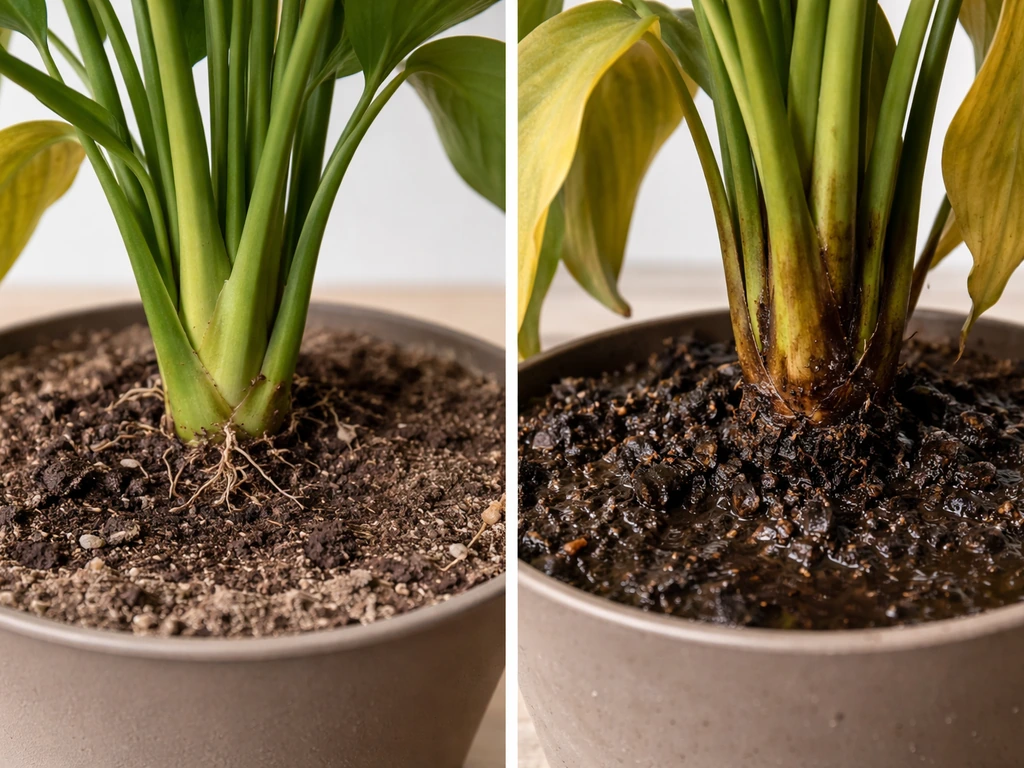
- Yellowing with mushy stems at the base: this is overwatering and root rot, not a light problem. Low-light plants need less water, and many owners water on a schedule rather than checking soil moisture, which causes rot.
- Yellowing of older leaves only, with no stem mushiness: this is usually normal leaf aging, or occasionally a nitrogen deficiency if the plant hasn't been fertilized in a long time.
- Crispy brown leaf edges or tips: this points to low humidity, fluoride sensitivity from tap water, or inconsistent watering, not low light.
- Sudden widespread wilting or yellowing across the whole plant at once: check for root rot, pests (especially fungus gnats or mealybugs), or severe underwatering before blaming the light.
The most common mistake I see (and have made myself) is overwatering a low-light pothos and then blaming the dim spot when the plant declines. In low light, pothos uses water much more slowly because it's doing less photosynthesis. If you're watering on the same schedule you'd use for a bright-light plant, you'll keep the roots soggy and invite rot. Always check the soil before you water, and in low light you can often go 10 to 14 days between waterings.
Best placement in your space: windows, corners, and distance guidance
Where you put your pothos matters more than most people realize, and the difference between 3 feet from a window and 8 feet from a window is dramatic in terms of actual light levels reaching the plant. Light follows an inverse square relationship, meaning it drops off fast as you move away from the source.
- Within 3 to 5 feet of a north-facing window: this is genuinely low light, but usable for pothos. Expect slow growth and some leggy vines, but the plant will stay alive and reasonably healthy if watering is dialed in.
- Within 3 to 6 feet of an east- or west-facing window: this is closer to medium light, and is actually the sweet spot for pothos. You'll get better color, faster growth, and more compact vines. East-facing windows give gentle morning sun that pothos handles well.
- More than 8 feet from any window: light levels here often drop below the 50 PPFD threshold that pothos needs. The plant may survive for months but will eventually weaken and become prone to problems. A grow light is the practical fix here.
- Near a south-facing window with sheer curtains: this gives bright indirect light, which is actually better than 'low light' conditions. Your pothos will grow actively and maintain color. Without the curtain, direct midday sun can scorch the leaves.
Rotate your pothos a quarter turn every week or two if it's near a directional light source. Vines always reach toward light, so rotating keeps growth even rather than letting the plant stretch dramatically to one side. It also ensures all parts of the plant get exposure rather than the back staying dark and dropping leaves.
How to supplement low light with artificial lighting
If your space genuinely can't offer enough natural light, artificial lighting works well for pothos. The good news is that pothos doesn't need high-intensity grow lights like fruiting plants do. You're just trying to get into that 50 to 200 PPFD range consistently for around 12 to 14 hours a day, which is achievable with relatively affordable setups.
LED grow lights
LED grow lights are the best all-around choice for supplementing low-light pothos. Full-spectrum LEDs with a balanced red-to-blue ratio support both leaf development and overall plant health. For pothos, a small panel or bar-style LED (even a 10 to 20 watt unit) placed 12 to 18 inches above the plant will get you well into the growth-supporting light range. LEDs run cool, use less electricity than other options, and last a long time. They're my first recommendation if you're buying something specifically for a low-light corner.
Fluorescent bulbs
Standard T5 or T8 fluorescent shop lights work well for pothos and are a budget-friendly option if you already have fixtures around. A 4-foot T5 fixture hung 6 to 12 inches above the plant provides decent light intensity in the right spectrum range. Fluorescents run cooler than older HID lighting but warmer than LEDs, and they're less energy-efficient over time. If you already have a fluorescent setup or find one secondhand, it absolutely does the job for a low-light foliage plant like pothos.
Regular light bulbs and lamps
Standard incandescent bulbs are mostly useless for plant growth because they put out very little of the blue and red spectrum that drives photosynthesis. However, 'daylight' or 'full spectrum' LED bulbs in the 5000K to 6500K color temperature range, placed close to the plant (6 to 12 inches) and run for 12 to 14 hours daily, can provide enough supplemental light to keep a pothos alive and modestly growing. This isn't an ideal setup, but if you just want to add a desk lamp with a good bulb near a pothos on a shelf, it genuinely helps versus no supplement at all. Use a timer so you don't have to remember to turn it on and off.
| Light Type | Effectiveness for Pothos | Placement Distance | Estimated Cost | Best For |
|---|---|---|---|---|
| Full-spectrum LED grow light | Excellent | 12–18 inches above plant | $20–$60 for small panel | Dedicated low-light corners, shelf setups |
| T5/T8 fluorescent | Good | 6–12 inches above plant | $15–$40 for fixture | Budget setups, existing fixtures |
| Daylight LED bulb (5000–6500K) | Adequate | 6–12 inches from plant | $5–$15 per bulb | Casual supplement, desk lamps |
| Standard incandescent bulb | Poor | Not recommended | Low | Not suitable for plant growth |
Whatever light source you use, a basic outlet timer is worth the few dollars it costs. Set it to run 12 to 14 hours per day, keeping a consistent photoperiod. Plants respond well to predictable light schedules, and you won't have to remember to turn anything on. I run mine from 7 a.m. to 8 p.m. and haven't had to think about it since.
Care adjustments for low-light pothos
Growing pothos in lower light than ideal requires a few specific care tweaks. The plant is doing less photosynthesis, so it needs less of most things, not more.
Watering
In low light, pothos uses water much more slowly. Because low light slows growth, pothos can be more prone to root problems if you water on a schedule instead of checking soil moisture, since the soil stays wet longer. Overwatering is the number one killer of low-light pothos, usually because owners keep watering on a fixed schedule. Instead, water only when the top inch or two of soil is dry. In a truly dim spot, this might mean watering every 10 to 14 days in winter, or every 7 to 10 days in summer. Stick your finger in the soil or use a moisture meter. If it's still damp, wait.
Fertilizing
Low-light pothos grows slowly, so it doesn't need much fertilizer. Feeding a slow-growing plant heavily just causes salt buildup in the soil without the plant being able to use the nutrients efficiently. During the active growing season (spring through summer), a diluted balanced liquid fertilizer once a month is plenty. In fall and winter, or if the plant is in very low light year-round and barely growing, skip fertilizing entirely. When in doubt, fertilize less rather than more.
Pruning and propagation
Low-light pothos tends to get leggy, with long bare vines that have few leaves. Pruning those vines back to a node (the small bump or brown root nub on the stem) encourages the plant to push new growth from that point and keeps it looking bushier. The cuttings you remove are easy to propagate: put them in a glass of water, keep them somewhere with decent light (not the same dim corner), and you'll see roots in 2 to 3 weeks. You can then pot them up into soil and use them as fill-ins around the base of the mother plant to make it look fuller. It's a simple, free way to improve a leggy low-light plant.
Quick troubleshooting by scenario
Scenario 1: Low-light corner, no grow light
- Is the plant within 5 feet of a window? If yes, it can likely manage with adjusted care (less water, less fertilizer, more patience).
- More than 8 feet from any window? The plant will weaken over time. Add a daylight LED bulb on a timer as a minimum, or move the plant closer to a window.
- Getting leggy vines with tiny leaves? Normal for low light, but prune back the bare vines and the plant will push denser new growth.
- Yellow mushy stems? Stop watering immediately, check the roots. If roots are brown and mushy, you likely have root rot from overwatering in a low-light setting. Trim rotten roots and repot in fresh dry soil.
- No growth at all for 3 or more months? The light is too low. Move the plant or add artificial light.
Scenario 2: Grow-light-only setup (no window)
- Are you running the light 12 to 14 hours a day? If not, start there. Pothos needs a consistent photoperiod to photosynthesize effectively.
- Is the light source within 12 to 18 inches of the plant's leaves? Move it closer if needed. Light intensity drops quickly with distance.
- Leaves still fading or growth stalling even with a grow light? Check the light's spectrum. A warm-white-only bulb won't cut it. You need a full-spectrum LED or a daylight-spectrum bulb (5000K+).
- Plant looks healthy but vines are reaching away from the light? Reposition the light directly above the plant, or hang it overhead rather than to the side.
- Root rot happening even under grow lights? Reduce watering frequency. Plants under grow lights without any natural sun cycle can sometimes trick owners into thinking the plant is growing fast and needs more water.
Pothos is one of the genuinely forgiving houseplants out there, and it handles low light better than most. If you're also considering other low-light options, plants like snake plants, ZZ plants, spider plants, and philodendrons are in a similar tolerance range and worth knowing about if you're furnishing a dim apartment. Snake plants can also grow in low light, though growth may slow down compared with brighter conditions. Spider plants can also handle low light, but they grow much more slowly if the light stays very dim. But among the easiest of the easy, pothos lands near the top of the list, especially if you pick the plain green variety and dial in your watering. ZZ plants (Zamioculcas zamiifolia) are also known for tolerating low light, and they may grow very slowly in dim conditions. Get the light situation in the right range, water less than you think you need to, and your pothos will hold its own in spots where most other plants would give up.
FAQ
Can pothos survive in a room with almost no natural light, like a basement hallway?
Yes, but only if “low light” is still enough for pothos to photosynthesize. If the plant is in true darkness (no visible shadow and very weak room lighting), pothos may survive for a while but will stop producing new leaves and can decline from chronic low energy. In that case, a small LED on a timer is usually a better fix than moving it a little farther from the window.
What happens if I move my pothos from low light to brighter light suddenly?
If you do a lighting adjustment, increase light gradually over 1 to 2 weeks. Sudden moves from a very dim corner to brighter indirect light can stress leaves, causing temporary pale patches. Keep watering based on soil dryness, not on how green the plant looks after the move.
Is it normal for pothos to keep dropping leaves in low light?
Yes. Pothos can still lose leaves in low light, but it should eventually stabilize once it is established in that lighting level. If leaf drop continues after 4 to 6 weeks, recheck the two biggest variables: whether you are overwatering (soil staying damp) and whether the plant is too far from the light source.
How can I tell if my pothos problem is low light versus overwatering?
Look for slow growth and leaf changes rather than “all at once” dieback. In low light, leaves often get smaller, internodes get longer (leggy vines), and variegation may fade. In contrast, overwatering more often shows persistent yellowing, mushy stems, or a sour smell, and the soil stays wet for many days.
Should I fertilize a pothos that’s growing slowly in low light?
It matters because growth is slower. In low light, fertilizing lightly and infrequently is safer, because unused nutrients build up in the soil. A good rule is to fertilize only when you see active new growth, and even then use about half strength once a month during spring through summer, then stop in fall and winter.
How often should I water pothos in low light, especially in winter?
Generally, keep pothos slightly drier. Let the top inch or two of soil dry, and in winter or very dim rooms it can be 10 to 14 days or longer between waterings. Also make sure the pot has drainage holes, because low-light roots are more vulnerable when water cannot escape.
Why is my pothos so leggy and sparse in low light, and what should I do?
It’s common. A “leggy” pothos in low light usually means the plant is reaching toward available light. Prune back to a node, and if possible, shorten the distance to the window or add a low-power LED for consistent indirect brightness. Rotating the pot helps too.
Can I propagate leggy low-light pothos cuttings right away in the same dim corner?
Yes. You can propagate cuttings from leggy vines, but the new cuttings should not be kept in the same dim spot right away. Start them in brighter indirect light so they form roots properly, then transition them back to the low-light location once they are growing.
My golden or neon pothos lost its variegation in low light, is that permanent?
If variegated leaves start turning mostly green, it’s usually a light-response rather than a pest issue, especially when growth is otherwise healthy. For golden and neon types, bring light up gradually or add supplemental LED light to preserve the yellow pattern. Also check for scale or mealybugs if you see sticky residue or distorted new growth.
How accurate are phone lux meter apps for deciding if my pothos gets enough light?
Not reliably. Lux or app estimates are ballpark only because they depend on your phone model, camera settings, and how the sensor interprets light. For practical use, pair the reading with the hand-shadow test and adjust location until you consistently see “soft shadow” to “clear shadow” conditions that match your goal.
Can I keep pothos in a hanging basket or crowded shelf in low light without harming it?
Generally yes, but leave enough space for the vines to trail without blocking light from lower leaves. Dense leaf clutter can reduce airflow and make it harder to detect damp soil. For low-light setups, keep the canopy less crowded than you would for a bright window and ensure every pot has drainage and airflow around it.