
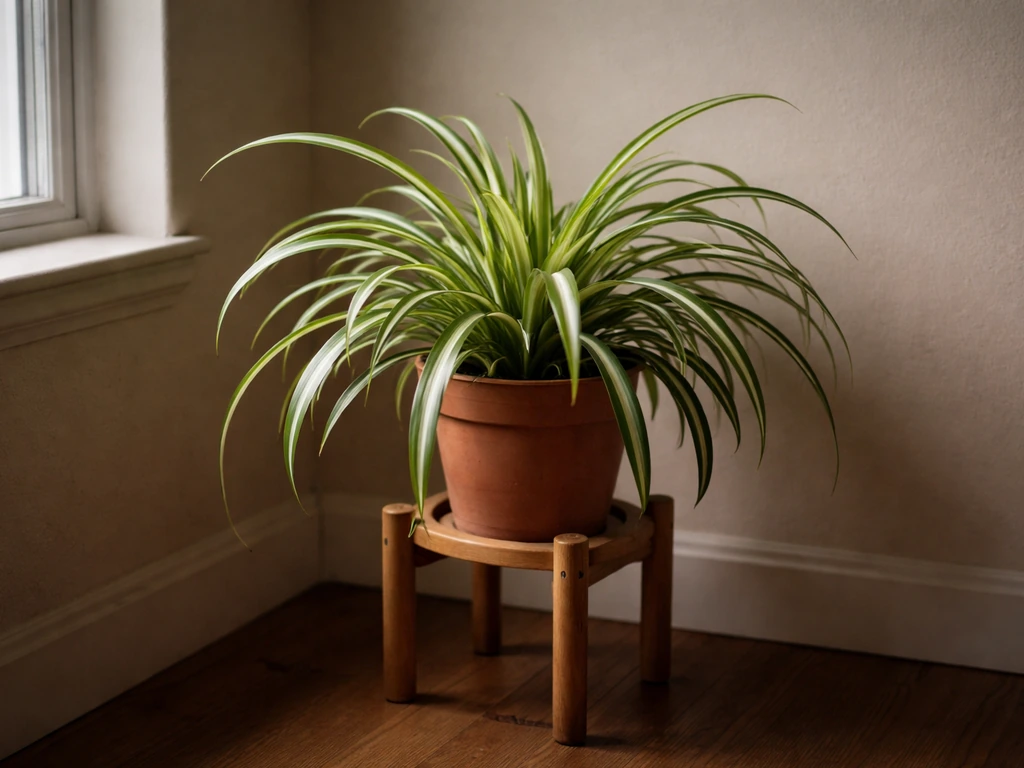
Yes, spider plants can grow in low light, but there's an honest caveat worth knowing before you tuck one into a dim corner. They will survive, and they will stay alive, but "thriving" depends on how low the light actually is. At true low light (think: a north-facing room with one small window), your spider plant will grow slowly, lose some of its white variegation, and almost certainly won't produce the trailing babies it's famous for. At medium-to-low light, though, like a few feet back from an east or west window, most spider plants hold up just fine. Knowing exactly where your setup falls makes all the difference.
Can Spider Plants Grow in Low Light? Practical Indoor Guide
Marcus Hartley
21 Apr 2026
Spider plant light requirements (and what "low light" really means)
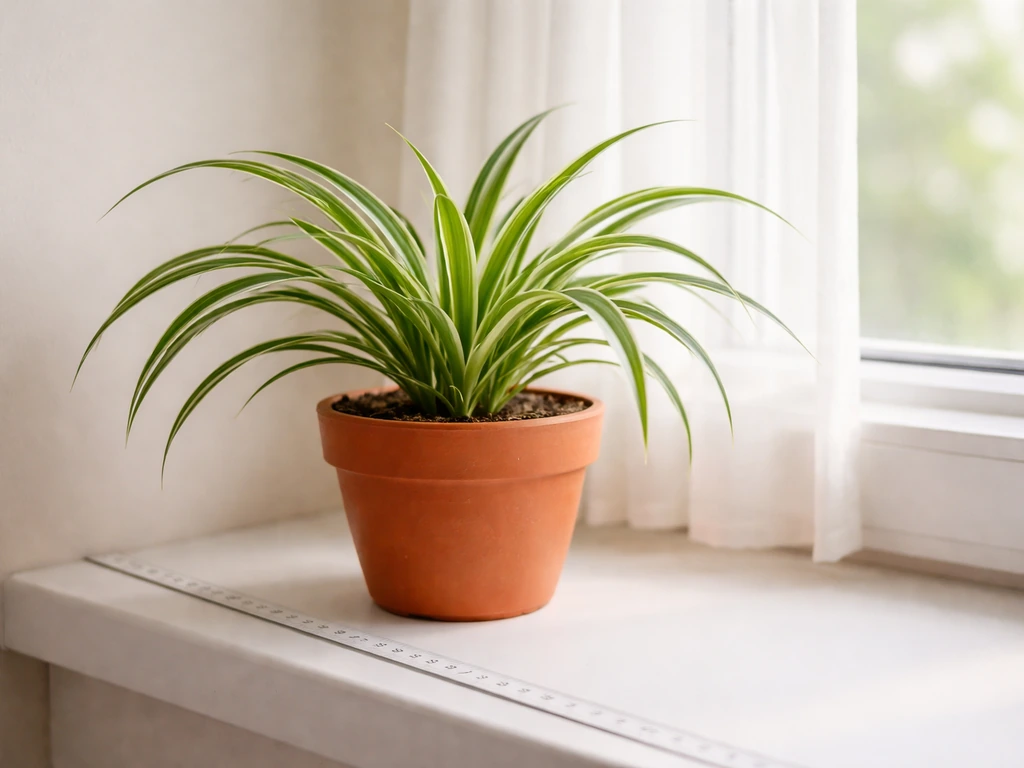
Spider plants prefer bright indirect light and do best at roughly 10,000 to 15,000 lux, that's the kind of light you'd get a foot or two from a bright window that doesn't get direct afternoon sun. But they're genuinely adaptable. University of Illinois Extension categorizes them as tolerant of medium light, which puts them a step ahead of true low-light specialists but well ahead of plants that demand a sunny south-facing window.
When growers talk about "low light" indoors, they usually mean one of two things: a room where no window gets direct sun and the brightest spot tops out around 500 to 1,500 lux, or a spot that's several feet away from any window where ambient light barely moves the needle. A spider plant placed here will photosynthesize, just slowly and with noticeable trade-offs. The minimum useful daily light duration is around 4 to 6 hours of whatever indirect light the plant can access. Below that, you're in territory where the plant is just barely ticking over.
Compare this with plants like pothos or snake plants, which are genuinely built for low-light corners. Yes, snake plants are often a better fit for genuinely low light than spider plants. Spider plants sit closer to that category than, say, a fiddle-leaf fig, but they're not quite in the same forgiving tier. They're adaptable, not indestructible. Think of medium light as their sweet spot and low light as their limit.
Low-light performance: what will actually change
If you move a spider plant from a bright spot into a genuinely dim one, here's what to expect over the following weeks and months. Growth slows noticeably, new leaves come in smaller and farther apart. The plant won't throw out runners or produce spiderettes (those little baby plants it's known for) because that takes energy the plant doesn't have to spare in low light. Flowering and baby production are also tied to longer days, so if your plant is already light-limited and in a dim room in winter, you may not see babies for a very long time.
The most visible change for variegated spider plants is fading stripes. Bright indirect light produces crisp, vibrant white or yellow edges. In low light, the plant will often push out leaves that are more uniformly green, that's not a disease, it's the plant prioritizing chlorophyll production over the lighter-colored cells that don't photosynthesize as efficiently. It's a survival response. If you love the look of those stripes, this matters.
One thing worth noting: if you want babies, light is only part of the equation. Spider plants are more likely to produce plantlets when they're a little root-bound. So keeping the plant in a snug pot and getting the light right are both pieces of the same puzzle.
Artificial light options that actually work
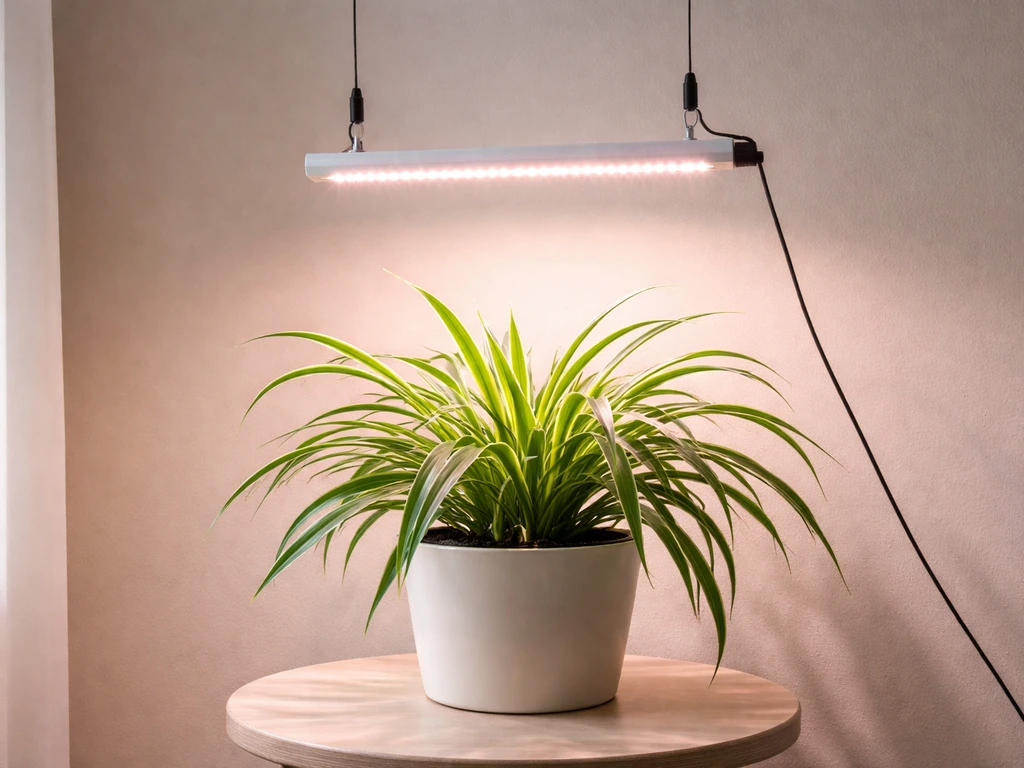
If your space doesn't have enough natural light, artificial lighting is a practical solution, and it doesn't have to be complicated or expensive. Spider plants respond well to supplemental light, and you have a few good options depending on your setup and budget.
LED grow lights
Full-spectrum LED grow lights are the most efficient choice right now. They run cooler than older options, use less electricity, and can be dialed in for the spectrum spider plants need. For a spider plant in a low-light room, aim for around 15 to 20 watts per square foot of supplemental coverage. Run the light for 8 to 10 hours per day, that mimics the longer days that trigger more active growth and, eventually, baby production.
Position the light 12 to 24 inches above the plant canopy for the vegetative growth stage. Keep in mind that LED light intensity follows the inverse-square law, meaning that moving the light just a few inches closer or farther has a surprisingly large effect on what the plant actually receives. If your plant looks pale or spindly even under a grow light, try bringing it 4 to 6 inches closer and check again after a week or two.
Fluorescent lights
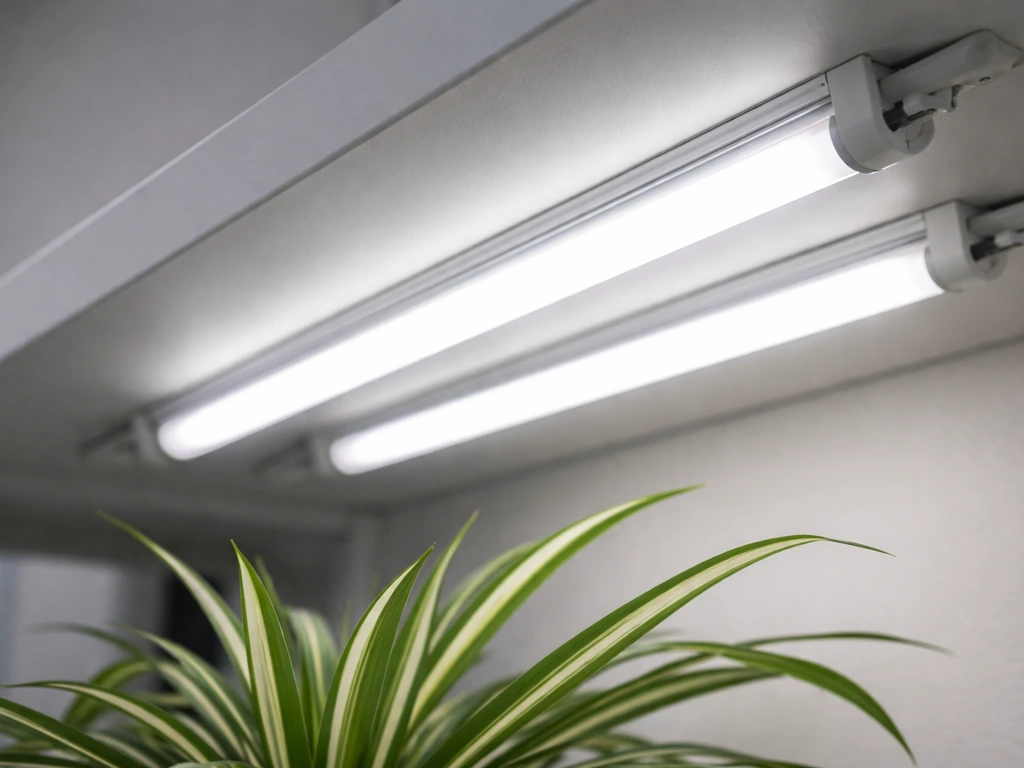
Standard cool-white or daylight fluorescent bulbs (T5 or T8 tubes) work well for spider plants and are often what you'll find in offices or shelving units. They're not as efficient as LEDs but they do the job. Position the plant 6 to 12 inches below the tubes for best results, and run them on the same 8 to 10 hour schedule. Fluorescents lose intensity quickly with distance, so placement closer to the bulb matters more here than with a spread-beam LED panel.
Standard indoor lamps
Regular incandescent bulbs don't provide the right light spectrum for plants and generate too much heat for their output. However, if you swap in a full-spectrum LED bulb (labeled as "daylight" around 5000–6500K) in a standard desk lamp or floor lamp, you can give a spider plant useful supplemental light at very low cost. It won't replace a dedicated grow light, but for a single plant in a reading nook or on a shelf, a daylight LED bulb running 8 to 10 hours a day is genuinely better than nothing.
| Light Source | Efficiency | Best Placement | Daily Duration | Cost |
|---|---|---|---|---|
| Full-spectrum LED grow light | Excellent | 12–24 inches above canopy | 8–10 hours | Moderate upfront, low running cost |
| Fluorescent (T5/T8) | Good | 6–12 inches below tube | 8–10 hours | Low to moderate |
| Daylight LED bulb in desk lamp | Acceptable for one plant | 12–18 inches away | 8–10 hours | Very low |
| Incandescent bulb | Poor | Not recommended | N/A | Low cost, poor results |
How to place your spider plant for the best results in low light
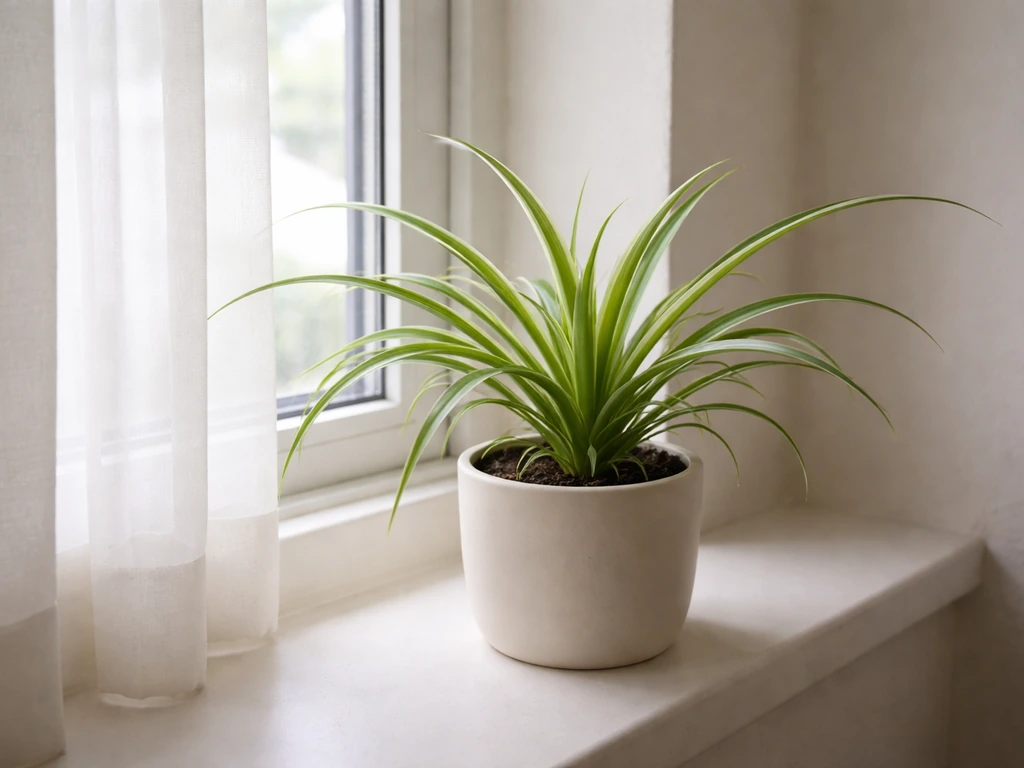
Whether you're working with a natural window or an artificial setup, placement is where most people either get it right or quietly wonder why their plant looks sad. With natural light, east and west-facing windows are your best friends for spider plants in low-light rooms, they provide gentler indirect light for a reasonable chunk of the day and also happen to be the windows most likely to trigger flowering and baby production when days are longer.
- North-facing window: place the plant as close to the glass as possible, ideally within 12 to 18 inches. This is truly low light and you should expect slower growth.
- East or west window (further back in the room): move the plant forward, within 2 to 3 feet of the glass. Sheer curtains drop available light significantly so remove them if you can.
- Under a grow light: start at 18 to 20 inches above the plant and watch for response over 1 to 2 weeks. Move closer if growth stays sluggish. Move further if leaf tips show stress.
- Rotate the pot a quarter turn every week or two so all sides of the plant get even light exposure and growth stays balanced rather than leaning.
- Avoid placing the plant in a corner far from any window and far from any light source. That's where spider plants just stall.
How to tell if your spider plant isn't getting enough light
Spider plants are pretty communicative once you know what to look for. The classic signs of insufficient light show up gradually, so check in every couple of weeks if you've recently moved the plant to a dimmer spot.
- Leggy, stretched growth: stems grow longer between leaves as the plant reaches for light. This is sometimes described as "green and spindly" and it's one of the clearest indicators of under-lighting.
- Fading variegation: white or yellow stripes become less distinct or disappear, with new leaves emerging mostly solid green.
- No babies: if your spider plant is pot-bound (which helps trigger spiderettes) but still not producing runners after several months, light is likely the limiting factor.
- Pale or washed-out new leaves: new growth comes in lighter than expected and doesn't firm up to the normal deep green.
- Very slow or stalled growth: spider plants aren't fast growers in the best conditions, but if you haven't seen a single new leaf in 6 to 8 weeks during spring or summer, light is worth examining first.
Before assuming it's always light, quickly rule out overwatering (see the next section) and brown tips from fluoride or dry air, which look different from light-related problems. Oklahoma State University Extension also notes that fluoride and overwatering or underwatering can contribute to leaf-tip browning, helping distinguish non-light causes brown tips from fluoride or dry air. Brown tips alone, without the legginess or fading, are usually a water quality or humidity issue rather than a light shortage.
What to do when you spot these signs
- Move the plant closer to its existing light source by 6 to 12 inches and wait 2 weeks before judging the response.
- If on a grow light, reduce the hanging height by 4 to 6 inches or increase the daily photoperiod from 8 hours to 10 hours.
- Consider adding a supplemental daylight LED bulb if no other option is available.
- Rotate the pot so the leggier side faces the light source more directly.
- If the room is genuinely very dark, be honest with yourself: a spider plant may not be the right pick for that specific spot, and a snake plant or ZZ plant would handle it better.
Care adjustments to make in low light
The biggest mistake people make when moving a spider plant to a low-light spot is keeping the same care routine they used when the plant was in brighter conditions. Slower growth means slower water uptake, and that's where overwatering problems start.
Watering
In low light, let the top 1 to 2 inches of soil dry out before watering again. In brighter conditions you might be watering every 7 to 10 days; in a dim room that could stretch to every 2 to 3 weeks, especially in winter. Stick your finger an inch into the soil, if it feels even slightly damp, hold off. Overwatering is the fastest way to kill a spider plant that's already struggling with limited light, because the roots can't dry out between waterings and root rot sets in quietly.
Fertilizing
During spring and summer when the plant is actively growing, fertilize every 2 to 4 weeks with a balanced liquid fertilizer. But if your plant is in genuinely low light and growth has slowed to a crawl, scale back significantly, feeding a plant that isn't actively growing just builds up excess salts in the soil without benefiting the plant. In low-light fall and winter conditions, dropping to once every 8 to 10 weeks (or stopping entirely) makes more sense. Resume regular feeding when you either move the plant to better light or when spring arrives and natural light increases.
Other habits to adjust
- Don't repot unless the plant is severely rootbound and clearly struggling. Staying slightly root-bound actually helps with baby production, and repotting into larger soil increases overwatering risk in low light.
- Dust the leaves occasionally — cleaner leaves absorb whatever light is available more efficiently.
- Don't fertilize right after moving a plant to lower light; let it adjust for 4 to 6 weeks first.
- If you're using a grow light on a timer, keep the schedule consistent rather than varying the hours day to day. Plants respond to photoperiod stability.
Your next steps today
Here's how to take action right now based on where you stand. First, figure out what kind of light your current spot actually offers. If you have a north-facing window with no obstructions, you're in true low light, move your spider plant as close to the glass as possible, ideally under 18 inches, or add a daylight LED bulb on an 8 to 10 hour timer. If you have an east or west window and the plant is sitting 3 or more feet back, simply moving it forward closer to the glass could make a visible difference within a couple of weeks.
If you're setting up an artificial light system, pick a full-spectrum LED grow light rated for the area you're working with, hang it 18 to 20 inches above the plant, run it 8 to 10 hours daily on a timer, and check the plant's response after 2 weeks. Adjust the height as needed. Cut your watering frequency and fertilizing schedule to match the slower growth pace, and you'll avoid the most common low-light mistake, which is caring for the plant like it's in a bright window when it isn't.
Spider plants are genuinely one of the more forgiving options for lower-light rooms, sitting in similar territory to pothos and philodendrons for adaptability, even if they're not quite as shade-tolerant as snake plants or ZZ plants. ZZ plants are another option that tolerates low light very well, so it can be worth considering if you have limited brightness.
Philodendrons can also do well in low light, but they will grow more slowly and you may need to adjust your expectations for size and leaf fullness can philodendron grow in low light. If you’re comparing options, see also whether ZZ plants and other popular houseplants can handle low-light conditions too, including whether aloe can grow in low light can aloe grow in low light.
Get the placement right, adjust your watering, and most spider plants will hold on just fine, and with a proper artificial-light setup, you can push them into actual thriving territory even without a great window.
FAQ
Can spider plants survive in a truly low-light room for months or years?
Yes, but not indefinitely. If the room is consistently “true low light” (no direct sun and the brightest spot stays very dim), the plant may survive while losing variegation and eventually becoming less vigorous, with fewer or no babies.
How can I tell if my spider plant problem is low light or overwatering?
In low light, pale or washed-out leaves usually mean the plant is light-starved, but if you also see soft, dark, or foul-smelling roots, that points to overwatering. The fix is to extend dry-down time (top 1 to 2 inches dry) and reduce watering frequency before trying to “boost light” only.
Will rotating the pot help my spider plant grow better in low light?
Yes, though it changes the look. Expect slower leaf production and less crisp variegation, and the plant is less likely to send out runners until it gets longer, stronger days. Rotating the pot about once every couple of weeks helps keep growth from leaning toward the window.
How long should I wait to see improvement after moving a spider plant to a dimmer spot or adding a grow light?
Don’t judge progress by weekly growth alone. In dim conditions, new leaves can take longer to emerge, so check for trends over 4 to 8 weeks (leaf spacing, color, and whether new growth is happening at all).
If I use a grow light, can I leave it on all day or 24/7?
It can, but with a schedule. If the light source is strong enough to matter, running it 8 to 10 hours per day works well, but avoid leaving it on 24/7 since the plant still needs an off period for normal rhythms and stress reduction.
Should I fertilize less when my spider plant is in low light?
Overfertilizing is a common mistake when light is low. If growth has slowed dramatically, scale back to very infrequent feeding (around every 8 to 10 weeks) or pause until you see new active growth.
My spider plant has brown tips, does that always mean it needs more light?
Higher humidity is not a substitute for light. If tips brown without legginess or variegation fading, it’s more often fluoride or dry air, so flush with low-mineral water and consider gentle humidity improvements, but keep light your main priority.
Why isn’t my spider plant making babies even though it’s still alive?
It depends on how “low” the light actually is. In medium-to-low conditions (for example, a few feet from an east or west window), spider plants often persist. If babies are the goal, place closer to the brightest window you have and consider supplemental lighting for consistent daily duration.
What should I change about soil and watering when moving a spider plant to low light?
Yes, and it’s usually a sign you need to adjust care. In low light, reduce watering because uptake slows, and watch for fungus gnats or wet-soil smell. Improve airflow and ensure the pot has drainage to prevent root stress.
My spider plant looks leggy in low light, can it recover and fill out again?
If the plant is very leggy, don’t expect “recovery” overnight. Start by increasing light gradually (or positioning closer to the window) and keep watering conservative, then remove only severely deformed leaves when needed. New growth will eventually fill in, but older stems may not branch.