
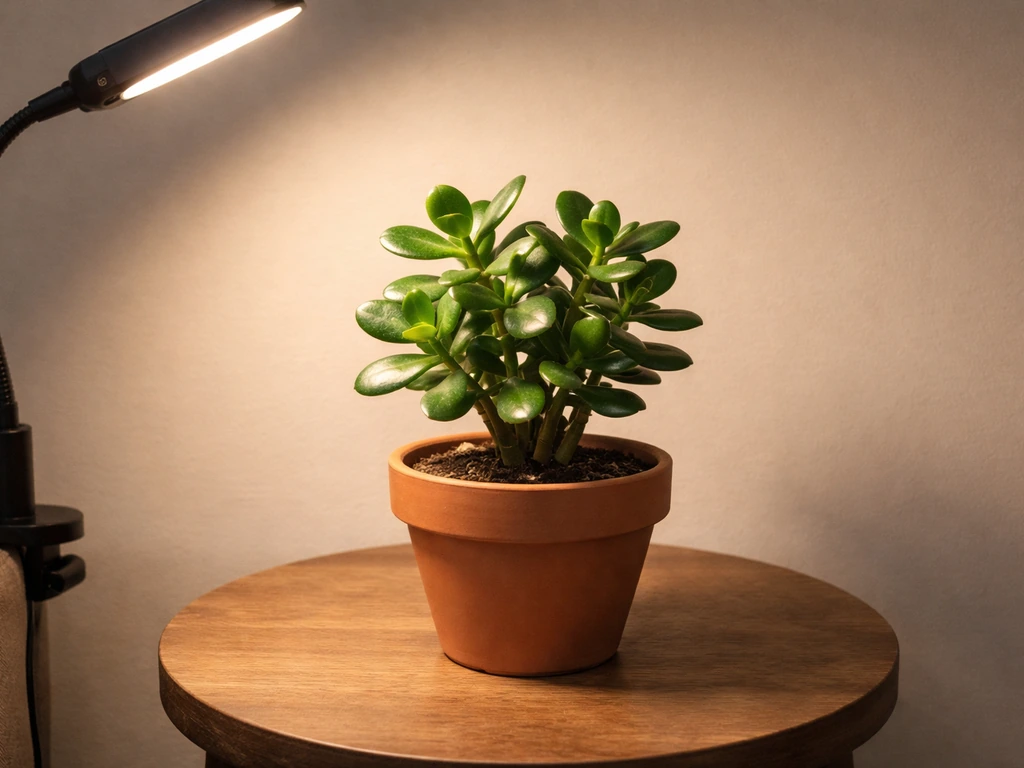
A jade plant can survive indoors without direct sunlight, but it won't truly thrive without some form of bright light, whether that comes through a window or from an artificial grow light. The honest answer is: zero light means a slow, sad decline, but a well-placed LED or fluorescent fixture running 12 to 14 hours a day can absolutely keep a jade plant healthy, compact, and growing in a room with no usable natural light.
Can Jade Plant Grow Without Sunlight? Indoor Light Tips
Marcus Hartley
16 May 2026
How much light a jade plant actually needs
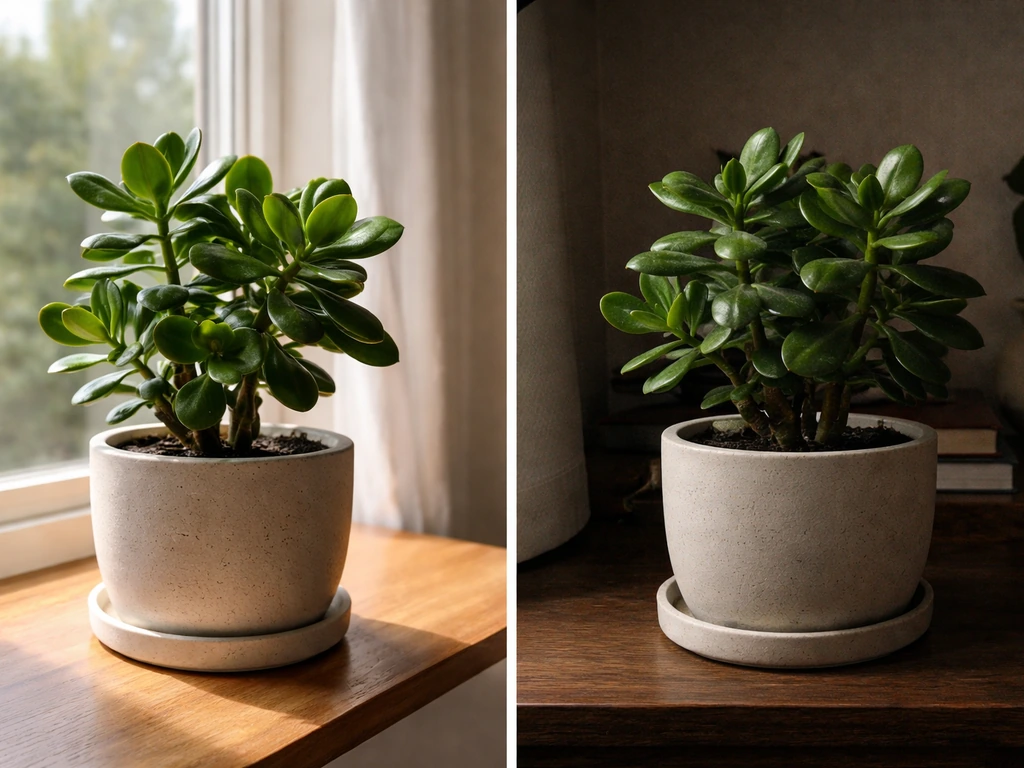
Jade plant (Crassula ovata) is often marketed as a low-maintenance, low-light plant, and while it is forgiving, that reputation is a bit misleading. According to University of Wisconsin–Madison Extension, jade does best with four or more hours of direct sun per day. It will survive in bright, indirect light, but direct sun is where it looks its best: compact, with thick rounded leaves that may show a little red blush at the edges from the light intensity.
That said, 'survive' and 'thrive' are two very different outcomes. A jade plant sitting a few feet back from a bright south- or west-facing window is getting enough indirect light to stay alive and even grow slowly. A jade in a north-facing room or a basement apartment is in survival mode at best, and it will start to show it over weeks and months.
What 'no sunlight' realistically means: survive vs. thrive
When people ask if jade can grow without sunlight, they usually mean one of two things: no direct sun but some ambient daylight, or truly no windows at all. If you are truly asking about can rubber plant grow without sunlight, know that it is similar in that it needs bright light or a strong grow light to avoid stunting no windows at all. These are very different situations. A spot with bright ambient light from a north-facing window, or filtered light through a sheer curtain, is not 'no light.' Jade can limp along there, though it won't look its best. A basement grow room, an interior office, or a room with blacked-out windows, that's actual near-zero natural light, and jade will not sustain itself there without artificial lighting. Even though jade can survive without natural sunlight, it generally does best when you provide enough light to prevent leggy growth and slow decline near-zero natural light.
The New York Botanical Garden notes that too little light causes jade to grow leggy and misshapen, which is the clearest signal that the plant is merely trying to survive rather than actually thriving. Seasonal changes matter too: as daylight shortens in winter (roughly October through February), even a plant near a window gets dramatically less light, which can shift it from thriving into survival mode without you changing anything else.
The bottom line: if you have genuinely no usable natural light, jade can still be grown successfully, but only with a deliberate artificial lighting setup. It won't work on a windowsill lightbulb or wishful thinking.
Signs your jade plant isn't getting enough light
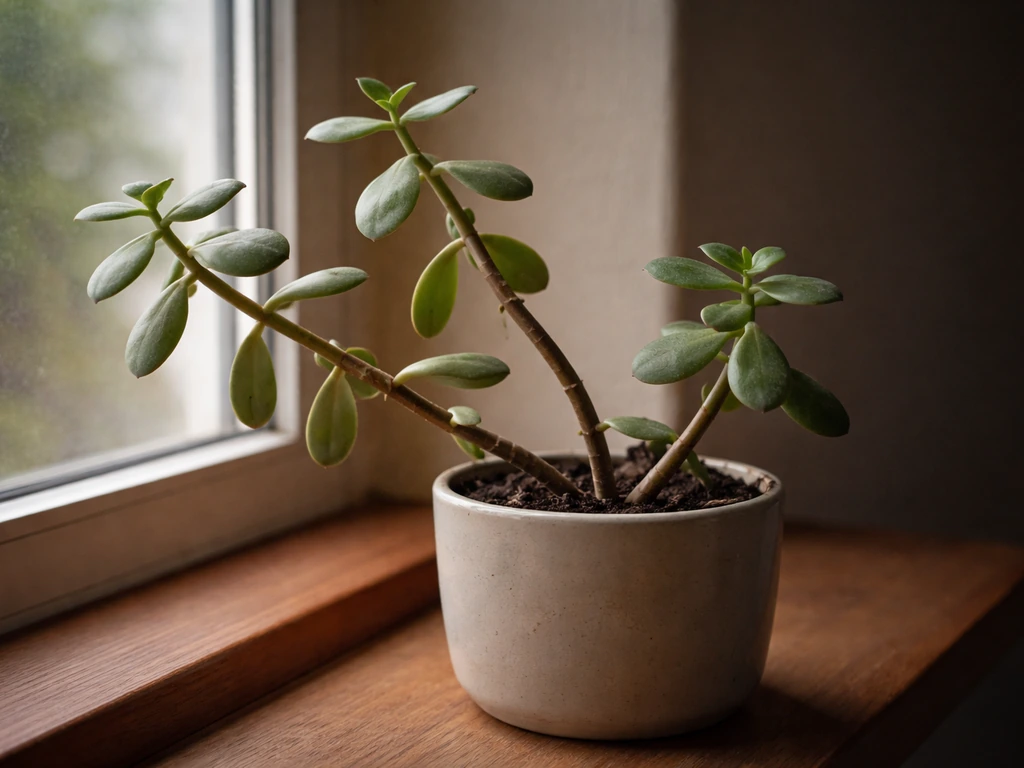
Jade is pretty communicative once you know what to look for. Low-light stress usually shows up slowly, over several weeks, which is why a lot of people miss it until things are pretty bad.
- Leggy, stretched stems: New growth reaches long and thin toward the nearest light source, with wide gaps between leaves. This is called etiolation, and it's the classic sign of insufficient light.
- Sparse, widely spaced leaves: Healthy jade has dense, clustered foliage. Light-starved jade looks thin and straggly.
- Pale or yellowing leaves: Leaves lose their deep green color when photosynthesis is hampered by insufficient light.
- Leaf drop: Leaves fall off, especially lower ones. Note that overwatering causes the same symptom, so check both light and soil moisture.
- No new growth or extremely slow growth: If your jade hasn't put out new leaves in months during the growing season (spring through summer), light is a likely culprit.
- Soft, mushy stems near the base: This usually means root rot, which is often triggered by low light combined with normal watering habits (more on this below).
One useful positive indicator to watch for: when light is sufficient, jade leaves often develop a subtle reddish tinge at their edges. If you increase light and start seeing that red blush appear over a few weeks, you're on the right track.
How to grow jade indoors with artificial light
Good news: jade responds well to artificial lighting, and you don't need to spend a fortune on a fancy grow light system. A basic full-spectrum LED grow light or even a quality fluorescent shop light can provide everything jade needs to stay compact and healthy in a room with no usable sun.
Choosing the right light
For jade and other succulents, the University of Maine Extension recommends targeting a light intensity of 100 to 200 PPFD (micromoles of light per square meter per second). That's a moderate light level, not the intense output needed for fruiting plants like tomatoes. Most affordable full-spectrum LED grow lights marketed for houseplants or succulents will hit this range easily when positioned correctly.
| Light type | Best for jade? | Pros | Cons |
|---|---|---|---|
| Full-spectrum LED grow light | Best option | Energy efficient, low heat, long lifespan, good PPFD output | Small upfront cost, but pays off quickly |
| Fluorescent (T5 or T8) | Good option | Widely available, inexpensive, decent output for succulents | Runs warmer, bulbs need replacing every 1–2 years |
| Standard incandescent bulb | Not recommended | Cheap and easy to find | Produces mostly heat, very low usable light output for plants |
| Regular LED (non-grow) | Not ideal | Available everywhere | Lacks the full spectrum plants need for healthy photosynthesis |
My recommendation: go with a full-spectrum LED panel or a clip-on LED grow light. They're widely available now for $15 to $40, run cool, and give you consistent output without the hassle of replacing bulbs. For a single jade plant or a small grouping, you don't need anything elaborate.
Light distance, duration, and placement
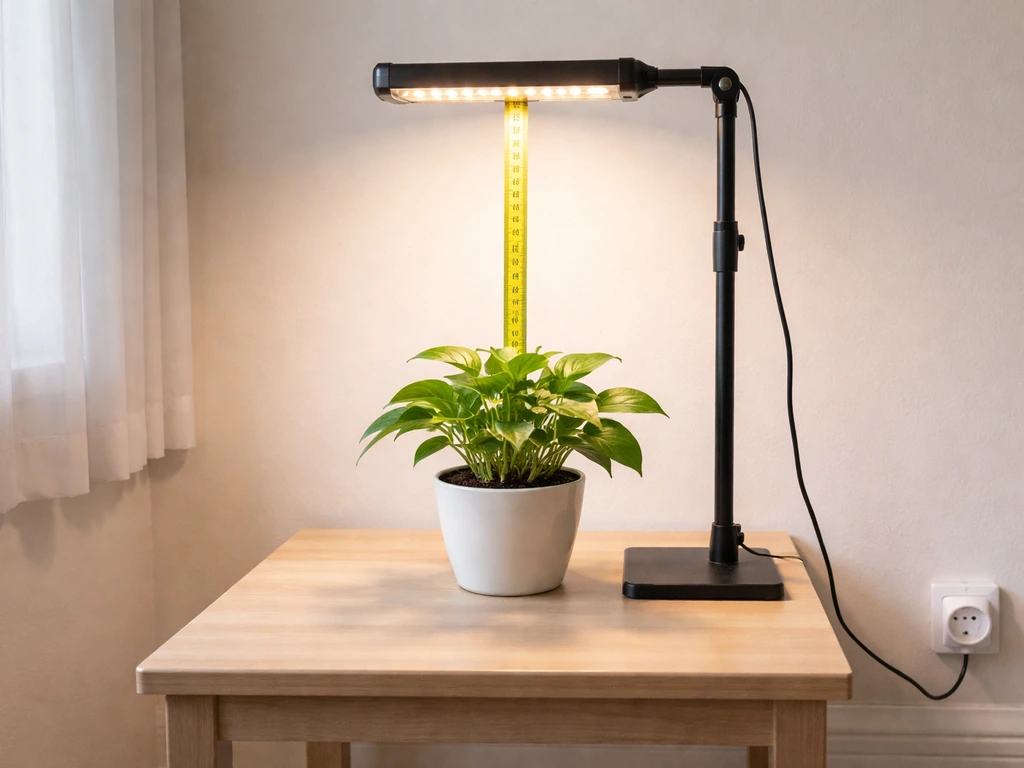
Getting the setup right is mostly about two variables: how close the light is to the plant, and how long it runs each day. DLI (daily light integral) is computed from PPFD together with photoperiod, usually expressed as light-hours per day, which makes it a practical way to set photoperiod targets in grow lighting DLI is computed from PPFD and photoperiod (light-hours/day). Both matter, and getting one wrong can undermine the other.
- Distance: Position your LED or fluorescent fixture 6 to 12 inches above the top of the plant. Closer than 6 inches risks heat stress or light burn; farther than 12 inches drops the intensity below what jade needs to do more than survive.
- Duration: Run the light for 12 to 14 hours per day. This compensates for the lower intensity of artificial light compared to direct sun and gives jade enough total daily light to maintain healthy growth.
- Consistency: Use a simple plug-in timer so the light runs on a fixed schedule. Jade and other succulents are sensitive to photoperiod changes, so random on/off patterns can stress the plant.
- Rotation: If your jade is near a single directional light source, rotate the pot a quarter turn every week or two so all sides receive even exposure and the plant stays symmetrical.
- Placement: Keep jade away from heating vents, drafts, or air conditioning units near the light setup. Temperature swings stress the plant and compound light-related issues.
If you notice the plant is still stretching toward the light even with a 12-hour schedule, either move the fixture a couple of inches closer or add an extra hour to the photoperiod before assuming you need a stronger light entirely.
Adjust your watering when light is low
This is the part most people get wrong, and it's where jade plants die. Under lower light, jade's metabolism slows significantly. It's not photosynthesizing as actively, not growing as fast, and not using up water the way it would in a sunny south-facing window. If you keep watering at the same rate you would in high light, you're almost guaranteed to end up with root rot.
The New York Botanical Garden advises watering jade in low-light winter conditions only as often as necessary to prevent the leaves from puckering. That's your cue: let the leaves tell you. A slightly soft or wrinkled leaf means the plant is genuinely thirsty. A firm, plump leaf means leave it alone. In low-light conditions (natural or artificial), this often means waiting at least two weeks between waterings, and sometimes longer.
The Pacific Northwest Extension warns that waterlogged soil is the primary driver of jade root and stem rot. Once rot sets in, it's hard to reverse, so prevention is everything. Always use a well-draining succulent or cactus mix, make sure your pot has drainage holes, and never let jade sit in a saucer full of water. When in doubt about whether to water, wait another few days and check the soil a couple inches down. If it's still damp, skip it.
A quick note on varieties and low-light tolerance
Most standard Crassula ovata varieties have similar light needs, but some cultivars are noted to tolerate lower light a little better than others. The 'Tricolor Hobbit' variety, for example, is considered one of the more adaptable options for lower-light indoor settings. That said, no jade variety is a true low-light plant in the way that pothos or snake plants are. If you're comparing jade to some of its succulent relatives, jade is actually one of the more adaptable, but it still needs a meaningful light source. Other common houseplants like ZZ plants or spider plants genuinely tolerate low-light spaces better than jade does.
Troubleshooting checklist and next steps
If you're trying to fix a struggling jade or set one up for success in a low-light space today, work through this checklist in order.
- Assess your current light honestly: Stand where the plant is and look around at noon. Is there a bright patch of light, or is the space dim and shadowy? If you need to turn on ceiling lights to see clearly, natural light is insufficient for jade.
- Choose your light source: Pick up a full-spectrum LED grow light if you don't have one. A basic clip-on or panel model in the $15–$40 range is plenty for a single jade or small collection.
- Set up distance and timer: Position the light 6 to 12 inches above the plant's canopy and set a timer for 12 to 14 hours on, 10 to 12 hours off. Consistent schedule, every day.
- Cut back watering immediately: If the plant is in a low-light environment, extend time between waterings. Start checking leaves rather than following a fixed calendar schedule. Water only when leaves feel slightly soft.
- Check your soil and pot: Make sure you're using a well-draining succulent mix and a pot with drainage holes. If the current soil is dense or soggy, repot into fresh mix before anything else.
- Rotate the plant weekly: Give it a quarter turn each week to prevent one-sided stretching and uneven growth.
- Monitor for 4 to 6 weeks: Recovery and adjustment take time. Watch for new growth that's compact rather than leggy, and look for leaves firming up and staying plump after watering. If stretching continues after four weeks, move the light 2 inches closer or add an hour to the daily schedule.
- Log what you change: It sounds tedious, but even a quick phone note when you water or adjust the light makes it much easier to spot what's working over time.
Jade is a resilient plant, and most light-stressed specimens recover well once given better conditions. The stretchy, leggy growth won't un-stretch (you can prune it back once the plant is stable), but new growth coming in compact and healthy is a clear sign you've solved the problem. Give it a few weeks to settle in, stay conservative with watering, and let the light do the work.
FAQ
What’s the minimum light jade needs if there’s truly no direct sunlight?
Jade can survive with indirect ambient light, but it generally needs bright conditions for steady growth. If there are no windows or you use blackout curtains, plan on a grow light and aim for moderate intensity (around the 100 to 200 PPFD range) for 12 to 14 hours per day, rather than relying on a room light.
Can I keep a jade plant under a regular LED light instead of a grow light?
Sometimes, but many “household” LEDs do not provide enough usable intensity or the right spectrum. If you try it, verify results by watching for compact new growth and, over a few weeks, a slight red edge on leaves. If you see continued stretching or slow decline, switch to a full-spectrum grow light.
How close should the grow light be for jade?
Start with the fixture positioned close enough that the plant is not stretching after a couple of weeks. If your jade keeps reaching toward the light even with a 12-hour schedule, move the light a couple inches closer first, then adjust run time if needed.
How do I know if my jade is getting too little light versus too much water?
Low light shows up as leggy or stretched growth and slowly declining health. Overwatering shows up quickly as soil staying damp and leaves getting soft, translucent, or dropping. A useful check is to wait, then water only when soil a couple inches down has dried, especially during low-light seasons.
Should I increase watering if I add a grow light?
No. When light increases, jade may use more water, but soil dryness should still drive your schedule. After changing lighting, re-check the pot every week or two and only resume more frequent watering if leaves firm up to normal and the soil dries faster.
Will jade grow in a north-facing room with a window?
It may survive, especially near the window with filtered daylight, but it often stays in survival mode. Expect slower growth and possible legginess. In winter, the reduced daylight can push even near-window plants toward stress unless you supplement with artificial light.
Can I use a timer for a jade grow light, and what schedule is safest?
Yes, using a timer helps keep the photoperiod consistent. A common starting point is 12 to 14 hours on, with the remaining hours off for rest. If the plant shows stretching, increase duration gradually or adjust distance rather than jumping to much longer schedules immediately.
Is jade ever okay on a windowsill with only artificial light at night?
Yes, that’s typically the easiest setup. Daylight through the window plus grow light in early evening can prevent winter decline. Just avoid placing the plant so far that light levels drop drastically, and keep watering conservative if the room stays dim.
Can jade tolerate completely blacked-out windows if I run the grow light all day?
All day is usually unnecessary and can be counterproductive if you overshoot. Better to use a controlled schedule like 12 to 14 hours and confirm plant response. If you run it too long, you may encourage unwanted stretching if the fixture is too far or the intensity is too low.
What’s the fastest way to tell if my jade is improving under more light?
Look for new growth that stays compact, not stretched stems. Also watch for a subtle red blush at the leaf edges developing over a few weeks. If you only see changes in leaf color without sturdier, tighter growth, the light may still be insufficient or the plant may be stressed from roots.
How long can jade decline before I notice, and when should I intervene?
Light stress often appears over weeks, not days. If you see clear stretching, thinning, or a persistent lack of new compact growth, intervene by adjusting light distance and duration and tighten watering immediately to reduce rot risk.