
A rubber plant (Ficus elastica) can survive in low light, but it will not actively grow without a meaningful light source. "No sunlight" typically means slow decline: leaves drop, stems stretch toward any sliver of brightness, and the plant stalls. A rose plant also struggles when it does not get enough sunlight, so it typically needs bright light to grow well can rose plant grow without sunlight. That said, you do not need a south-facing window blasted with direct sun to keep one healthy. For variegated Ficus elastica, Royer’s care sheet recommends low or no direct sun, not near a window, and also notes that it can do well with high bright direct or indirect light for much of the day south-facing window blasted with direct sun. With the right window placement or a decent LED grow light, rubber plants do well indoors, even in apartments without ideal natural light.
Can Rubber Plant Grow Without Sunlight? Light Guide
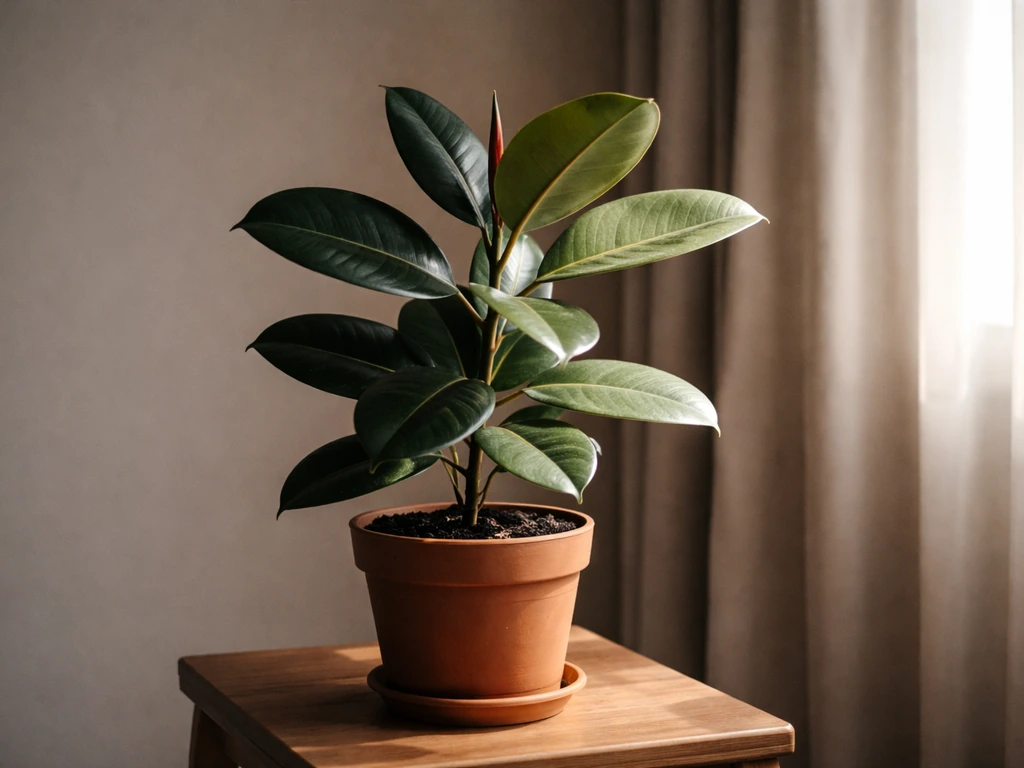
Can a rubber plant survive in low light or without direct sunlight
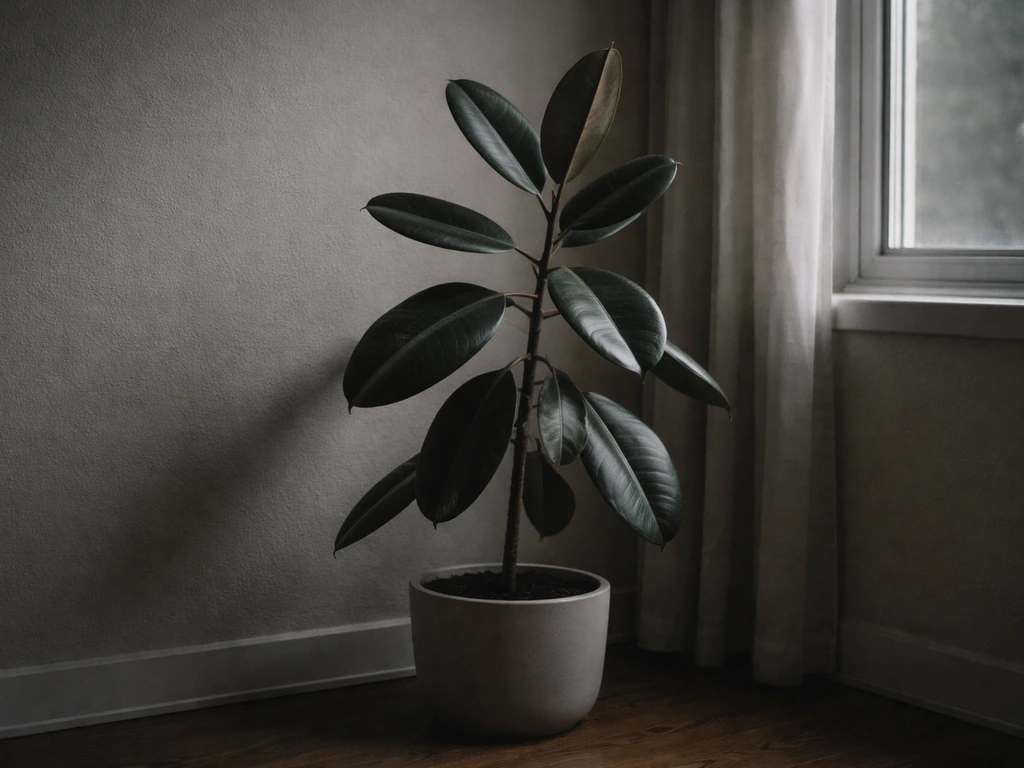
Technically, yes, a rubber plant can survive in very low light for a while. But surviving is not the same as growing, and there is a real floor below which things go wrong fast. Royer's care guidelines for Ficus elastica describe a "low" light condition as "no direct sun, not near a window," and they are blunt about it: if no new leaves are appearing, the plant needs better conditions. That is the practical line between surviving and thriving.
In the wild and in outdoor cultivation, Ficus elastica is classified as a full sun to partial shade plant. Indoors, the equivalent of "enough light" is roughly 100 to 500 foot-candles (FC), which puts it in the medium-bright category according to University of Maryland Extension guidelines. That range can absolutely be met without direct sun hitting the leaves, but it cannot be met from across a dark room. North-facing windows, which typically deliver only 25 to 100 FC, sit at or below the low end of what this plant wants.
The honest answer: rubber plants are not true low-light plants the way ZZ plants or pothos are. Compared to something like a ZZ plant, which genuinely tolerates near-darkness, your rubber plant is going to need more help if your space is dim. That does not mean you cannot grow one in a windowless office, but you will need artificial light to make it work.
What your rubber plant actually needs
Light intensity
Rubber plants want medium-bright light, which translates to roughly 100 to 500 foot-candles (or about 1,000 to 5,000 lux) for comfortable indoor growth. University of Maryland Extension specifically lists rubber plant under this medium-bright category. If you want a more precise number, research growing Ficus elastica under greenhouse conditions used photosynthetic photon flux density (PPFD) around 100 to 150 µmol m-2 s-1 as a working range for moderate light conditions. For practical purposes, aim for the middle to upper end of that foot-candle range if you want actual new leaf growth, not just survival.
One thing worth knowing: the terms "low light" and "bright indirect light" that you see on plant care tags are not precise. University of Florida IFAS Extension points this out directly, noting that human perception of brightness does not map reliably to what plants actually receive. If you are serious about getting this right, a cheap light meter app or a dedicated lux/foot-candle meter (they run under $20) removes all the guesswork.
Photoperiod (how many hours per day)
Rubber plants are not particularly photoperiod-sensitive for flowering the way some species are, but duration still matters for total daily light intake. A common practical target for foliage houseplants is 10 to 14 hours of light per day when using artificial sources. The concept behind this is the daily light integral (DLI), calculated as 0.0036 times PPFD times light hours. If your PPFD is on the lower end (say, around 100 µmol m-2 s-1), giving the plant 14 hours instead of 8 meaningfully compensates for the lower intensity.
Temperature
Keep your rubber plant away from cold drafts, which is relevant when you are placing it near windows in winter. Clemson HGIC specifically flags cold drafts alongside low light and dry air as triggers for leaf drop. Average indoor temperatures between 60 and 80 degrees Fahrenheit work well. Cold windows in January can stress the plant even if the light through the glass is decent, so watch for that combination.
Signs your rubber plant is not getting enough light
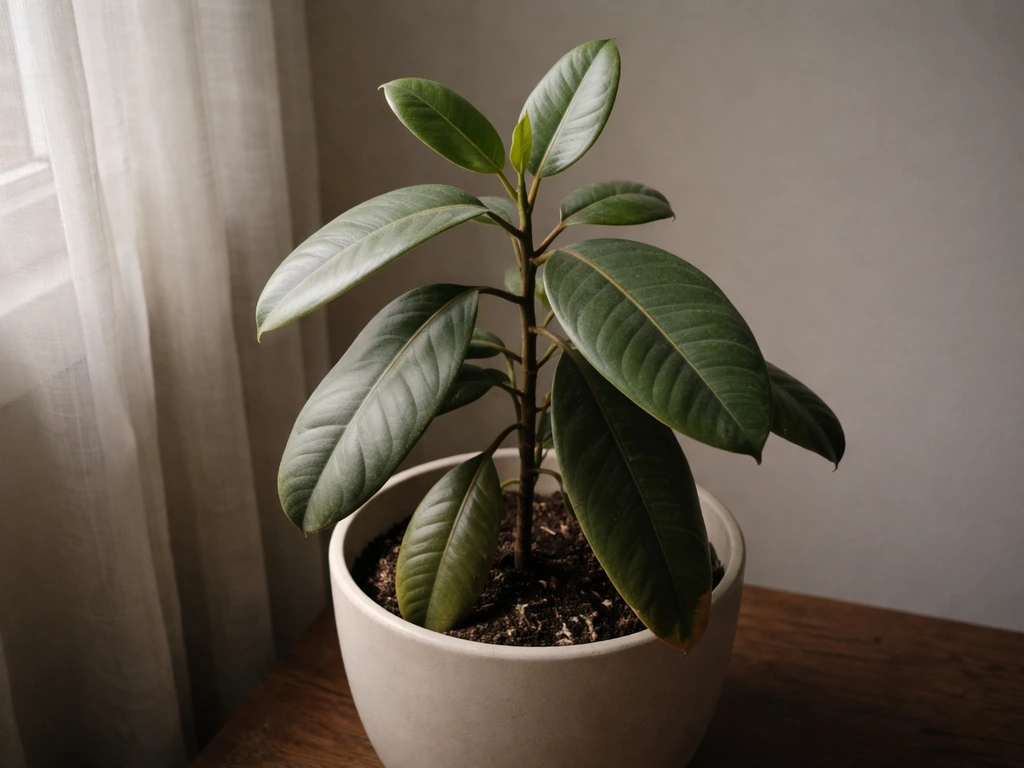
Low-light stress in rubber plants shows up in a pretty recognizable pattern. The tricky part is separating light problems from watering or temperature problems, because the symptoms overlap. Here is what to look for and how to tell them apart.
- No new leaves for several weeks or months: This is the clearest signal. Healthy rubber plants in good conditions push out new leaves regularly during the growing season. Stalled growth in spring or summer almost always points to inadequate light.
- Leggy, stretched growth: When a rubber plant does produce new stems, they grow long and spindly with wide gaps between leaves. The plant is reaching for a light source it cannot find.
- Pale or yellowing leaves: Chlorophyll production drops under low light, causing leaves to lose their deep green (or in variegated cultivars, their contrast). This is different from the yellowing caused by overwatering, which usually starts at the base of the plant.
- Leaf drop: Ficus elastica is notorious for dropping leaves when stressed. If multiple leaves are falling and your watering schedule has not changed, light is a likely culprit. Clemson HGIC links leaf drop directly to too little light.
- Dark coloring without growth: A rubber plant sitting in very low light sometimes holds its color for a while but makes absolutely no progress. It is essentially in standby mode.
- Brown leaf edges: This can indicate cold draft stress from a nearby window rather than low light, especially in winter. Check whether the affected leaves are closest to a drafty window or exterior door.
To confirm it is a light issue and not a watering problem: feel the soil. If you have been watering correctly (letting the top inch dry out between waterings) and the plant is still stalling or dropping leaves, look at the light. Overwatered rubber plants typically show soft, yellowing lower leaves and sometimes mushy stems near the base. Light-stressed plants look more like they are fading or reaching.
Best lighting options for a rubber plant indoors
Window placement
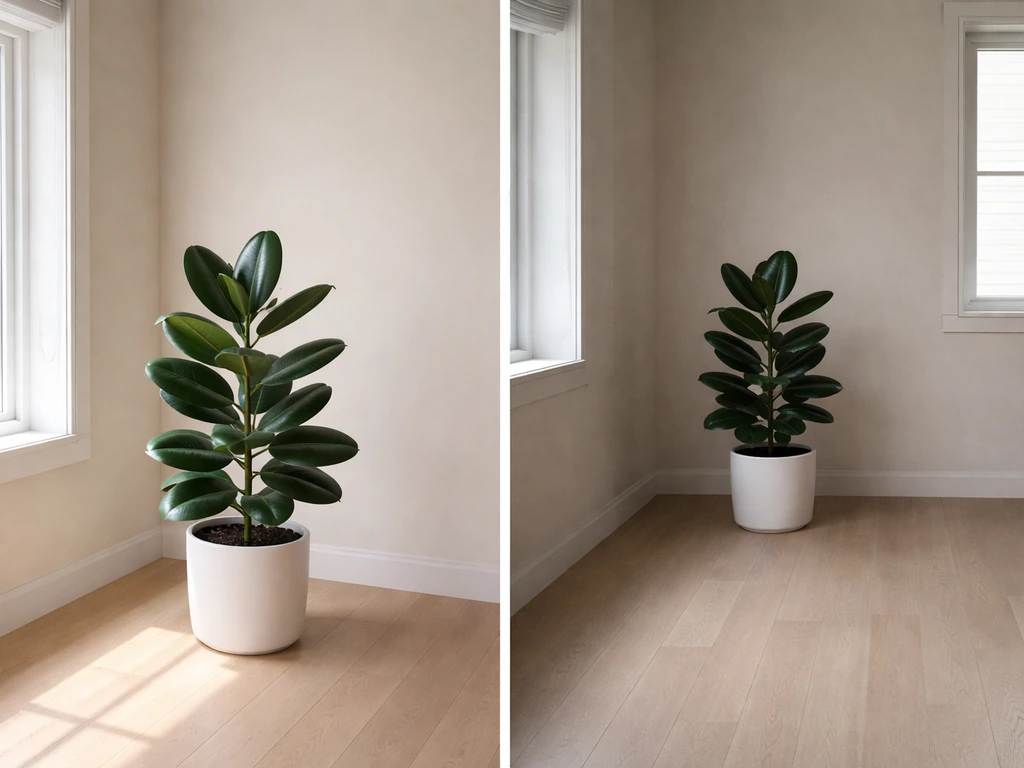
East or west-facing windows are your best natural light option for a rubber plant. These typically deliver 100 to 500 FC, right in the medium-bright range. South-facing windows with a sheer curtain to block harsh midday direct sun also work well. North-facing windows, on the other hand, hover around 25 to 100 FC, which keeps the plant alive but usually will not support active growth. If north-facing is what you have, supplement with artificial light.
One practical tip: place the plant within 3 to 5 feet of the window, not across the room. Light intensity drops off fast with distance indoors. If you are also wondering about jade plant care, the answer depends on whether it gets enough light intensity even when sunlight is limited can jade plant grow without sunlight. A plant sitting 10 feet from a window receives a fraction of what a plant sitting 2 feet from the same window gets.
LED grow lights
Full-spectrum LED grow lights are currently the best all-around option for supplementing or replacing natural light for rubber plants. They run cool, use less electricity than older lighting types, and the spectrum options have improved a lot. For a medium-bright plant like a rubber plant, look for a light that can deliver at least 100 to 200 µmol m-2 s-1 PPFD at the canopy level, or the equivalent of 1,000 to 2,000 lux. Many budget-friendly LED panels in the $25 to $60 range can do this for a single plant.
Fluorescent lights
T5 or T8 fluorescent grow lights are a solid and affordable alternative, especially if you already have fixtures. They work fine for rubber plants as supplemental lighting. They run a bit warmer and are less energy-efficient than LEDs, but they absolutely get the job done. University of Missouri Extension notes that simple spotlights and incandescent bulbs are not effective for plant growth, so stick to fluorescent or LED rather than repurposing a regular lamp.
| Light Source | Approx. Cost | Best For | Drawbacks |
|---|---|---|---|
| East/west window | Free | Primary light source, easy placement | Dependent on season and apartment orientation |
| Full-spectrum LED panel | $25-$60 for single plant | Full replacement or supplement, low heat, energy efficient | Upfront cost, needs a timer |
| T5/T8 fluorescent | $15-$40 | Supplement, widely available | Less efficient than LED, slightly warmer |
| North window only | Free | Survival mode only | Usually insufficient for active growth without a supplement |
How to set up artificial lighting for your rubber plant
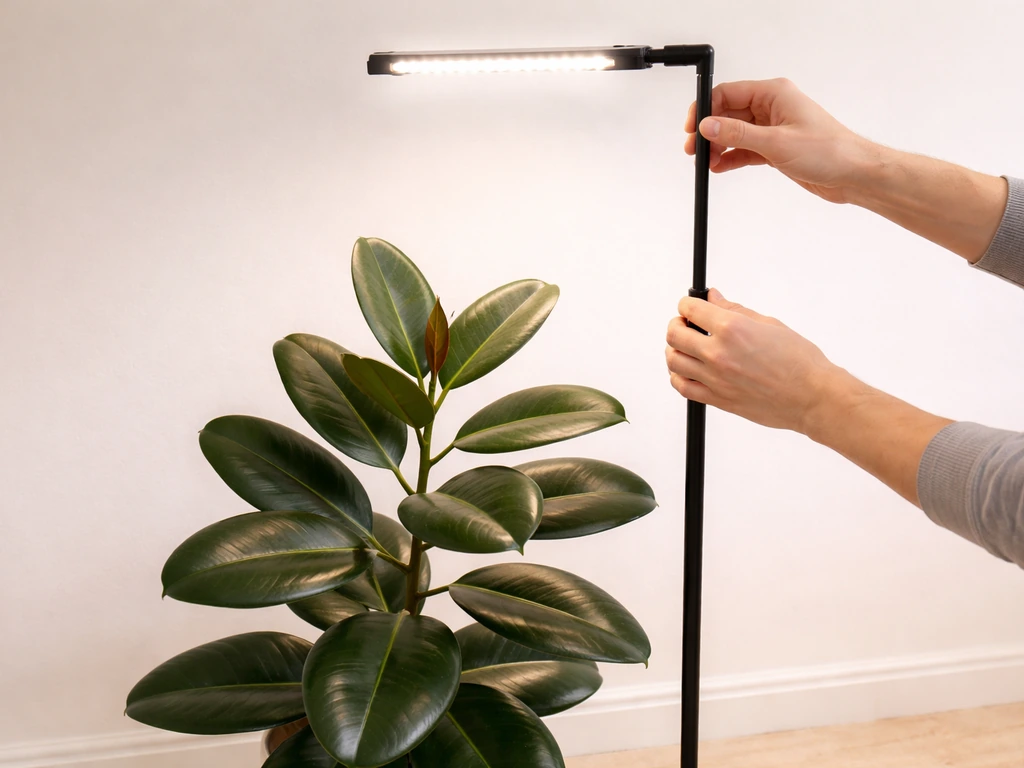
Getting the setup right matters more than spending a lot on equipment. Here is a straightforward approach that works for most home setups.
- Position the light 12 to 24 inches above the top of the plant. University of Minnesota Extension uses this 12 to 24 inch range as a practical guide for foliage houseplants under grow lights. Closer means higher intensity but also higher heat risk; farther means lower intensity. Start at 18 inches and adjust based on how the plant responds.
- Run the light for 12 to 14 hours per day. Use a simple outlet timer (around $10) so you do not have to think about it. This compensates for lower-intensity setups by extending the exposure window. Do not leave the light on 24 hours, as plants benefit from a dark period.
- Check actual light intensity if you can. A free lux meter app on your phone gives you a rough reading. Aim for 1,000 to 3,000 lux at the leaf level for decent growth. A dedicated foot-candle meter is more accurate if you want to dial it in.
- Use a full-spectrum LED or fluorescent fixture, not a regular incandescent or spotlight bulb. The spectrum matters for photosynthesis, and standard household bulbs do not deliver the right wavelengths efficiently.
- Rotate the plant every week or two so all sides receive even light exposure, especially if you are using a single directional light source.
The most common mistake I see is running the light for only 6 to 8 hours and wondering why nothing changes. If your light intensity is modest (which is fine), you need to make up for it with duration. Twelve to fourteen hours is the sweet spot for compensating with lower-intensity setups.
Adjusting care when light is low
Watering
A rubber plant in low light photosynthesizes less and uses water more slowly. If you keep watering on the same schedule you used when the plant was in bright light, you will almost certainly overwater it. The standard advice, and the right call here, is to wait until the top inch of soil is dry before watering again. In winter or in genuinely dim rooms, this might mean watering only every two to three weeks. Always check the soil before you water rather than going by the calendar.
Fertilizing
Cut back on fertilizer when light is low. A plant that is not actively growing has no use for extra nutrients, and feeding it when it is sitting in low light causes salt buildup in the soil that can damage roots. During spring and summer, if your plant is in a decent light situation and actively growing, a half-strength liquid fertilizer every two to four weeks works well. In fall and winter, or whenever growth has stalled due to low light, stop fertilizing entirely until conditions improve. Resume once you see new leaf growth starting up again.
Leaf care
Dust buildup on rubber plant leaves is a bigger deal than most people realize. Each leaf is a solar panel, and a dusty surface blocks light absorption. Wipe the leaves down with a damp cloth every few weeks, especially the large lower leaves. This is a free and easy way to improve light efficiency without moving the plant or buying anything.
How long recovery takes and when to make a bigger change
After improving your rubber plant's light situation, do not expect overnight results. New leaves take time to emerge, and a plant that has been stressed needs a few weeks to stabilize before it starts pushing out fresh growth. Realistically, expect to see signs of improvement (a new leaf bud forming, firmer stems, no further leaf drop) within four to eight weeks of moving the plant to better light or setting up a grow light. Full recovery from significant leaf loss can take a full growing season.
If you have added artificial lighting, given it 8 to 10 weeks, adjusted your watering, and still see no new growth or continued leaf drop, it is time to reassess one of three things: the light intensity might still be too low (check with a meter), the duration might be too short, or there is a secondary problem like root rot or pest damage that is masking the light improvement. Check the roots by gently lifting the plant from its pot.
The honest threshold for giving up on a particular location is simple: if no new leaves have appeared over an entire spring and summer, that spot is not working. Either move the plant closer to a window, upgrade to a stronger light, or accept that this might not be the right plant for that corner of your home. Some plants just need more light than a specific space can offer, and that is okay. A spider plant or a ZZ plant might suit that dark corner far better than a rubber plant ever will. Spider plants are also often mentioned as a better option if you are wondering can spider plants grow without sunlight.
FAQ
Can a rubber plant survive in a closet or windowless room?
Yes, a rubber plant can keep living in a closet or windowless room, but it typically needs artificial light staged at canopy level. If you cannot place a light within a few feet of the plant, growth will usually stall even if the plant is still alive.
How strong does an LED grow light need to be for noticeable new leaves?
Use the highest practical intensity you can without overheating the leaves. Many people start with a too-weak LED and then run it too few hours, so aim for the mid to upper range of your setup’s output (at the leaf level) and then fine-tune duration from there.
Should I run grow lights on a timer, and for how many hours?
Turn the light on and off on a schedule and avoid guesswork. For most home setups, aim for 10 to 14 hours per day, and if you change the distance or bulb, re-check the schedule so you do not accidentally drop either intensity or duration.
Why does my rubber plant keep dropping leaves even after I increased watering?
Yes. In low light, the plant uses less water, so water less often and only when the top inch of soil is dry. If you keep the same watering rhythm from brighter seasons, root stress and leaf drop become much more likely.
How can I tell light stress apart from overwatering or root rot?
Leaf yellowing with soft, mushy lower growth or a foul smell from the soil points more toward root rot than light stress. Light deficiency more often shows slower fading or stretched, reaching growth, with the plant stalling rather than turning mushy.
Should I rotate my rubber plant if it is near a window or one grow light?
If your lights or window position create uneven light, rotate the pot every 1 to 2 weeks. This reduces leaning and helps new leaves emerge more evenly, especially when the plant is near a single light source.
What signs confirm it is actually growing, not just surviving?
Do not assume “it is surviving” means the setup is enough. A good sign is new leaf buds forming and firmer stems, while a plant that drops leaves and never produces new growth through spring and summer usually needs stronger or closer light.
Can cold drafts make it look like my rubber plant has a sunlight problem?
Cold draft stress can mimic light problems because both can cause leaf drop. Keep the plant away from cold window airflow, radiator vents, and exterior doors in winter, and watch for leaf drop right when temperatures at the glass swing.
Should I change fertilizing or water treatment when growing in low light?
Tap water can be fine for many homes, but in low light the plant’s slower growth means salts build up more easily if you fertilize or if water quality is mineral-heavy. In stalled growth periods, pause fertilizer and flush occasionally only if you see crusty fertilizer residue.
Does leaf dust actually matter for rubber plants in low light?
Yes, dust is a real issue because it reduces light capture. Wipe leaves with a damp cloth every few weeks, and pay extra attention to large lower leaves, since they receive less light and lose effectiveness faster when dusty.
How close should my rubber plant be to a window if I cannot use a grow light?
Because light drops quickly with distance, two feet from a window is usually very different from ten feet. If you are measuring visually, use a light meter app or lux meter to confirm your placement actually lands in the medium-bright range.