
Chia pets can grow indoors without direct sunlight, but they can't grow in complete darkness. The seeds need moisture to germinate, not light, so you'll see the first tiny sprouts appear in 2 to 5 days with water alone. But once those sprouts emerge, they need some kind of light to green up and fill out. A bright window with indirect light works fine. If you have no usable window, a basic LED grow light or a fluorescent shop light does the job. The setup is simple, and you don't need anything fancy to get a full, lush chia pet.
Can Chia Pets Grow Without Sunlight? Indoor Guide
Marcus Hartley
17 May 2026
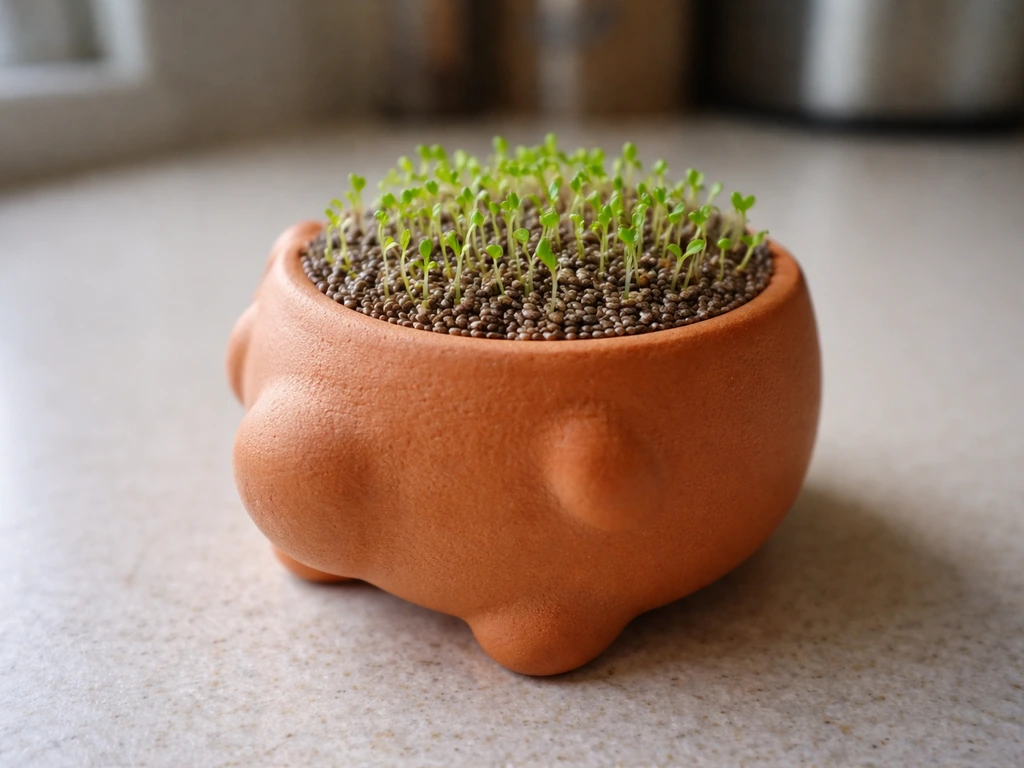
What chia pets actually need to sprout
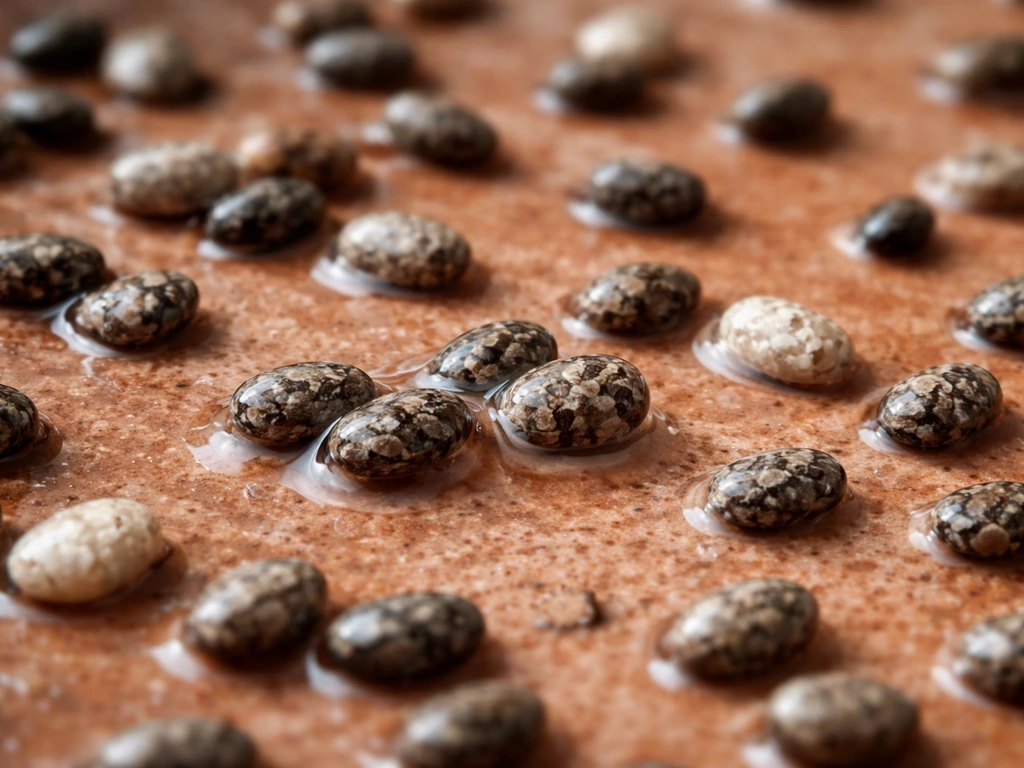
Chia seeds (Salvia hispanica) are surprisingly forgiving at the germination stage. The three things that actually matter are moisture, temperature, and time. Light is not required for the seeds to crack open and push out a root.
Moisture is the big one. Chia seeds form a gel-like coating when wet, which helps them stay in contact with the porous terracotta surface of the planter. That moisture drives germination. Research on chia germination confirms that water availability directly affects germination speed and vigor, so keeping the figure consistently damp (not soggy, not dry) is the single most important thing you can do.
Temperature matters more than most people realize. Chia germinates fastest between 16 and 26°C (roughly 60 to 79°F). Studies report initial germination signs appearing within about 2 days at optimal temperatures, with full germination typically completing in 5 to 7 days. If your room is cool, say around 10°C (50°F), expect things to slow down significantly. MDPI’s Plants/Biomolecules study on chia’s cardinal temperatures reports strong, temperature-dependent effects on germination, including optimal ranges and slower germination outside them expect things to slow down significantly. A warm kitchen countertop is a better spot than a chilly bathroom floor.
- Moisture: mist or soak the figure daily so seeds stay evenly damp
- Temperature: aim for 16 to 26°C (60 to 79°F) for the fastest germination
- Time: expect first sprouts in 2 to 5 days under ideal conditions, up to 7 days in cooler rooms
- Light: not needed for germination, but critical once sprouts emerge and need to green up
Can chia grow in total darkness? Here's the honest answer
Yes and no, and the distinction matters. Chia seeds will germinate in complete darkness because germination is driven by water uptake, not light. In fact, some microgreen growers deliberately sprout chia in darkness for the first 2 to 3 days before introducing light. The seeds don't care.
What happens next is where darkness becomes a problem. Once the sprouts emerge, they need light to photosynthesize and produce chlorophyll. Without any light, sprouts will grow pale, leggy, and weak. They'll stretch toward any available light source, the stems will be spindly, and the color will stay a washed-out yellow-white instead of the vibrant green you want. Given enough time in total darkness, the sprouts will stall and eventually die.
The good news: the turnaround is fast. Research on chia sprouts shows that even etiolated (dark-grown, pale) sprouts can begin visible greening within 24 hours of being moved into adequate light. So if you started yours in a dark cabinet and they look pale, don't panic. Get them into light and they'll recover quickly.
So when people ask "can chia pets grow without sunlight," the real question is what they mean by "without sunlight. In that case, the answer is usually yes for starting the sprouts, but you still need light after they emerge can grass grow without sunlight. " No window light at all? You'll need an artificial light source. A shaded room with some ambient brightness? That can work, especially if you supplement. A north-facing window with indirect light? That's usually enough to get solid results.
The best indoor light options for chia pets
You have more options than you might think, and none of them require a big investment.
Bright indirect window light
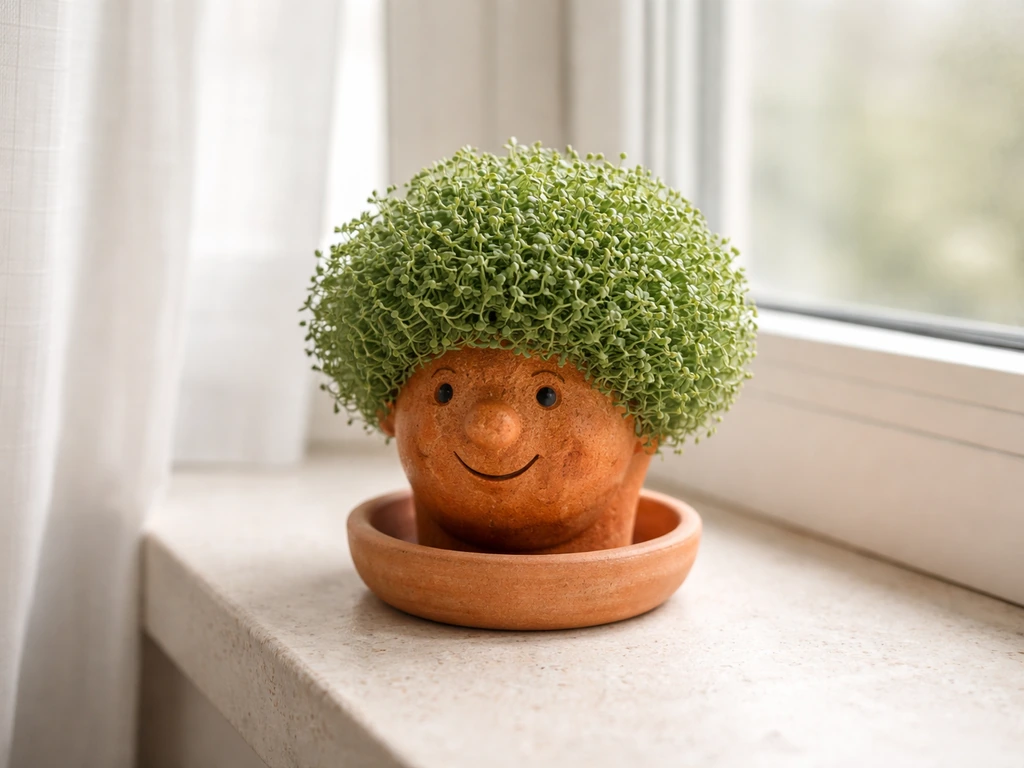
A spot near a south or east-facing window that gets several hours of bright indirect light per day is ideal and completely free. You don't need direct sun hitting the chia pet. Indirect natural light through a window is plenty for a chia pet to fill out nicely. North-facing windows with lower light levels can work too, just expect slower, thinner growth.
LED grow lights
LED grow lights are the best artificial option for most indoor setups. They run cool, use less electricity than older options, and can be positioned close to the plant. For chia sprouts and microgreens, you want a light intensity (PPFD) in the range of 100 to 180 micromoles per square meter per second (μmol/m²/s). Most affordable full-spectrum LED grow lights hit that range when positioned about 6 to 12 inches above the chia pet. Run them 12 to 16 hours per day.
Fluorescent and shop lights
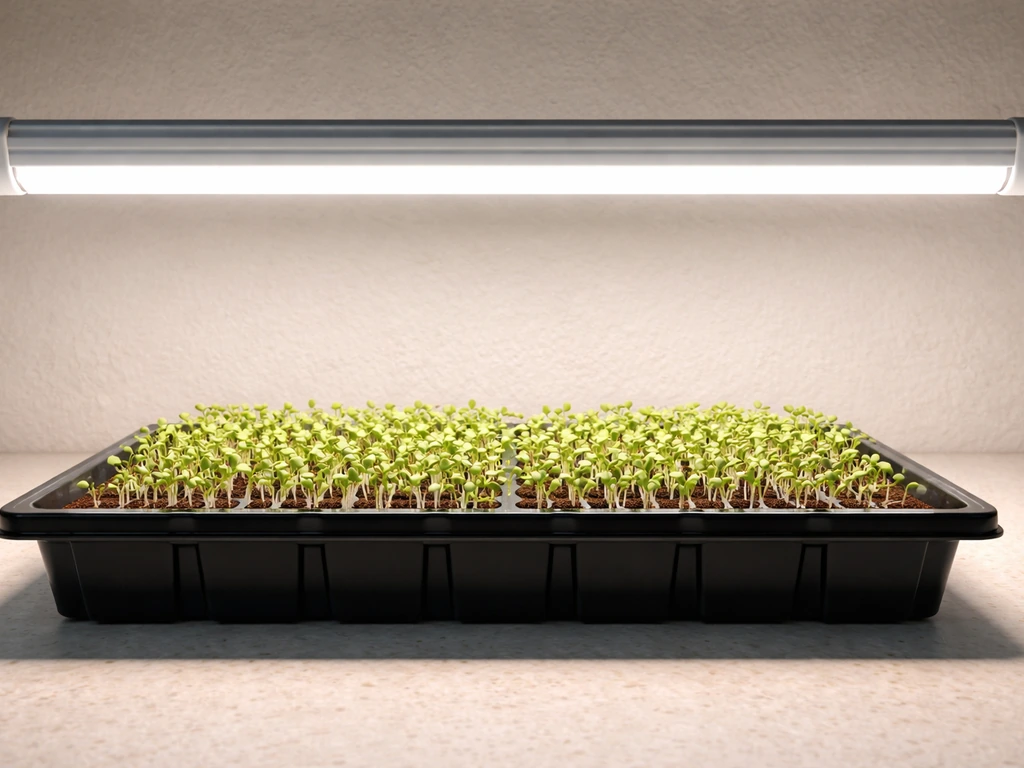
Standard T5 or T8 fluorescent tubes and LED shop light bars work well for chia. They're inexpensive and widely available. Position them about 2 to 4 inches above the chia pet (fluorescents drop off quickly with distance) and run them for 14 to 16 hours per day. A cheap timer plug makes this effortless. This is probably the most budget-friendly option if you already have a shop light sitting around.
| Light Source | Best For | Typical PPFD Range | Distance from Plant | Daily Hours |
|---|---|---|---|---|
| Bright indirect window | Rooms with decent natural light | Variable (50–300+) | N/A (place near window) | All day (natural) |
| LED grow light | Any room, most flexible option | 100–180 μmol/m²/s | 6 to 12 inches | 12 to 16 hours |
| T5/T8 fluorescent tube | Budget setups, shelves | 80–150 μmol/m²/s | 2 to 4 inches | 14 to 16 hours |
| LED shop light bar | Budget setups, wide coverage | 80–160 μmol/m²/s | 3 to 6 inches | 14 to 16 hours |
| Dark room / cabinet | Not recommended after sprouting | Near 0 | N/A | N/A |
How to set up artificial light for your chia pet
Setting up a grow light for a chia pet doesn't need to be complicated. Here's what actually matters.
- Choose your light: an LED grow light or fluorescent shop light are the two easiest options. Either works.
- Position it correctly: for LEDs, start at 6 to 8 inches above the top of the chia pet and adjust based on growth response. For fluorescents, keep them 2 to 4 inches above. Closer is better for low-intensity bulbs.
- Set a timer: chia sprouts need 12 to 16 hours of light per day. A simple outlet timer (under $10) lets you set it and forget it. Running lights during the day and off at night mimics natural cycles.
- Give it a rest period: 8 hours of darkness per day is fine and actually supports healthy growth. Don't run lights 24 hours — plants benefit from a dark period.
- Rotate the figure: rotate your chia pet 180 degrees every day or two so all sides get even light exposure. This prevents one side from growing fuller than the other.
- Check for heat: LED lights run cool, but keep your hand near the chia pet surface to make sure it's not getting dried out by heat from the bulb. Consistent moisture matters more than anything.
If you want to dial things in more precisely, the key metric is PPFD (Photosynthetic Photon Flux Density), which measures the amount of usable light actually hitting the plant. For chia sprouts, you're aiming for roughly 100 to 180 μmol/m²/s. You can buy a cheap PAR meter or phone app to check this, but honestly, for a chia pet you don't need to overthink it. The guidelines above get you in the right range.
What to expect: timelines by lighting level
Here's a realistic picture of what you'll see under different lighting scenarios. These are based on keeping moisture consistent and room temperature in the 18 to 24°C (65 to 75°F) range.
| Lighting Scenario | Days to First Sprouts | Days to Full Coverage | Expected Quality |
|---|---|---|---|
| Bright indirect window (south/east) | 2 to 4 days | 10 to 14 days | Dense, green, healthy |
| North-facing or shaded window | 3 to 5 days | 14 to 21 days | Lighter green, moderate density |
| LED grow light (12–16 hrs/day) | 2 to 4 days | 10 to 14 days | Dense, green, healthy |
| Fluorescent shop light (14–16 hrs/day) | 2 to 5 days | 12 to 16 days | Good green color, solid coverage |
| Bright room ambient light (no direct source) | 3 to 6 days | 16 to 24 days | Patchy, paler, thinner |
| Complete darkness | 2 to 4 days (germination only) | Will not fill out | Pale, leggy, will stall |
The pattern is consistent: germination happens regardless of light, but quality growth needs a real light source. Under good conditions (window or grow light), a chia pet looks full and green within two weeks. In marginal light, it takes longer and looks thinner. In darkness, it just doesn't work past the sprout stage.
Care tips that prevent mold and keep growth even
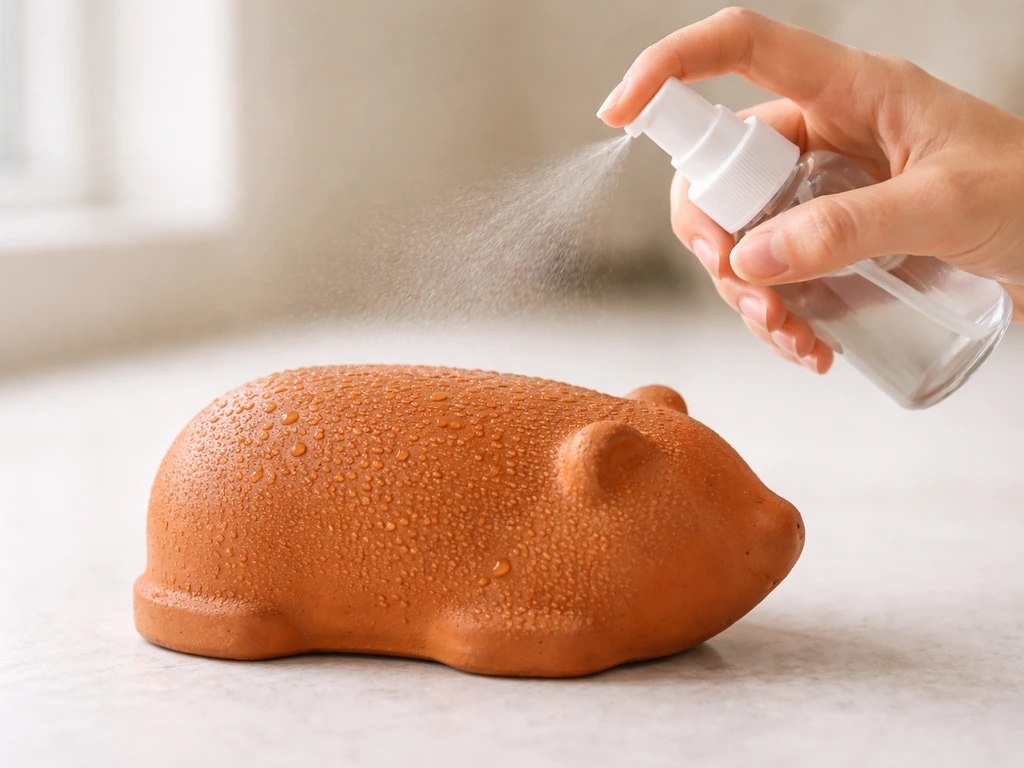
Chia pets are almost entirely a moisture management game. Get the water balance right and most problems go away on their own.
- Mist or water daily: the terracotta figure should stay consistently damp. Don't let it fully dry out between waterings, but also don't leave it sitting in a pool of water.
- Empty the drip tray: standing water in the tray promotes mold on the bottom of the figure. Tip it out after each watering.
- Avoid overwatering: soggy conditions cause mold and root rot. If you press a finger to the surface and it's dripping wet rather than just damp, ease off.
- Rotate the figure: this keeps all sides evenly moist and evenly lit, preventing one side from drying out or growing more sparsely.
- Good airflow helps: a light fan nearby or just a well-ventilated room reduces mold risk significantly. Don't seal your chia pet in a humid, stagnant enclosure.
- If mold appears: remove the sprouts, soak the terracotta figure in a solution of 1/2 teaspoon of bleach per quart of water for 30 minutes, rinse thoroughly, let it dry completely, then reseed. This is the official recommendation and it works.
One thing I'd add from experience: mold on chia pets almost always comes from overwatering in a low-airflow spot, especially when light is also weak. Low light means slower growth, which means moisture sits longer without being used. If you're in a low-light situation, be especially conservative with water.
When your chia sprouts aren't showing up
If you're past day 7 and still seeing nothing, work through this list before giving up.
- Check moisture: the most common reason chia doesn't germinate is that the figure dried out before the seeds had a chance to swell and sprout. Touch the surface. If it feels dry or even just slightly tacky rather than damp, it dried out at some point. Re-soak the figure and mist thoroughly.
- Check temperature: if your room is below 15°C (59°F), germination will be very slow or may stall. Move the figure somewhere warmer. Even placing it near an appliance that generates a little heat can help.
- Check seed coverage: the seeds need good contact with the terracotta surface. If the seed paste was applied too thick in some spots or too thin in others, germination will be uneven. Press seeds gently into the surface when applying.
- Check your seeds: old or improperly stored chia seeds have lower germination rates. If your seeds are more than a year or two old or were stored somewhere humid and warm, germination rates drop. Fresh seeds from a sealed package work best.
- Check for mold: if you see fuzzy growth (not the fine white root hairs, which are normal) or smell something off, mold is the issue. Do the bleach soak, dry, and restart.
- Check the light situation post-sprout: if sprouts appeared but then stopped growing or look pale and stretched, they need more light. Move them closer to a window or add artificial light.
One thing worth knowing: the fine white hairs you see on chia sprouts in the first few days are root hairs, not mold. They look fuzzy and can alarm first-timers. They're completely normal and actually a sign of healthy germination. True mold is fuzzy but also discolored (gray, black, or green) and usually has a smell.
So, can chia pets grow without sunlight? Here's the bottom line
Chia pets grow fine without direct sunlight. What they can't do is grow in complete darkness past the initial sprout stage. If you have a reasonably bright room, an indirect window, or any kind of grow light or shop light, you have enough to work with. Set up your light source 6 to 12 inches above the figure, run it 12 to 16 hours a day, keep the terracotta consistently damp (not soaked), and you'll see green, dense growth within two weeks. The seeds are doing most of the work. Your job is just not to let them dry out or drown.
If you're growing other things in low-light spaces, the same principles apply more broadly. Chia seeds (when grown as microgreens rather than on a pet figure) follow similar rules, and other fast-sprouting plants like beans and coriander have their own light thresholds worth understanding before you pick a spot for them indoors. If you're wondering can coriander grow without sunlight, the key is giving it enough light for healthy, non-leggy growth after germination beans and coriander. Chia is actually one of the easier ones to work with, which is part of why chia pets have been a reliable crowd-pleaser for decades.
FAQ
My chia pet is in a dark room. Will it ever turn green?
Yes, but “no sunlight” is different from “no light.” After sprouting, you need enough brightness for chlorophyll to form. If your room is lit well enough that you can comfortably read for hours without turning on a lamp, it will often be sufficient, otherwise use a grow light or fluorescent shop light.
How does temperature affect chia pet growth indoors without sunlight?
Expect slower and paler growth if the room is cool, even with light. A common rule of thumb is to keep the terracotta around 18 to 24°C (65 to 75°F), germination starts in 2 to 5 days, and full, dense growth usually takes about two weeks under adequate light.
Can I soak the terracotta figure to speed up germination in low light?
Avoid keeping it fully submerged. You want the terracotta consistently damp, not soaked, because excess water plus weak airflow leads to mold. If you see water pooling on the saucer, pour it off and let the figure dry slightly at the surface before the next misting.
What should I change if my chia pet looks pale and slow in low light?
Check the watering schedule to match your conditions. In bright rooms, you may only need light misting or short soak cycles, while in low-light setups growth is slower and the surface stays wet longer. If growth is pale, reduce water a bit and increase airflow (for example, nearby gentle fan) rather than adding more water.
How do I know I’m watering correctly if I can’t use a window?
Use a simple “humidity test”: touch the surface lightly. It should feel damp and cool, but not leave water on your finger or drip. If it feels dry, mist, if it feels slick or leaves water, wait and let it dry slightly.
Do I need a timer for LED or fluorescent lights when growing chia indoors?
Timer use matters. Running lights 12 to 16 hours per day helps prevent stretching and keeps growth steady. Turning the light on and off randomly can lead to uneven greening, especially if the light is the only light source.
If I started my chia pet in darkness, can it recover once I add a light?
Most ethylated (dark-grown) sprouts will green up within about a day after moving into adequate light, but they will not become as dense as sprouts that started with light from day one. If you began in darkness, move them as soon as you see sprouts, then keep the light consistent.
How can I tell root hairs from mold on a chia pet?
First, don’t mistake root hairs for mold. Root hairs are white and fuzzy early on. True mold is typically colored (gray, black, or green) and smells musty. If you suspect mold, discard that batch rather than trying to “save” it, because spores can spread.
My light is a little far away, how do I troubleshoot weak growth?
The distance affects how much usable light reaches the chia. If growth is still thin after a week, raise the light less (move it closer), or extend the light duration toward 16 hours per day, but keep fixtures within safe manufacturer guidance to avoid heat stress.
Can chia pets grow without sunlight in the same way they grow without windows?
Yes, but it depends on what you mean by “without.” If you mean no direct sun, you are fine with indirect window light or artificial light. If you mean truly no light after sprouting, it will not progress past the sprout stage, even if watering and temperature are perfect.